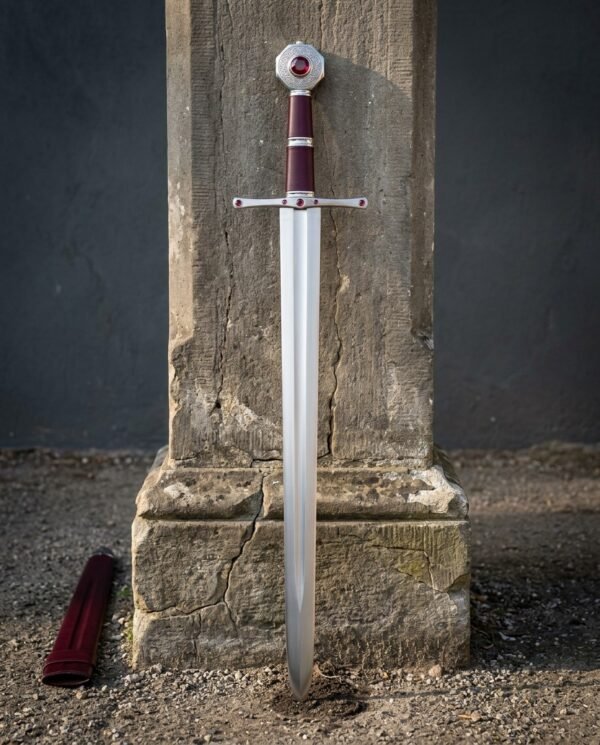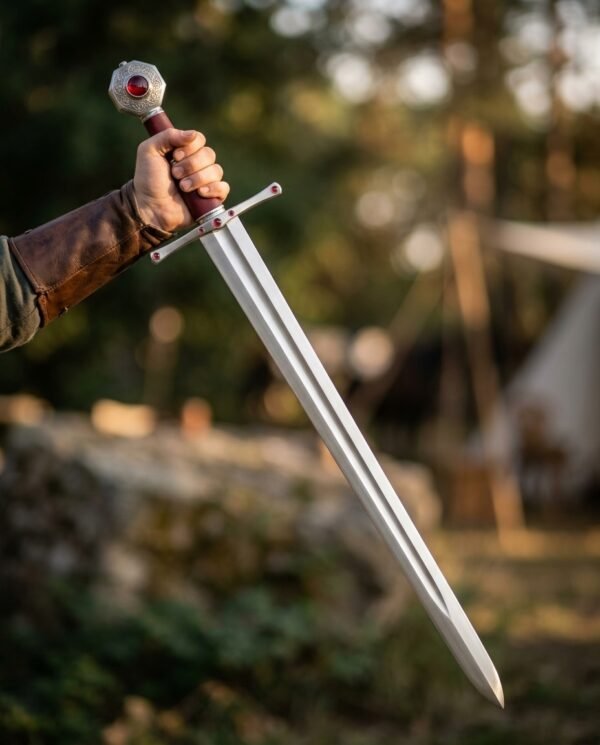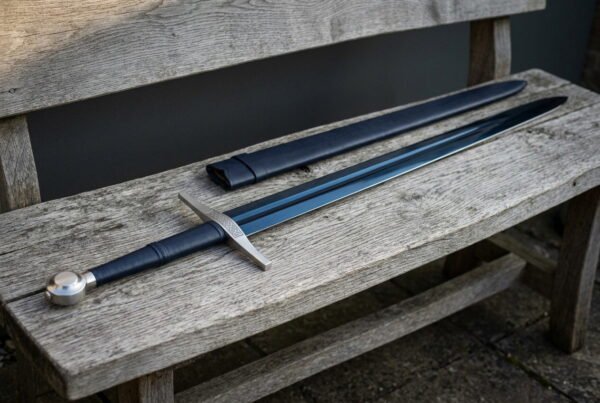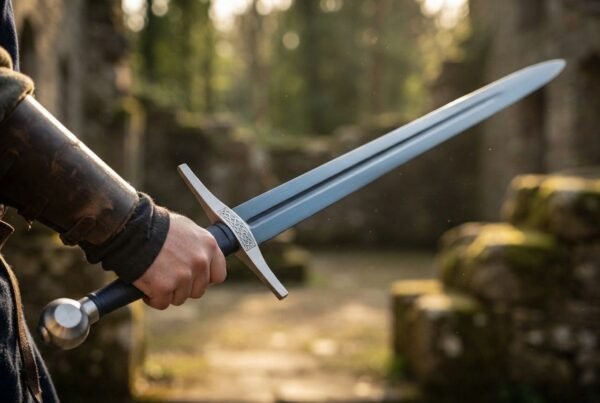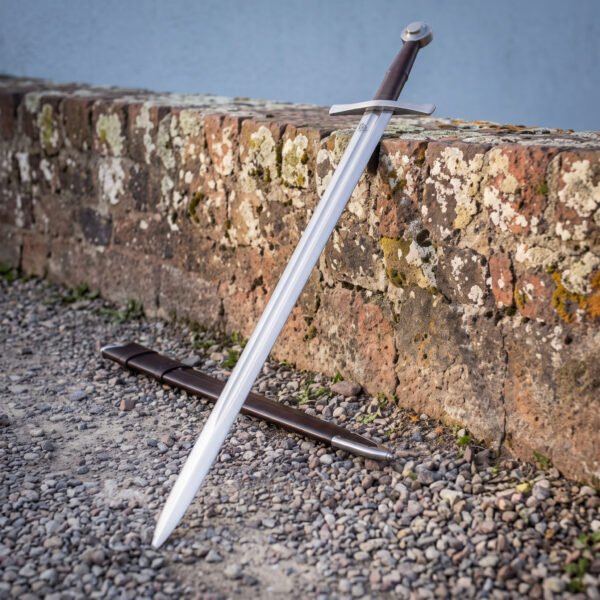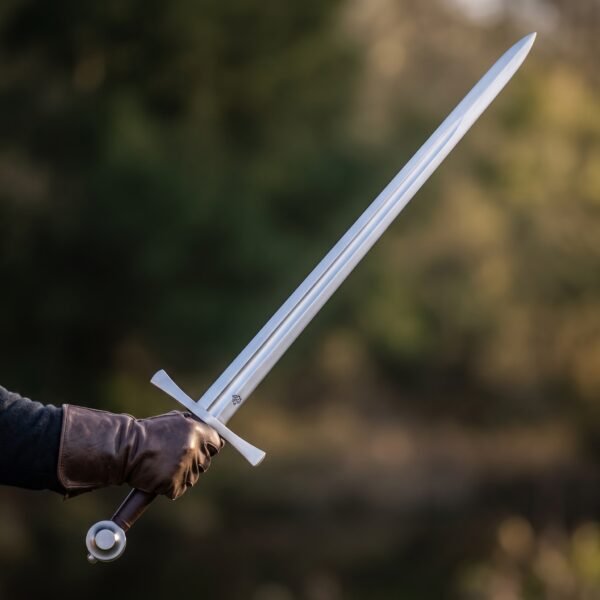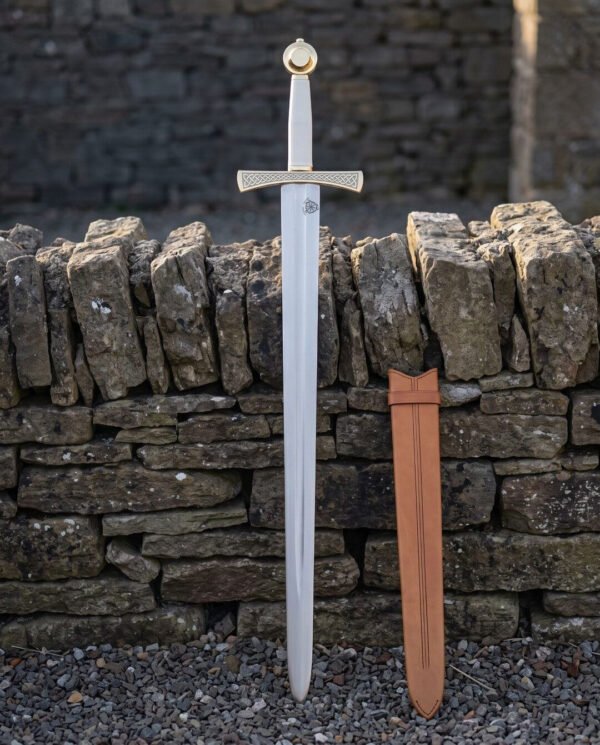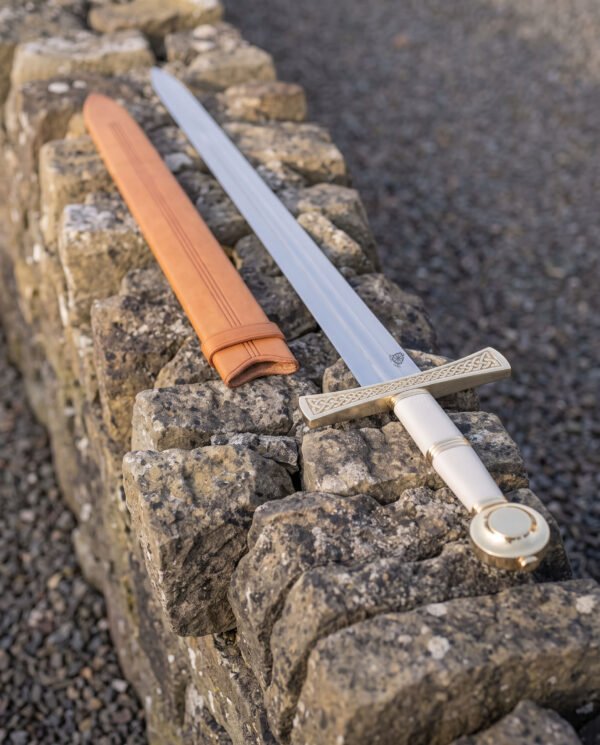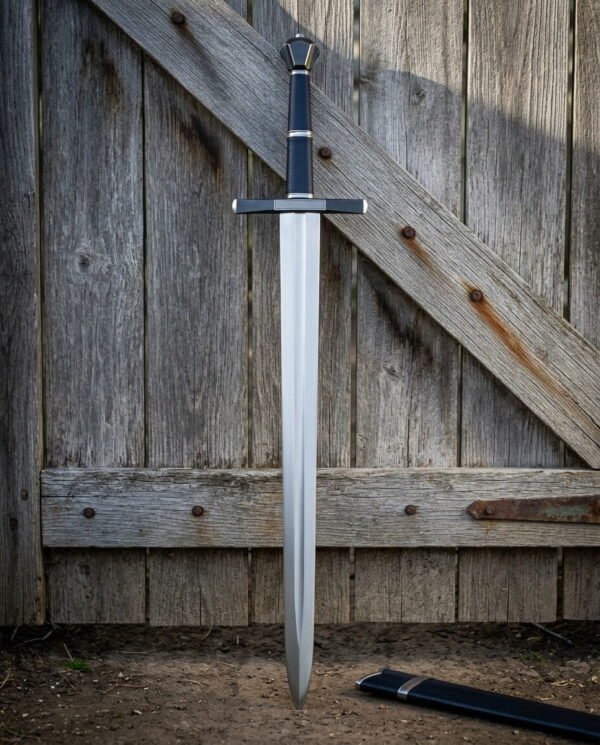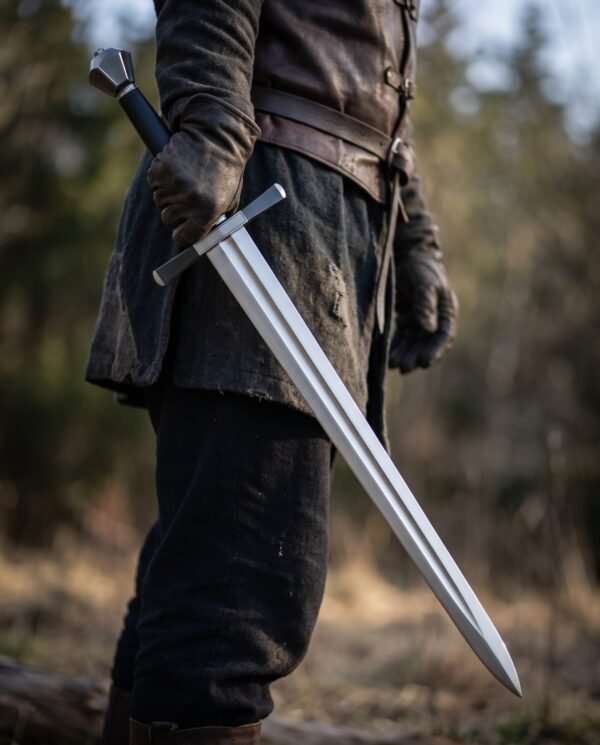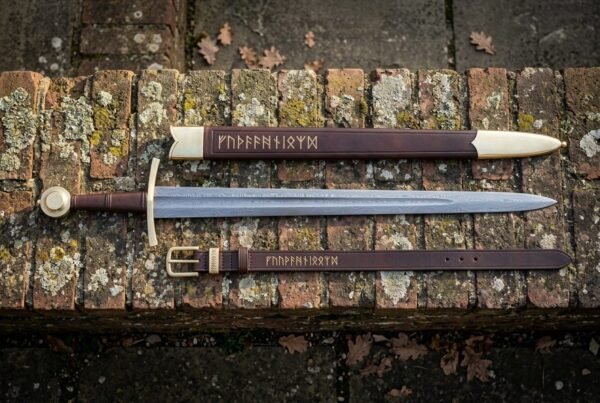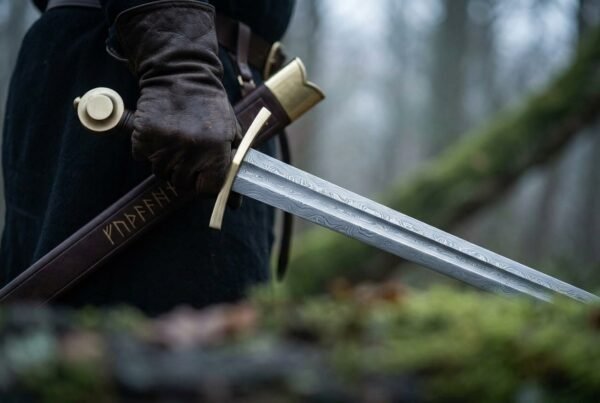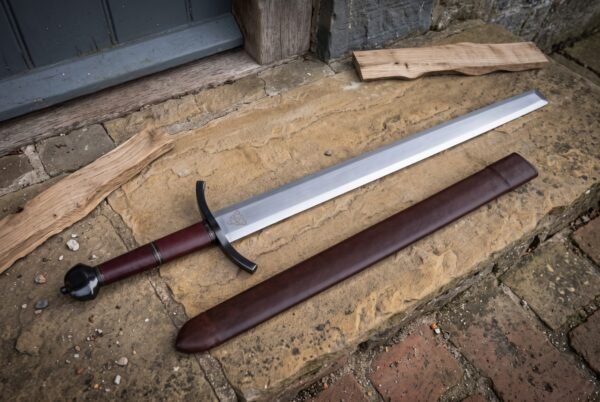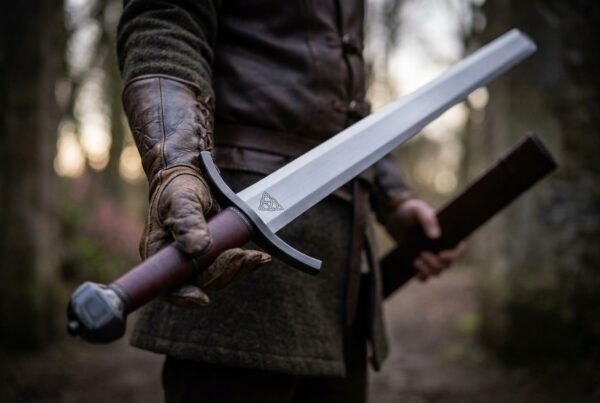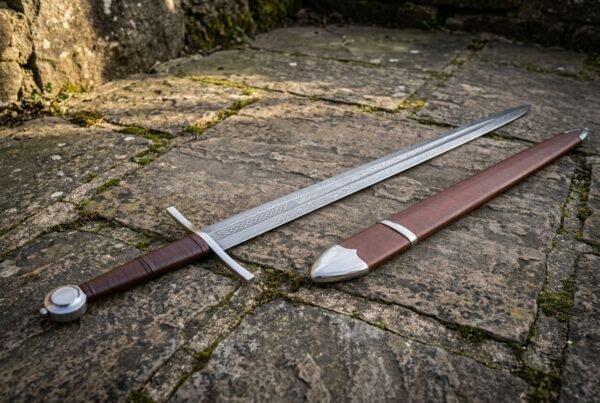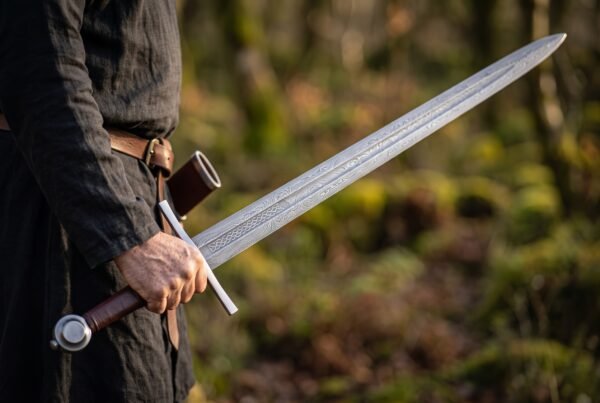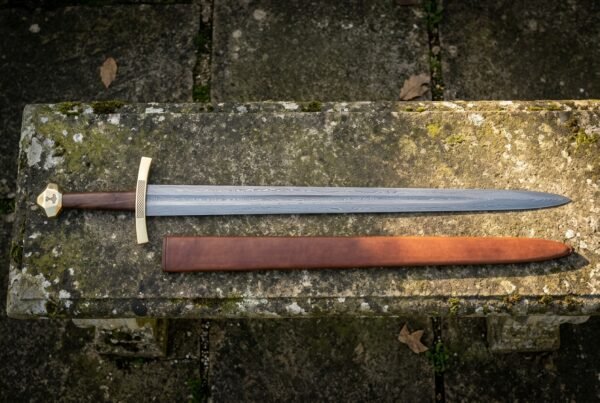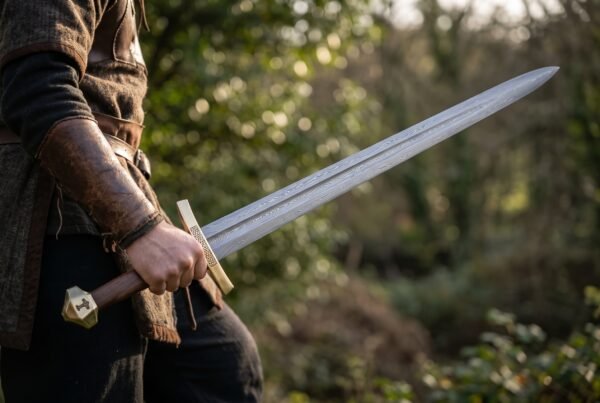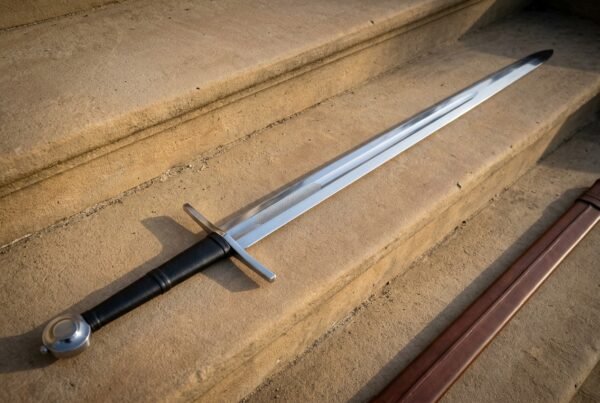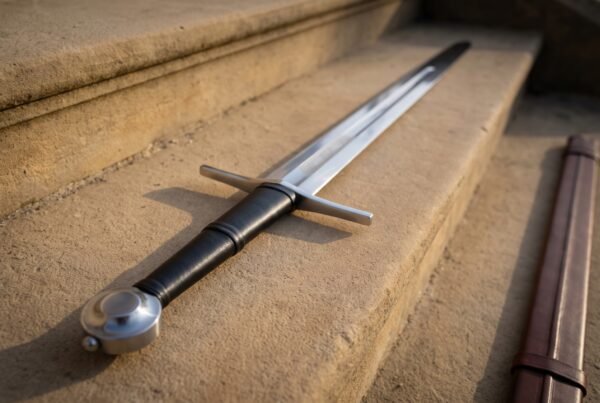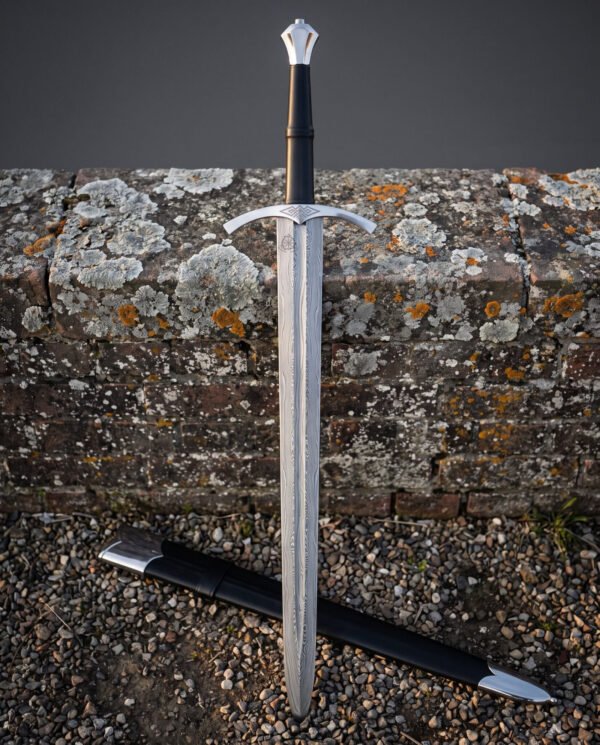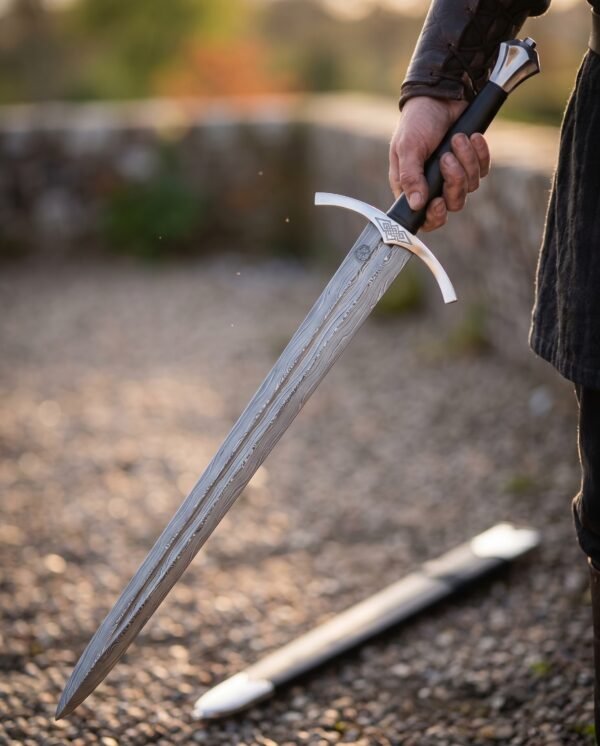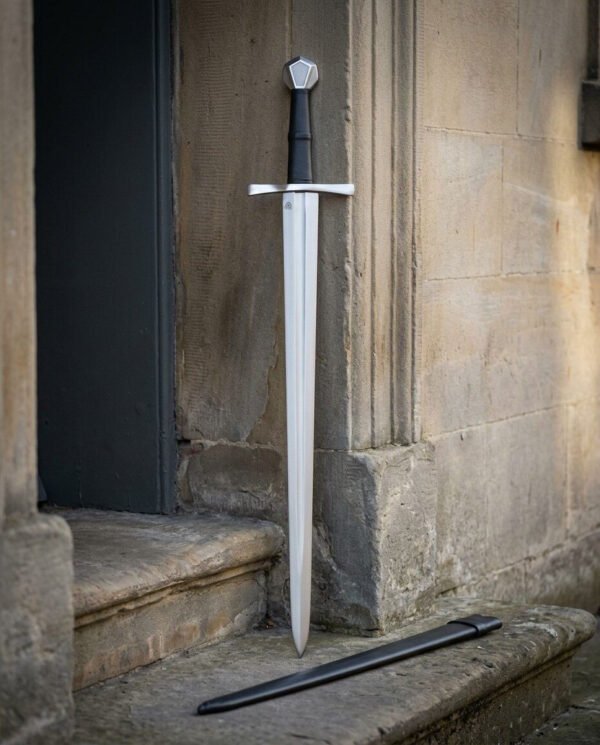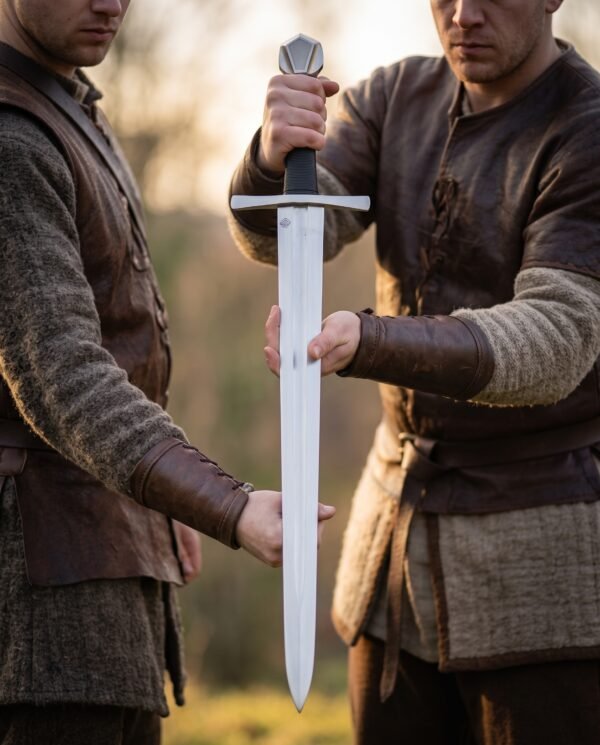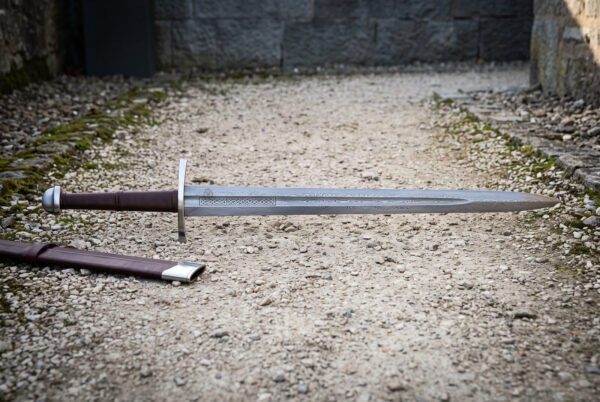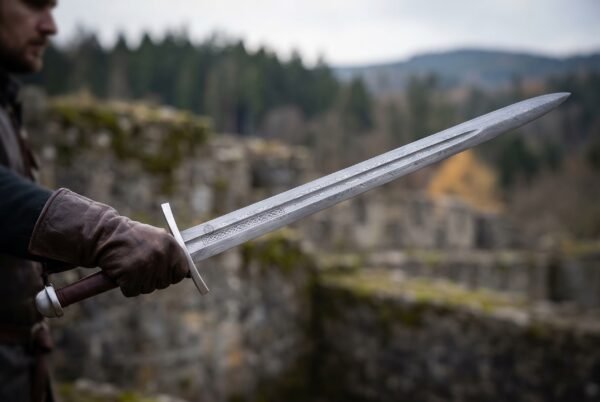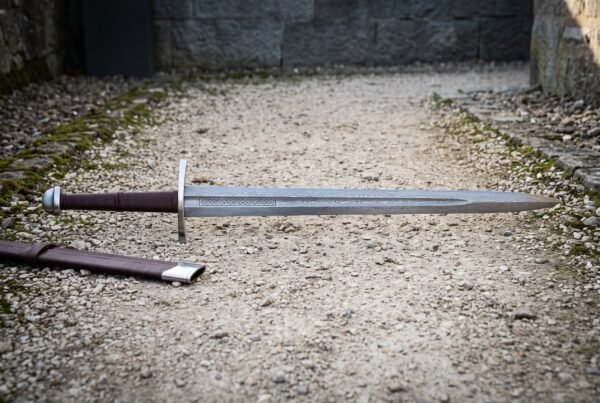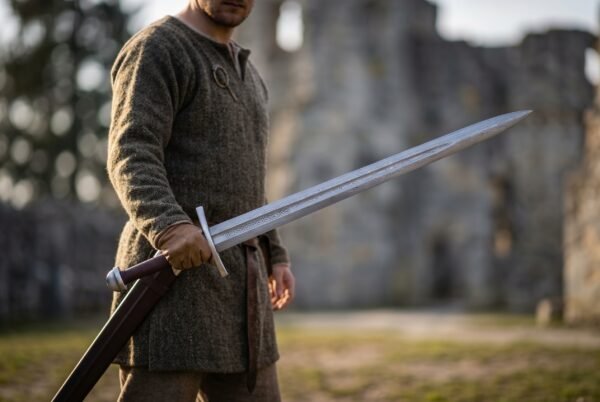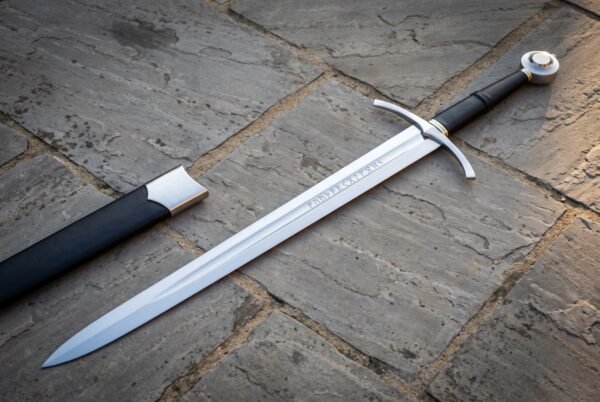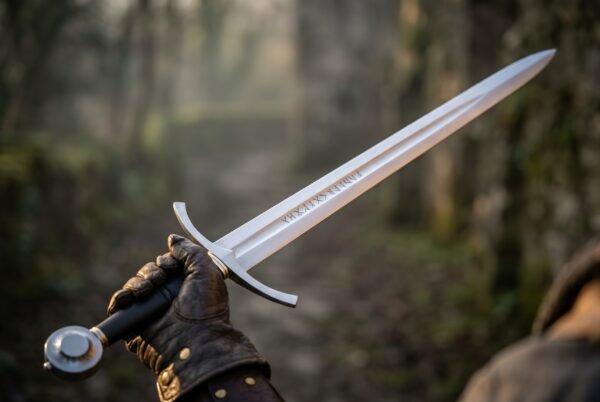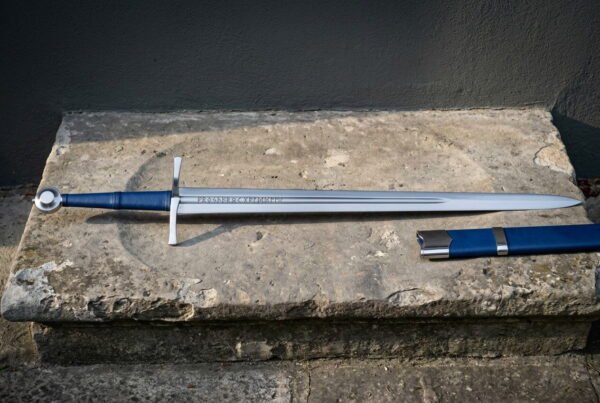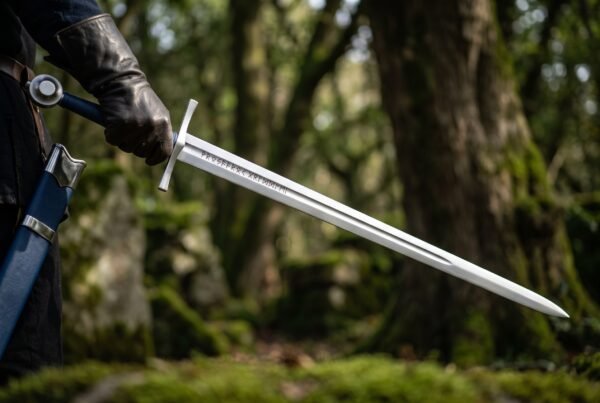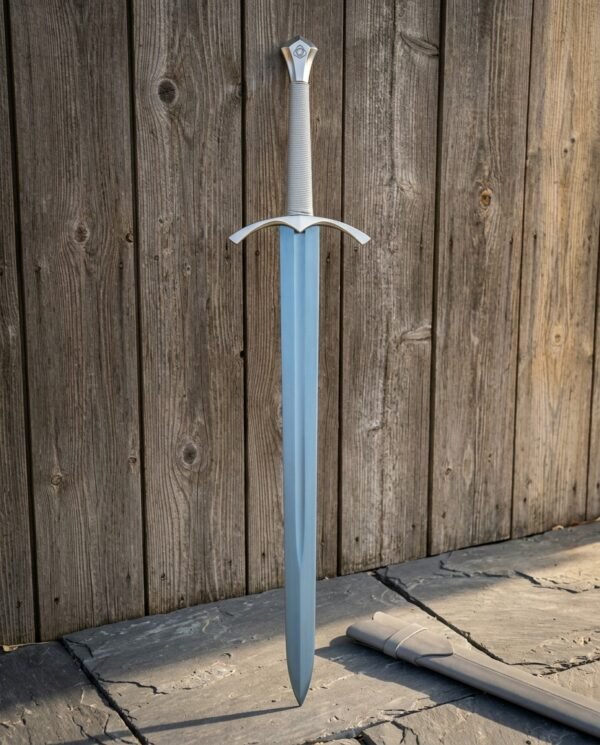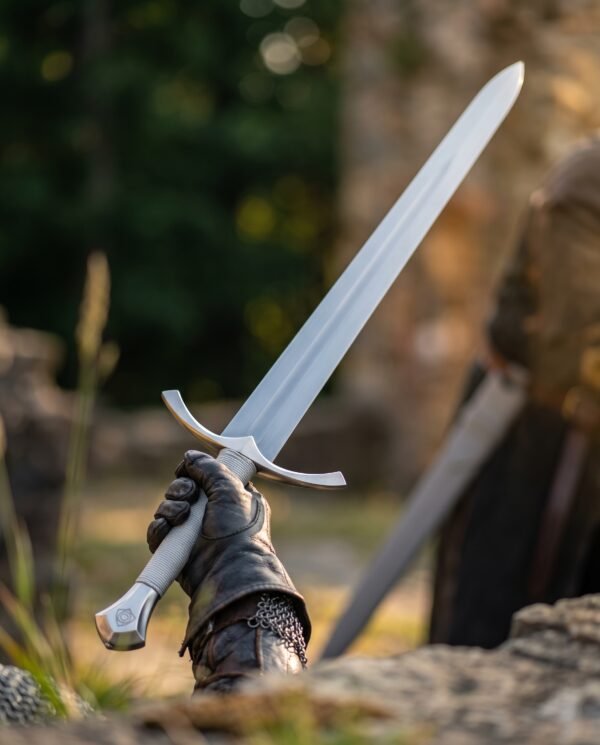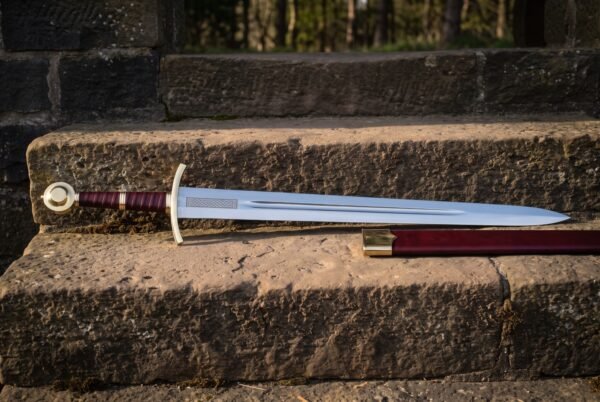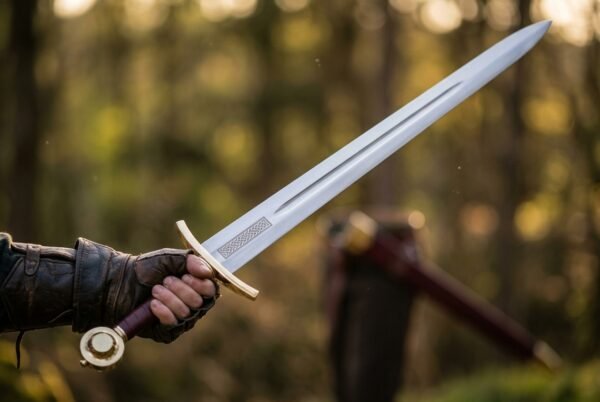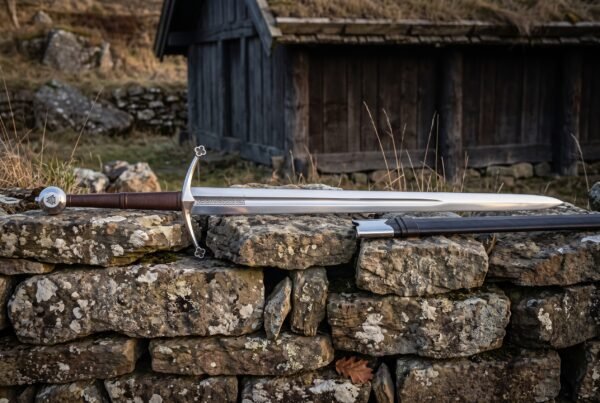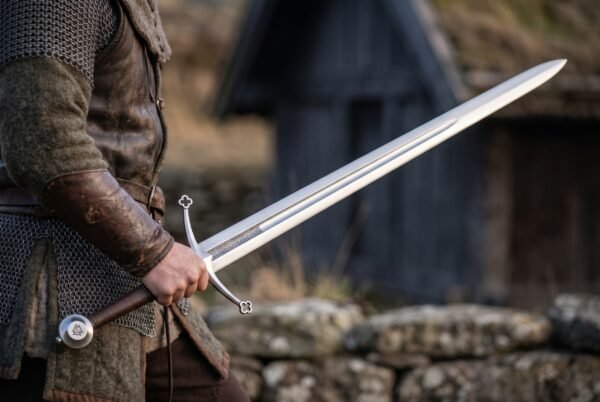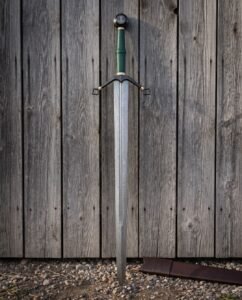
A knightly sword is the single hand cruciform blade of the high medieval period, roughly the eleventh century to the fourteenth. Straight, double edged, fullered, with a simple crossguard and a wheel or disc pommel. Ewart Oakeshott spent a career classifying the variations and his typology is still what everyone uses, which is why you see Type XII and Type XIV thrown around in descriptions.
What is on this tag
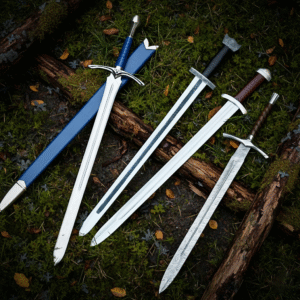
Arming swords, Oakeshott Type XII patterns, blued blades, pattern welded pieces and stone set hilts. Overall lengths run from about 36 to 38 inches with blades around 30. Steel is plain 1095 high carbon at 54 to 58 HRC or Damascus of 1095 and 15N20, forge welded and acid etched, at 58 to 60 HRC. Pommels are wheel, disc and faceted, several set with red stones. Guards are straight or slightly downswept. Grips are leather wrapped over a wooden core, and a number of blades carry etched knotwork bands along the fuller.
What the typology is actually telling you
Oakeshott’s types describe blade profile and cross section, not decoration. A Type XII has a broad blade tapering gently to a rounded point with a fuller running roughly two thirds of the length, which is a cutting blade that can still thrust. Later types narrow and stiffen as armor improves and thrusting into gaps becomes the point of the exercise. That progression is the whole story of medieval swords in one sentence, and the display against battle ready explainer covers what the modern labels actually mean on top of it.
Buying one
Check the pommel is peened rather than glued and the guard is seated tight. If this is a first sword, read the first sword guide before you spend. Single hand blades are in the arming swords and the two hand shapes in the longswords.
Weight and balance
A knightly sword of this size runs lighter in the hand than most people expect, usually between two and three pounds, with the balance point a few inches ahead of the guard. The wheel pommel is doing that work as a counterweight rather than as decoration. A sword that feels dead in the hand almost always has a pommel that is too light for its blade.
Storage
Keep the blade out of a closed leather scabbard and off a wall in direct sun, which dries a wrapped grip until it loosens.
Free US shipping
On most pieces. Heavier and oversized ones carry a flat charge.
Hand Forged
Heated, hammered and ground by hand.
Engraving available
Names, dates or Norse runes on most pieces.