
Hand Forged axes, Damascus blades, swords, seax, shields and drinking horns. Every piece is heated, hammered and ground by hand in the Czech Republic, then inspected and shipped free from our Memphis, Tennessee warehouse, with no import duty and no customs delay on US orders.


What is in here, and how it is sorted
The catalogue runs from a three inch pocket knife to a sword that needs two hands and a wall bracket, so one alphabetical list was never going to help anybody. It is sorted into six groups. Blades is what you hold in one hand and cut with. Swords is anything longer than a forearm. Norse Arms is steel on a haft, so axes, spears, hammers and polearms. Viking Armor is what stops all of that, shields included. Damascus Steel Jewelry is the same pattern worn rather than swung. Gifts and Gear is everything practical that is left, and it is a larger group than the name suggests.
Pick the group first, then narrow inside it. The tiles at the top are the doors most people use, and the full list of collections sits at the foot of the page. What follows is what each group holds, and what is worth settling before you spend money.
Blades
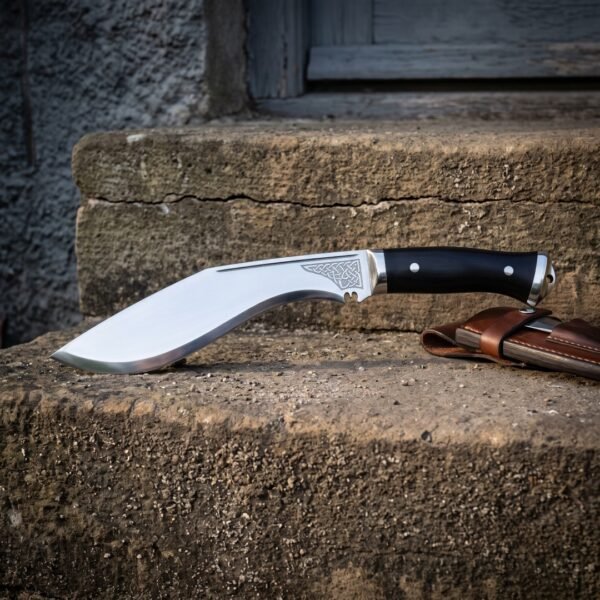
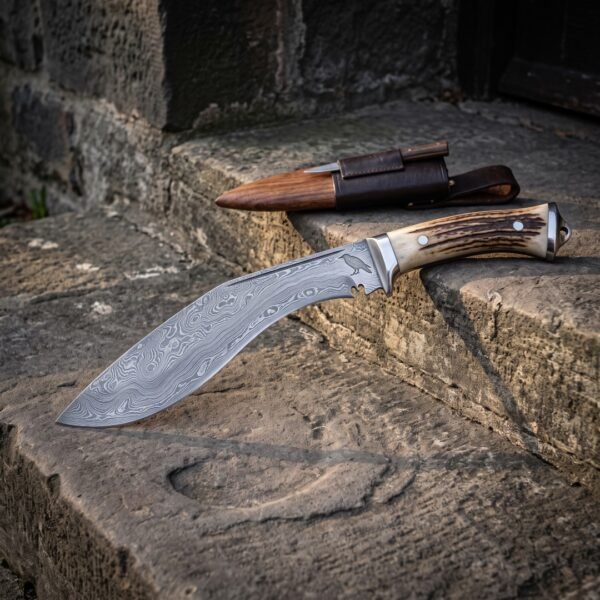
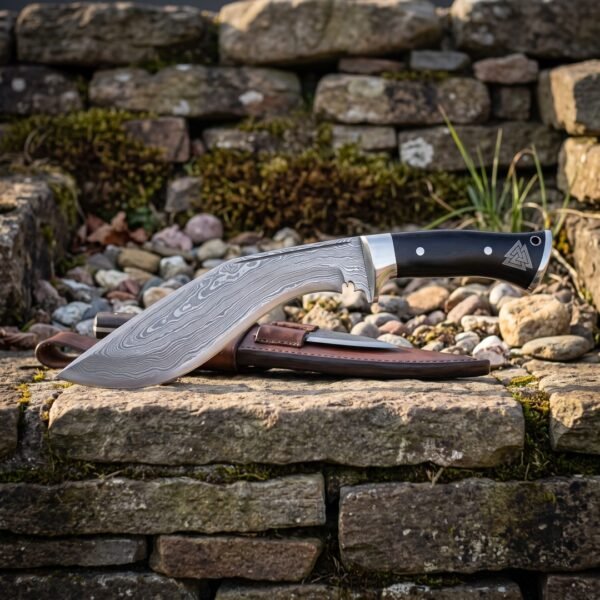
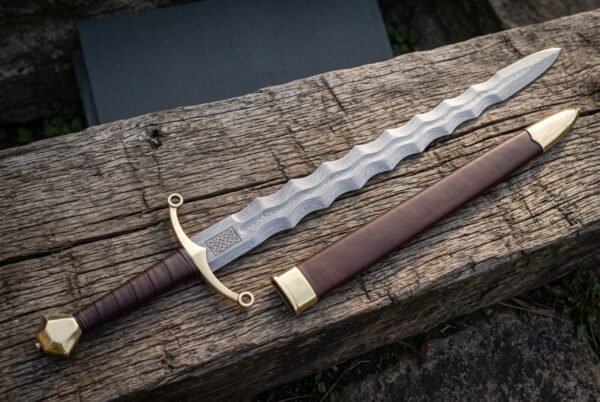
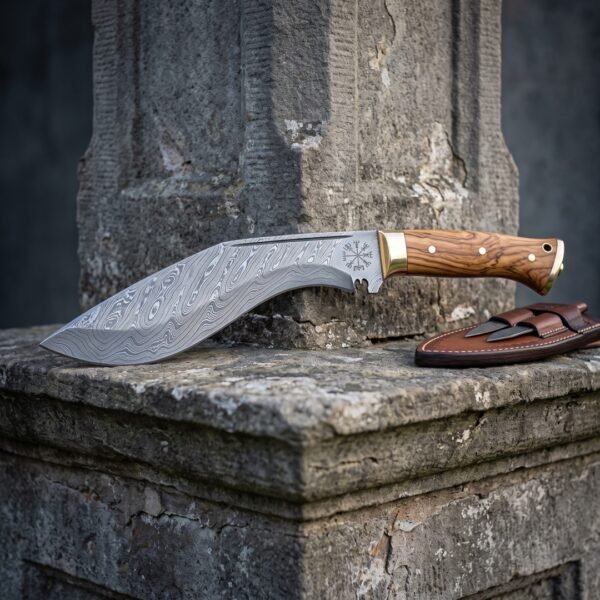
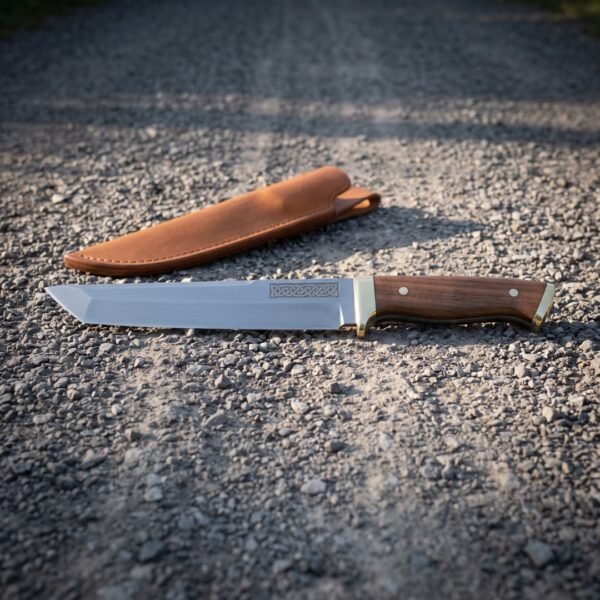
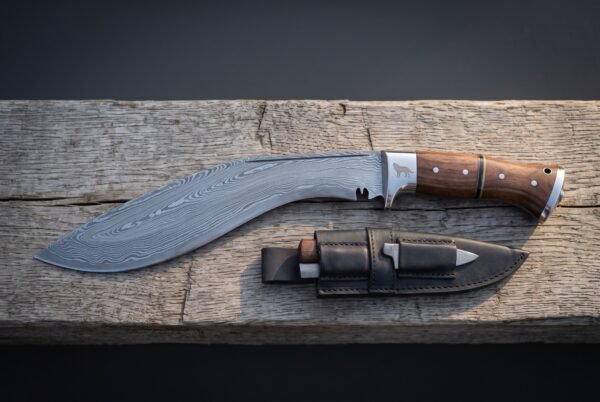
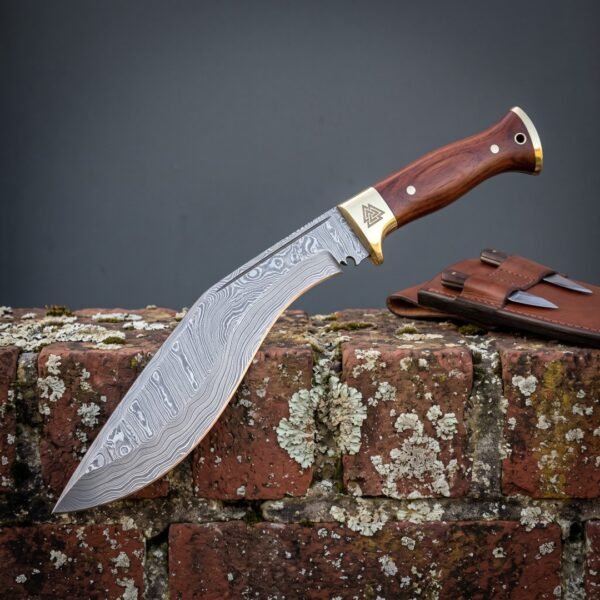
Most people arrive wanting a knife and leave with a very specific one, because these shapes are not interchangeable. The Damascus knives are the ones that get photographed: 1095 and 15N20 forge welded and etched so the grain reads, no two the same. For the same steel behaviour without paying for the pattern, the plain high carbon pieces sit in hunting knives, where a drop point of four or five inches does field work without complaint. The Viking knives and the seax under them are the long single edged shapes the Norse carried, bought as often for the history as for the cutting. Kitchen blades, folders and the curved shapes each have their own collection further down.
Swords
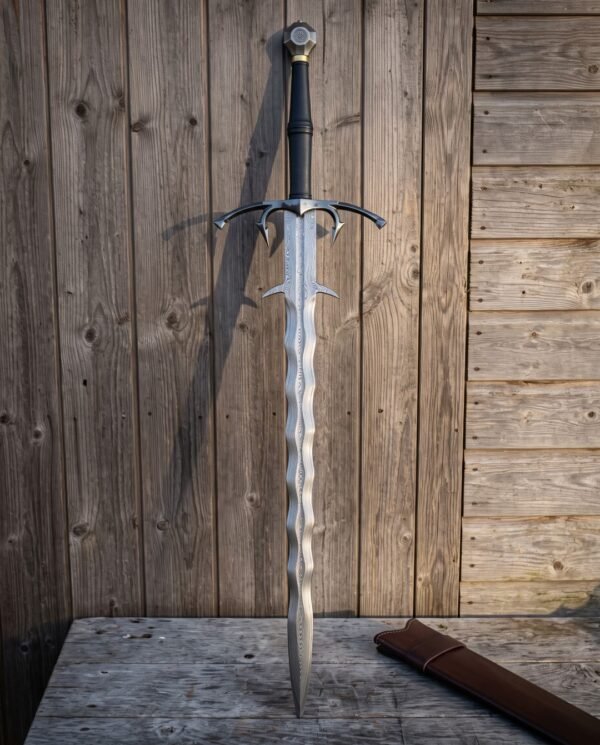
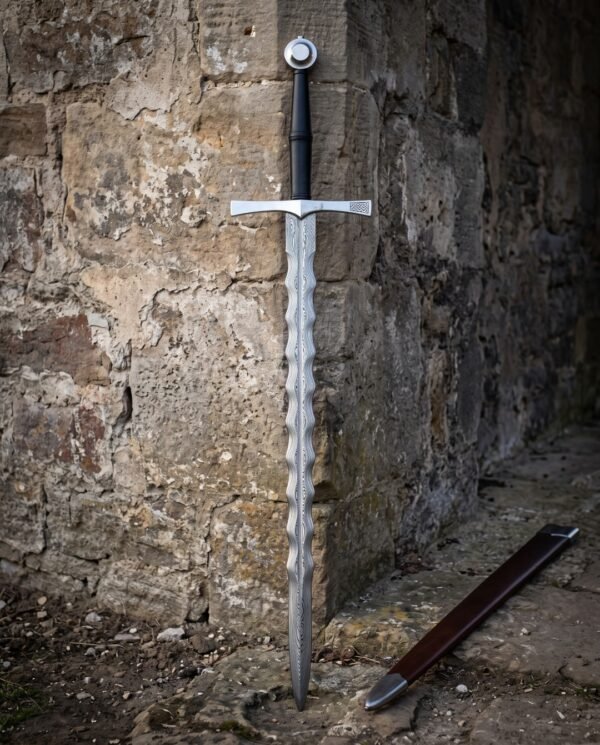
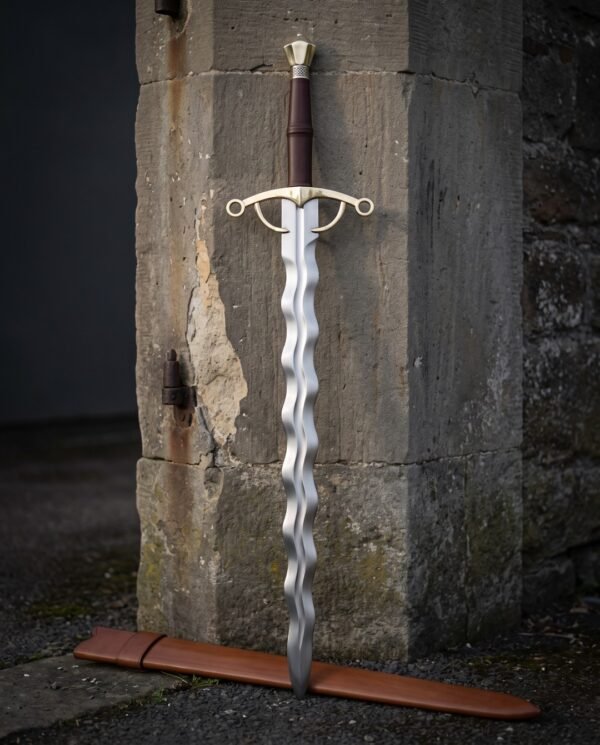
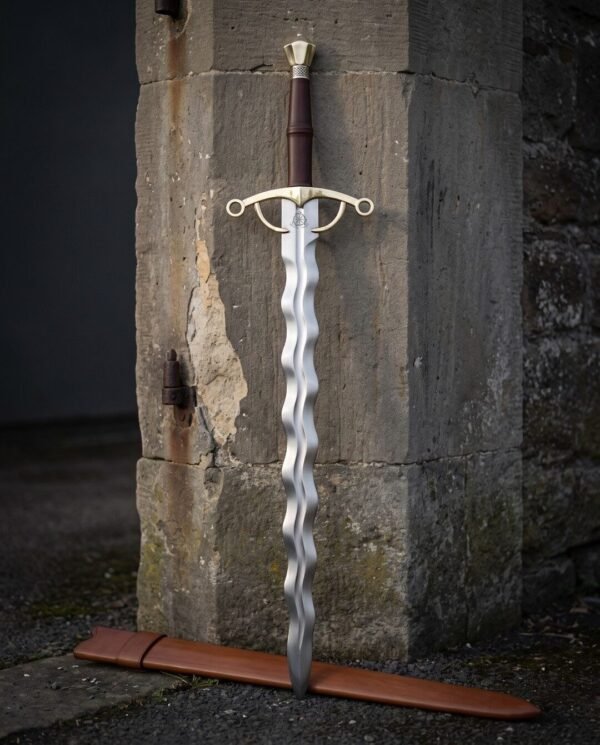
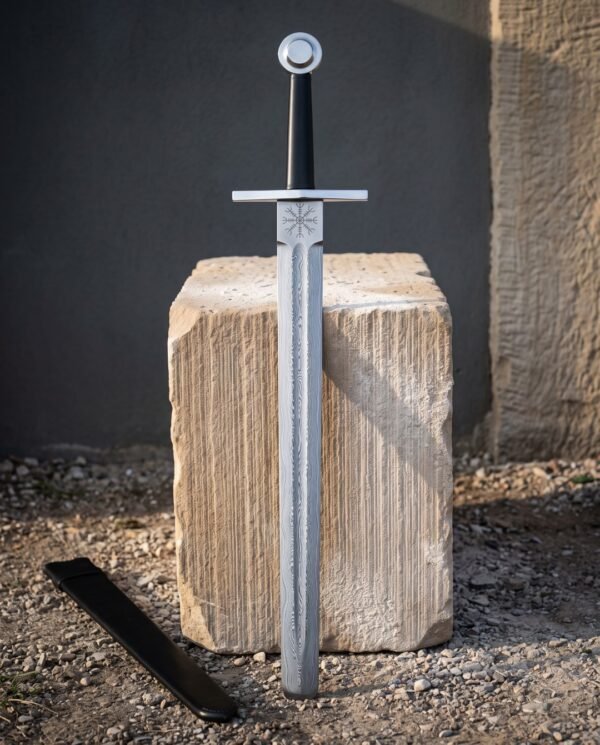
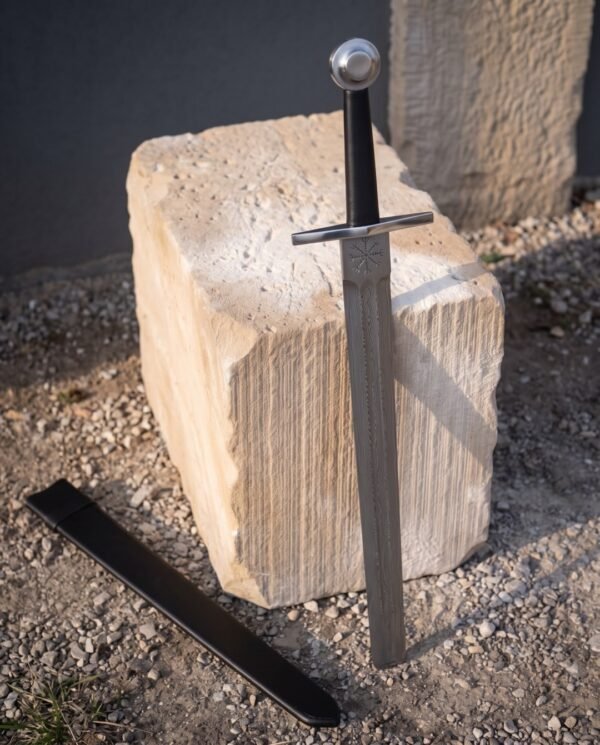
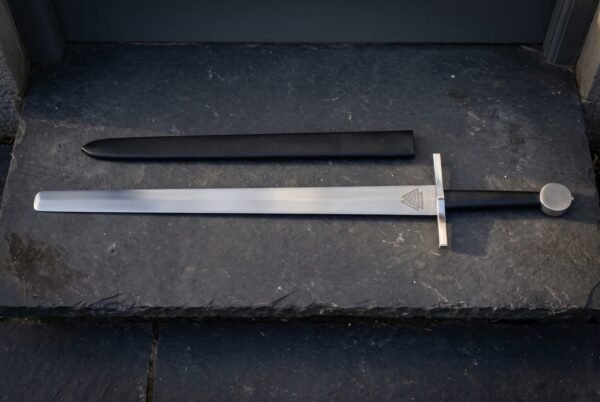
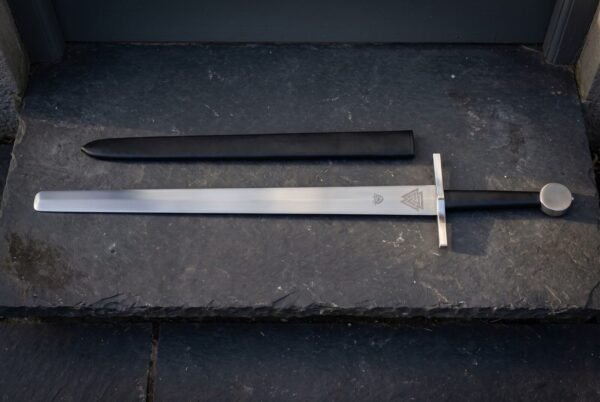
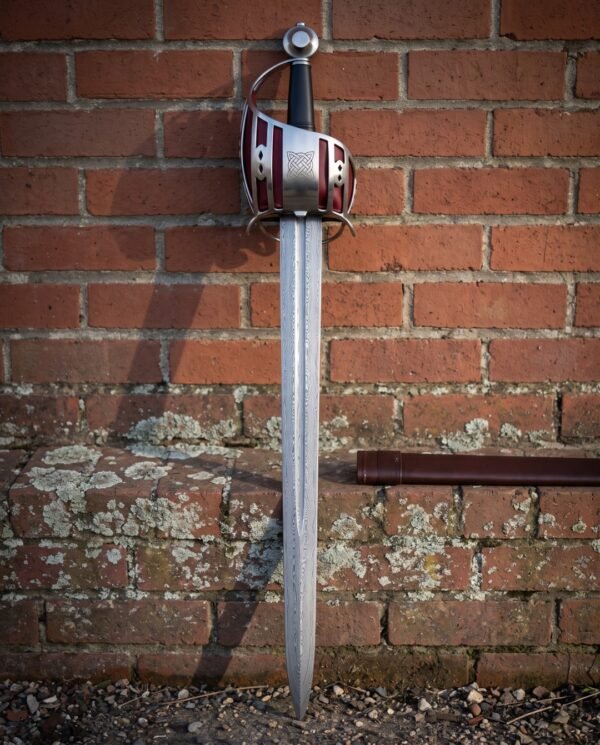
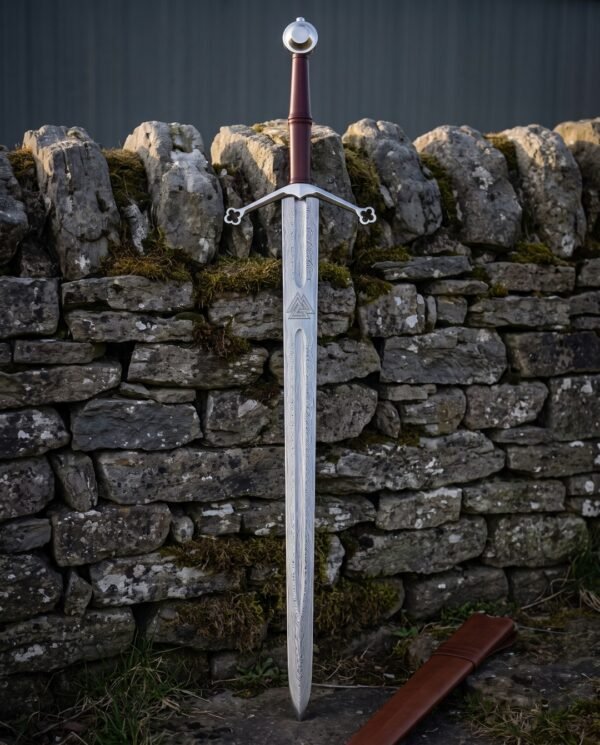
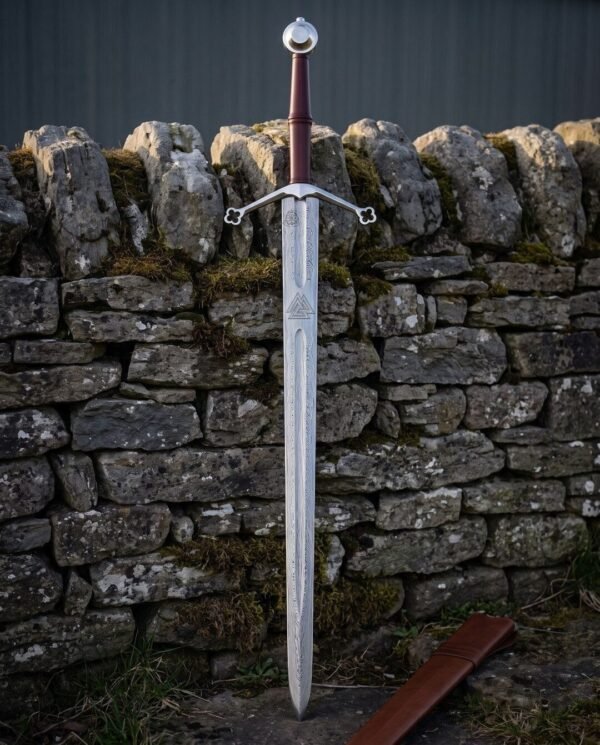
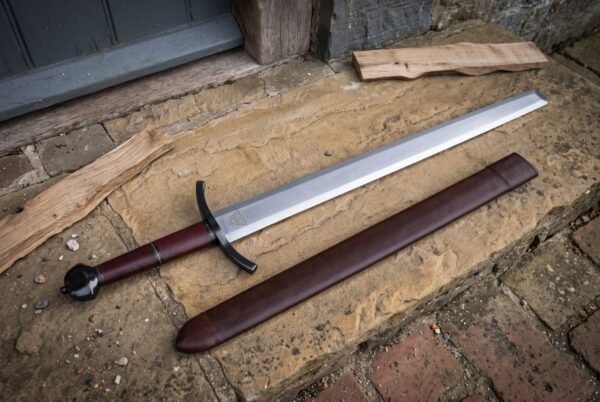
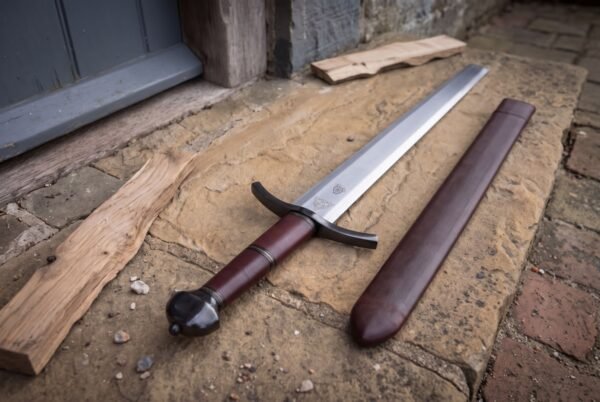
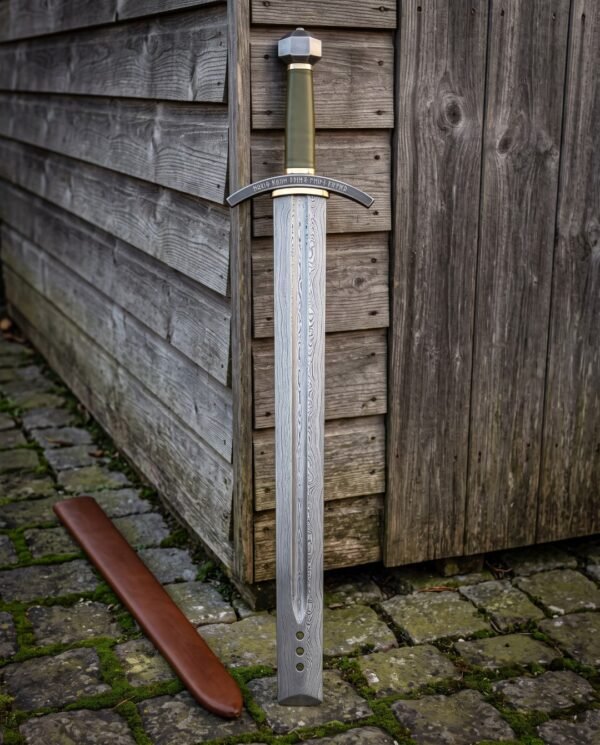
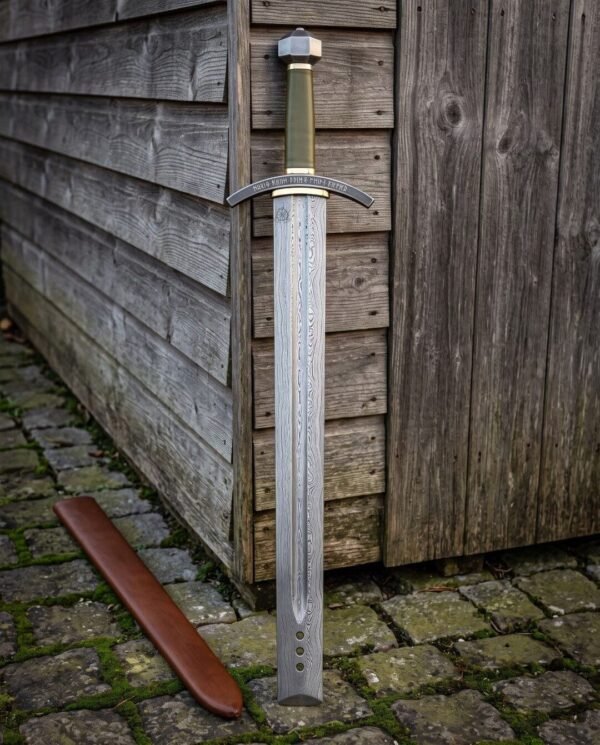
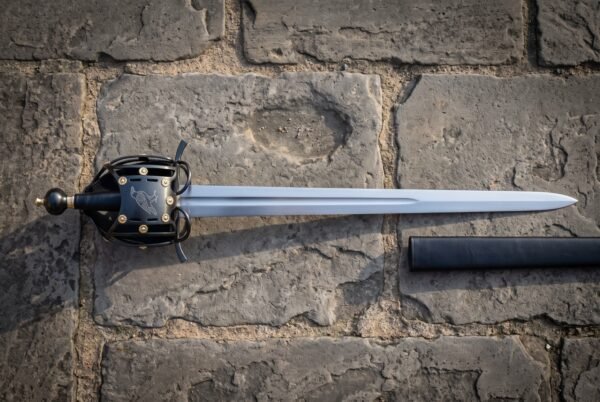
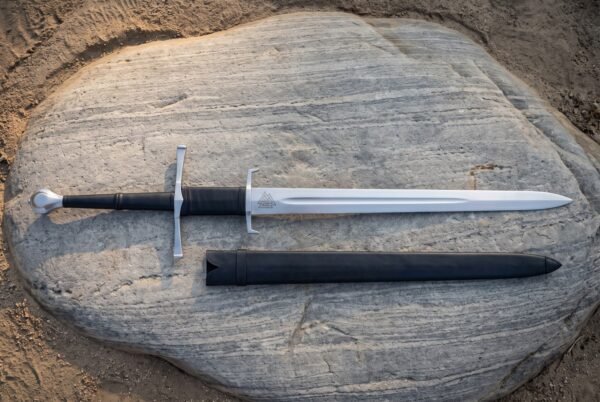
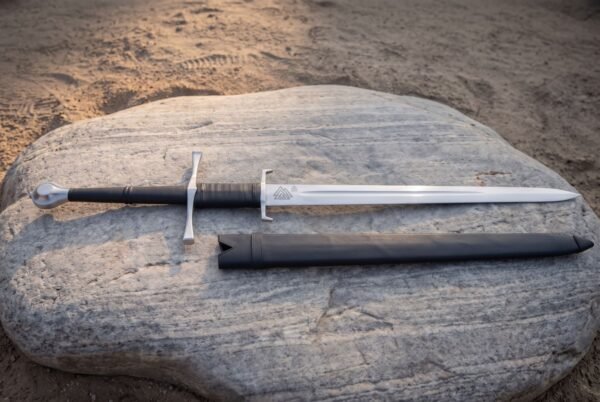
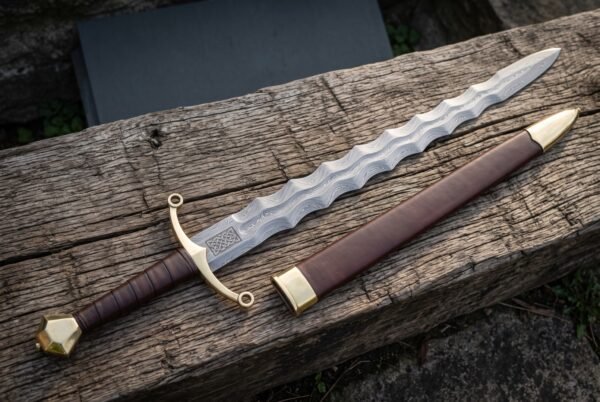
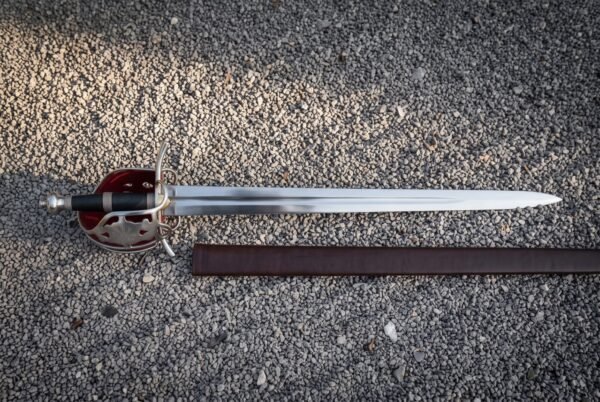
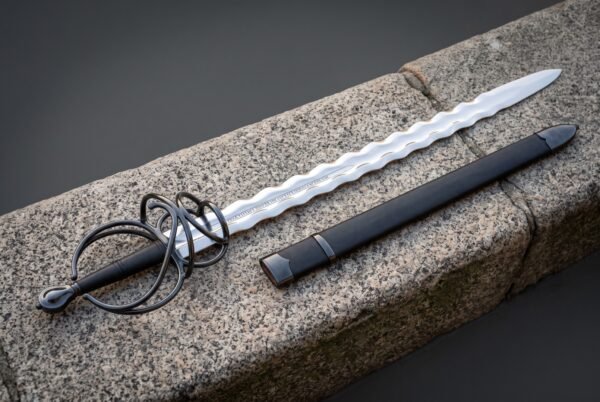
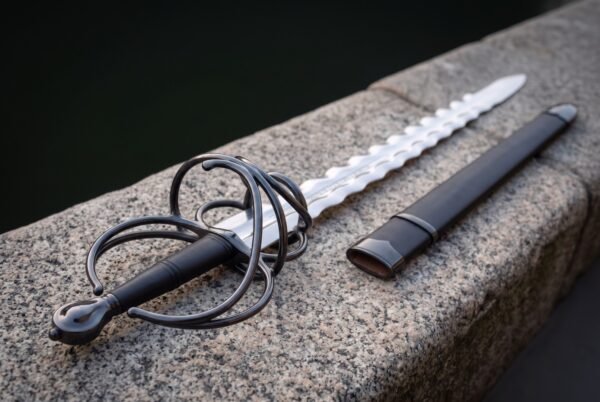
The Viking swords are broad, double edged and built to be used alongside a shield, which is why they are shorter than most people expect. The Damascus swords take that same geometry and carry the pattern the length of the blade. Everything later than the Norse, meaning arming swords, longswords, messers, rapiers, katana and the film blades, sits in the wider sword collection. Settle the length first. Overall length is the number that matters, not blade length, because that is what has to fit the wall and the box. Anything over 44 inches ships oversized.
Norse Arms
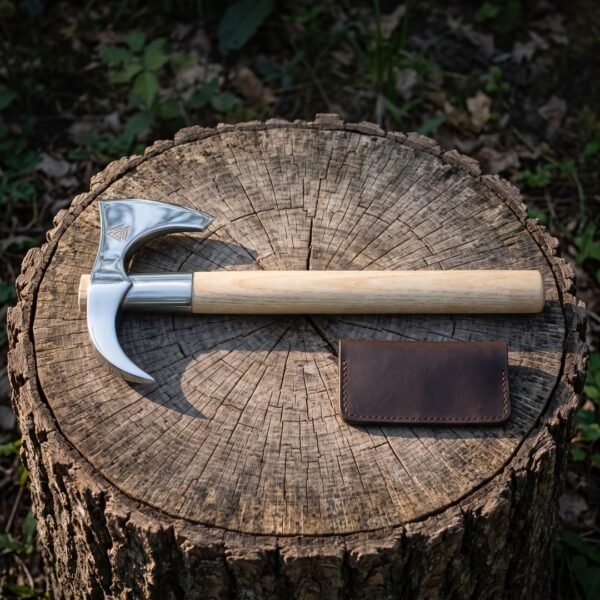
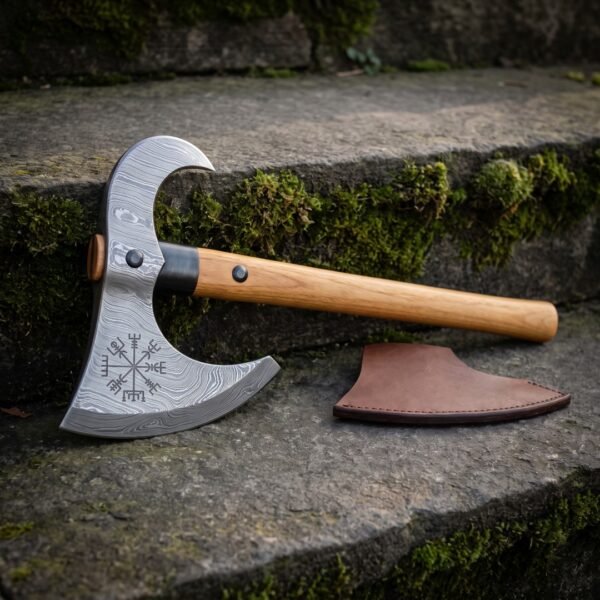
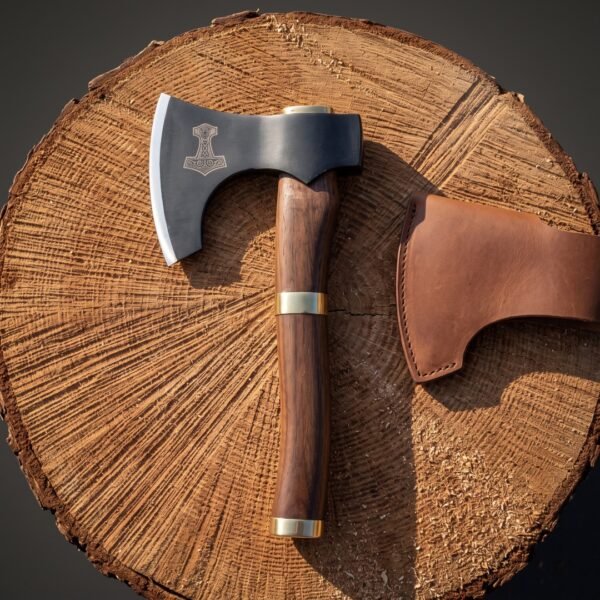
Viking axes is the busiest door on the site and probably the reason you are here. Inside Norse Arms the axes split by head shape. A bearded axe has the long lower beak that lets you choke up behind the edge for fine work. Battle axes are heavier through the eye, and Dane axes are the two handed version that wants floor space. Spears, maces, polearms and the Thor hammers sit in the same group, because they are all steel on wood and all ship in a long box. Between an axe for a wall and an axe for a woodpile, head weight and haft length decide it, not the pattern on the steel.
Viking Armor
Viking Armor holds the mail, the plate, the lamellar, the gambesons and every helmet on the site, plus the shields. The round shields are the Norse answer and the ones that hang best above a fireplace; kite shields and bucklers cover the centuries after. Fit matters more here than anywhere else, because a helmet that is nearly right is a helmet you wear once. Measurements and steel gauge are on every listing, and a tape measure round the head above the ears takes ten seconds.
Damascus Steel Jewelry
Same billets, much smaller pieces. The Mjolnir pendants are what most people come for; the rings and bracelets are what they still wear a year later. The etch is real, so the pattern runs through the metal rather than sitting on top of it, and it goes flat and grey if you wear it in a shower. A wipe and a smear of oil keeps it dark. Arm rings, torcs, beard beads and the plain Norse pendants sit in the same group.
Gifts and Gear
The practical end of the catalogue. Engraved and personalized pieces make up the largest group in the shop, because most things bought as gifts here end up with a name or a date on them. Wedding and groomsmen gifts is the same idea with a fixed date attached, so order earlier than feels necessary. Drinking horns, tankards, rune sets and hnefatafl boards sit alongside the stands, scabbards and spare hafts in accessories, which is the drawer everything else goes in.
How to choose: steel, size and handle
There are two steels in this catalogue and no others. Plain 1095 is about one percent carbon in iron with nothing else added that changes how it behaves, run at 54 to 58 HRC. It takes a very fine edge, comes back on a stone in minutes, and rusts if you leave it wet. That is the whole trade. Damascus is 1095 and 15N20 forge welded and acid etched, run harder at 58 to 60 HRC. The two alloys etch at different rates, which is where the pattern comes from, so it runs through rather than sitting on the surface. It holds an edge a little longer and wants the same oiling. The steel and hardness page sets out the reasoning at length, and the comparison guide puts the two side by side if you want the short version.
Size next. Three to five inches of blade is a knife you carry and use daily. Seven to eight inches is camp and field size, and it wants a belt rather than a pocket. Past that you are into sword territory, where the number that counts is overall length.
Handles last, and this is where most of the regret happens. Stag horn, buffalo horn and bone look best in photographs and forgive a wet hand least. Rosewood, walnut, olive and ash are the sensible choices and take an oil finish well. Micarta and pakka wood ignore weather entirely, so pick one of those if the piece lives outdoors. Every listing names its handle, so read it before the photograph decides for you.
Engraving
Almost everything here can be cut with a name, a date or a mark, in the United States, after the piece has landed and passed inspection. That is why it adds days rather than weeks. Text is 19 dollars. A symbol is 39 dollars, and the set covers the runes of the Elder Futhark along with the valknut, the vegvisir, Yggdrasil and the helm of awe. A family crest, redrawn from whatever image you send us, is 49 dollars. The engraving page shows what fits on which piece and how much room a blade, an axe cheek or a pendant gives you. One warning worth reading twice: once an engraving is cut the piece cannot be sold to anyone else, so the window to change the text or cancel is 12 hours from purchase.
Where these come from, and how they reach you
Ransack Viking is a United States company based in Memphis, Tennessee. The pieces are handmade in the Czech Republic, by workshops that still work at the anvil and the grinder rather than on a line. We import them, inspect them in Memphis, and ship from the warehouse there. Engraving is cut in the United States after arrival. We do not run a forge and have never claimed one, and the country of origin page sets out which stage happens where, because a lot of shops in this trade stay vague about it.
Because the stock is already in the country, a United States order clears no customs and pays no import duty. Processing runs one to two weeks while the piece is inspected and oiled, then three to seven days in transit, tracked. Shipping inside the United States is free on most pieces and 49 dollars on the heavy ones, meaning the longer swords and the hammers. Oversized items, meaning polearms, spears, shields, armor and swords over 44 inches, are 69 dollars at home and 90 abroad. The order and shipping page carries the full table and the timeline. Outside the United States the rate is a flat 69 dollars per order however many pieces are in it, with duty and VAT paid by us, and the worldwide shipping page explains what duty paid means at your door.
Questions people ask before they buy
Should I buy plain 1095 or Damascus?
Both are the same family of steel and both need oiling. Plain 1095 runs at 54 to 58 HRC, takes a very keen edge and comes back on a stone in minutes. Damascus is 1095 and 15N20 forge welded and etched, run at 58 to 60 HRC, so it holds an edge a little longer. If the piece is going on a wall, buy the pattern. If it is going in a pack, buy the plain.
Will these blades rust?
Yes, if you let them. There is no chromium in either steel, so a blade left wet shows grey or orange spots by morning. That is the composition, not a fault. Wipe it dry, oil it lightly, and it darkens into a patina instead.
How long does an order take?
Processing runs one to two weeks, then three to seven days in transit inside the United States, tracked. Engraving adds a few days, because it is cut after the piece has passed inspection.
Do I pay import duty?
No. Stock is already in the United States, so a domestic order clears no customs. On international orders we pay the duty and the VAT ourselves, so nothing is owed at the door.
What can be engraved, and what does it cost?
Text is 19 dollars. A symbol, meaning a rune, a valknut, a vegvisir or the helm of awe, is 39 dollars. A family crest redrawn from an image you send is 49 dollars. The engraving page lists what fits where.
Which handle should I pick if the piece goes outdoors?
Micarta or pakka wood. Neither cares about damp. Rosewood, walnut, olive and ash are the sensible timber options. Stag horn, buffalo horn and bone photograph best and forgive a wet hand least. Every listing names its handle.
Can I send something back?
You have 7 days from delivery to return a piece you changed your mind about, and a lifetime warranty against a defect in the forging, the grind, the heat treat or the fittings. Engraving is the exception: once cut, the piece cannot go to anyone else, so the window to change it is 12 hours from purchase.
If that did not settle it, the guides cover steel, fit, care and knife law at length, and the returns and lifetime warranty page says what happens if the piece turns out to be the wrong one.
Every collection
- Engraved & Personalized
- Swords
- Norse Arms
- Damascus Swords
- Damascus Knives
- Arming Swords
- Viking Swords
- Viking Axes
- Viking Knives
- Viking Armor
- Hunting Knives
- Short Swords
- Fantasy & Movie Swords
- Katana & Japanese Swords
- Wedding & Groomsmen Gifts
- Longswords
- Bearded Axes
- Viking Home Decor
- Kukri Knives
- Dagger Knives
- Folding Pocket Knives
- Bowie Knives
- Damascus Steel Jewelry
- Viking Seax
- Medieval Helmets
- Viking Shields
- Wakizashi
- Viking Spears
- Glaives & Polearms
- Damascus Skinner Knives
- Plate Armor
- Viking Helmet
- Rapiers
- Battle Axes
- Chef Knives
- Round Shields
- Flamberge Swords
- Scimitars
- Leather Armor
- Anglo-Saxon & Celtic
- New Arrival
- Kite Shields & Bucklers
- Gladius
- Norse Pendants
- Maces
- Blacksmith Tools
- Scabbards & Sheaths
- Broadswords
- Viking Hammers
- Tanto Knives
- Halberds
- Basket & Shell Hilt Swords
- Chainmail Armor
- Thor's Hammers
- Scale & Lamellar Armor
- Splitting & Felling Axes
- Roman & Greek Helmets
- Viking Rings & Bracelets
- Shield Bosses
- Viking Beer Mugs
- Cutlasses
- Messers
- Sabres
- Poleaxes
- Viking Belts, Buckles & Flags
- Drinking Horns
- Double-Headed Axes
- Dane Axes
- Tracker Knives
- Roman & Greek Shields
- Sword Stands & Displays
- Jian & Dao Chinese Swords
- Karambit Knives
- Runestones & Rune Sets
- Falchions
- Throwing Axes
- Medieval Axes
- Brigandine & Gambeson
- Fish Fillet Knives
- Hnefatafl & Viking Games
- Horn Mugs & Tankards
- Bastard Swords
- Throwing Knives
- War Axes
- Axe Handles & Hafts
- Tomahawks
- Arm Rings & Torcs
- Zweihanders
- Beard Rings & Beads
- Mjolnir Pendants
- Claymores
- Cowboy Bull Cutter
How a piece is made
Forged
Makers in the Czech Republic work two steels and no others. Plain 1095 high carbon at 54 to 58 HRC, or Damascus of 1095 and 15N20 at 58 to 60 HRC.
Hammered
Drawn out and shaped by hand in their forge. The Damascus is forge welded and acid etched, which is where the pattern comes from.
Fitted
Rosewood, ash, walnut, stag horn or wrapped leather grips set and finished before the piece leaves the bench.
Shipped
We import every piece, inspect it in Memphis, Tennessee, engrave it in the US if you asked for that, and ship it free. No import duty, no customs delay on US orders.
Put a name on it
Most pieces can be engraved with a name, a date or a line of Norse runes. It is the difference between a gift and a keepsake.