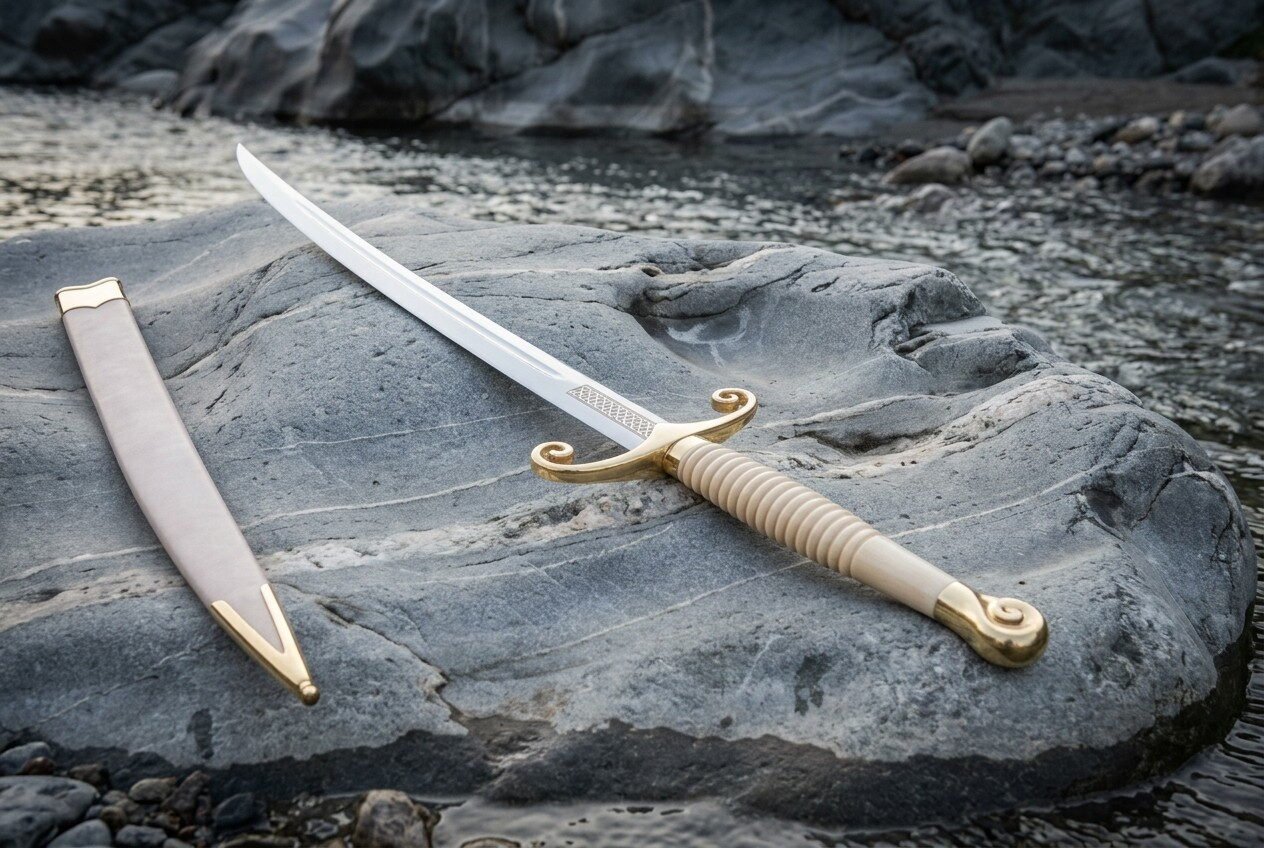
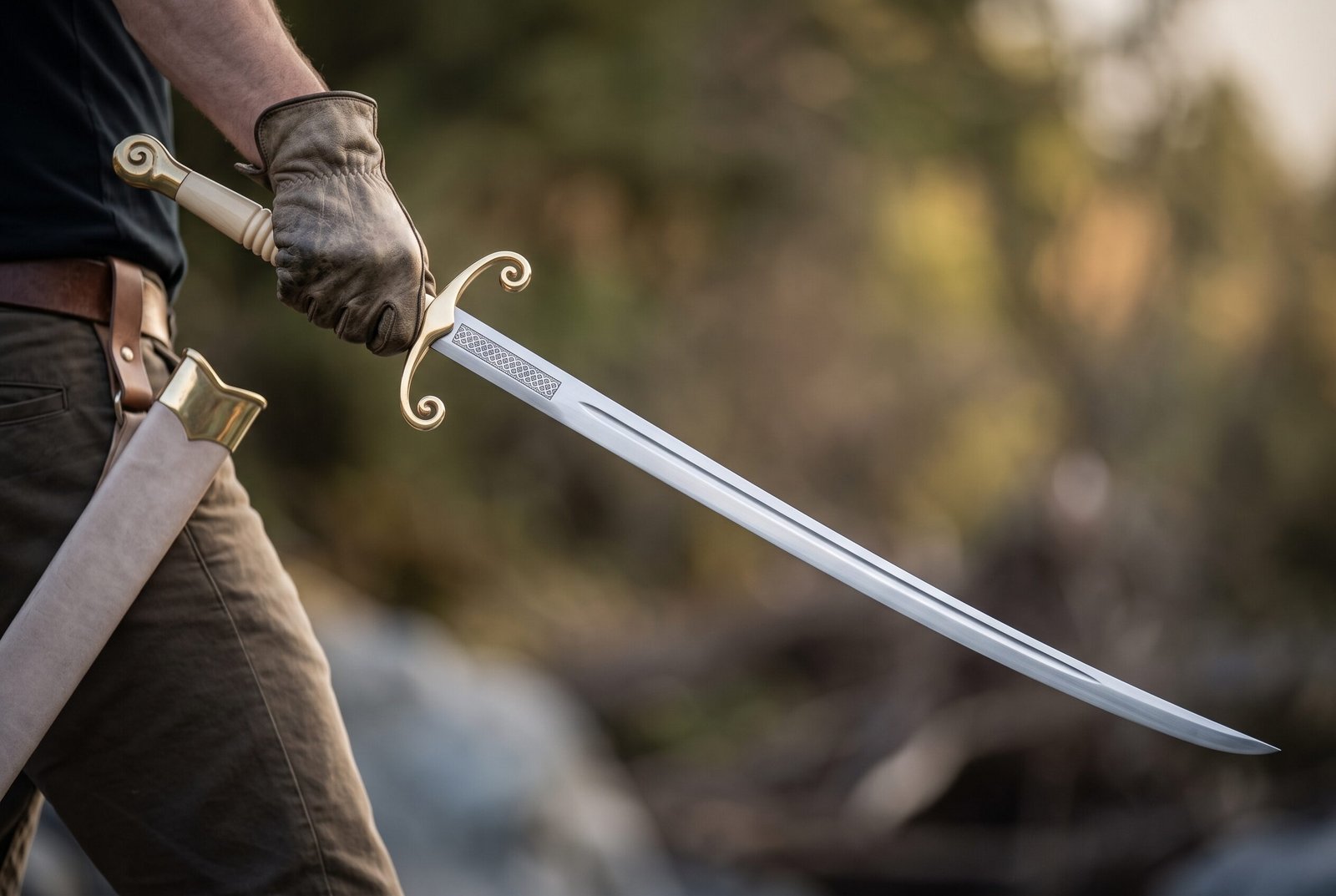
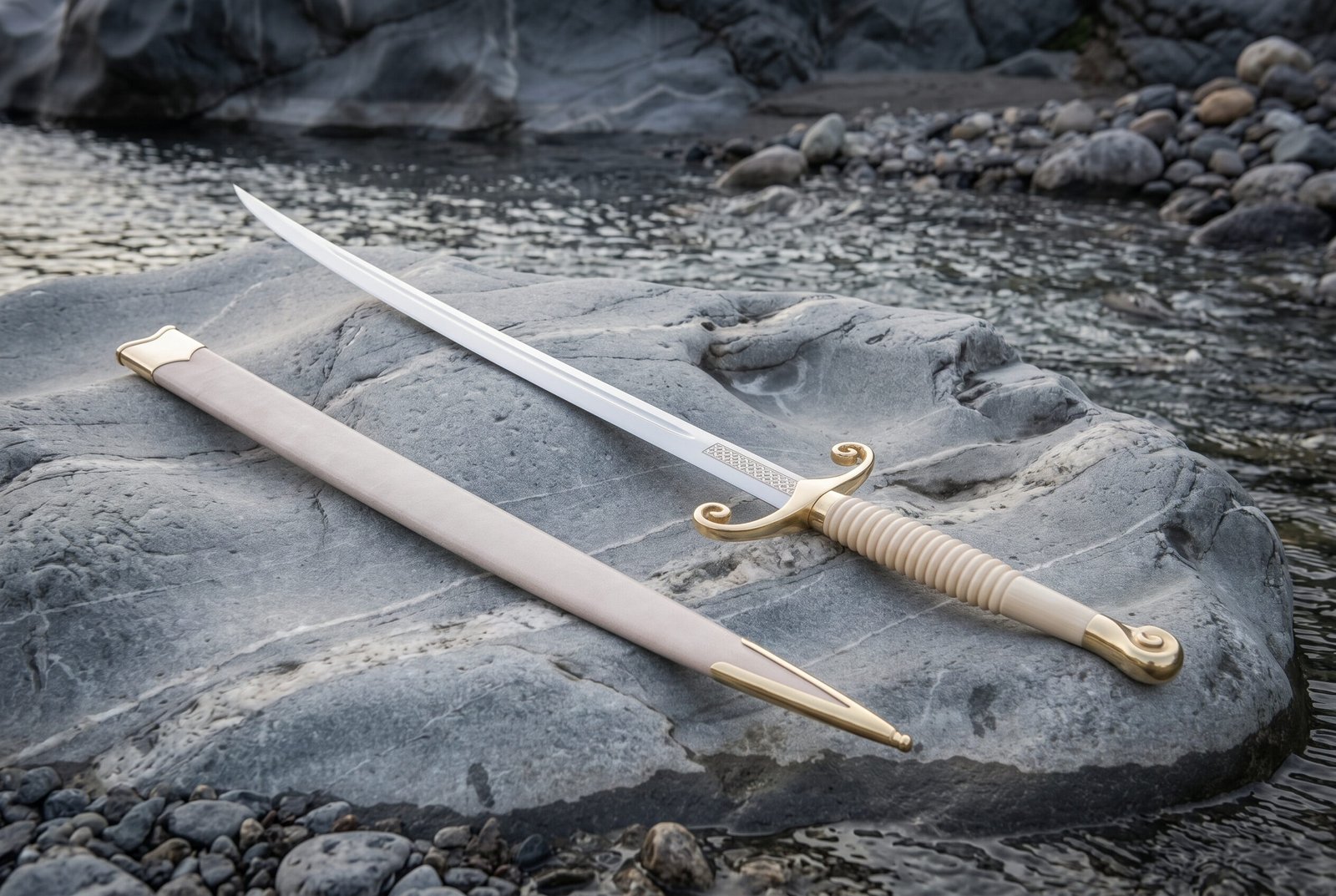
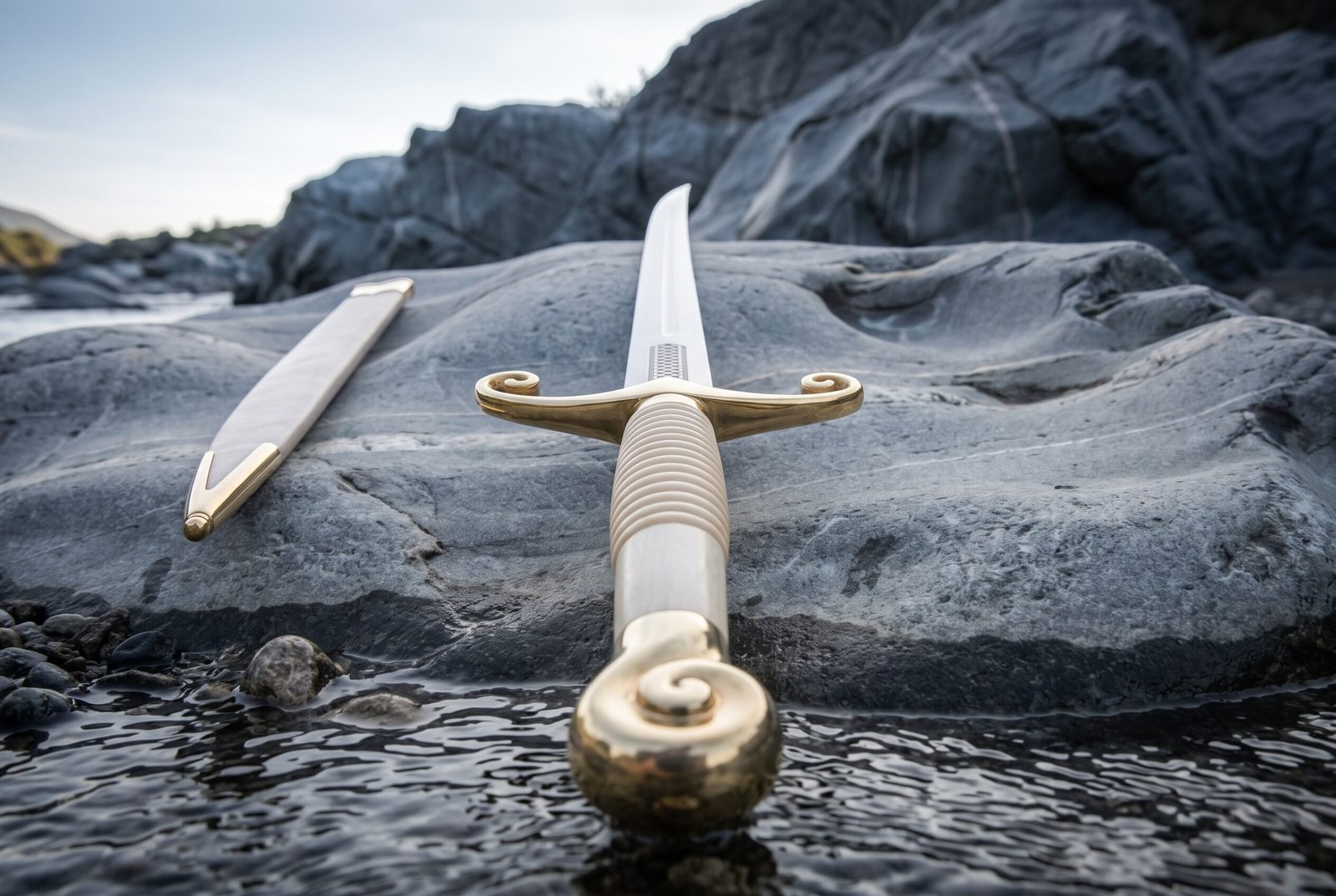
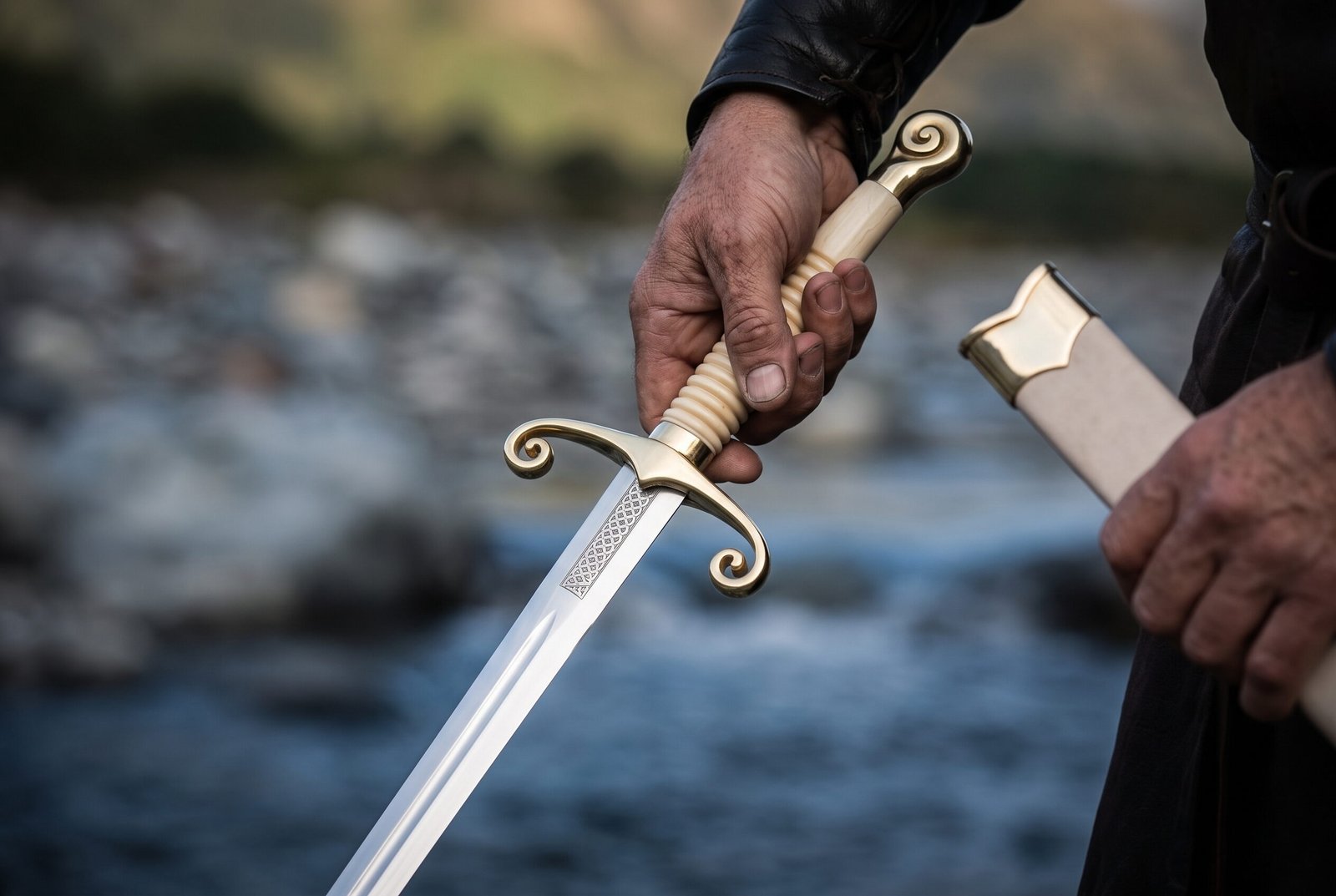
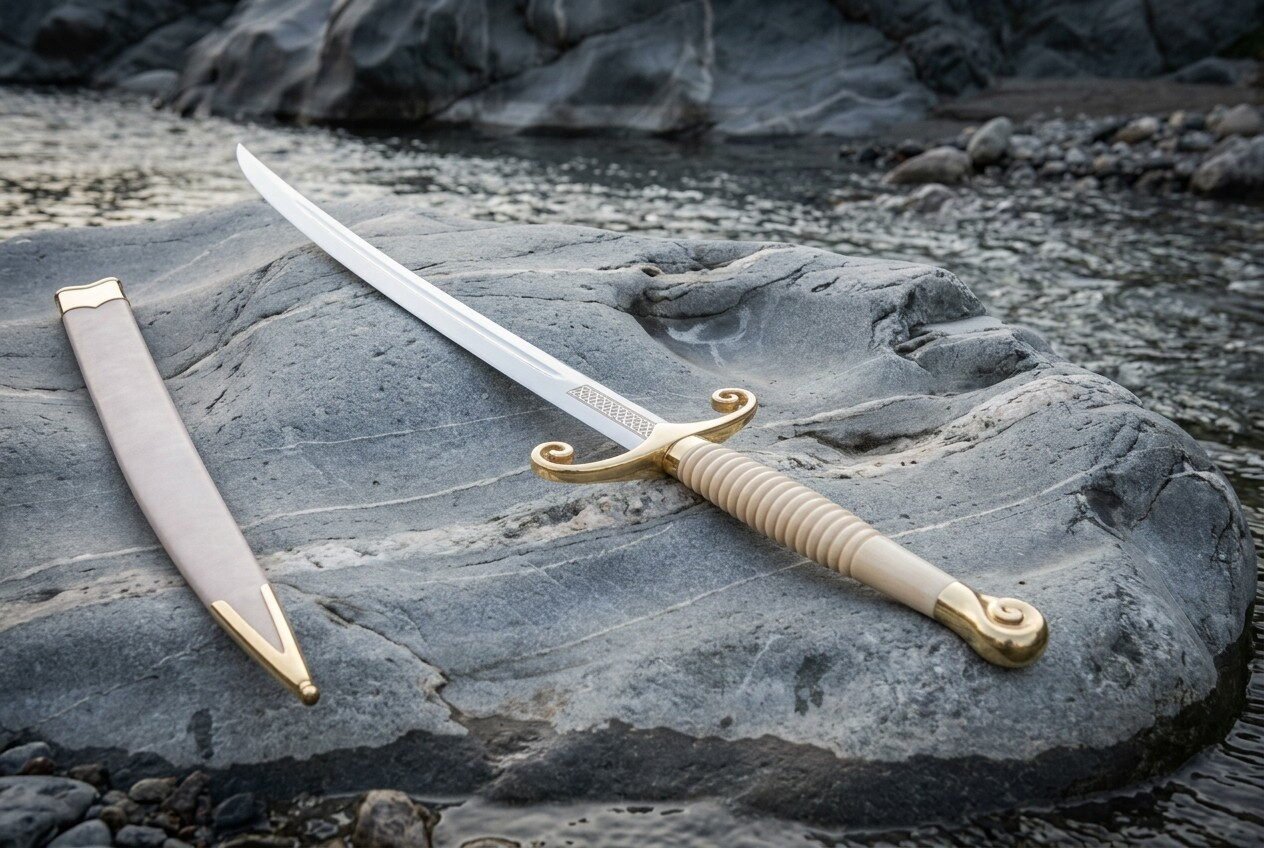
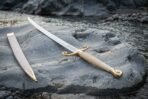
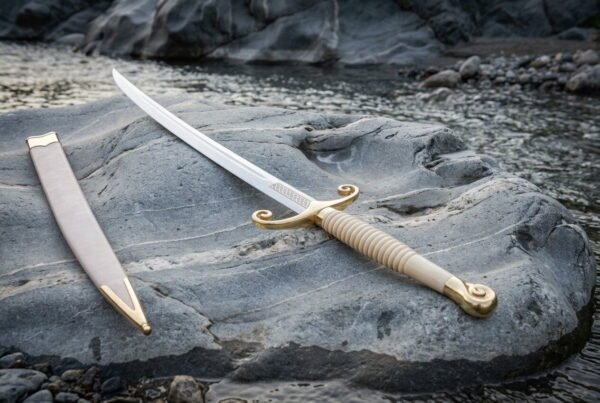
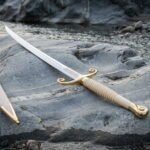
A light curved sabre with a dress hilt in polished brass. The blade is hand forged 1095 high carbon steel, single edged, with a long clean curve running out to a fine point and a narrow fuller along the spine. At the forte, just above the guard, there is a cross hatched panel of file work. The guard is brass with both quillons curving toward the blade and rolled into tight scrolls, the grip is ribbed in a pale bone tone, and the pommel finishes in a matching brass scroll. The scabbard is faced to match the grip and mounted in brass at throat and chape.
The scrolled quillon is a specific piece of European hilt vocabulary from the seventeenth and eighteenth centuries, when the sword had largely stopped being battlefield equipment for most of the people carrying one and had become a mark of rank. Hilts got lighter, more sculptural and much more expensive, and a smith who could roll a quillon into a clean tight scroll without cracking the brass was demonstrating exactly the skill the customer was paying for. This one is forged, ground, hilted and finished by hand in the Czech Republic. If the sword range brought you here, the Viking swords are the obvious next stop.
Specifications
| Blade steel | 1095 high carbon steel, hardened to 54 to 58 HRC |
|---|
| Blade profile | Single edged and curved to a fine point, narrow fuller along the spine, hand polished bright finish |
|---|
| Blade detail | Cross hatched file work panel at the forte above the guard |
|---|
| Guard | Solid polished brass, both quillons curving toward the blade and rolled into tight scrolls |
|---|
| Grip | Ribbed in a pale bone tone, seated between two brass ferrules |
|---|
| Pommel | Brass cap rolled into a scroll |
|---|
| Scabbard | Faced in the same pale bone tone, brass throat and pointed brass chape |
|---|
| Finish | Bright polished blade, hand polished brass fittings |
|---|
| Included | Sabre, matching scabbard, care card |
|---|
| SKU | RK-1799 |
|---|
Why a sabre is curved and what that does to a cut
Curve is the whole argument of a sabre. When a straight edge meets a target it lands along a long section at once and drives forward like an axe. When a curved edge meets the same target it touches at one point and then, as the arm continues, that contact point travels along the edge. The result is a draw cut, and a draw cut does far more damage for the same effort because the force is concentrated on a small patch that keeps moving into fresh material.
There is a second effect that gets less attention. A curved blade set into a straight grip means the edge does not point where your knuckles point, so the sword naturally presents its edge at a slight angle to the line of the arm. That is why a sabre cuts cleanly from the wrist while a straight sword of the same weight needs the whole arm behind it. It is also why the sabre survived into the age of gunpowder cavalry, when the rider had one hand on the reins and one pass to make.
1095 high carbon steel and the brass work
The blade is 1095, a plain high carbon steel of about one percent carbon, hardened to 54 to 58 HRC. A curved single edged blade is stiffer along its spine than a double edged one of the same weight, so the narrow fuller can be run right up near the back without softening it, and that takes weight out of the tip where a sabre least wants it.
The hilt is brass, not brass plate. Solid brass is soft enough to be forged and scrolled cold with careful annealing, it polishes to a warm gold rather than a hard yellow, and it develops a patina over years rather than flaking the way a plated finish does. The cross hatched panel on the forte is cut with a file rather than stamped, so the lines are shallow and slightly irregular in the way handwork always is.
Engraving, runes and your own design
Use the rune converter on this page to turn a name, a date or a short phrase into Elder Futhark and we will cut it into the steel, the leather or the wood. If you would rather have a Viking pattern than a rune line, choose your own design in the engraving option above the add to cart button and tell us where it goes. Where a piece already carries an engraved design, your chosen engraving replaces it rather than sitting alongside it. On a sabre the flat of the blade below the file work is the natural place for a line, and brass takes an engraving beautifully if you would rather have it on the guard. Full detail is on the engraving page.
Handling and balance
This is a light sabre and it feels it. The balance sits close to the guard, the blade is narrow through most of its length, and the whole sword pivots around the wrist rather than the elbow. The ribbed grip is cut so the hand indexes the edge without looking, which matters more on a curved blade than a straight one because a sabre delivered off edge does nothing at all.
It is a sharpened display and collector sabre. It is not sold for sparring and it should not be used for contact drills against another blade or against a person. Fencing sabre is done with a purpose built blunt.
Care
The blade is bright polished 1095, which is the least forgiving finish for carbon steel. Fingerprints will etch a permanent grey shadow into it if they are left overnight in a humid room. Wipe it down after every handling and keep a thin film of mineral oil on the steel. The brass needs the opposite treatment, in that it wants to be left alone. A warm patina is what brass is supposed to do. If you prefer it bright, a small amount of metal polish on a cloth brings it back, but polishing the scrolls repeatedly will eventually soften their crisp inner corners. Keep polish away from the grip. Do not store the sabre sheathed in a damp room. Our steel routine is under steel care.
Made in the Czech Republic
This piece is made by hand in the Czech Republic, in a workshop that still works the old way. The steel is forged, ground, heat treated and finished by smiths who learned the trade from the people before them, and the wood, horn and leather are cut and fitted by hand rather than pressed out on a line. That is also why no two pieces come out exactly the same.
Ransack Viking is a United States company. We import these pieces ourselves, check every one when it lands and ship from our warehouse in Chicago, Illinois. Engraving is done here in the United States after the piece arrives, so your runes or your own design go on before it leaves for you.
A note on handmade variation
This sabre is hand made, not machine made or bulk produced, so what arrives will not be a pixel for pixel copy of the photograph. The two scrolls are rolled by hand and their tightness will differ slightly from each other and from the picture. Brass varies in tone batch to batch and starts to warm the day it is finished, so yours may already read a shade deeper. The file work panel is cut freehand. The ribbed grip carries its own faint tool marks. The steel, the heat treat, the dimensions and the build are the same every time. The character is not. There is more on that in why a full tang matters, and in the gap between a display sword and a battle ready one if you want the background.
Frequently asked questions
Is the sabre sharp when it arrives
Yes. It comes with a hand put working edge along the curve. It is not a blunted display copy.
Is the hilt solid brass or plated
Solid brass. It is forged and scrolled rather than cast or plated, which is why it can be polished back repeatedly without any risk of a finish flaking.
Will the brass tarnish
Yes, and that is normal. Brass darkens to a warm gold over months. Leave it and it looks better with age, or bring it back with a light metal polish if you prefer it bright.
Can I use this for fencing practice
No. It is a sharpened collector and display piece. Sabre fencing uses a purpose built blunt with a flexible blade.
Does the scabbard match the grip
It does. The scabbard is faced in the same pale bone tone and mounted in brass at the throat and the chape so the whole piece reads as one set.
Can I have a name engraved on it
Yes. Use the rune converter on this page for Elder Futhark, or choose your own design. The blade flat and the brass guard both take an engraving well.
What is in the box
- Hand forged 1095 high carbon steel curved sabre with a bright polished blade
- Solid brass guard with both quillons rolled into scrolls, and a matching brass pommel
- Ribbed pale bone toned grip between two brass ferrules
- Matching scabbard mounted in brass at throat and chape
- Care card covering oiling, brass patina and storage
- Lifetime warranty against defects in forging, grind, heat treat and fittings
- Forged and finished in the Czech Republic
Explore the range
See the full sword range, the short swords, the scabbards and sheaths and the guides.
Other pieces in this group
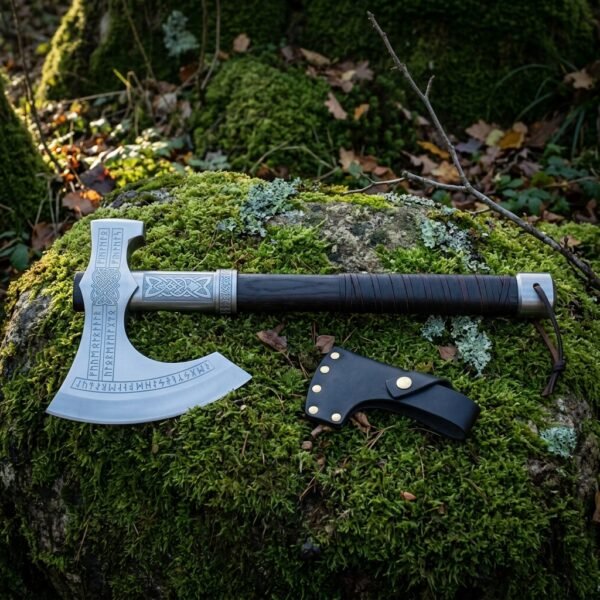
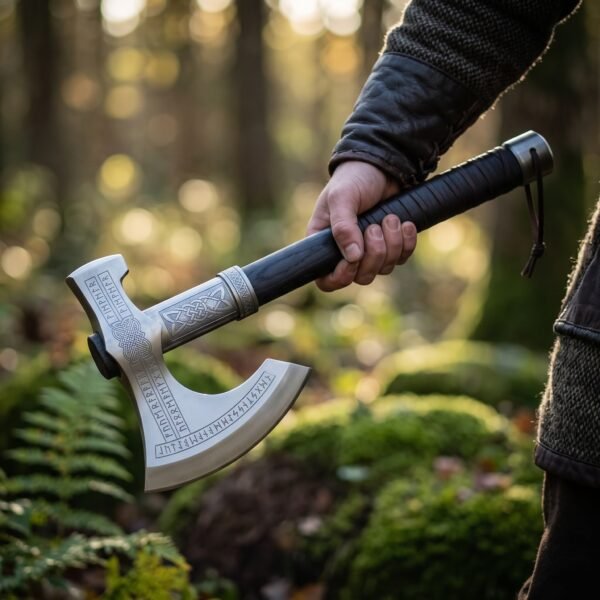
In the same category sits the Ravencleave Norse arms, 30 inches overall. A near match for this one is the Hickoryhawk tomahawk, high carbon steel. Closest to this in the range is the Grimhawk tomahawk, 14 inches overall.
Fitting out further, the Starthorn mace belongs with it. Nothing here exactly right, build one to your own spec on the custom Norse arms page.
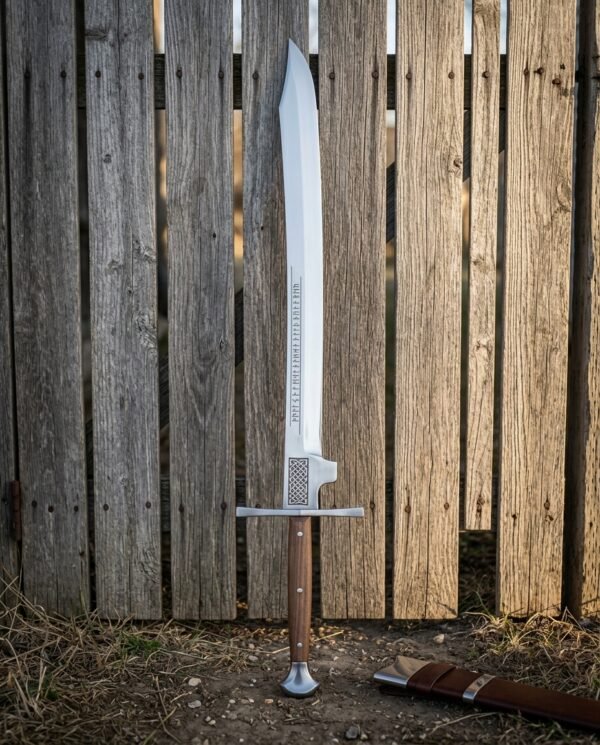
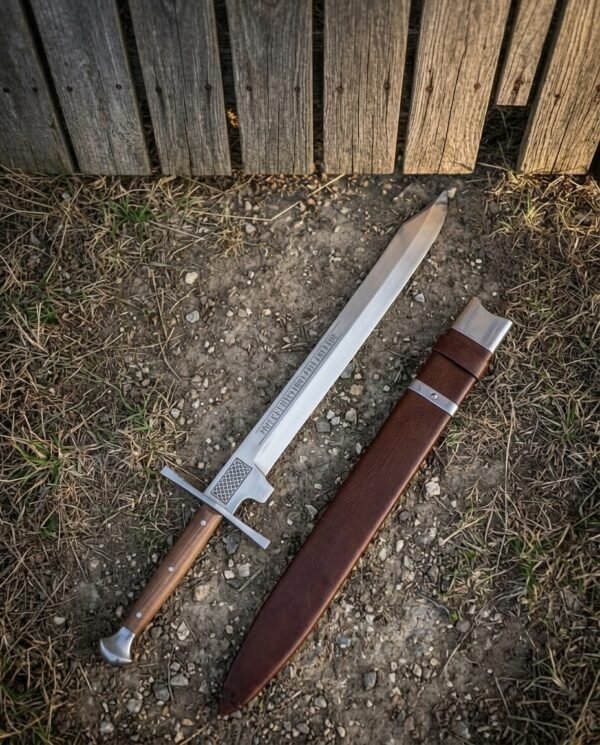
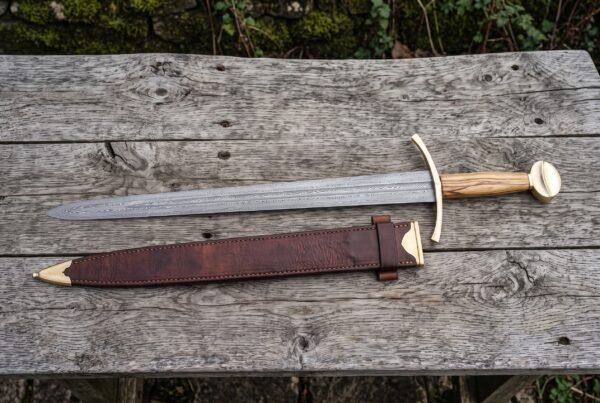
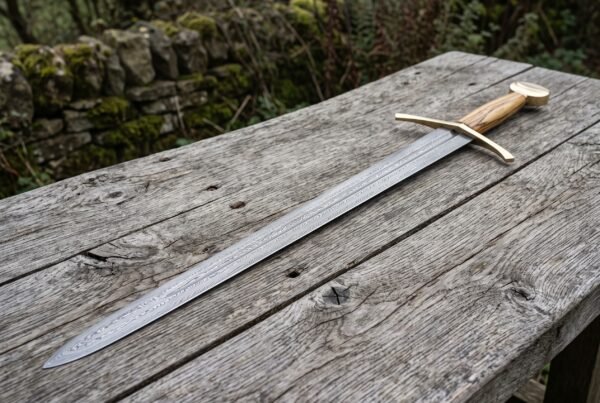
Photos don’t do this sword justice at all. Shipping was fast and everything arrived well packaged.
No regrets on this purchase at all. The bone handle feels amazing and the balance is perfect. Love it.
This is exactly what I wanted and then some. Ordered from Ransack Viking before and the quality stays consistent every time.