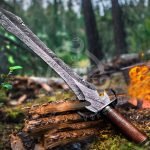
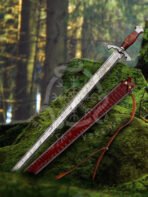
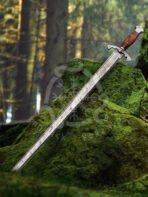
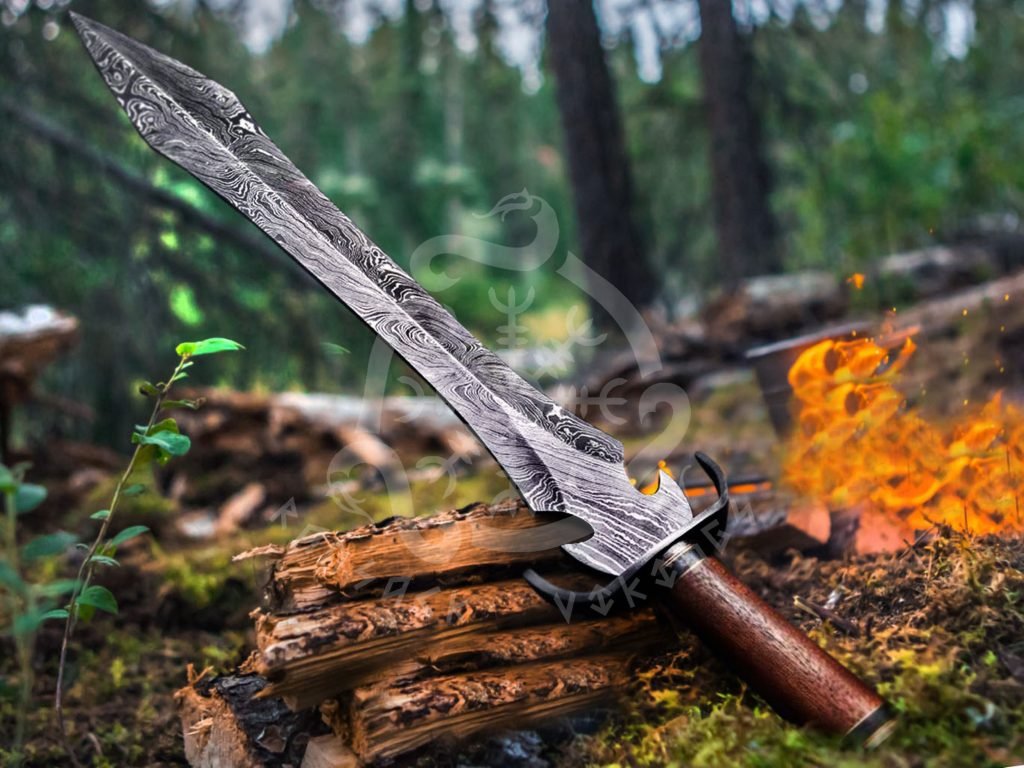
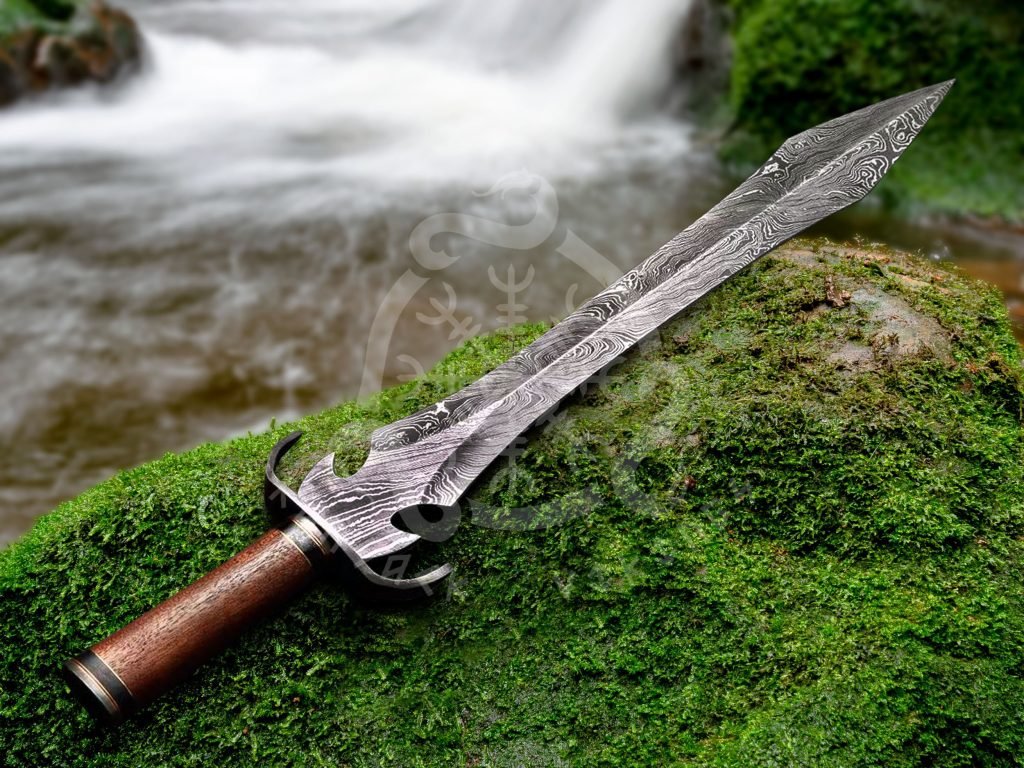
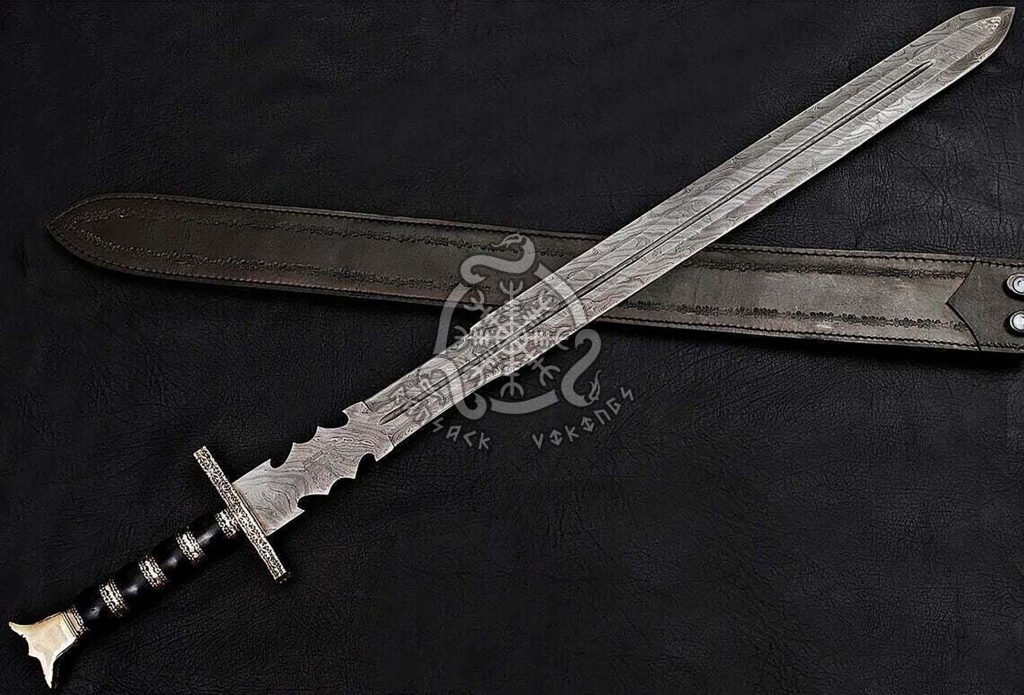
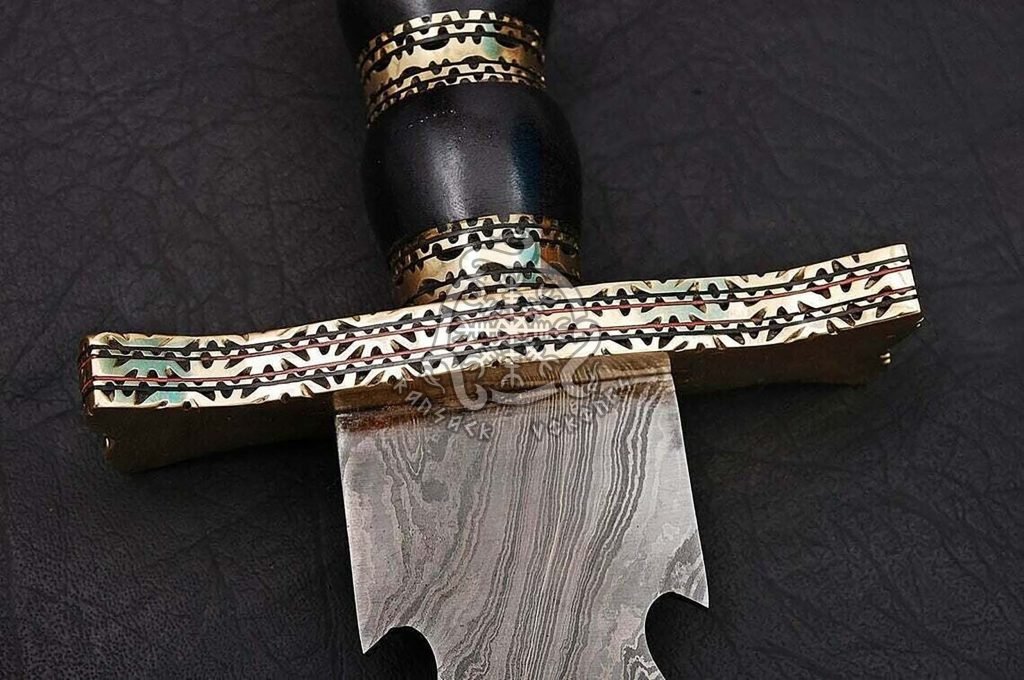
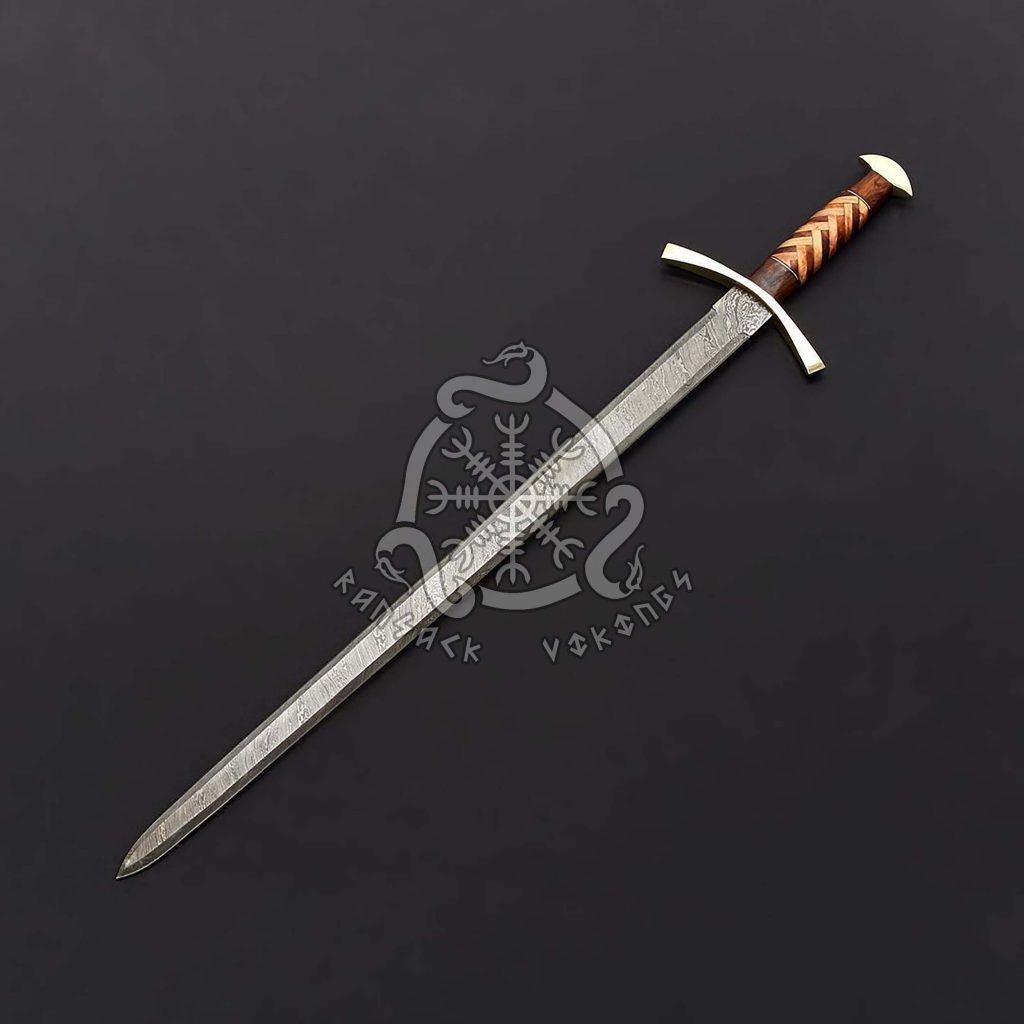
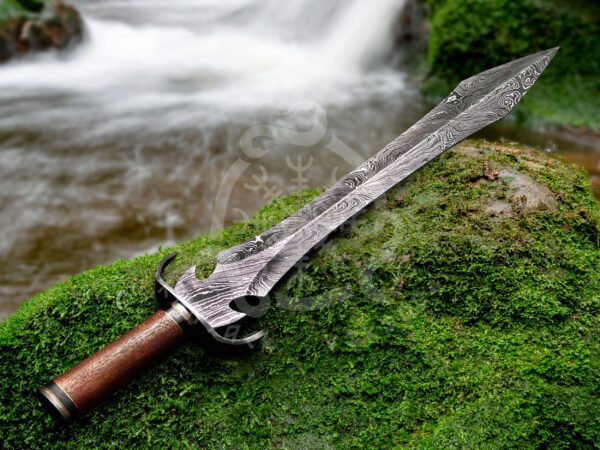
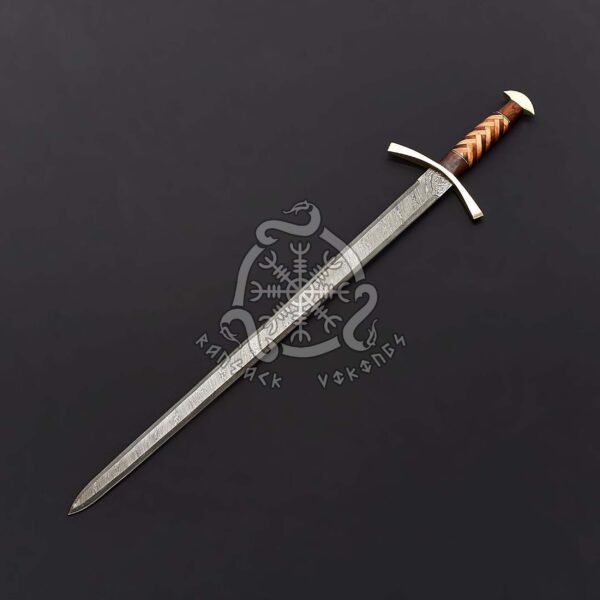
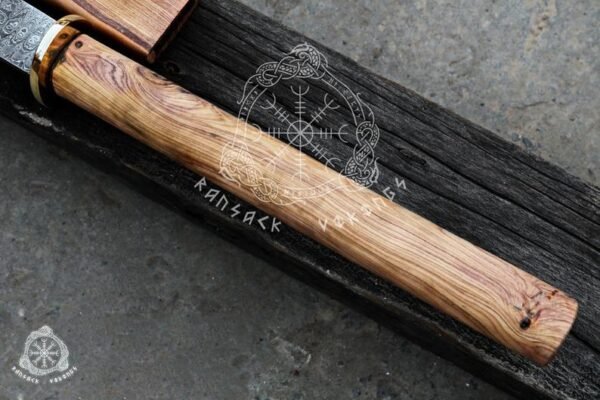
Thirty five inches overall, twenty nine of it blade, with a six inch rosewood grip and a bolster forged from the same Damascus as the blade. The Rosewarden is a Viking sword built to the proportions the originals were built to, and it is one of the few pieces in the range where the fittings and the blade are cut from related steel rather than dressed up with cast brass.
The Norse sword was a status object before it was a fighting blade. Iron was expensive and a pattern welded blade took a skilled smith weeks, which is why swords appear in a small fraction of Viking age graves while axes and spears appear in most of them. The design settled into a recognisable shape: a broad double edged blade with a wide shallow fuller running most of its length, a short thick guard, and a heavy pommel. The fuller is the clever part. Removing material from the centre of the blade, where it contributes least to stiffness, drops the weight without softening the edge or weakening the spine, and the pommel behind the hand then pulls the balance point back towards the grip. The result is a long blade that turns like a much shorter one.
This sword is forged and finished in the Czech Republic. The billet is welded here, the blade is drawn out and ground here, the heat treat happens here and the rosewood grip and Damascus bolster are fitted here. It ships as a bare sword in protective packaging, with no scabbard supplied.
Specifications
| Steel | Hand forged Damascus, 1095 and 15N20 |
|---|
| Hardness | 58 to 60 HRC |
|---|
| Overall length | 35 inches |
|---|
| Blade length | 29 inches |
|---|
| Handle length | 6 inches |
|---|
| Handle | Rosewood with Damascus steel bolster |
|---|
| Sheath | Not included |
|---|
| SKU | RK-677 |
|---|
Why the Viking sword is shaped the way it is
Look at a genuine Viking age blade and three things stand out. It is broad at the shoulder and it tapers gently rather than sharply, so the cutting power is spread along the length instead of concentrated at a point. It is double edged, because a sword used from a shield wall gets turned in the hand and there is no time to think about which side is up. And the guard is short and thick, because it exists to stop your hand sliding onto the blade and to take a blow, not to catch and trap another blade the way a later medieval cross guard does.
The six inch grip on this piece follows the same logic. Viking swords were single handed, used with a shield in the other hand, and the grip length reflects that. It is long enough to seat the whole hand with a little room behind the fingers for the pommel to sit, and short enough that the pommel stays where it needs to be as a counterweight. A longer grip would push the balance further back and turn the sword into something it is not. At twenty nine inches of blade the Rosewarden sits right in the historical band, where most excavated Viking blades fall between roughly twenty seven and thirty two inches.
Why Damascus and not stainless
The blade is forge welded from 1095 and 15N20, two real carbon steels bonded at welding heat and drawn out together. The 1095 is what hardens and holds the edge. The 15N20 contains nickel, which resists the acid etch and shows as the bright bands in the finished pattern. Hardened and tempered the blade sits around 58 to 60 HRC.
Stainless would remove the maintenance entirely, and that is the only argument for it here. What you would lose is the hardness, the edge retention and the pattern itself, because you cannot pattern weld a decorative billet out of stainless in the same way and get the same contrast. The trade is straightforward: this blade gives you a harder edge and real forge welded pattern, and in return it asks for a wipe of oil now and then. The full argument, and how to check that a pattern is forged rather than printed, is in Damascus versus stainless. For the Norse background, read about the Ulfberht swords.
Rosewood grip and Damascus bolster
Rosewood was chosen for weight and for grip. It is dense, naturally oily and it does not become slick when a hand warms up on it, which is more than can be said for a polished resin or a plain metal grip. It warms quickly, it takes a deep finish and it darkens slowly with handling rather than wearing through a coating.
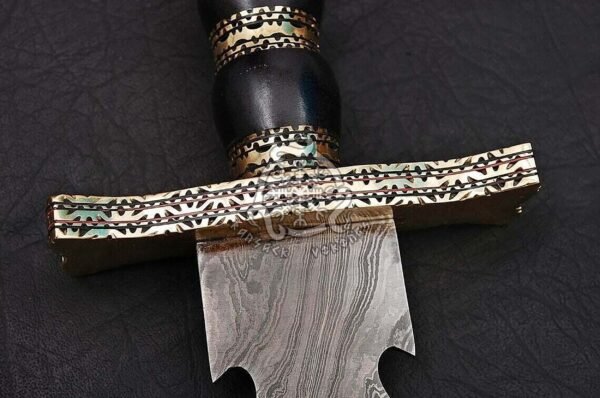
The bolster between grip and blade is Damascus, forged from the same class of billet as the blade, so the pattern carries across the join instead of stopping dead at a brass collar. That is a harder way to build a sword and it is the detail most people notice first when they pick it up. Being natural material, the wood needs feeding once or twice a year with a light oil to keep it from drying out and shrinking away from the bolster. The method is short and it is in wooden handle care.
Engraving, runes and your own design
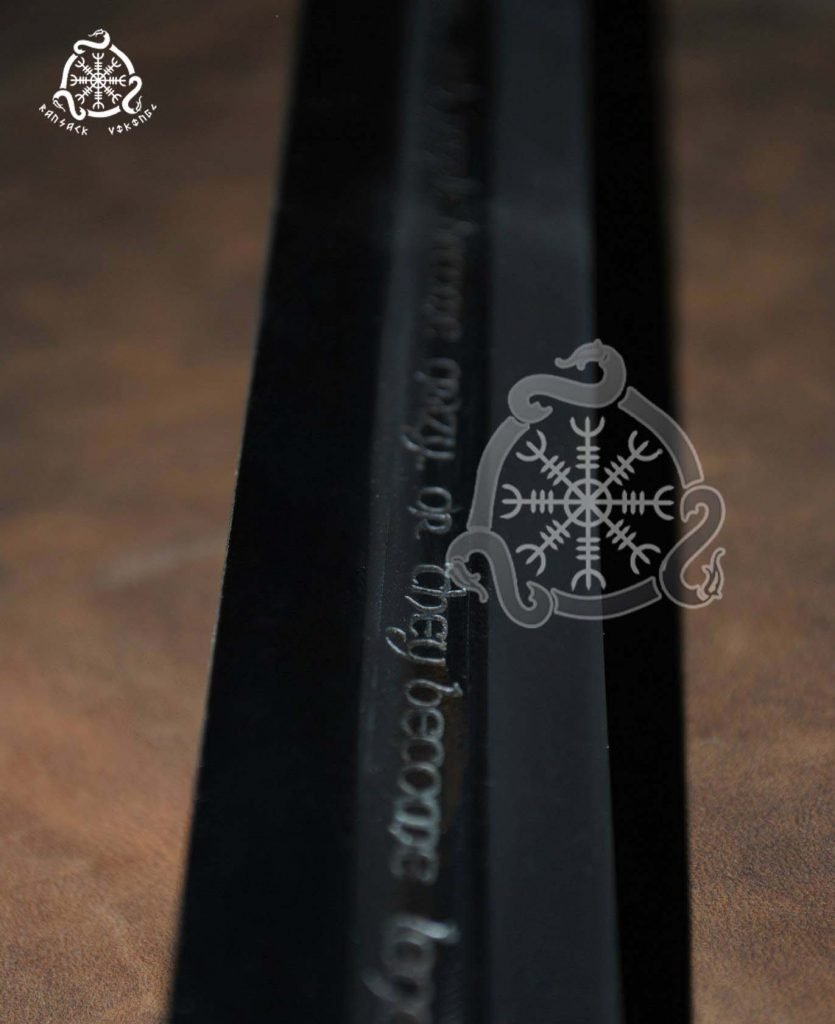
Use the rune converter on this page to turn a name, a date or a short phrase into Elder Futhark and we will cut it into the steel or the handle. If you would rather have a Viking pattern than a rune line, choose your own design in the engraving option above the add to cart button and tell us whether it goes on the blade or the handle. Where a piece already carries an engraved design, your chosen engraving replaces it rather than sitting alongside it. On a Viking sword the broad flat just below the guard is the traditional spot, which is exactly where the maker inscriptions sit on the historical blades. Layout and lettering options are on the engraving page.
Care and sharpening
Damascus is high carbon steel underneath the pattern, so it rusts if you let it. Wipe the blade after handling, because skin acid marks carbon steel within days. Before it goes on the wall or into a case, run a thin film of mineral or camellia oil over the whole blade with a cloth, and refresh it once or twice a year. Do not seal it in plastic, which traps moisture against the steel. Detail is in steel care.
The edge arrives set. Bringing it back is ordinary stone work: match the existing bevel, take overlapping passes from heel to tip until a burr forms along the full length, turn the blade and repeat, then strip the burr with light alternating strokes. A twenty nine inch blade simply needs more passes and a steadier hand than a knife does. The whole sequence is in sharpening with a whetstone.
Made in the Czech Republic
Every piece we sell is made by hand in the Czech Republic. The smiths there work the way the trade has been worked for a long time, heating and hammering the steel, taking the bevels down by eye, and fitting the handle and the leather one at a time. There is no automated line anywhere in it, so small differences from one piece to the next are normal and expected.
Ransack Viking is a United States company based in Memphis, Tennessee. We bring the pieces in ourselves, inspect them on arrival and ship them from our own warehouse. If you add engraving, that is carried out here in the United States before your order goes out.
A note on handmade variation
The Rosewarden is hand forged, not machine made or bulk produced, so the sword that arrives will not be a pixel for pixel copy of the photograph on this page. The Damascus pattern depends on how that individual billet folded and where in the bar the blade was cut, so it is unique to your sword. The rosewood grain and tone, the exact line of the taper and the finish on the bolster all vary a little. The dimensions, the steel and the build are the same every time. The character is not.
Frequently asked questions
Is a scabbard included?
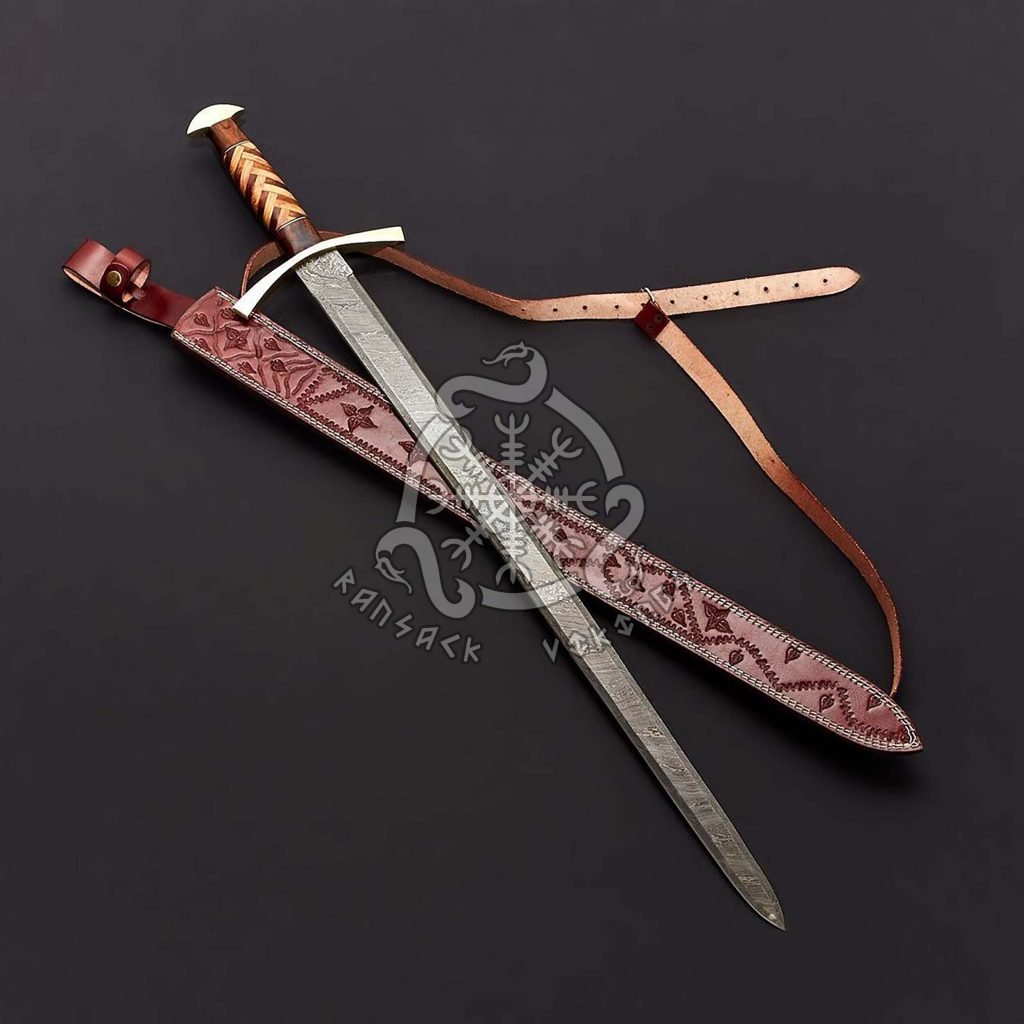
No. This sword ships bare in protective packaging. Anything fitted has to be cut to the individual blade, and blades vary slightly between pieces, so a shelf scabbard would not sit properly on it. Most owners use a wall bracket or a table stand.
Is the bolster really Damascus, or is it plated?
It is forged Damascus, from the same class of billet as the blade. That is why the pattern reads continuously from the grip end of the blade into the bolster instead of stopping at a plain collar.
How does it balance for its length?
Better than the length suggests. The blade is fullered and tapers along its length, and the fittings sit behind the hand, so the balance point stays close to the guard. It handles like a single handed sword should rather than like a wall hanger with a lump of steel at the end.
Will my sword look exactly like the photographs?
The size, the profile and the build will match. The Damascus pattern will not, because no two billets fold the same way, and the rosewood grain will be its own. That is what buying hand forged means.
Can it be engraved for a wedding or a retirement?
Yes, and it is one of the most requested pieces for exactly that. Run the name and date through the rune converter for an Elder Futhark line, or pick your own design in the engraving option and tell us whether it goes on the blade or the grip.
How do I stop it rusting on a wall?
Oil it and do not hang it in a bathroom, a basement or an unheated garage. A thin film of mineral or camellia oil, wiped over twice a year, is enough for a normal room. Fingerprints are the main enemy, so wipe the blade down after anyone handles it.
What is in the box
- One Rosewarden hand forged Damascus Viking sword
- Protective packaging
- Forged and finished in the Czech Republic
Explore the range
Sitting beside it in the catalogue: Viking Swords, Damascus Swords, Arming Swords and Norse Arms. The reasoning behind the steel, the fittings and the care routine is written up in the guides.




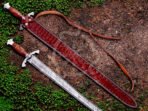



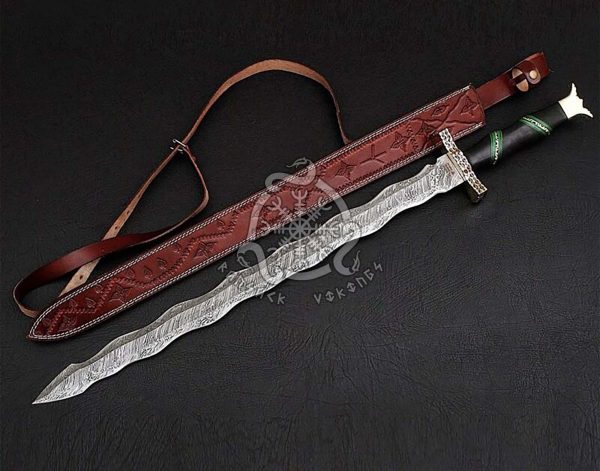
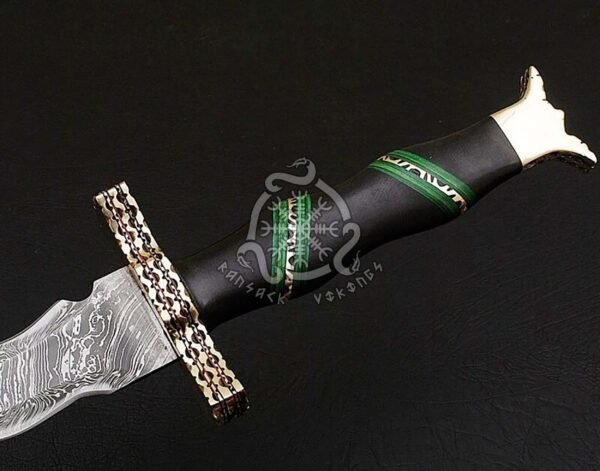

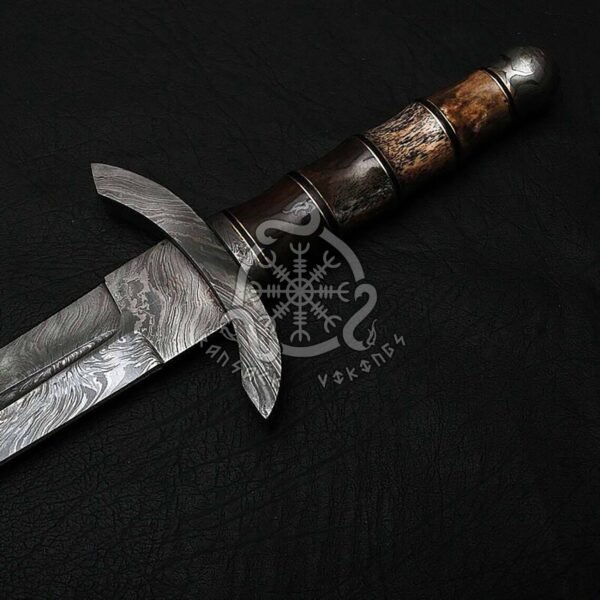



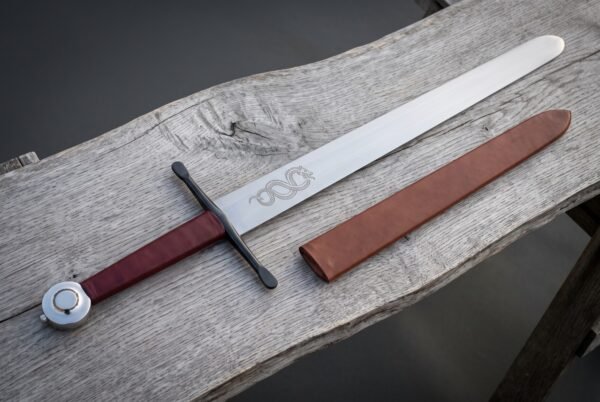
Can’t stop showing this off to everyone who comes over. Fit and finish is museum quality. You can tell real craftsmen made this by hand. Leather sheath is thick and well stitched. Not the cheap stuff you usually get. Weight and balance make it feel like a real functional piece not some cheap replica. Couldn’t be happier with this.
Feels way more premium than the price suggests. Leather sheath is thick and well stitched. Not the cheap stuff you usually get. Great buy overall.
My whole family was impressed when I unboxed it.
Five stars isn’t even enough honestly. This is going straight into my display case.
Best sword I’ve ever owned. Came in a nice gift box which made it feel even more special. This will be a family heirloom for sure.