A 1095 steel sword is made from plain high carbon steel with roughly nine tenths of a percent carbon and almost nothing else in it. No chromium, no vanadium, no marketing. It is the oldest simple recipe in modern steelmaking and it is still the standard for hand forged blades because it hardens predictably, takes a good edge and can be repaired by anybody with a forge.
The blades on this tag
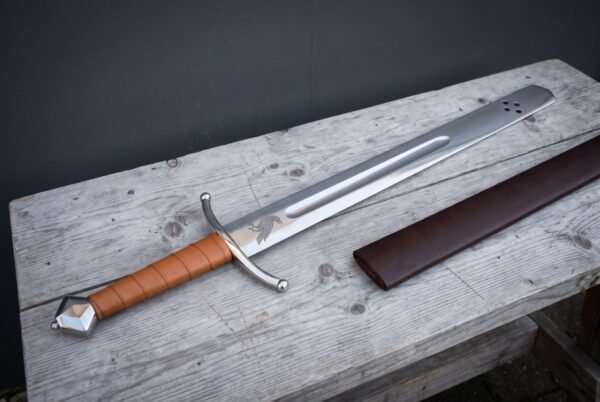
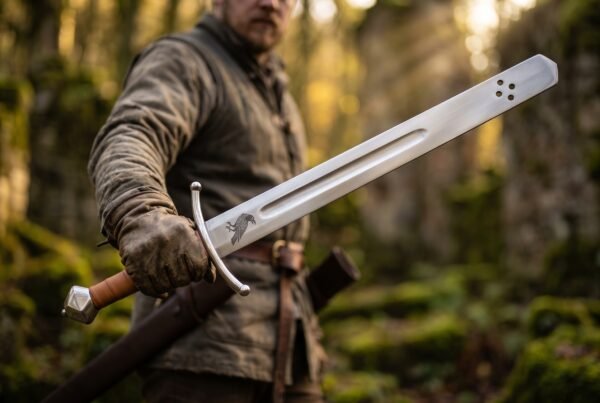
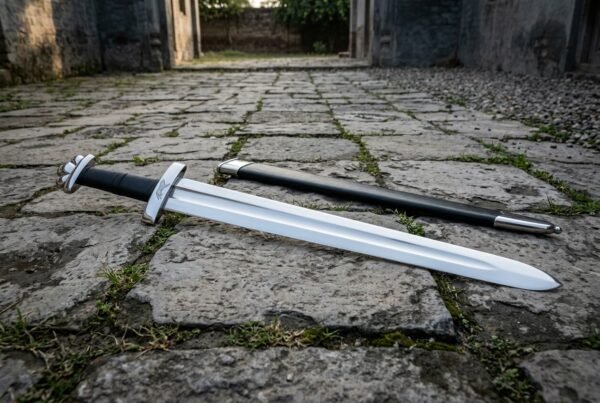
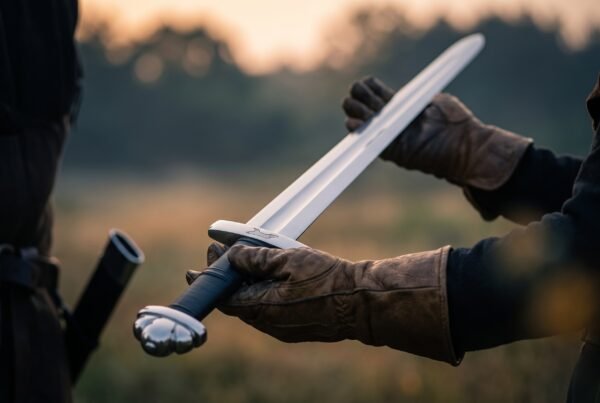
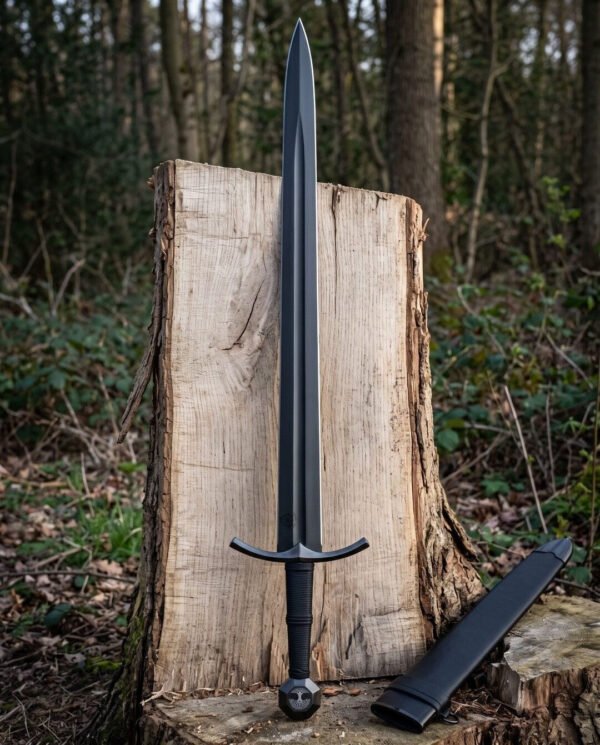
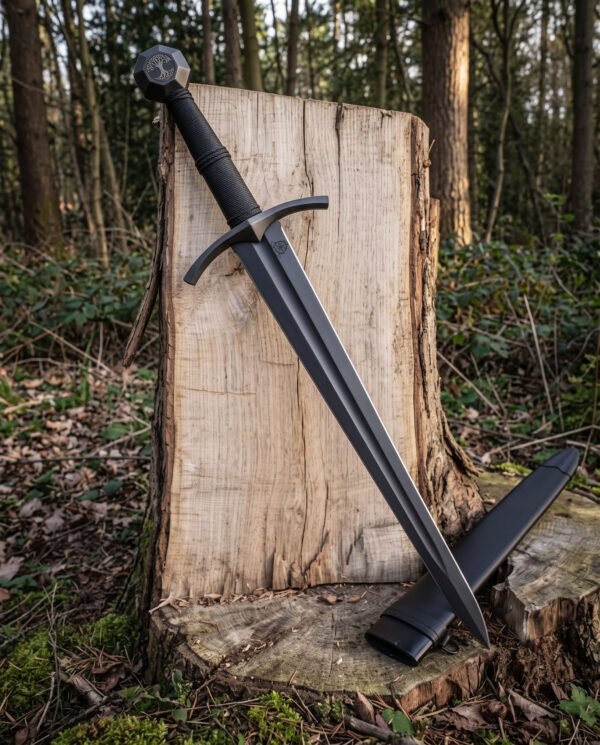
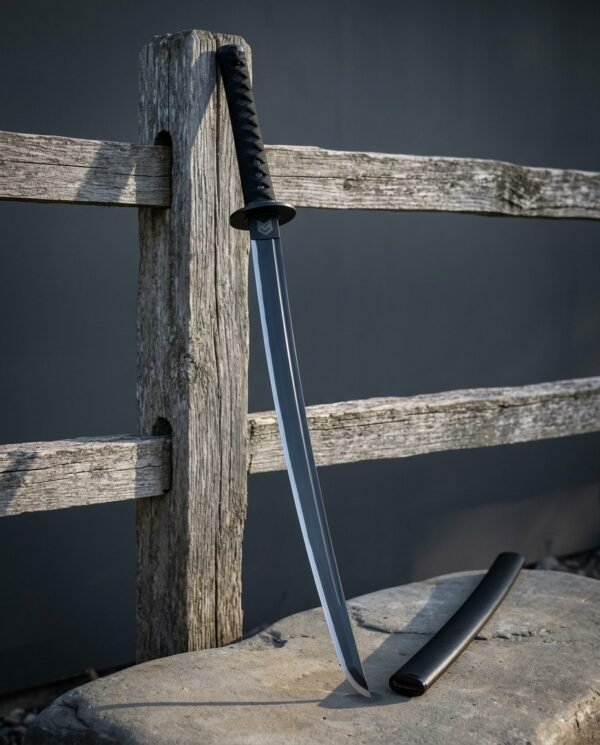
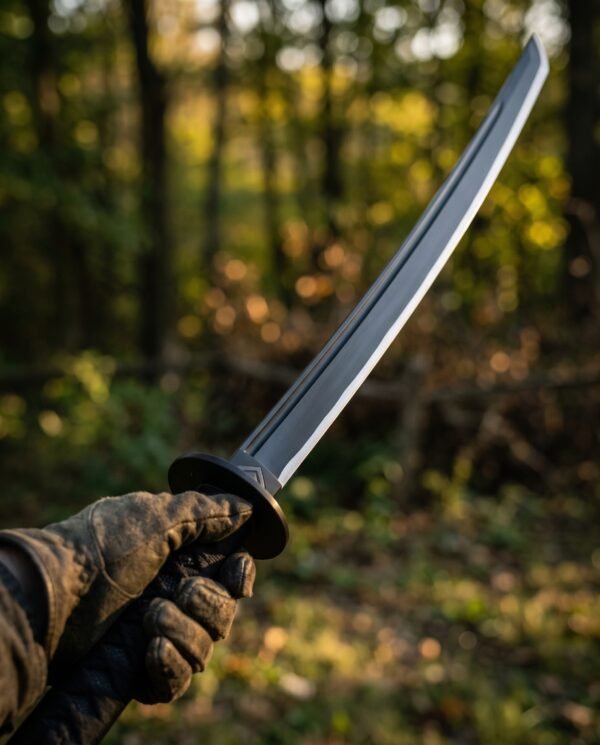
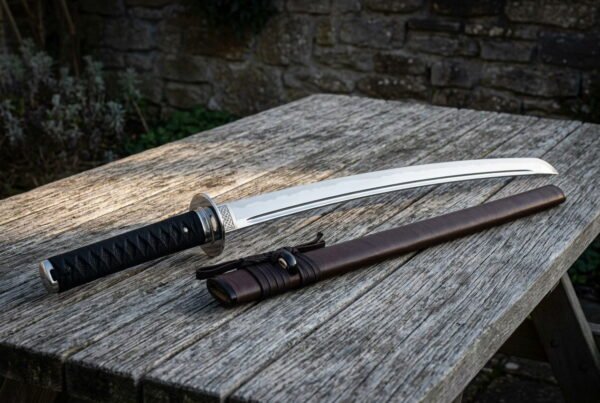
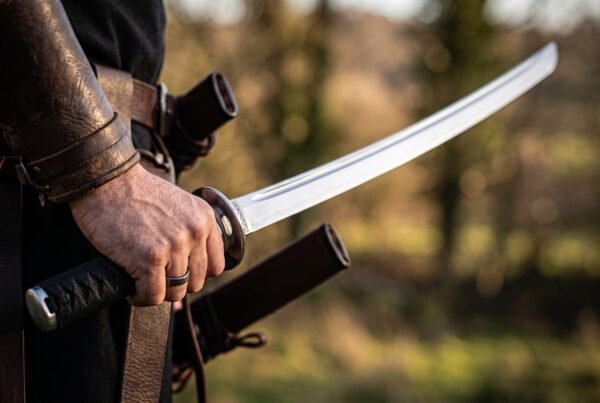
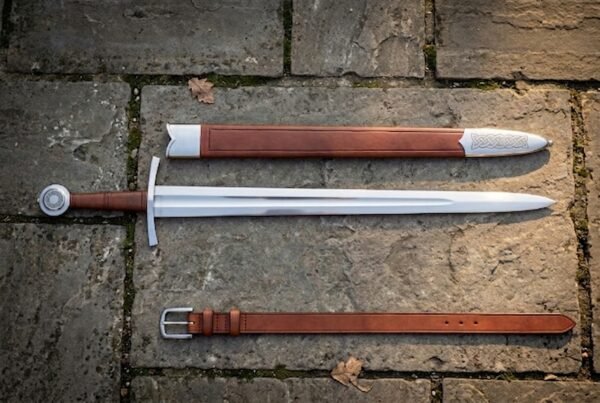
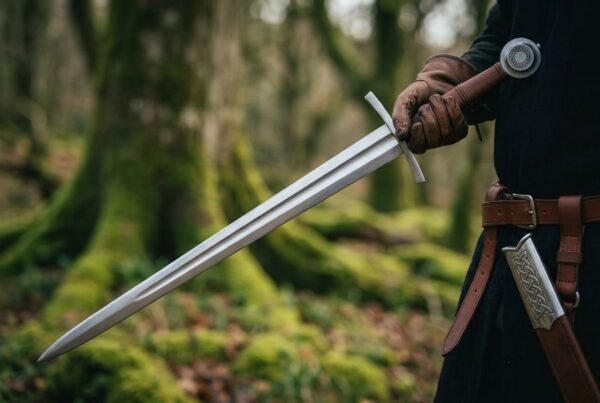
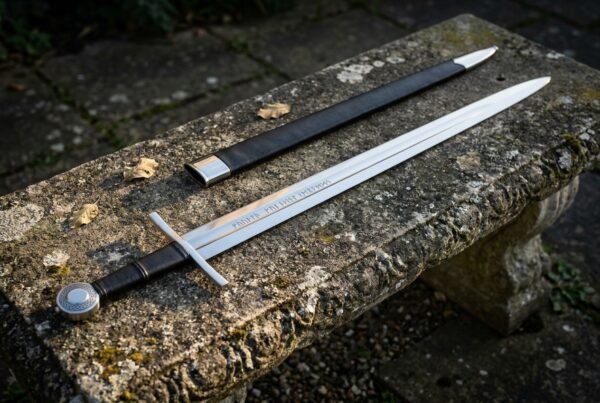
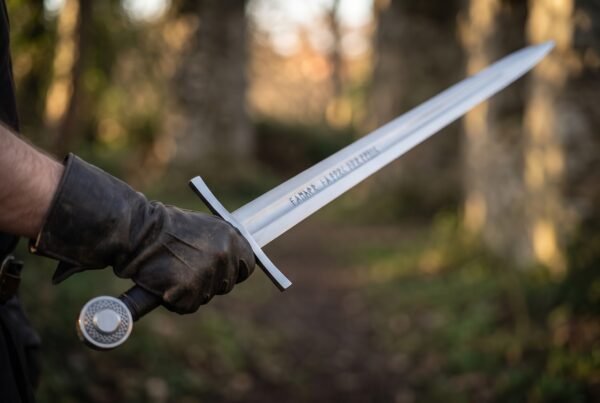
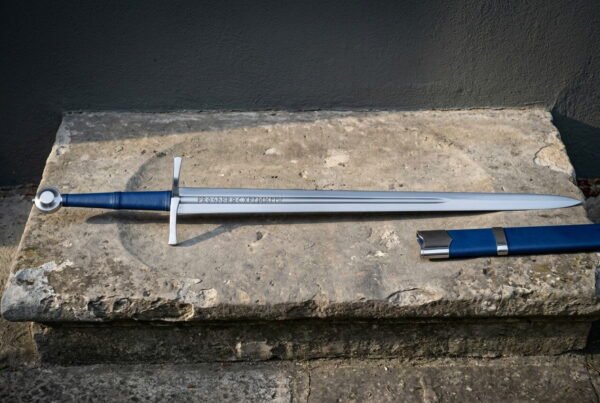
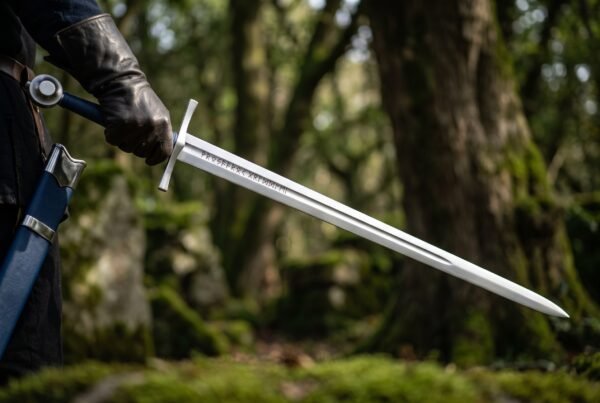
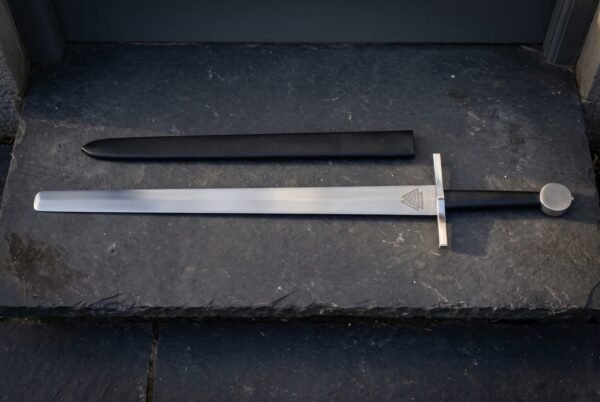
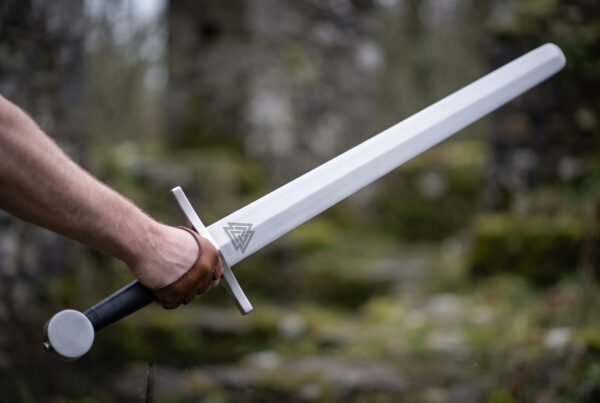
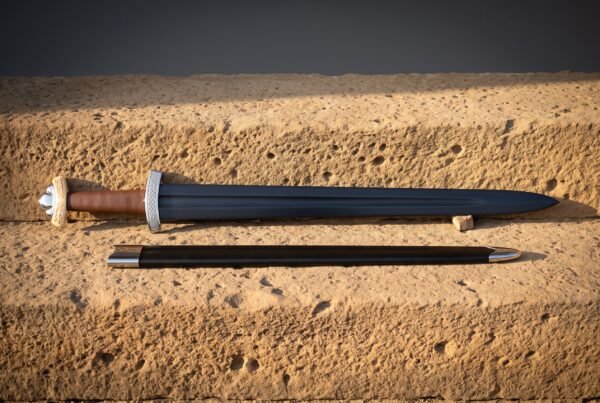
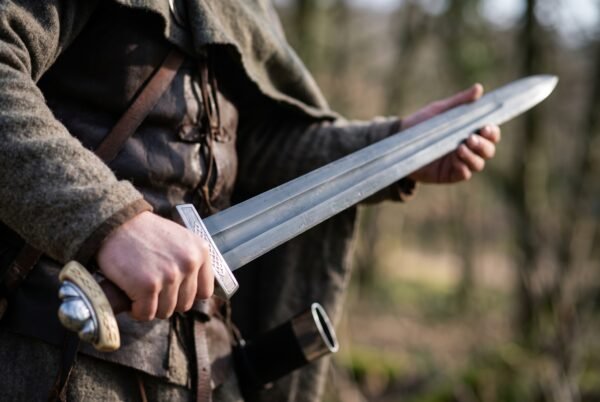
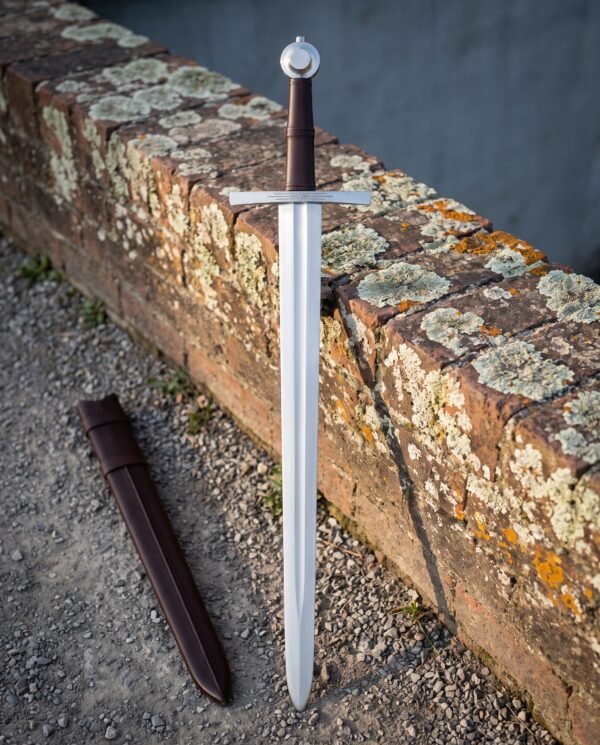
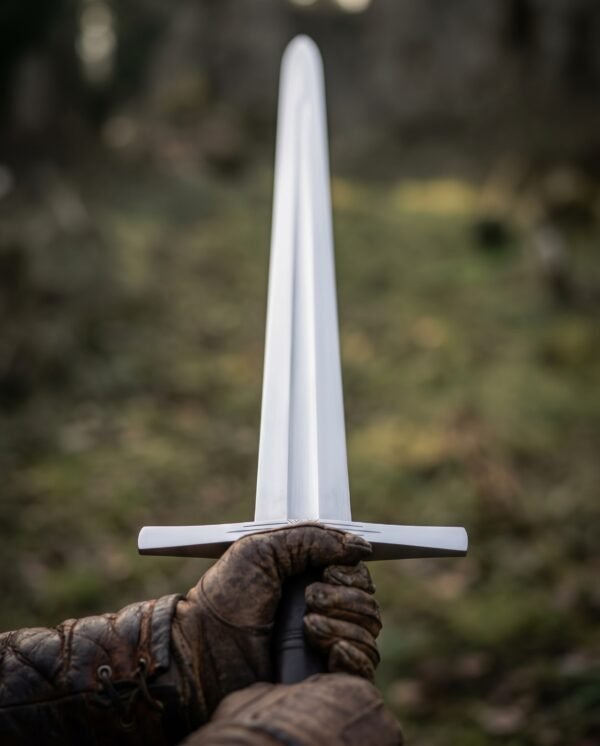
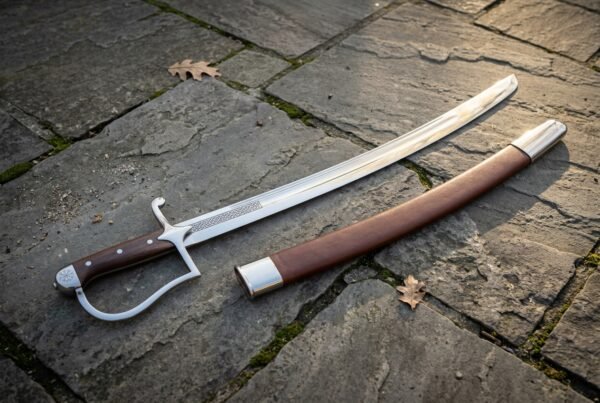
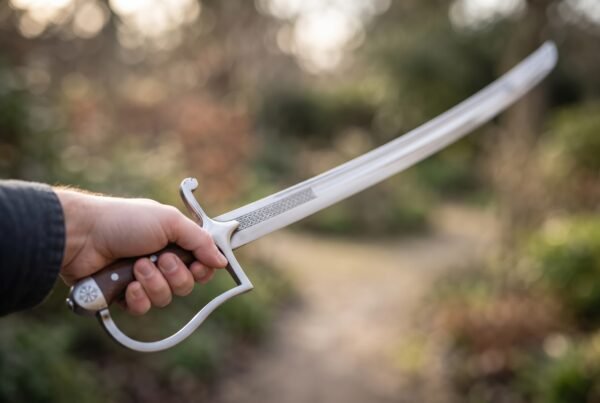
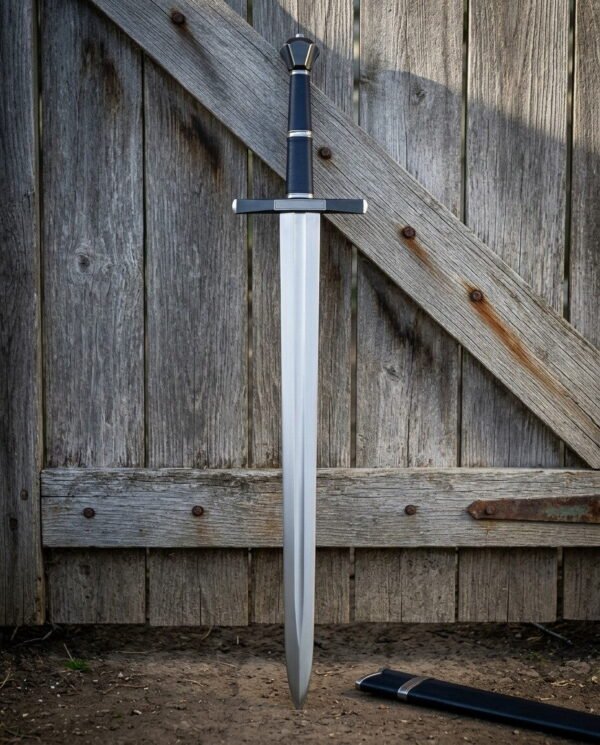
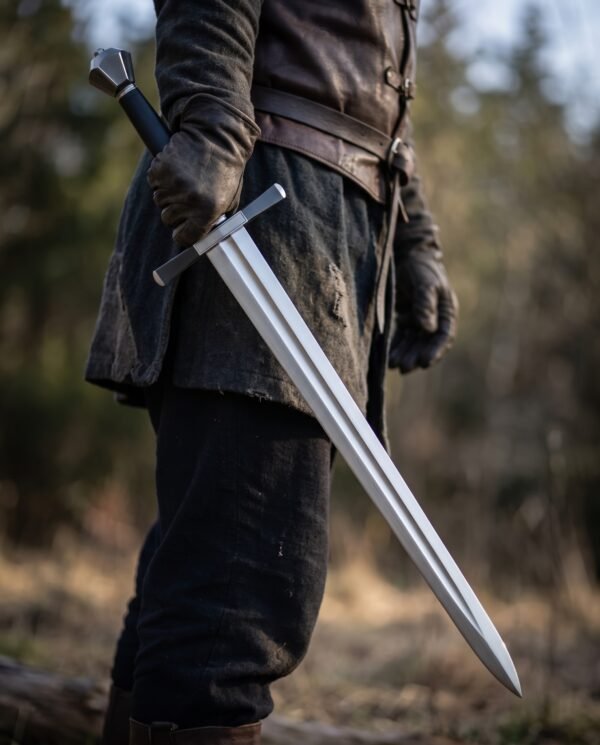
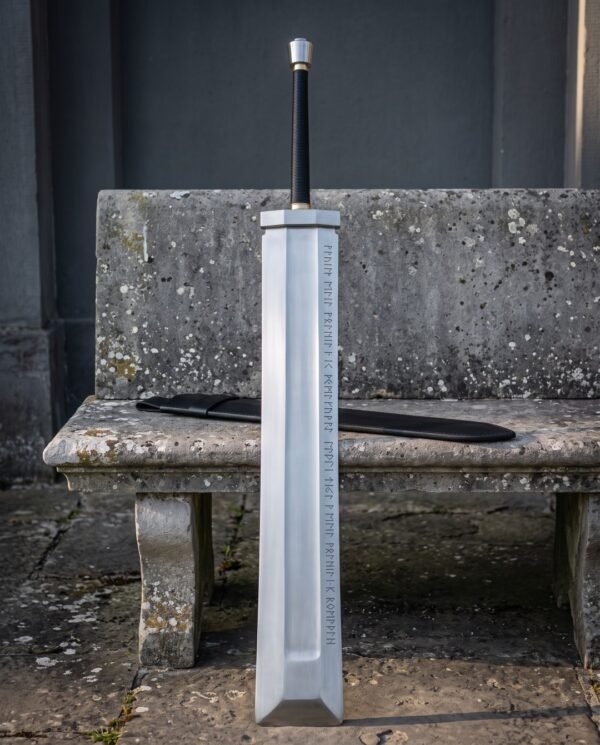
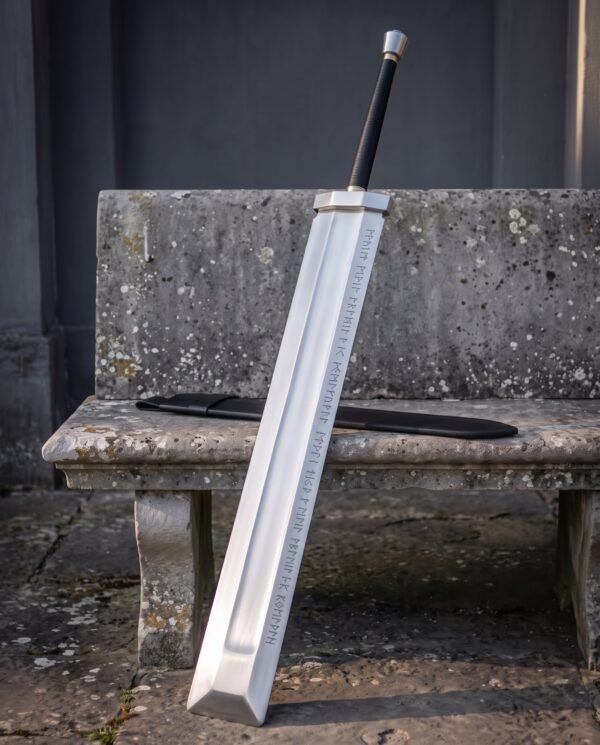
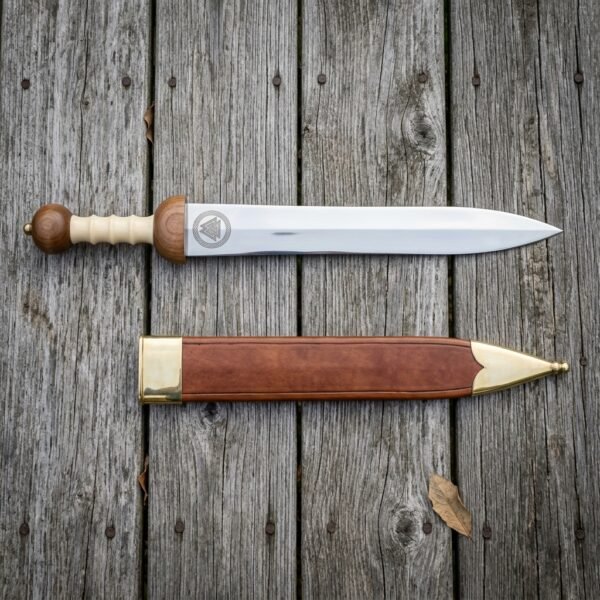
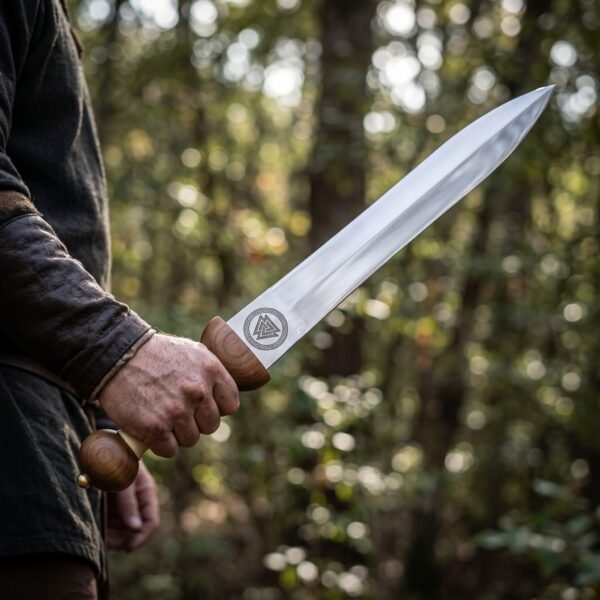
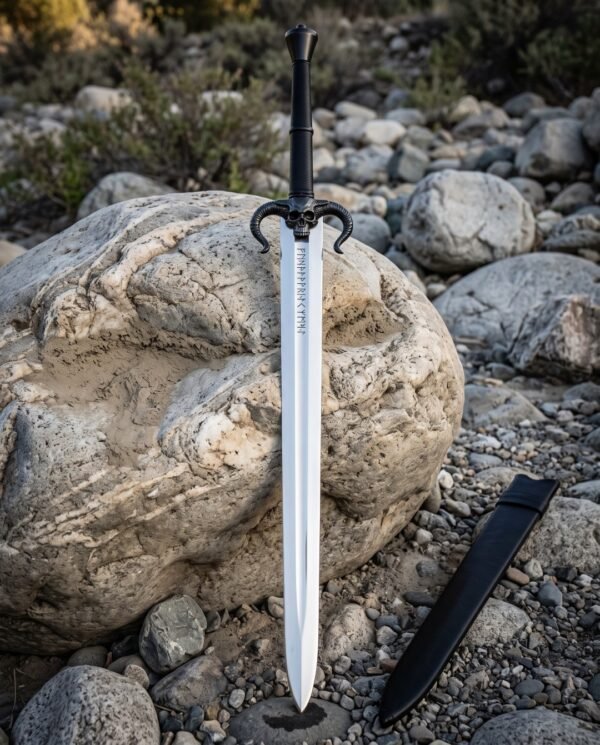
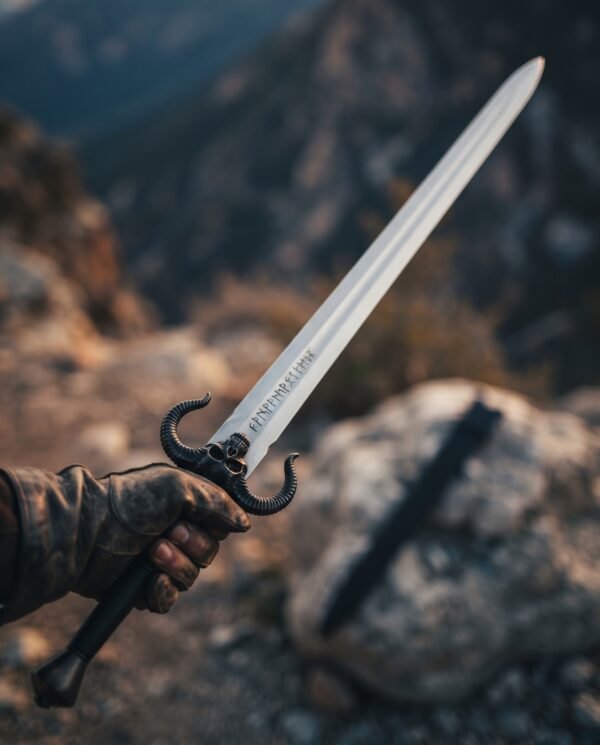
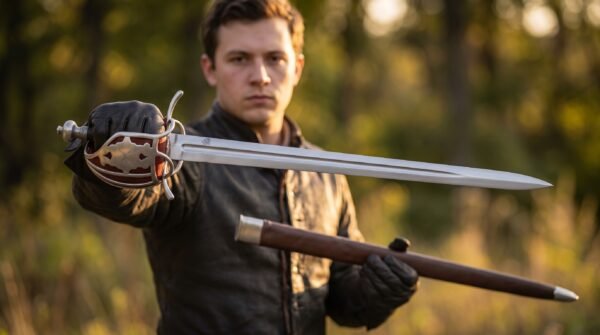
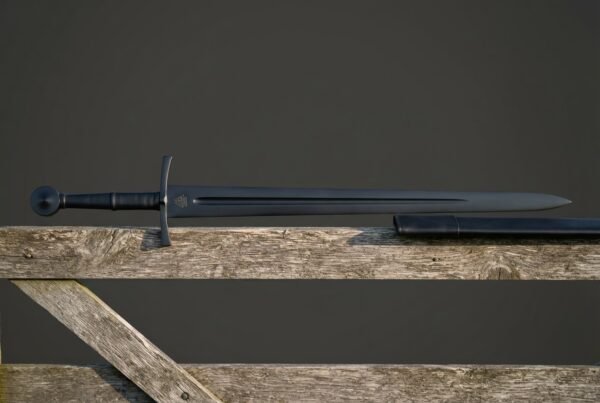
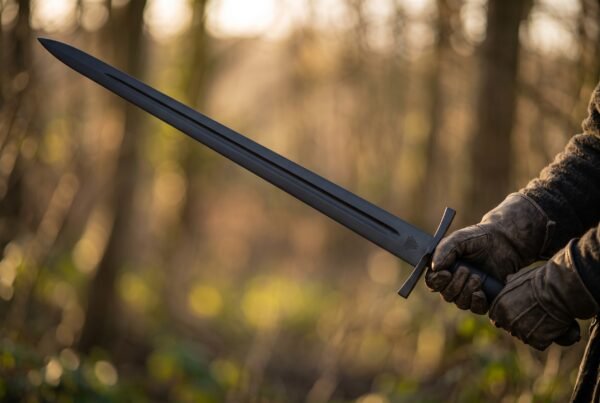
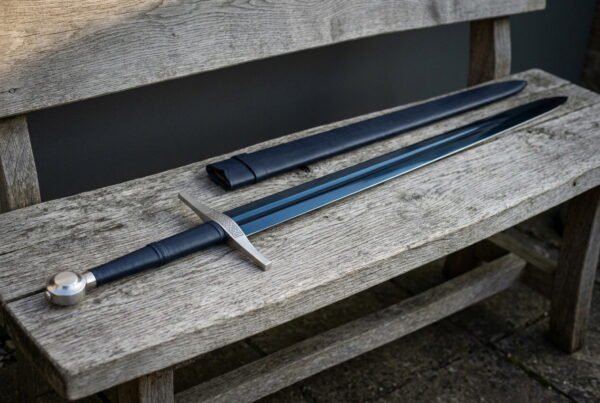
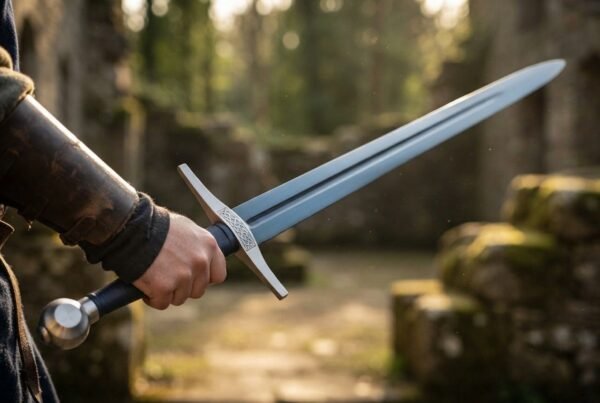
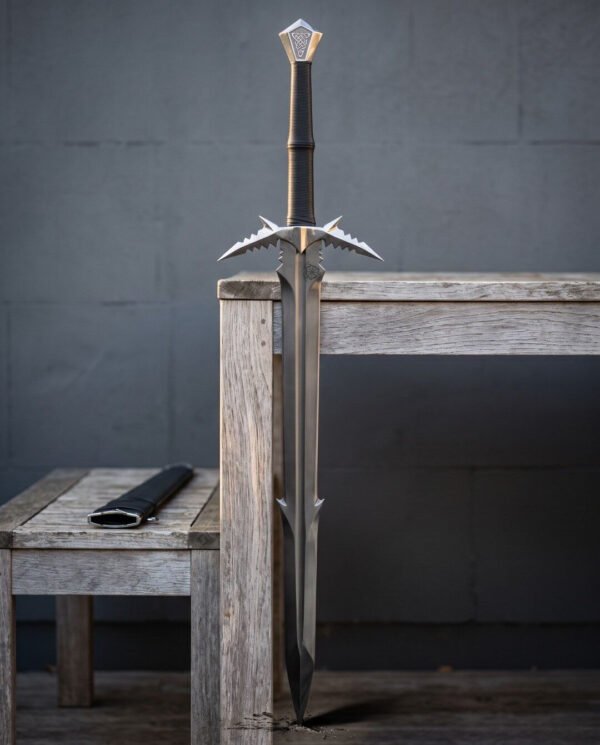
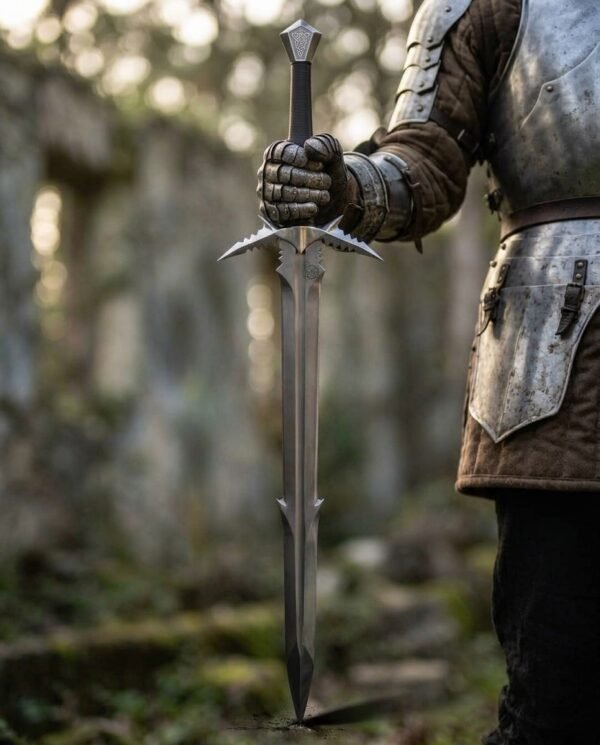
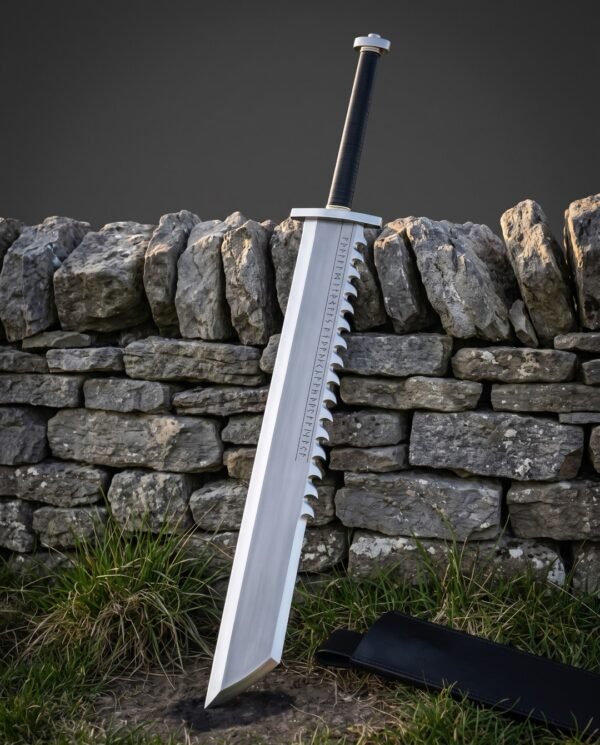
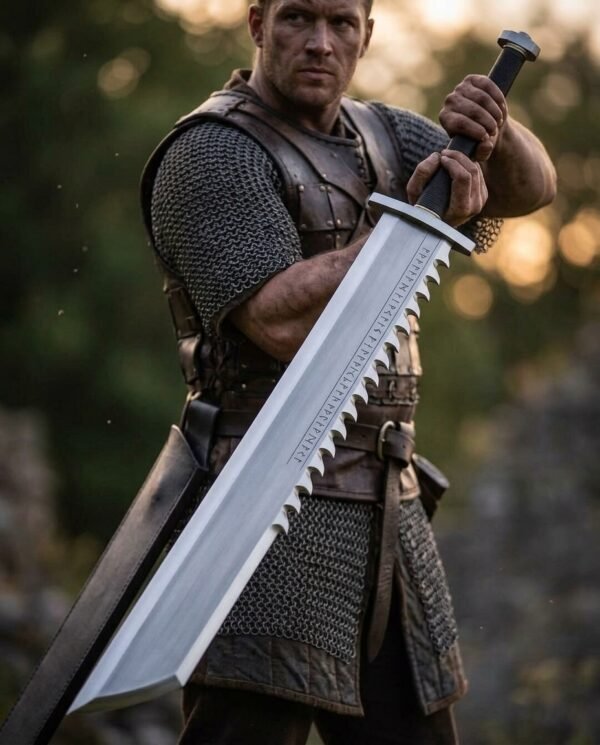
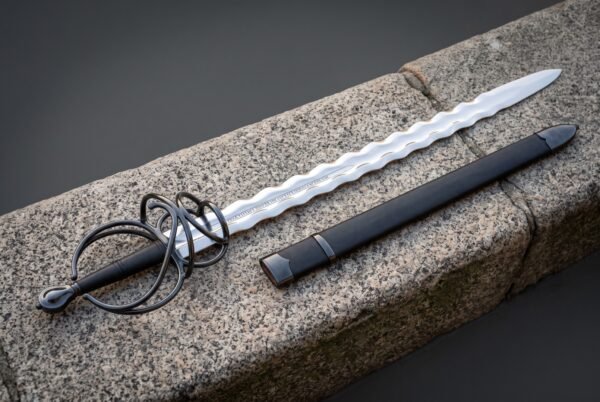
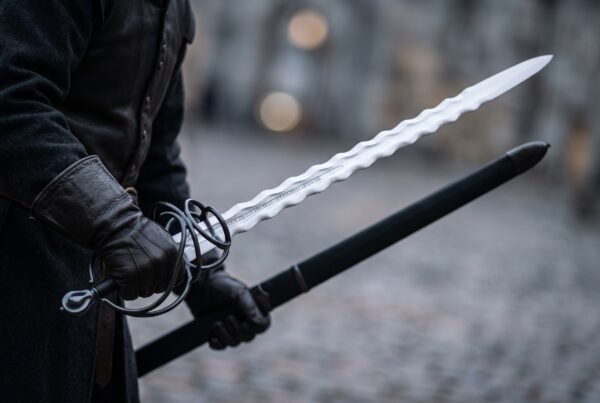
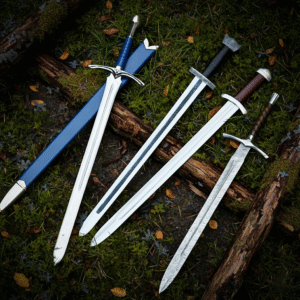
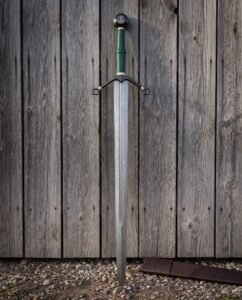
Knightly swords, arming swords, Norse warrior swords, blackened blades and wakizashi. Overall lengths run from about 28 to 40 inches. Hardness is 54 to 58 HRC throughout. Fittings include octagonal engraved pommels set with stone, wheel and disc pommels, straight and downswept crossguards, and Yggdrasil tree pommels on a couple of the blackened pieces. Grips are cord wrapped, leather wrapped and ribbed. Several blades carry etched fullers, knotwork bands or rune lines.
Why swords are softer than knives
A knife at 60 HRC is fine because it is short and supported along its length. A sword at the same hardness is a liability, because a long blade under lateral load either flexes and returns or snaps, and a hard blade snaps. At 54 to 58 HRC a 1095 sword will take a set and be straightened rather than breaking, which is the behavior you want in a piece that weighs several pounds and moves fast. Everything about that tradeoff is set out on the steel we use and how hard it is.
Rust, storage and handling
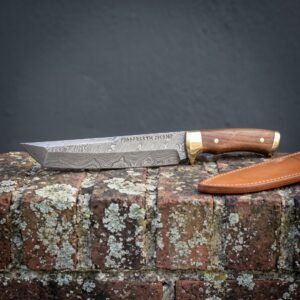
1095 has no corrosion resistance at all. Fingerprints etch it, damp scabbards mark it, and a summer in a garage will spot it. A wipe and a thin film of oil is the entire routine. Store the blade out of a closed leather scabbard rather than in it. Safe handling and storage, including keeping edged pieces away from children, is covered in the storage notes. The short Japanese blades are in the wakizashi and everything else in the swords.
Fittings and construction
Pommels are peened over the tang rather than glued, which shows as a small dome of steel at the top of the hilt. Guards are seated against the blade shoulder. Grips are wrapped over a wooden core. A sword built this way can be taken apart and rebuilt by a smith, which is not true of a blade assembled with epoxy.
Free US shipping
On most pieces. Heavier and oversized ones carry a flat charge.
Hand Forged
Heated, hammered and ground by hand.
Engraving available
Names, dates or Norse runes on most pieces.