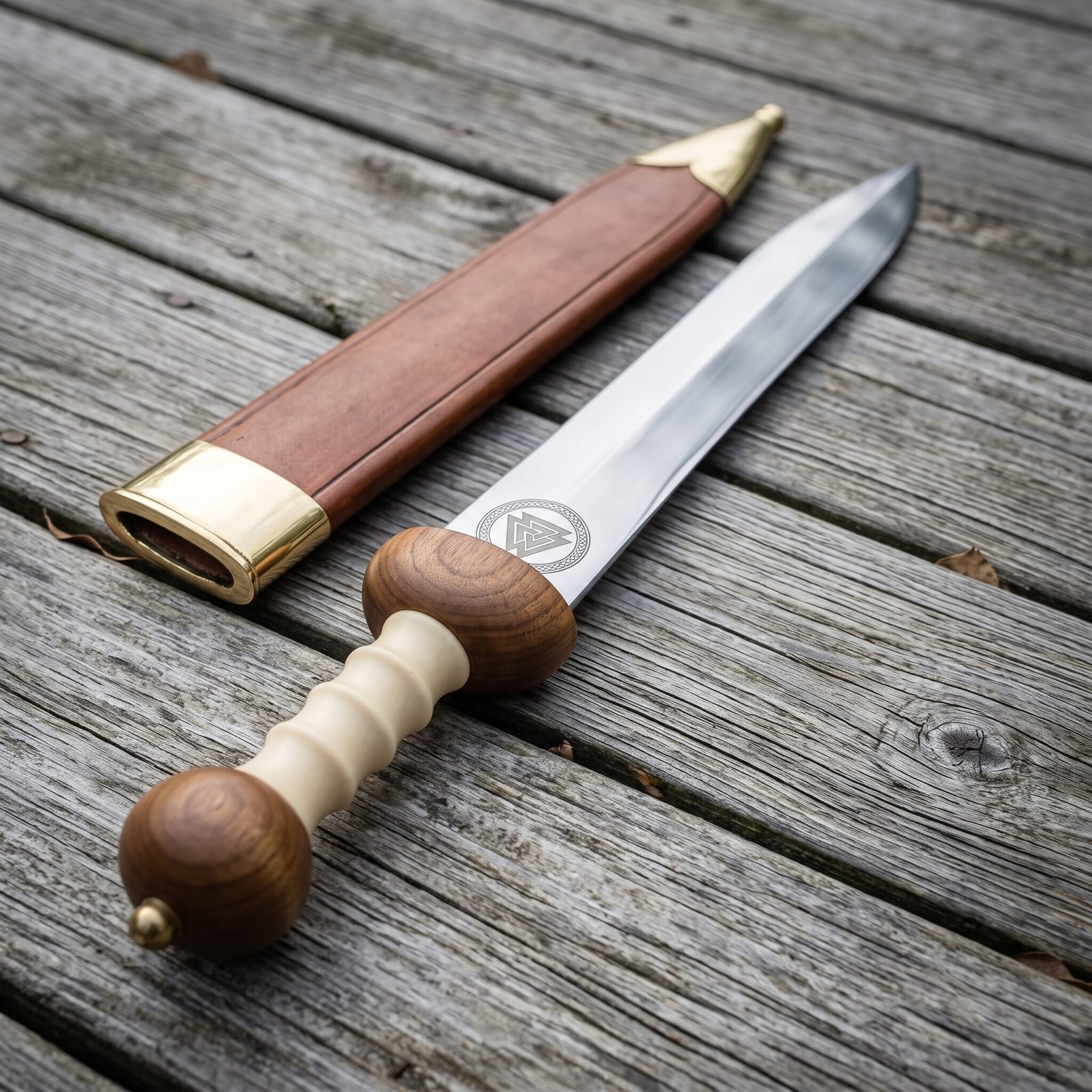
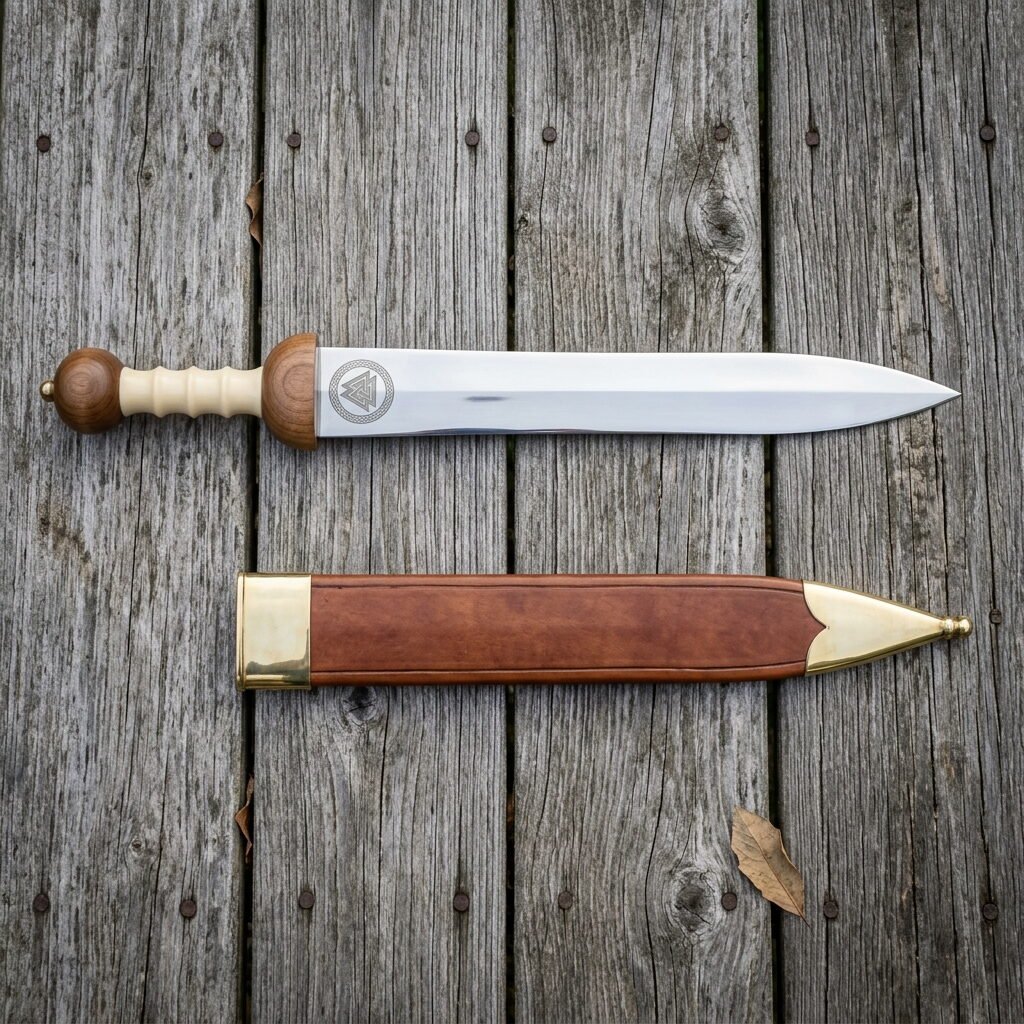
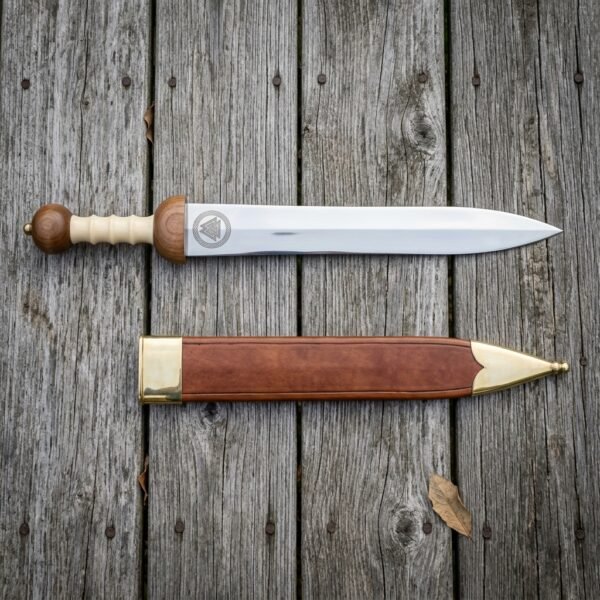
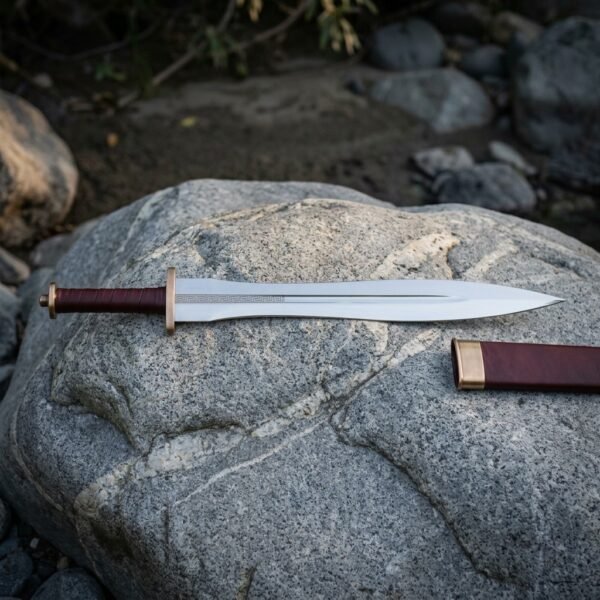
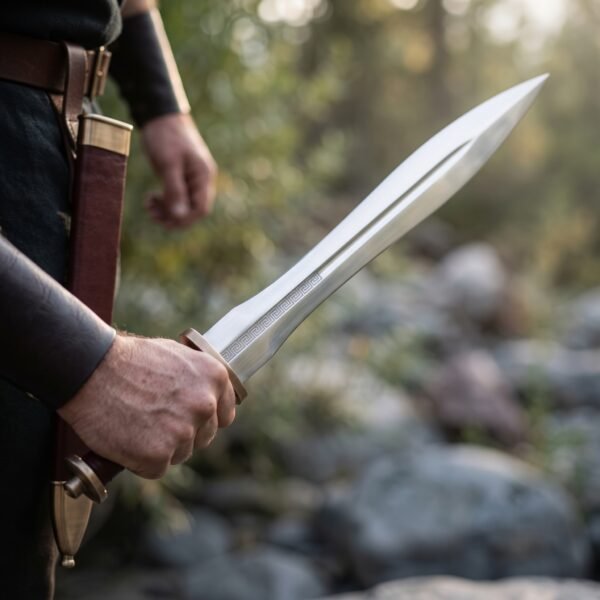
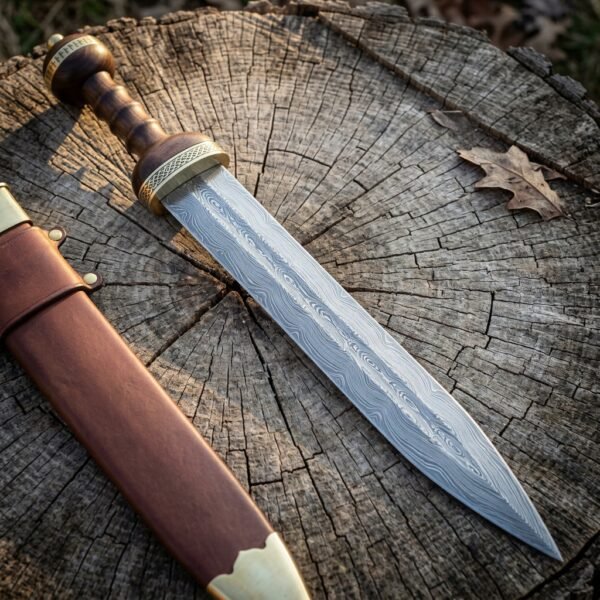
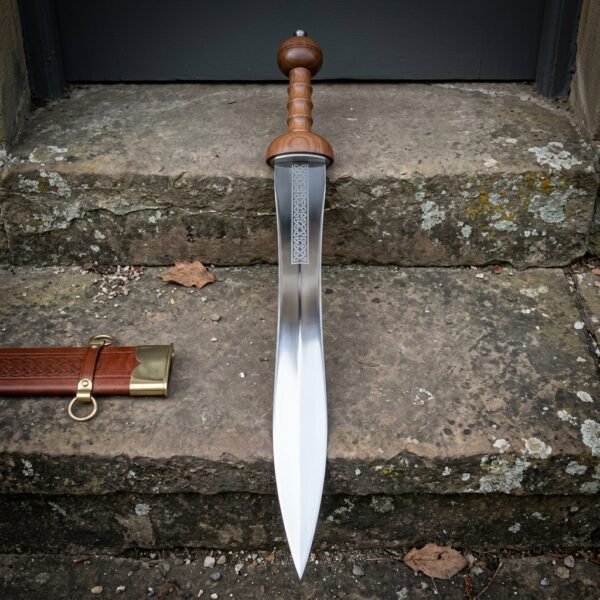
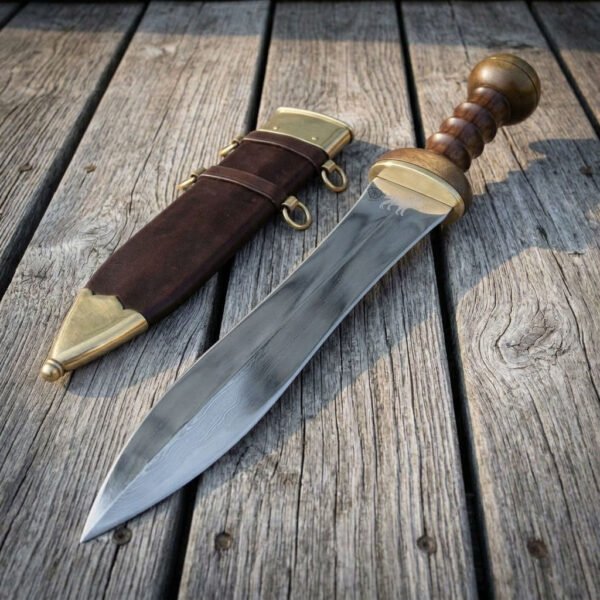
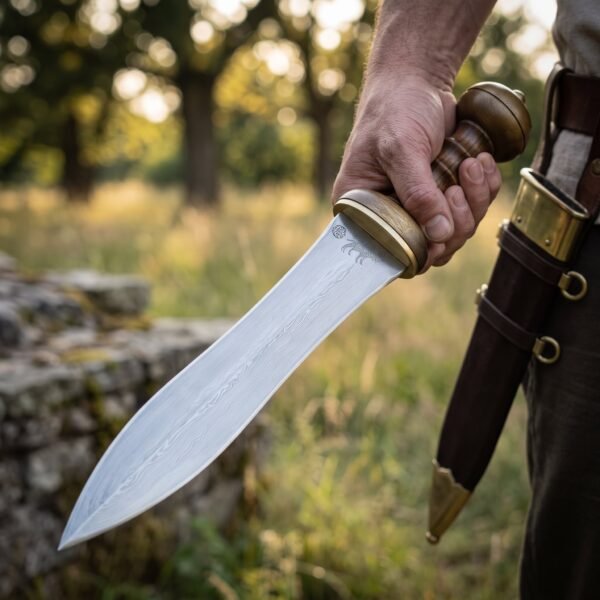
This is a hand forged Roman gladius built on the Pompeii pattern, the last and most widespread of the legionary short swords. Where the earlier Mainz blades were waisted in the middle and drawn out into a long slender point, the Pompeii blade runs straight and parallel from the guard until it turns into a short triangular tip. The pattern takes its name from four swords recovered from the ruins of Pompeii, sealed under ash when Vesuvius erupted in AD 79. Those four finds gave archaeologists a fixed date for a shape that had already spread across the whole Roman army, and the reason the pattern won out is practical rather than romantic. Parallel edges are faster to grind, easier to sharpen back to true after a campaign, and a shorter point is far less likely to snap off in a shield rim or a mail ring. It was the sword of an army that had to equip and repair tens of thousands of men.
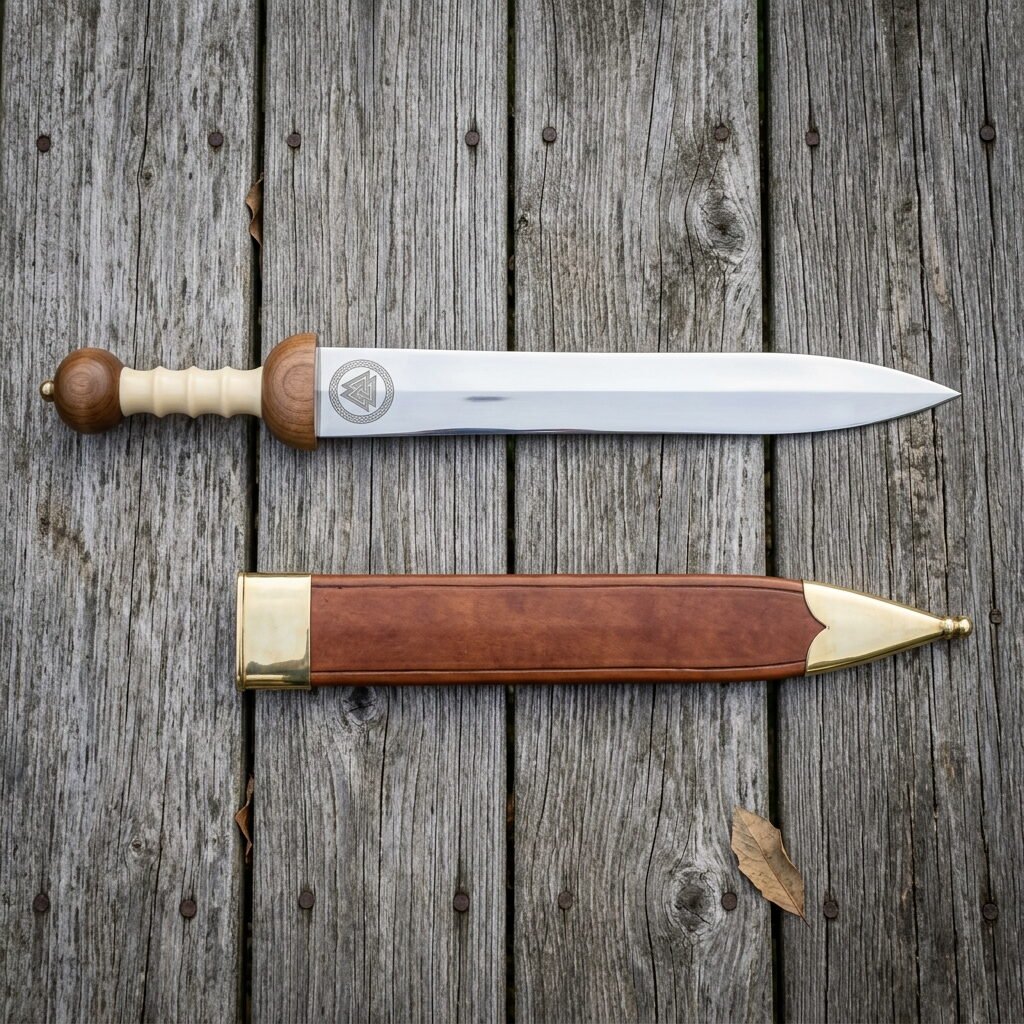
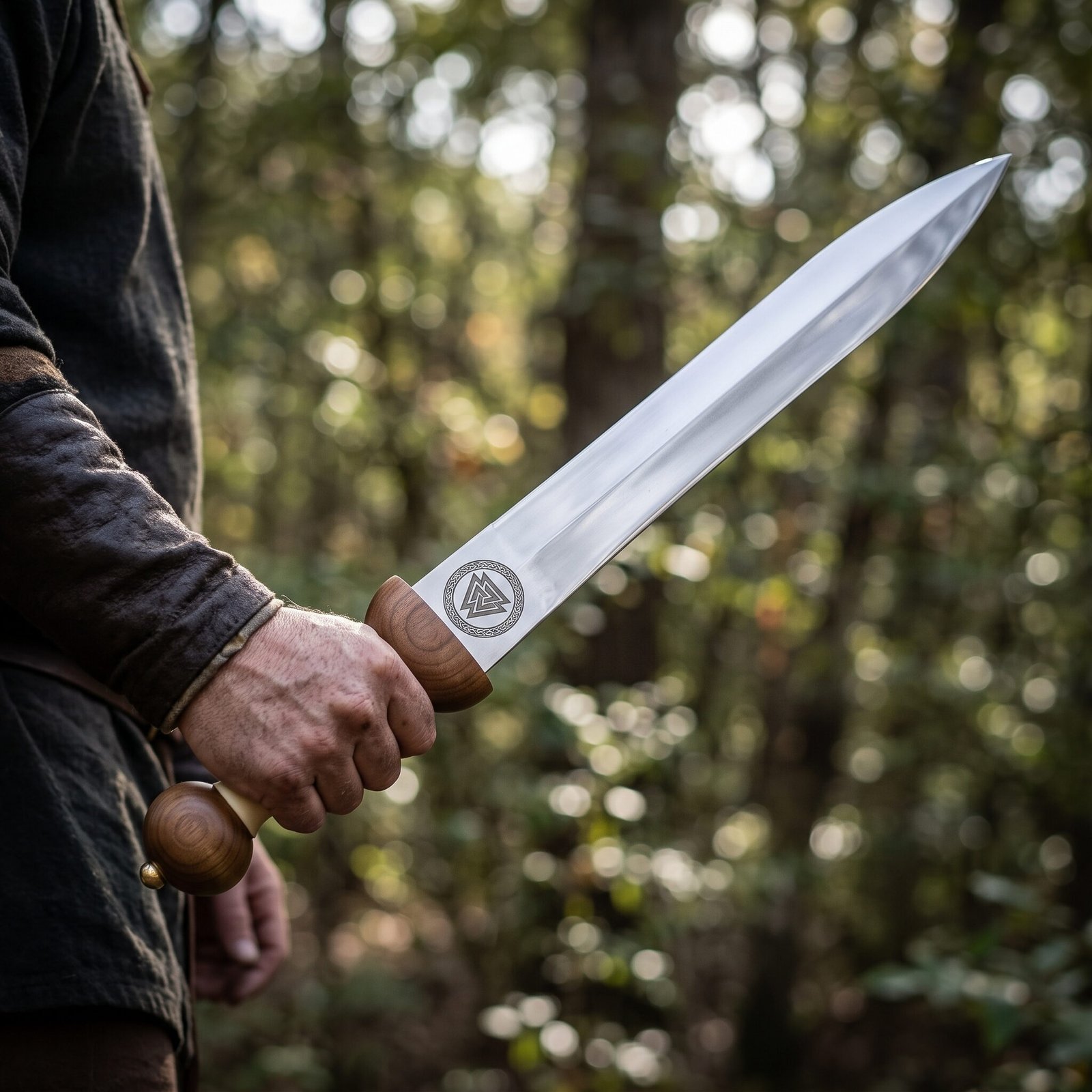
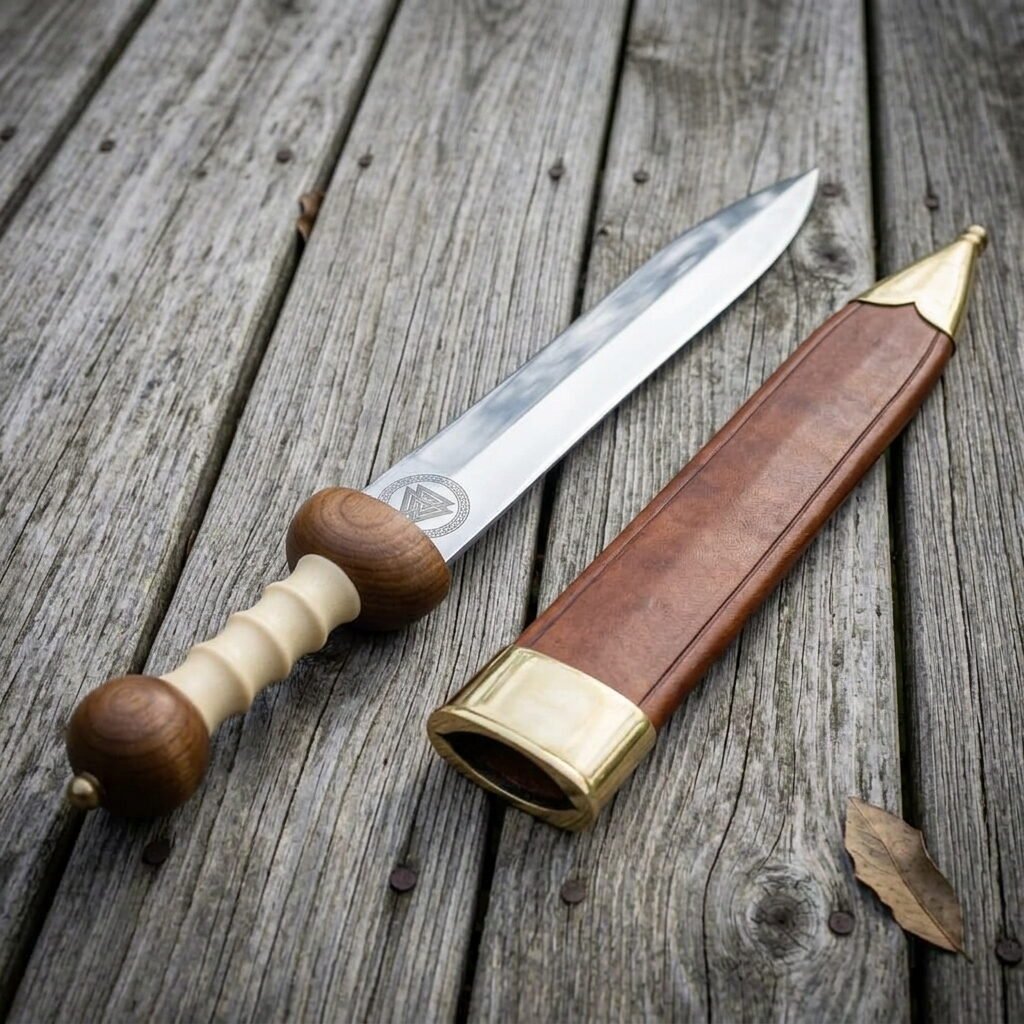
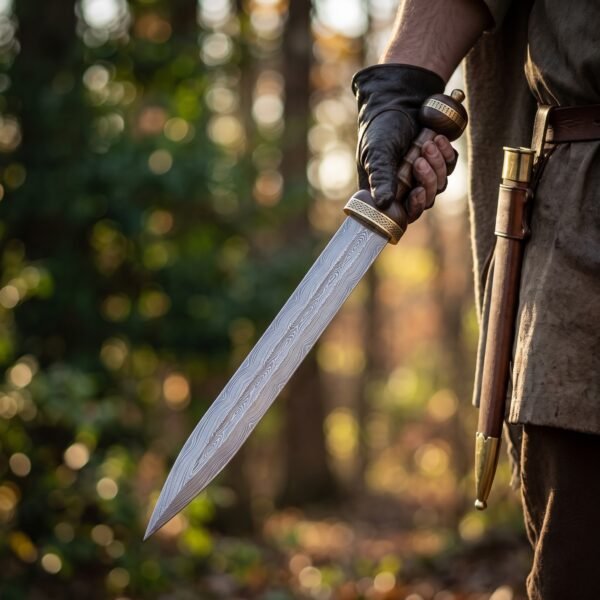
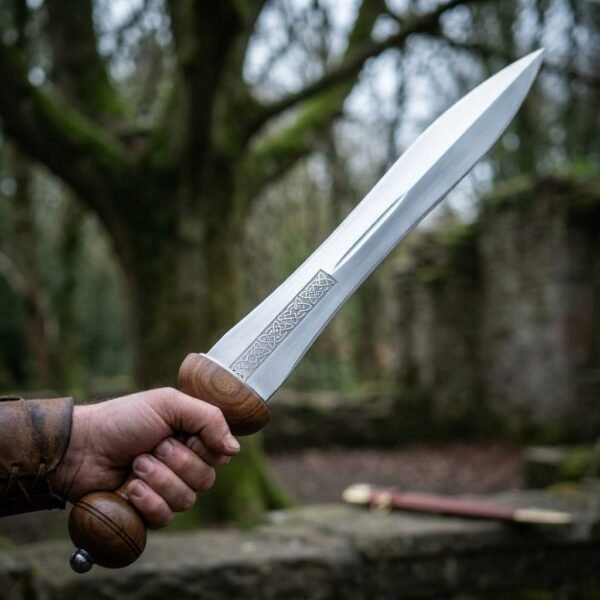
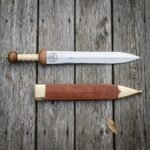
Every piece is forged, ground, heat treated and finished by hand in the Czech Republic. This one is 1095 high carbon steel, mirror polished, with a circular Valknut roundel etched into the forte, a ribbed bone grip between a walnut guard block and a walnut globular pommel capped with a brass tang nut, and it ships in a brown leather scabbard with a heavy brass throat and a brass chape. Shipping inside the United States is free.
Specifications
| Steel | 1095 high carbon steel, hand forged and mirror polished |
|---|
| Hardness | 54 to 58 HRC |
|---|
| Overall length | 27 inches |
|---|
| Blade length | 20 inches |
|---|
| Blade width | 2 inches at the guard, parallel edged Pompeii profile with a short triangular point |
|---|
| Blade detail | Etched Valknut roundel at the forte |
|---|
| Grip | Ribbed bone grip with finger ridges |
|---|
| Guard | Walnut guard block |
|---|
| Pommel | Globular walnut pommel with a brass tang nut |
|---|
| Tang | Full length, peened at the pommel |
|---|
| Scabbard | Brown leather with brass throat and brass chape |
|---|
| SKU | RK-1330 |
|---|
Why the Pompeii blade is shaped the way it is
A gladius is a thrusting sword first and a cutting sword second, and the Pompeii profile is the clearest expression of that. Because the edges stay parallel for most of the blade, the mass sits close to the hand instead of out at the tip. That gives a point of balance only about two and a half inches ahead of the guard, which is why a blade this broad still feels light and quick in the wrist. Roman drill leaned on the short thrust delivered from behind the scutum, and Vegetius wrote that a thrust driven two inches into the body is enough to kill, while a cut turned aside by bone often is not. The short triangular point is stiff through its whole length because it is only a couple of inches long, so it can be driven into a target and pulled back out without levering the blade.
The straight edges also make the sword honest to maintain. There is no complex curve to chase when you dress the edge, and the diamond section behind the point resists bending. Set beside the Mainz pattern, the Pompeii looks plainer, and that is exactly the point. It is a soldier’s tool built to be made in quantity, carried for years and put back into service after every repair.
Why 1095 high carbon steel and not stainless
1095 carries roughly nine tenths of one percent carbon and almost nothing else. That simplicity is what makes it a sword steel. It moves cleanly under the hammer, it responds predictably to a quench, and it can be drawn back to a hardness that suits a long blade rather than a small knife. This one is taken to 54 to 58 HRC. That is deliberately softer than a kitchen knife, because a sword has to bend and come back rather than shatter, and a blade run too hard is a blade that snaps at the tang or takes a chip out of the edge on the first hard contact.
Stainless steel gets its rust resistance from a large chromium content, and in the sizes needed for a sword that chromium buys corrosion resistance at the cost of toughness. Long stainless blades are notorious for failing at the shoulder. Carbon steel will take a patina and will rust if you neglect it, and that is a fair trade for a blade that behaves properly. If you want the metallurgy set out in full, read our comparison of Damascus versus stainless.
The bone grip, walnut guard and pommel
Roman hilts were built in four separate parts threaded onto the tang and locked with a peened nut, and this one is built the same way. The guard block and the globular pommel here are walnut, chosen because it is dense, stable and does not split when it is turned thin around a tang. Between them sits a ribbed bone grip. The ribs are not decoration. They are finger swells, and they let you index the sword by feel and keep hold of it when your hand is wet. Bone was a normal Roman grip material alongside ivory and turned wood, and it stays cool and slightly grippy in the hand in a way that polished metal never does.
Wipe the walnut down with a dry cloth and give it a light coat of oil once or twice a year. Do not soak it and do not leave it in a hot car or against a radiator, because the movement that follows is what loosens a hilt. Our short guide to wooden handle care covers the routine in more detail.
Engraving, runes and your own design
Use the rune converter on this page to turn a name, a date or a short phrase into Elder Futhark and we will cut it into the steel or the handle. If you would rather have a Viking pattern than a rune line, choose your own design in the engraving option above the add to cart button and tell us whether it goes on the blade or the handle. Where a piece already carries an engraved design, your chosen engraving replaces it rather than sitting alongside it. On this sword that means your engraving takes the place of the Valknut roundel at the forte unless you ask us to put it further down the blade. Full details are on the engraving page.
Care and sharpening
Dry the blade after handling and wipe it with a light machine oil or a paste wax before it goes away. Fingerprints are acidic and will etch a polished carbon blade within days in a humid room. Do not store it inside the leather scabbard for months at a time, because tanned leather holds moisture and salts against steel. Hang it or lay it on a rack and keep the scabbard for carrying. Our notes on steel care apply to plain carbon blades as well as pattern welded ones. When the edge dulls, take it back with a coarse then fine stone at a low angle worked from the guard to the point, following our guide to sharpening with a whetstone.
Made in the Czech Republic
Every piece we sell is made by hand in the Czech Republic. The smiths there work the way the trade has been worked for a long time, heating and hammering the steel, taking the bevels down by eye, and fitting the handle and the leather one at a time. There is no automated line anywhere in it, so small differences from one piece to the next are normal and expected.
Ransack Viking is a United States company based in Chicago, Illinois. We bring the pieces in ourselves, inspect them on arrival and ship them from our own warehouse. If you add engraving, that is carried out here in the United States before your order goes out.
A note on handmade variation
This gladius is hand forged. It is not machine made and it is not bulk produced, so what arrives will not be a pixel for pixel copy of the photograph. The grain and tone of the walnut, the colour and figure of the bone, the exact depth of the polish and the precise line of the blade profile all vary because each one is worked by hand from natural materials. The dimensions, the steel and the build are the same every time. The character is not, and that is the nature of a forged object rather than a fault in it.
Frequently asked questions
Is the gladius sharp when it arrives?
Yes. It ships with a working edge that will cut paper and light rope. Tell us in the order notes if you want it blunt for stage or reenactment use and we will leave a rounded quarter inch edge instead at no extra cost.
Can I actually use it for cutting practice?
Yes, on soft targets. Water bottles, pool noodles and tatami mats are all fair game. Do not use it against steel, hardwood or bone, and never throw it. A short broad blade like this generates a lot of shock at the tang and edge to edge contact will chip it.
What is the difference between this and the Mainz pattern?
The Mainz blade is waisted in the middle and finishes in a long slender point, which makes it a slightly better armour piercer and a slightly more fragile tip. The Pompeii blade is parallel edged with a short stiff point, lighter in the tip and quicker in the hand. Mainz is the earlier shape, Pompeii the later one that the army settled on.
Can I have runes engraved on this one?
Yes. Use the rune converter above the add to cart button. On this sword the natural place for a rune line is along the flat below the forte, and your engraving replaces the Valknut roundel unless you say otherwise.
Will the bone grip crack?
Not in normal use. Bone is stable once it is dry and fitted, but it does not like sudden changes in humidity. Keep it out of direct sun and away from heat sources and it will outlast you.
How long does shipping take?
Shipping inside the United States is free and most orders leave the shop within seven to ten working days, then two to five days in transit. Custom engraving adds about a week.
What is in the box
- One hand forged 1095 high carbon steel Pompeii pattern gladius, 27 inches overall
- Brown leather scabbard with brass throat and brass chape
- Light protective oil coat on the blade for transit
- Care and sharpening card
- Forged and finished in the Czech Republic
Explore the range
See the rest of the gladius range, the wider short swords, our arming swords and everything under swords. Background reading lives in the guides.
Others in the same line
Next along the rack is the Ironlegion gladius. For a straight comparison, see the Leafwarden gladius, 28 inches overall. Worth putting side by side with this is the Emberlegion gladius, 27 inches overall.
If you are putting a set together, the Ironmarch sabre sits alongside it. You can have this made your way instead on the custom Viking sword page.

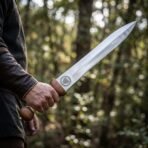
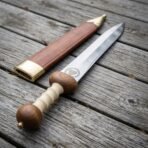
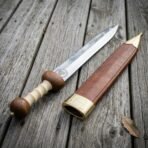
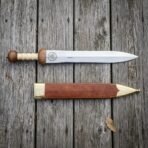
No regrets on this purchase at all. Even the small engravings are crisp and clean. Will definitely order again for another gift.
Perfect gift. Perfect quality. No complaints. The bone handle feels amazing and the balance is perfect. Even the small engravings are crisp and clean. High Carbon Steel blade holds a razor edge right out of the box. This will be a family heirloom for sure.
Solid sword. Glad I ordered it. Nice that it ships from a US warehouse even though the craftsmanship is Czech.