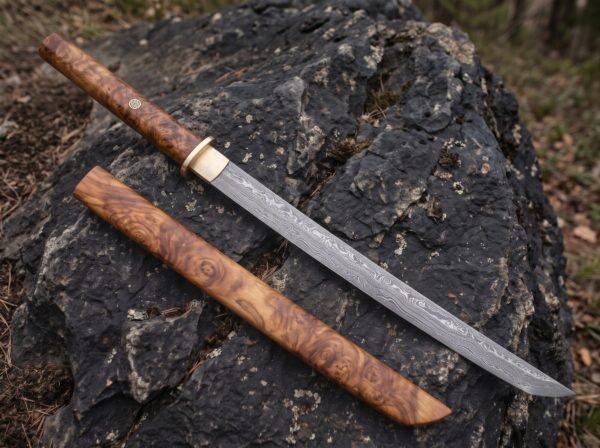
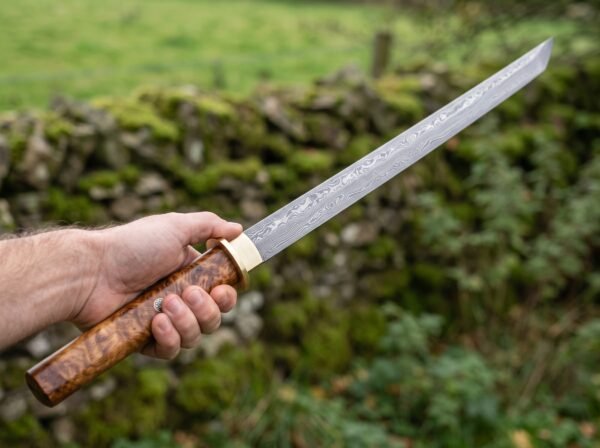
The Reedcurve is a wakizashi, the shorter of the two swords that a samurai wore as a pair with the katana. The long sword was the field blade. The wakizashi was the one that stayed on the belt indoors, in a house or a shop or a corridor where there was no room to draw anything longer, and it was the sword a man kept beside him when he slept. It is a serious blade in a short package, and that is what makes it such a satisfying thing to own.
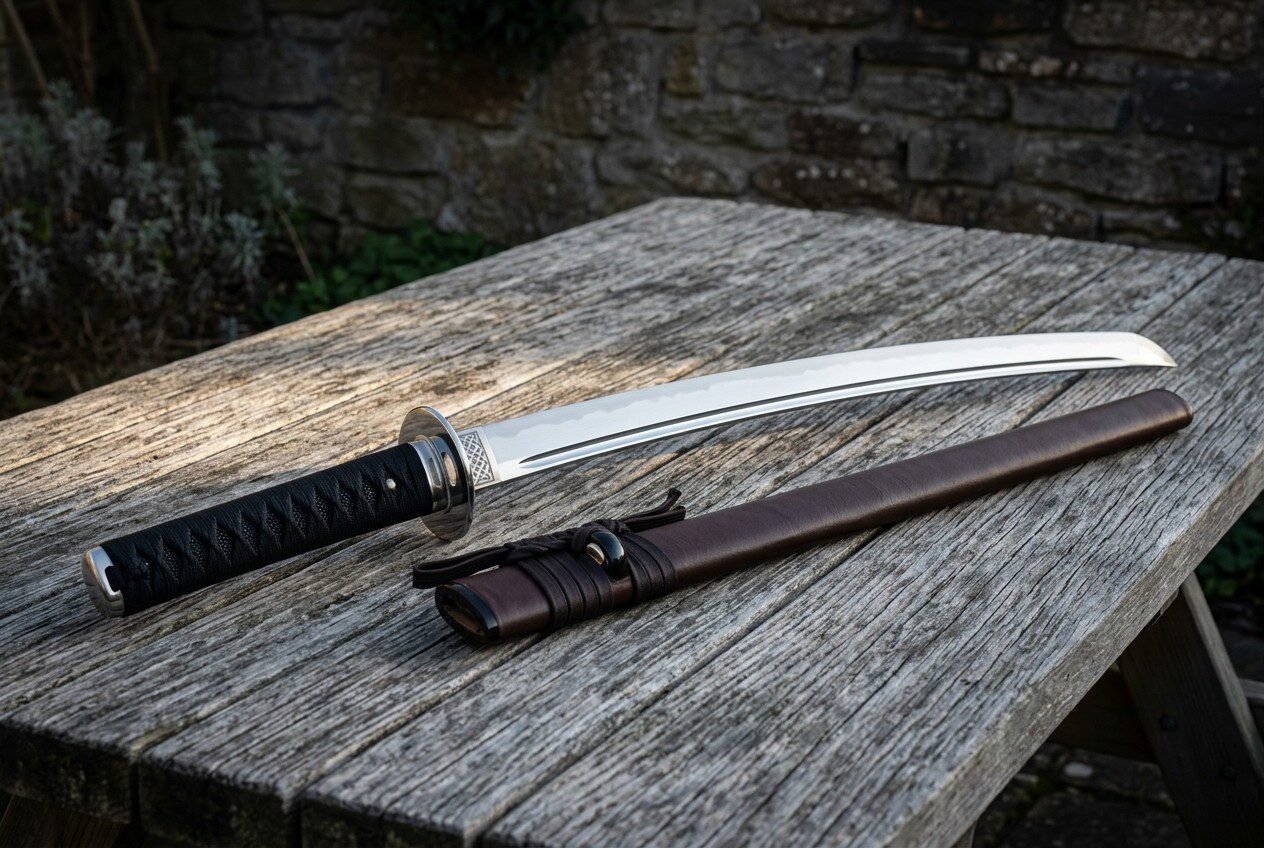
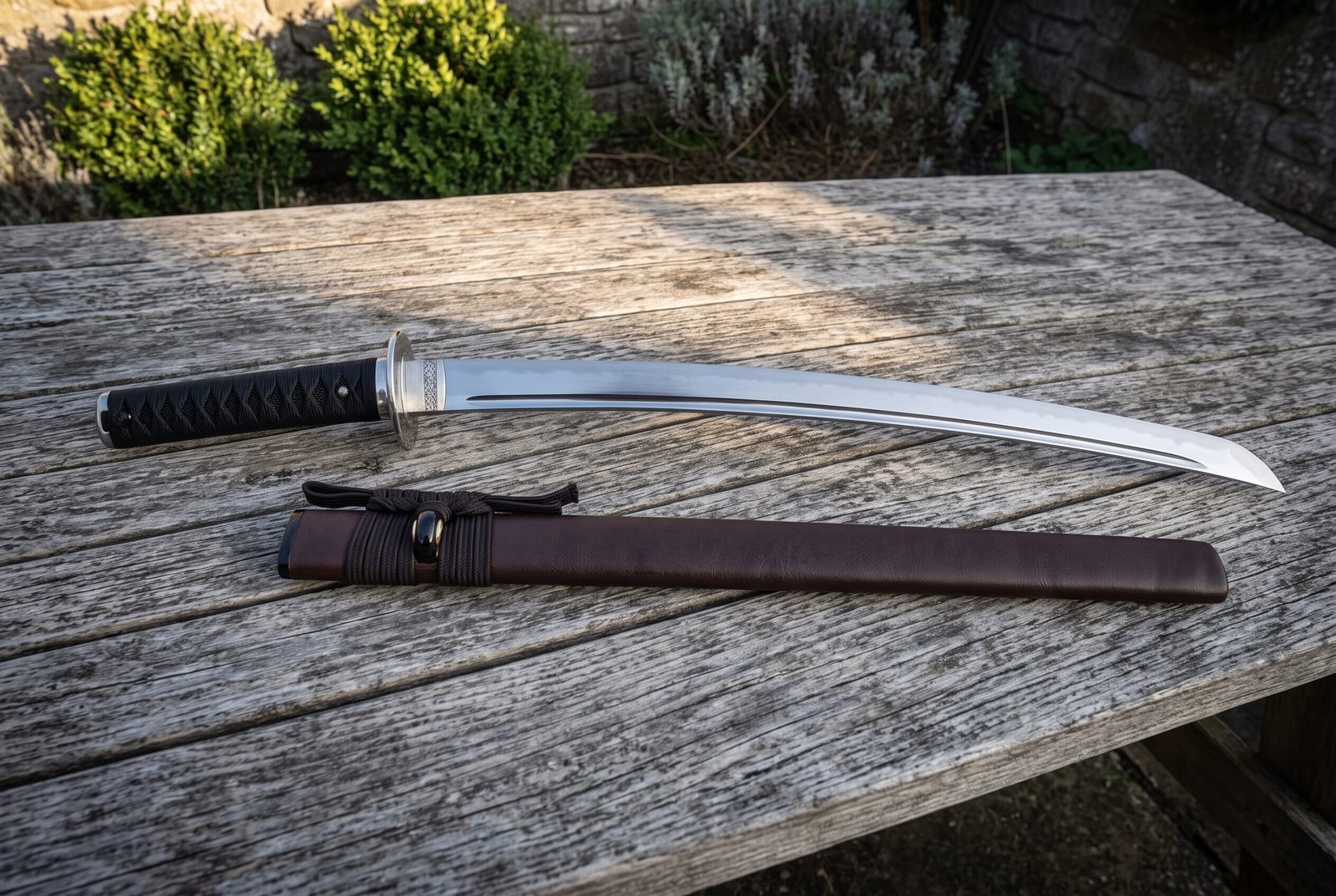
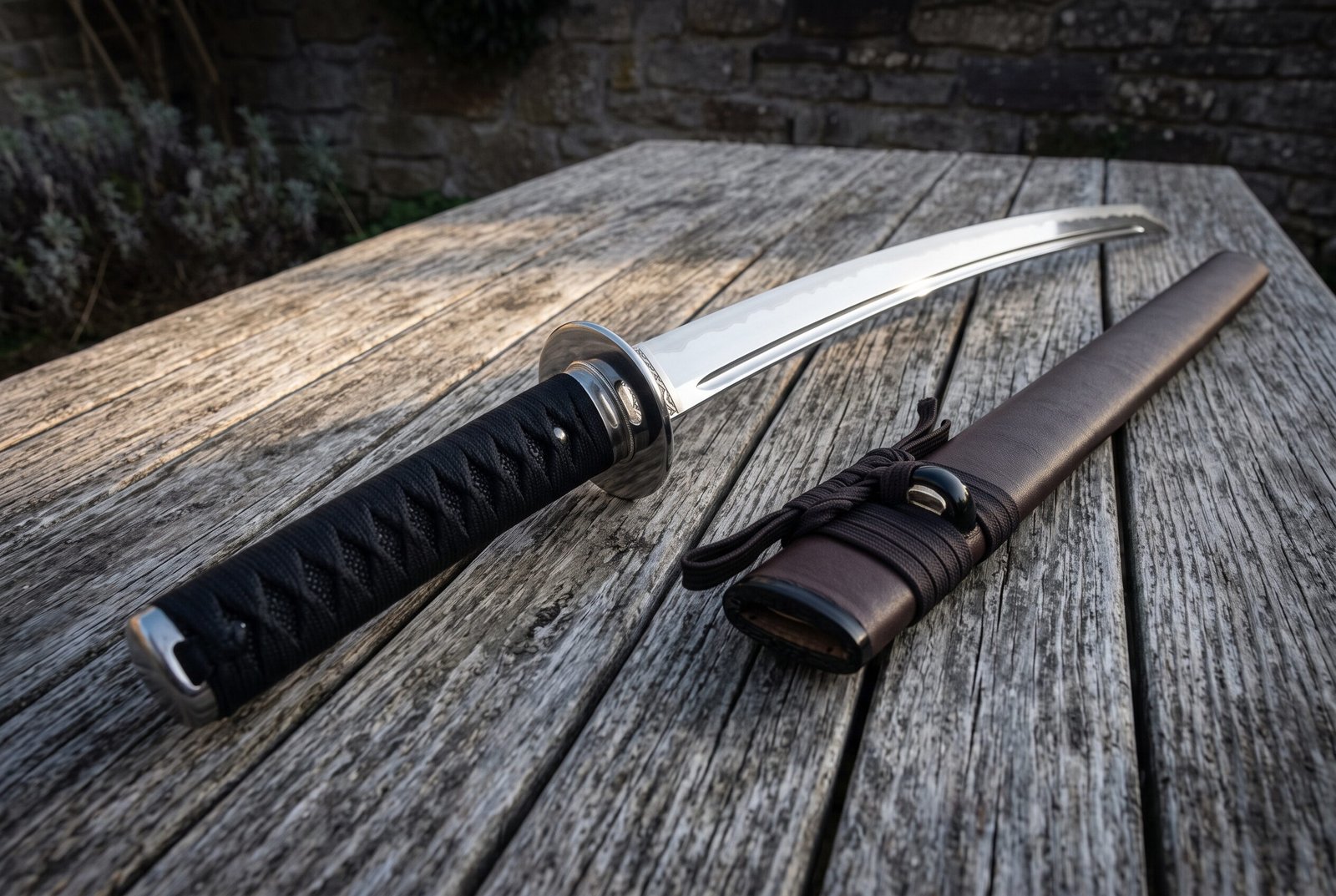
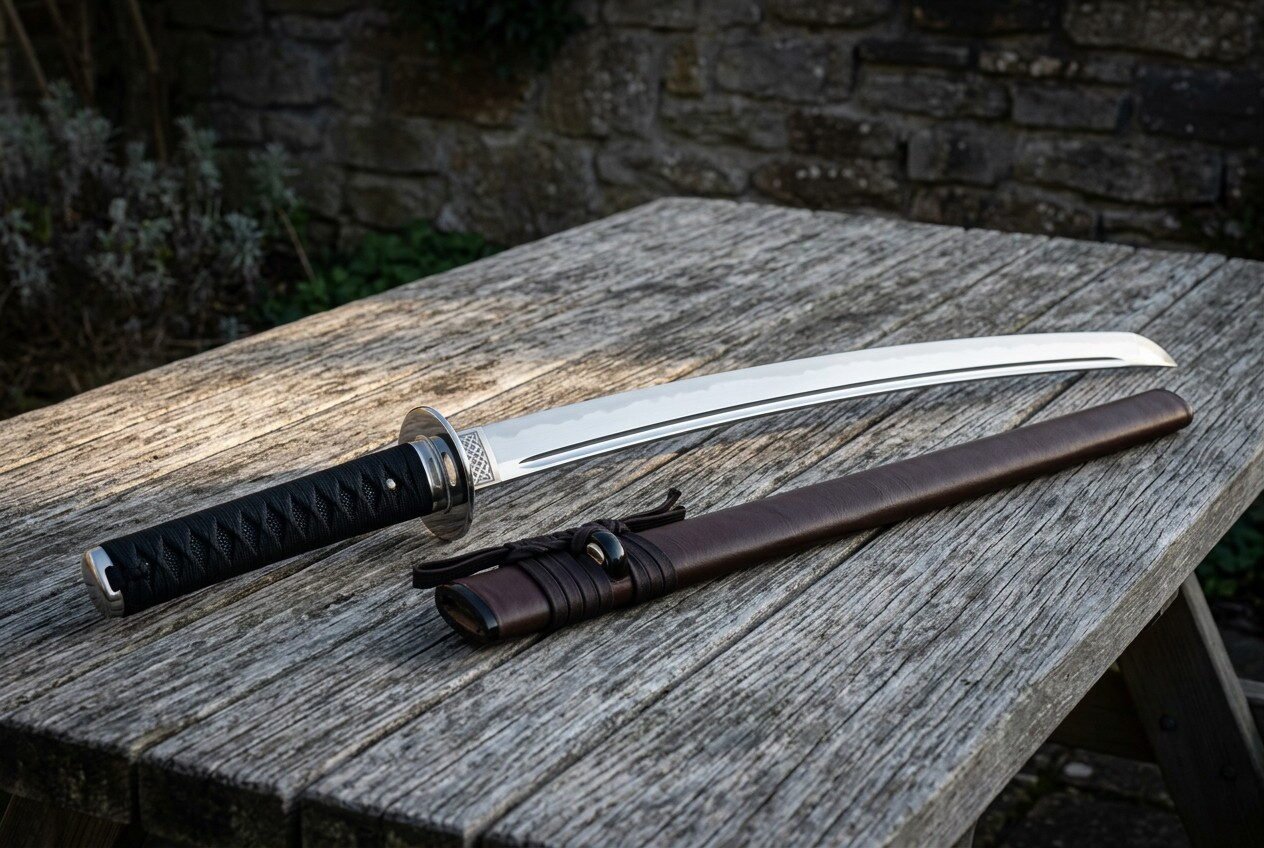
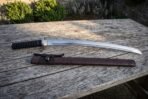
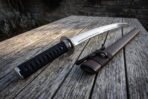
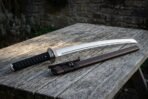
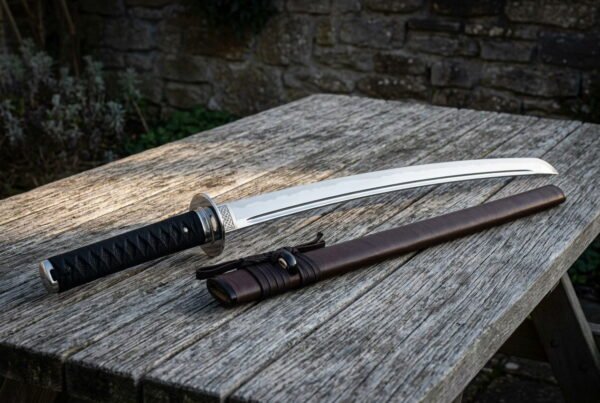
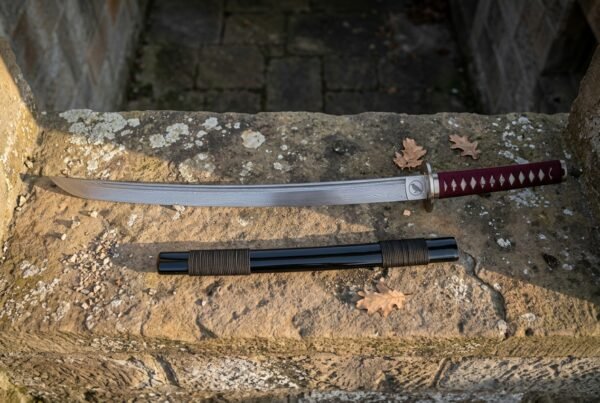
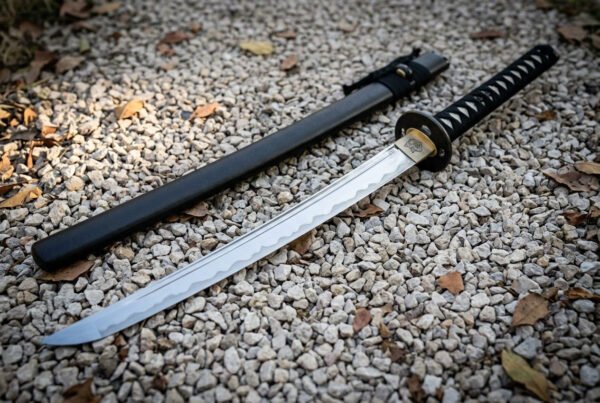
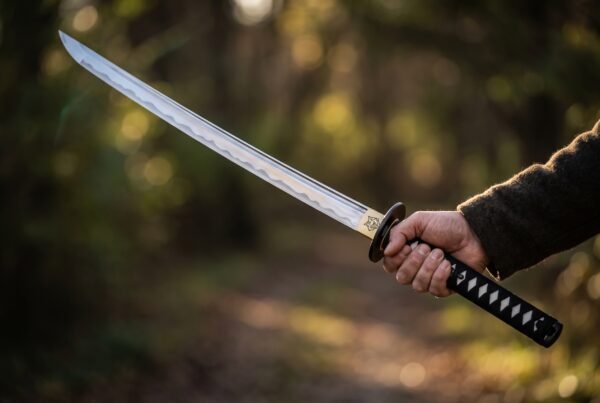
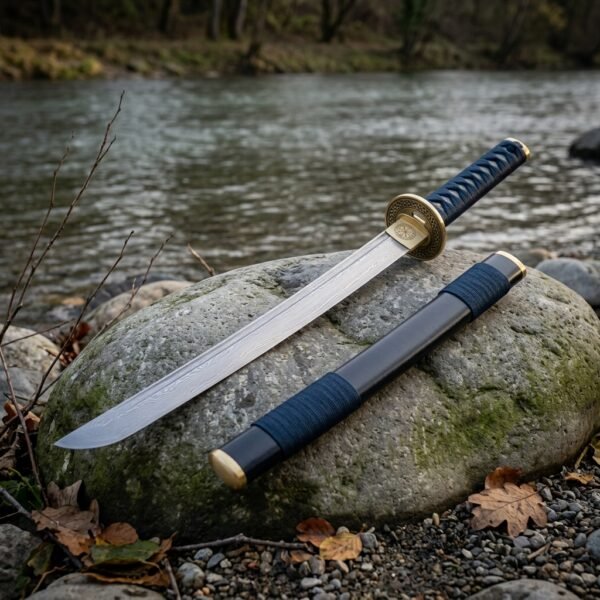
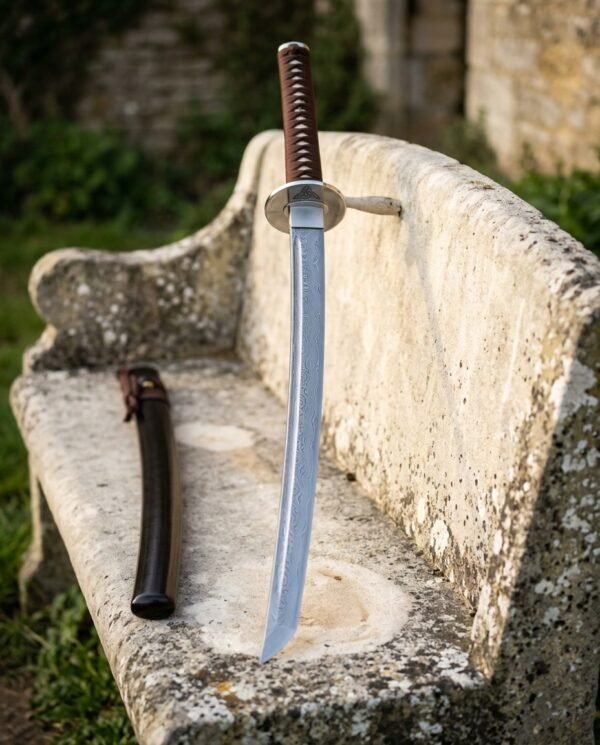
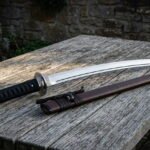
Look along the edge of this one and you will see a soft cloudy line running parallel to it, wandering slightly as it goes. That is the hamon, and it is not decoration. Before the quench the smith coats the spine of the blade in a thick layer of clay and leaves the edge bare or thinly covered. When the hot blade goes into the water the bare edge cools in a fraction of a second and locks into hard martensite, while the clay slows the spine enough that it cools into softer pearlite. The line you can see is the border between the two structures. It is the reason a properly made single edged blade can hold a hard edge and still bend rather than snap. Ours is forged, ground, hardened and polished by hand in the Czech Republic, and it ships fitted in the leather covered saya you see in the photograph. If the wakizashi brought you here, the Japanese swords are the obvious next stop.
Specifications
| Blade material | 1095 high carbon steel, hardened to 54 to 58 HRC |
|---|
| Blade type | Single edged, curved, with a differentially hardened edge and a visible hamon |
|---|
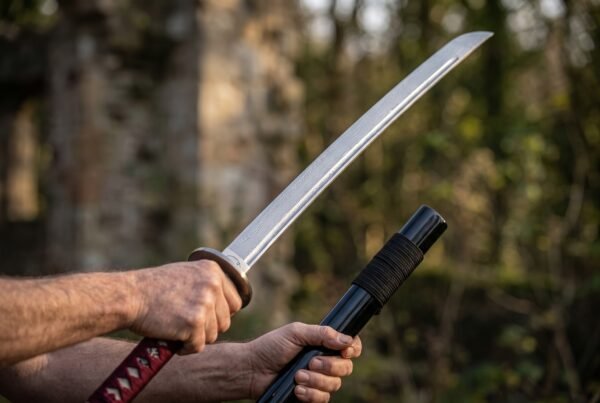
| Fuller | Single groove running along the upper blade below the spine |
|---|
| Overall length | Approximately 28 inches |
|---|
| Blade length | Approximately 20 inches |
|---|
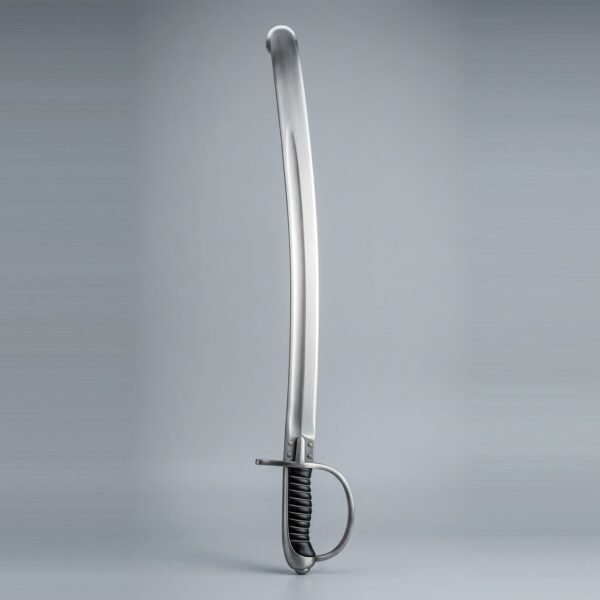
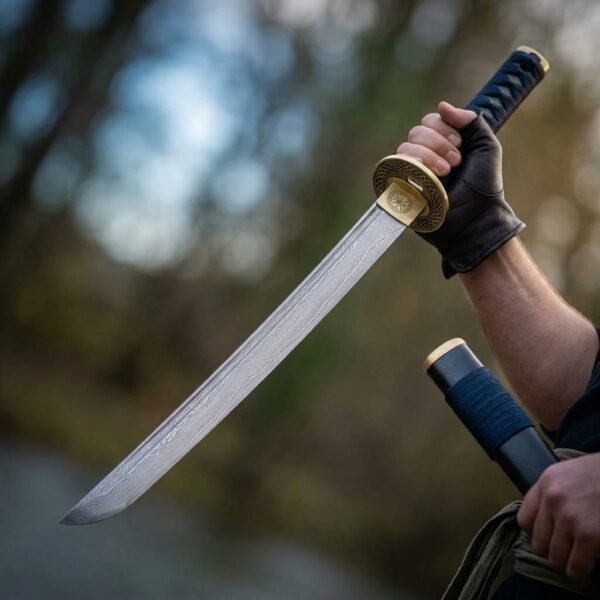
| Handle | Black cord wrap in a diamond pattern over a hardwood core, approximately 8 inches |
|---|
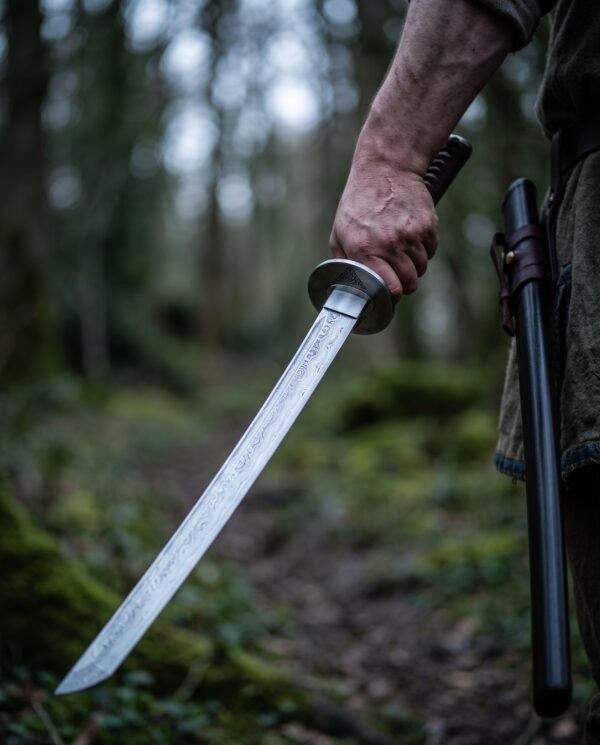
| Fittings | Round steel guard with a hatched rim, steel collar, steel butt cap |
|---|
| Scabbard | Wooden saya covered in dark brown leather with a cord wrap and a retaining knot |
|---|
| Finish | Bright hand polished blade, satin steel fittings |
|---|
| Included | Sword and leather covered saya |
|---|
| SKU | RK-1831 |
|---|
Why a wakizashi is shaped the way it is
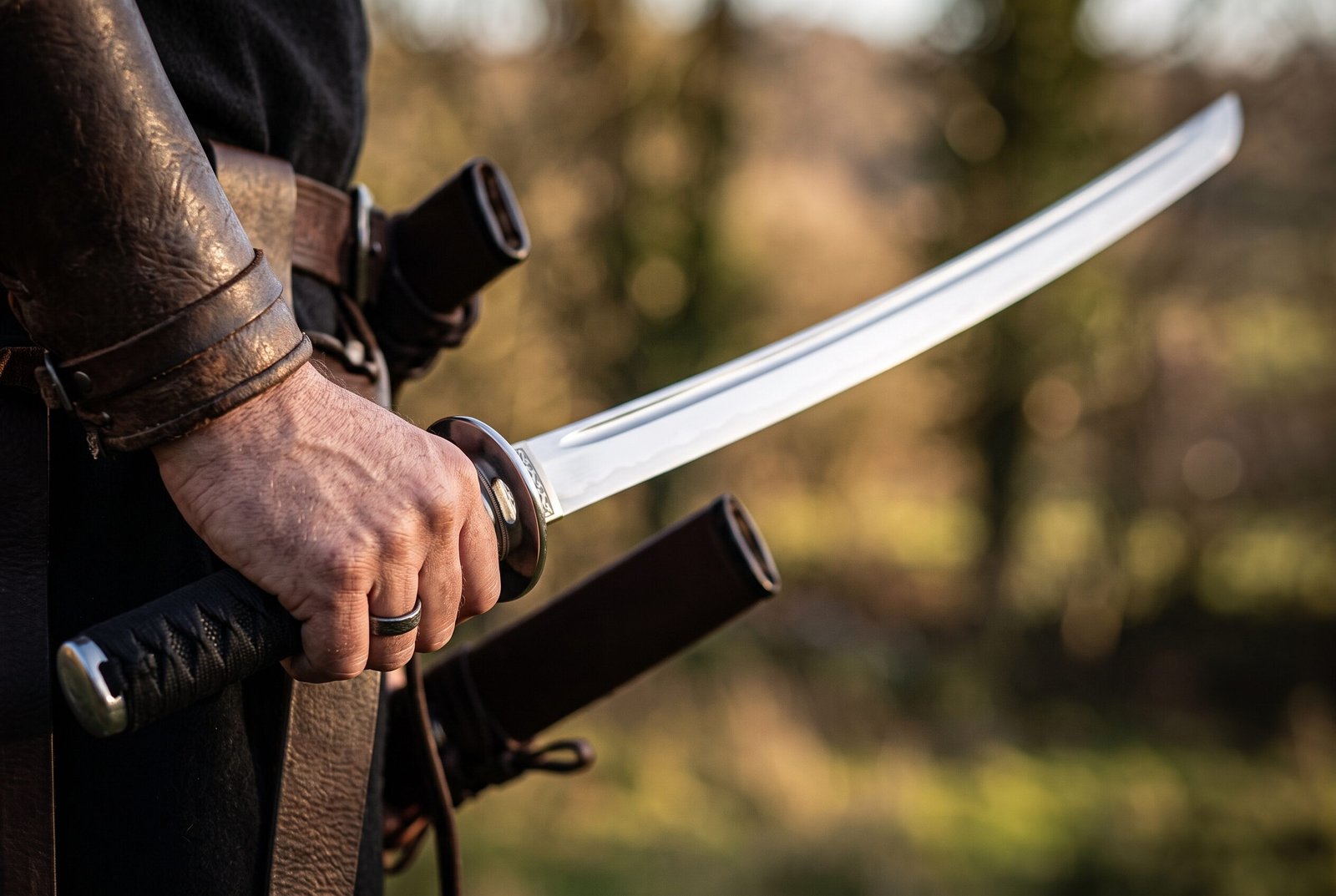
A wakizashi is not simply a katana that came out short. The proportions are different on purpose. The curve, the sori, sits further down toward the tip than it does on a long sword, which puts the point in line with the hand and makes the sword quick to bring on target in a confined space. The blade is proportionally wider and thicker through the middle, because a short blade has less mass to work with and needs the section to keep authority behind the cut. The handle is long enough for two hands on a blade this size, which sounds excessive until you actually pick one up and find that the second hand is what turns a short sword from a large knife into something you can control through a full arc.
The other thing worth knowing is the saya. A Japanese scabbard does not grip the blade along its length. It is hollowed so the blade floats clear of the wood, and the sword is held in place by friction at one point only, where the collar at the base of the blade seats into the mouth of the scabbard. That is why a well fitted sword comes out with a light push of the thumb and why it will not rattle. It also means the saya has to be treated as part of the sword rather than as a box to keep it in.
The steel and how it is treated
1095 is a simple high carbon steel, close to one percent carbon and very little else. There is nothing exotic in it and that is exactly why it has been used for cutting tools for as long as anyone has been making them. It takes a hard edge, it sharpens easily on an ordinary stone, and it responds cleanly to differential hardening, which is what makes the hamon possible in the first place. We take ours to between 54 and 58 HRC at the edge, which is hard enough to hold an edge through real use and soft enough that the blade will take a knock without cracking.
The trade for that simplicity is that 1095 is not stainless. It will rust if you leave it wet or if you leave fingerprints on it for weeks in a damp room. A wiped blade and a thin film of oil is all it takes, and the habit becomes automatic quickly.
Engraving, runes and your own design
Use the rune converter on this page to turn a name, a date or a short phrase into Elder Futhark and we will cut it into the steel, the leather or the wood. If you would rather have a Viking pattern than a rune line, choose your own design in the engraving option above the add to cart button and tell us where it goes. Where a piece already carries an engraved design, your chosen engraving replaces it rather than sitting alongside it. If you want to talk it through first, the engraving page shows what the cut actually looks like at size on a blade and on leather.
Handling and balance
Balance on a sword this length sits close to the guard, roughly two to three inches out from it. That is a long way back compared with a chopping tool and it is deliberate. It means the sword feels lighter in the hand than the scales say, it changes direction quickly, and the point stays where you put it. The weight that is there is concentrated in the first third of the blade, so a cut still has something behind it.
Drawing is done with the left hand rotating the saya edge upward as the right hand pushes the collar clear, not by hauling the blade straight out of a scabbard held flat. Practise that slowly and unsharpened first if you have not handled a Japanese style sword before. The edge is close to the hand on a short sword and there is no forgiving way to learn the motion fast.
Care
Wipe the blade down after handling and put a thin film of mineral oil or camellia oil over it before it goes back in the saya. Do not store it oiled and wet, and do not leave it in the scabbard in a damp garage for a season. Leather over wood will hold moisture against steel if you give it the chance. The leather on the saya wants a light feed with a neutral leather conditioner once or twice a year, worked in with a cloth and buffed off, which keeps it supple and stops the surface cracking where it flexes at the mouth. Sharpen on waterstones with the existing bevel, following the curve rather than fighting it. Our full guidance on steel care covers oiling, storage and rust removal in more detail.
Made in the Czech Republic
The work behind this piece happens in a Czech Republic workshop that has kept to the old methods. Steel is forged and heat treated by hand, the grind is taken down by eye rather than by machine, and the handle, fittings and sheath are cut and finished one at a time. Because of that, every piece carries small marks of the hand that made it.
Ransack Viking is a United States company. We import direct, check each piece when it reaches us, and ship from our Chicago, Illinois warehouse. Engraving is added here in the United States after arrival, so the piece you receive is finished to your order.
A note on handmade variation
This is hand made rather than machine made or bulk produced, so what arrives will not be a pixel for pixel copy of the photograph. The hamon wanders differently on every blade because the clay is laid on by hand and no two quenches are identical. The polish catches the light in its own way. The leather on the saya is a natural material and takes colour unevenly, so one will be a shade warmer or cooler than another, and the grain will differ. The cord wrap on the handle finds its own tension. The dimensions, the steel, the heat treat and the build are the same every time. The character is not. There is more on that in sharpening a curved blade, and in how the Japanese blade lengths line up if you want the background.
Frequently asked questions
Is it sharp when it arrives
Yes. It comes with a working edge put on by hand and it will cut. Take it out of the saya over a table rather than over your leg the first time.
Is the scabbard included
It is. The leather covered saya in the photograph ships with the sword and is fitted to that specific blade, which is why the sword and its scabbard are never separated here.
Can I use it for cutting practice on tatami or bottles
It is built as a functional forged blade rather than a wall piece, so it will cut. Get instruction before you try target cutting. Most injuries with a short sword happen on the draw and the return, not the cut.
Will the blade rust
It can, because 1095 is not stainless. Wipe it and oil it and it will stay clean for years. Leave it wet in a leather scabbard and it will spot within days.
Can I have runes cut into this one
You can. Runes go well along the flat of the blade near the collar, or into the leather of the saya if you would rather keep the steel plain. Say which you want in the engraving option.
How long until it ships
One to two weeks of processing, then free shipping inside the United States. Engraved orders sit at the longer end of that window.
What is in the box
- Reedcurve wakizashi short sword in 1095 high carbon steel
- Wooden saya covered in dark brown leather with its cord wrap
- Care card covering oiling and storage
- Lifetime warranty against defects in forging, grind, heat treat and fittings
- Forged and finished in the Czech Republic
Explore the range
See the rest of the Japanese swords, the shorter wakizashi, the wider sword range, or read the guides for how we heat treat and finish a single edged blade.
Compare it with these
Closest to this in the range is the Rippleguard wakizashi, 28 inches overall. If this one is not quite right, there is the Inkfold wakizashi, 28 inches overall. Also in this group is the Twinsaya wakizashi, forged from 1095.
If you are putting a set together, the Nightreed Japanese sword sits alongside it. Pick the steel, the length and the fittings yourself on the design your own page.


Incredible craftsmanship on this one. I keep coming back to Ransack Viking because it’s always this good.