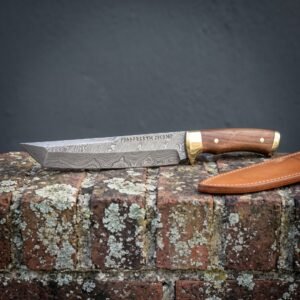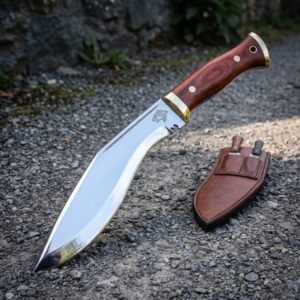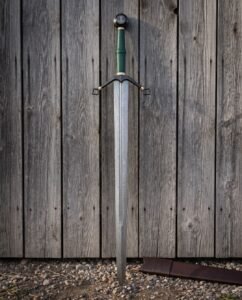
Brass on a hilt does two useful things. It weighs the pommel end so a long blade balances closer to the hand, and it does not corrode when a bare palm sweats on it. It also warms the whole piece against a dark blade, which is why it turns up on most of the swords people photograph rather than fight with.
Where the brass is worked
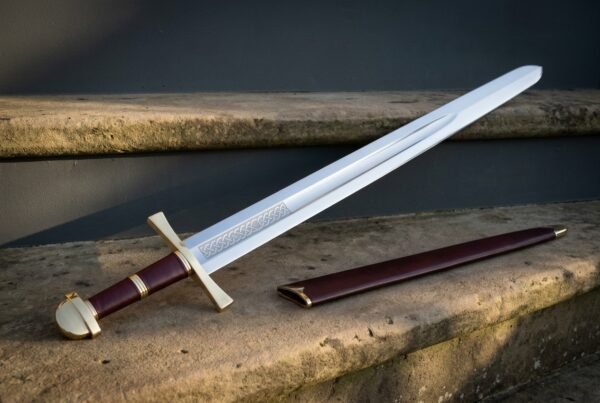
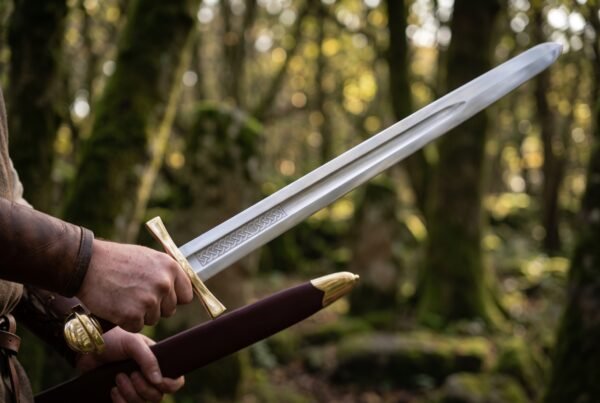
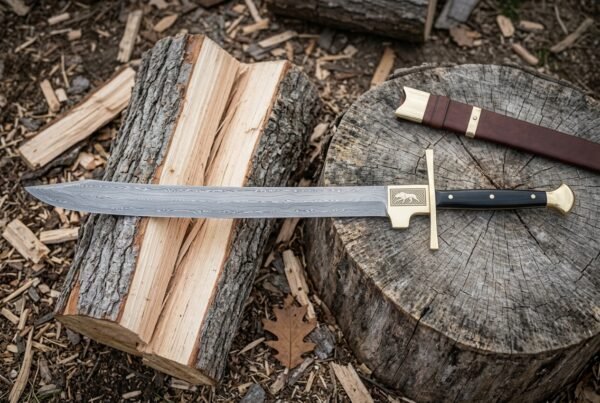
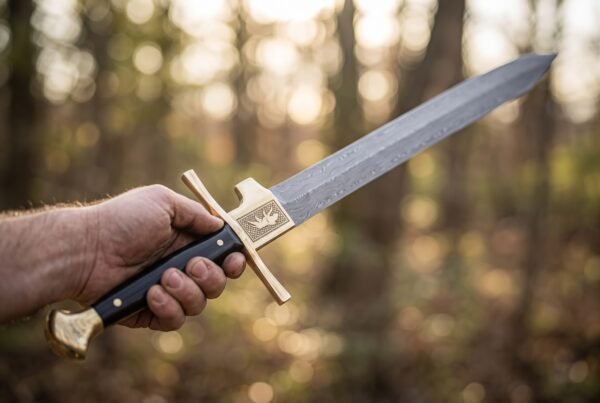
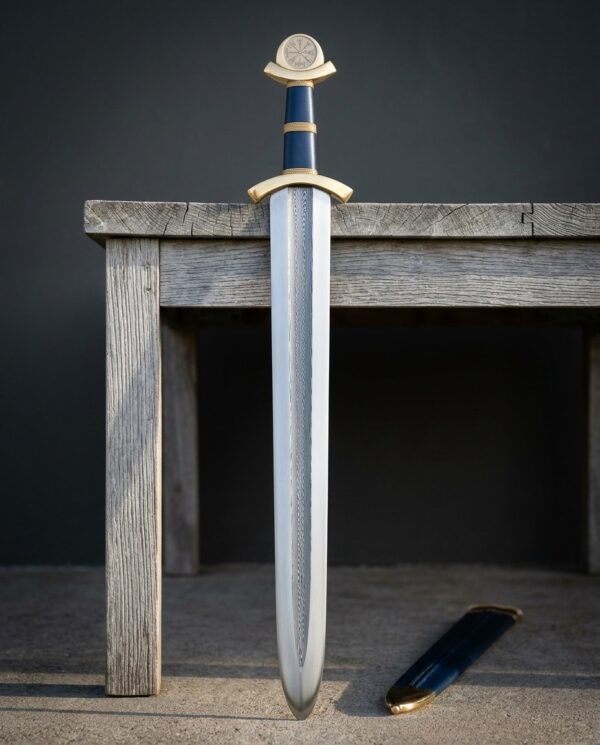
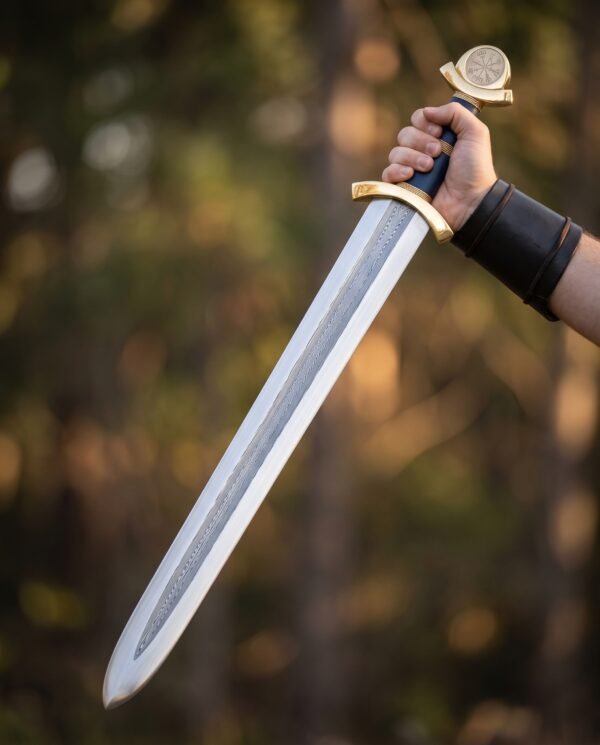
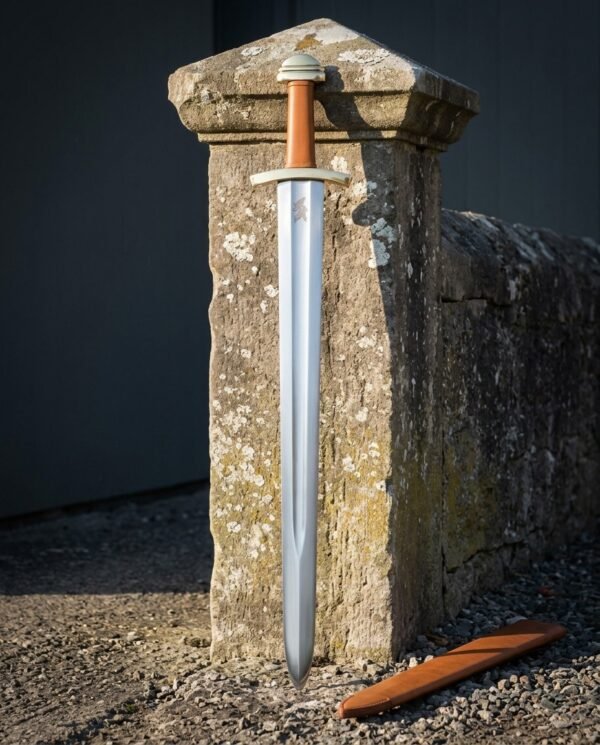
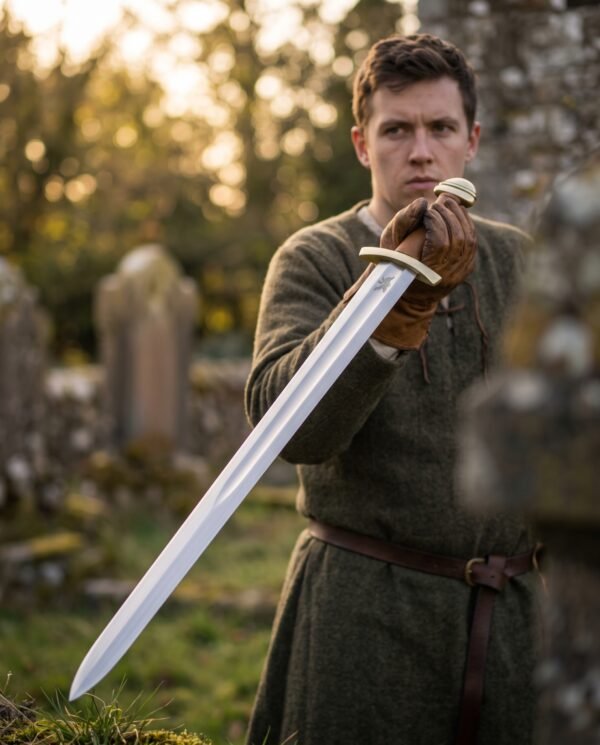
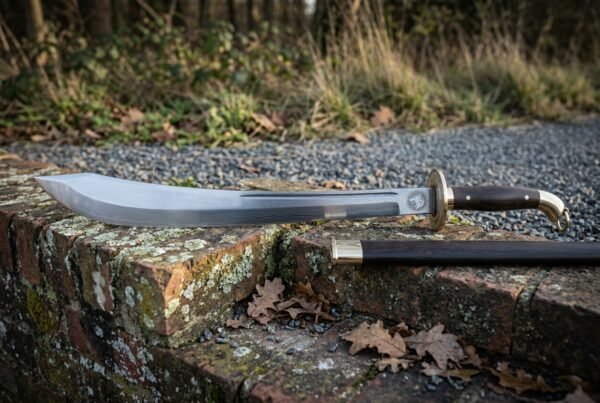
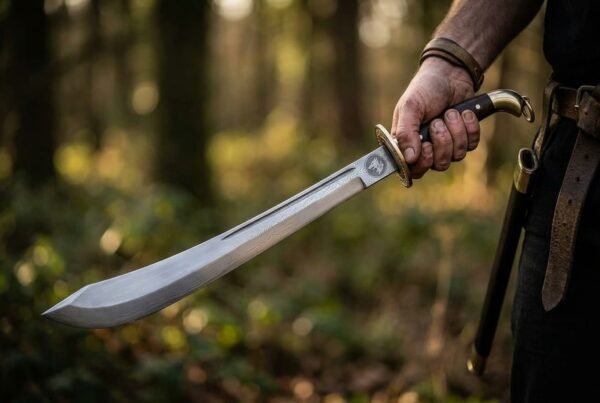
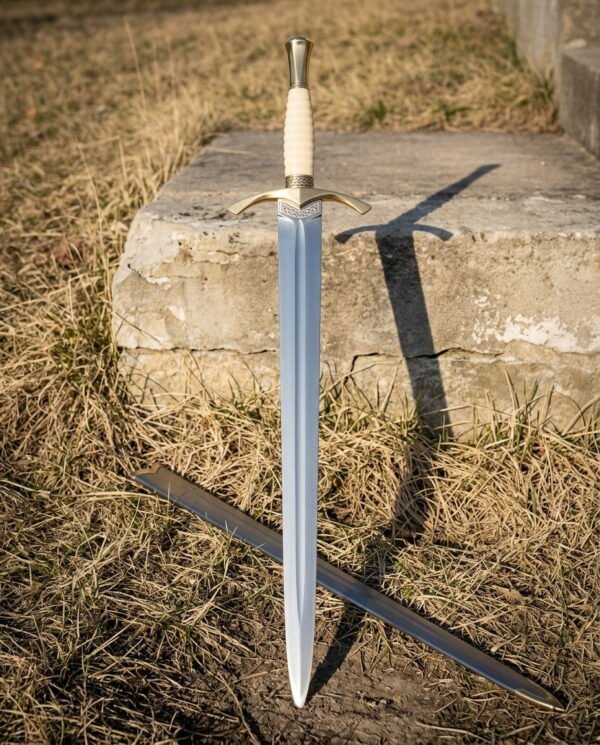
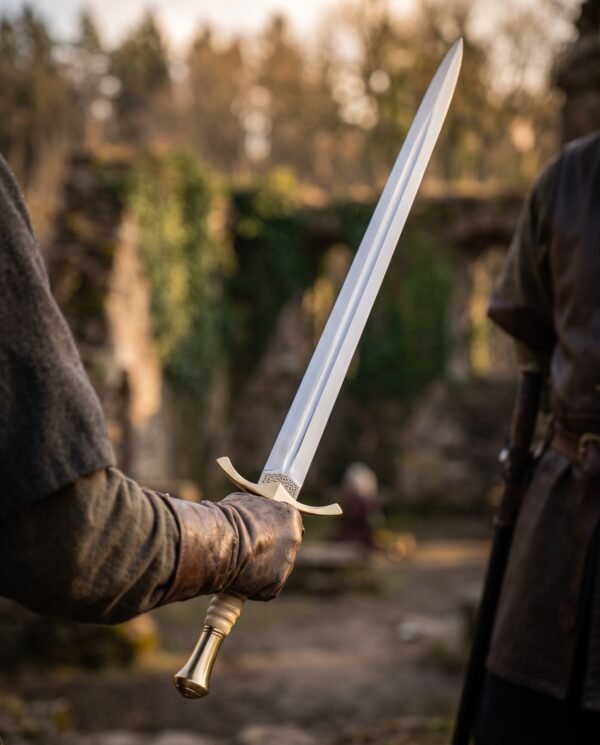
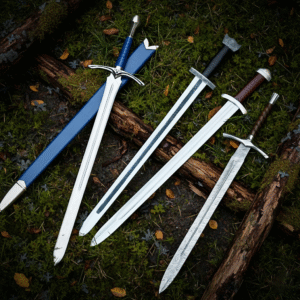
Gildwarden is the fullest example, a 37 inch knightly arming sword with a brass guard and pommel over an oxblood leather grip. Brasslight uses a bell pommel and a downswept guard with a ribbed bone toned grip and engraved knotwork bands. Emberhilt puts a brass dome pommel above a 29 inch fullered blade with an etched raven mark, a tan grip and a fitted scabbard. Fjordgleam is the layered one, 34 inches overall with a pattern welded 1095 and 15N20 core, a brass hilt and a blue leather scabbard. Two falchions carry it too: Grimwake with a brass cross guard and pommel over a dark hardwood grip, and Emberfall in Damascus at 30 inches overall.
The cross hilted blades sit in arming swords, the Norse shapes in Viking swords and the broad single edges in falchions.
Free US shipping
On most pieces. Heavier and oversized ones carry a flat charge.
Hand Forged
Heated, hammered and ground by hand.
Engraving available
Names, dates or Norse runes on most pieces.