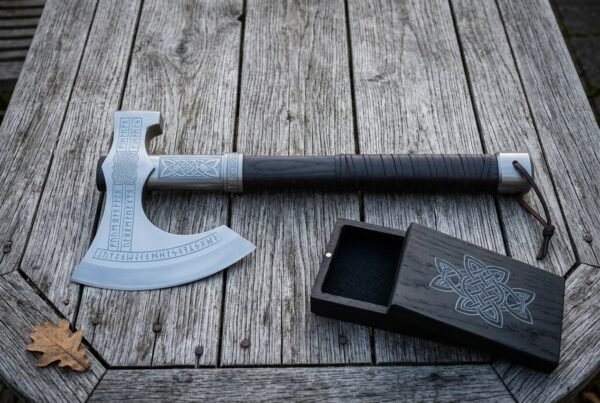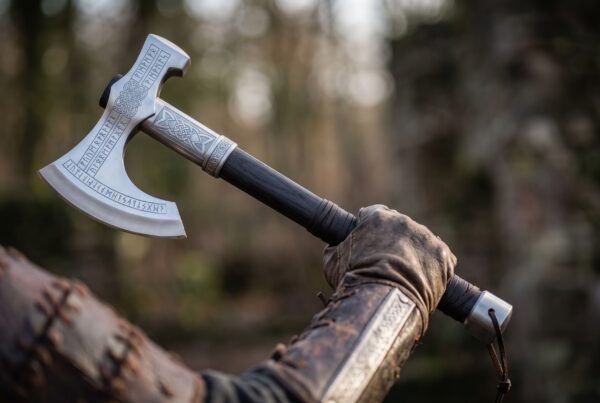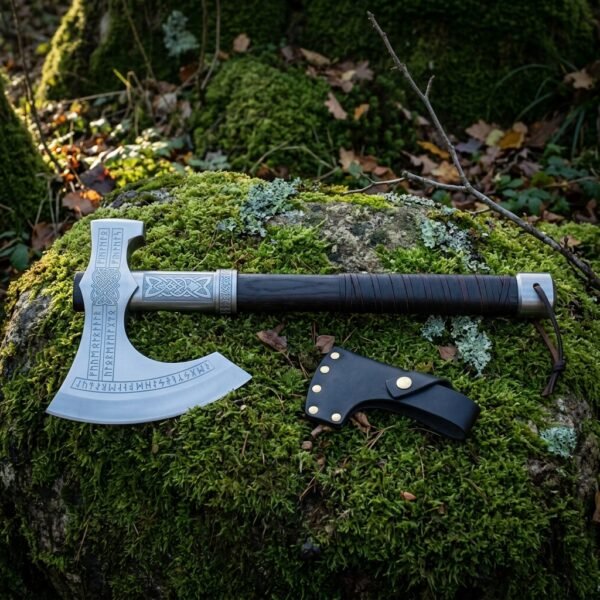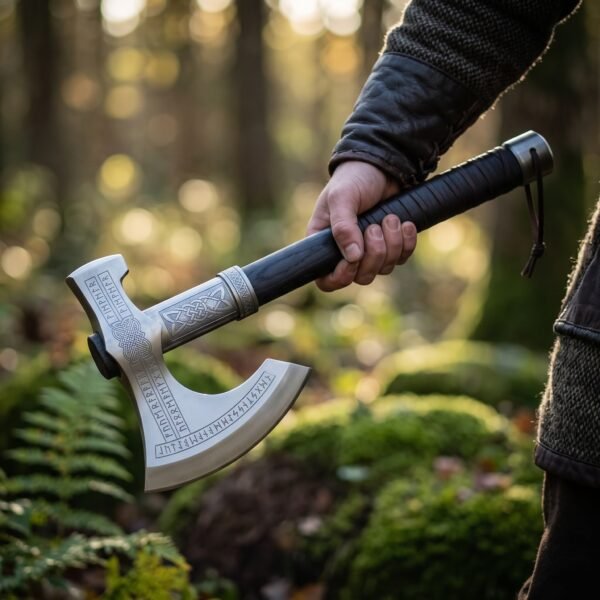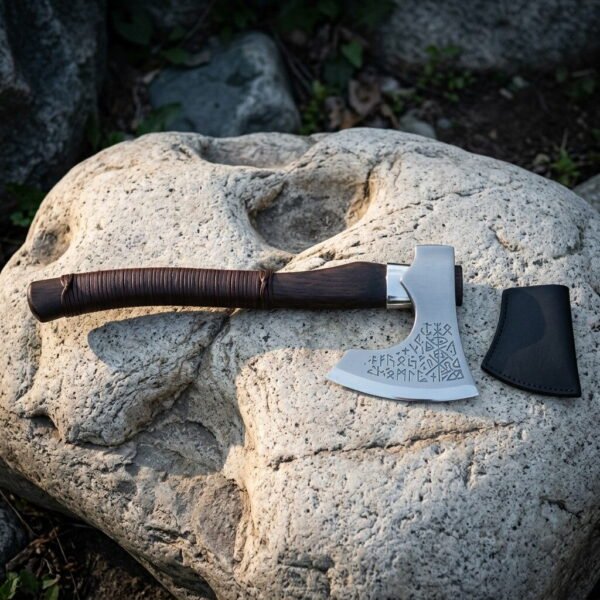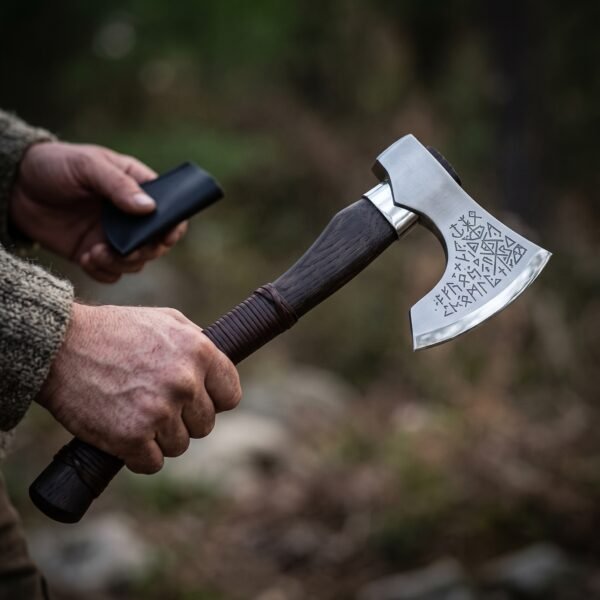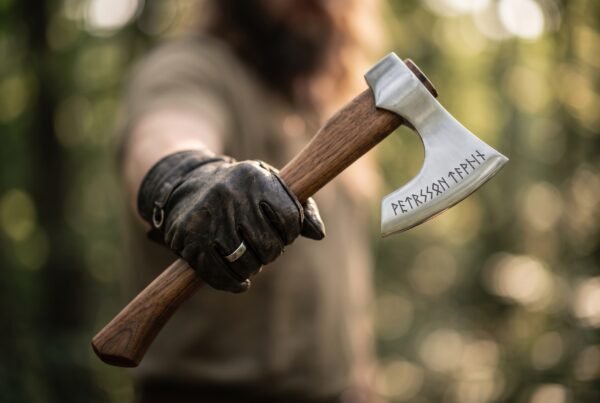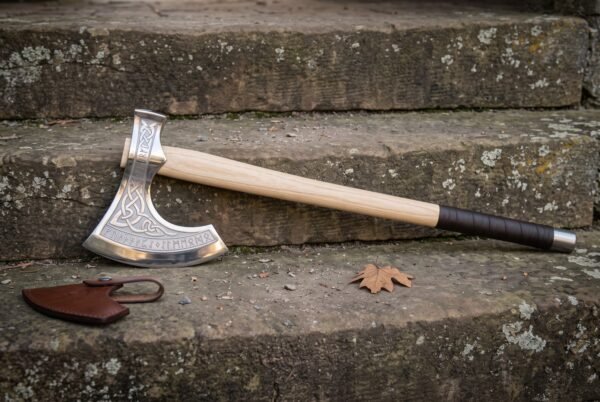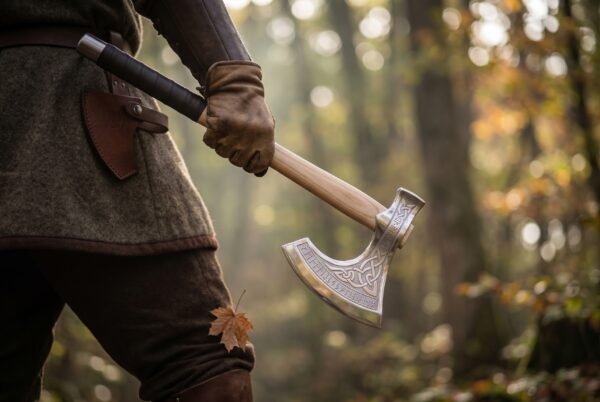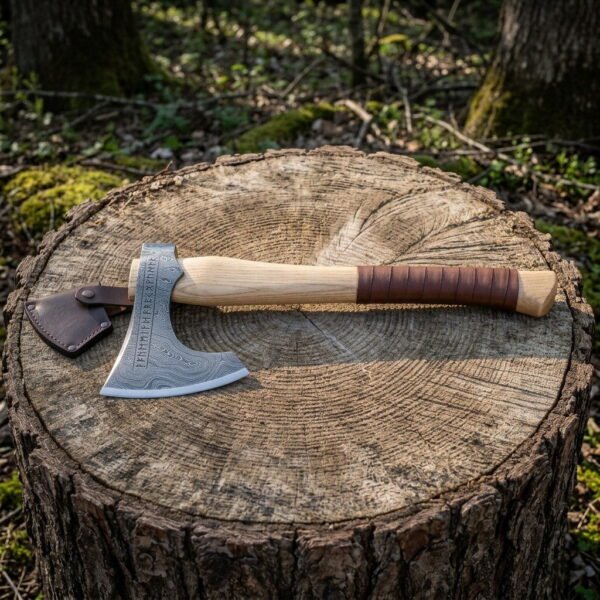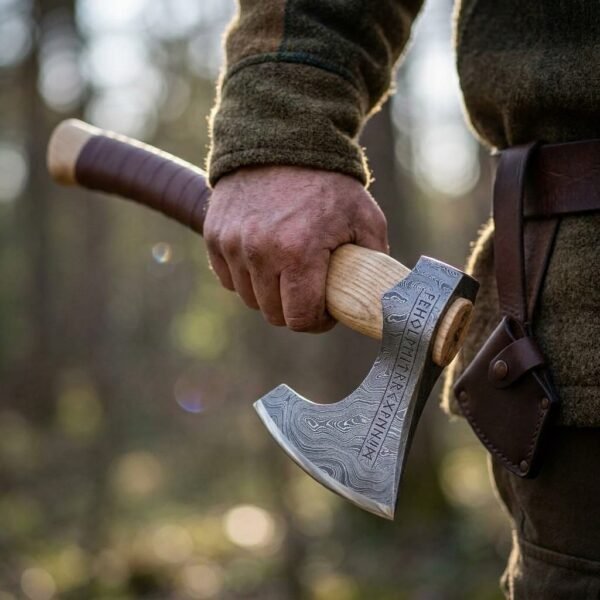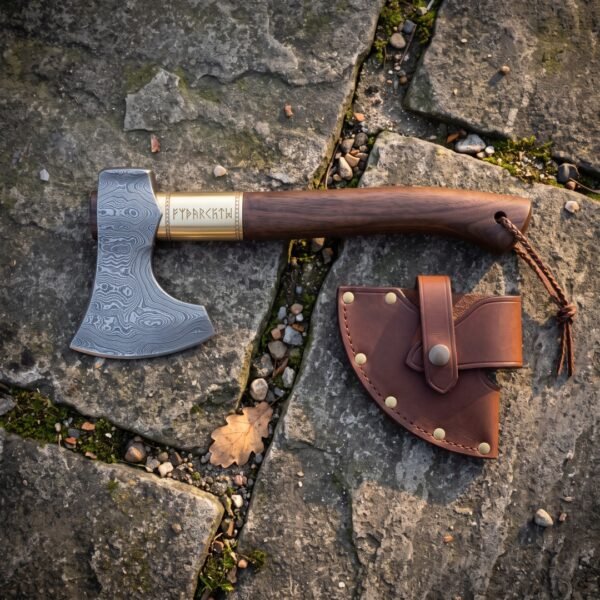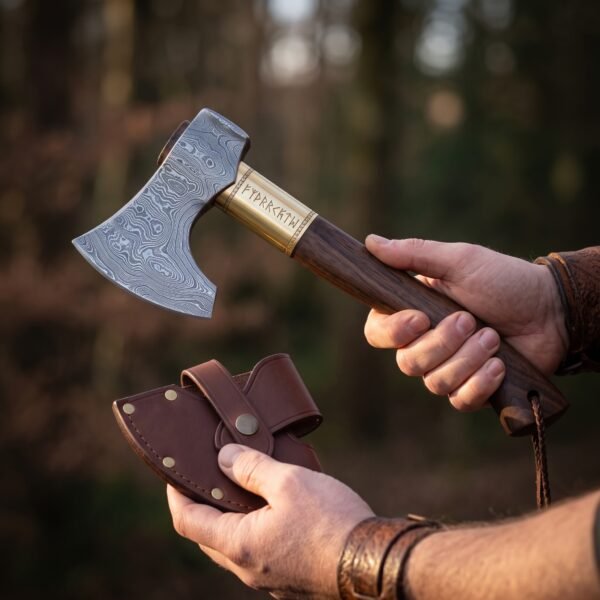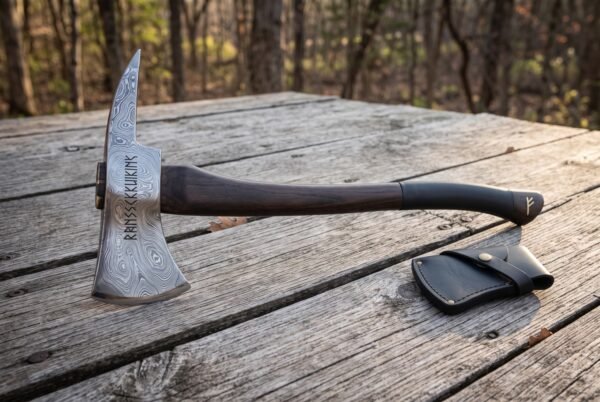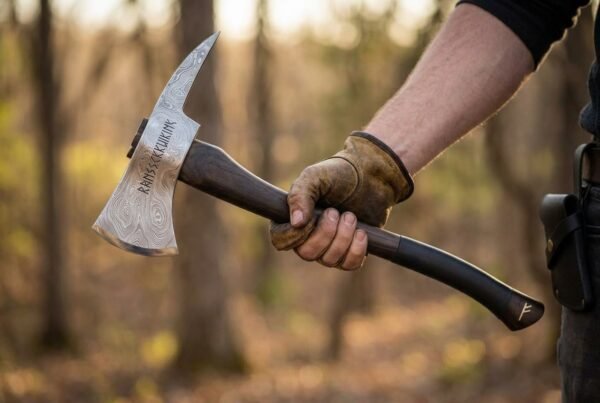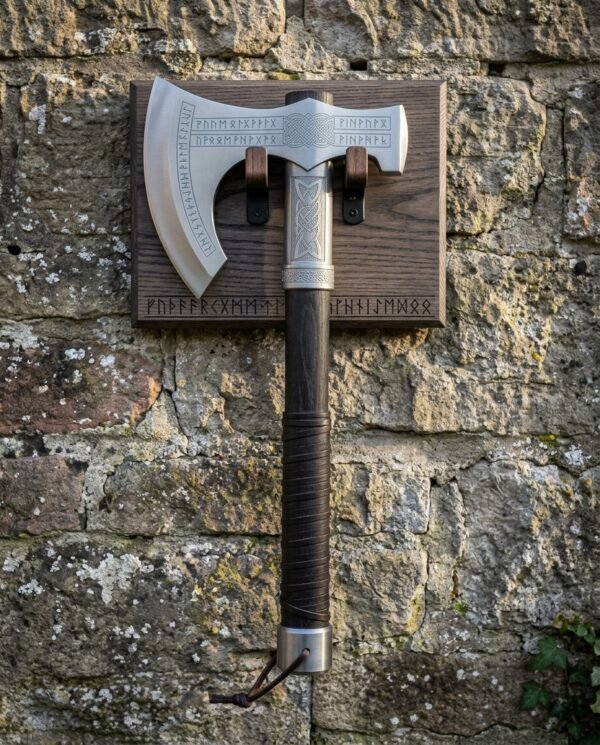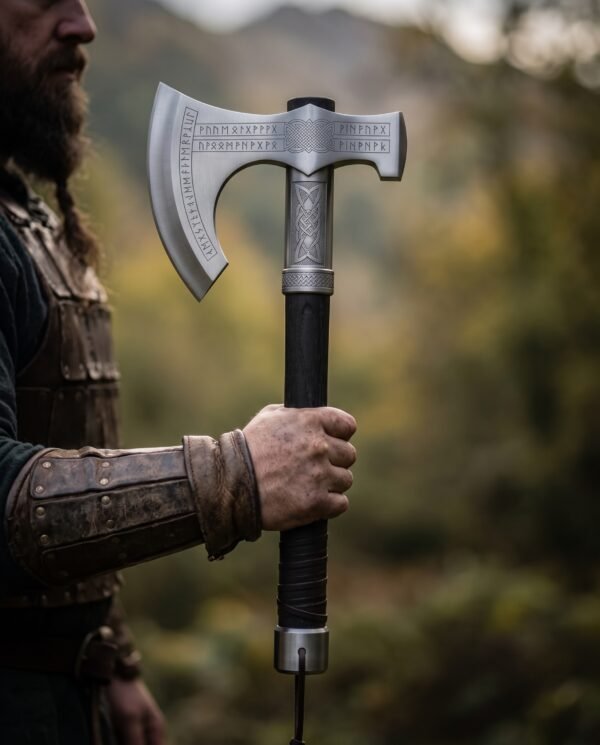
A Norse runic axe carries Elder Futhark letters cut into the head, the collar or the haft. The runes are not filler. They are an alphabet that was used for names, ownership marks and short inscriptions on real objects, which is why an axe with a rune band on it sits closer to the archaeology than one covered in generic swirls.
The marked axes
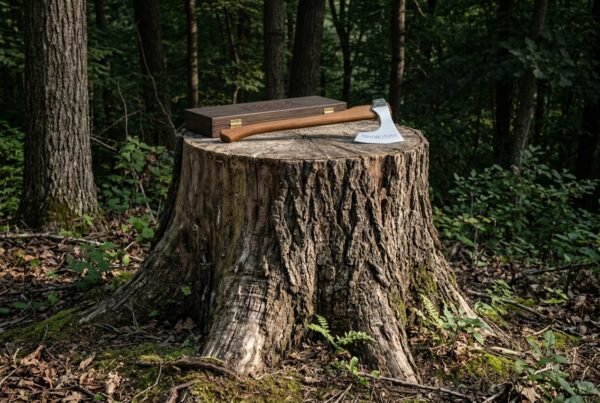
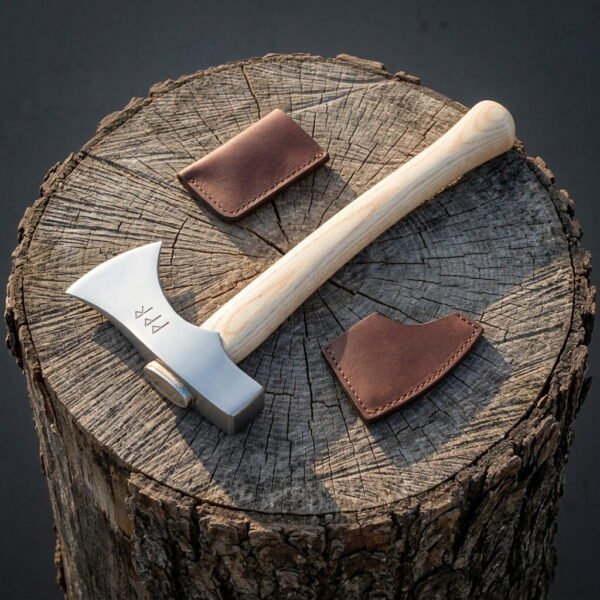
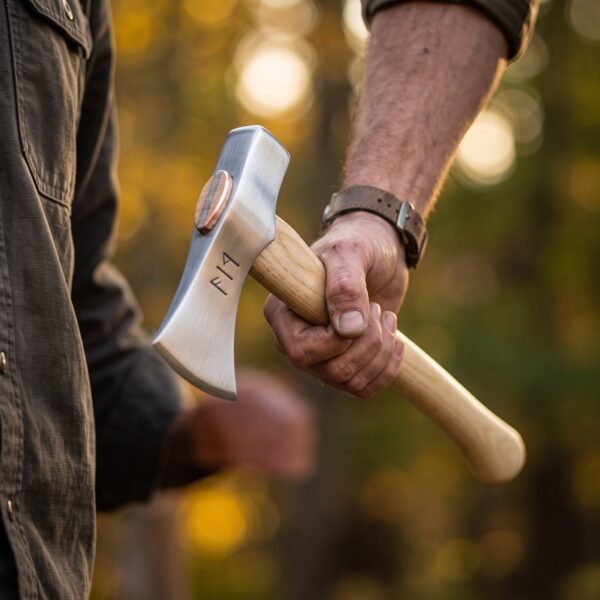
The centrepiece is a runic bearded war axe at 34 inches overall with a 10 inch cutting edge on a dark leather wrapped ash haft. It comes three ways: on its own, with a rune carved wall mount, or with a rune carved presentation box that takes the 34 inch axe in a 38 inch case. Below that sit a Damascus bearded head on a 16 inch walnut haft with a brass rune collar and a leather head sheath, a Damascus bearded hatchet with a rune line down the walnut haft, a 1095 bearded head on a 26 inch ash haft with an etched rune band and knotwork cheeks, a hand axe on a 15 inch ash handle with struck rune marks, a polished bearded head, a leather edge sheath and a pouch, a Damascus head on a 22 inch ash haft with a rune bordered edge, a 1095 head on a 19 inch walnut haft with rune and stave etching under a black leather cover, and a rune engraved head on a hickory haft that ships in a carved hardwood presentation box. Steel is plain 1095 high carbon at 54 to 58 HRC or forge welded 1095 and 15N20 Damascus at 58 to 60 HRC. Prices run from 229 dollars to 795 dollars.
What the letters say
If you are going to own an object covered in an alphabet, it is worth being able to read it. Our page on the Elder Futhark sets out all twenty four letters with the sources behind them, and runestones explained covers what was actually carved on real stones and why, which is less mystical and more interesting than the modern version. For your own text rather than a stock band, everything set up for cut work is in the engraved and personalised range, and the heavier heads are in war axes.
Ransack Viking is a US company based in Chicago, Illinois. These pieces are handmade in the Czech Republic, then imported, inspected and shipped from Chicago. Engraving is done in the US after arrival: text 19 dollars, symbol 39 dollars, family crest 49 dollars.
Free US shipping
On most pieces. Heavier and oversized ones carry a flat charge.
Hand Forged
Heated, hammered and ground by hand.
Engraving available
Names, dates or Norse runes on most pieces.