The falchion is the medieval answer to a simple question. If most of the work a sword does is cutting, why carry the weight in the wrong place? A falchion moves mass forward, widens the blade toward the point and keeps a single edge, so the balance sits out where the cut lands. Manuscript illustrations from the thirteenth and fourteenth centuries show these broad single edged swords in the hands of infantry, huntsmen and men at arms across France, England and the German lands, and the Conyers falchion in Durham Cathedral is the best known survivor. What surprises people who handle one for the first time is how quick it is. The blade looks heavy in a photograph, but the widest part is thin, and the sword recovers from a cut faster than its profile suggests. A first sword is easy to get wrong, and buying a first sword covers the traps.
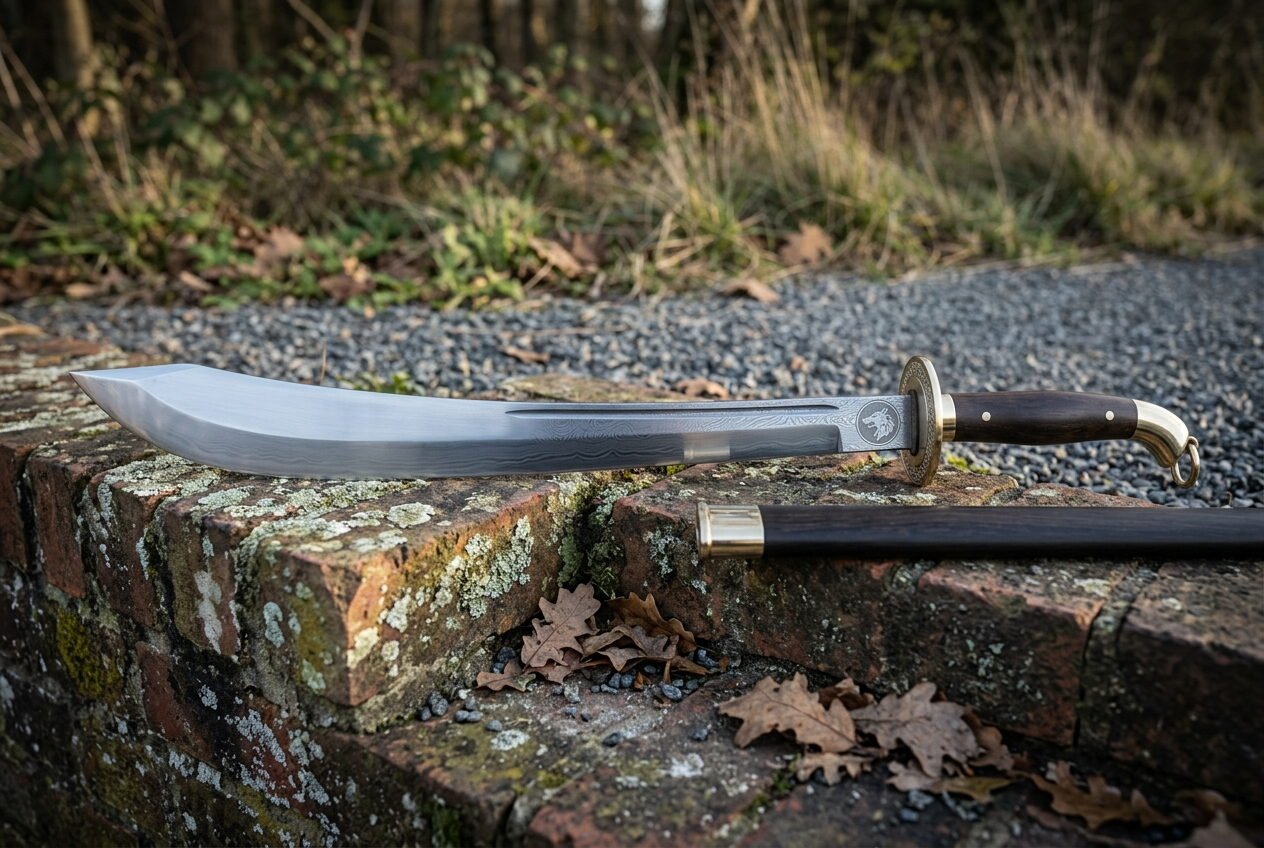
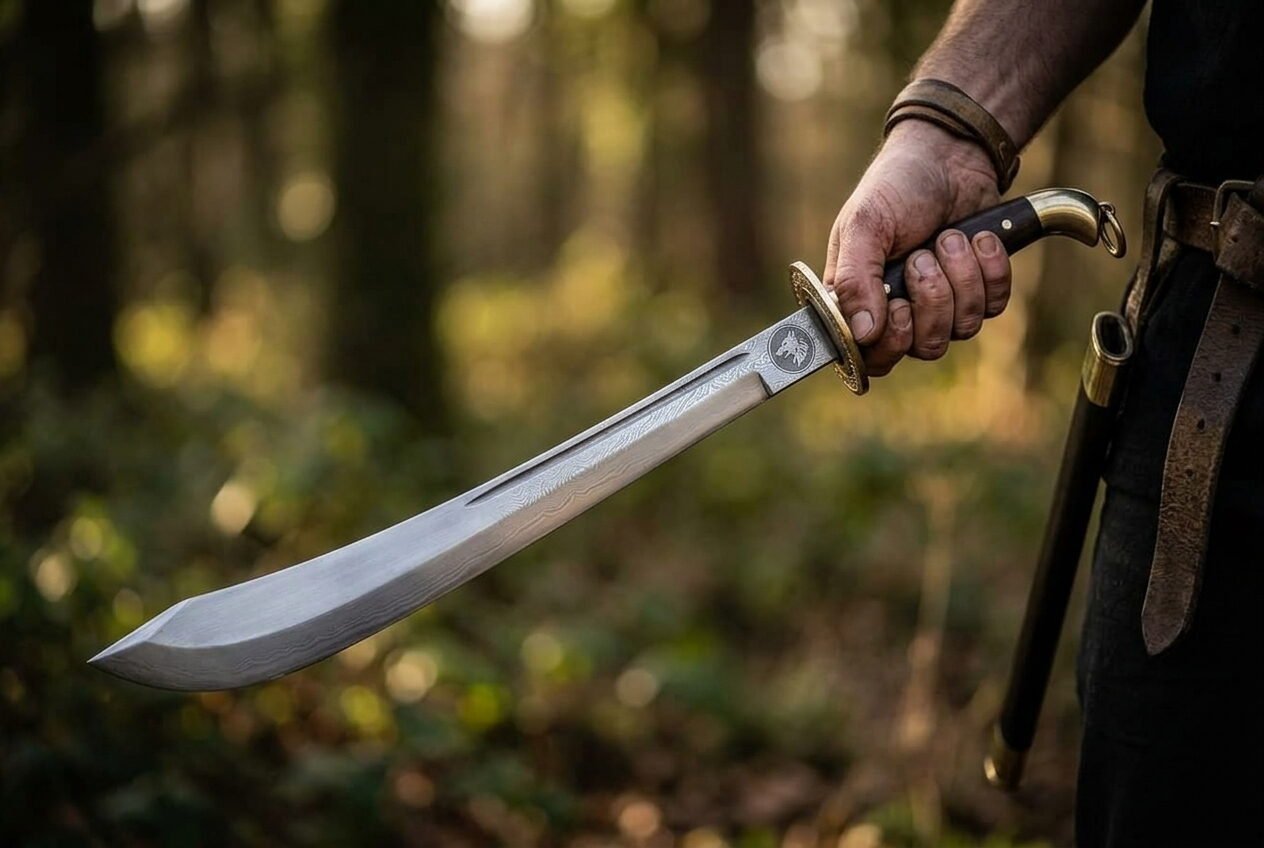
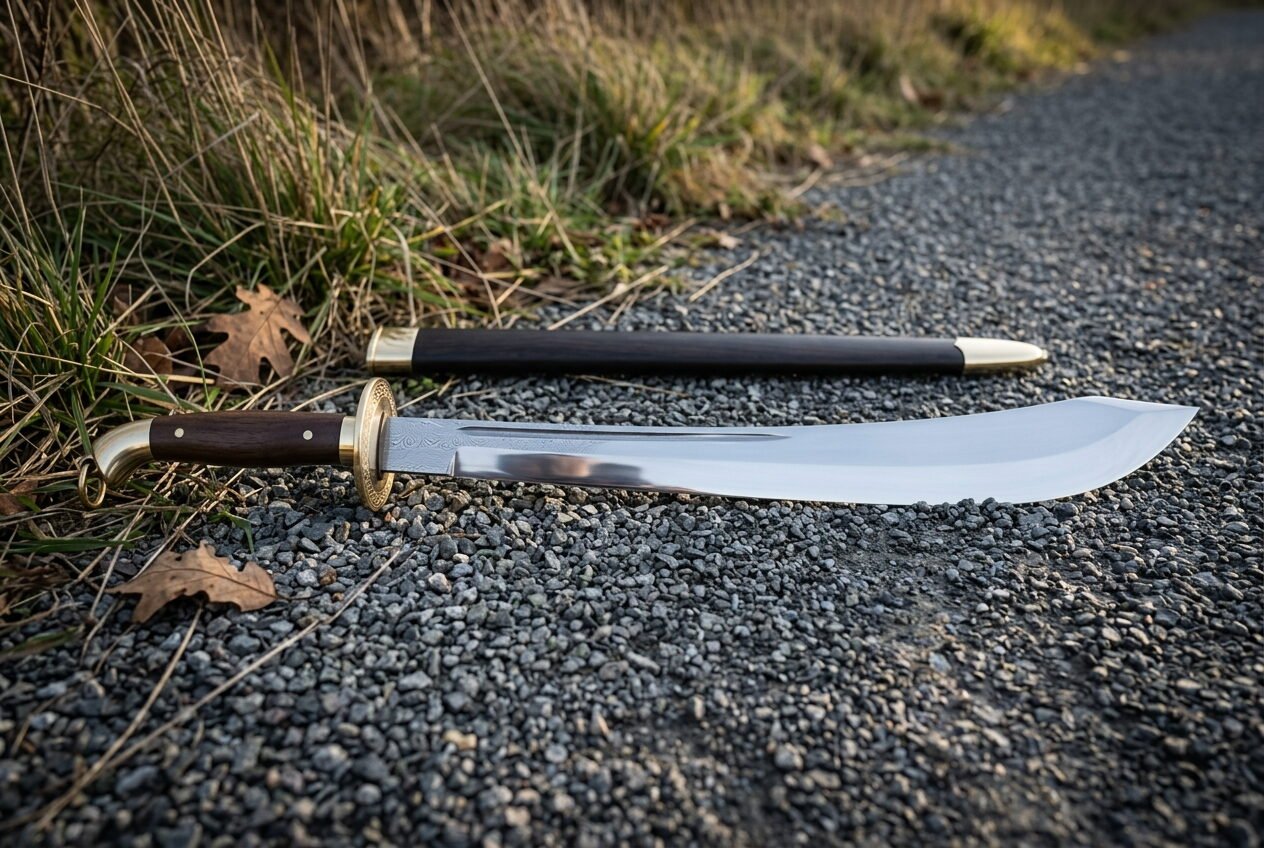
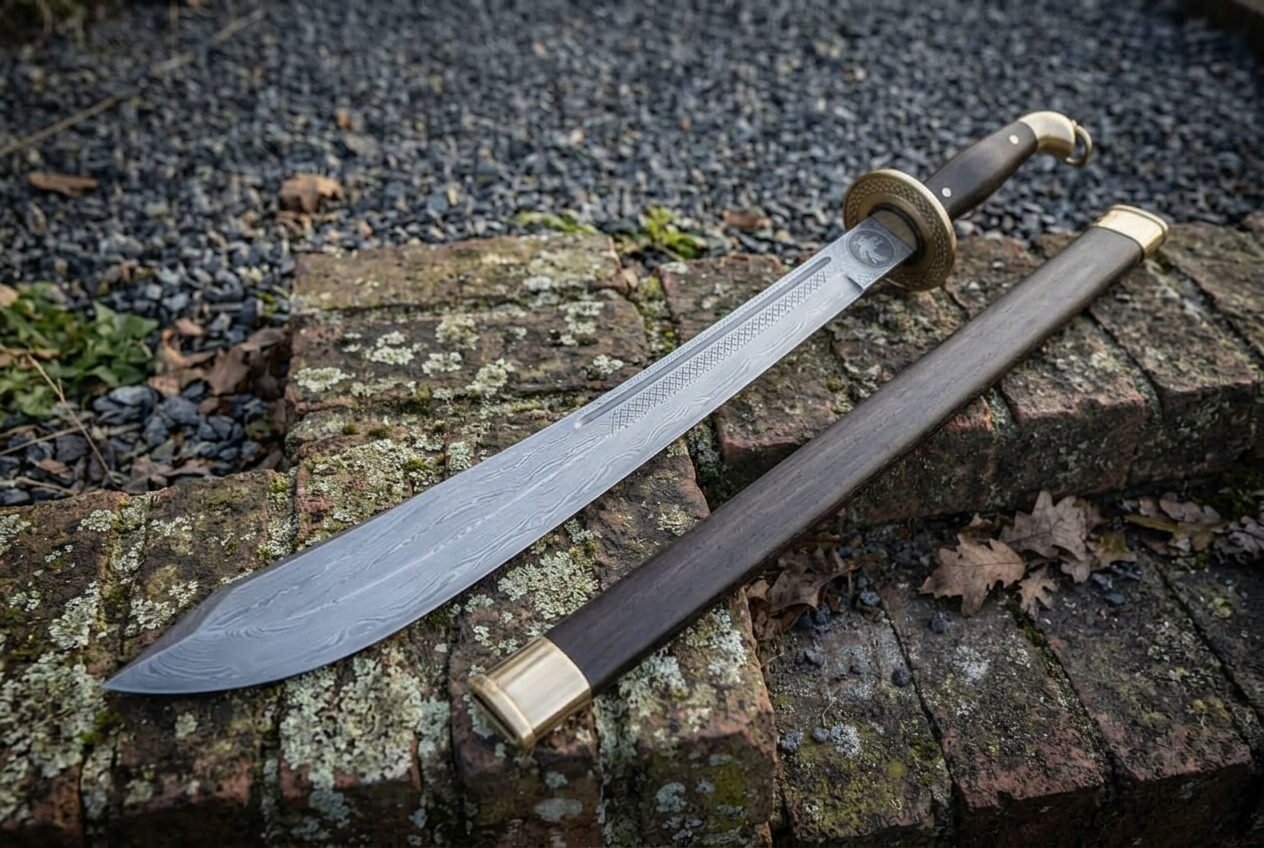
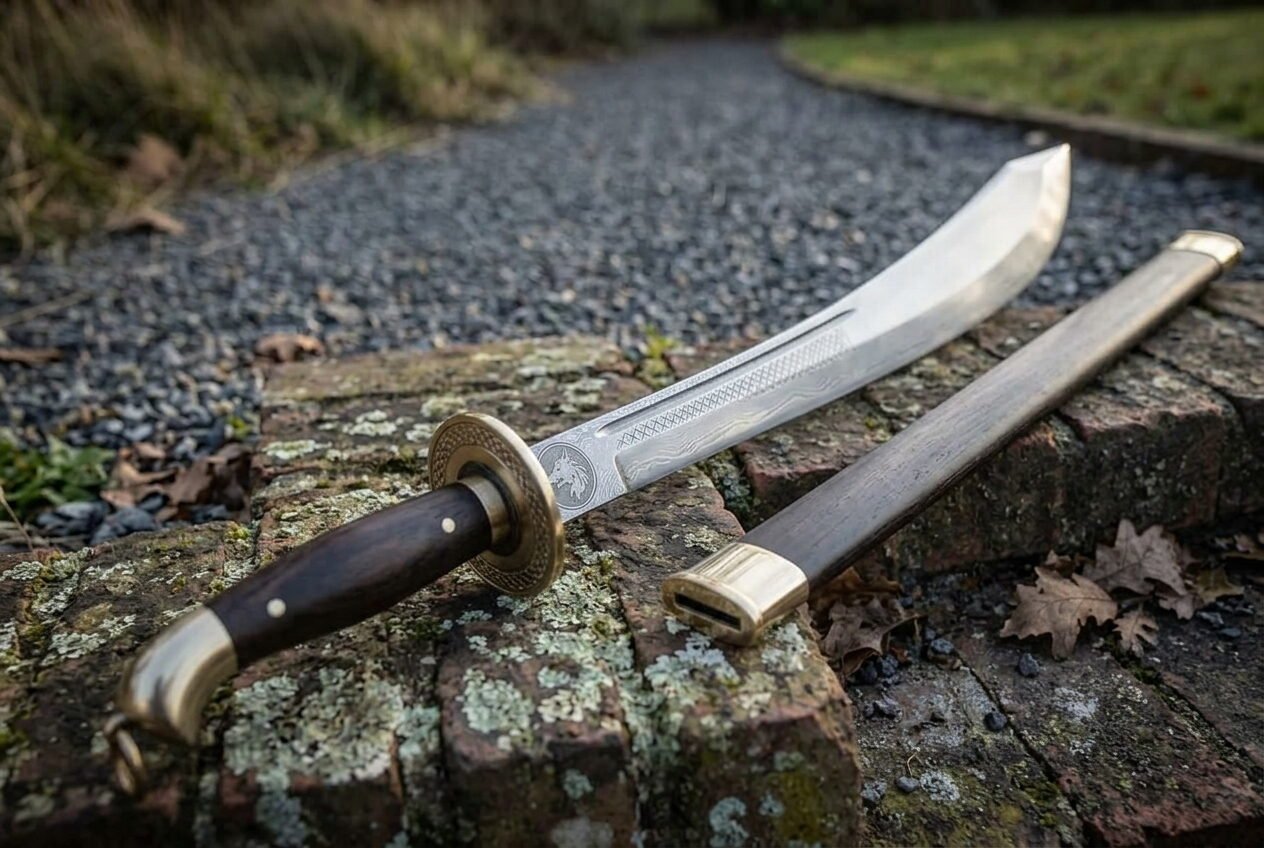
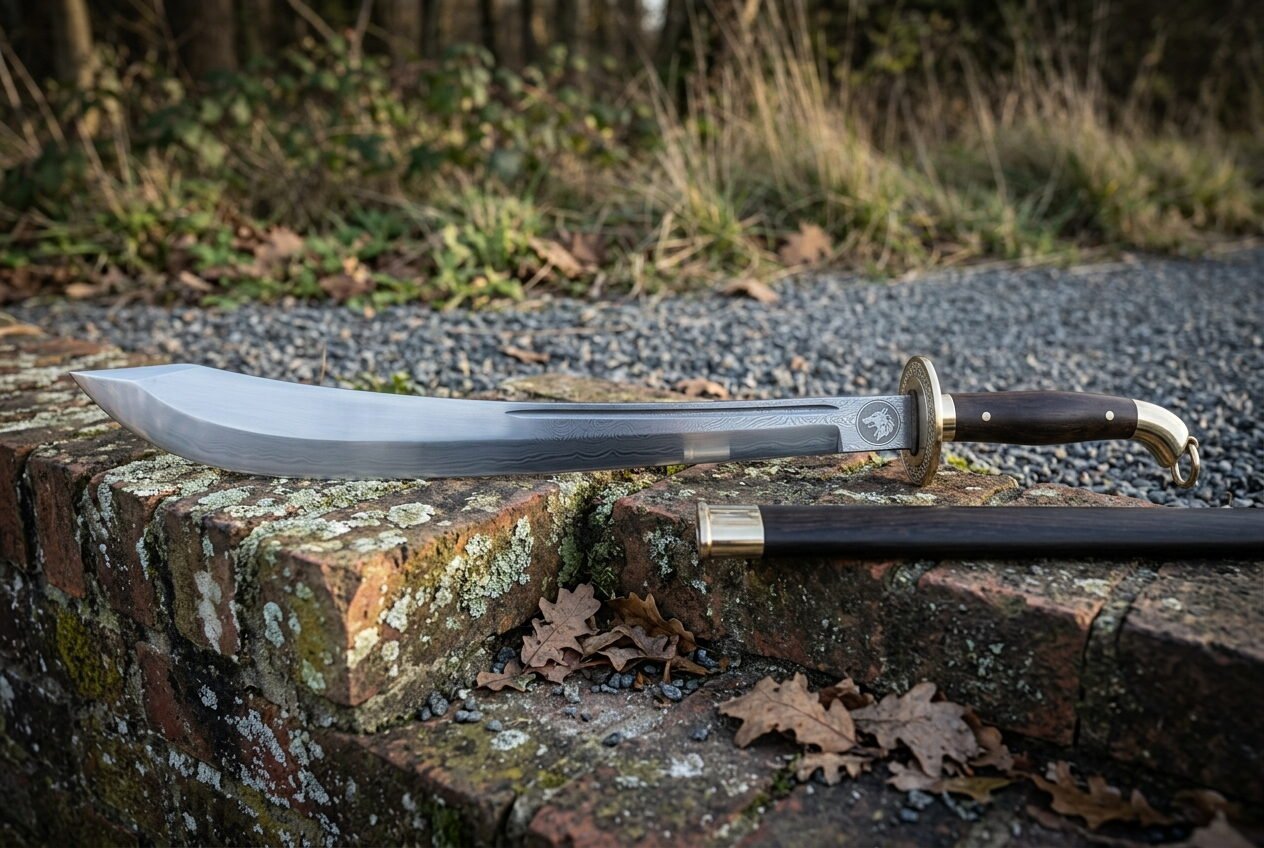
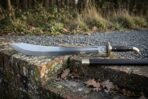
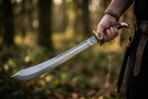
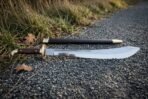
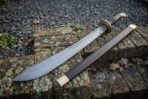
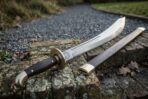
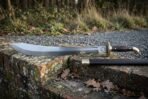
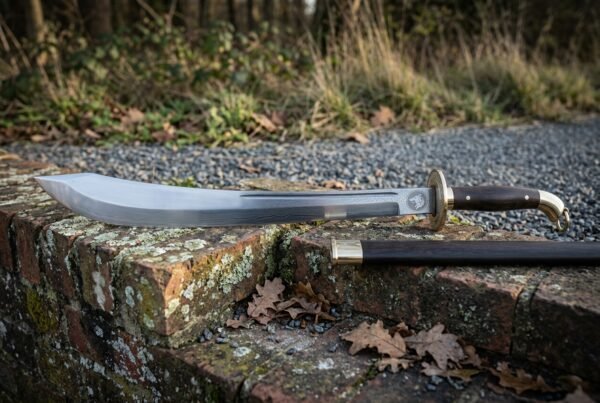
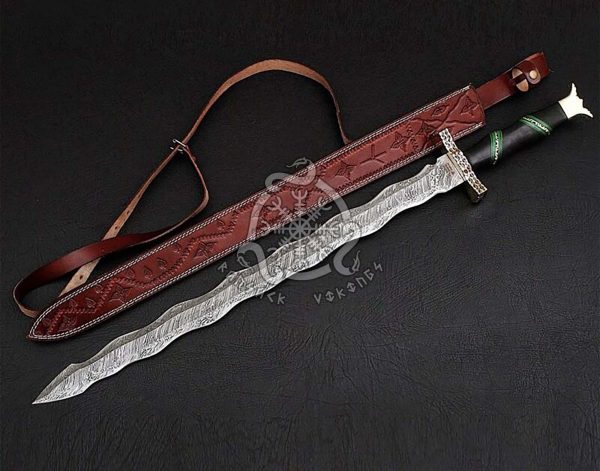
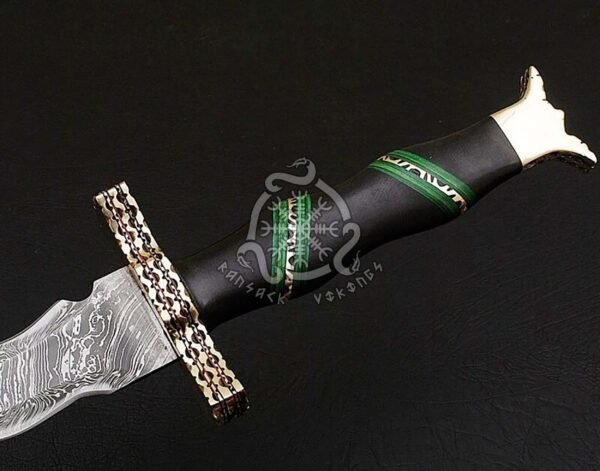
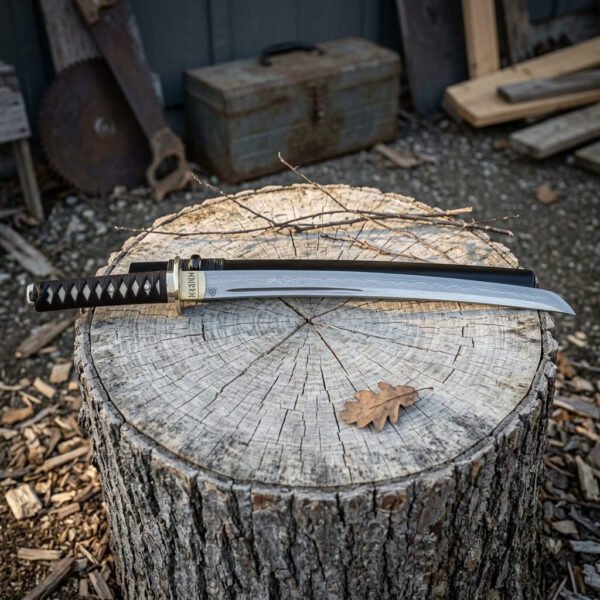
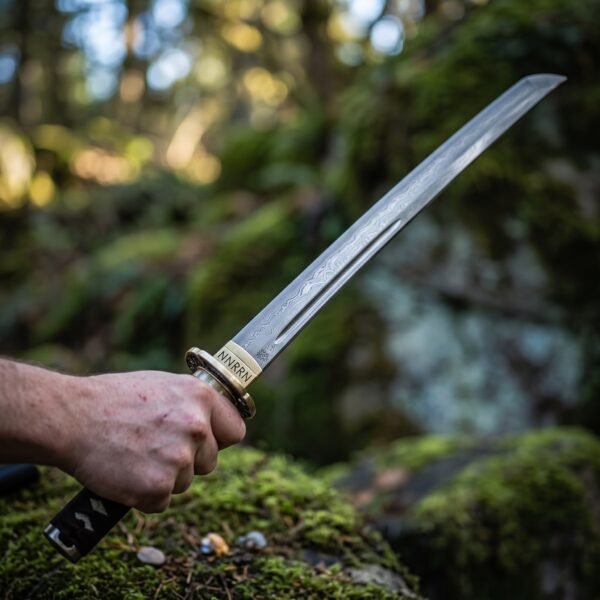
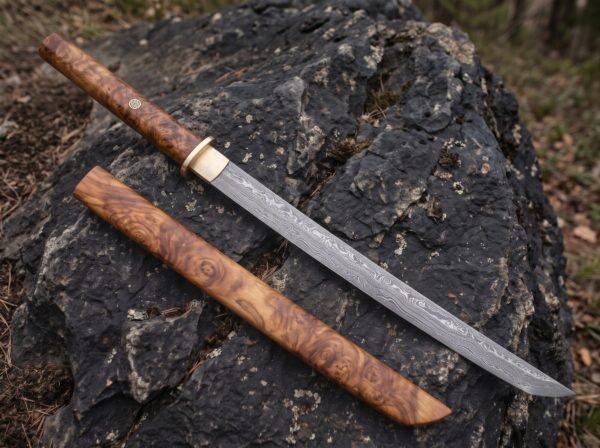
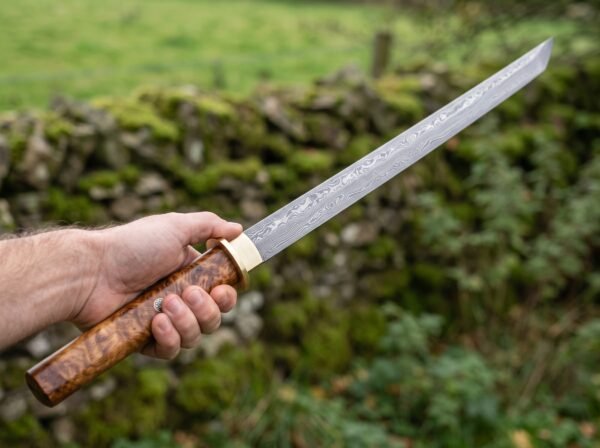
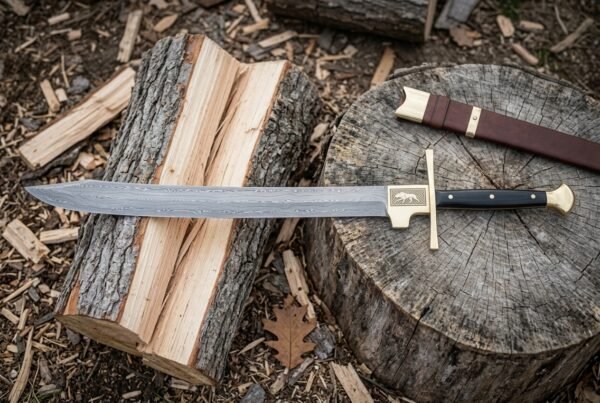
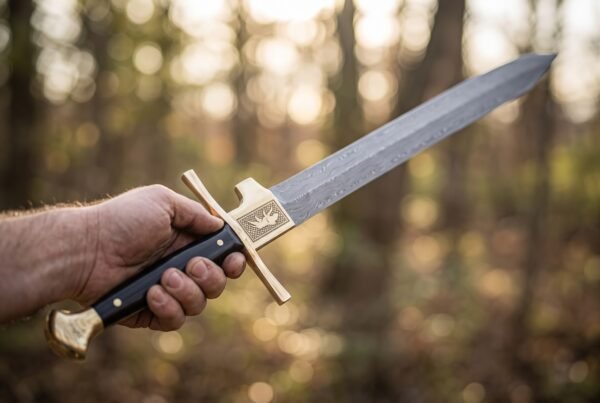
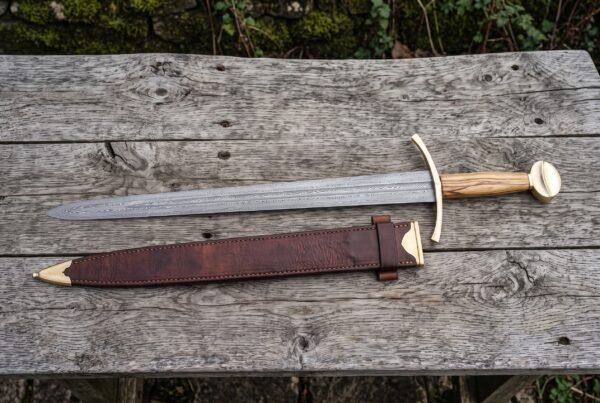
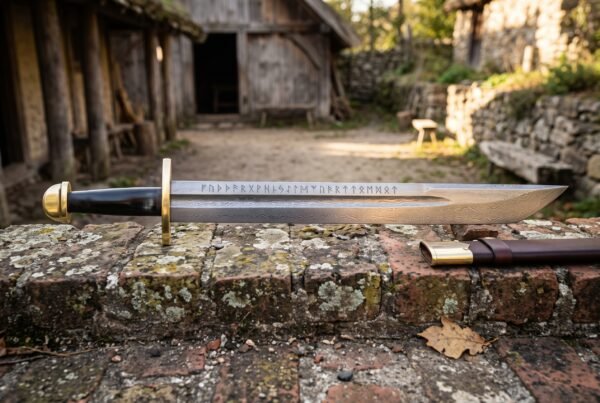
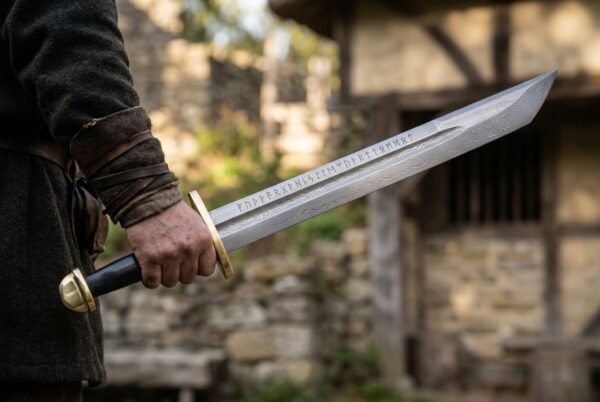
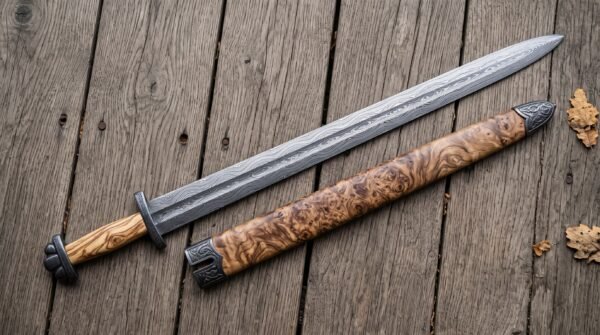
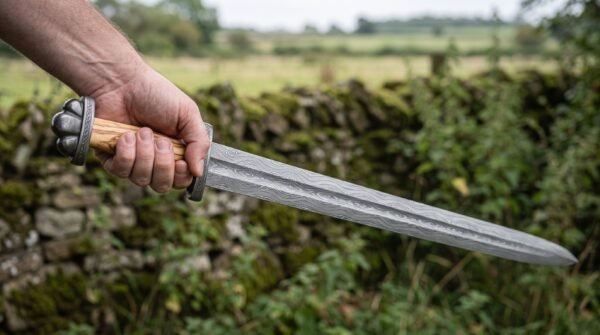
This falchion is forged and finished by hand in the Czech Republic. The blade is Damascus, 1095 and 15N20 forge welded, hardened and tempered to 58 to 60 HRC, then etched to show the pattern and given a working edge. The hilt is a round brass disc guard and a curved brass pommel cap ending in a small ring, with a dark hardwood grip between them. It ships in a dark wooden scabbard with a brass throat and chape, ready to hang or stand on a rack, and shipping inside the United States is free.
Specifications
| Steel | Damascus, 1095 and 15N20 forge welded |
|---|
| Hardness | 58 to 60 HRC |
|---|
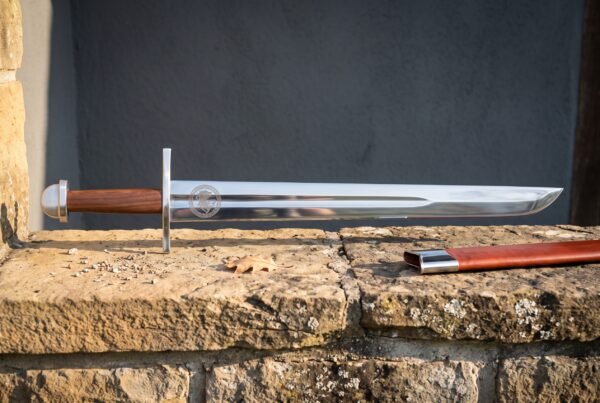
| Blade | Single edged falchion, widening toward a clipped point, with a narrow fuller and an etched band along the spine and a wolf head medallion near the guard |
|---|
| Overall length | 30 inches |
|---|
| Blade length | 24 inches |
|---|
| Blade width | 2.1 inches at the widest point |
|---|
| Guard | Round brass disc guard with an engraved rim and a brass collar |
|---|
| Grip | Dark hardwood, 6 inches, with two pins |
|---|
| Pommel | Curved brass pommel cap ending in a small ring |
|---|
| Scabbard | Dark wood with brass throat and chape |
|---|
| Weight | Approximately 2 pounds 6 ounces |
|---|
| SKU | RK-1290 |
|---|
Why a falchion is shaped like a cleaver
Look at the profile from the side. The back of the blade runs almost straight from the guard, the edge curves gently away from it, and the last third widens before sweeping up to a clipped point. That widening is the whole idea. Percussion mass gathers where the blade is broadest, so the sword arrives at the target with more behind it than a straight double edged blade of the same weight. Because only one side is sharpened, the other side can stay thick, which is why a falchion takes hard contact without folding.
The clipped point matters too. A pure cleaver would be useless at anything except chopping. Bringing the back down to meet the edge gives the falchion a usable tip for a thrust, and it keeps the very end of the blade from being so wide that it drags in the air. The guard is a compact brass disc because a falchion is used with the hand close to the work. There is no complicated basket to catch on a shield rim or a cloak.
Why Damascus and not stainless
Only two steels are used at this forge. Plain pieces are 1095 high carbon steel. Damascus pieces like this one are 1095 and 15N20 forge welded together. Nothing else comes through the shop.
The 1095 layers carry the carbon that takes the edge, and the nickel in the 15N20 layers stays bright when the blade is etched, which is what gives the flat its pattern. At 58 to 60 HRC it holds a keen edge while staying tough enough to absorb a bad cut without chipping. Stainless steels earn their name by carrying a large amount of chromium, and that chromium forms hard carbides that get in the way of a fine edge and make the steel more brittle at sword lengths. A stainless blade of this size is usually a wall hanger. The trade you make with carbon Damascus is rust. It will spot if you leave it damp or handle it and put it away. A wipe with oil after handling is all it asks. If you want to read more about how carbon steels compare, see our note on Damascus versus stainless.
The hardwood grip and brass furniture
The grip is a single piece of dark hardwood, shaped to a slight oval so the edge alignment tells you which way the sword is pointing without looking. It is fitted between a brass disc guard and a brass pommel, and the tang is peened over the pommel so the assembly is tight. Brass is the traditional choice on a falchion because it is soft enough to work cold, it does not rust, and it warms up to a deep colour with handling.
Wood needs a little care. Keep it out of direct sun and away from radiators, and give it a thin coat of oil once or twice a year to stop the grain drying and shrinking away from the guard. Our guide to wooden handle care covers what to use and how often.
Engraving, runes and your own design
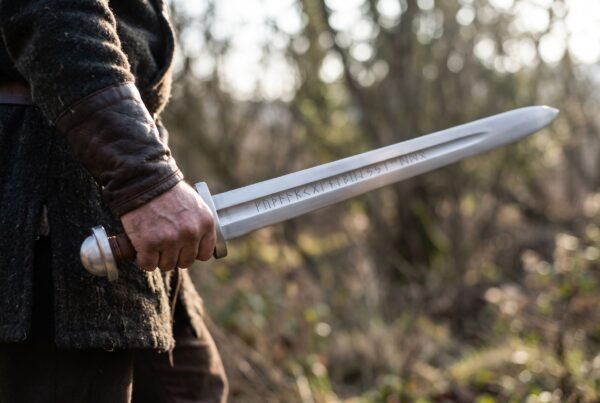
Use the rune converter on this page to turn a name, a date or a short phrase into Elder Futhark and we will cut it into the steel or the handle. If you would rather have a Viking pattern than a rune line, choose your own design in the engraving option above the add to cart button and tell us whether it goes on the blade or the handle. Where a piece already carries an engraved design, your chosen engraving replaces it rather than sitting alongside it. Full details of what we can cut and how long it adds to the build are on the engraving page.
Care and sharpening
Wipe the blade down after handling, because fingerprints are slightly acidic and will etch a bright polish given a week or two. A light mineral oil or a purpose made blade oil is enough. Store the sword out of the scabbard if you are putting it away for a season, since the wooden scabbard can hold moisture against steel. Our steel care page goes through storage and rust removal in more detail.
The edge arrives sharp and cutting ready. When it dulls, a falchion is easy to sharpen because the bevel is on one side only and the curve is gentle. Work along the edge with a medium then a fine stone, keeping the angle you already have rather than trying to impose a new one, and finish with a few light passes on the back to remove the burr. See sharpening with a whetstone for the method.
Made in the Czech Republic
This is a handmade piece from the Czech Republic, made in a workshop that still forges, grinds and finishes by hand instead of stamping parts out. The smiths there have kept the older way of working, and the wood, horn and leather are shaped and fitted by hand as well. Two pieces of the same design will never be identical, and that is part of what you are buying.
Ransack Viking is a United States company. We handle the import ourselves, look over every piece when it lands and ship from our warehouse in Chicago, Illinois. Engraving is done in the United States after the piece arrives, so your design goes on before we send it out.
A note on handmade variation
This falchion is hand forged. It is not machine made and it is not bulk produced, so what arrives will not be a pixel for pixel copy of the photograph. Grain in the wood, tone in the brass, the exact sweep of the edge and the way the polish catches light all vary, because every one is worked by hand from natural materials. The dimensions, the steel and the build are the same every time. The character is not, and that is the part you cannot order twice.
Frequently asked questions
Is the falchion sharp when it arrives?
Yes. It ships with a working edge that will cut paper and light targets straight out of the box. If you want it blunted for stage or display use, say so in the order notes and we will grind it back before it leaves.
Can I actually cut with it, or is this a display piece?
It is a functional sword. The blade is full tang, heat treated through and peened, so it will handle tatami mats, water bottles and light green wood. It is not made for steel on steel sparring, which needs a blunt trainer with rolled edges.
Can I have runes engraved on the blade?
Yes. Use the rune converter above to turn a name or phrase into Elder Futhark, or choose your own Viking pattern in the engraving option. Tell us whether you want it on the blade or the grip.
Will mine look exactly like the photographs?
The shape, size and steel will match. The wood grain, the brass tone and the polish will be slightly different, because each one is forged and finished by hand.
What is the difference between a falchion and a messer?
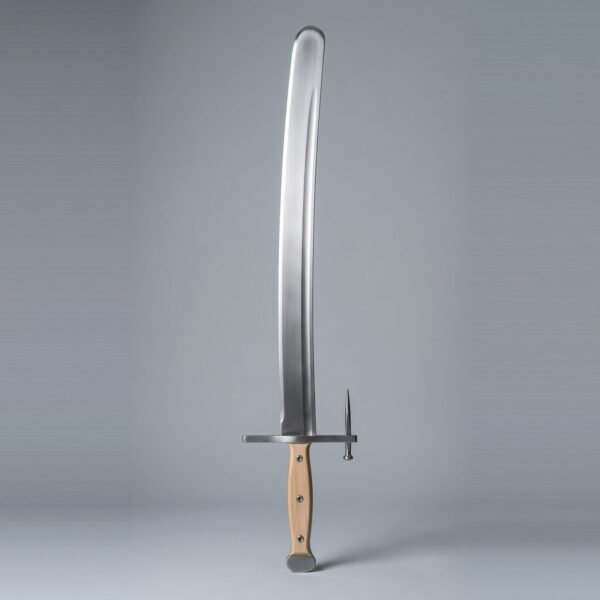
Both are single edged. A falchion widens toward the point and is built around a sword style hilt with a guard and pommel, here a brass disc and a curved brass cap. A messer is usually narrower and more parallel sided, and it is built like an oversized knife with slab scales pinned through the tang.
How long does shipping take?
Shipping inside the United States is free. In stock swords normally arrive within five to seven business days of dispatch. Custom engraving adds two to three weeks to the build before the parcel ships.
What is in the box
- One hand forged Damascus falchion, 30 inches overall
- One dark wooden scabbard with brass throat and chape
- Care card with oiling and storage instructions
- Your Elder Futhark rune line or chosen pattern, if engraving was ordered
- Forged and finished in the Czech Republic
Explore the range
See the rest of the falchions, the one handed and two handed messers, the full sword range and the Damascus swords, or read the guides for help choosing between them.
Also in this part of the catalogue
Worth putting side by side with this is the Wynthorn arming sword, 37 inches overall. In the same category sits the Wheelbright arming sword, 38 inches overall. A near match for this one is the Brasswake arming sword, forged from 1095.
For a different piece from the same family, look at the Thornwatch longsword. Or start from a blank sheet on the custom Viking sword page.
Training at a HEMA club? Look at the Reifholm leather dussack for drills and free play, and check our synthetic trainer guide as well.

Photos don’t do this sword justice at all. Leather sheath is thick and well stitched. Not the cheap stuff you usually get. The wood handle feels amazing and the balance is perfect. This shop clearly takes pride in their work.