A pattern welded sword is the hardest thing in this catalogue to make. Two steels forge welded into a billet, then drawn out to thirty inches or more without a single weld failing anywhere along the length. A knife is a few inches of that risk. A sword blade is a great deal more, and a billet that delaminates halfway through is scrap after several days of work.
What is on this tag
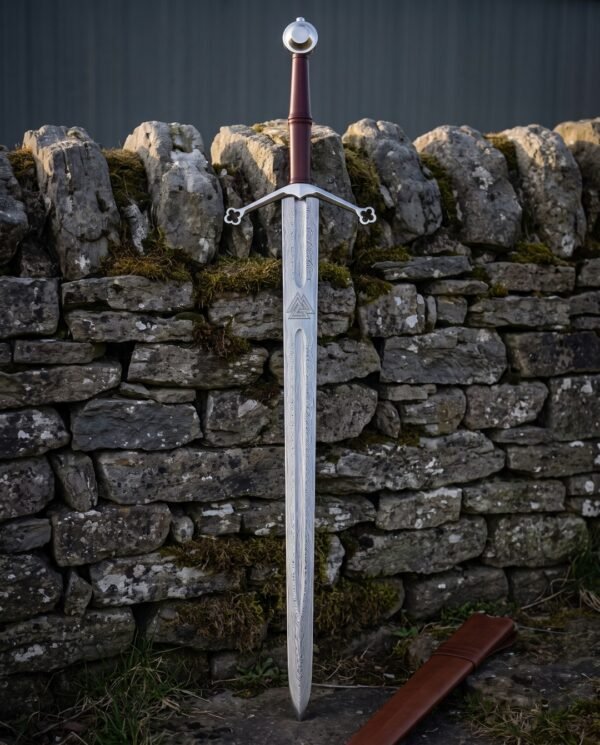
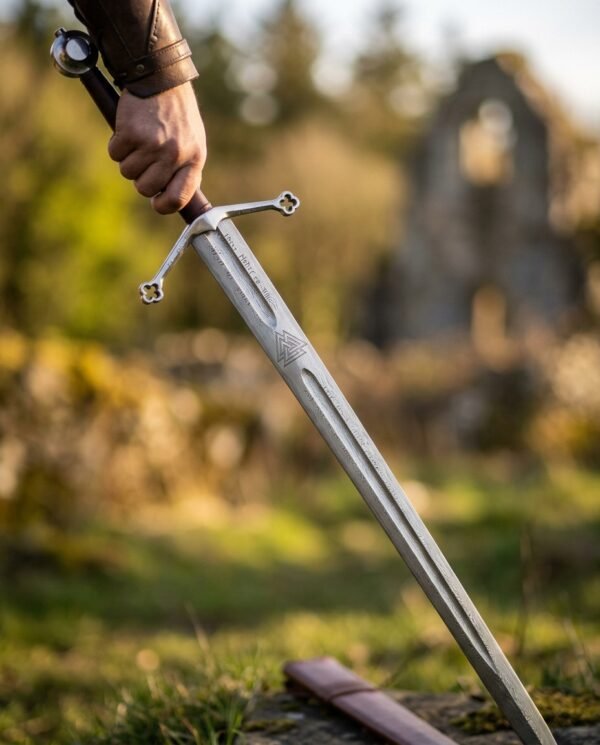
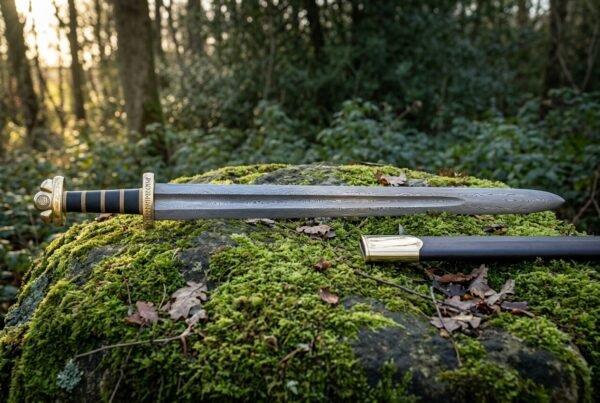
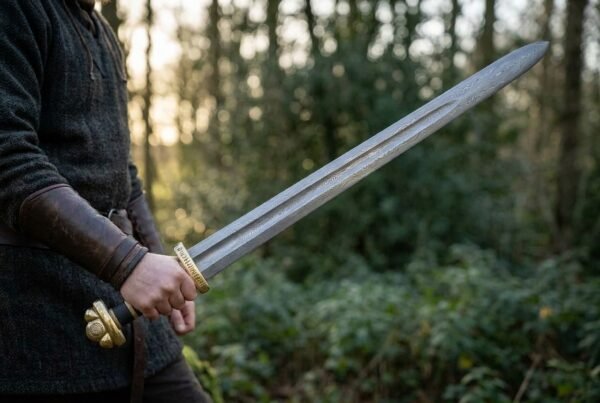
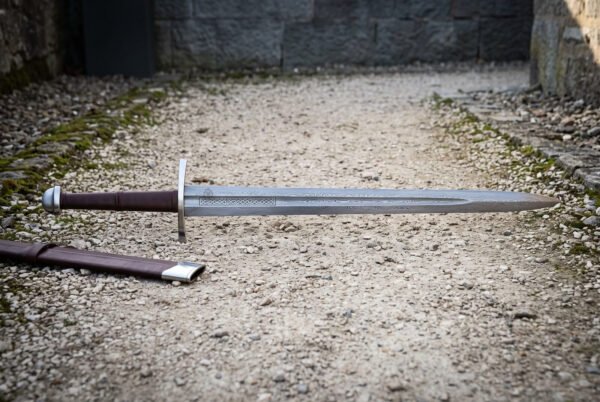
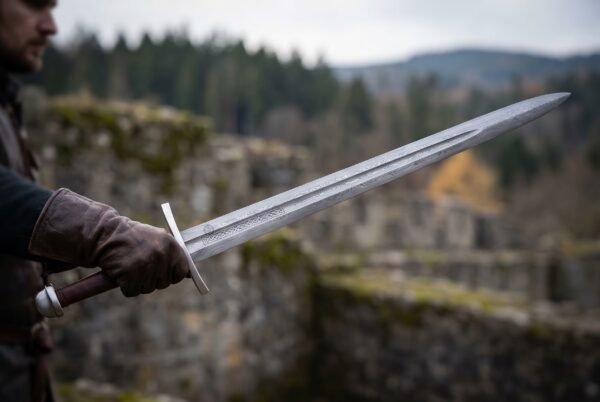
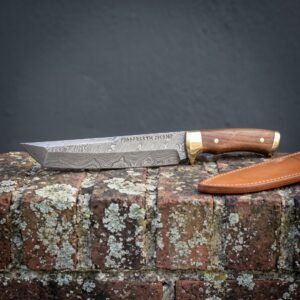
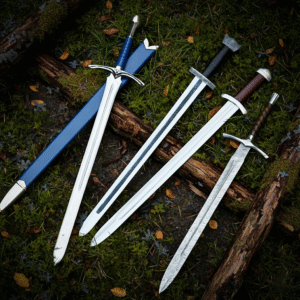
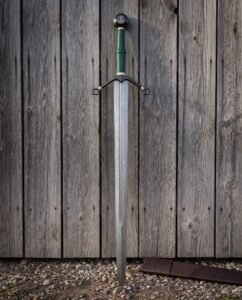
Viking swords at 36 inches overall with 30 inch Damascus blades, arming swords with brass hilts and Helm of Awe engraving, Viking swords with five lobed pommels and rune etched fullers at 37 inches, and Polish szablas at 37 inches with 31 inch blades. The steel is Damascus of 1095 and 15N20, forge welded and acid etched, at 58 to 60 HRC. Grips are leather wrapped and cord wrapped over a wooden core, with steel and brass fittings.
Historical pattern welding, and why it stopped
Early European smiths pattern welded because iron quality was wildly inconsistent, and twisting several bars together produced a blade more predictable than any single bar. Once bulk steel became reliable in the later Viking Age the practical reason disappeared, and by the eleventh century most good blades were plain steel with pattern welding surviving as decoration. The best surviving examples, including some of the Ulfberht group, sit right at that transition, which the Ulfberht article goes into.
Checking it is real
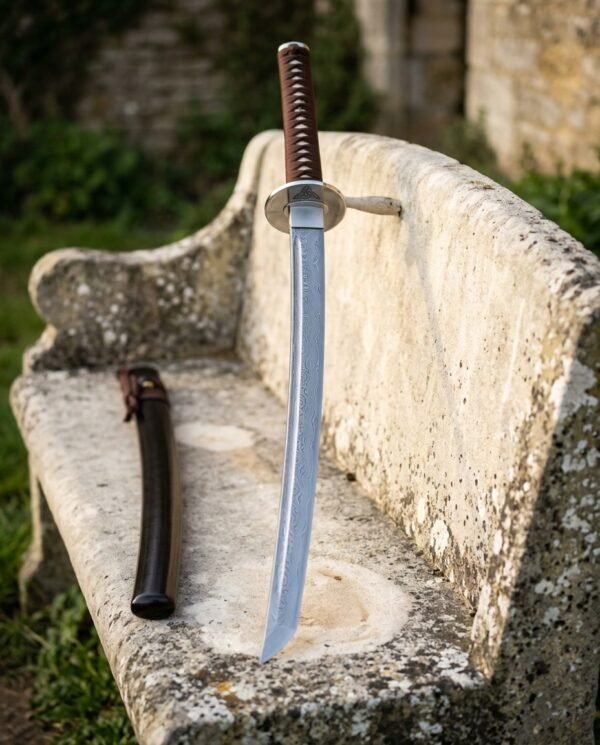
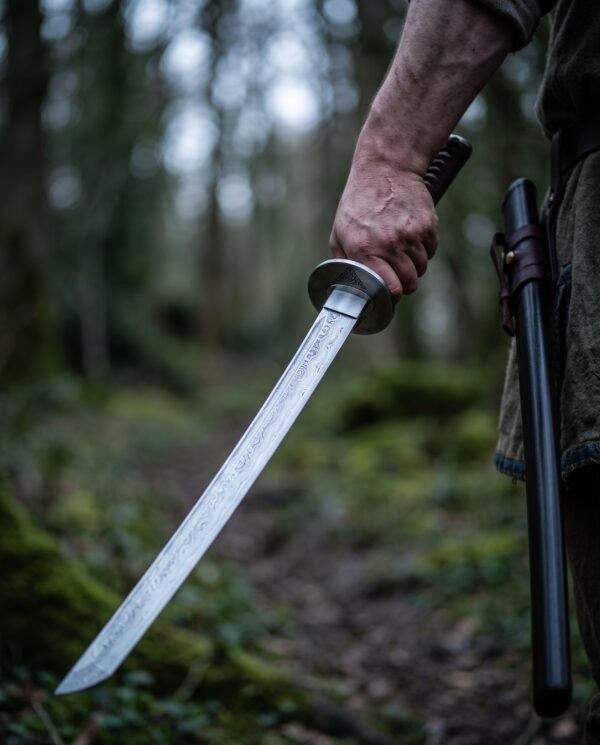
Layers should show on the spine and at the tang as well as on the polished flat, because a forged billet is layered through its thickness. A surface print stops at the grind lines and looks too regular. The five checks covers this properly. The blades are in the Damascus swords and the curved single edged pieces in the sabres.
Care
The etch is a finish and not a coating, so handling wears it at the contact points over years and any abrasive cleaner removes it. Wipe, dry and keep a thin film of light oil on the blade. Store it out of a closed leather scabbard, since vegetable tanned leather holds acid and moisture against carbon steel.
Weight
A pattern welded blade weighs the same as a plain one of the same dimensions. The layers change nothing about mass or balance, whatever a listing elsewhere might imply.
Free US shipping
On most pieces. Heavier and oversized ones carry a flat charge.
Hand Forged
Heated, hammered and ground by hand.
Engraving available
Names, dates or Norse runes on most pieces.