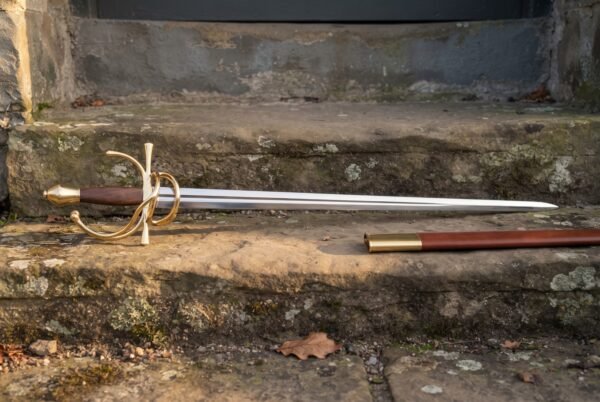
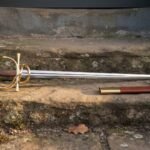
The Gildthorn is a hand forged dueling sword on a gilt brass swept hilt, the sort of sword that was worn as much for what it said about the owner as for what it could do. By the late sixteenth century the formal duel had its own literature, its own etiquette and its own set of legal fictions to get around the fact that it was illegal almost everywhere. A challenge, seconds, an agreed place outside the city walls at dawn, and a sword worn openly on the hip as a standing declaration that you were a man who might have to use it. The hilt on a sword like this was jewellery as much as ironwork, and a gilded brass guard on a plain polished blade was the exact combination a man of means would choose.
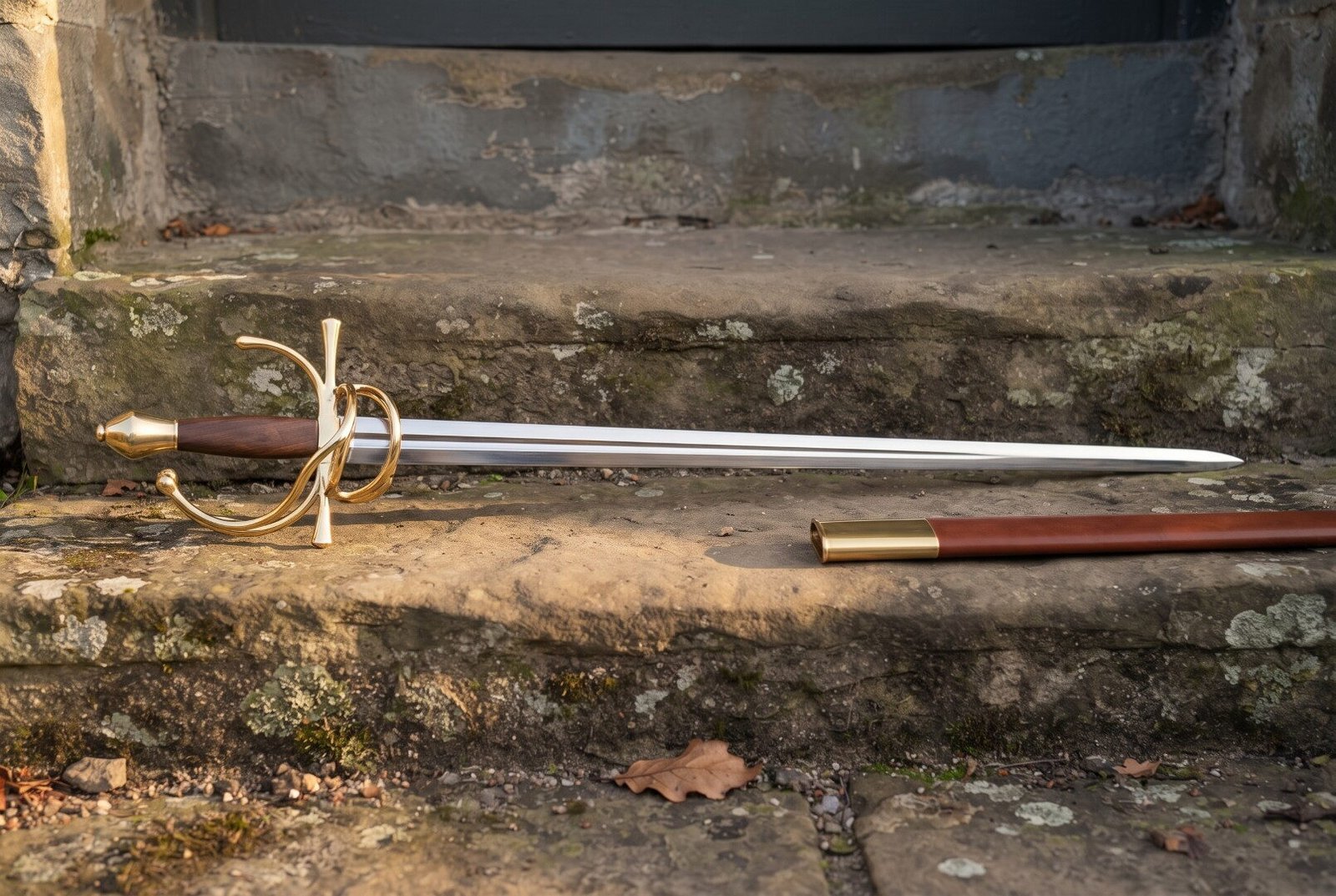
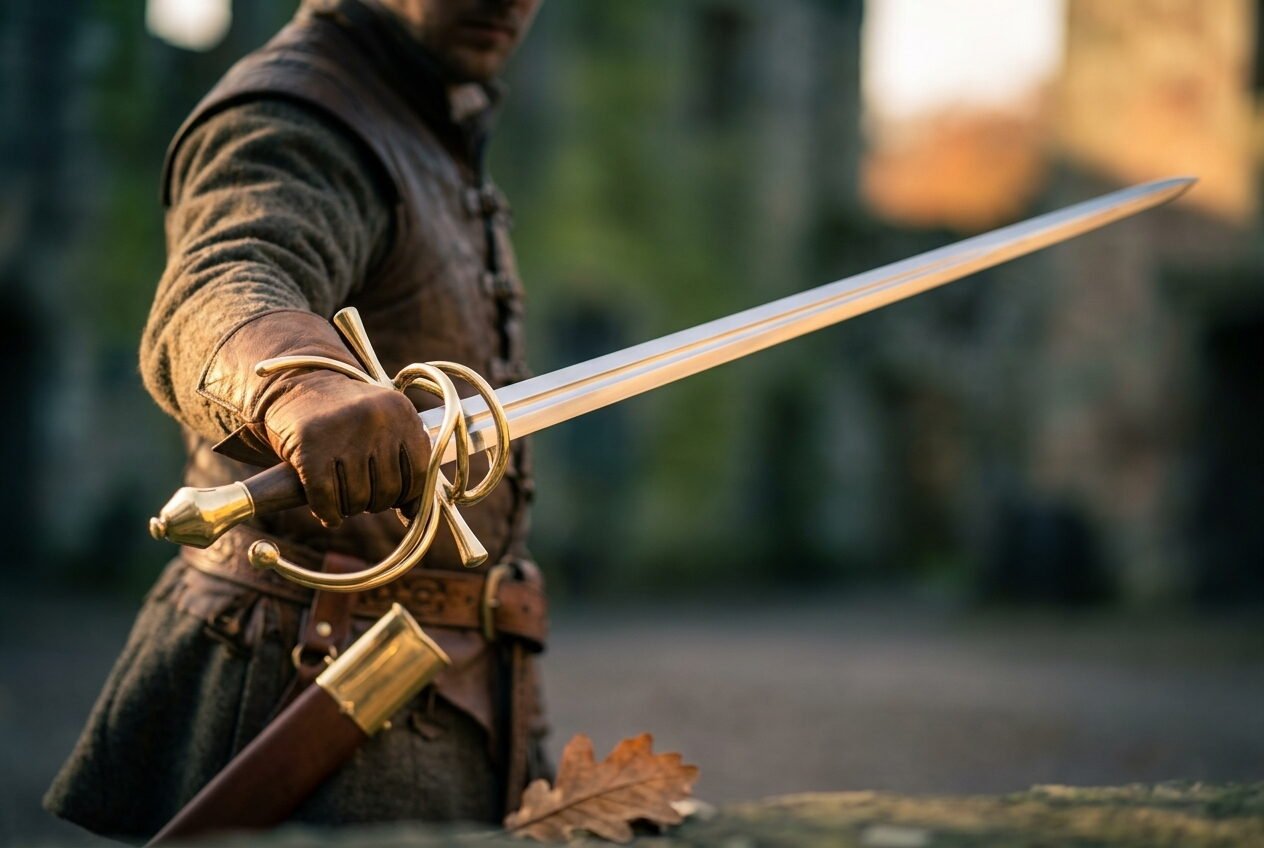
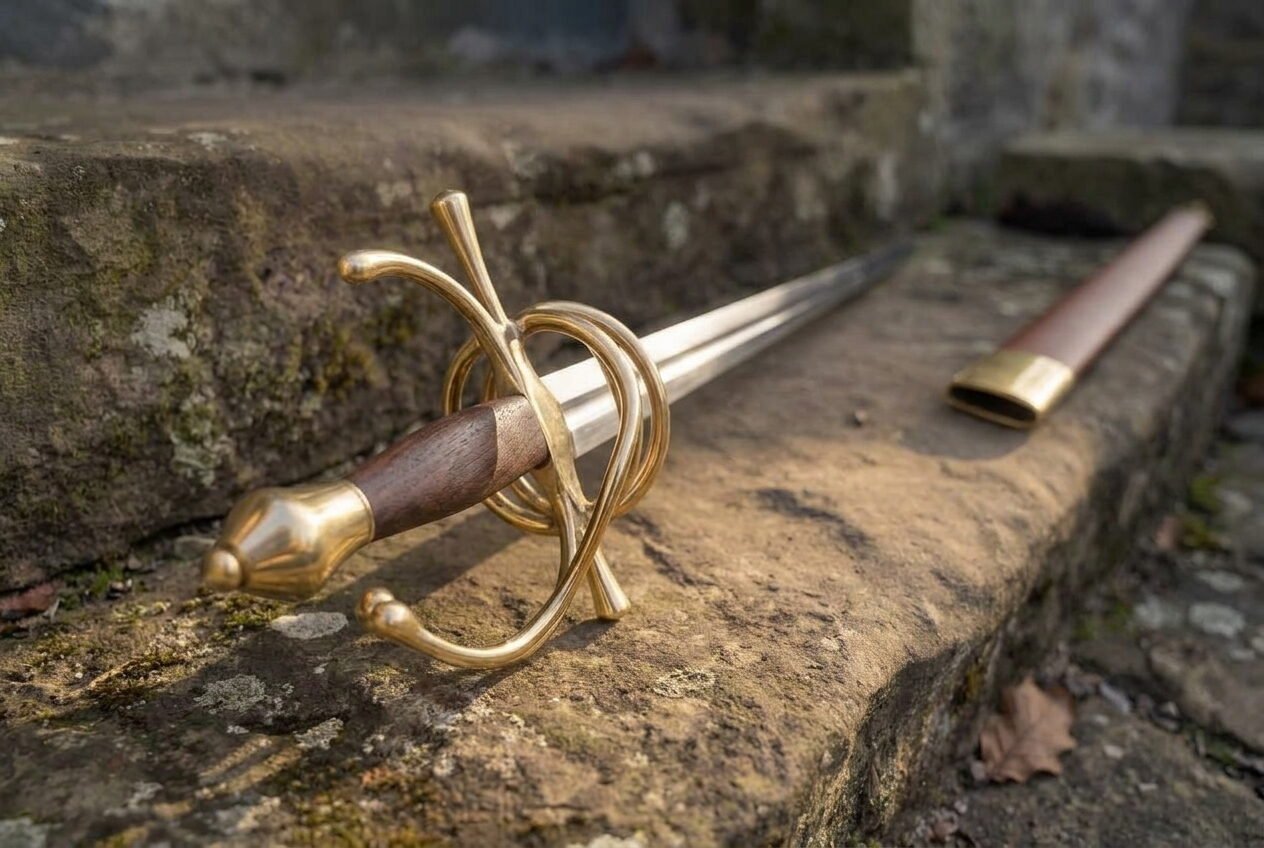
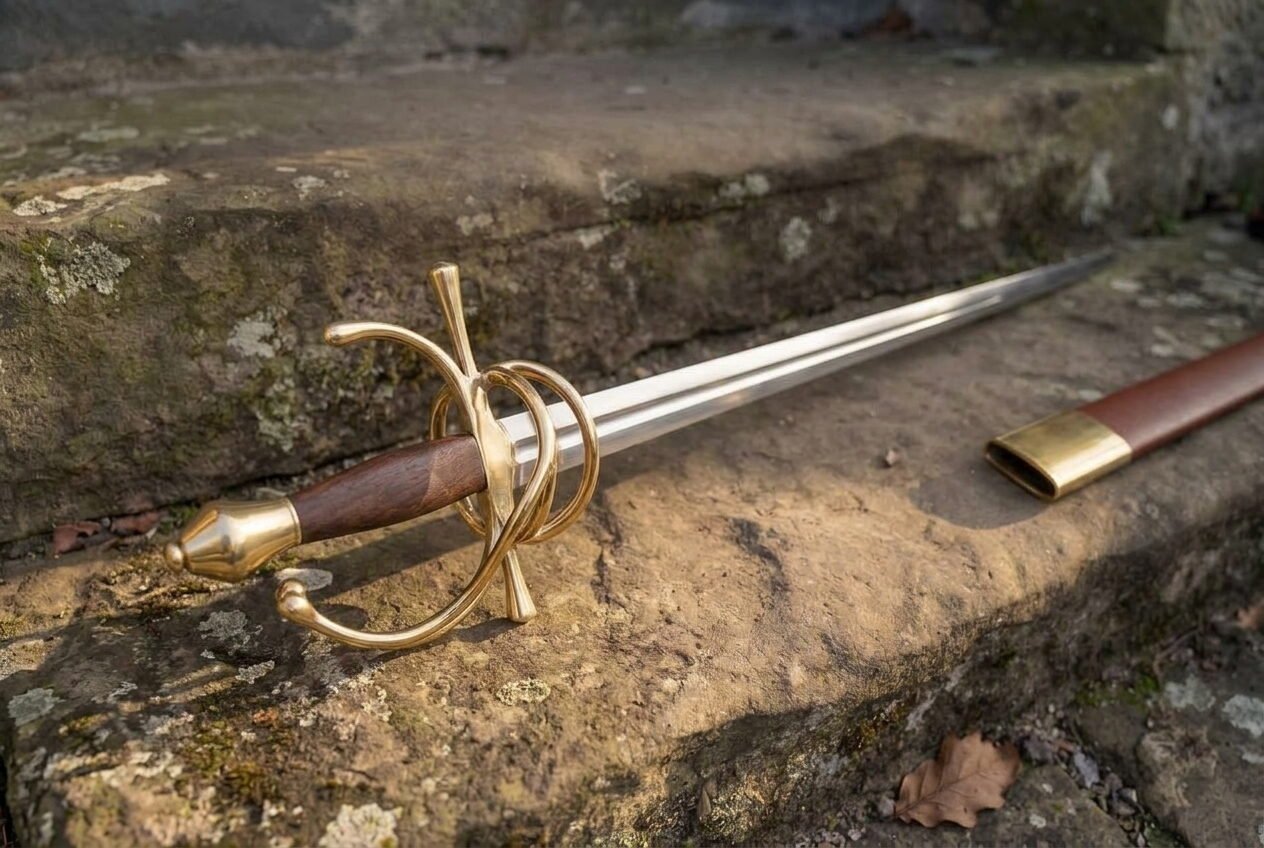
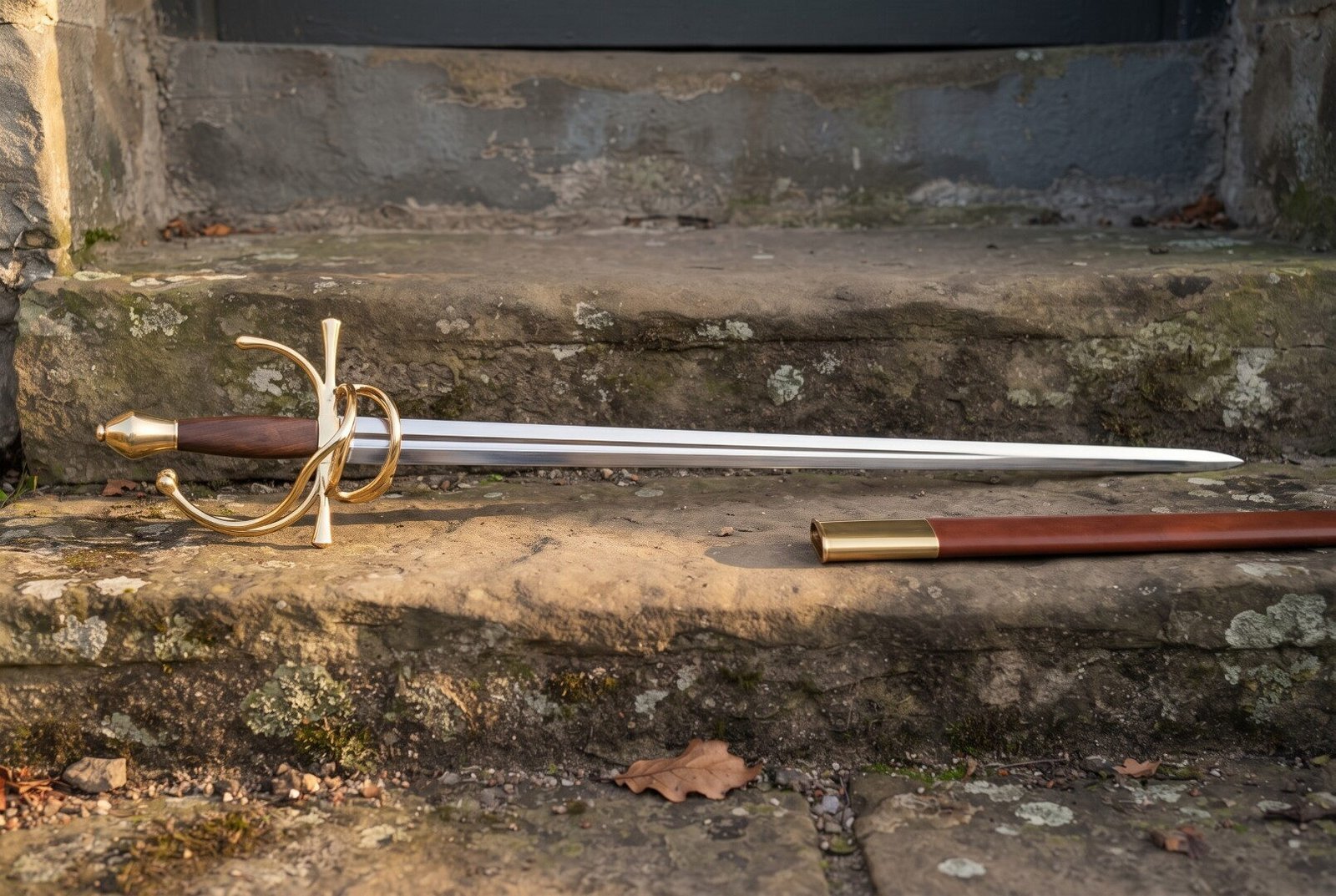
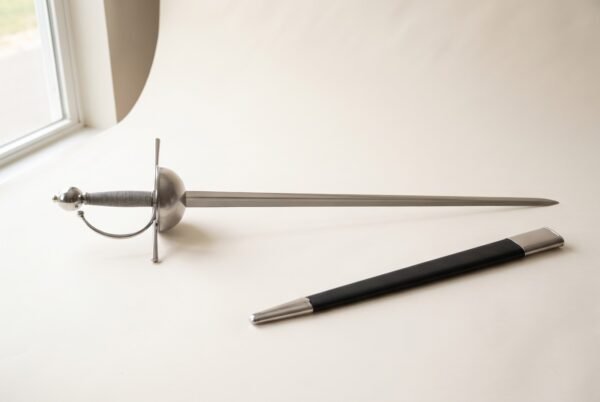
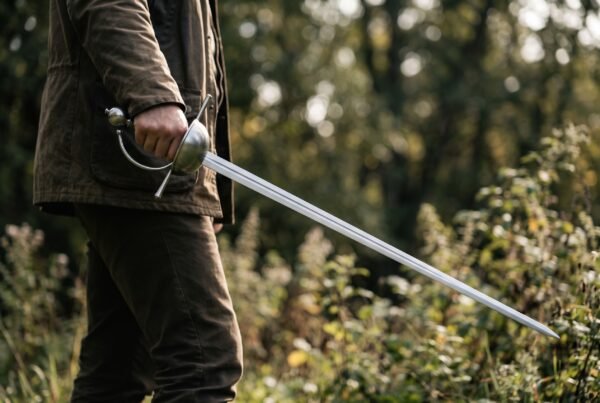
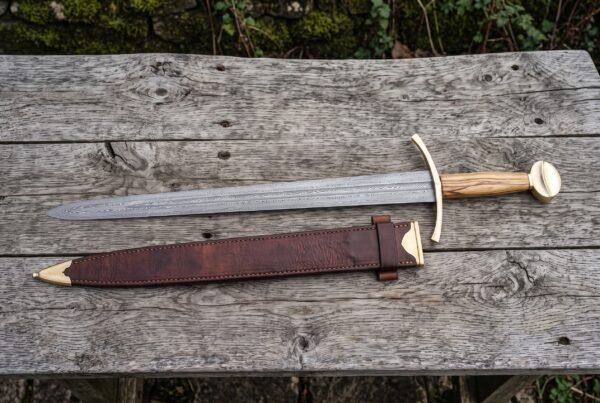
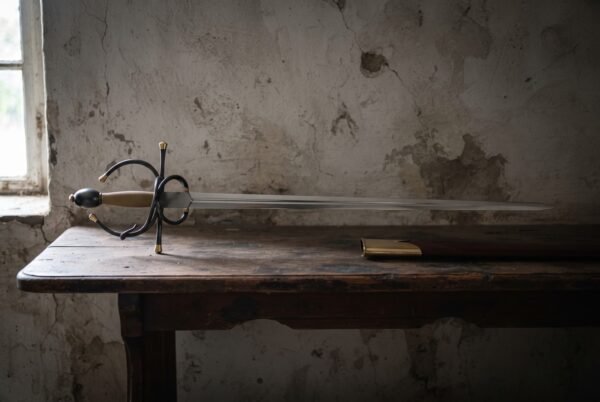
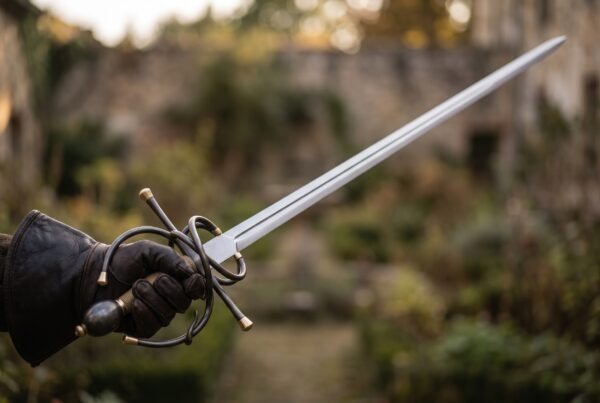
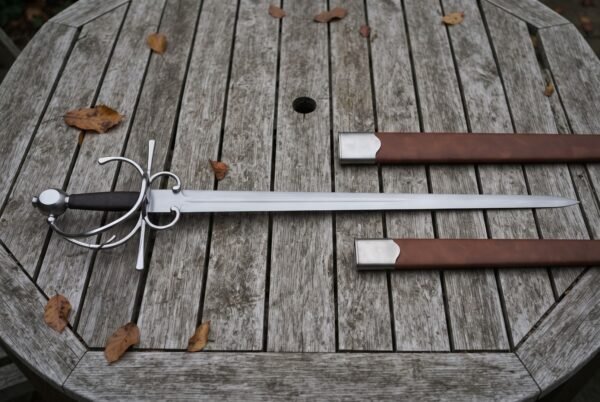
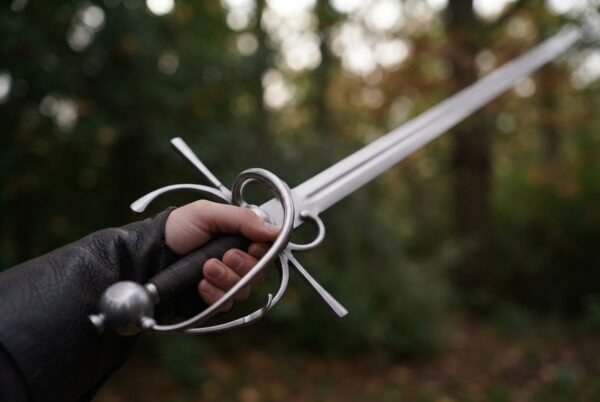
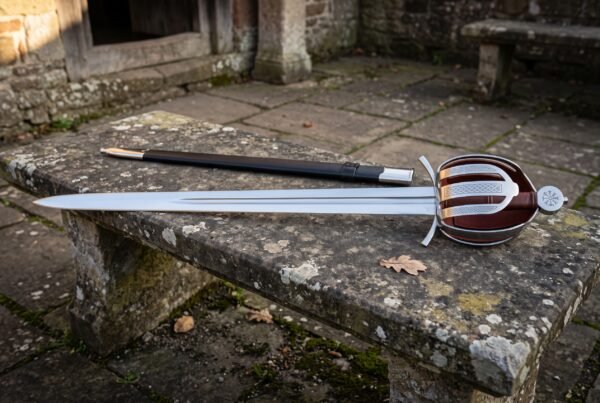
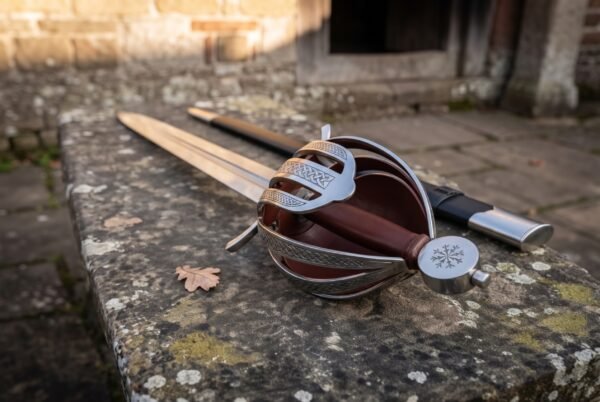
This one is forged and finished in the Czech Republic. The blade is 1095 high carbon steel, hardened, tempered, ground to a broad tapering double edge with a central fuller and brought to a mirror polish. The hilt is brass, gilded and polished, swept into two side rings over the ricasso with a knuckle bow and a rear guard bar and a straight quillon finishing in flared spatulate ends. The grip is turned rosewood under a faceted brass pommel. It ships with the fitted russet leather scabbard shown, mounted with a heavy brass throat.
Specifications
| Steel | 1095 high carbon steel |
|---|
| Hardness | 54 to 58 HRC |
|---|
| Overall length | 40.5 inches |
|---|
| Blade length | 33.5 inches |
|---|
| Blade profile | Broad tapering double edge with a central fuller, mirror polished |
|---|
| Guard | Gilt brass swept hilt with knuckle bow, two side rings, a rear guard bar and straight quillons with flared ends |
|---|
| Grip | Turned rosewood, left bare |
|---|
| Pommel | Faceted brass pommel |
|---|
| Scabbard | Russet leather with heavy brass throat |
|---|
| SKU | RK-1411 |
|---|
Why the guard is brass and the blade is steel
Mixing metals on a sword looks like pure decoration and it is not. Brass and steel have genuinely different properties, and putting each where it works is old practice rather than a modern shortcut.
Brass is denser than steel, roughly eight and a half against seven and eight tenths grams per cubic centimetre. That sounds trivial until you realise the pommel is a counterweight. A brass pommel of a given size weighs more than the same shape in steel, so it pulls the balance point back towards the hand more effectively without having to be made larger and uglier. On a sword like this, where the blade is broad and the hilt is expected to stay elegant, that extra density is genuinely useful.
Brass is also softer than hardened steel, which is why it is wrong for a blade and right for a guard. A soft guard deforms slightly when an opposing blade strikes it, absorbing energy instead of transmitting a sharp shock into the hand, and it does not develop the brittle nicks a hardened bar would. It casts and files easily, which is why the ornamental work on period hilts is so often brass or bronze rather than steel, and it does not rust. Gilding on top of brass is a finish rather than a structural choice, and it keeps the guard bright with far less work than polished steel would need.
Why 1095 high carbon steel and not stainless
The blade cannot be brass and it should not be stainless. Stainless steel gets its corrosion resistance from a large chromium content, and chromium ties carbon into coarse carbides that sit through the metal like grit. In a long blade that flexes, those are the places a crack begins. Manufacturers avoid the problem by keeping stainless display swords soft, which is why they take a permanent bend and never come back.
1095 is a plain high carbon steel with very little in it apart from iron and carbon. It hardens right through, tempers predictably, and at 54 to 58 HRC it will hold a working edge on a long blade while still springing back from a flex. It rusts if left neglected, and a wipe with an oiled cloth is the whole remedy. The full argument is on Damascus versus stainless.
The rosewood grip
The grip is turned rosewood, left bare rather than covered in leather or wire. Rosewood earns that exposure. It is dense, oily and close grained, so it takes a fine finish, resists moisture better than most timbers and does not need a wrap to feel secure in the hand. It also darkens gently with handling, which is why a well used rosewood grip looks better after ten years than it did new.
Bare wood does want a little care. Keep it out of direct sunlight, which will bleach and eventually check the surface, and away from radiators and car boots, since repeated heating and cooling opens grain. A very light application of a hard wax or a wood oil once a year is plenty and any more than that just sits on the surface. The routine is covered in wooden handle care.
Engraving, runes and your own design
Use the rune converter on this page to turn a name, a date or a short phrase into Elder Futhark and we will cut it into the steel or the handle. If you would rather have a Viking pattern than a rune line, choose your own design in the engraving option above the add to cart button and tell us whether it goes on the blade or the handle. Where a piece already carries an engraved design, your chosen engraving replaces it rather than sitting alongside it. On the Gildthorn the brass takes a cut beautifully and holds detail better than hardened steel does, so the faceted pommel and the flat of the quillon block are worth considering as well as the blade. See the engraving page.
Care and sharpening
Two materials, two routines. The steel wants wiping after handling and a thin film of mineral or camellia oil, because fingerprints will etch a mirror polish inside a week. The brass wants almost nothing. Gilded brass darkens slowly into a warm patina that most collectors prefer to a factory shine, and if you would rather keep it bright, use a soft cloth and the mildest brass polish you can find, sparingly, since aggressive polish will cut through gilding. Do not store the sword in the scabbard for months on end. Details on the steel care page.
The edge arrives sharp and ready. To refresh it use a whetstone, follow the existing bevel, work both sides evenly along the full length and finish on a strop. Keep the stone away from the brass. See sharpening with a whetstone.
Made in the Czech Republic
Every piece we sell is made by hand in the Czech Republic. The smiths there work the way the trade has been worked for a long time, heating and hammering the steel, taking the bevels down by eye, and fitting the handle and the leather one at a time. There is no automated line anywhere in it, so small differences from one piece to the next are normal and expected.
Ransack Viking is a United States company based in Chicago, Illinois. We bring the pieces in ourselves, inspect them on arrival and ship them from our own warehouse. If you add engraving, that is carried out here in the United States before your order goes out.
A note on handmade variation
This piece is hand forged. It is not machine made or bulk produced, so what arrives will not be a pixel for pixel copy of the photograph. Rosewood is a natural material and its grain, figure and colour differ from blank to blank, sometimes considerably. The gilding sits slightly differently on every casting, the sweep of the ring is bent and filed by hand, and the russet leather takes dye its own way. The dimensions, the steel and the build are the same every time. The character is not.
Frequently asked questions
Is the hilt solid brass or brass plated steel
It is brass, cast and finished, then gilded and polished. It is not a plated steel guard.
Will the gilding wear off with handling
It will wear at the high points over years of handling, in the same way as any gilded object, and most owners consider that an improvement rather than a fault. It will not flake off in normal display use.
Is the sword sharp and can I cut with it
It arrives with a working edge and it is a functional hardened blade, so light cutting on bottles or a rolled mat is reasonable. It is not intended for edge on edge sparring.
Can I have runes engraved on this one
Yes, and brass is an easier surface to engrave than hardened steel. Use the rune converter for Elder Futhark or pick your own design, and tell us whether it goes on the blade, the pommel or the quillon block.
What is the difference between a dueling sword and a rapier
A rapier is one kind of dueling sword. The term dueling sword covers the whole family carried for personal combat, from broad bladed cut and thrust swords like this one through to the long narrow rapier and the later smallsword. This blade keeps enough width to cut, which a true rapier does not.
How long does shipping take
Free shipping inside the United States. In stock pieces leave within a few days. It takes three to five weeks in the shop because of the brass and gilding work, and engraving adds a few days more.
What is in the box
- Gildthorn hand forged 1095 high carbon steel dueling sword with gilt brass hilt
- Fitted russet leather scabbard with heavy brass throat
- Care card covering steel oiling, brass patina and rosewood upkeep
- Elder Futhark rune engraving or your own Viking design if selected at checkout
- Forged and finished in the Czech Republic
Explore the range
See the rest of the rapiers, the short swords, the arming swords and the full sword range, or read the guides.
Others in the same line
Sitting beside it in the catalogue is the Nightgild rapier, 47 inches overall. Another in the same line is the Emberleaf rapier, 44 inches overall. Next along the rack is the Brasswake rapier, 43 inches overall.
Fitting out further, the Jadeholt Chinese sword belongs with it. You can have this made your way instead on the design your own page.
Our HEMA line includes the Ceravalt rapier trainer for drills and sparring, and our rapier versus sidesword guide is the place to look next.


Expected better quality for the price. Handle had some rough edges that needed sanding down myself. Just an average purchase. Wouldn’t rush to buy again.