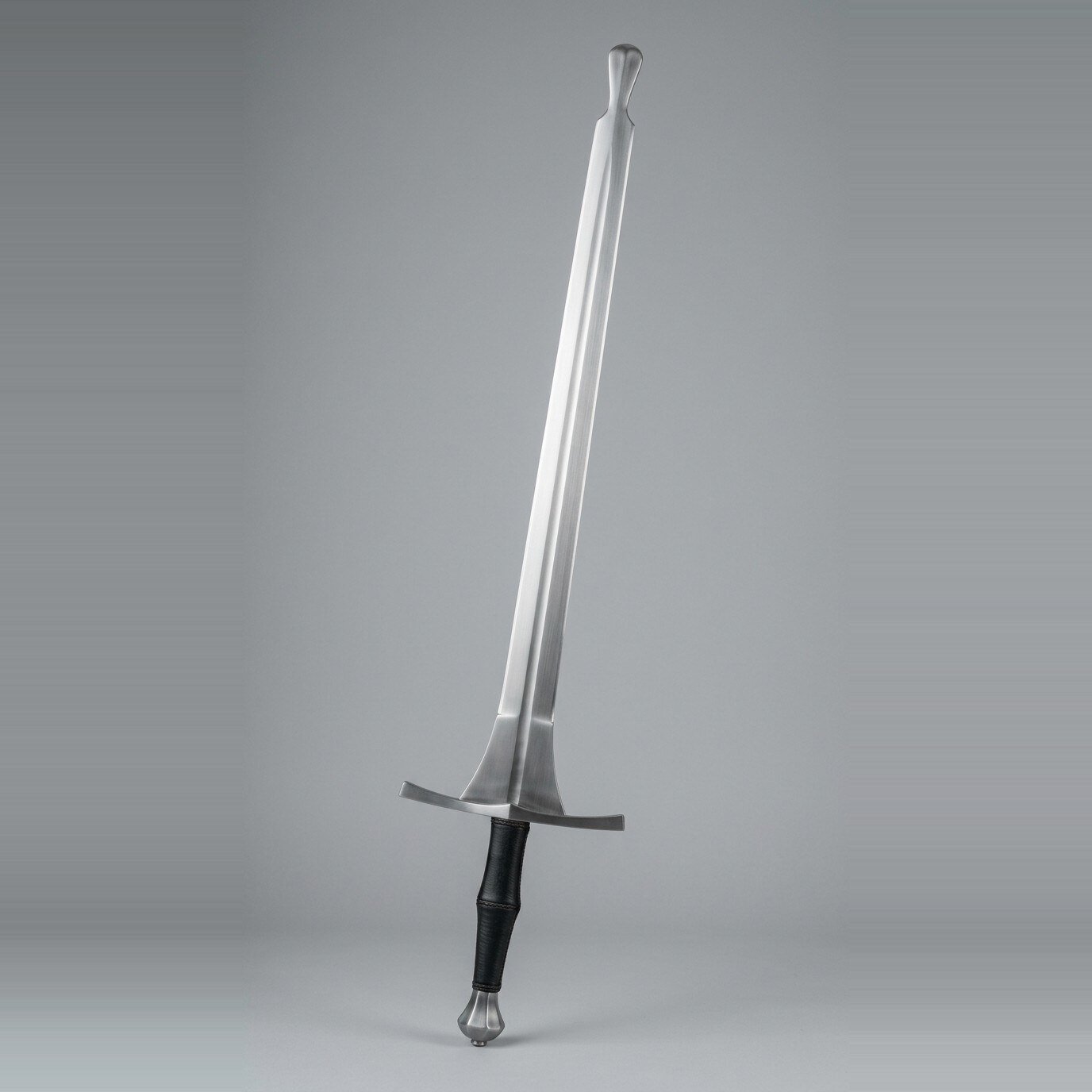
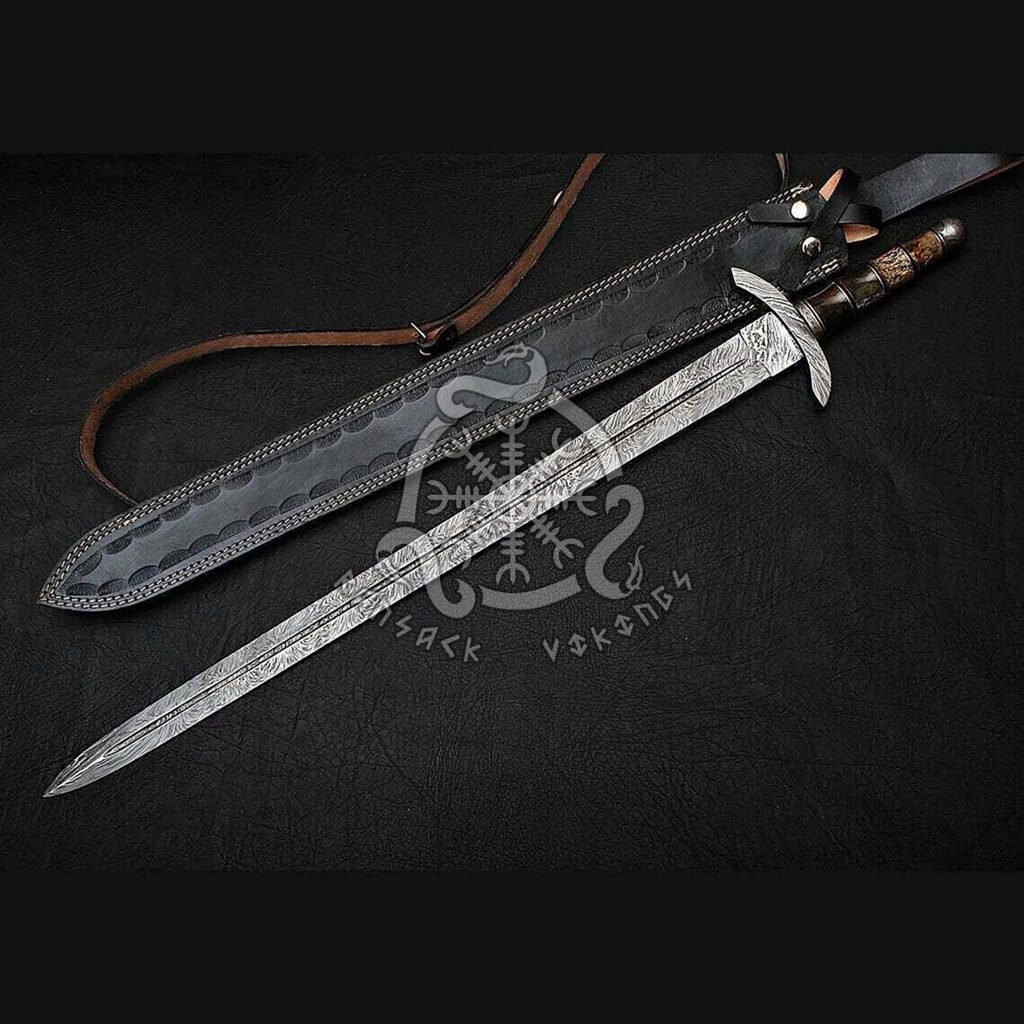
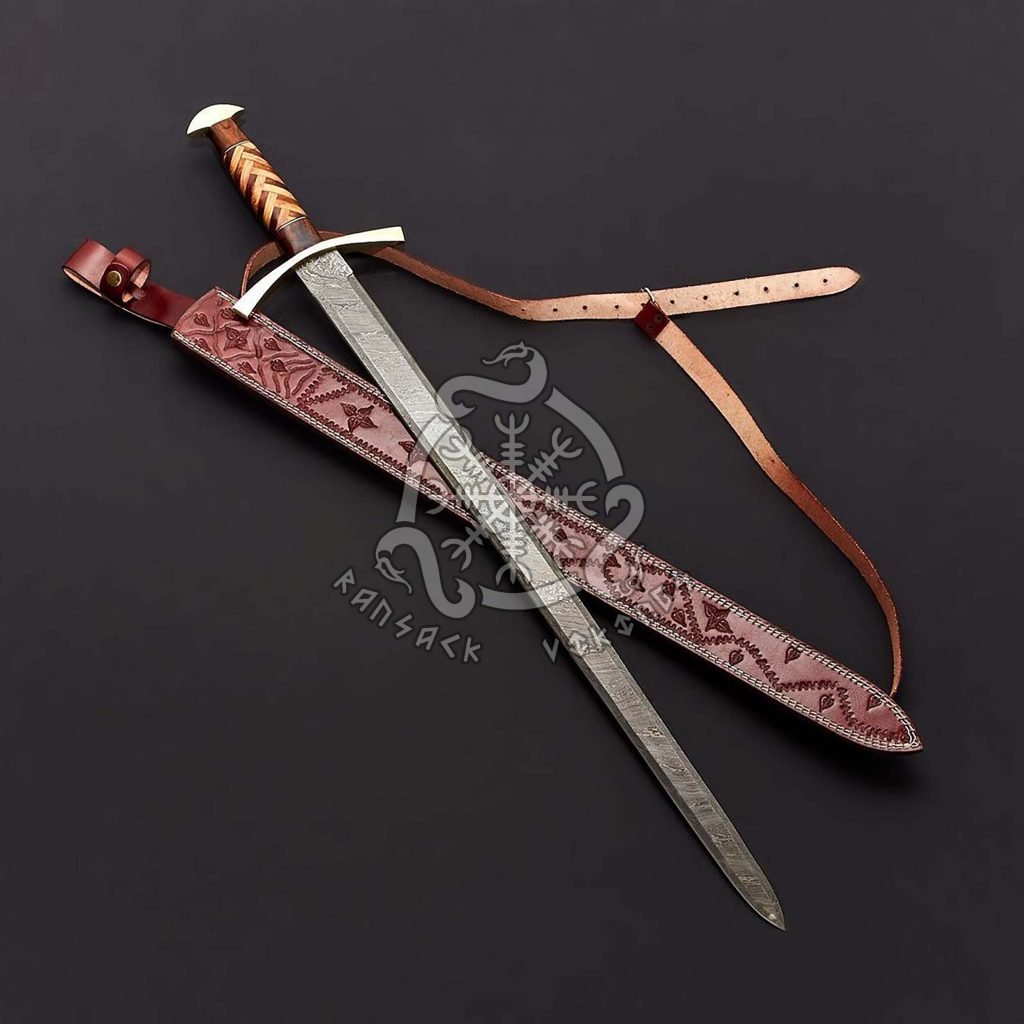
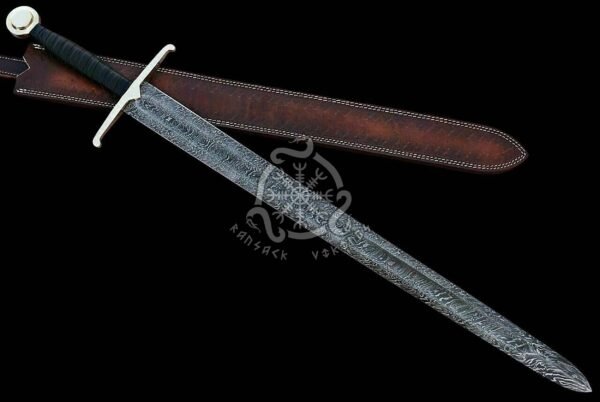
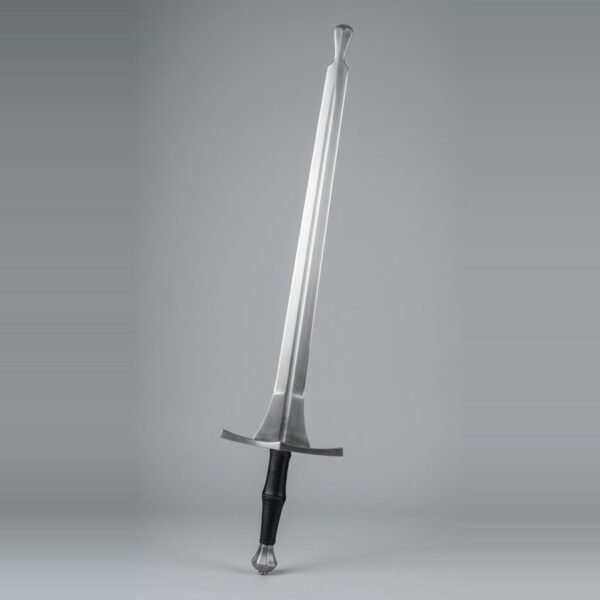
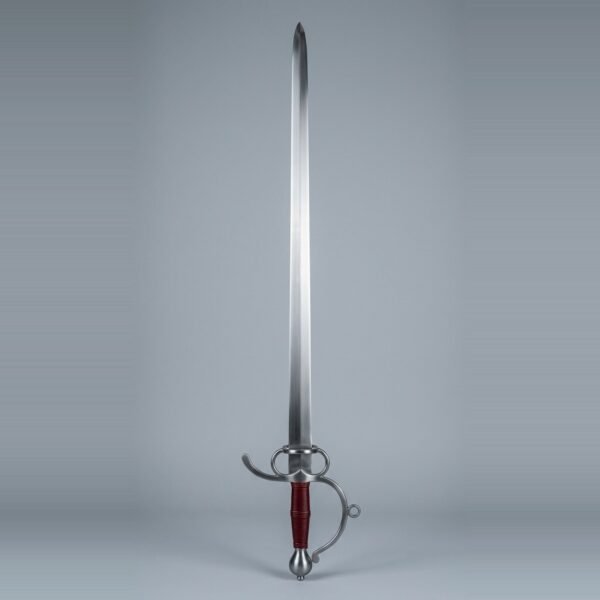
The Vandrekt is a feder, the purpose built fencing tool of the German schools, and the first thing to look at on it is the tip. It ends in a flared safety knob: the last inch of blade widens out into a broad, thick head that spreads the force of a thrust across a mask or a jacket instead of concentrating it at a point. That knob is the whole reason a feder exists.
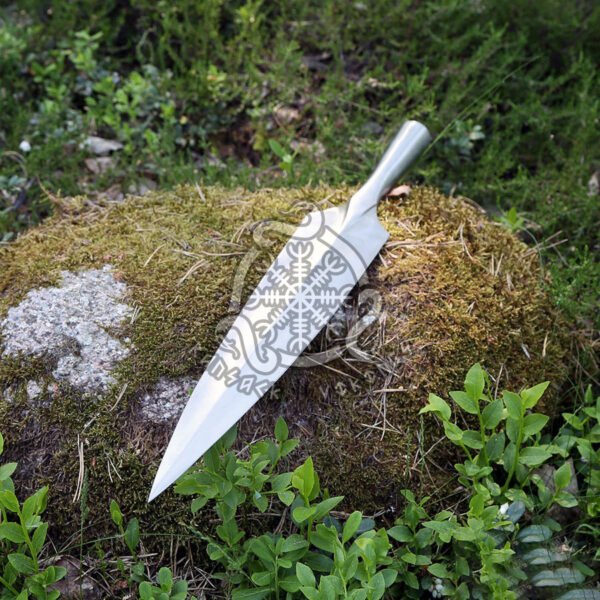
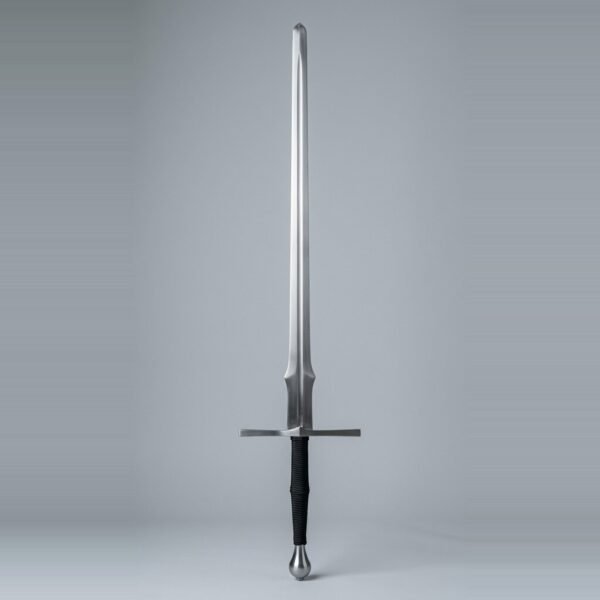
Below it the blade is narrow, and it widens into a triangular schilt that flares smoothly out of the blade rather than stepping off a long separate ricasso. The transition is a continuous flare, not a shoulder, and the cross above it is wide, drawn well out past the hand on both sides. Together those three parts do what a real sword’s mass and edge would otherwise have to do.
If a feder is new to you, read what is a feder first and then HEMA sword flex explained, because the flex tier is the single thing most first time buyers get wrong. The rest of the purpose built sparring steel sits in feders.
Specifications
Read these as the shape of the piece. Every one is finished by hand, so the figures move a little from one to the next.
| Material | 51CrV4 spring steel, hardened to 49 to 52 HRC |
|---|
| Overall length | About 49 inches, hand made so it varies a little piece to piece |
|---|
| Blade length | About 38 inches |
|---|
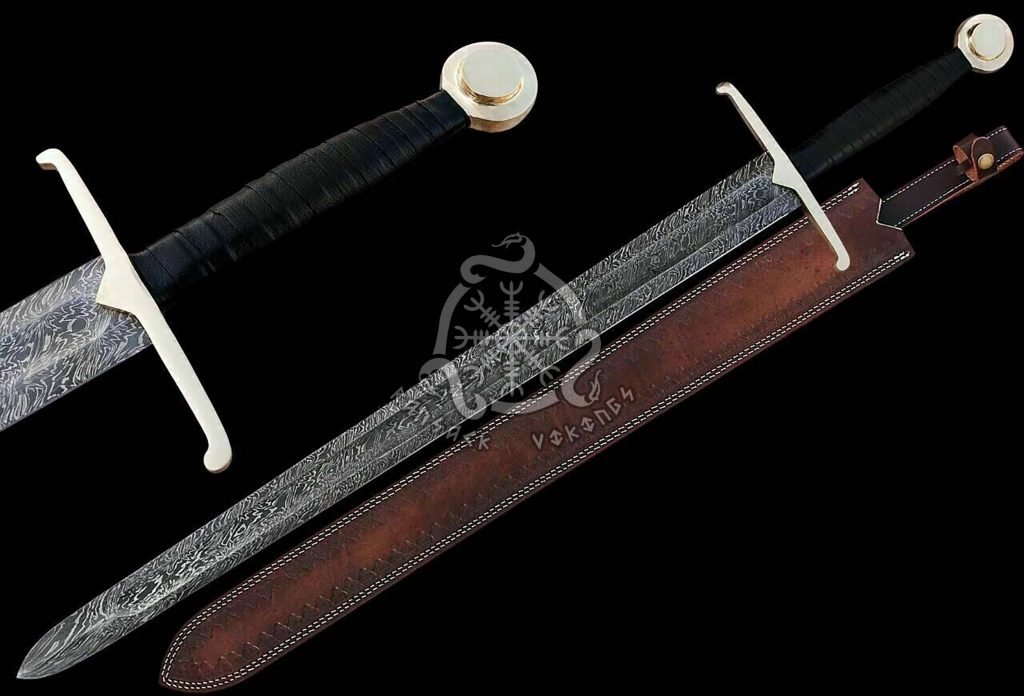
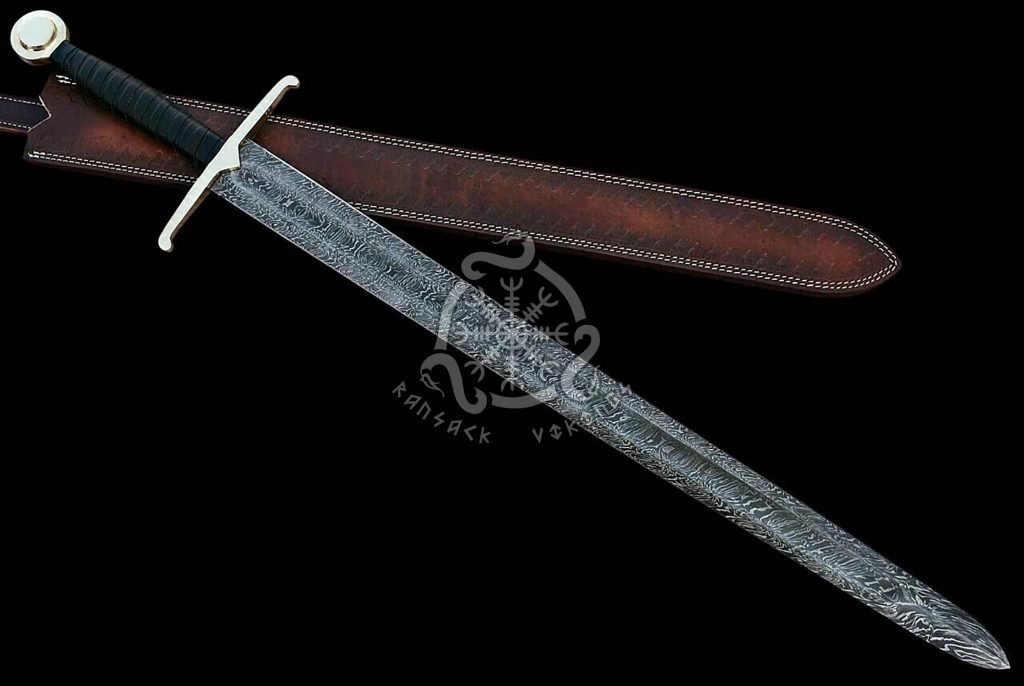
| Blade type | Narrow feder blade flaring smoothly into a triangular schilt, no long separate ricasso |
|---|
| Edge | Blunted, about 3 mm flat land, not sharpened |
|---|
| Tip | Flared safety knob, broad and thick across the head |
|---|
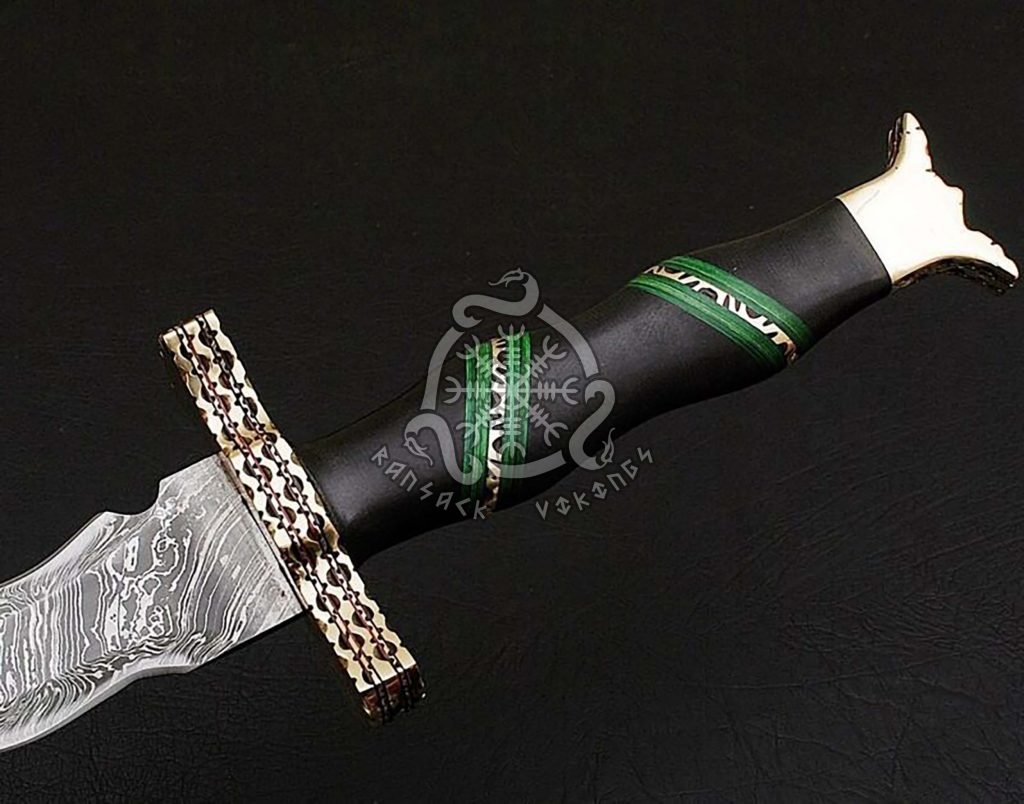
| Guard | Wide straight cross, drawn well out past the hand |
|---|
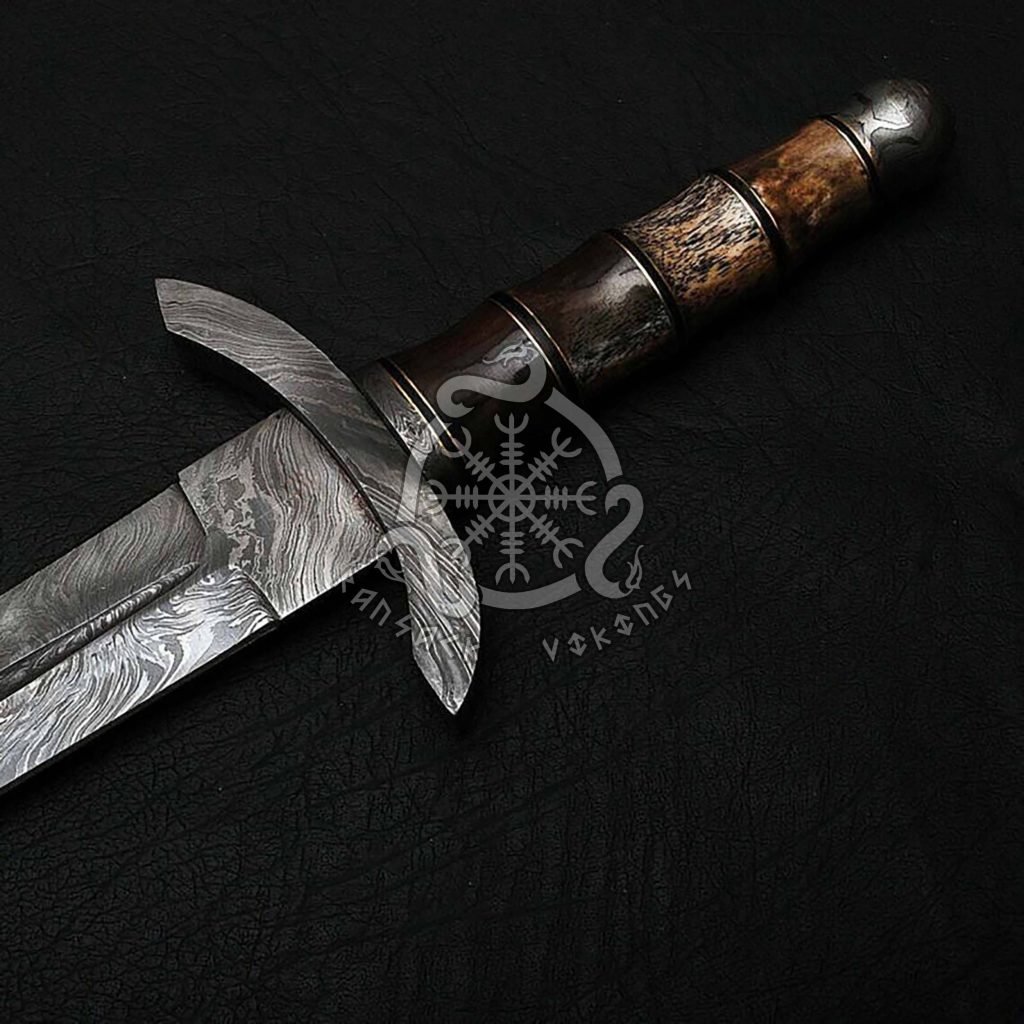
| Pommel | Fluted pear, seated on the tang and peened over |
|---|
| Grip | Black leather over a wood core, two handed |
|---|
| Flex | Medium tier |
|---|
| Included | Cloth wrap and a care card, no scabbard |
|---|
| SKU | RK-3041 |
|---|
Feders, the fencing school and why the tip is shaped like that
A feder is not a sword with the edges taken off. It is its own object, made in the fifteenth and sixteenth centuries for the fencing schools and the shooting guilds, so that people could fence longsword hard and often without killing each other. The German name fechtfeder points at the blade, which was thought to look like a quill: narrow along most of its length with a widened section near the hilt.
Everything about the shape follows from that job. The blade above the schilt is thin and light, so it moves fast and hurts less when it lands. The schilt puts back the width that a real sword carries at the base, which is what protects the hands in a bind. The cross is wide because a wide cross catches a blade that has slid down the schilt and keeps it away from the fingers. The tip is thickened because a thrust is the most dangerous thing in the system and a bare point would go through a mask.
This one takes the knob route rather than the rolled route. The last stretch of blade widens out into a broad flared head, thick front to back as well as side to side, so a hard thrust spreads across an area rather than stacking onto a small circle. On the blade you feel it as a little extra mass right at the end, which is worth knowing before you first pick it up.
The triangular schilt, the flared knob and the spring in the blade
The steel is 51CrV4 spring steel hardened to 49 to 52 HRC. That is the choice across every blunt in this line and it matters most on a feder, because spring steel bends and returns instead of taking a set or snapping under a hard bind. A feder is thrust into people several hundred times in a good session. A blade that held a bend would be scrap within a month.
The schilt on this piece is triangular and it flares smoothly. Walk your eye down from the cross and the steel widens in one continuous sweep into the triangle, then narrows again into the blade proper. There is no long flat parallel ricasso under it and there is no stepped shoulder where the schilt begins. That is a real difference between feder patterns and it is worth knowing which one you are buying, because a smoothly flared schilt sits closer to the cross and gives a slightly shorter safe zone for a half sword grip.
Flex is in the medium tier. Feder flex is usually sold in bands, from light through medium up to strong or tournament, with stiff blades kept for harness work. Medium is the tier most clubs put on a general trainer: enough give that thrusts fold rather than drive, enough spine that a bind holds and the point does not wander. We give you the tier rather than a number because we do not test each blade on a scale.
The edges carry a flat land of about 3 mm, which is above the usual minimum of 2 mm for a longsword trainer, so nothing on the blade behaves like an edge even when it is driven along an arm.
Engraving, runes and your own design
Use the rune converter on this page to turn a name, a date or a short phrase into Elder Futhark and we will cut it into the steel or the grip. On a feder the schilt is the natural canvas, because it is the widest flat on the piece and a rune line sits square on it, and the pommel will take a symbol if you want the steel of the blade left plain.
If you would rather have your own design than a rune line, choose your own design in the engraving option above the add to cart button and tell us where it goes. Where a piece already carries an engraved design, your chosen engraving replaces it rather than sitting alongside it. More on the engraving page.
Handling and balance
It is long and it is light for its length, which is what a feder should be. Most of the steel that would be in a sword’s forward blade simply is not there, so the point comes up fast and stays up. Fencers moving from a blunt longsword usually find the first session disorienting for exactly that reason. The sword you have been driving suddenly moves on its own.
The flared knob at the end puts a little mass right at the tip, which steadies the point in a thrust and gives the blade a slight tendency to lead. It is a small effect but it is real, and it shows up most in fast direction changes. Give it a session before you decide whether you like it.
The wide cross and the schilt do the work in a bind. Set the bind low, on the schilt rather than up the blade, and the hands stay covered without a gauntlet doing all the thinking. We do not publish a weight or a point of balance for this piece, because the photograph carries no scale and every one is finished by hand.
Care
51CrV4 is not stainless and the blade is bare steel. Wipe it after every session and keep a light film of oil on it between uses. Mineral oil or a light gun oil is plenty.
The schilt and the cross are where rust starts. There are junctions at the cross block and along the underside of the schilt that a cloth passes straight over, so make a point of drying and oiling those rather than just running down the flats.
Check the flared tip for cracks and for burrs before every session. A feder tip takes more abuse than any other part of the piece and a split knob is the one fault that takes a blade out of service immediately. Let the leather grip dry after use rather than sealing it in a bag, and treat it once or twice a year with a leather balm. The full method is in the knife care guide.
Made in the Czech Republic
Made by hand in the Czech Republic and imported by Ransack Viking. Nothing here is drop shipped out of an importer catalogue straight to a customer. Every one is checked for hilt tightness, pommel seating and blade straightness at our North Babylon, New York warehouse, and ships from there. Shipping in the United States is free, returns run for seven days, and the lifetime warranty against defects in the forging, the grind, the heat treat and the fittings has no end date and needs no receipt.
A note on handmade variation
This is hand forged. It is not machine made, not cast and not bulk produced, so what arrives will not be a pixel for pixel copy of the photograph on this page. The schilt is ground by hand, so the exact angle of the triangle and the point where it starts to flare move from one piece to the next. The flared knob is worked at the end of the blade and no two are the same width to the millimetre. The fluting on the pear pommel is cut by eye. None of that is a fault and none of it changes how the feder fences.
Frequently asked questions
What the flared knob on the tip is for
It spreads the force of a thrust over a wider area so the point does not concentrate load on a mask or a jacket. It is the single most important safety feature on a feder.
Whether this feder has a ricasso
Not a long separate one. The schilt flares smoothly out of the blade rather than stepping off a flat parallel ricasso, so there is no stepped shoulder under it.
What flex tier this is
Medium tier. The market sells flex in bands from light through medium to strong or tournament, with stiff blades kept for harness work. We give the tier rather than a measured number.
Whether it is allowed in tournaments
Many longsword events require a purpose built feder rather than a blunt, and this is one. Requirements still differ event to event, so read the ruleset you are entering under. We will not claim legality under a ruleset we have not named.
Whether a scabbard is included
No. Feders do not come with a scabbard and we will not promise one. It arrives wrapped for transit with a care card in the box.
Whether it can be engraved
Yes. Runes, your own text or your own design, cut in the United States after the piece lands here. Text and runes are $19, a symbol is $39 and a family crest is $49.
What is in the box
- One Vandrekt feder, hand made in the Czech Republic.
- A cloth wrap for transit.
- A care and storage card.
- Your warranty and returns information.
Explore the range
The rest of the purpose built sparring steel is in feders, the blunt longswords are in HEMA longswords, the whole training line is in HEMA swords and the wider catalogue is in longswords. Every guide we have written sits in the guides hub.
If this one is not it
Close in size and role you have Brimhalt feder, about 50 inches overall, Vindlaur feder, about 50 inches overall, Ravnstad feder, about 48 inches overall and Nattvarn hand and a half, about 48 inches overall to compare against this one.
The full feder category and the wider HEMA sword hub hold the rest of the line, and you can specify your own on the custom sword builder.








Reviews
There are no reviews yet