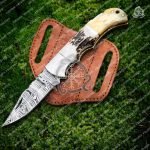
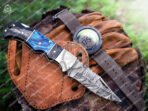
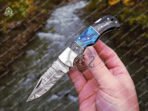
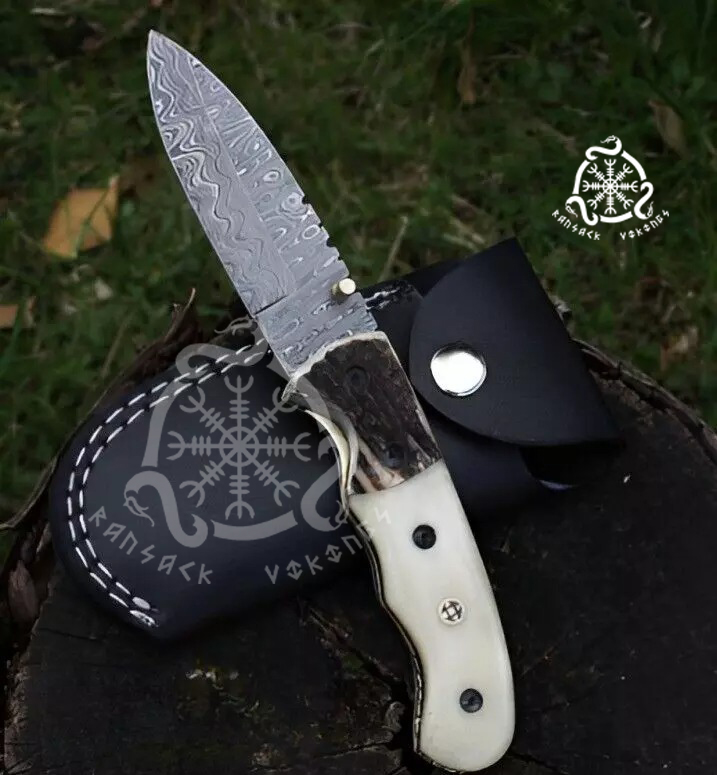
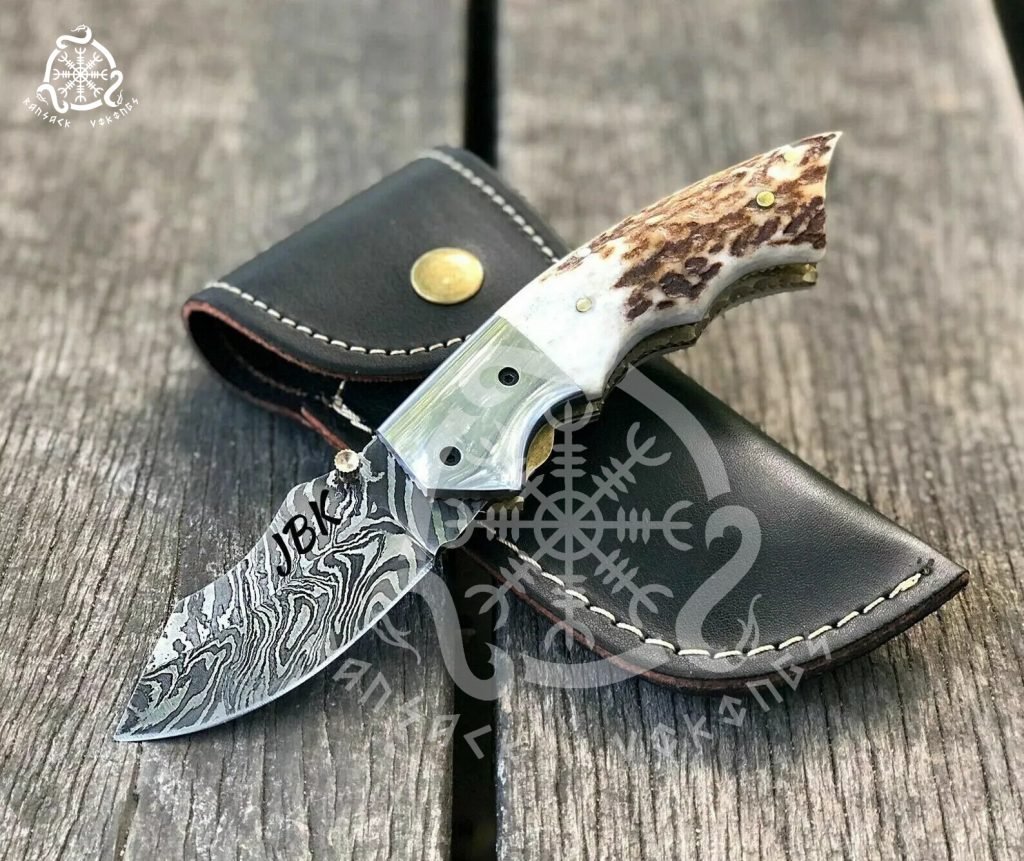
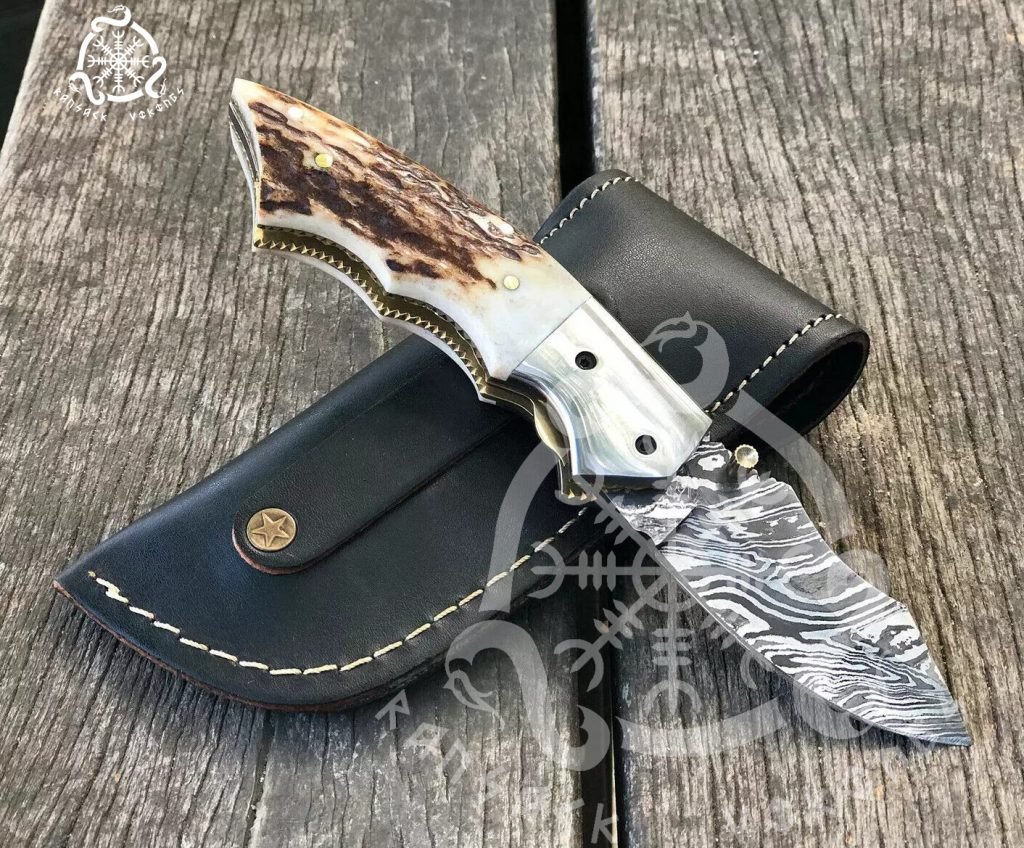
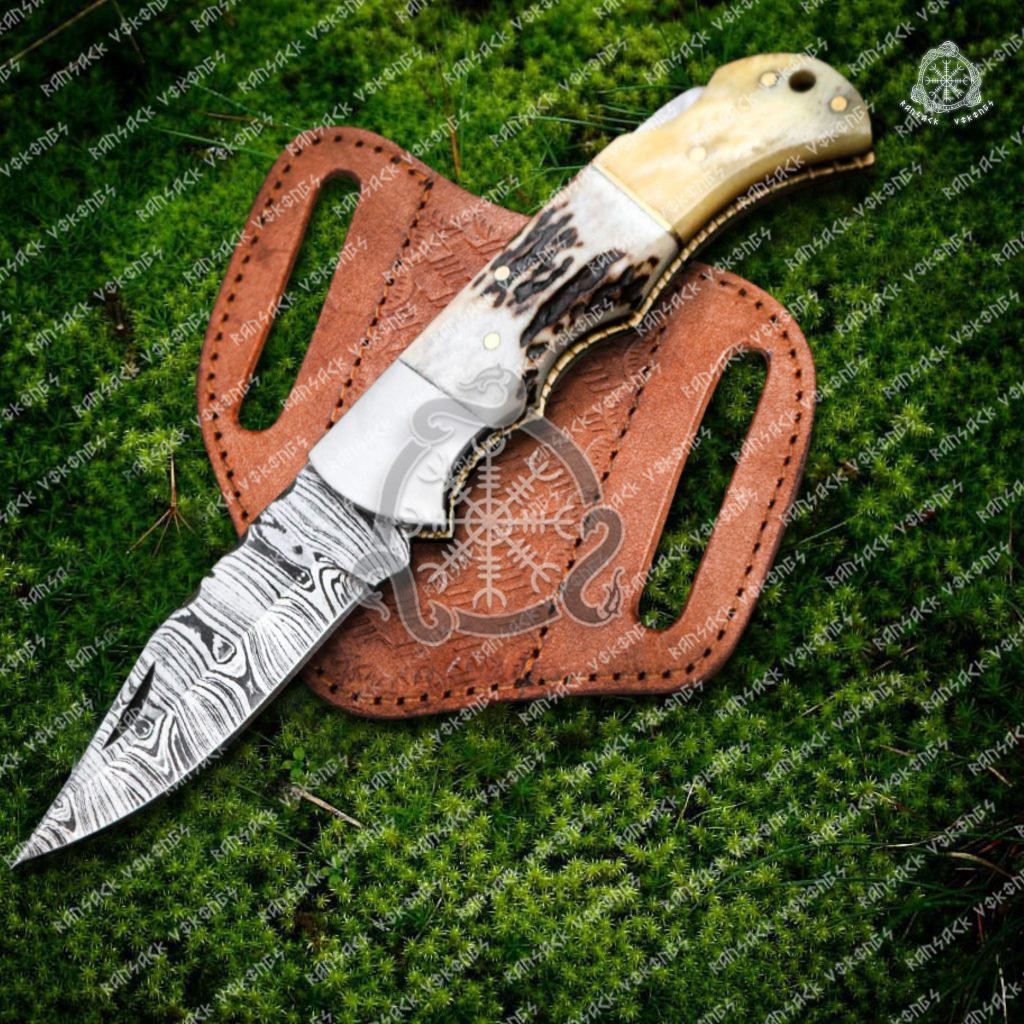
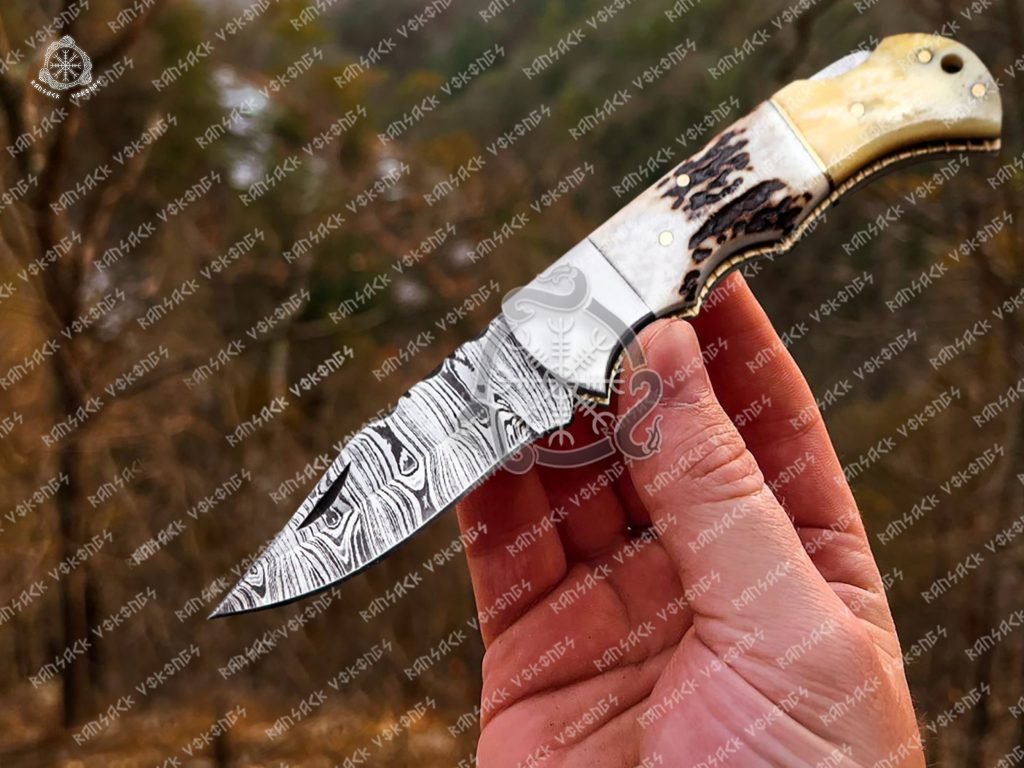
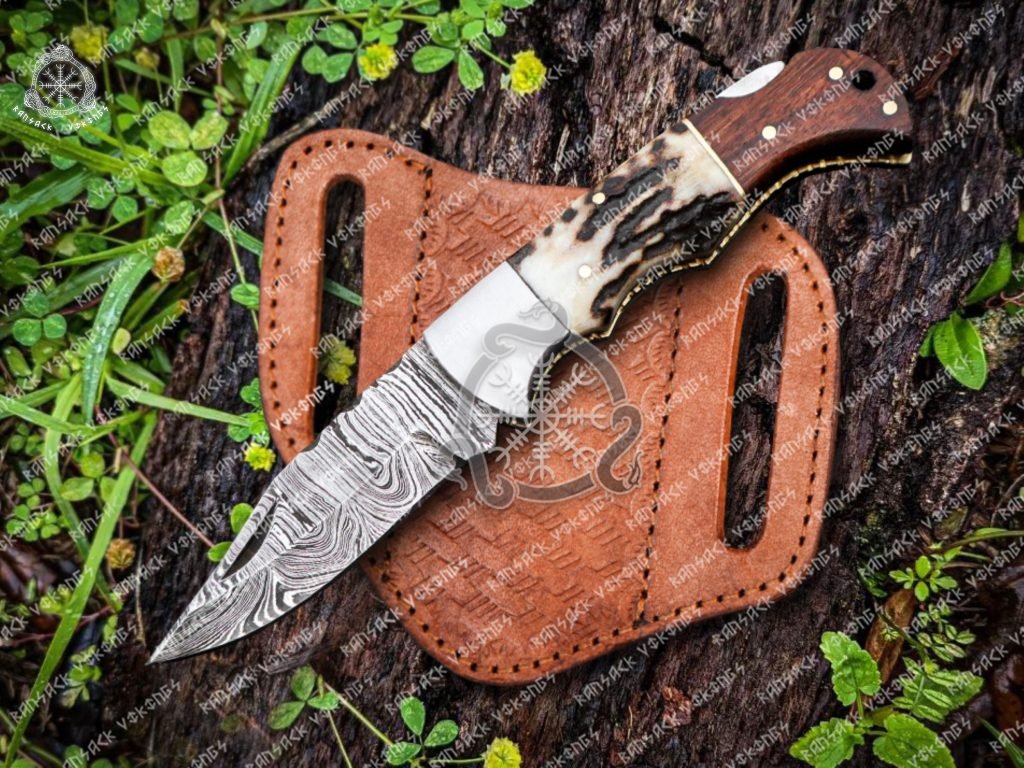
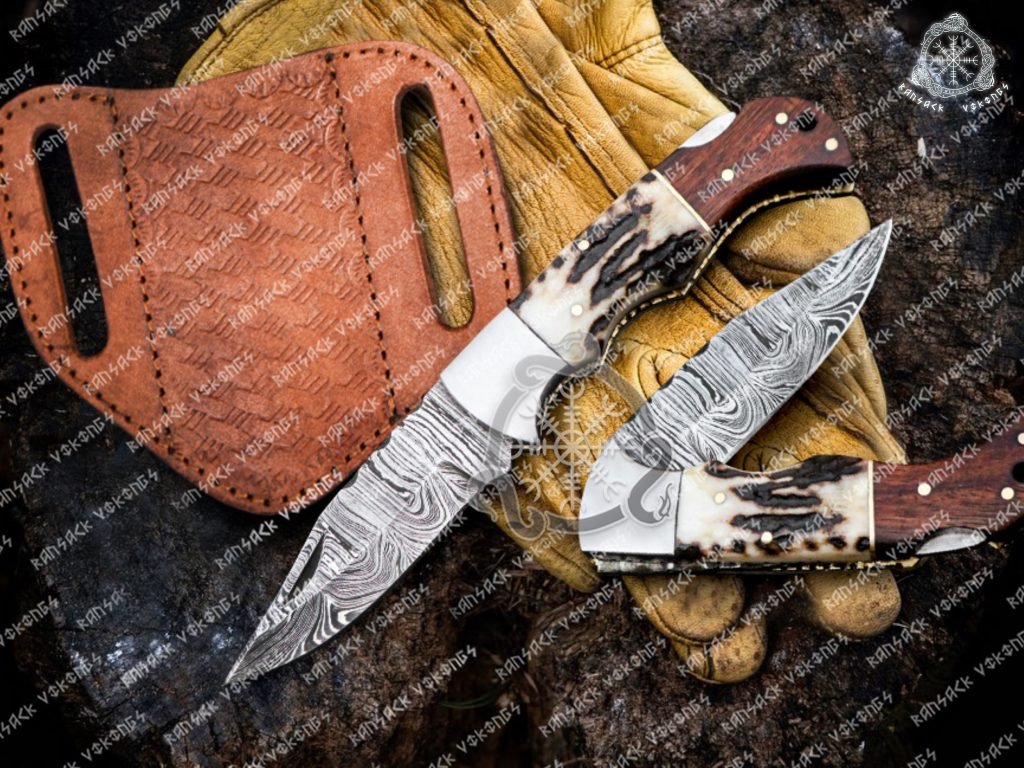
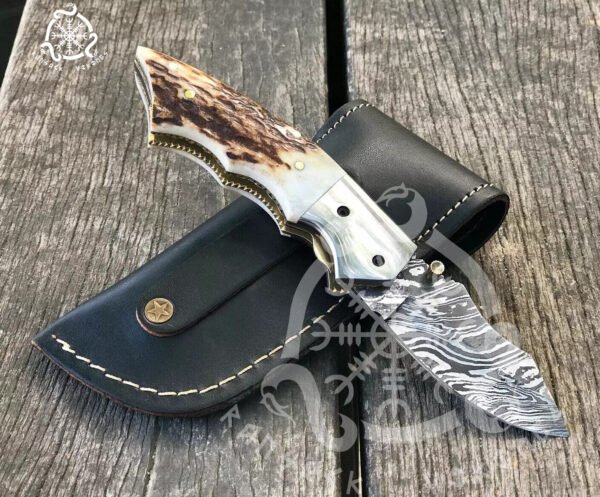
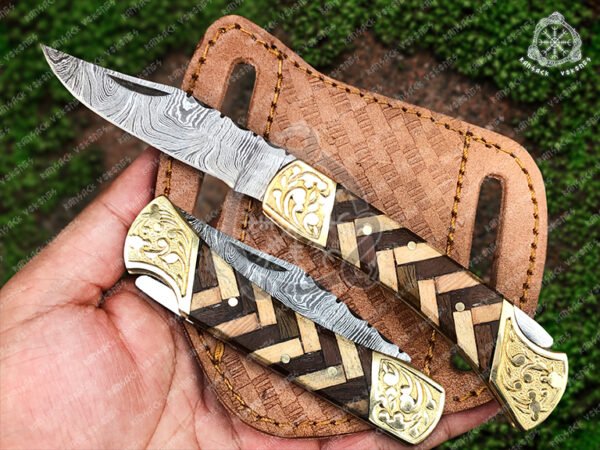
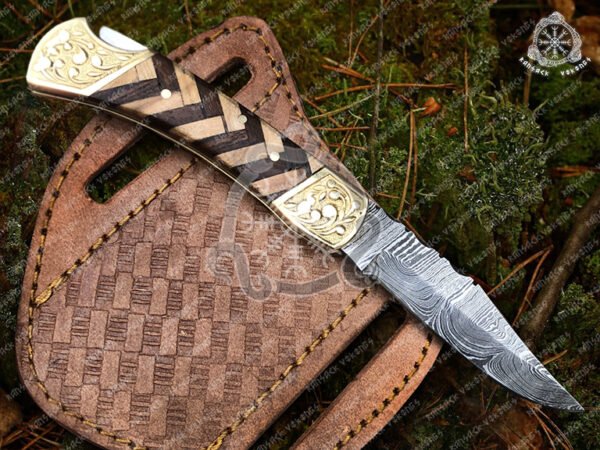
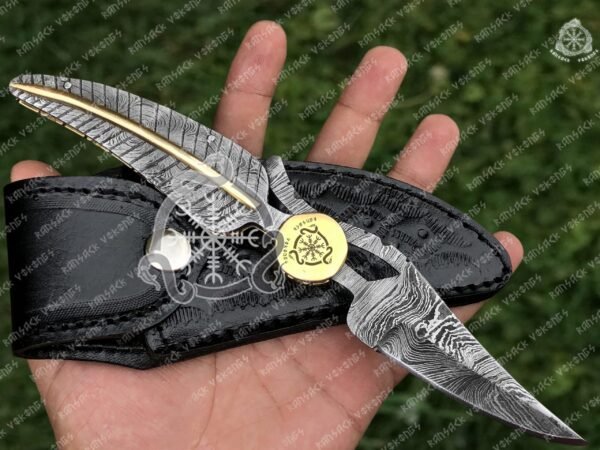
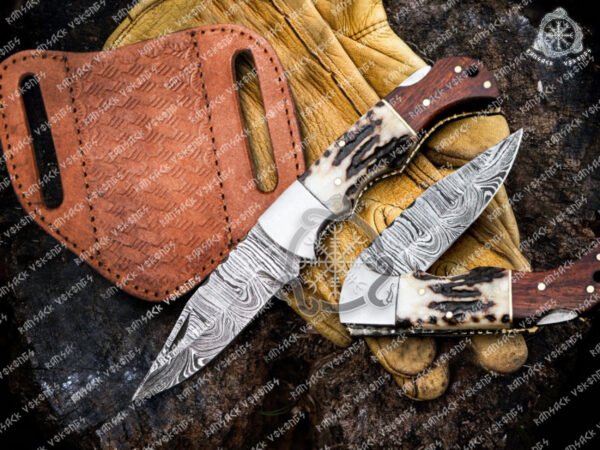
Pakka wood is the reason this one gets picked up first. The Pakkacarry is a hand forged Damascus folding pocket knife with a 2.75 inch blade, 6.5 inches open, and scales of pakka wood that stay stable in a damp pocket where plain timber would move. Blade, handle and sheath are all fitted to each other rather than assembled from a bin of parts, so the knife sits balanced in the palm and the blade closes dead centre between the liners. What makes a folder worth carrying daily is set out in what makes a good daily folder.
The pocket knife as most Americans picture it came out of Sheffield. The Barlow pattern, a stout single blade with a long bolster, was being made by the Barlow family from about 1670 and was cheap enough and tough enough that it crossed the Atlantic in barrels. It turns up in colonial inventories, in Washington family accounts and, a century later, in Mark Twain, where a Barlow is the currency of choice among boys with nothing else to trade. The pattern survived because it got the important thing right: enough bolster to take the abuse, enough blade to be useful, small enough to forget you were carrying it.
This knife is forged and finished in the Czech Republic. It ships with a cowhide leather sheath, protective packaging and a working edge already on it.
Specifications
| Steel | Hand forged Damascus, 1095 and 15N20 |
|---|
| Hardness | 58 to 60 HRC |
|---|
| Pattern | Fire pattern Damascus with brass file work |
|---|
| Overall length | 6.5 inches open |
|---|
| Blade length | 2.75 inches |
|---|
| Handle length | 3.75 inches |
|---|
| Weight | 6 oz |
|---|
| Handle | Pakka wood |
|---|
| Sheath | Cowhide leather sheath |
|---|
| SKU | RK-374 |
|---|
What the backspring is doing
The defining part of a traditional folder is not the blade, it is the flat bar of spring steel running along the back of the handle. That backspring rides against a cam ground into the base of the blade tang, and the shape of that cam decides everything about how the knife feels. Where the cam is at its highest, the spring is under most tension, so the blade wants to move away from that point. Where the cam drops, the spring relaxes and holds the blade still.
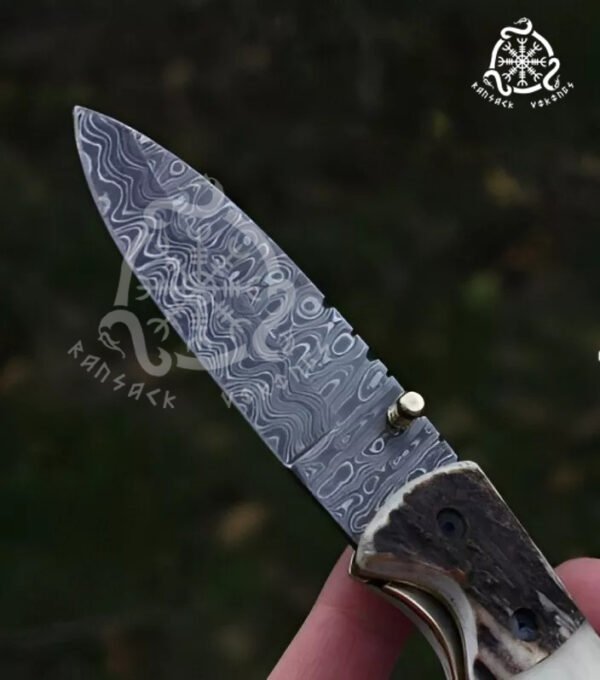
That is why a well made slip joint has three positions: closed, half open and fully open, with a definite snap into each one. Cutlers call it the walk and talk. Good walk means the blade travels without grinding or sticking; good talk is the sound the spring makes as it drops into place. It also means the knife is safe in a pocket, because the spring has to be actively overcome before the blade can start to open. The brass file work along the spine of this blade is cut into the visible edge of that same assembly, and the jimping gives your thumb a positive place to push from when you are working through cardboard or hide.
Why Damascus and not stainless
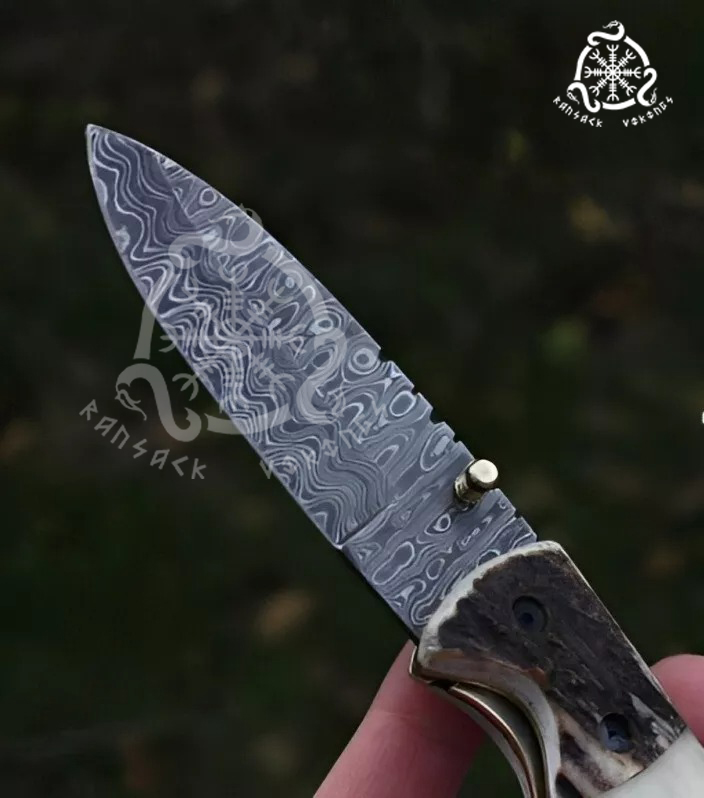
The blade is built from alternating layers of 1095 and 15N20, forge welded into a single bar before the shape is ever cut from it. Because the layers run all the way through the steel, grinding the bevel reveals the pattern rather than removing it. Etching in acid at the end eats the two alloys at different rates, which is where the light and dark bands come from. A printed or laser marked blade looks similar in a photograph and disappears the first time you take a file to it.
Hardened to 58 to 60 HRC, this steel takes a keener edge and holds it through more work than the soft stainless used in most mass produced folders. The cost is that it is carbon steel and it will spot if you leave it wet. That is a two second job to prevent and it is the trade every serious cutler makes. The full comparison is in Damascus versus stainless.
The pakka wood handle
Pakka wood is not a species, it is a process. Thin sheets of hardwood veneer are soaked in phenolic resin and then pressed together under heat and pressure until the resin cures right through the stack. What comes out is a laminate that still shows real wood grain but no longer behaves like raw timber: it will not swell in humidity, shrink in a dry winter or split around the pins, which is exactly what you want on a knife that lives in a pocket next to your body heat.
It is finished with oil rather than lacquer, so a dull patch can be brought back at home with a wipe of mineral oil and a soft cloth instead of being sent away for refinishing. Colour and figure vary sheet to sheet, so no two handles come out identical. The routine is the same one we recommend for solid timber and it is written up in wooden handle care.
Engraving, runes and your own design
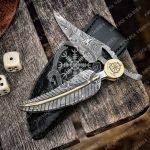
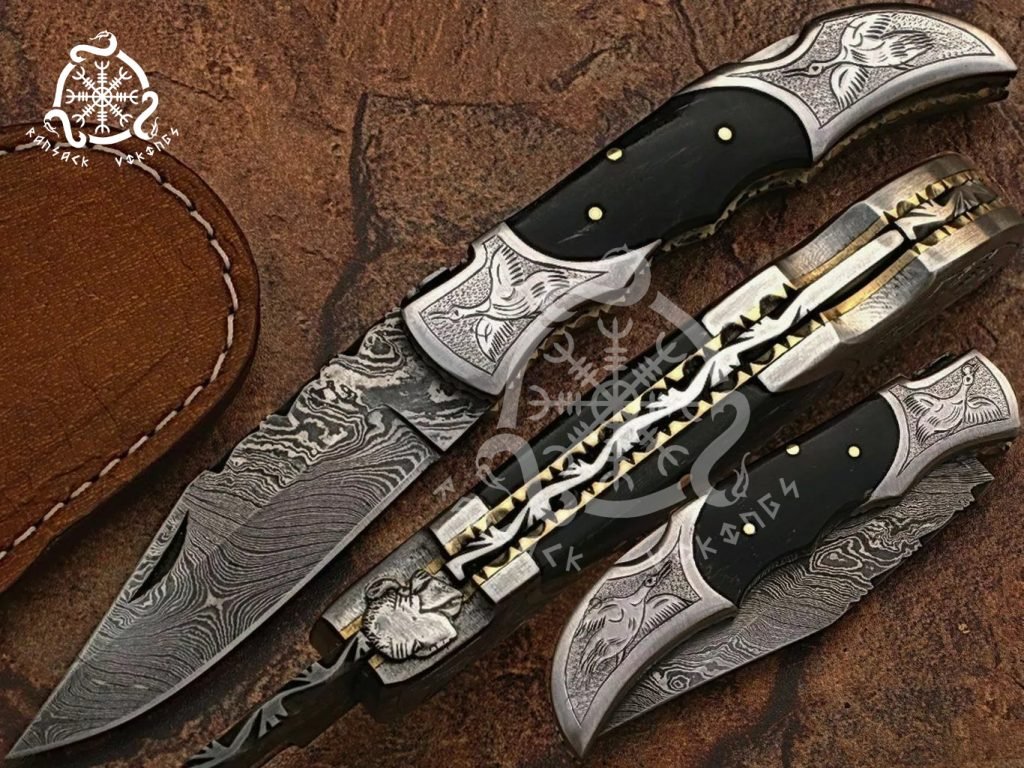
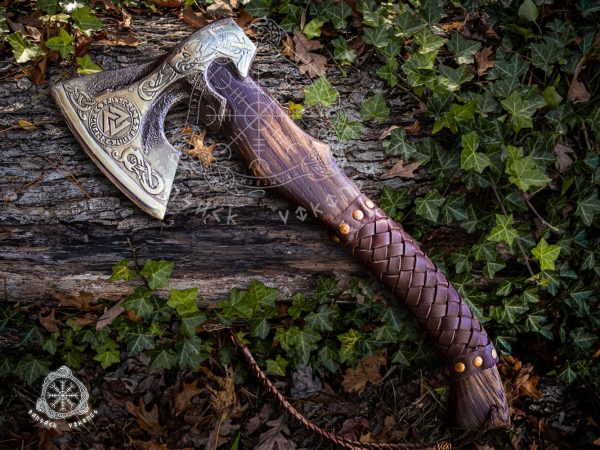
Use the rune converter on this page to turn a name, a date or a short phrase into Elder Futhark and we will cut it into the steel or the handle. If you would rather have a Viking pattern than a rune line, choose your own design in the engraving option above the add to cart button and tell us whether it goes on the blade or the handle. Where a piece already carries an engraved design, your chosen engraving replaces it rather than sitting alongside it. This is the reason the Pakkacarry ends up in groomsman boxes so often, and every cut is made here before packing. Options and lettering samples are on the engraving page.
Care and sharpening
Dry the blade after use and put a thin film of mineral or camellia oil on it before storage. Acidic work, meaning fruit, onion, tomato or anything salty, should be wiped off straight away rather than left to sit. A drop of light oil in the pivot two or three times a year keeps the action clean; work the blade open and shut a dozen times to spread it and wipe away what comes out with the grit.
For the edge, a 1000 grit waterstone will do almost all of the work and a 3000 will refine it. Keep to the angle already on the blade rather than setting a new one. Do not put the knife in a dishwasher and do not store it inside the leather sheath for months at a time, because vegetable tanned leather holds moisture and salts against steel. Method for both jobs is in steel care and sharpening with a whetstone.
Made in the Czech Republic
This is a handmade piece from the Czech Republic, made in a workshop that still forges, grinds and finishes by hand instead of stamping parts out. The smiths there have kept the older way of working, and the wood, horn and leather are shaped and fitted by hand as well. Two pieces of the same design will never be identical, and that is part of what you are buying.
Ransack Viking is a United States company. We handle the import ourselves, look over every piece when it lands and ship from our warehouse in Memphis, Tennessee. Engraving is done in the United States after the piece arrives, so your design goes on before we send it out.
A note on handmade variation
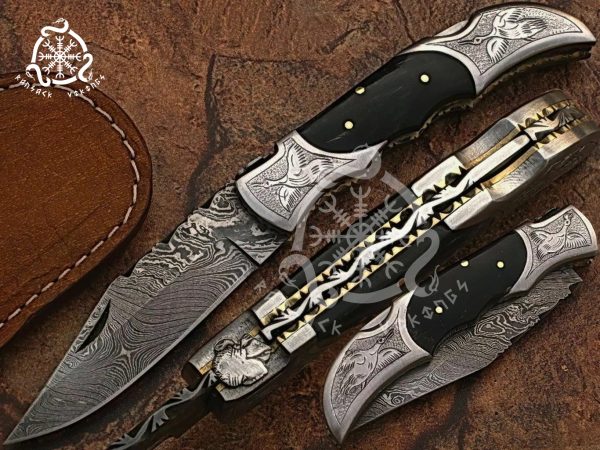
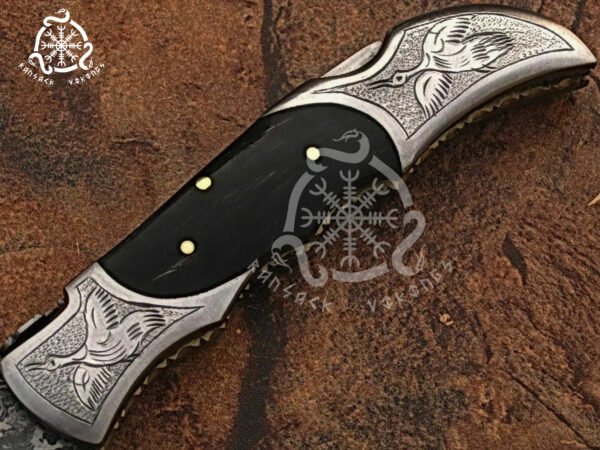
Every Pakkacarry is hand forged rather than machine made or bulk produced, so what arrives will not be a pixel for pixel copy of the photograph. The Damascus pattern is drawn out of the billet by hand and lands differently on every blade, the pakka wood carries its own figure and tone, the brass file work is cut by eye, and the exact line of the grind moves a little from piece to piece.
What does not move is the specification. The dimensions, the steel, the hardness and the build are the same every time. The character is not, and that is the whole point of buying from a forge instead of a factory.
Frequently asked questions
Is pakka wood as strong as natural hardwood
It is stronger in the ways that matter on a knife. The resin filling the veneer stops the movement that splits raw timber around a pin, and it will not absorb water. It gives up a little of the depth that a single piece of figured hardwood has.
How does it compare with the bone handled version
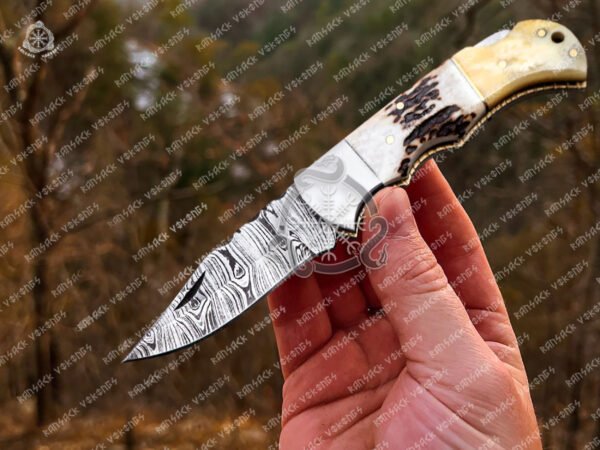
Same blade, same dimensions, different feel. Bone is a natural material with more variation and a cooler first touch. Pakka wood is more uniform, slightly grippier when wet and needs less looking after.
Can this be a groomsman or wedding gift with initials
Yes, and it is one of the most common reasons people buy it. Initials, a date or a rune line are all cut here before the knife ships, and orders of several matching pieces are fine.
Will the Damascus pattern wear off with sharpening
No. The pattern is the structure of the steel, not a coating. Sharpening removes metal from the very edge and the layers keep showing as you go. Heavy polishing can lighten the etch, and it can be re etched.
Is it heavy in a pocket at 6 oz
It has more heft than a modern titanium folder because the liners and the bolsters are solid rather than skeletonised. Most owners describe it as reassuring rather than heavy, but if you want the lightest possible carry this is not that knife.
What does the seven day return window cover
Seven days from delivery on an unused piece in its original condition. Engraved and personalised pieces are made to your specification, so they can only come back if there is a fault with the knife itself.
What is in the box
- One Pakkacarry Damascus folding pocket knife
- Cowhide leather sheath
- Protective packaging
- Care notes for carbon steel and pakka wood
- Forged and finished in the Czech Republic
Explore the range
Compare it against the rest of the folding pocket knives, or look at the Viking knives and the hunting knives if you want a fixed blade instead. Background reading sits in the guides.



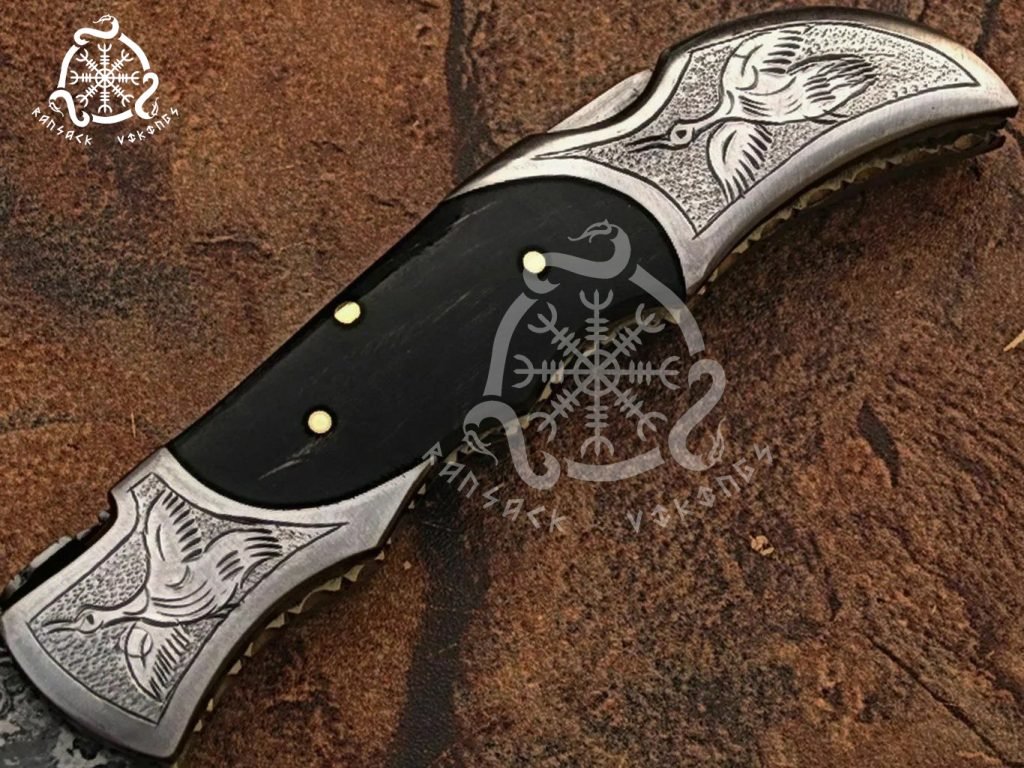

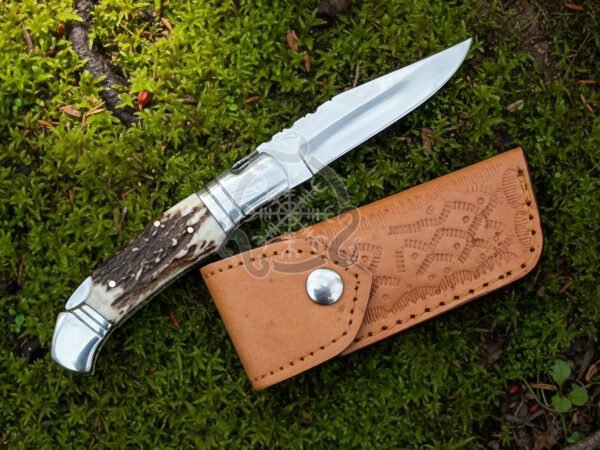
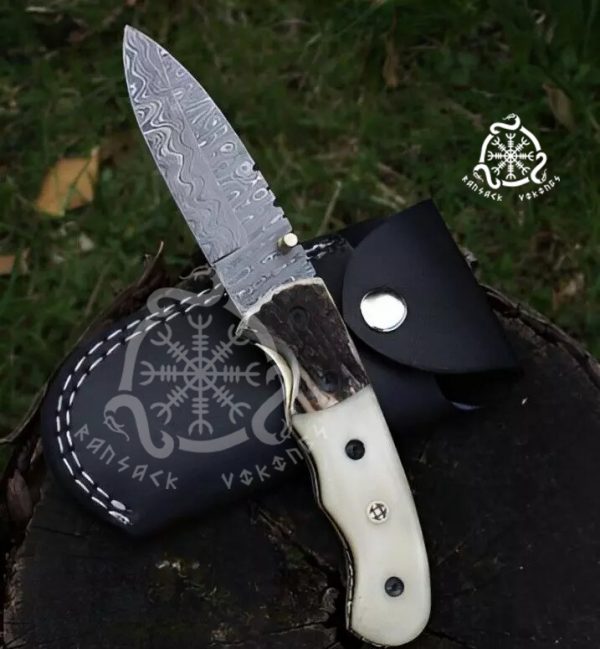






Showed up right on time and looked even better than the photos. Came in a nice gift box which made it feel even more special. Even the small engravings are crisp and clean. Already telling my friends to check this out.