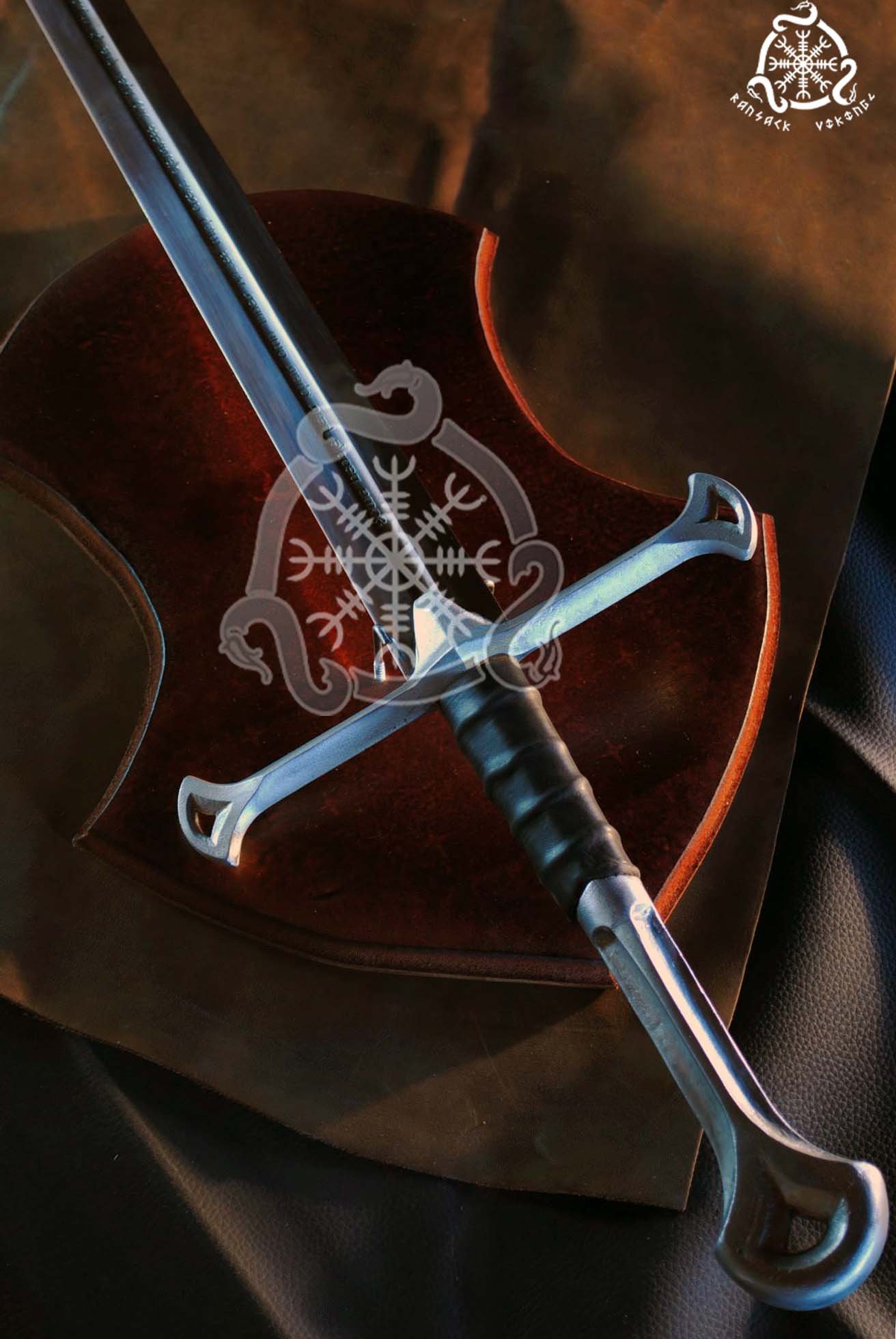
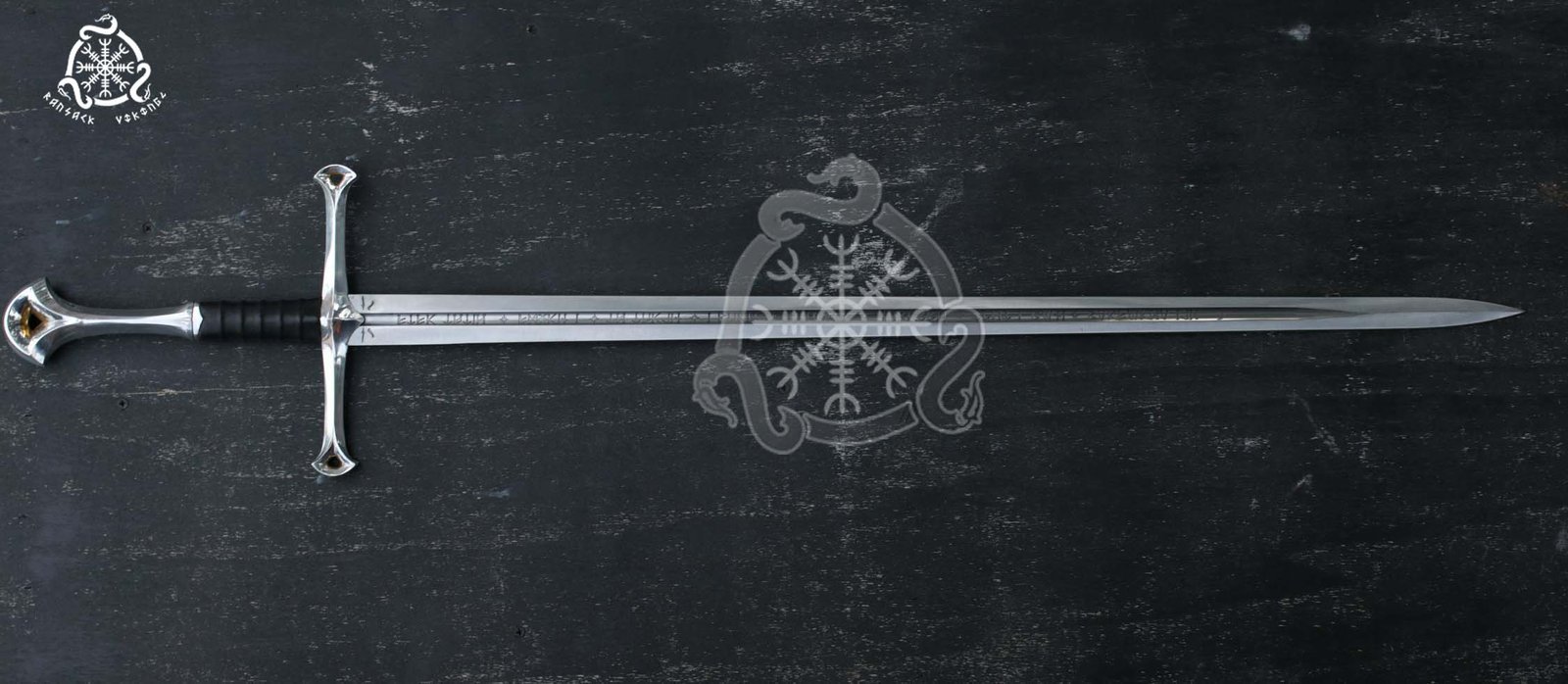
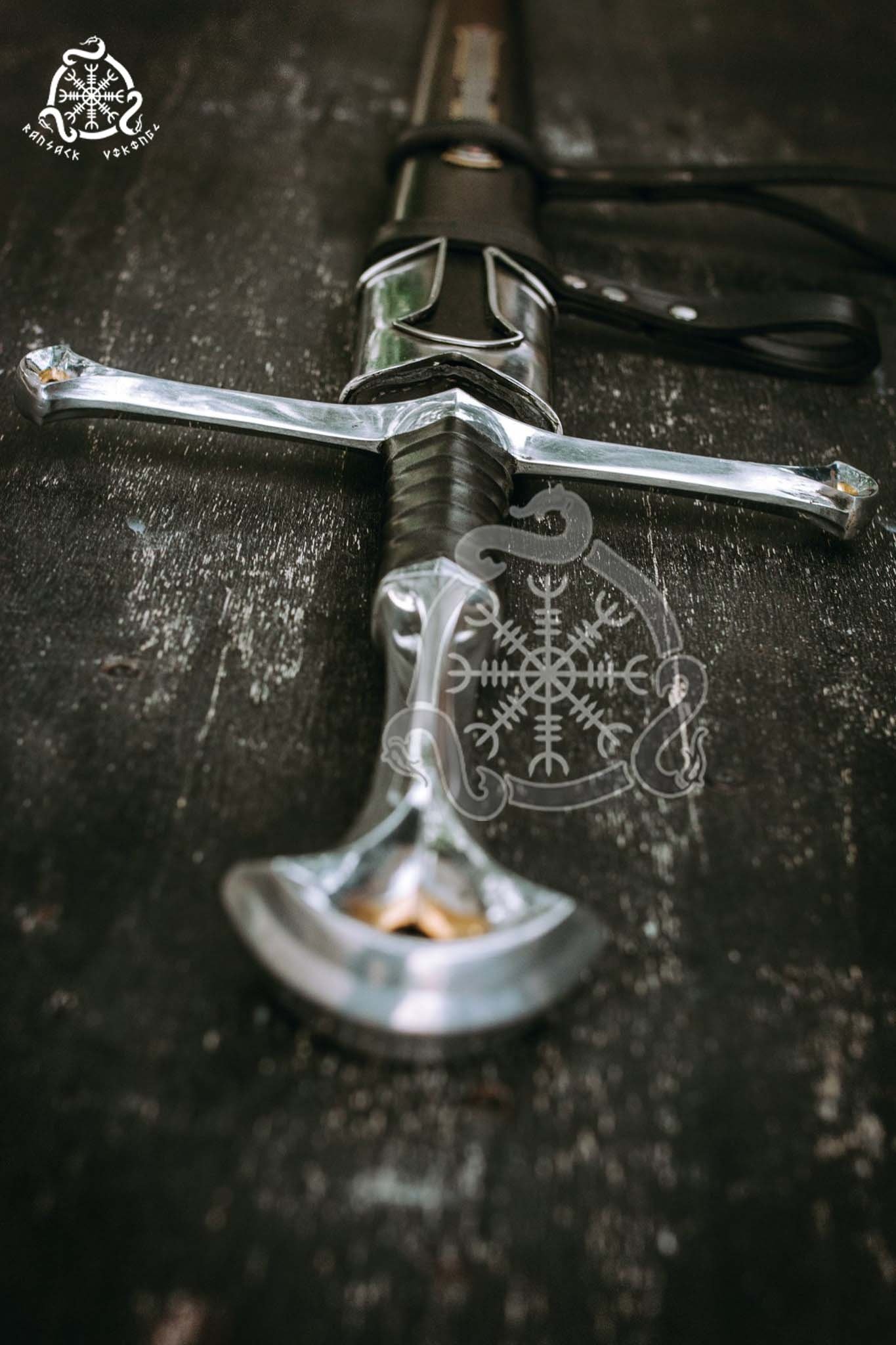
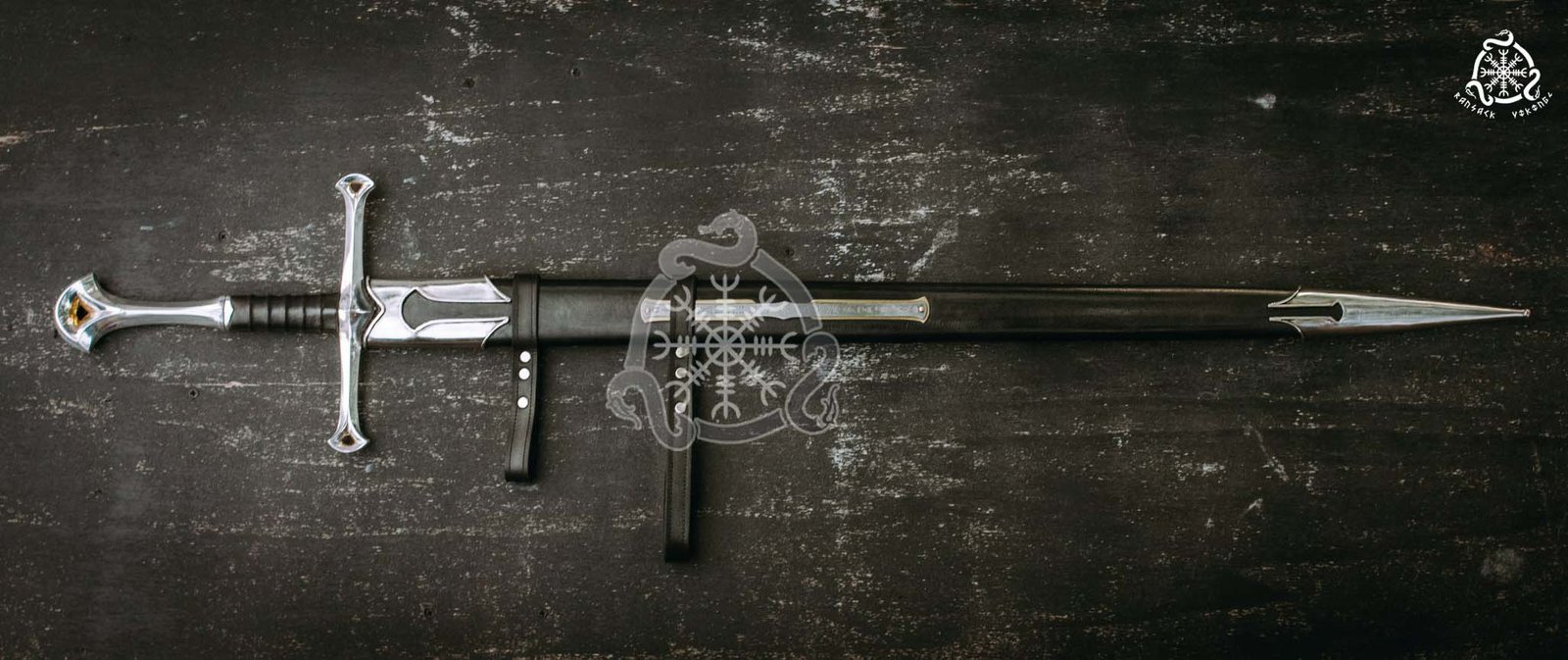
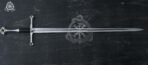
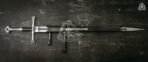
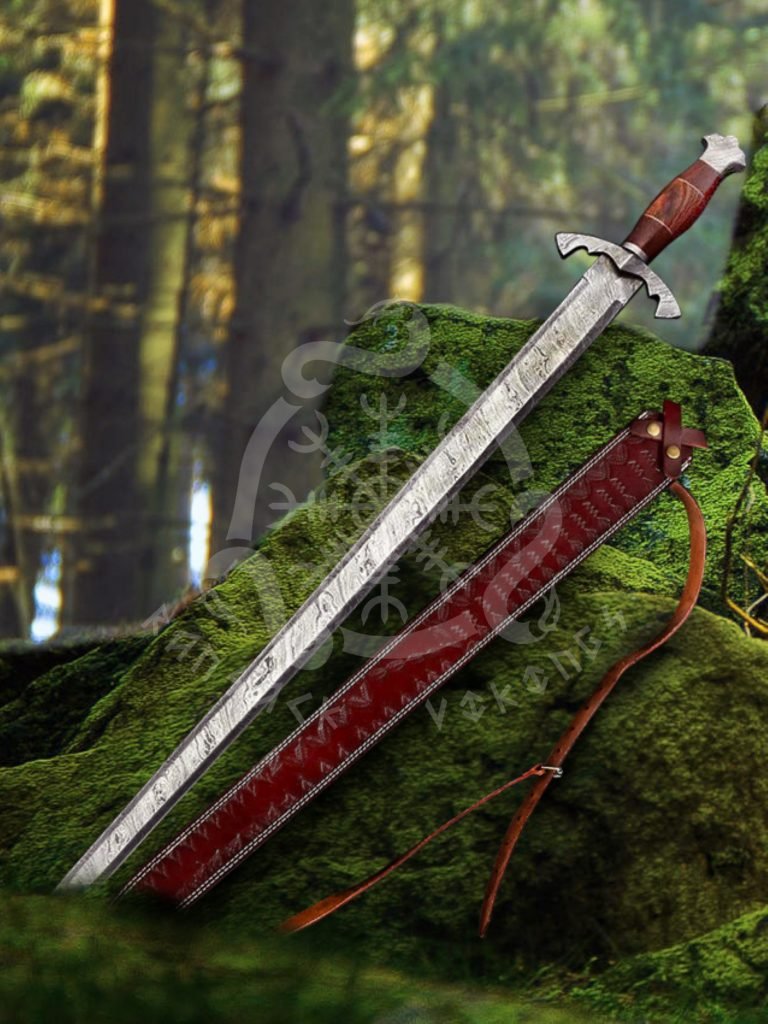
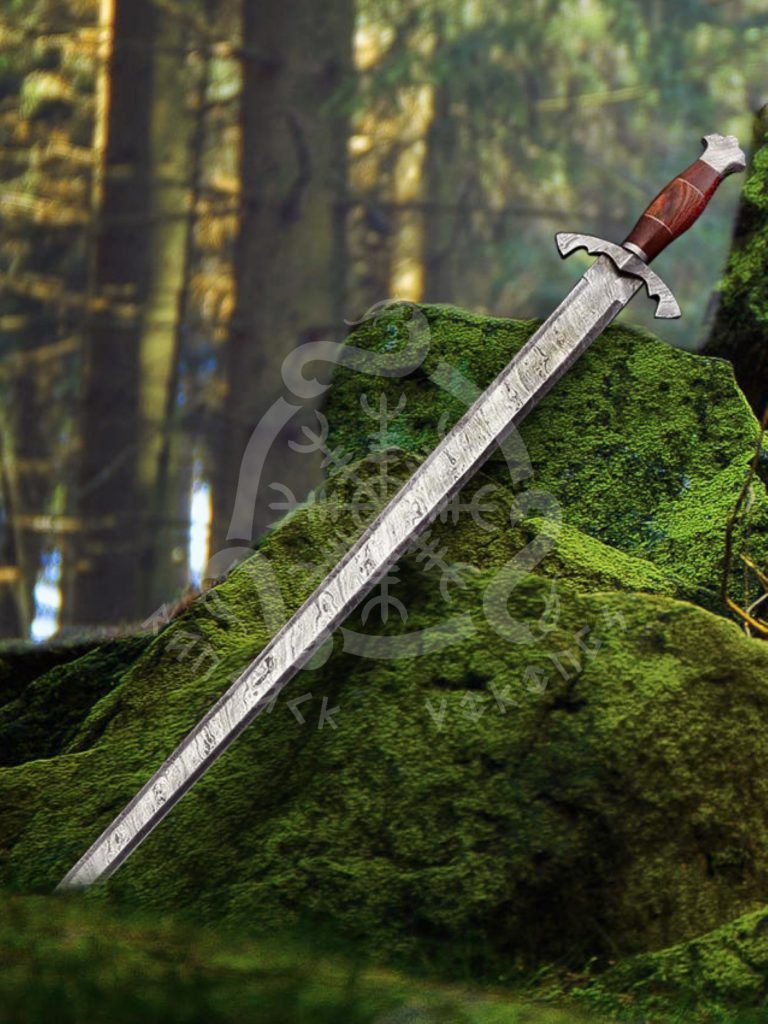
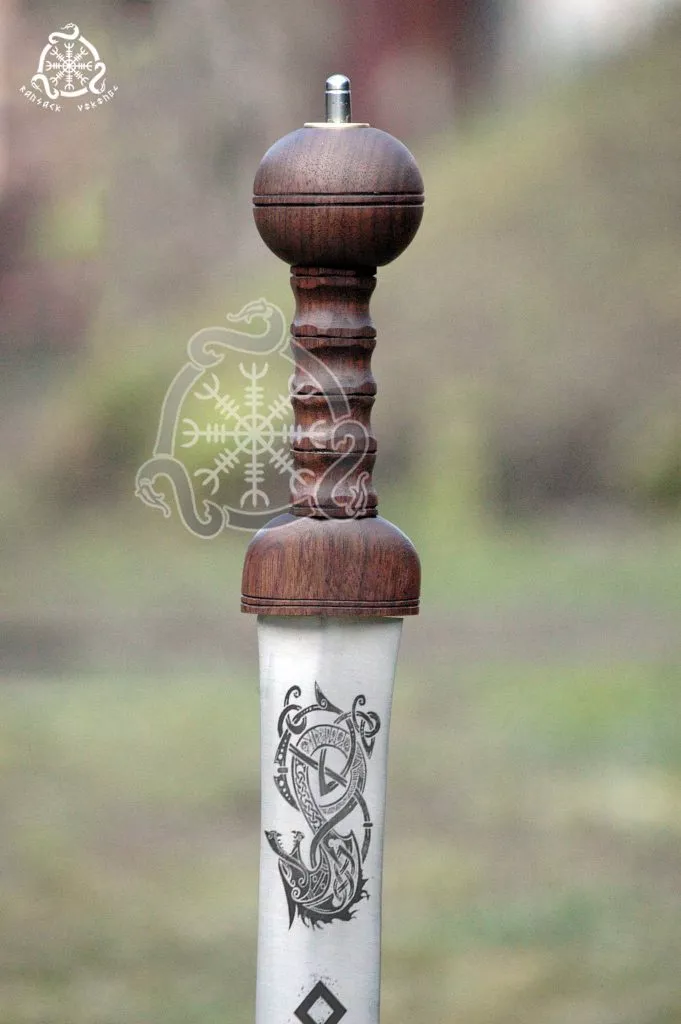
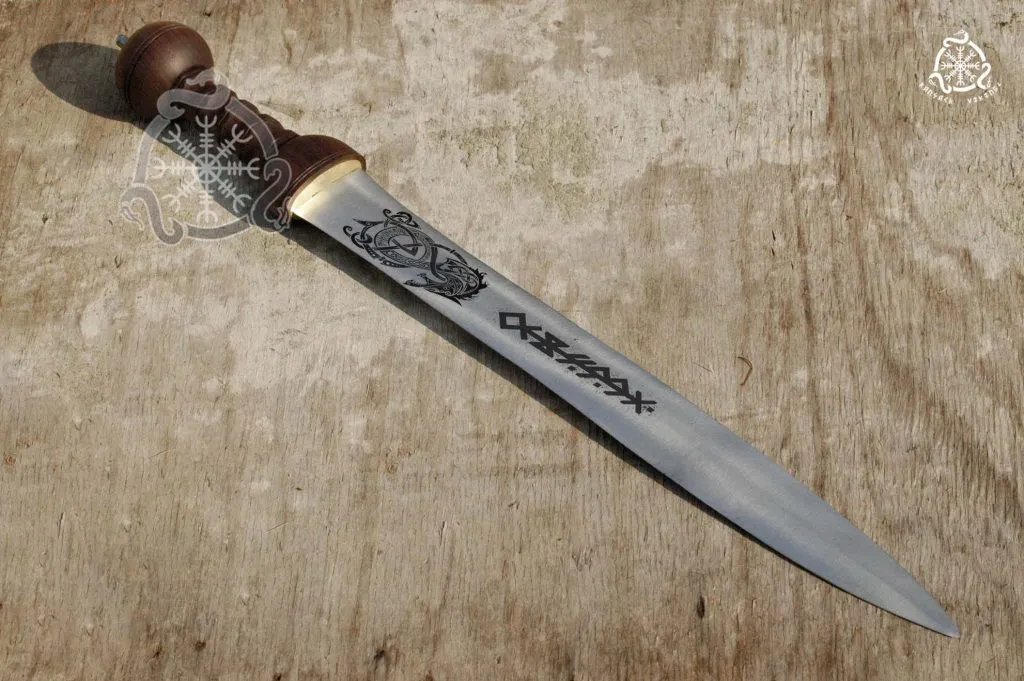
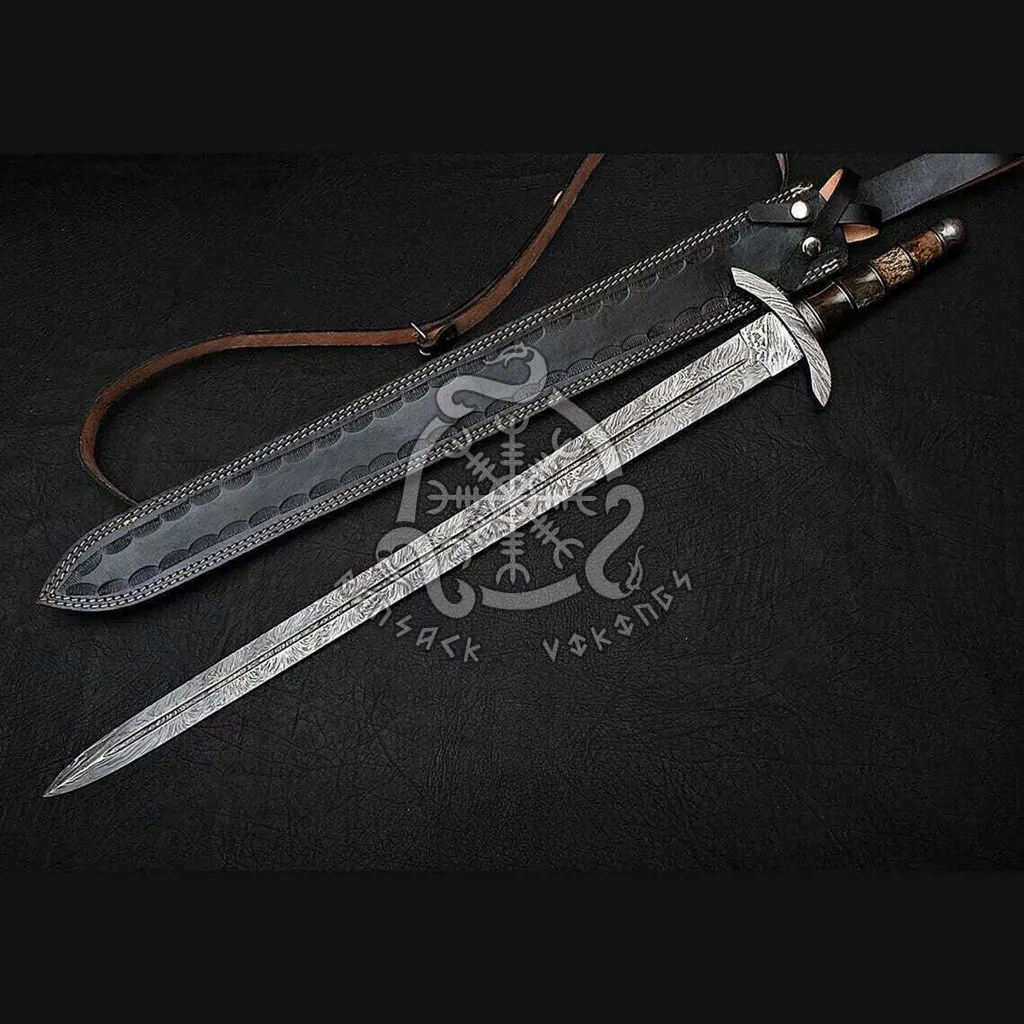
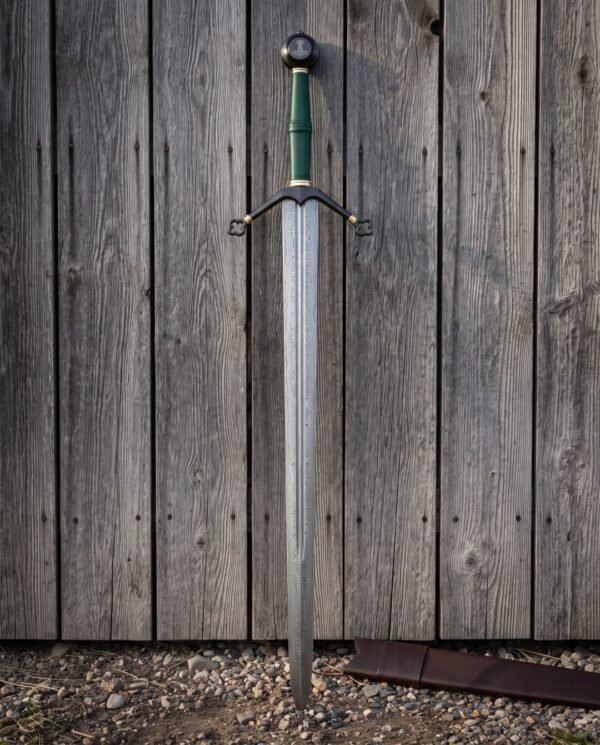
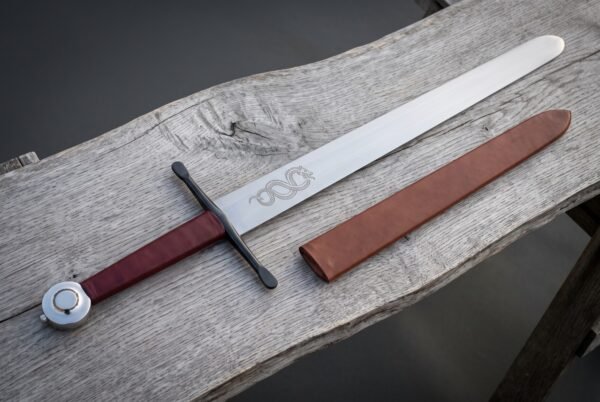
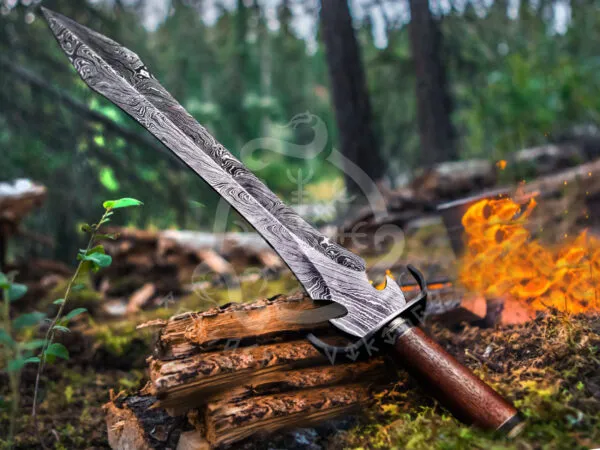
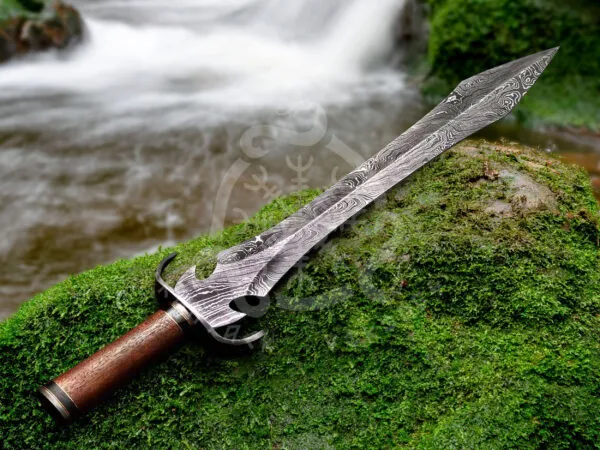
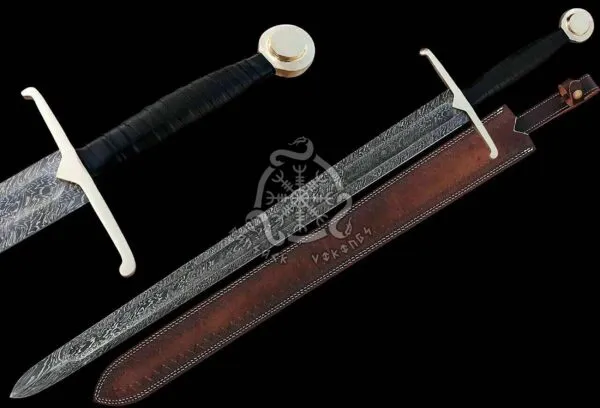
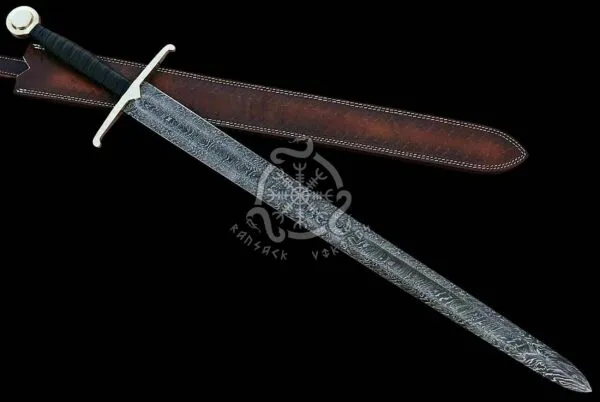
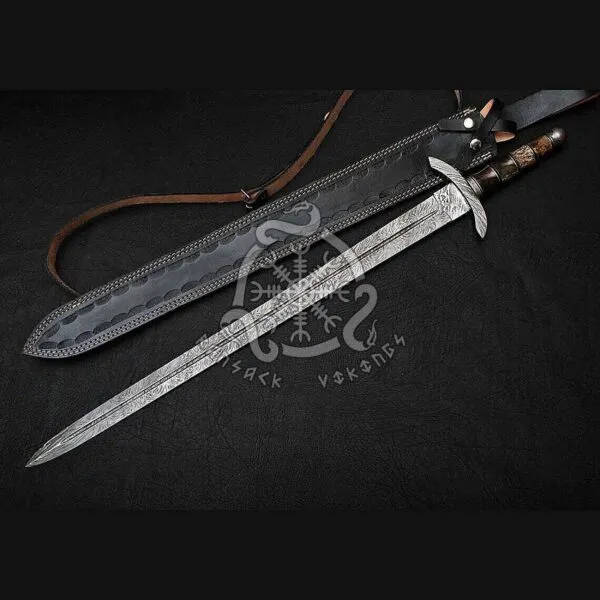
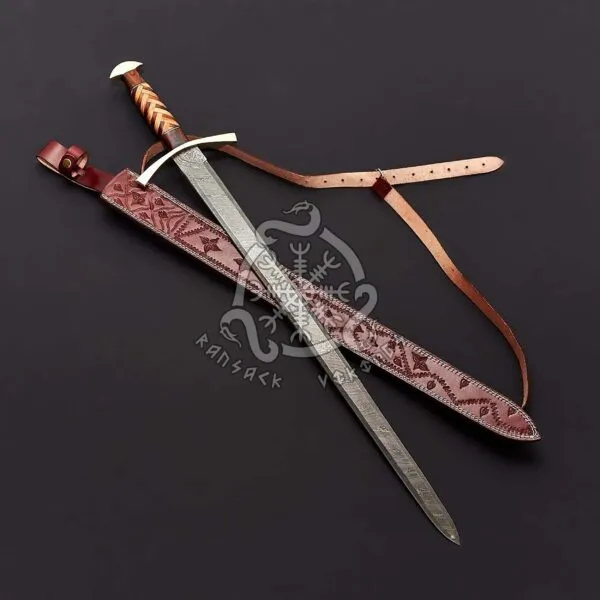
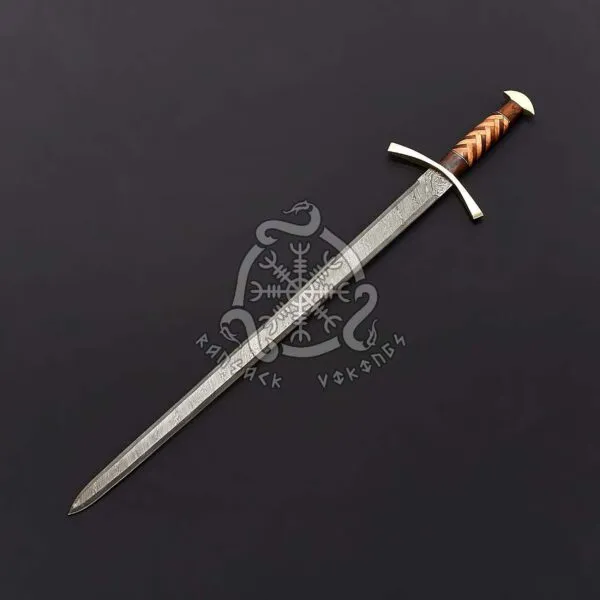
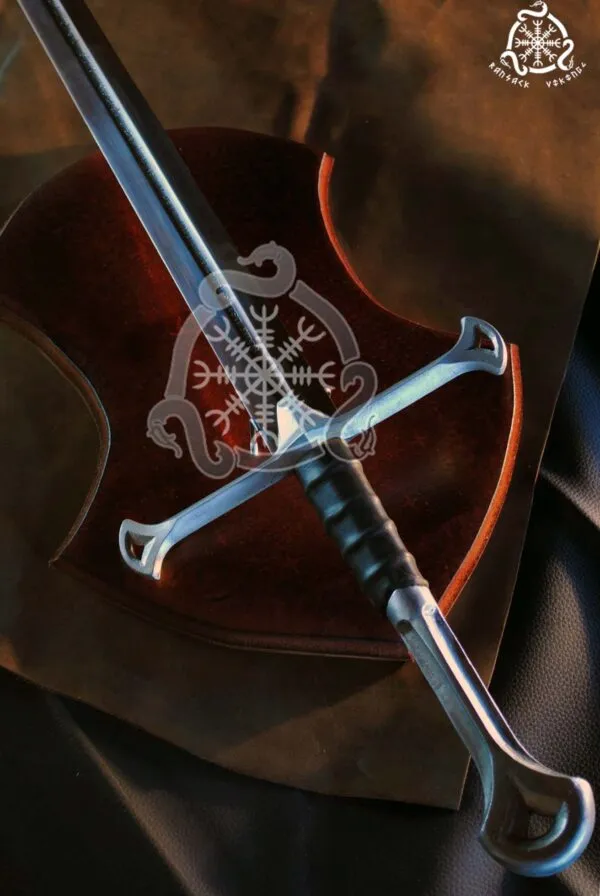
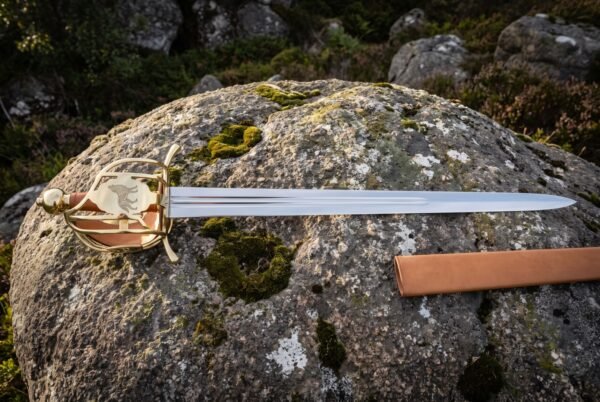
Thirty inches of blade on a 38 inch sword is a lot of steel, and the Leathergrip carries it on an unusual hilt. The grip is 8 inches of steel wrapped along its length in leather rather than the wood or horn you would normally find on a sword, which puts a continuous run of metal from the point to the pommel and gives the piece a solid, unbroken feel in the hand that a scaled hilt cannot match. A first sword is easy to get wrong, and buying a first sword covers the traps.
The Viking sword is the object the whole period is judged by, and there is a reason for that beyond romance. Making one was the single most demanding metalworking task in early medieval Europe. A blade needed to be nearly a metre long, straight, stiff enough not to whip, springy enough not to snap, and hard enough at the edges to cut, and it had to be made from bloomery iron of wildly inconsistent quality. The solution the smiths of the sixth to ninth centuries arrived at was pattern welding. Thin rods of iron and steel were twisted together, forge welded into a core, and then hard steel edges were welded onto that core. When the finished blade was polished and etched, the twisted rods showed through as herringbone and serpentine figures running down the fuller. It looked spectacular. It was also structural, because the twisted core distributed weakness rather than letting a single bad seam run the whole length of the blade.
Every Leathergrip is forged, heat treated, ground, assembled and wrapped in a Czech Republic workshop. Shipping inside the United States is free, processing takes one to two weeks, and returns are accepted within seven days.
Specifications
| Steel | Premium hand forged high carbon steel |
|---|
| Overall length | 38 inches |
|---|
| Blade length | 30 inches |
|---|
| Handle length | 8 inches |
|---|
| Handle | Steel wrapped in leather for a secure grip |
|---|
| Intended use | Collector and display piece |
|---|
| SKU | RK-663 |
|---|
How a sword hilt is put together
The hilt is the part collectors learn to read, because it is the part that tells you whether a sword was assembled properly or simply stuck together.
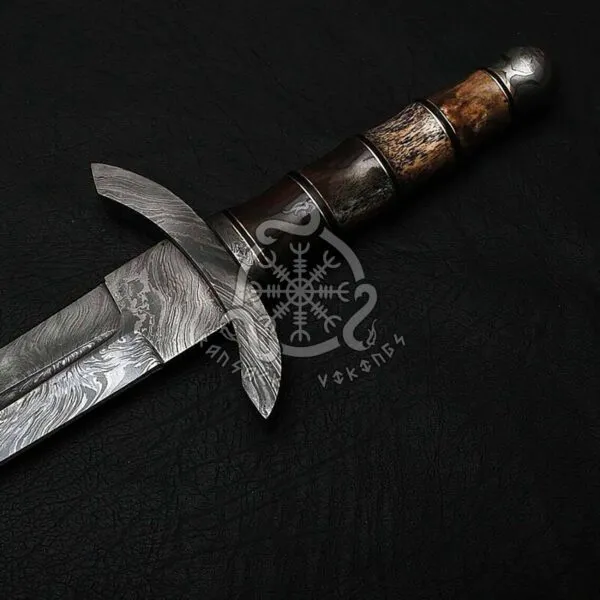
The tang is the extension of the blade that runs back through the guard, the grip and the pommel. On a well built sword it is a continuous piece with the blade rather than a separate part welded on, which is the single most common shortcut on cheap display swords and the reason so many of them eventually rattle or fail at the guard. Everything else in the hilt is threaded onto that tang and then locked in place, historically by peening the end of the tang over the top of the pommel like a rivet.
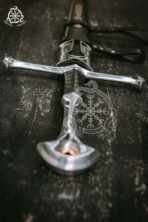
The lower guard, or cross, does two jobs. It stops your hand sliding forward onto the blade, and it acts as a stop that keeps the grip components compressed. The pommel at the other end is a counterweight, and its mass is what pulls the balance point back toward your hand. On a 30 inch blade the pommel is doing serious work. Remove it and the sword becomes unmanageable.
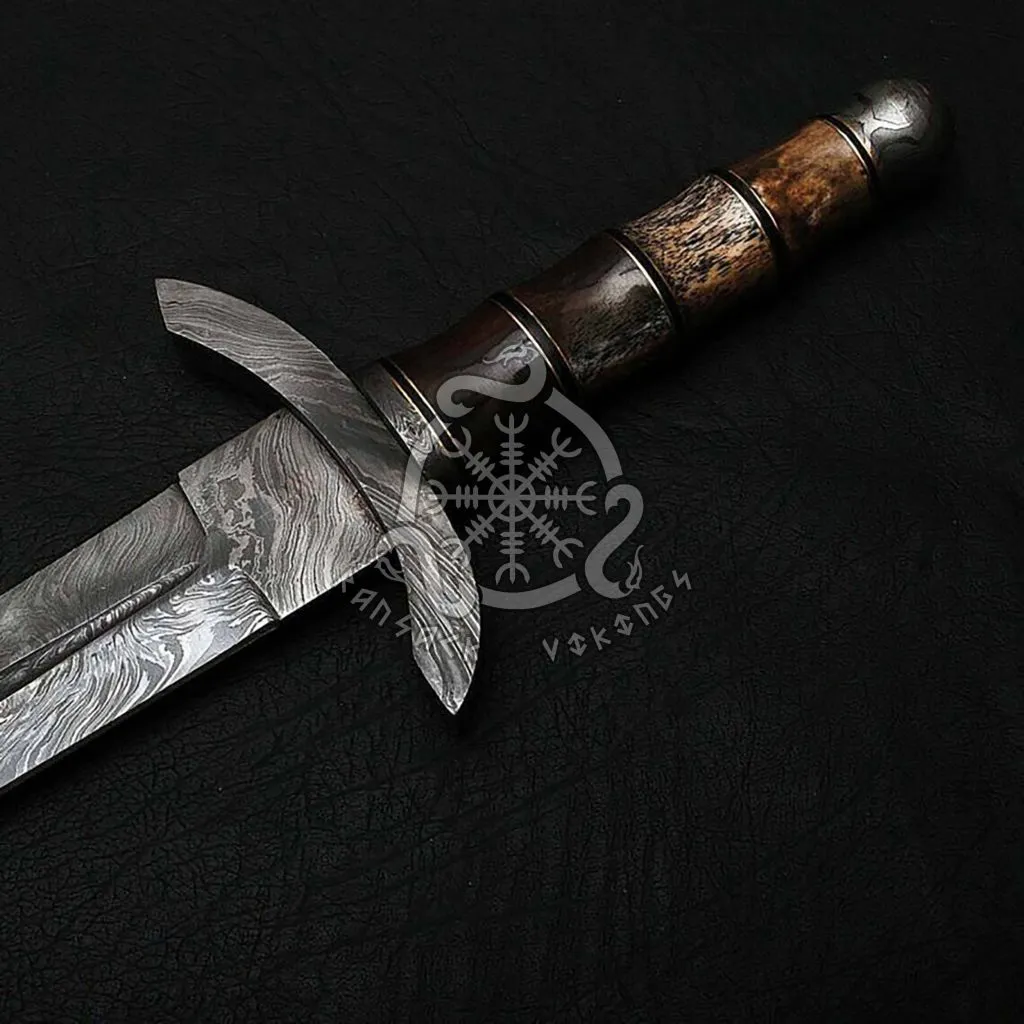
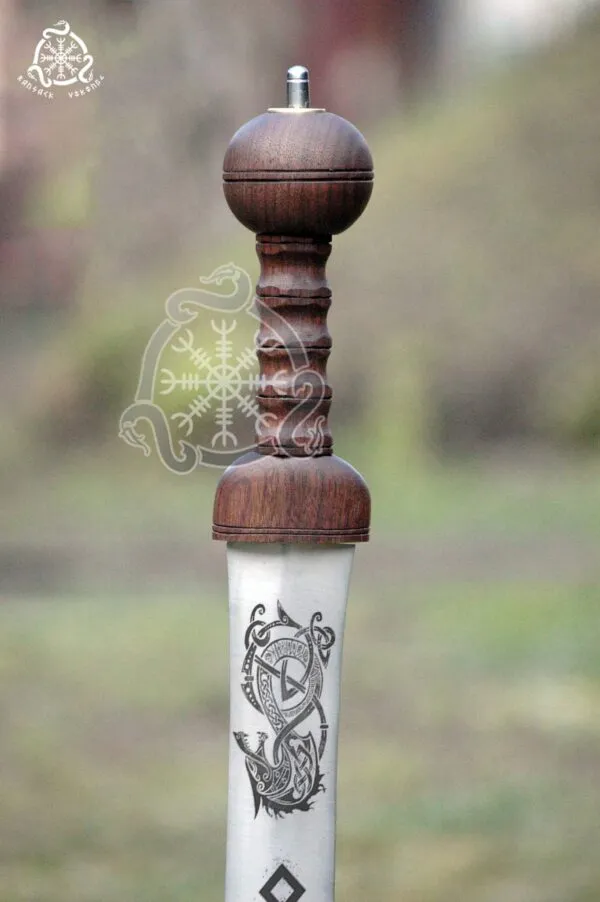
On this piece the grip itself is steel rather than an organic material fitted around a tang, which means the hilt has no joint line in the middle to loosen with age. That is a genuine durability advantage on a piece intended to be handled by every visitor who picks it up.
Why forged high carbon steel and not stainless
Long blades punish the wrong steel. The failure that matters on a sword is not a dull edge, it is a break, and the property that prevents a break is toughness rather than hardness.
High carbon steel, forged and properly tempered, bends and returns. Push it too far and it takes a set, which is a repairable problem and a visible warning. Stainless steel resists corrosion because of its chromium content, and those chromium carbides reduce toughness in a long thin section. A stainless blade of this length under a hard lateral load is far more likely to fail suddenly rather than bend, and sudden failure in a metre of steel is the outcome nobody wants.
The price of carbon steel is that it has no built in corrosion protection. Fingerprints will etch into a bare polished blade within days if they are left, and a sword stored in a damp room will spot. That is genuinely a two minute problem, solved with a cloth and a little oil a few times a year. The full argument is set out in Damascus versus stainless.
The steel grip and the leather wrap
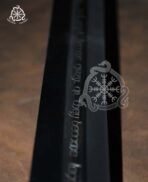
There is no wood anywhere on this hilt, and that changes how you look after it. A steel core wrapped in leather is a construction with two materials, each wanting something different.
The steel underneath is the structural element and it is what gives the sword its solidity and its balance. Being metal, it does not shrink in a dry house or swell in a humid one, which is the failure mode that eventually loosens every wooden gripped sword ever made. It also transmits a little more of the temperature of the room to your hand, which is why the leather over it matters.
The leather wrap does the work your palm cares about. It gives grip, it insulates, and it takes up the small amount of give that stops a bare steel handle feeling harsh. Look after it the way you would any quality leather, which is to say do not treat it like wood. Keep it dry. Wipe it with a barely damp cloth rather than soaking it, and use a small amount of proper leather conditioner once a year at most. Over oiling leather softens it and lets a wrap slacken and slip, which is the opposite of what you want. If a wrap ever loosens, get in touch rather than trying to glue it down.
Engraving, runes and your own design
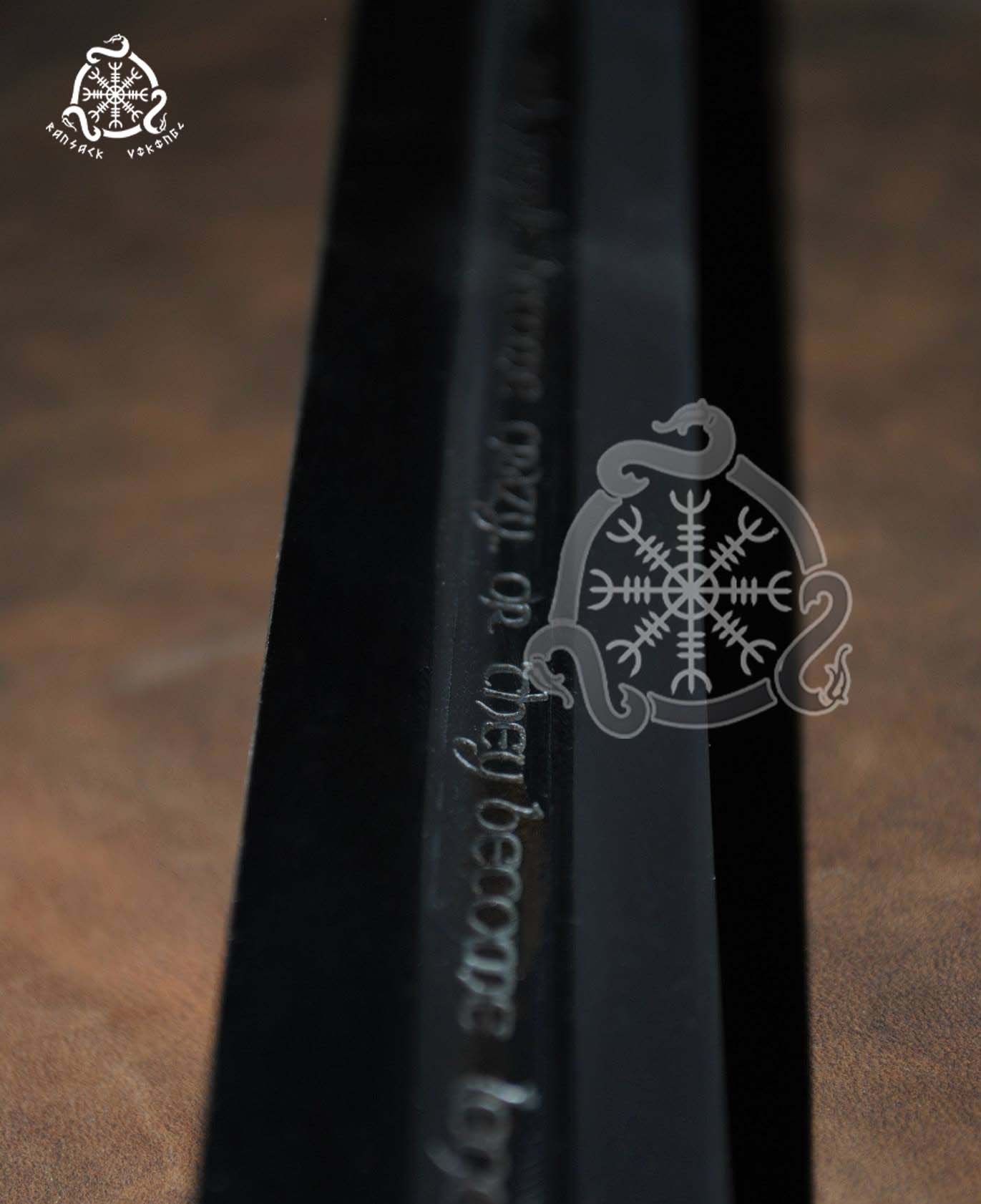
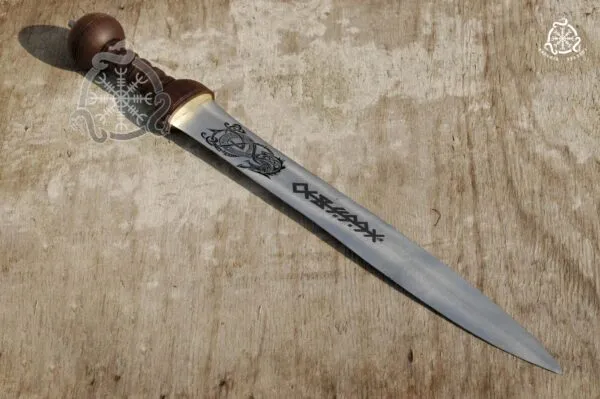
Use the rune converter on this page to turn a name, a date or a short phrase into Elder Futhark and we will cut it into the steel or the handle. If you would rather have a Viking pattern than a rune line, choose your own design in the engraving option above the add to cart button and tell us whether it goes on the blade or the handle. Where a piece already carries an engraved design, your chosen engraving replaces it rather than sitting alongside it. On this sword the blade is the obvious surface, since the grip is covered by leather for its full length, and 30 inches gives you room for a long line. Detail on the engraving page.
Care and upkeep
Wipe the blade after anyone handles it. Skin oils are mildly acidic and will mark bare carbon steel within days if they sit. Two or three times a year, put a thin film of light oil or a paste wax over the whole blade with a soft cloth and buff it back. Store it out of a damp basement or garage, and never store it wrapped in plastic, which traps moisture against the steel. Rust spots lift with fine abrasive and oil, and the routine is in steel care.
This is a collector and display sword rather than a cutting tool, and it should be treated as one. If you own knives from the range and want the sharpening technique for those, it is written up in sharpening with a whetstone. Do not test cut with a display sword and do not strike anything with it.
Made in the Czech Republic
The work behind this piece happens in a Czech Republic workshop that has kept to the old methods. Steel is forged and heat treated by hand, the grind is taken down by eye rather than by machine, and the handle, fittings and sheath are cut and finished one at a time. Because of that, every piece carries small marks of the hand that made it.
Ransack Viking is a United States company. We import direct, check each piece when it reaches us, and ship from our Memphis, Tennessee warehouse. Engraving is added here in the United States after arrival, so the piece you receive is finished to your order.
A note on handmade variation
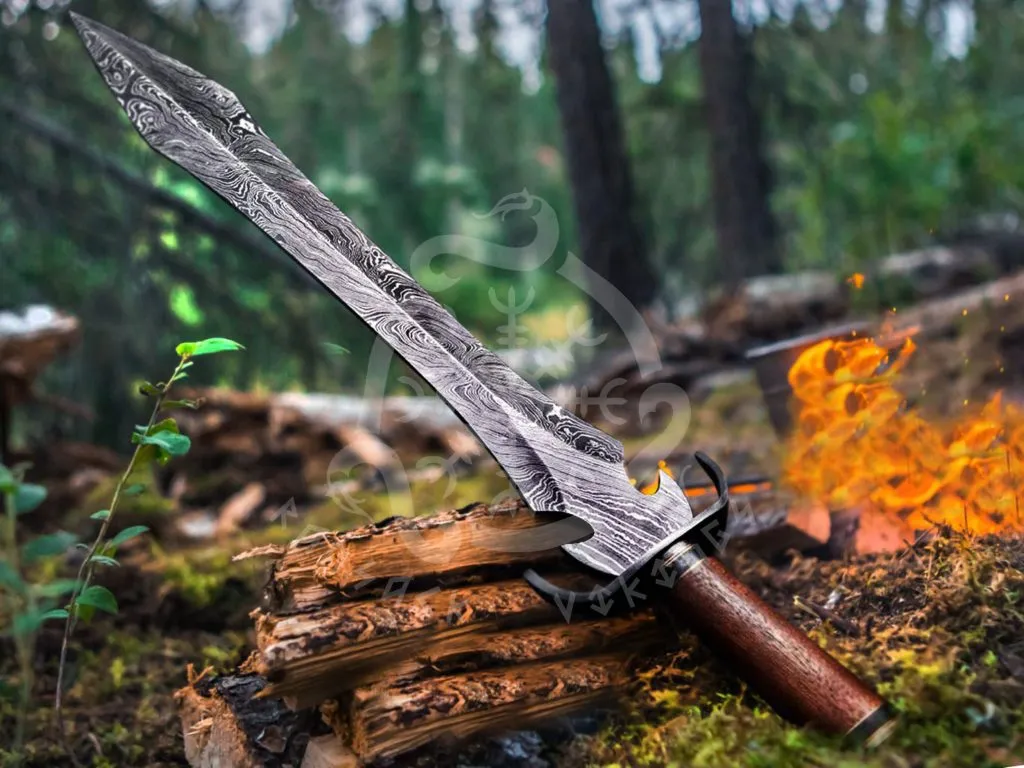
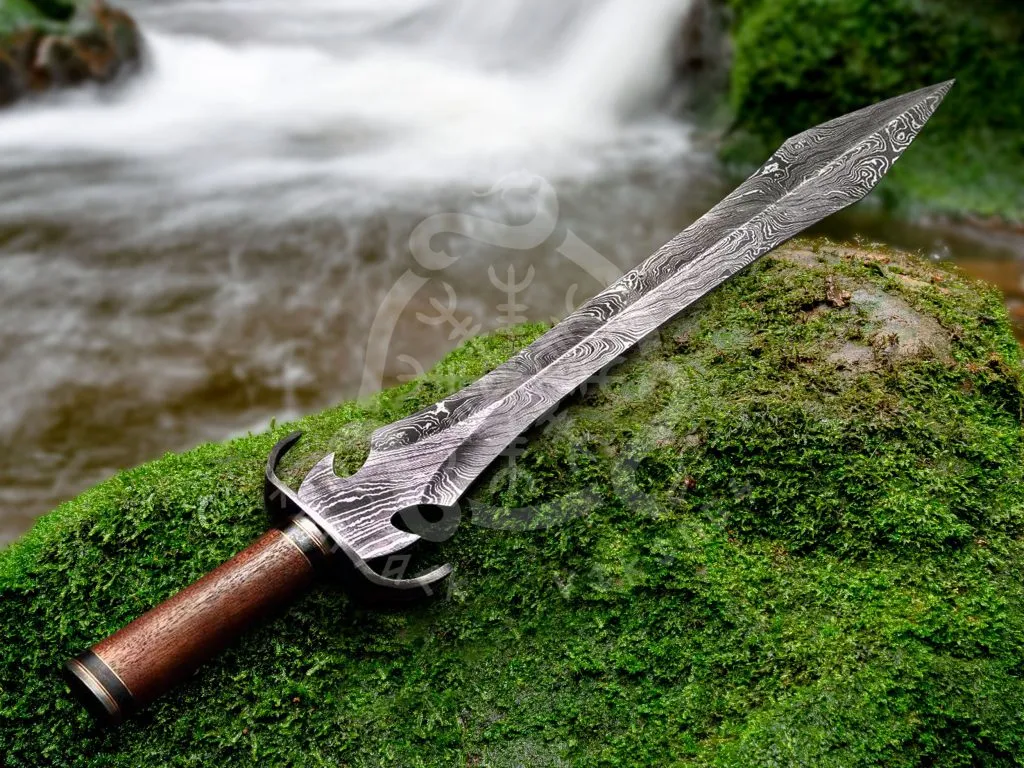
The Leathergrip is hand forged. It is not machine made and it is not bulk produced, so what arrives will not be a pixel for pixel copy of the photograph. The finish along the blade, the tone of the steel, the colour and grain of the leather and the exact tension and overlap of the wrap all vary from one sword to the next, because each is worked by hand from natural materials. The dimensions, the steel and the build are the same every time. The character is not.
Frequently asked questions
Is the handle actually steel?
Yes. The grip is steel, wrapped in leather along its length for grip and comfort. There is no wood in the hilt, so it will not shrink, swell or loosen with the seasons the way a wooden grip does.
Is this a battle ready sword?
It is built and sold as a collector and display piece. Do not test cut with it, do not strike anything with it and do not use it for contact reenactment.
How do I care for the leather wrap?
Keep it dry, wipe it with a barely damp cloth, and use leather conditioner sparingly, once a year at most. Do not use the oil you would put on a wooden handle.
How heavy is it?
A 30 inch blade with a steel hilt has real presence in the hand. Lift it with a proper grip rather than by the blade, and support it fully when you set it down.
Can it be wall mounted?
Yes, on a pair of sword hangers rated for the weight and fixed into a stud or a proper anchor. Support the blade near the guard and near the point rather than at a single centre bracket.
What is pattern welding, and is this blade pattern welded?
Pattern welding is the early medieval technique of twisting rods of iron and steel together and forge welding them into a blade core. This sword is forged from high carbon steel rather than pattern welded. For a layered pattern in the steel, look at the Damascus pieces in the range.
What is in the box
- One Leathergrip hand forged Viking sword, 38 inches overall
- Protective packaging
- Forged and finished in the Czech Republic
Explore the range
Related collections: Swords, Viking Swords, Viking Shields and Viking Hammers. Hilt construction, steel and care are covered in the guides.

Got this as a birthday gift and the reaction was priceless. Already planning my next purchase from this shop. It’s handmade in the Czech Republic but ships from a US warehouse so it arrived quicker than I expected.