
The kukri is the forward angled Nepalese chopper, a heavy single edged blade that kinks down partway along its length so the mass sits ahead of your hand. That kink is the whole design. It turns a swing into a chop and lets a 16 inch knife do work that would otherwise want a small axe.
The blades here run 15 to 17 inches overall with 10 to 12 inches of edge measured along the curve, and listed weights sit near 1 lb 6 oz to 1 lb 8 oz. Two steels run through the range. Plain 1095 high carbon is hardened to 54 to 58 HRC and comes back quickly on a stone. Damascus of 1095 and 15N20 is forge welded, folded and acid etched, hardened to 58 to 60 HRC, and holds an edge a little longer. Every piece is full tang, with a cho notch cut at the throat of the edge, and handles run to buffalo horn, stag antler, rosewood, walnut, olive wood, bone, micarta and stacked leather.
If you camp, clear brush or want one blade that chops, start at 16 inches. The kukri knife guide covers the history, the shapes and what to look for if this is your first one.
Free US shipping
On most pieces. Heavier and oversized ones carry a flat charge.
Hand Forged
Heated, hammered and ground by hand.
Engraving available
Names, dates or Norse runes on most pieces.
Ships from Memphis
Inspected and dispatched from our Tennessee warehouse. No import duty, no customs delay on US orders.
Kukri Knives
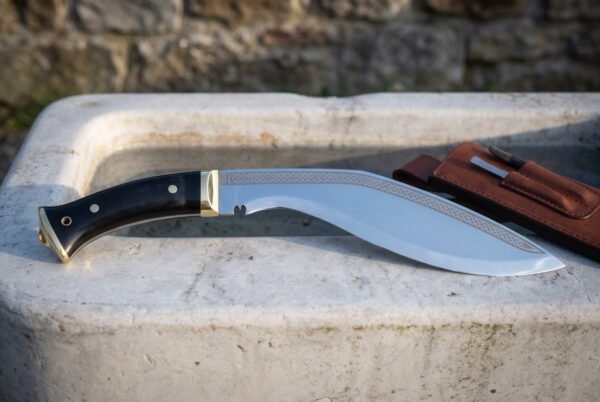
Inkbraid Hand Forged Full Tang Kukri with Buffalo Horn Handle & Etched Knotwork Spine | About 16 Inches Overall | Brass Fittings and Leather Sheath | Norse Camp Gift | RK-2203
Original price was: $209.00.$177.65Current price is: $177.65.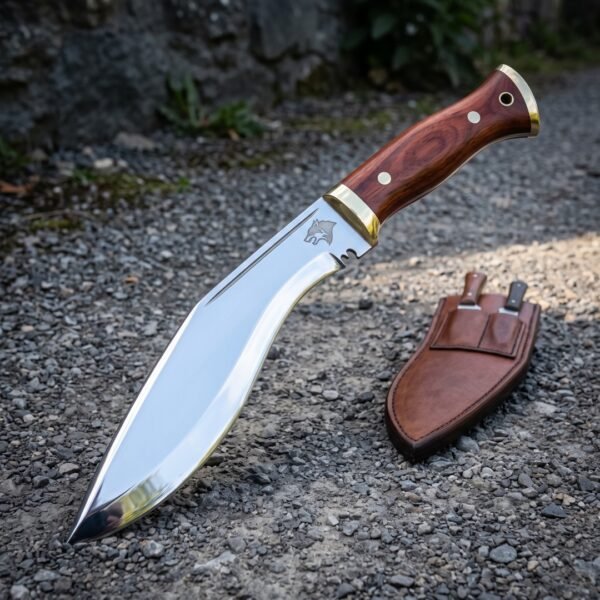
Greyfang Hand Forged Gurkha Kukri Knife with Rosewood Scales & Etched Wolf Head | About 16 Inches Overall | Brass Fittings and Leather Sheath Holding Two Companion Knives | Camp Gift | RK-2202
Original price was: $189.00.$160.65Current price is: $160.65.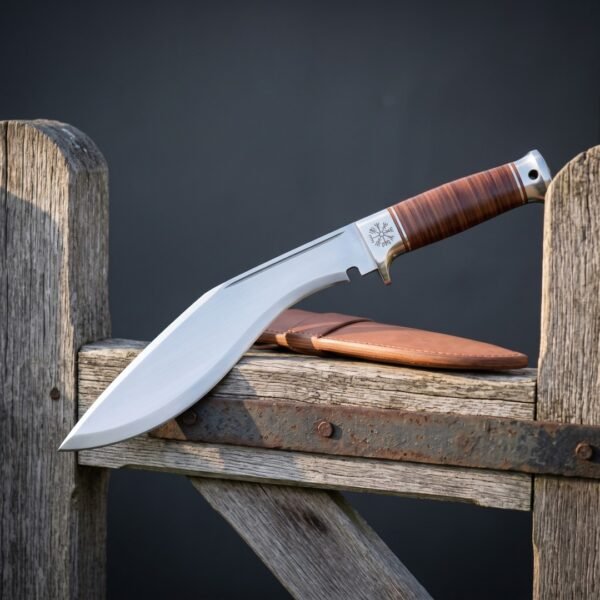
Stavehelm Hand Forged 1095 Kukri Knife with Stacked Leather Handle & Helm of Awe Bolster | About 16 Inches Overall | Tan Leather Sheath | Norse Camp Gift | RK-2198
Original price was: $199.00.$169.15Current price is: $169.15.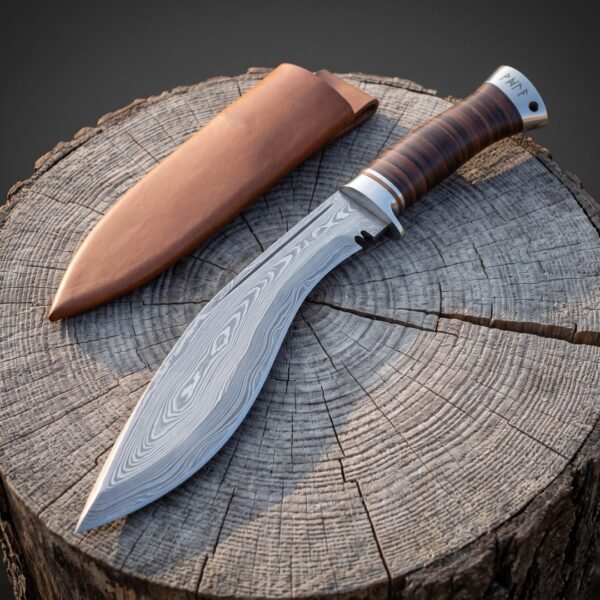
Coilbrand Hand Forged Damascus Kukri Knife with Stacked Leather Handle & Runed Steel Pommel | About 16 Inches Overall | Tan Leather Sheath | Norse Collector Gift | RK-2196
Original price was: $259.00.$220.15Current price is: $220.15.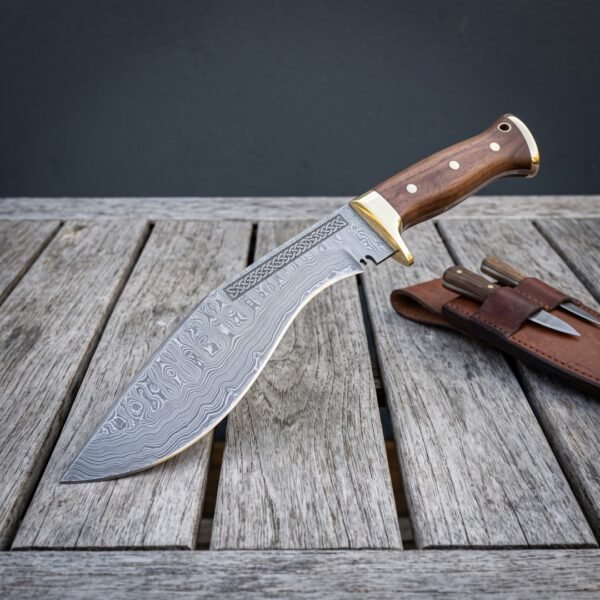
Fellcarve Hand Forged Damascus Kukri Knife with Walnut Scales & Brass Bolster | About 16 Inches Overall | Leather Sheath and Two Companion Knives | Norse Camp Gift | RK-2195
Original price was: $269.00.$228.65Current price is: $228.65.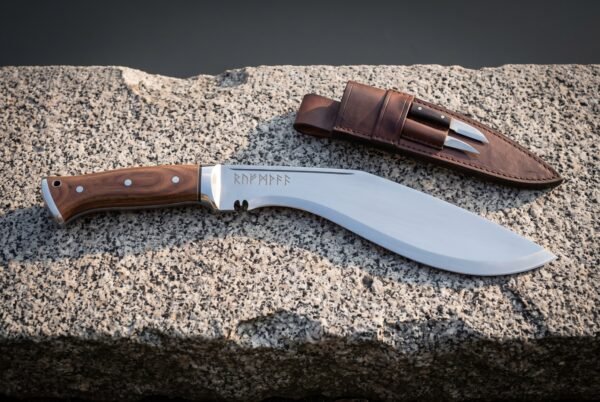
Runehollow Hand Forged High Carbon Kukri with Elder Futhark Engraved Blade | Rosewood Scales and Steel Bolster | Leather Sheath and Two Companion Knives | Norse Gift | RK-2184
Original price was: $215.00.$182.75Current price is: $182.75.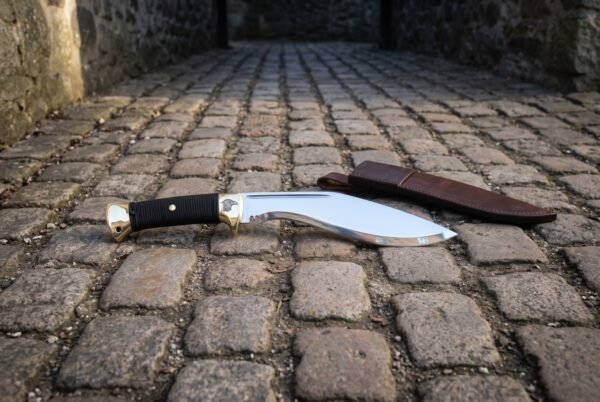
Cordraven Hand Forged High Carbon Kukri with Cord Wrapped Grip | Raven Engraved Brass Bolster | Flared Brass Butt Cap and Leather Sheath | Norse Camp Gift | RK-2183
Original price was: $179.00.$152.15Current price is: $152.15.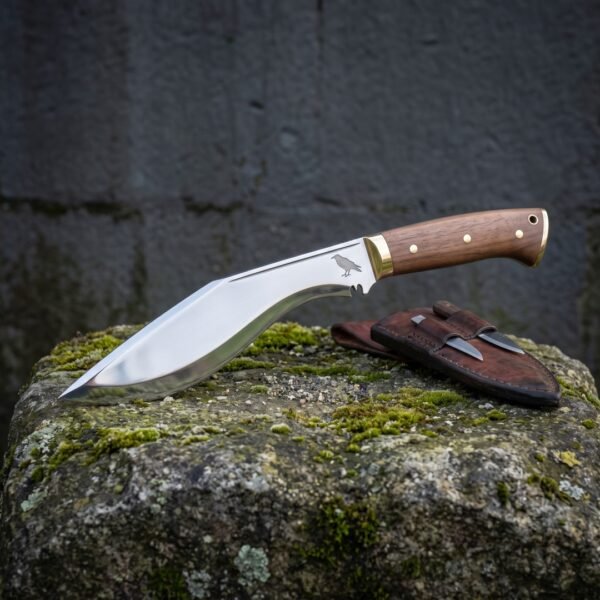
Brasscrow Hand Forged High Carbon Kukri with Walnut Scales | Raven Etched Full Tang Blade | Brass Bolster and Brass Pins | Leather Sheath | Norse Camp Gift | RK-2171
Original price was: $199.00.$169.15Current price is: $169.15.
Coalspine Hand Forged Damascus Kukri with Black Micarta Scales | Full Tang Deep Belly Blade | Steel Bolster and Knotwork Engraved Spine | Bushcraft Gift | RK-2170
Original price was: $289.00.$245.65Current price is: $245.65.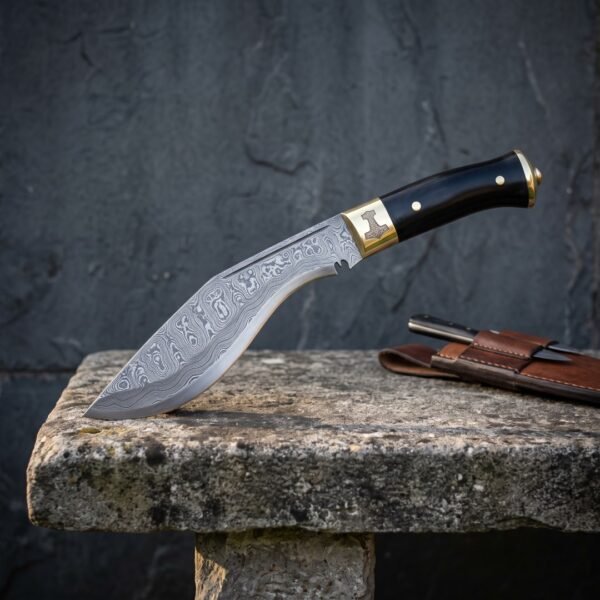
Thundercurve Hand Forged Damascus Steel Kukri Knife | 16 Inch Overall Length | Black Horn Handle with Mjolnir Engraved Brass Bolster | Norse Gift | RK-2152
Original price was: $289.00.$245.65Current price is: $245.65.
Palefang Hand Forged Damascus Steel Kukri Knife | 16 Inch Overall Length | Bone Handle Scales with Wolf Etched Steel Pommel | Norse Hunting Gift | RK-2151
Original price was: $269.00.$228.65Current price is: $228.65.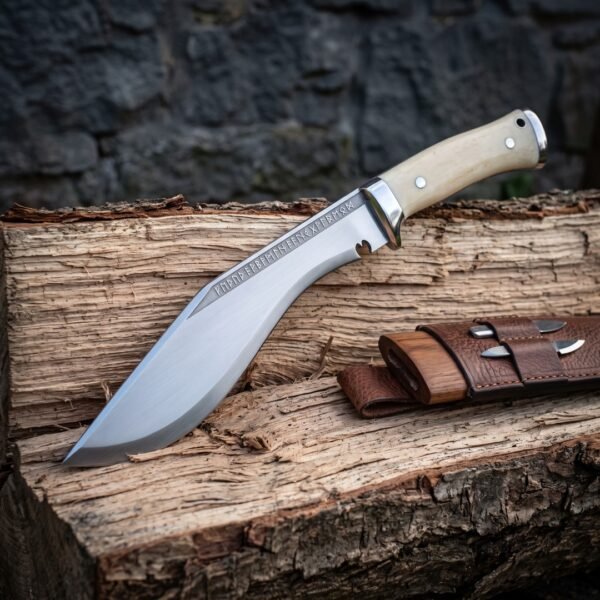
Bonecurve Hand Forged High Carbon Steel Kukri Knife | 16 Inch Overall Length | Bone Handle Scales with Polished Steel Bolster and Cap | Norse Camp Gift | RK-2148
Original price was: $189.00.$160.65Current price is: $160.65.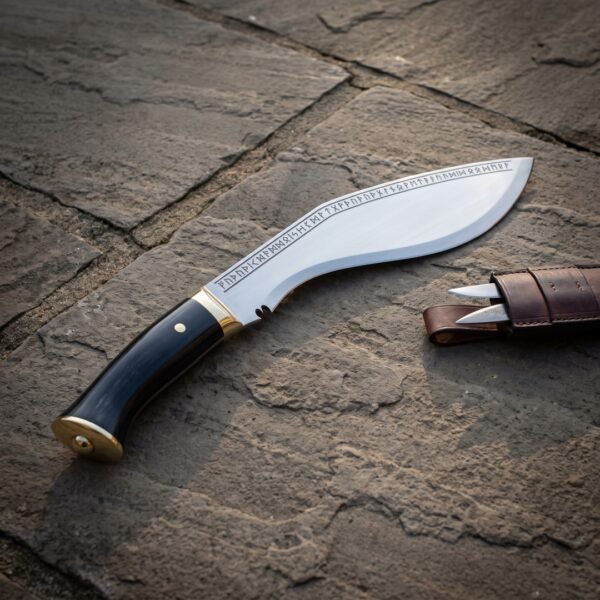
Runecurve Hand Forged High Carbon Steel Kukri Knife | 16 Inch Overall Length | Black Horn Handle with Brass Bolster and Butt Cap | Rune Etched Gift | RK-2147
Original price was: $209.00.$177.65Current price is: $177.65.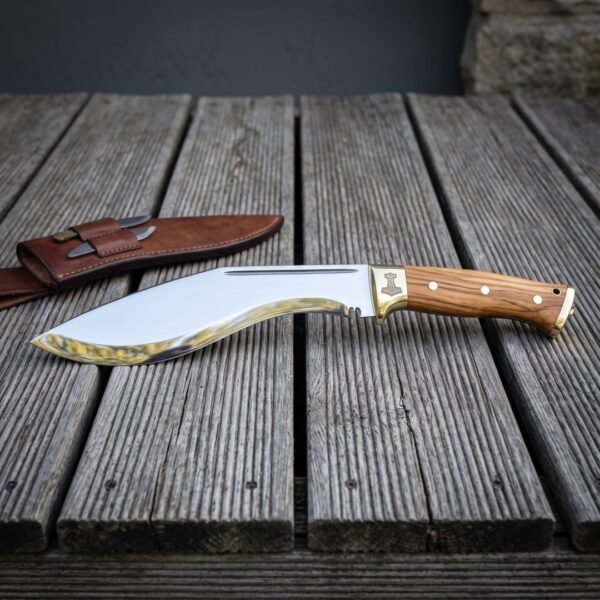
Hammergrove Hand Forged 1095 Steel Kukri Knife with Olive Wood Handle | 16 Inch Overall and 11 Inch Blade | Mjolnir Cut Brass Bolster and Leather Sheath | Norse Outdoor Gift | RK-2133
Original price was: $229.00.$194.65Current price is: $194.65.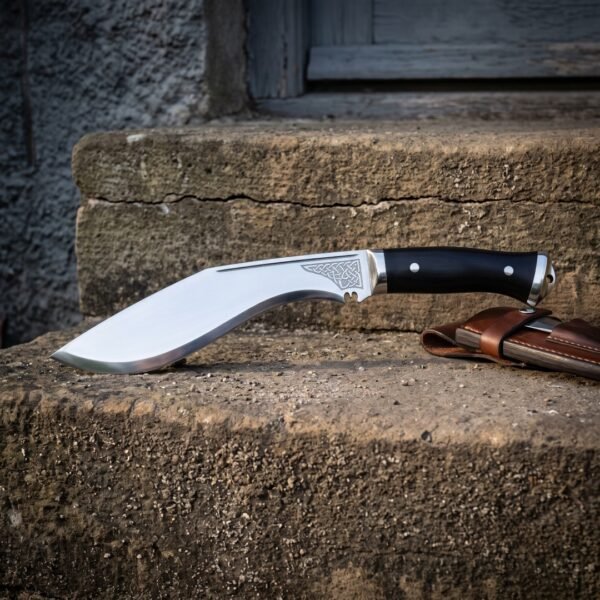
Pitchgrove Hand Forged 1095 Steel Kukri Knife with Black Micarta Handle | 16 Inch Overall and 11 Inch Blade | Knotwork Bolster and Steel Pommel and Leather Sheath | Outdoor Gift | RK-2128
Original price was: $209.00.$177.65Current price is: $177.65.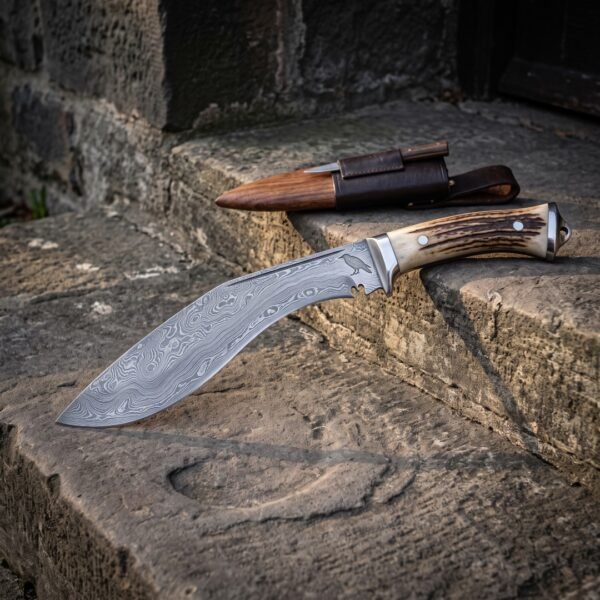
Stagvane Hand Forged Damascus Kukri Knife with Stag Antler Handle | 15 Inch Overall and 10 Inch Blade | Steel Bolster and Leather Sheath Holding Karda and Chakmak | Outdoor Gift | RK-2123
Original price was: $299.00.$254.15Current price is: $254.15.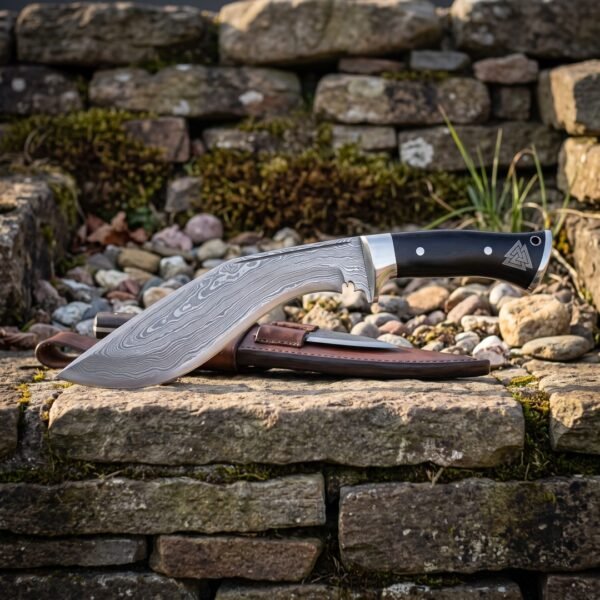
Sablecurve Hand Forged Damascus Kukri Knife | 16 Inch Overall | Black Scales and Steel Bolster with Engraved Valknut Butt Cap, Leather Belt Sheath and Two Companion Blades | Outdoor Gift | RK-2115
Original price was: $249.00.$211.65Current price is: $211.65.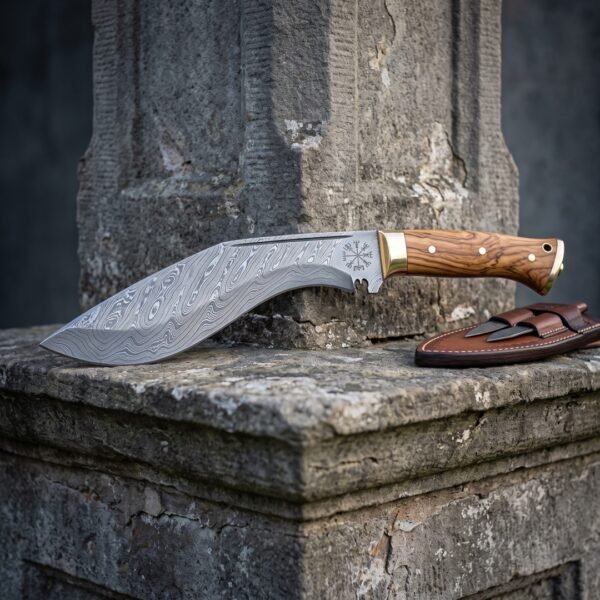
Olivewhorl Hand Forged Damascus Kukri Knife | 17 Inch Overall | Olive Wood Scales and Brass Bolster with Etched Vegvisir, Leather Sheath and Two Companion Blades | Norse Camp Gift | RK-2111
Original price was: $279.00.$237.15Current price is: $237.15.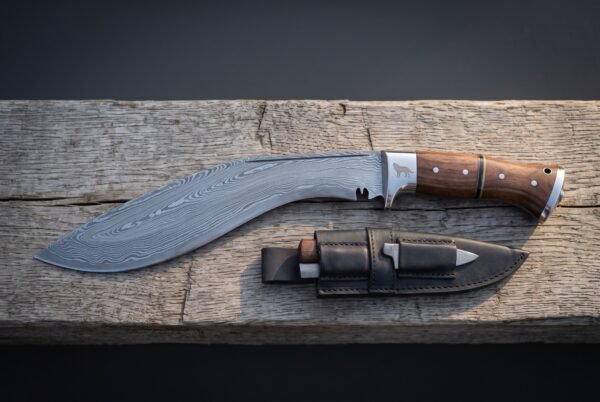
Wolfcurve Hand Forged Damascus Kukri Knife | 17 Inch Overall | Rosewood Scales and Steel Bolster with Etched Wolf, Black Leather Sheath and Two Companion Blades | Hunting Gift | RK-2107
Original price was: $259.00.$220.15Current price is: $220.15.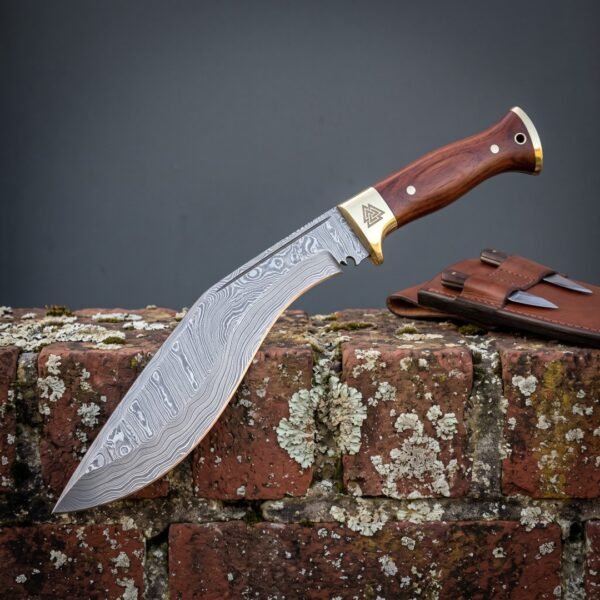
Trineknot Hand Forged Damascus Kukri Knife | 17 Inch Overall | Rosewood Scales and Brass Bolster with Etched Valknut, Leather Sheath and Two Companion Blades | Norse Camp Gift | RK-2106
Original price was: $269.00.$228.65Current price is: $228.65.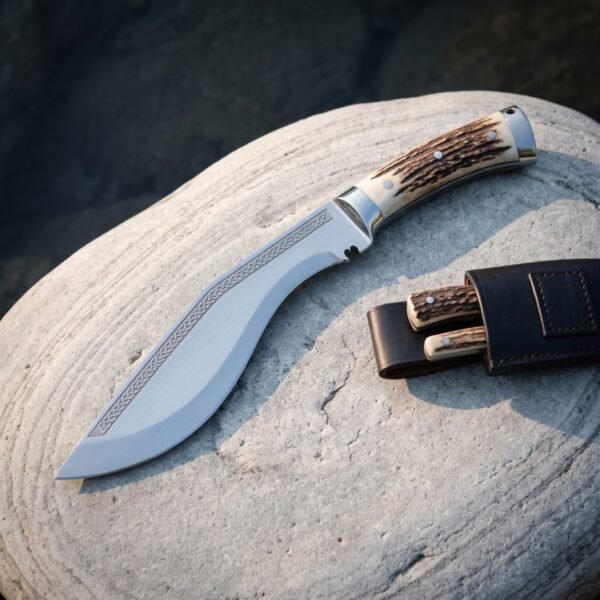
Hornstag Hand Forged 1095 Steel Kukri Knife | 16 Inch Overall | Stag Horn Scales and Polished Steel Bolster with Leather Belt Sheath and Two Companion Blades | Bushcraft Gift | RK-2100
Original price was: $209.00.$177.65Current price is: $177.65.Vegwarden Hand Forged Damascus Kukri Knife with Etched Vegvisir | Black Scales, Brass Bolster and Ringed Butt Cap | Brown Leather Belt Sheath | Norse Gift | RK-2078
Original price was: $279.00.$237.15Current price is: $237.15.Curvefang Hand Forged Damascus Kukri Knife with Buffalo Horn Handle & Karda Chakmak Companion Set | Camp Chopping Gift | RK-1582
Original price was: $259.00.$220.15Current price is: $220.15.Foldcurve Hand Forged 1095 and 15N20 Damascus Kukri Knife with Rosewood Handle & Brass Fittings | Camp Chopper Gift | RK-1564
Original price was: $259.00.$220.15Current price is: $220.15.Why the blade bends forward
A straight knife cuts where your hand points. A kukri does not. The blade drops forward at roughly twenty degrees partway down its length, so the heavy belly section sits ahead of the line of your wrist. When you swing, that offset mass arrives at the target first and carries the energy of the whole knife into a short section of edge. The effect is closer to a hatchet than to a bowie, and it is why a kukri that weighs a pound and a half chops like something much heavier.
The second consequence is the grind. Because the belly does the work, the steel is thickest through the spine behind the bend and thins toward the point and toward the ricasso. That gives you three tools in one blade. The forward belly chops, the middle slices, and the section nearest the handle, where the edge is finest and closest to your fingers, does the fine work a big knife is usually bad at.
The shape is old and it was not designed for display. Kukris have been the general purpose blade of Nepal for centuries and the standard field knife of Gurkha regiments since the early nineteenth century, which is where most of the English language literature about them comes from.
The kukris in this collection
Two things separate the pieces on this page. The first is steel. The second is what comes in the sheath.
Kukris in 1095 high carbon
Plain high carbon blades hardened to 54 to 58 HRC, in satin, mirror polished or bright ground finishes. Sizes are consistent at about 16 inches overall with 11 inches of edge along the curve. Most carry a fuller or a swedge along the spine to take weight out of the section that does not cut, and several are engraved along that spine with an Elder Futhark rune line or a knotwork band. Handles run to buffalo horn, rosewood, walnut, olive wood, pale bone, black micarta, stacked leather washers and cord wrap. This is the group to buy if the knife will be used and sharpened often.
Kukris in Damascus
Pattern welded 1095 and 15N20 hardened to 58 to 60 HRC, acid etched so the layers read as light and dark bands across the belly. Sizes run 15 to 17 inches overall with 10 to 12 inches of edge. Two listed weights on this group are about 1 lb 6 oz and about 1 lb 8 oz for the kukri alone. Handles include buffalo horn, stag antler, olive wood, rosewood with inlay lines, walnut, black micarta and stacked leather. Fittings are polished brass or steel, several engraved with a Valknut, a Mjolnir or a Vegvisir stave.
Kukris supplied with the karda and chakmak
Traditional kukri sheaths carry two small companion blades in a pocket at the front. The karda is a small utility knife for the jobs a chopper is too big for. The chakmak is a blunt burnisher, used to true a rolled edge and, historically, to strike sparks from flint. Roughly two thirds of the pieces here ship with both. The rest come with the sheath alone, and the product page states which.
Sizes, steel and fittings across the range
Every figure below is taken from the specification panel of a piece on this page. Blades are forged and ground by hand, so read the numbers as what to expect rather than as a guarantee to the millimetre.
| Handle and fittings | Overall length | Blade along the curve | Steel and hardness | Listed weight | In the sheath |
|---|---|---|---|---|---|
| Buffalo horn with brass bolster | 16 in | 11 in | 1095 at 54 to 58 HRC | Not listed | Karda and chakmak |
| Rosewood scales with brass bolster | 16 in | 11 in | 1095 at 54 to 58 HRC | Not listed | Karda and chakmak |
| Stacked leather with steel bolster | 16 in | 11 in | 1095 at 54 to 58 HRC | Not listed | Sheath only |
| Stag horn scales with steel fittings | 16 in | 11 in | 1095 at 54 to 58 HRC | Not listed | Karda and chakmak |
| Stacked leather with runed steel cap | 16 in | 11 in | Damascus at 58 to 60 HRC | Not listed | Sheath only |
| Walnut scales with brass bolster | 16 in | 11 in | Damascus at 58 to 60 HRC | Not listed | Karda and chakmak |
| Buffalo horn with steel bolster | 16 in | 11 in | Damascus at 58 to 60 HRC | About 1 lb 8 oz | Karda and chakmak |
| Rosewood with brass bolster and butt cap | 16 in | 11 in | Damascus at 58 to 60 HRC | About 1 lb 6 oz | Sheath only |
| Stag antler with steel fittings | 15 in | 10 in | Damascus at 58 to 60 HRC | Not listed | Karda and chakmak |
| Olive wood with brass fittings | 17 in | 12 in | Damascus at 58 to 60 HRC | Not listed | Karda and chakmak |
One figure needs care. Blade length on a kukri is measured along the curve, so a piece listed at 11 inches has noticeably less straight line reach than a straight 11 inch blade. If you are comparing a kukri against a bowie on paper, allow for that before you decide one is longer than the other.
The cho, the bolster and the tang
Every kukri on this page carries a cho, the small notch cut into the edge just ahead of the handle. Explanations for it vary and most of them are religious or symbolic. The practical effect is real enough. It stops a sharpening stroke from running off the edge into the ricasso and it gives water and sap somewhere to leave the blade instead of tracking back into the handle.
All of them are full tang, with the steel running the whole length and width of the handle. On the scaled pieces the tang is visible as a strip between the scales and pinned through with two or three pins. On the stacked leather handles the washers are compressed over the tang under a peened cap. Both are strong. A partial tang, where a narrow spike is glued into a drilled grip, has no place in a chopping knife, and there are none here.
Bolsters are brass or steel, wrapped around the front of the handle. That collar takes the shock of a chop before your hand does, and it is the part most likely to loosen over years of hard use. If a bolster starts to move, stop using the knife and have it re seated rather than chopping through it.
Handles and how they behave
Buffalo horn and stag antler are the traditional materials and both look better with age. Neither likes dry heat, so keep them off a radiator and out of a hot car, because horn and antler shrink as they dry and can crack or pull away from a pin. Bone behaves the same way.
Rosewood is dense, oily and close grained, so it polishes up and resists moisture on its own. Walnut and olive wood are drier and take a wipe of oil once or twice a year. Micarta is resin and canvas and is effectively waterproof, which makes it the sensible choice if the knife will live in a pack. Stacked leather washers take hand oil and a patina, and are the most comfortable of the lot over a long session.
Brass fittings darken over months. A metal polish on a cloth brings them back, or leave them alone if you prefer the aged look.
Using a kukri without wrecking it
Let the blade do the work. A kukri is swung, not pushed, and the weight of the forward belly is what cuts. Gripping hard and forcing the swing costs you speed and puts strain on your wrist. Loosen the grip, let the knife accelerate, and tighten only at the moment of contact.
Chop with the belly, roughly the middle third of the edge. That is the thickest and best supported section. Chopping with the point risks a chipped tip, and chopping right down near the cho puts the shock straight into the bolster and your hand. Do not use a kukri as a splitting wedge or hammer the spine with a rock, because a hardened high carbon spine is not built to be struck.
Green wood, cane, brush and rope are what this blade is for. Seasoned hardwood and bone will dull it fast, and a knot will chip it whatever the steel.
Sharpening a recurve
A kukri cannot be sharpened like a chef knife. Pushing the blade straight across a flat stone only touches the high points and flattens the belly, which ruins the geometry that makes the knife chop. Sweep instead, so the contact point travels along the curve from the ricasso to the tip through the stroke, and match the angle you find on the blade rather than imposing a new one.
A round or oval rod handles the tighter section behind the belly, and a small flat stone works the straighter section near the point. For 1095 at 54 to 58 HRC a 1000 grit stone restores a working edge in a few minutes and a 3000 grit polishes it. Damascus at 58 to 60 HRC takes longer on the coarse stone and holds the result longer. The chakmak, where one is supplied, is for straightening a rolled edge between sharpenings rather than for removing steel.
Rust, sheaths and storage
Both steels here are carbon steel and both will rust. Wipe the blade dry after use, leave a light film of oil on it, and store it out of the sheath if it will sit for months. Leather holds moisture against steel, and a damp sheath is the most common reason a well kept blade still ends up spotted. Camellia, mineral or food safe oil all work. Grey patina is stable and does no harm, and orange spotting lifts with fine abrasive and oil.
Sheaths here are stitched cowhide with a belt loop, most with a front pocket for the companion blades. The leather is stiff at first and takes the shape of the blade over a few weeks.
Engraving and gifting
Most kukris here can be engraved after they arrive in the United States. Names, dates and rune lines go along the spine or onto the flat behind the bolster, and several pieces already carry a cut Vegvisir, Valknut or Mjolnir on the bolster or butt cap. Elder Futhark is a phonetic alphabet rather than a cipher, so a name is transliterated by sound, and there is no rune for the letter C.
Engraving is permanent and an engraved piece cannot be returned, so send the exact spelling and read it twice before you order.
Where these kukris are made
Every blade on this page is made by hand in the Czech Republic. Finished pieces are imported to the United States, inspected by Ransack Viking in Memphis, Tennessee, and shipped from there, with engraving added after arrival. Small differences in grind, etch figure and handle colour between two kukris of the same name are normal, because two people made them on two different days.
Browse related categories
- Viking knives, the single edged Norse working blades
- Damascus knives in forge welded 1095 and 15N20
- Bowie knives with long clip points and deep bellies
- Hunting knives for field dressing and skinning
- Double edged daggers and Norse dagger shapes
- Viking seax knives, the single edged belt blade
- Bearded axes, the other way to carry chopping power
- Leather sheaths and replacement scabbards
Guides worth reading first
- What is a kukri and why the blade bends forward
- How to sharpen a curved blade without flattening the belly
- Knife blade shapes and what each one is good at
- Damascus vs high carbon steel: which blade should you buy
- The complete knife care guide: blade, handle and sheath
- Kukri knife guide, shapes and what to look for
Frequently asked questions
What is a kukri knife used for?
Chopping, mostly. Clearing brush, limbing branches, cutting cane and rope, and camp work that would otherwise want a small axe. The finer section of edge nearest the handle handles the smaller jobs, so one blade covers a wider range than its size suggests.
What is the notch near the handle for?
That is the cho. Most explanations for it are symbolic. In practice it stops a sharpening stroke running off the edge into the ricasso, and it gives sap and water a place to leave the blade rather than tracking back into the handle.
What are the two small knives in the sheath?
The karda and the chakmak. The karda is a small utility knife for jobs the kukri is too large for. The chakmak is a blunt burnisher for truing a rolled edge, and historically for striking sparks from flint. Roughly two thirds of the kukris here ship with both, and each product page states which.
Do these kukris arrive sharp?
Yes. Blades are ground and finished by hand and arrive with a working edge. They are not razors out of the box, because a very thin edge on a chopping blade chips against a knot. A few passes on a 1000 grit stone will take any of them further.
Which is better for a kukri, 1095 or Damascus?
Take 1095 if the knife will be used hard and sharpened often, because it comes back on a stone faster. Take Damascus for the pattern and slightly longer edge retention on a piece that will be handled and cleaned rather than abused. Neither is stainless and both need oil.
How do you sharpen a curved kukri edge?
Sweep the blade across the stone so the contact point travels along the curve, rather than pushing it straight as you would a straight edged knife. A round rod suits the tighter section behind the belly. Match the existing angle and stop when you feel a burr along the whole edge.
Is a kukri legal to own and carry?
Owning one is legal almost everywhere in the United States. Carrying a fixed blade of 10 to 12 inches is a different question and turns on state law and often on city ordinance. Read our state by state summary before you clip anything to a belt, and treat it as a summary rather than legal advice.
Where are these kukris made?
They are made by hand in the Czech Republic, then imported, inspected and shipped by Ransack Viking from Memphis, Tennessee, with engraving added in the United States after arrival.
Featured pieces
 Gurkhastag Hand Forged Damascus Kukri Knife with Stag Horn and Wood Handle and Damascus Guard and Butt Cap & Leather Sheath
Original price was: $159.00.$135.15Current price is: $135.15.
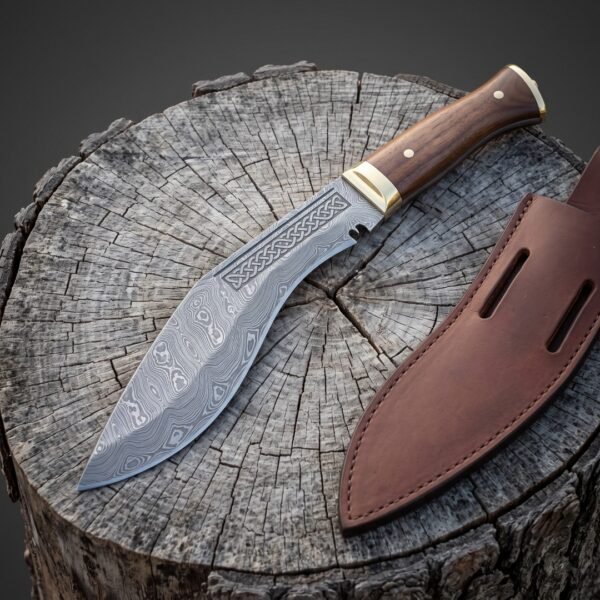 Foldcurve Hand Forged 1095 and 15N20 Damascus Kukri Knife with Rosewood Handle & Brass Fittings
Original price was: $259.00.$220.15Current price is: $220.15.
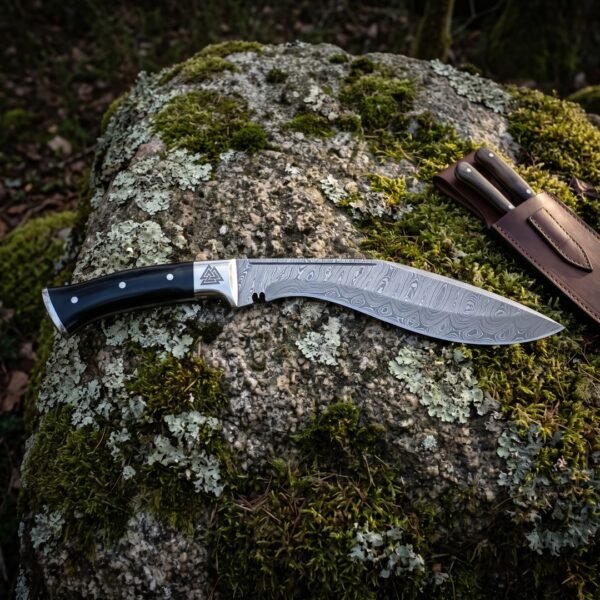 Curvefang Hand Forged Damascus Kukri Knife with Buffalo Horn Handle & Karda Chakmak Companion Set
Original price was: $259.00.$220.15Current price is: $220.15.
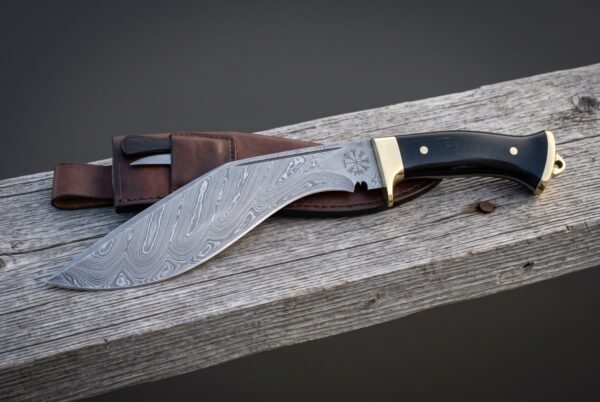 Vegwarden Hand Forged Damascus Kukri Knife with Etched Vegvisir
Original price was: $279.00.$237.15Current price is: $237.15.