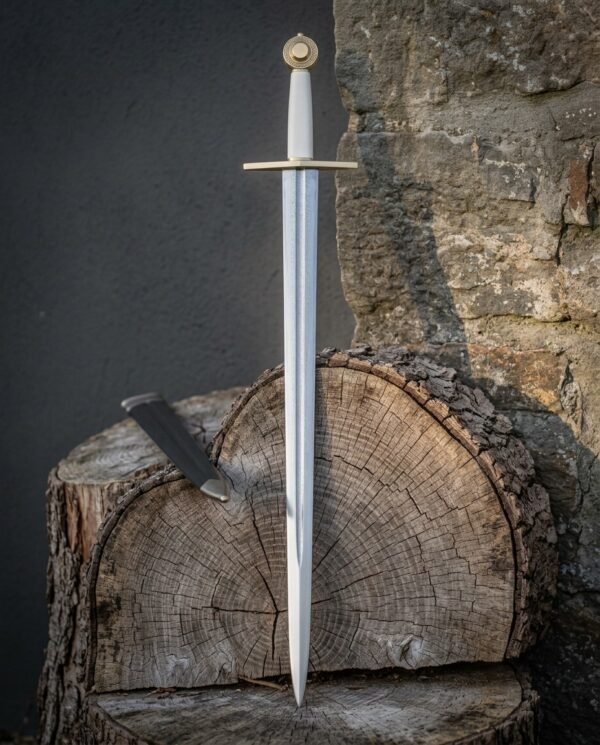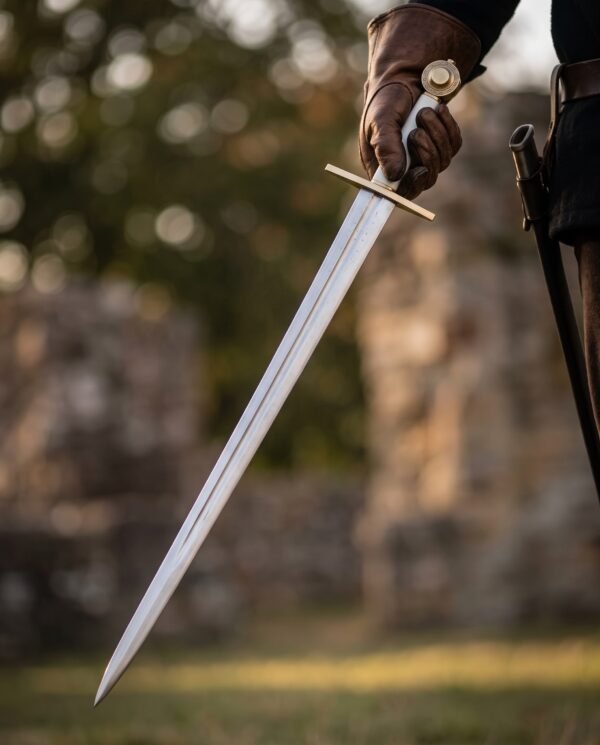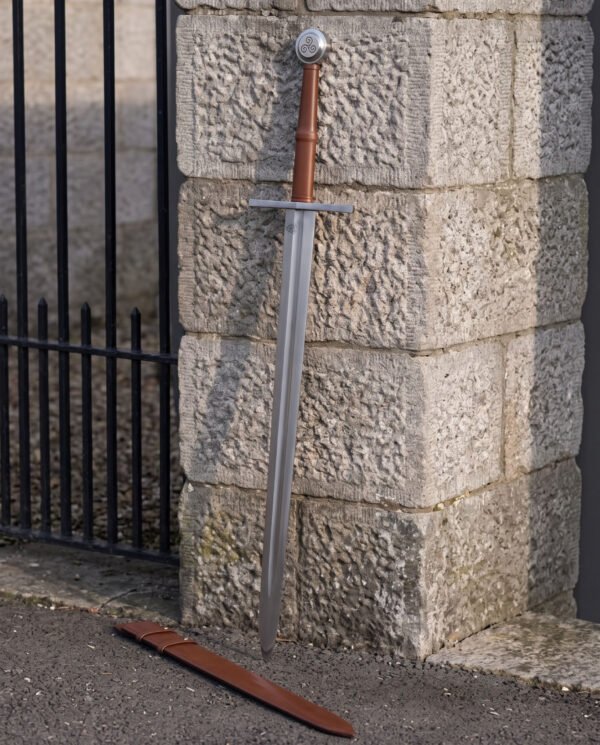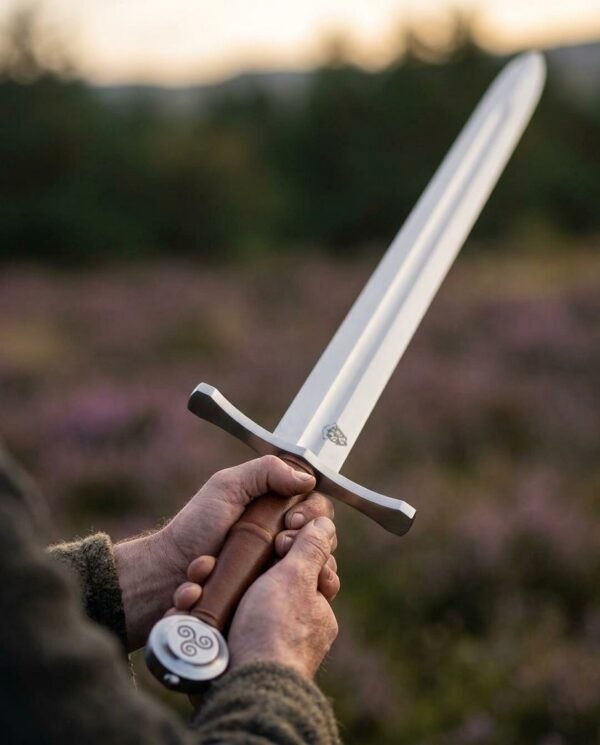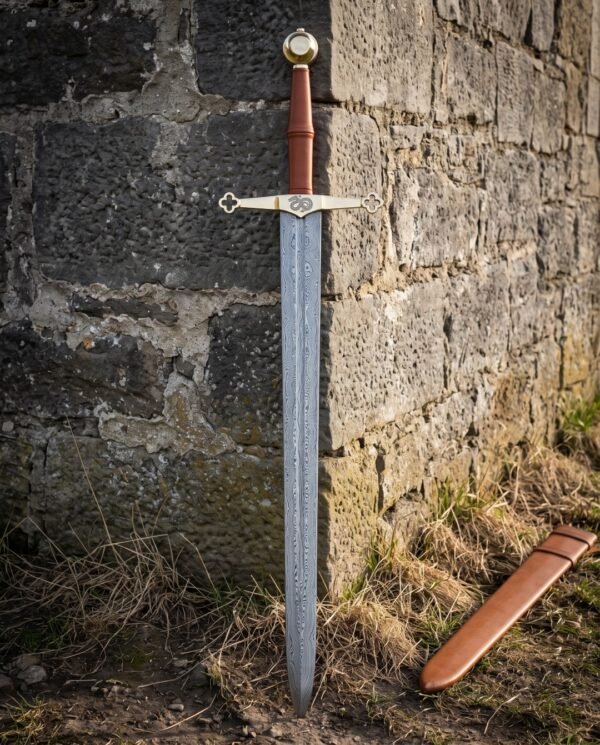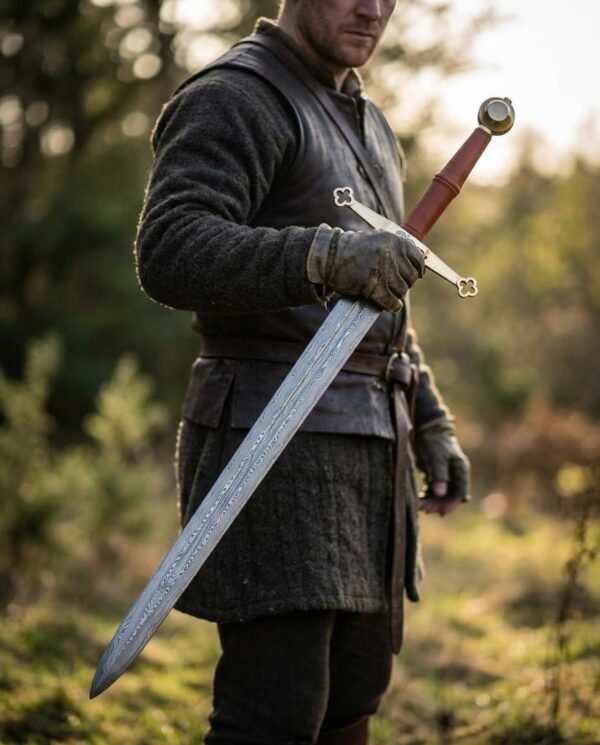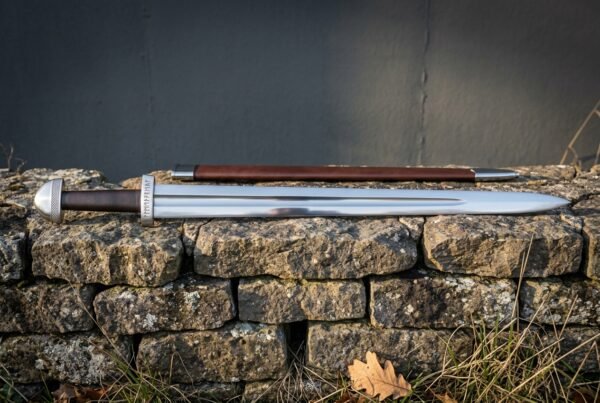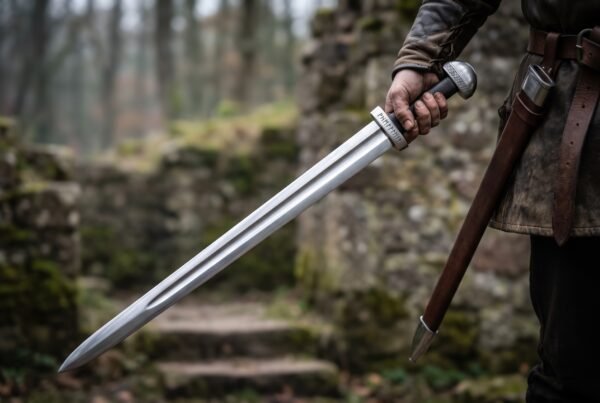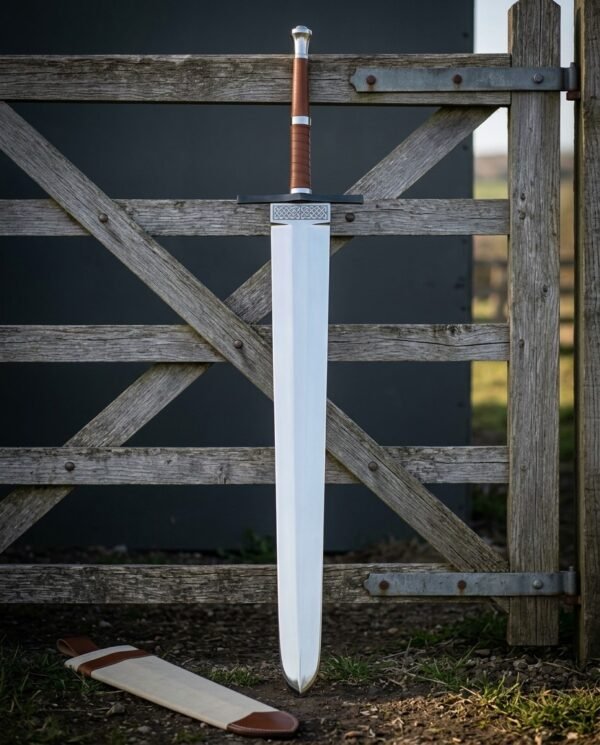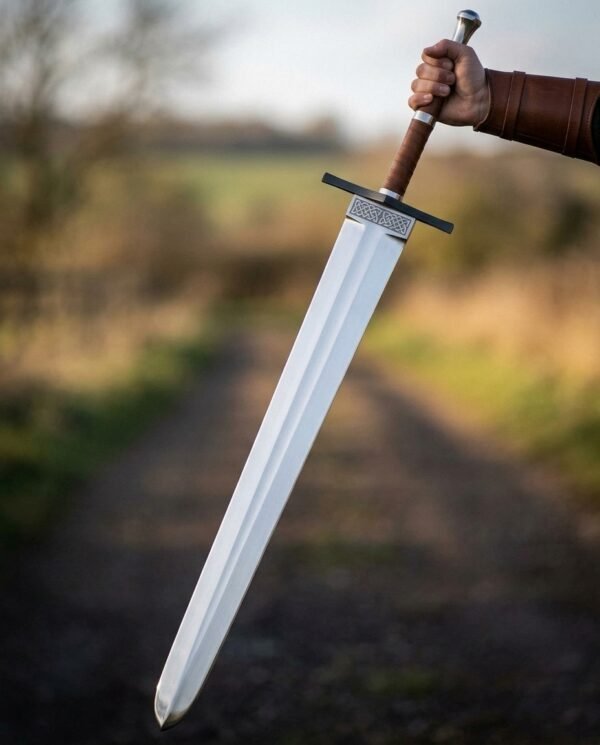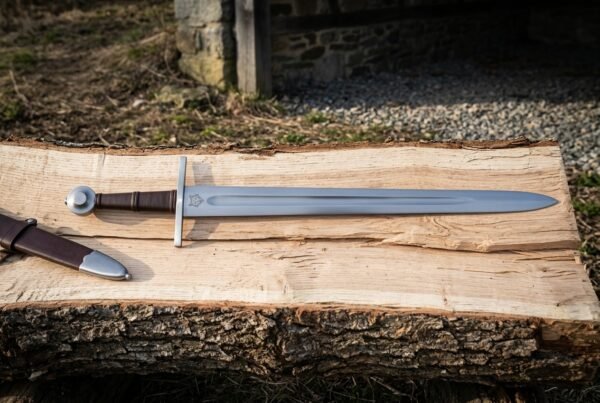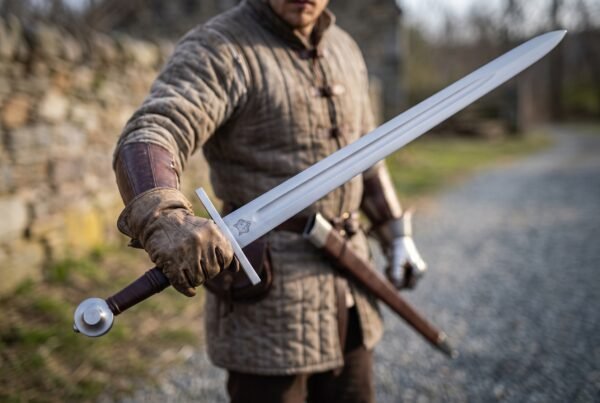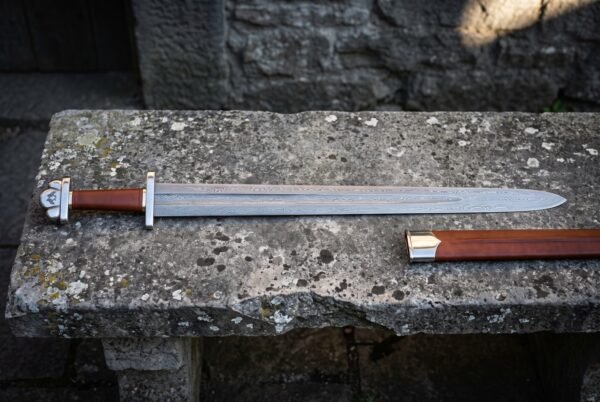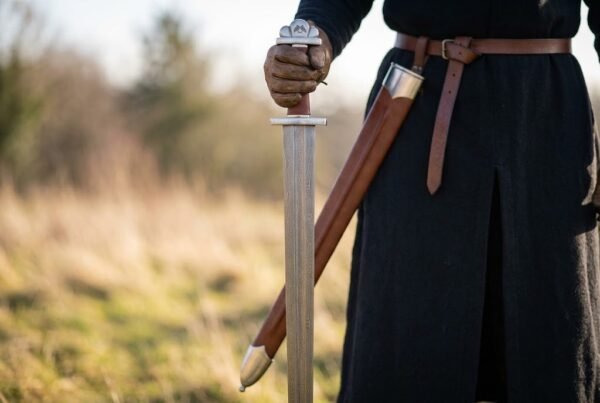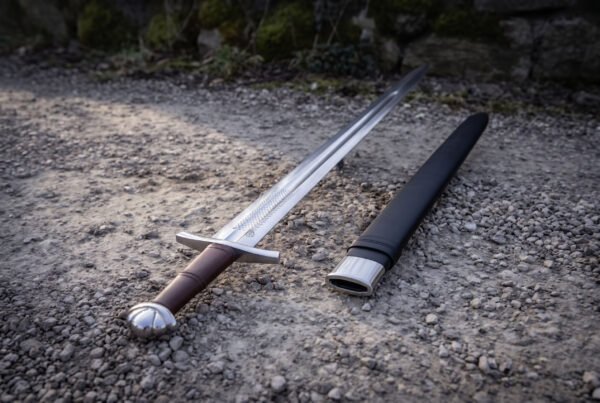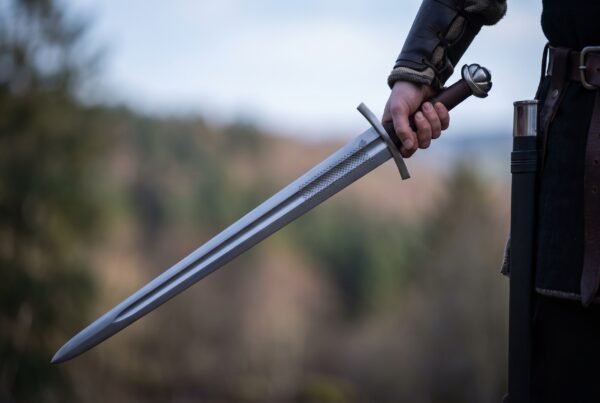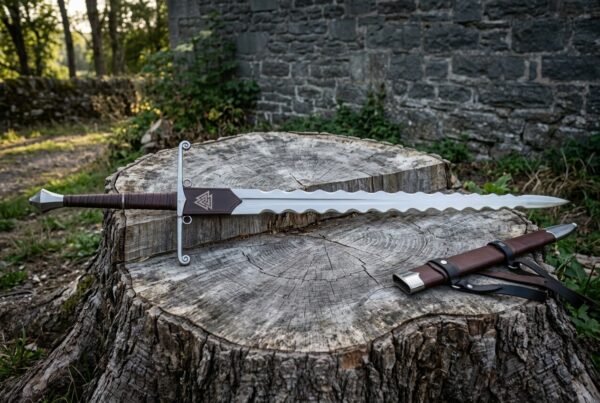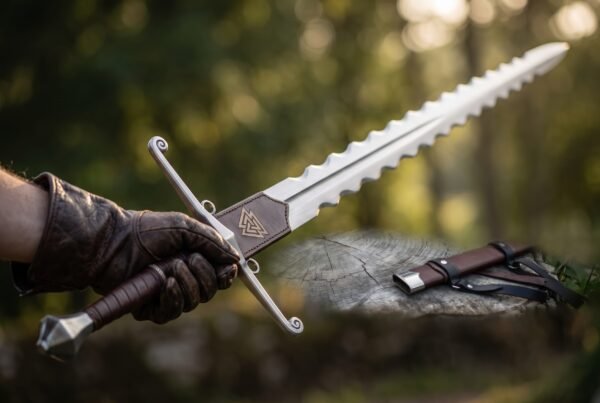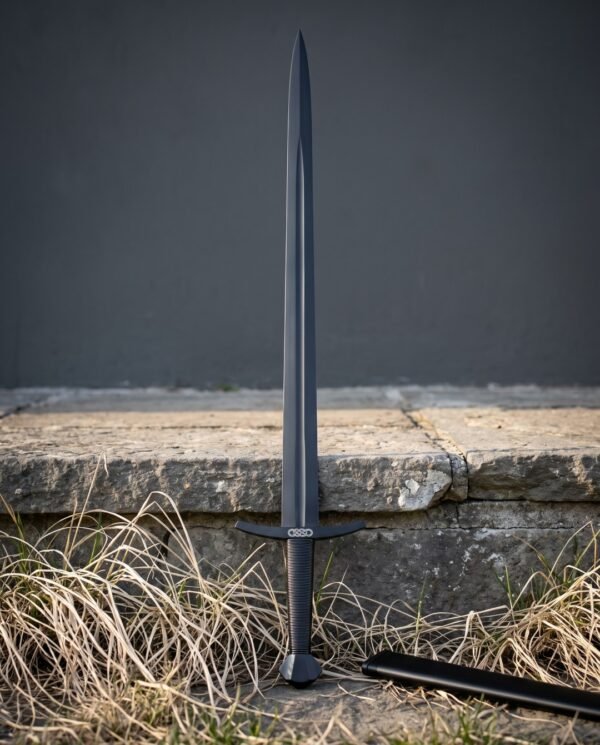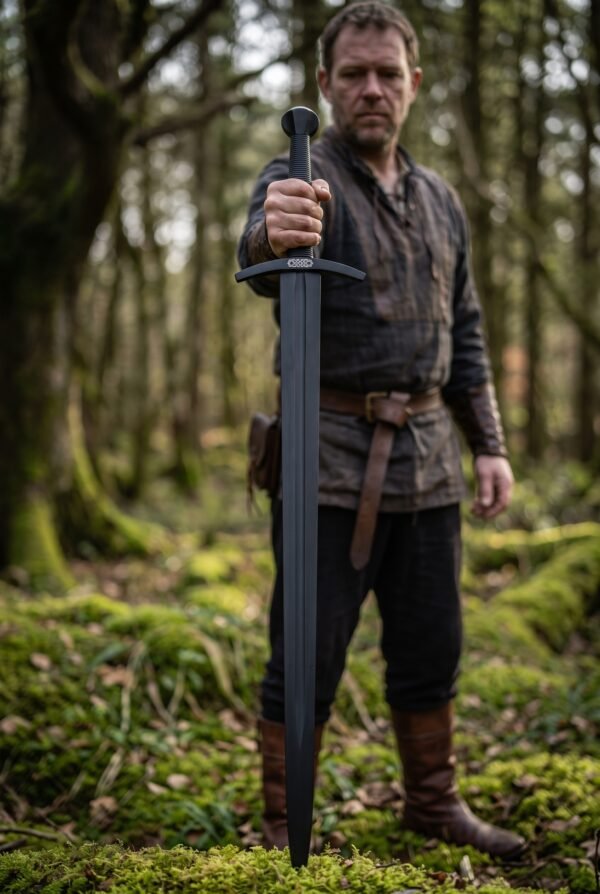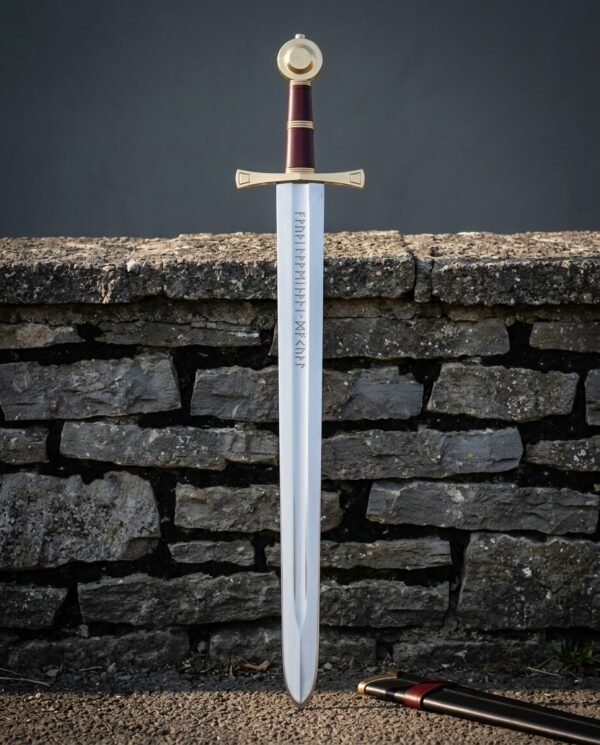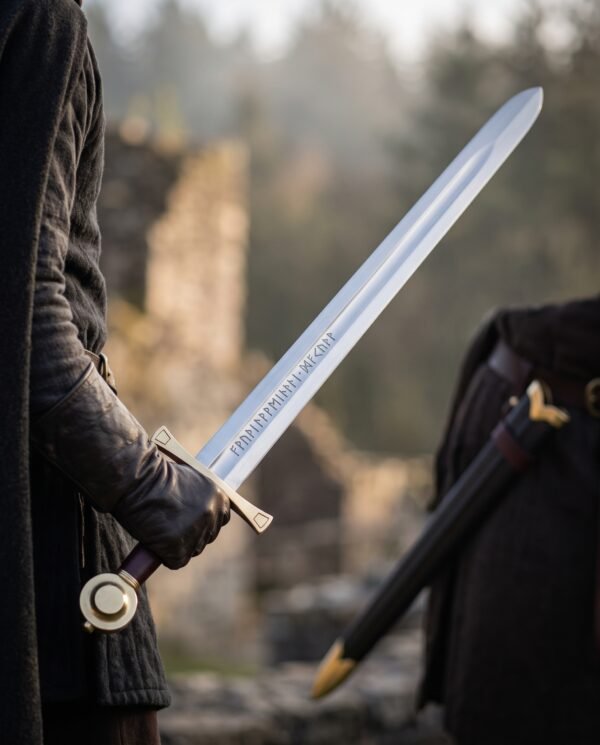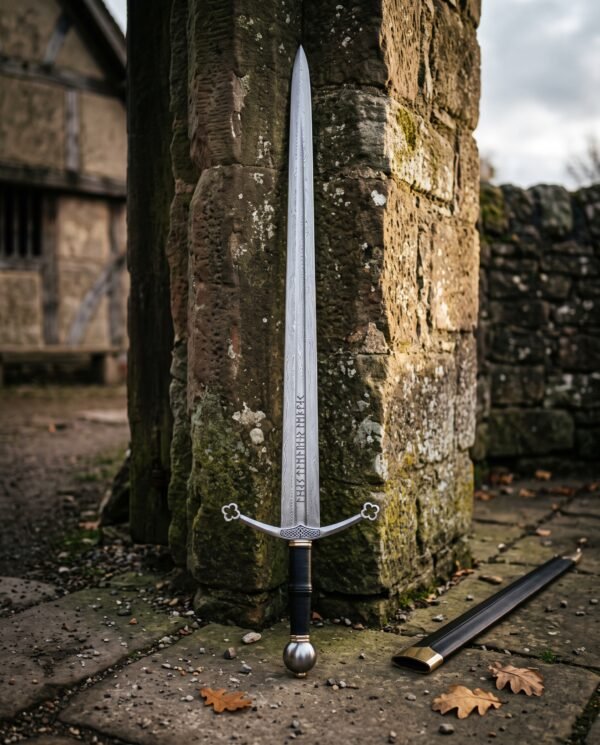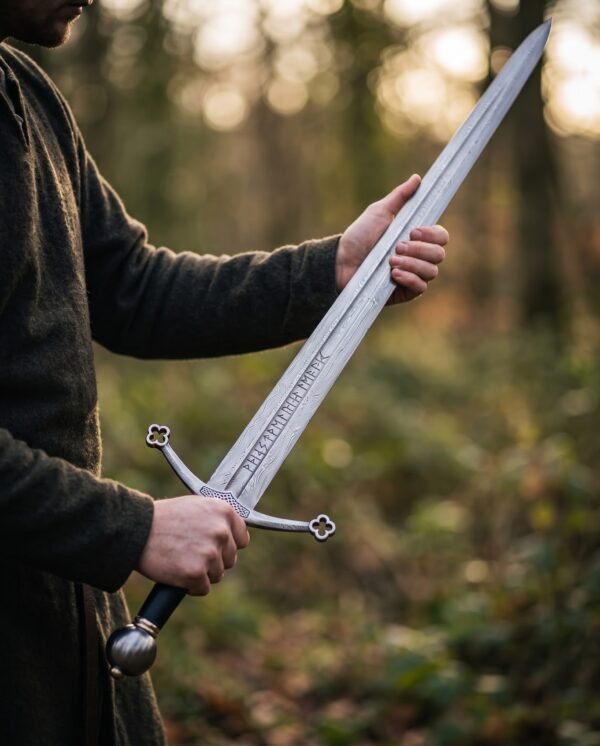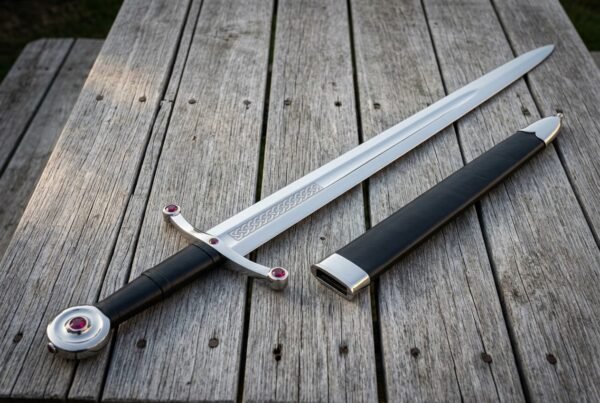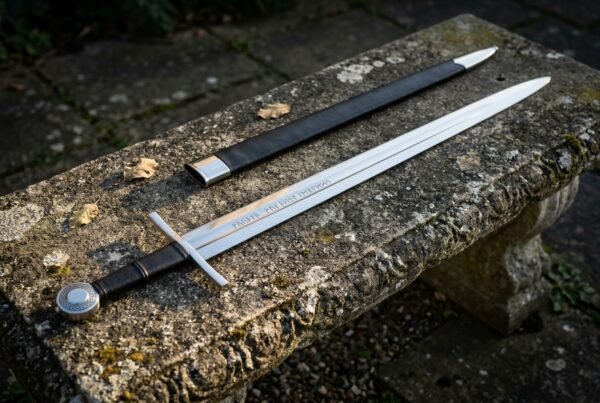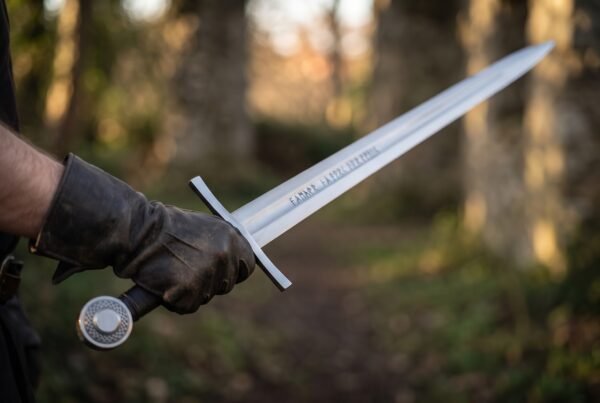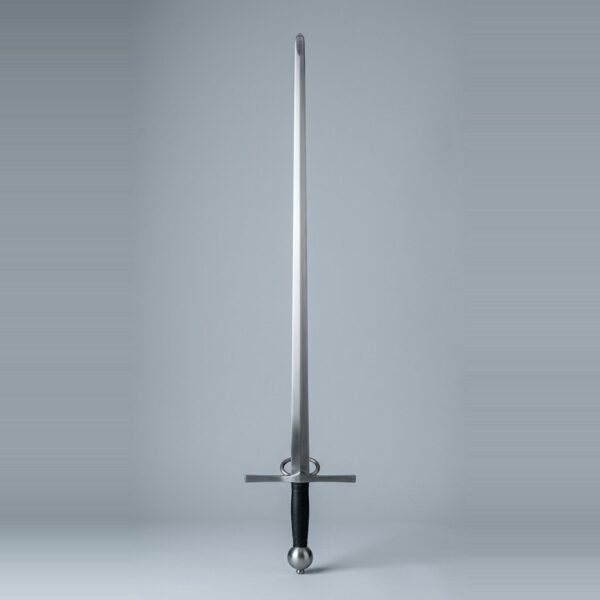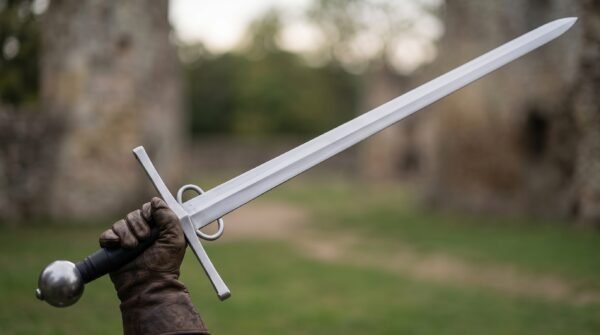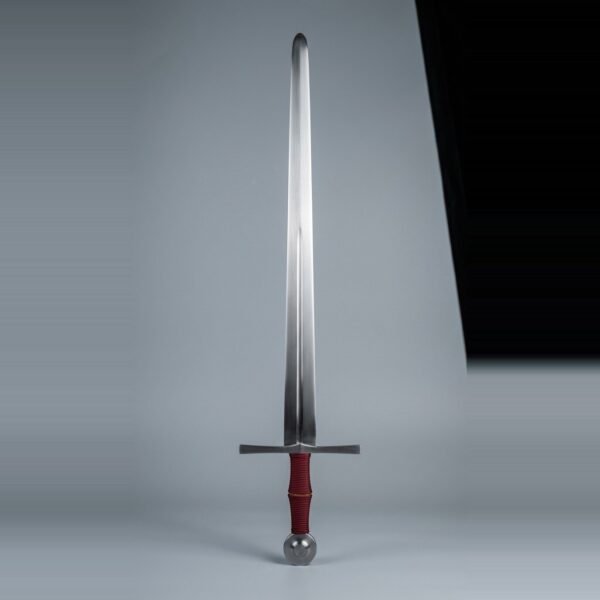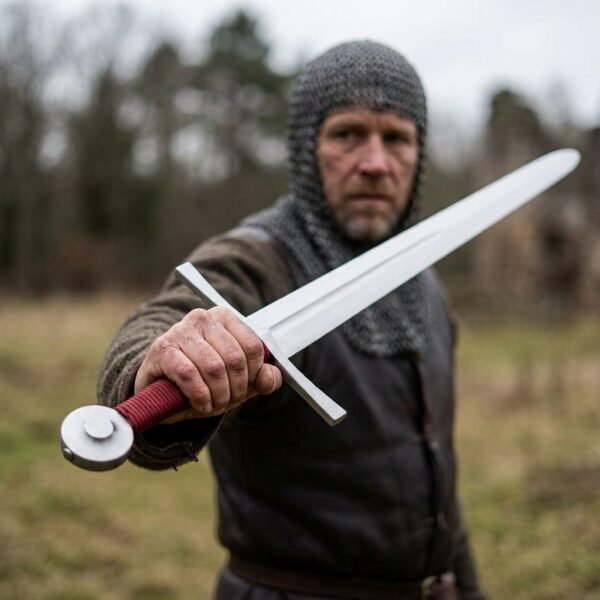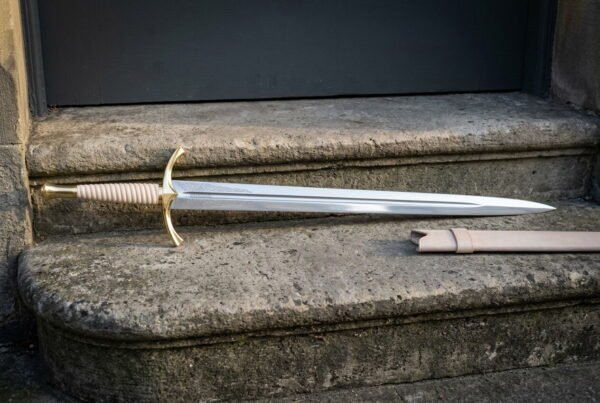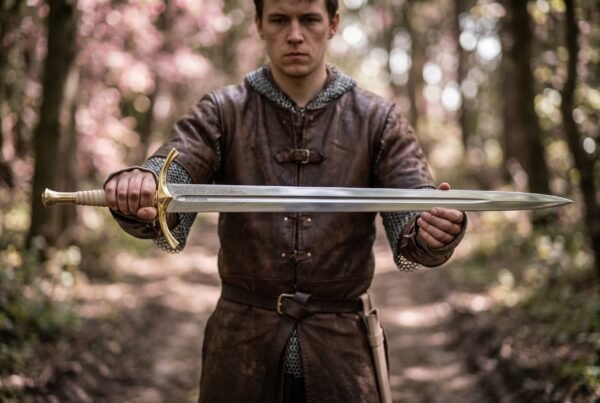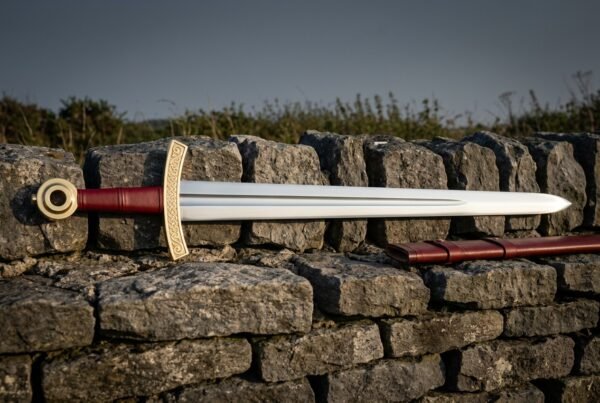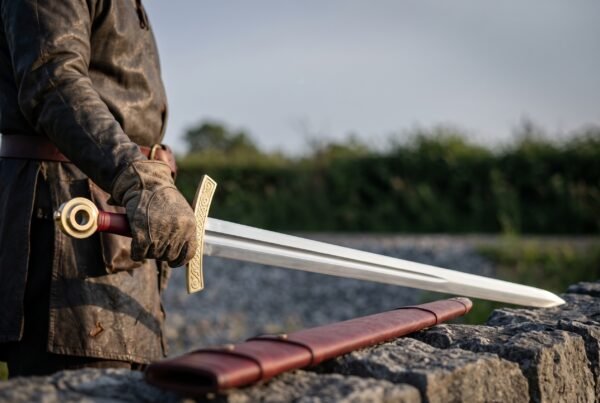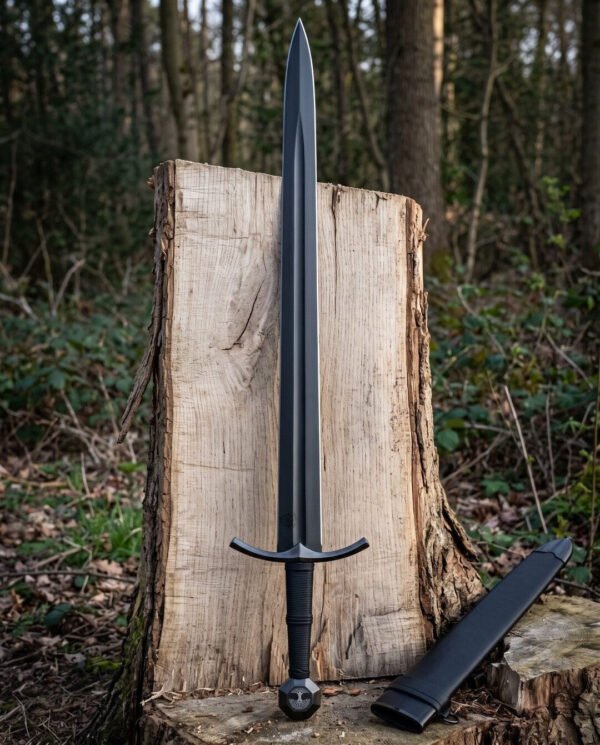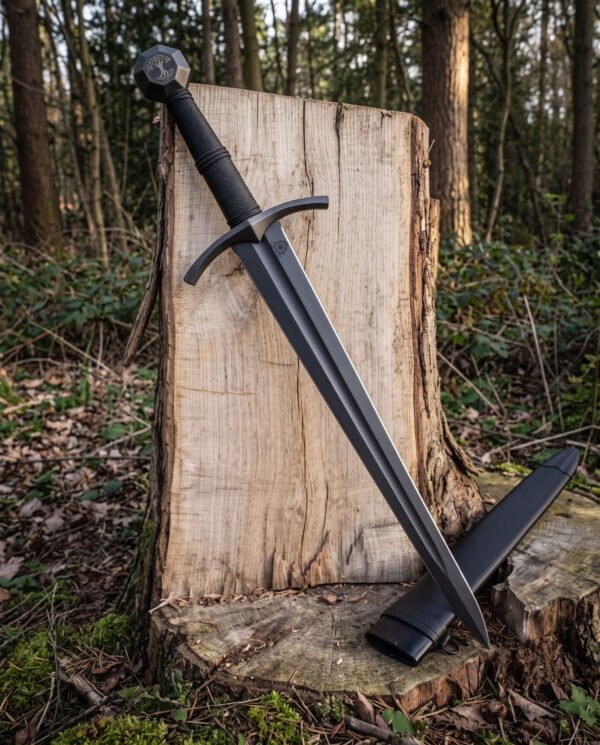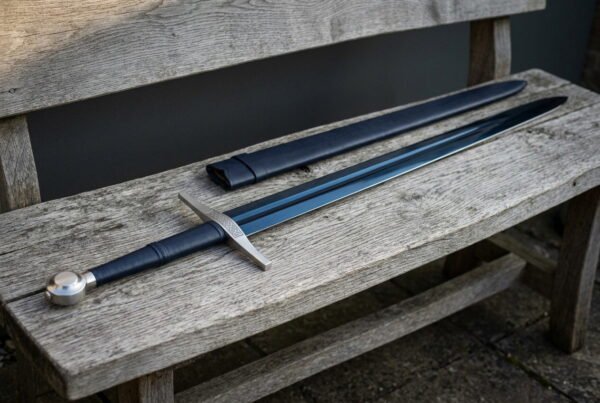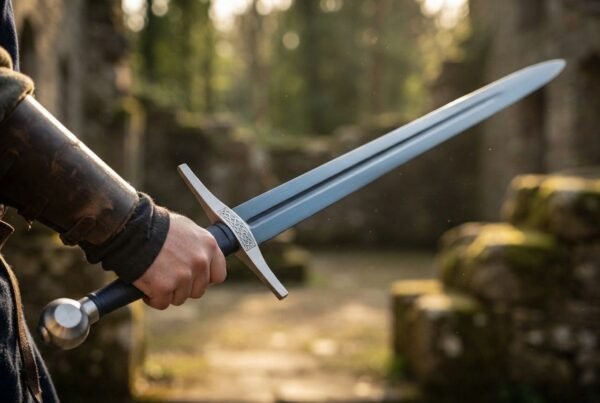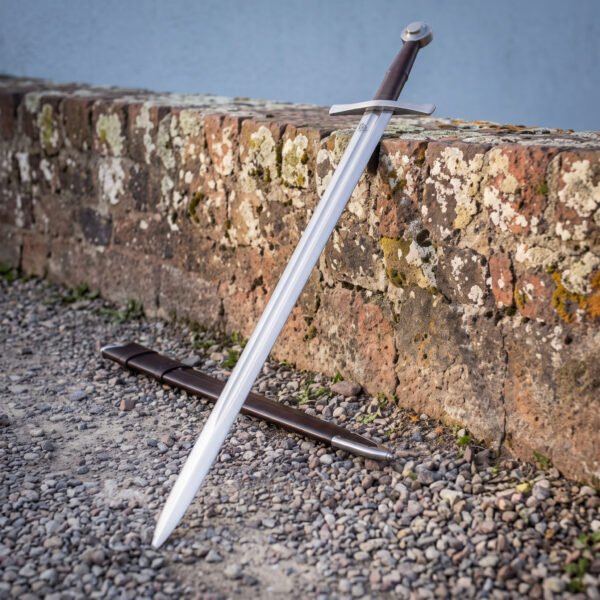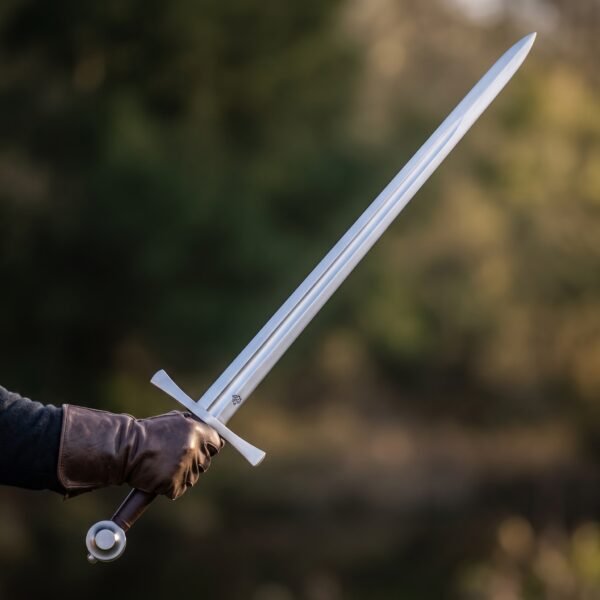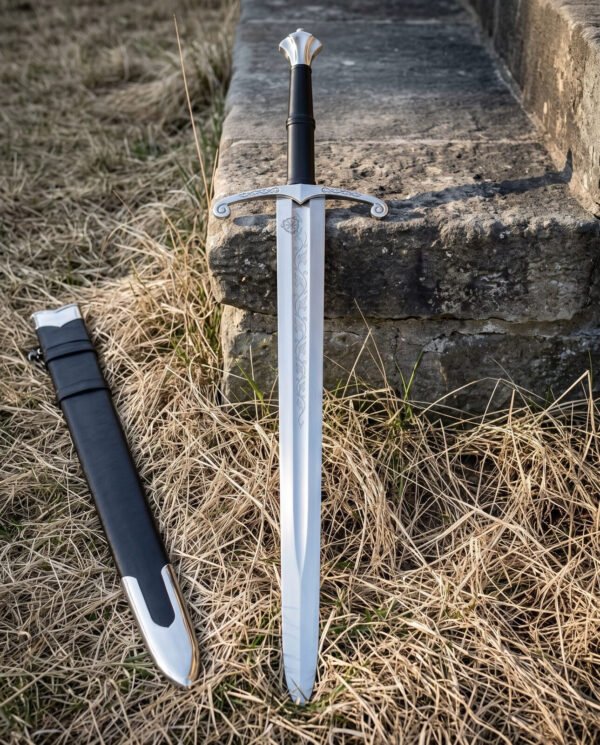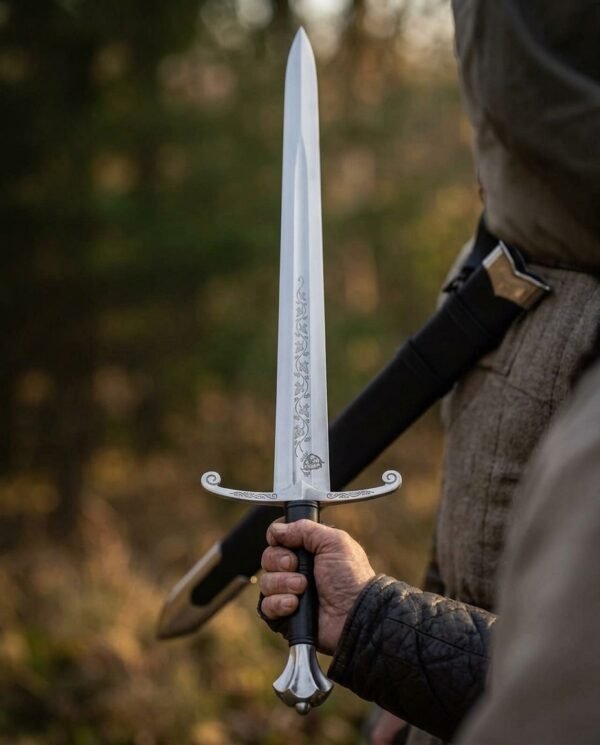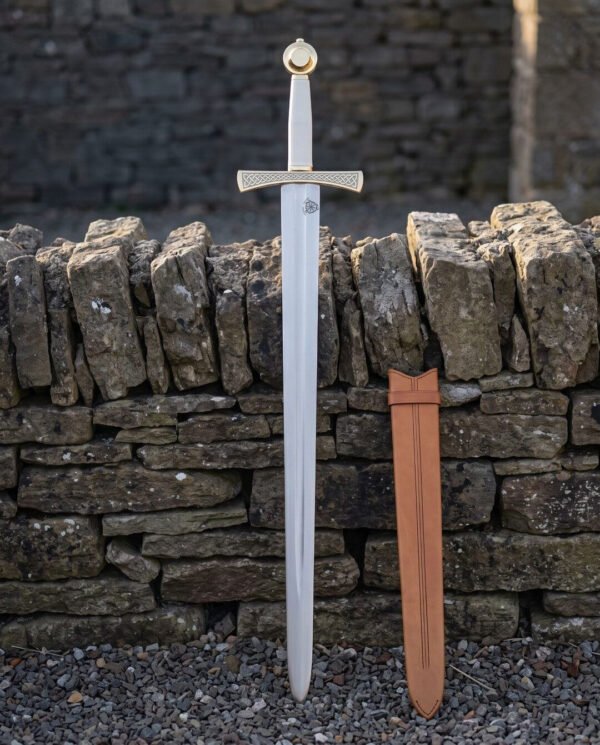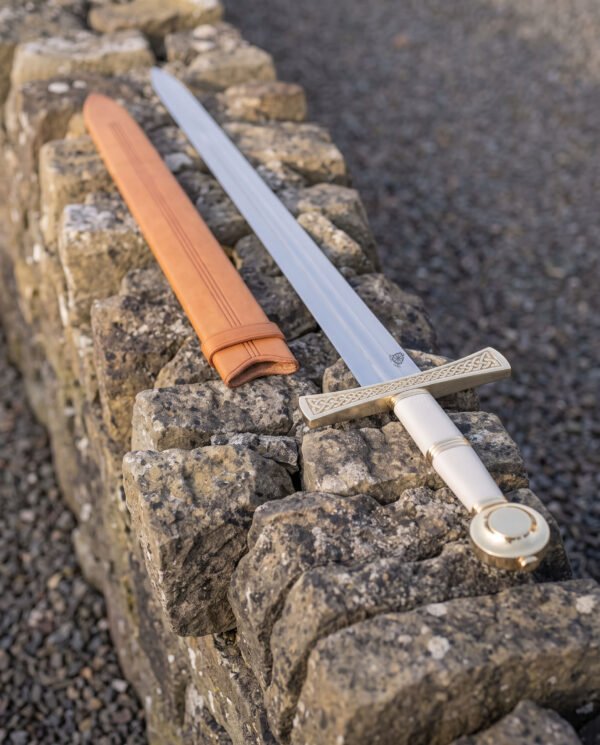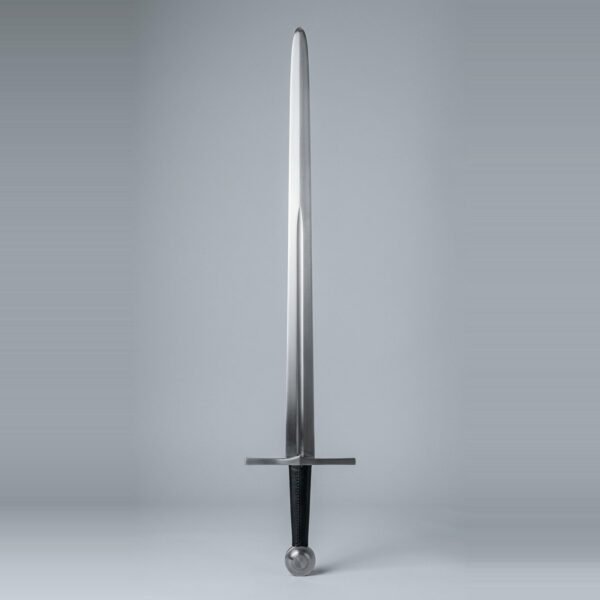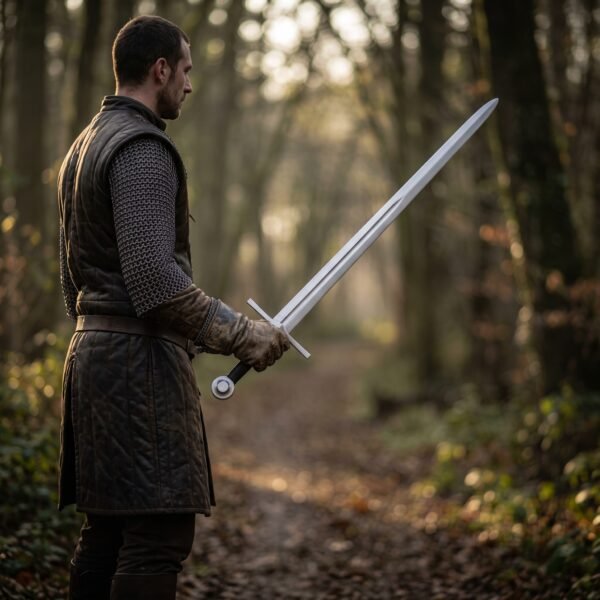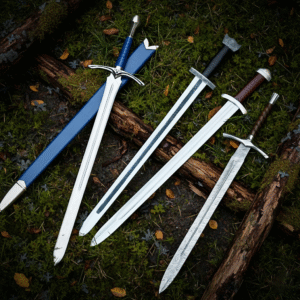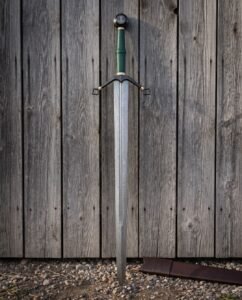
An arming sword is the single hand cruciform blade a knight wore on his belt. Straight, double edged, usually fullered, with a simple crossguard and a wheel, disc or brass bell pommel. It is the plainest sword shape in medieval Europe and it stayed in service for centuries because it worked, which is not something you can say about most of what gets sold as medieval.
The blades on this tag
Overall lengths run from about 31 to 38 inches with fullered blades around 24 to 30. Steel is plain 1095 high carbon at 54 to 58 HRC or Damascus of 1095 and 15N20, forge welded and acid etched, at 58 to 60 HRC. Grips are stacked leather, leather wrapped over a core, ribbed bone or wood. Pommels include disc, wheel, bell and engraved forms, and several blades carry etched valknuts, knotwork bands or rune lines in the fuller. Guards are straight or downswept and seated against the blade shoulder rather than pinned on.
Why the fuller is there
It is not a blood groove. That story has been repeated for a century and it is wrong. A fuller removes steel from the middle of the blade, where it contributes least to stiffness, which drops weight without weakening the blade in the ways that matter. It is the same principle as an I beam. On an arming sword the fuller usually runs from just below the guard to somewhere before the point, and it should stop cleanly rather than running off the end, which is a fair indicator of whether the blade was forged or ground into shape.
Hanging one, or hanging it up
Take the weight at two points and find a stud rather than trusting drywall with several pounds of steel. Keep it off a wall in direct sun, which dries a leather grip and fades it. The mounting guide covers brackets and load properly. If the sword arrives with a scabbard, store the blade out of it or oil it first, since vegetable tanned leather holds moisture against steel. Replacement leather is in the scabbards and sheaths. The single hand blades are in the arming swords and the wider bladed shapes in the broadswords.
What to check on the piece
A peened pommel rather than a glued one, visible as a small dome of steel at the top of the hilt. A guard seated tight against the blade shoulder with no gap. A grip that does not rotate under hand pressure. None of that shows in a photograph and all of it decides whether the sword is still tight in ten years.
Free US shipping
On most pieces. Heavier and oversized ones carry a flat charge.
Hand Forged
Heated, hammered and ground by hand.
Engraving available
Names, dates or Norse runes on most pieces.