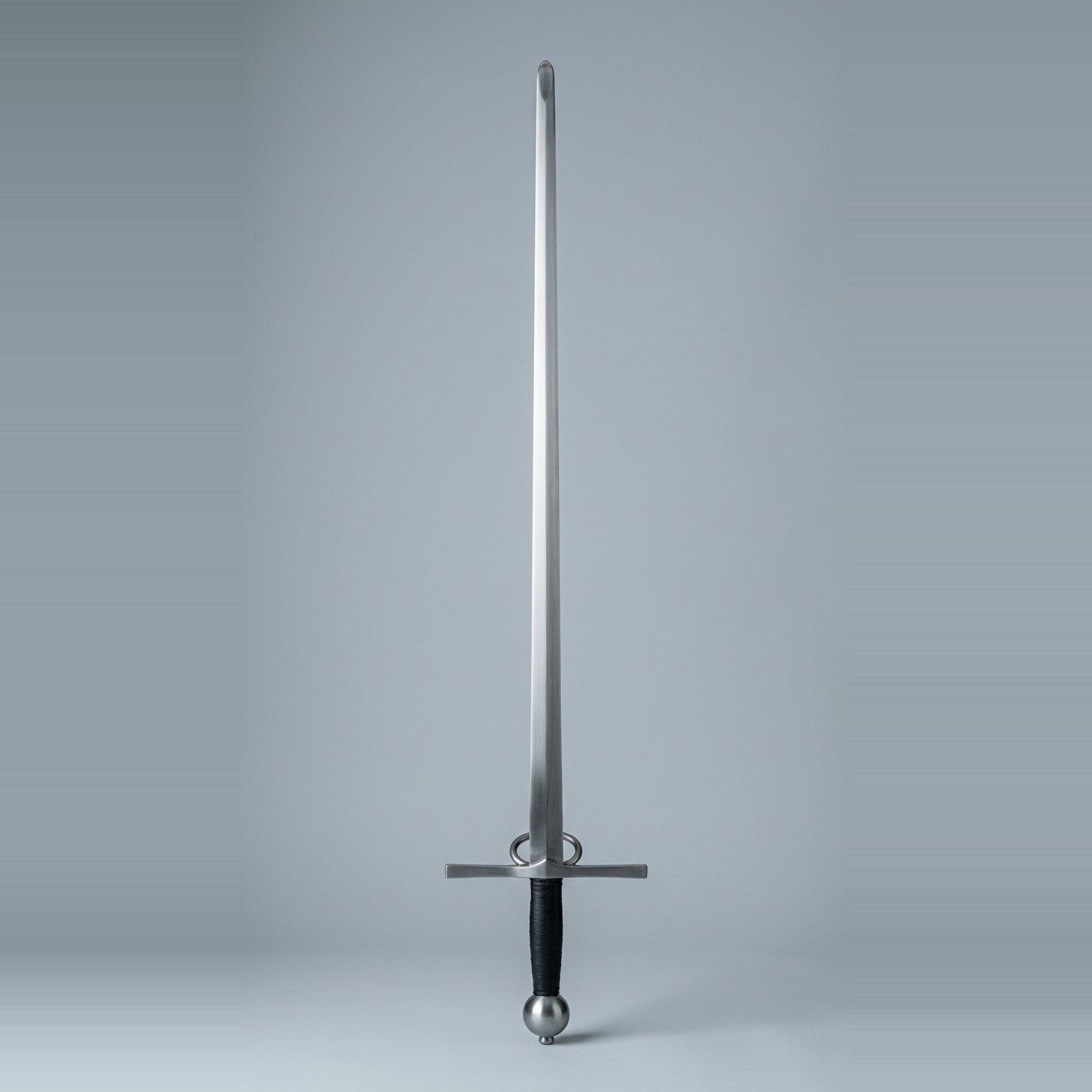
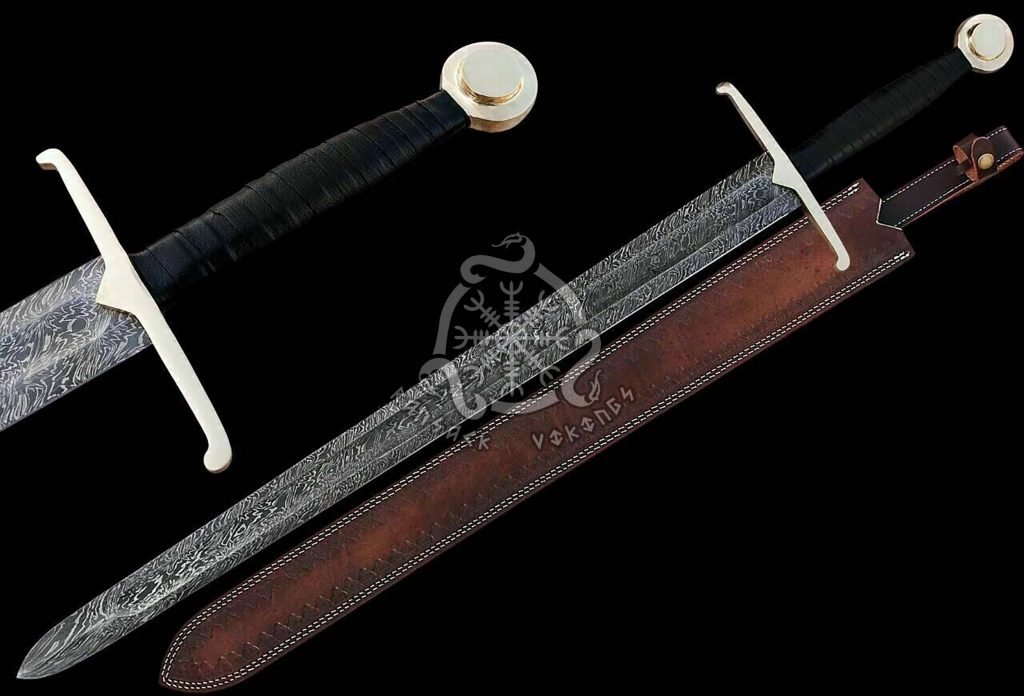
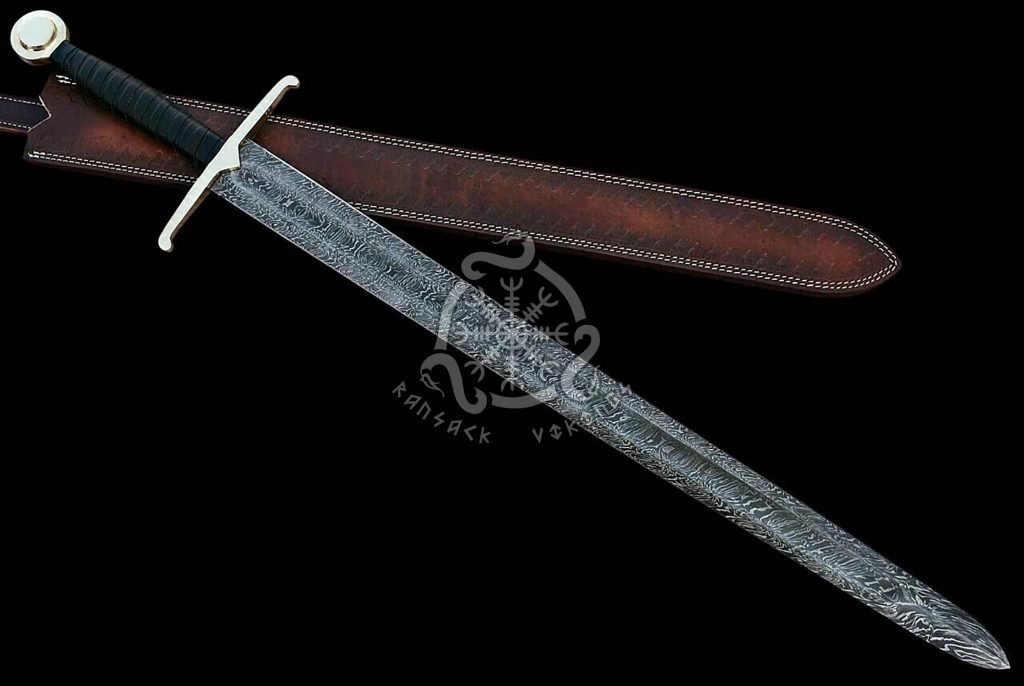
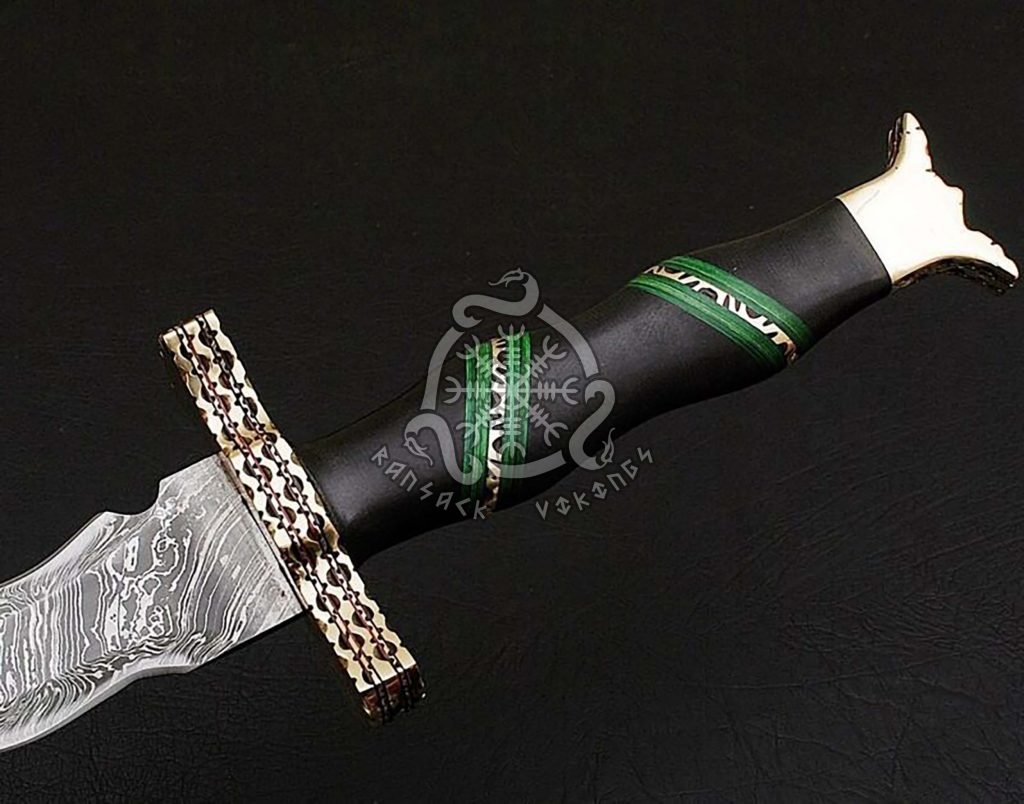
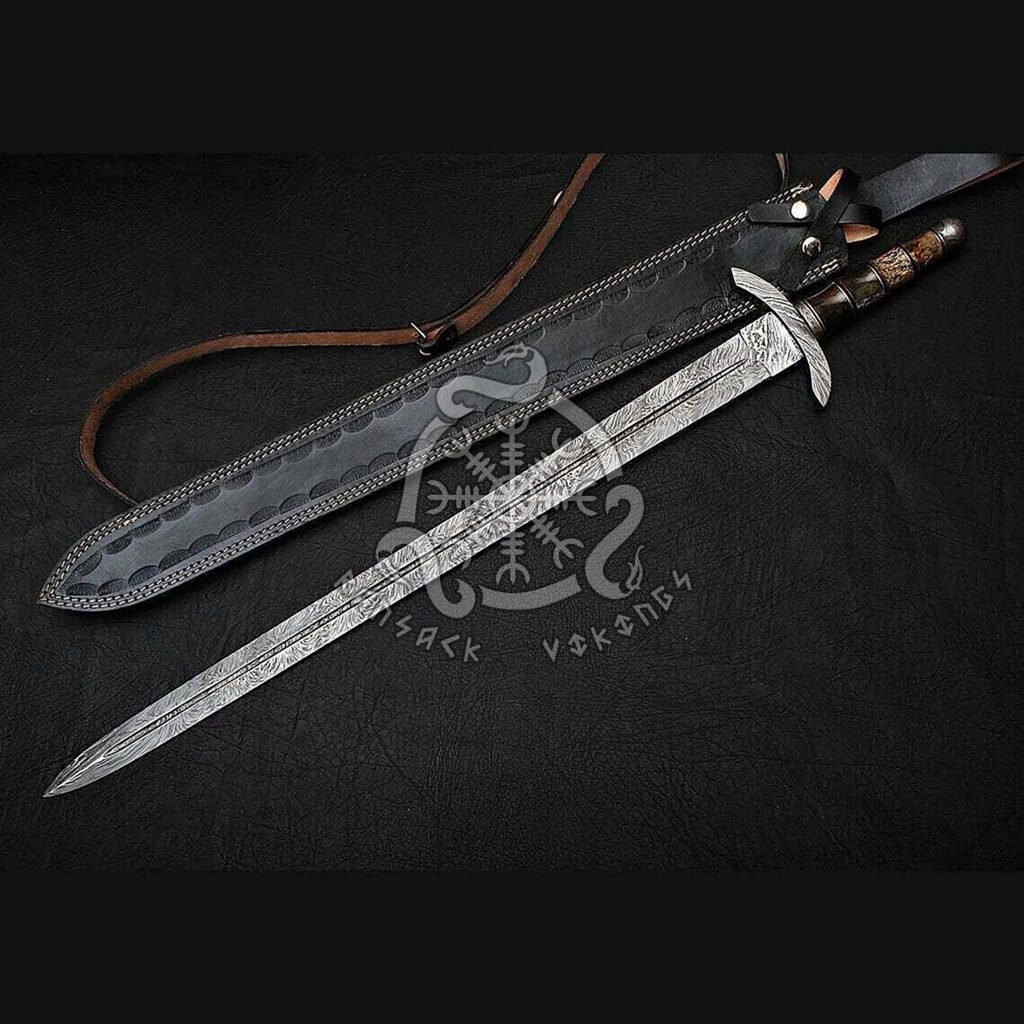
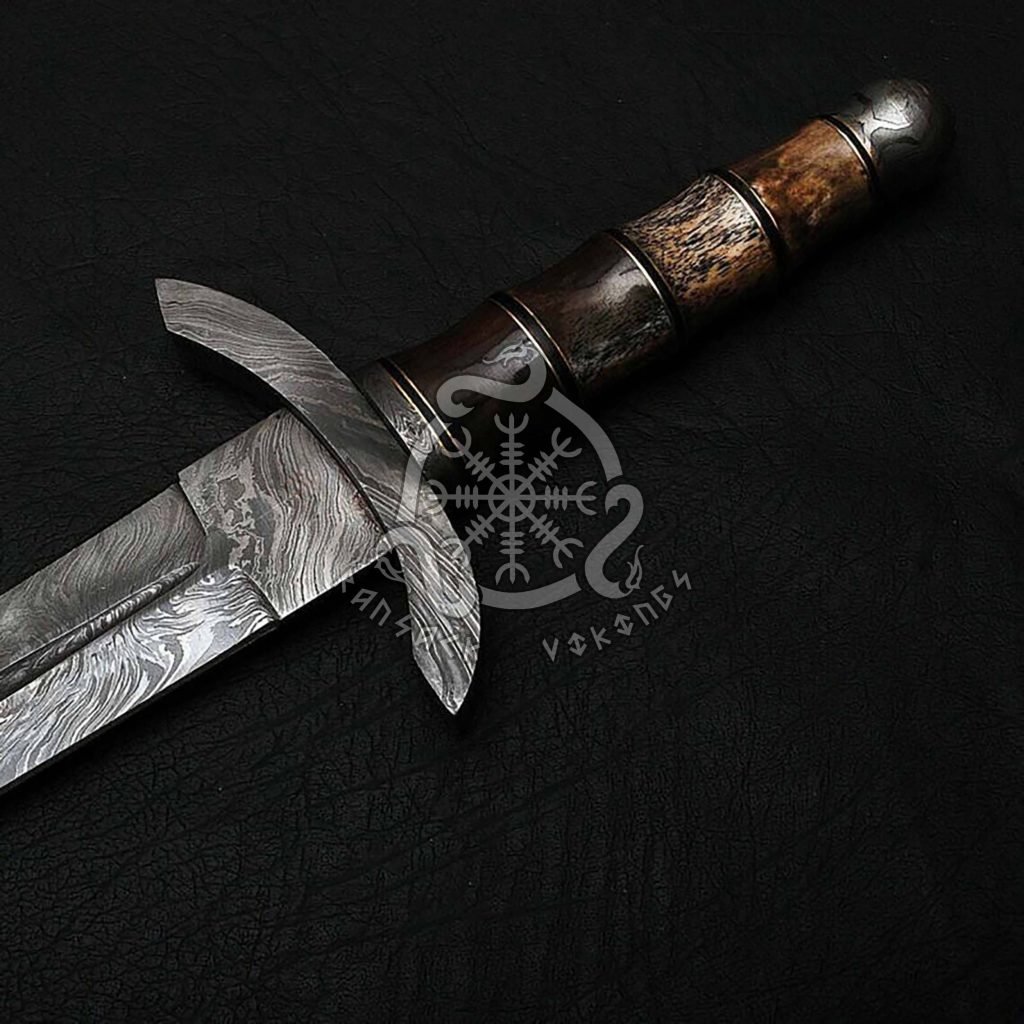
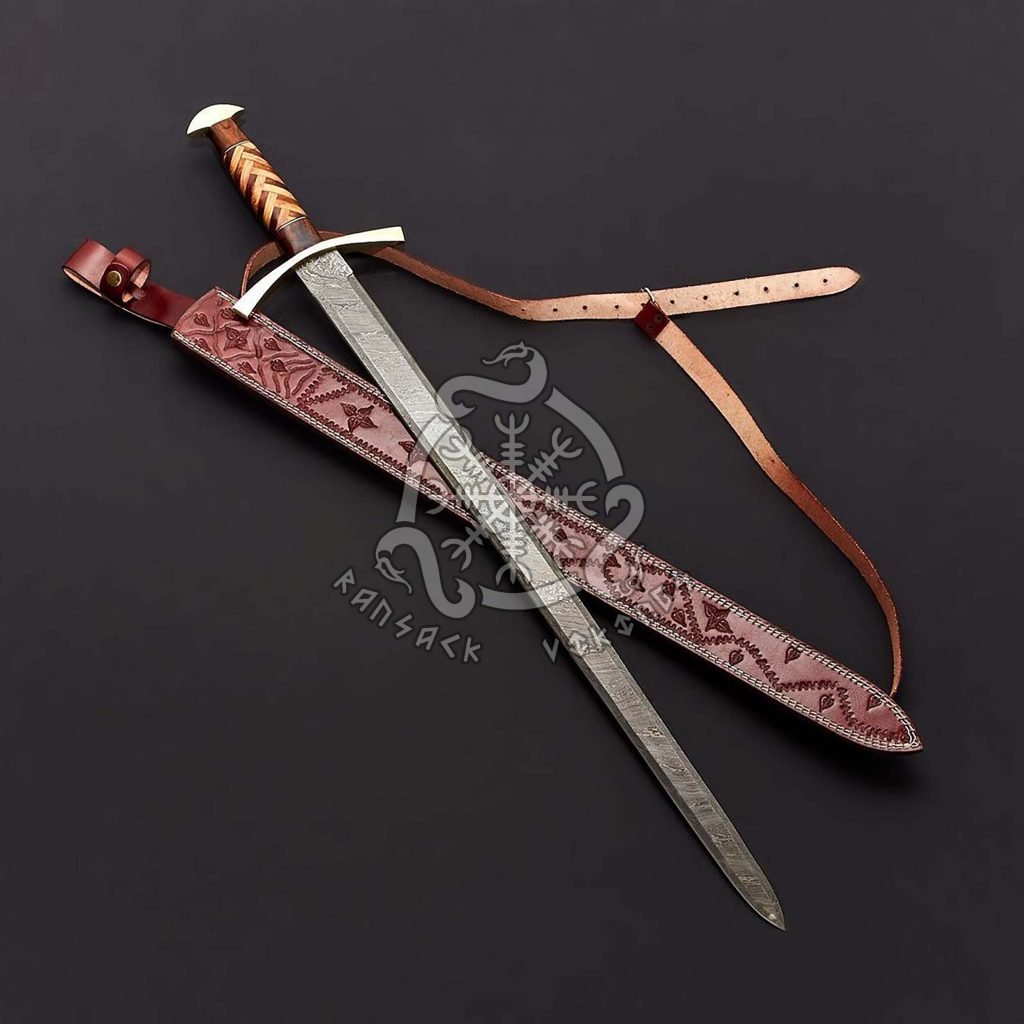
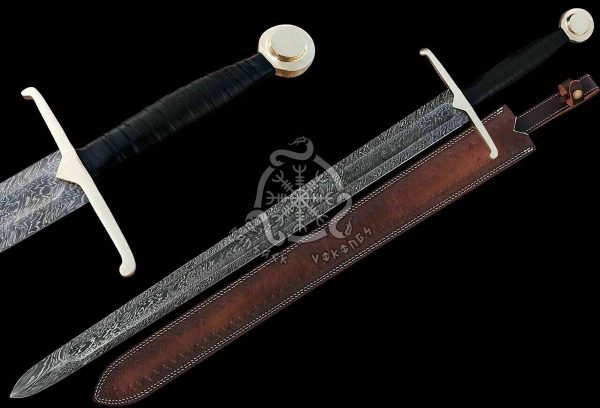
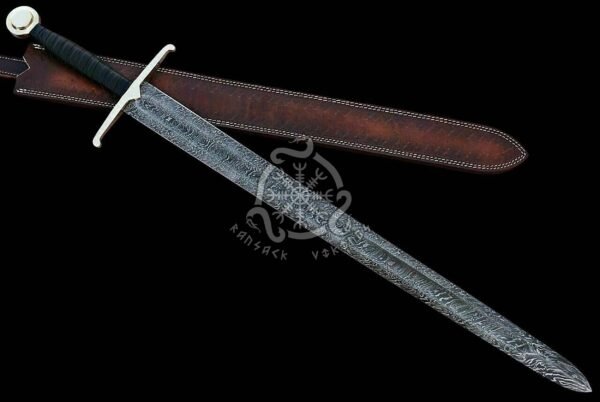
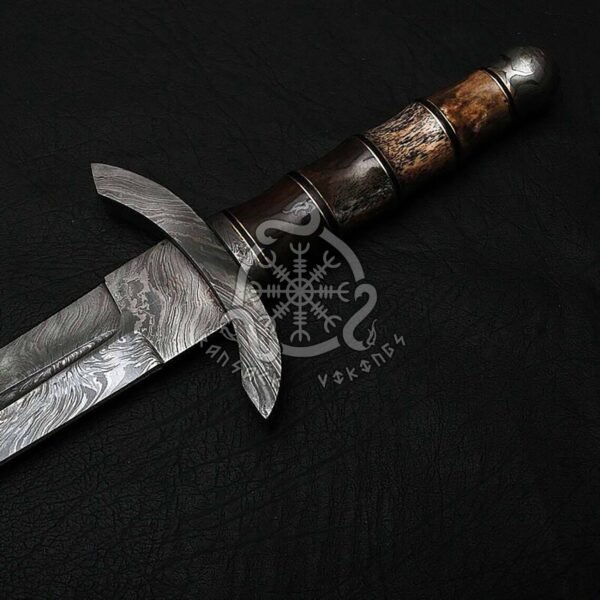
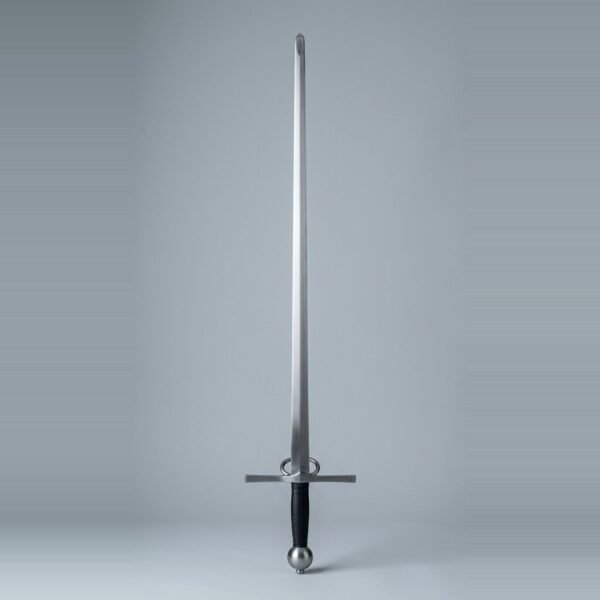
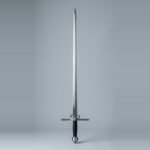
An arming sword that has started to grow a hilt. The cross is straight and plain, and above it sit two side rings, one on each face, standing clear of the block. That is the first step on the road that ends in the swept hilt, and it is the feature that makes this sword noticeably safer to bind with than a bare cruciform hilt.
The blade is narrow, diamond in section and carries no fuller at all, which makes it stiffer than a wide fullered blade of the same weight and pushes it towards the thrust. The grip is black leather over a wooden core, the pommel a plain sphere peened over the tang. Blunted 51CrV4 spring steel throughout, about 37 inches overall, hand made so it varies a little piece to piece.
If you are building a sword and buckler kit, read how to choose your first HEMA sword and blunt and sharp training swords before you order, because the blade you want for buckler work is not the blade you want for cutting. The rest of the shelf is in HEMA arming swords.
Specifications
What we can state without guessing. Lengths are approximate because every one is forged and fitted by hand.
| Material | 51CrV4 spring steel, hardened to 49 to 52 HRC |
|---|
| Overall length | About 37 inches, hand made so it varies a little piece to piece |
|---|
| Blade length | About 30 inches |
|---|
| Blade type | Narrow, diamond in section, no fuller anywhere in the blade |
|---|
| Edge | Blunted, about 3 mm flat land, not sharpened |
|---|
| Tip | Blunted and rounded off, not a spatulated tournament tip |
|---|
| Guard | Straight cross with two side rings, one on each face above the block |
|---|
| Pommel | Sphere, peened over the tang |
|---|
| Grip | Black leather over a wooden core, sized for one hand |
|---|
| Flex | Medium, the tier most clubs ask of a one handed trainer |
|---|
| Included | The arming sword only. No scabbard, no buckler and no tip protector |
|---|
| SKU | RK-3026 |
|---|
Sword and buckler, and the hilt that grew out of it
The oldest fencing manuscript anybody has, Royal Armouries MS I.33, is a sword and buckler book. It was written around 1300 and it teaches a plain cruciform arming sword paired with a small round shield held in the off hand, fought in seven wards with the buckler covering the sword hand at almost every moment. That pairing is still the fastest way into medieval fencing and it is still the cheapest kit to assemble.
This sword is a later cousin of the I.33 blades rather than a copy of one. The side rings did not exist in 1300. They arrive in the fifteenth century, when fencers who were no longer carrying a buckler needed the hilt itself to do the covering, and they lead directly to the ring and counterguard hilts of the sidesword a century later. Fitting them to an arming sword gives you a piece that works for I.33 and for the transitional plays either side of it.
In practice they change the bind. With a ring above the cross on both faces you can take a blade high on the forte without the opponent’s point sliding down onto your fingers, which is the injury that ends most bare hilted sparring sessions early. You still want gloves. You just want them less desperately.
A narrow blade with no fuller and what the side rings change
51CrV4 spring steel hardened to 49 to 52 HRC. Under a hard bind the blade bends and springs back rather than taking a set or breaking, which is the only behaviour worth paying for in a sparring piece. Our cutting swords use 1095 at 54 to 58 HRC because hardness matters when a blade meets tatami, but that hardness is wrong for two people leaning on a crossing.
There is no fuller in this blade and that is deliberate. A fuller lightens a wide blade by removing metal from the middle of the flat where it contributes least. A narrow diamond section blade is already light, so cutting a fuller into it would only cost stiffness. What you get instead is a blade that resists a lateral bend well, holds a thrust line honestly and feels quicker in the last third than a broad fullered arming sword.
The trade is in the cut. A narrow unfullered blade has less presence in a cut than a wide one and it will feel less authoritative on a pell. If most of your work is buckler play, thrusting and the bind then that is the right trade. If you want the cut to feel heavy, the wider fullered arming swords on the same shelf are the ones to look at. Flex on this piece is the medium tier and the tiers are explained in HEMA sword flex explained.
Engraving, runes and your own design
Use the rune converter on this page to turn a name, a date or a short phrase into Elder Futhark and we will cut it into the steel or the grip. If you would rather have your own design than a rune line, choose your own design in the engraving option above the add to cart button and tell us where it goes. Where a piece already carries an engraved design, your chosen engraving replaces it rather than sitting alongside it. More on the engraving page.
The sphere pommel takes a rune line around its equator neatly, and the flat of the blade just above the cross is clear of the rings and takes a longer name or a club mark. Tell us which you want and we will keep it clear of the ring shoulders.
Handling and balance
One hand, and the sphere pommel sits into the heel of the palm rather than against the wrist, so the sword rolls easily between the ward positions without needing a hammer grip. The side rings are close enough to the hand to be useful and far enough forward that they do not foul a thumb laid on the flat.
Point recovery is quick because the blade is narrow and there is no mass out in the middle of it. That suits buckler work, where the sword has to come back and cover the hand faster than the shield can move. We do not publish a weight or a point of balance, because every one is finished by hand and a printed figure would be a guess dressed up as a specification.
Care
Wipe the blade after every session and get a rag into the inside of both side rings, because that is where sweat sits and where an unfullered blade will show its first rust spot. Mineral or camellia oil on a cloth is all it needs.
Leather grips want air. Let the sword dry before it goes in a bag and never store it damp in a sealed sleeve, because leather holding moisture against a tang is how a hidden rust problem starts. Check the pommel peen every few months by twisting the grip gently, since hand fitted hilts settle in their first season. The full routine is in the knife care guide.
Made in the Czech Republic
Made by hand in the Czech Republic and imported by Ransack Viking. Nothing here is drop shipped out of an importer catalogue straight to a customer. Every one is checked for hilt tightness, pommel seating and blade straightness at our North Babylon, New York warehouse, and ships from there. Shipping in the United States is free, returns run for seven days, and the lifetime warranty against defects in the forging, the grind, the heat treat and the fittings has no end date and needs no receipt.
The arming swords and sideswords in this line come from the same bench, so the ring work and the leather wrapping match across the range. Two bought together will look like a matched pair.
A note on handmade variation
This is hand forged. It is not machine made, not cast and not bulk produced, so what arrives will not be a pixel for pixel copy of the photograph on this page.
On an arming sword that shows in the exact circle of the rings, the seam line on the leather and the size of the sphere pommel. The blade section, the length and the flex tier stay consistent. The hand work does not, and that is the reason to own one.
Frequently asked questions
Will it work for I.33 sword and buckler
Yes, with the caveat that the side rings are a later feature than the manuscript. Everything the book asks of the sword, this one does, and the rings simply give your hand more cover than a bare cross would.
Why does the blade have no fuller
Because it is narrow. A fuller lightens a wide blade without costing much stiffness, but on a narrow diamond section it would only make the blade more flexible for no gain. The result here is a stiffer, more thrust oriented blade.
Is it sharp
No. It is a blunt trainer with a flat land on the edge and a rounded point. It is made for drill and sparring. We sell sharp blades separately and label them plainly as cutting swords.
Can I take it to an event
Read the ruleset first. The Berlin HEMA Cup asks for a spatulated or rolled tip of at least 1.5 cm and this point is rounded rather than spatulated to that width. We never claim tournament legality without naming the rules.
Is a buckler or a scabbard included
No. The sword only. Nothing in this batch ships with a scabbard and we do not bundle a buckler with it.
Can it be engraved
Yes. Elder Futhark runes or your own design, cut in the United States after arrival. Text and runes are 19 dollars, a symbol 39 dollars, a family crest 49 dollars.
What is in the box
- One Ashgrimm arming sword, about 37 inches overall
- A light coat of protective oil on the blade for transit
- Care and warranty details for the piece
- Ransack Viking packaging, inspected and shipped from North Babylon, New York
Explore the range
More one handed steel is in HEMA arming swords and HEMA sideswords. For two hands, try HEMA longswords or the wider arming swords shelf. The writing is collected in the guides hub.
Others in the same line
From the same run, look at Faskvar arming sword, about 37 inches overall, Haldvane arming sword, about 37 inches overall, Skarnvik arming sword, about 36 inches overall, Skelvard sidesword, about 40 inches overall and Rundholm montante, about 66 inches overall before you decide.
The whole HEMA arming sword category and the HEMA sword hub carry everything else in this range, and the custom sword builder will take a spec of your own.








Reviews
There are no reviews yet