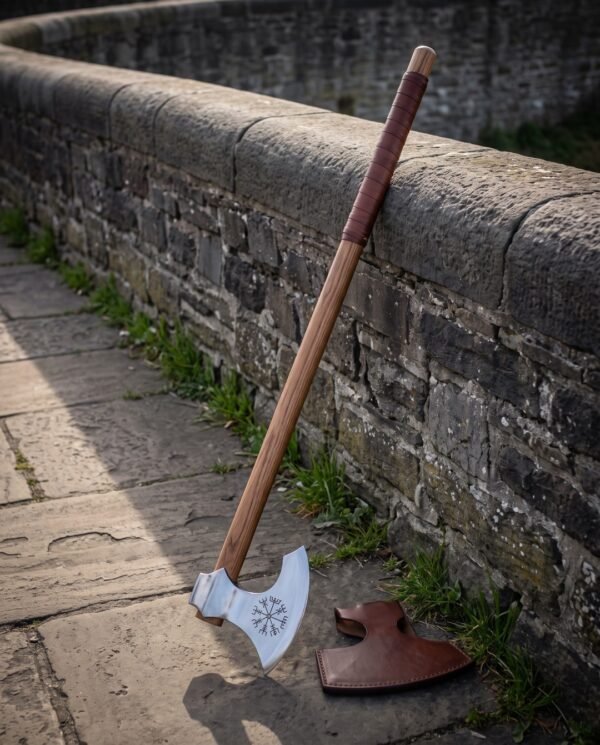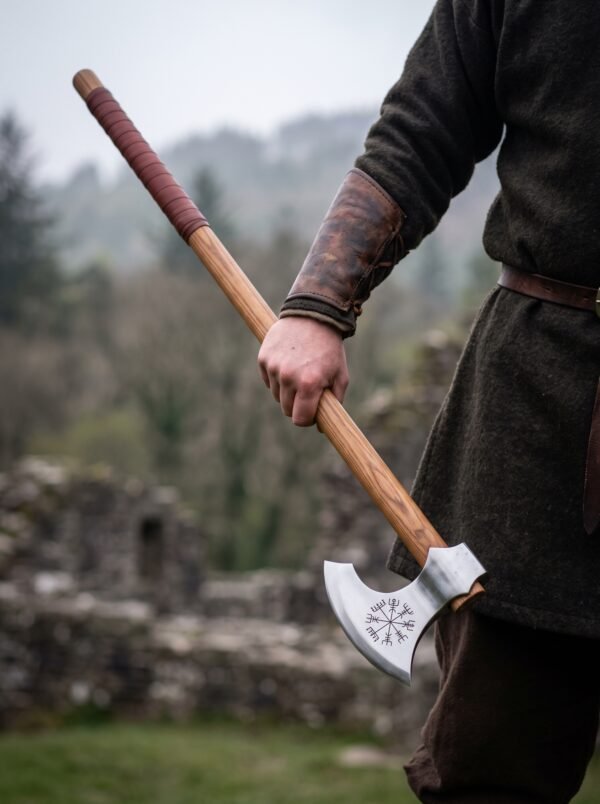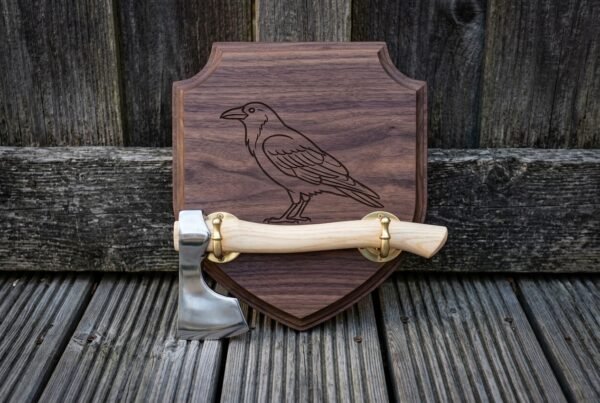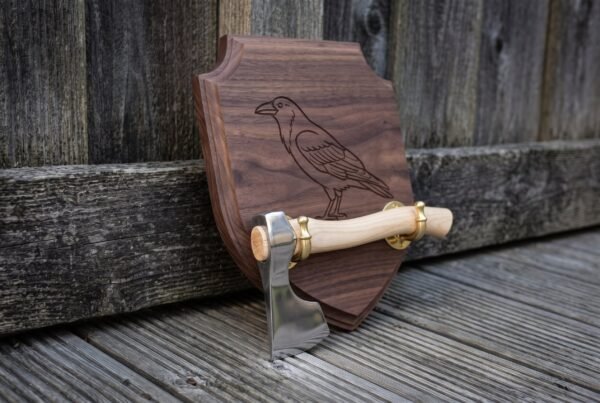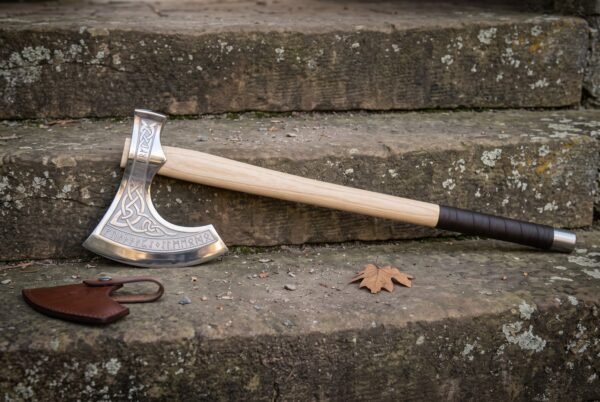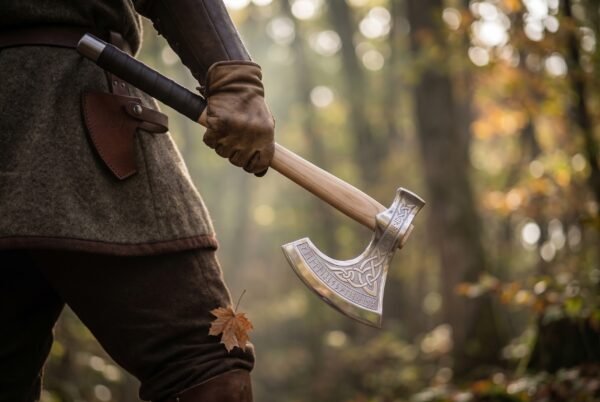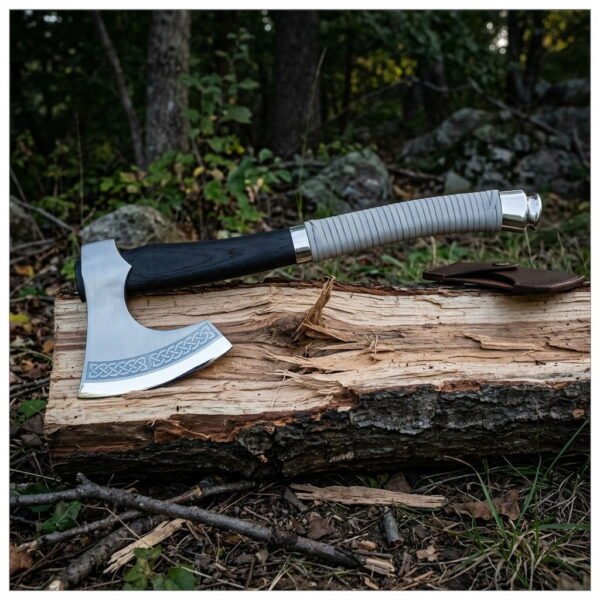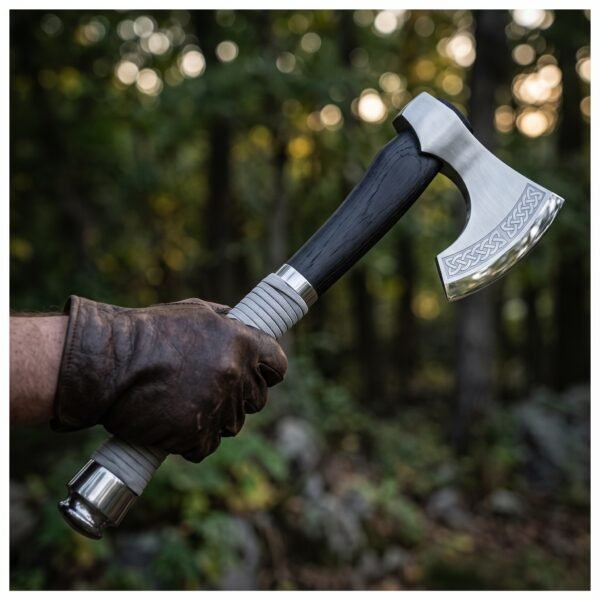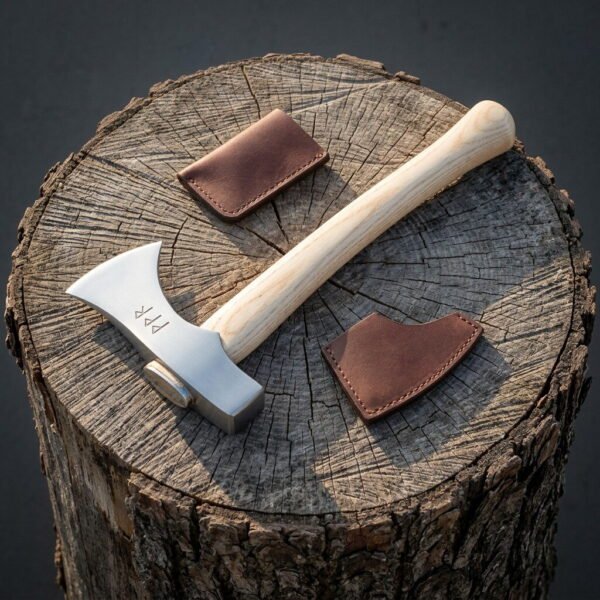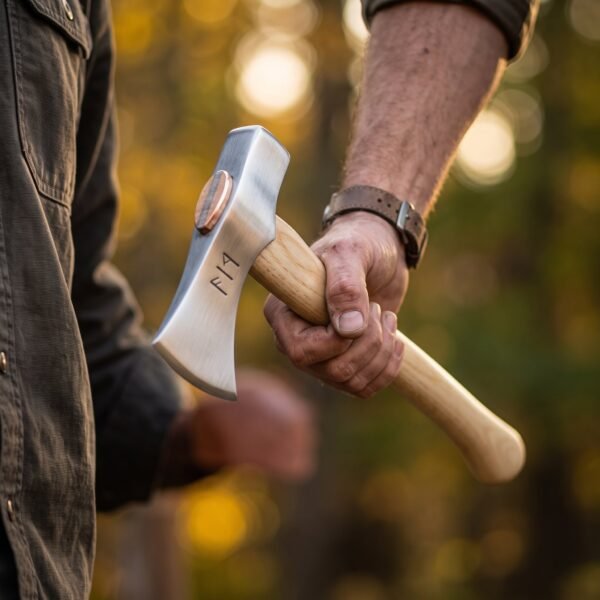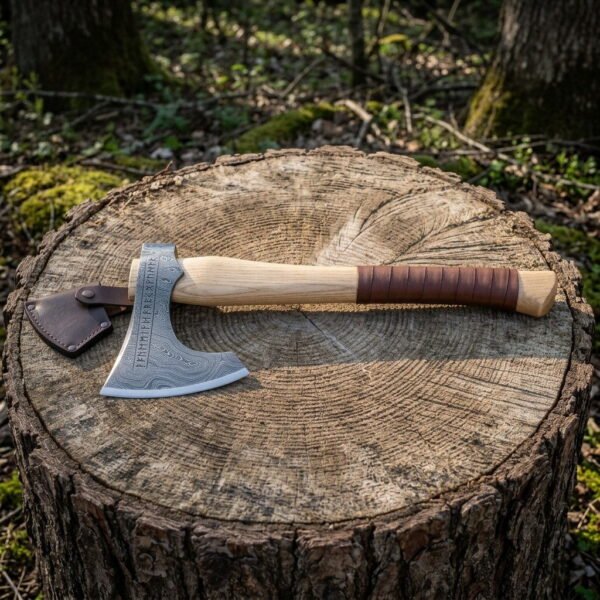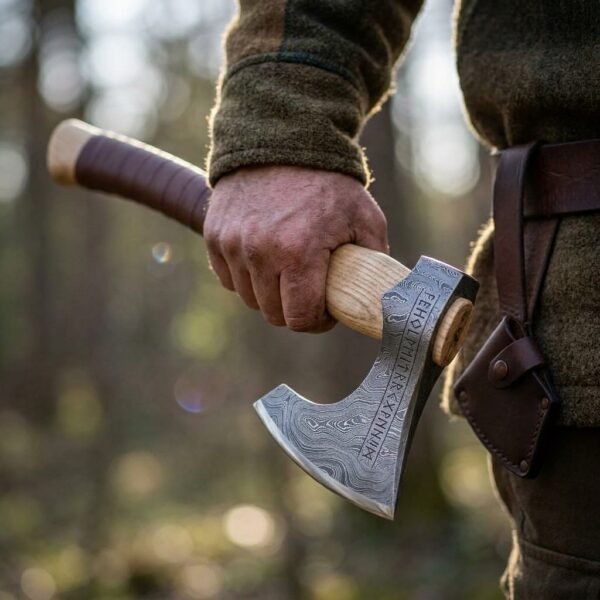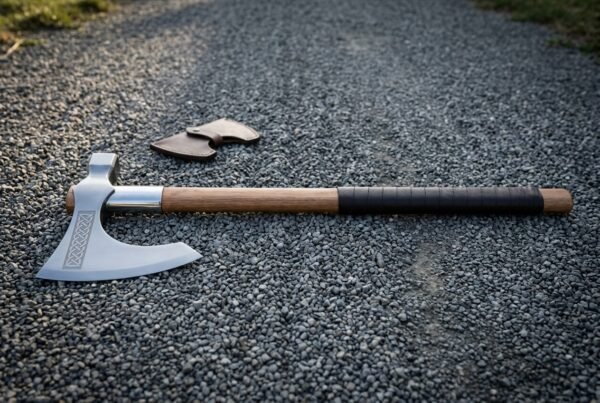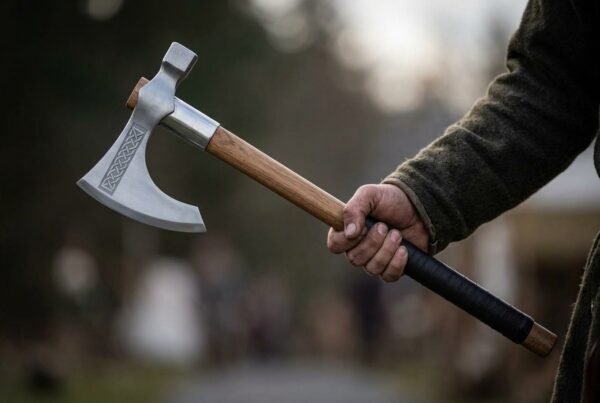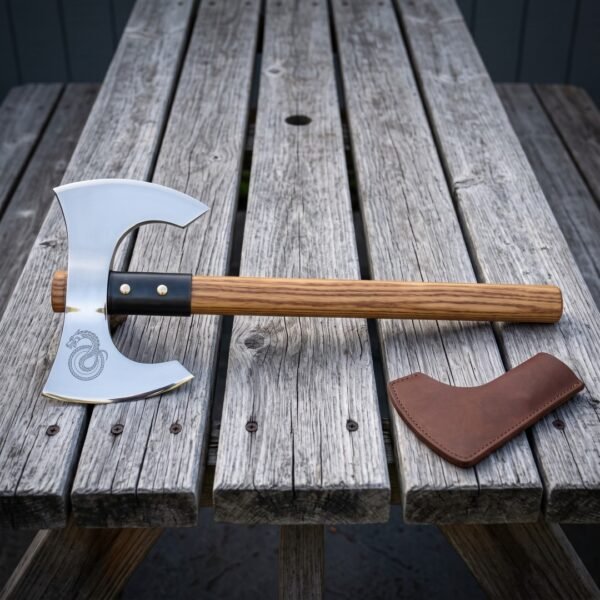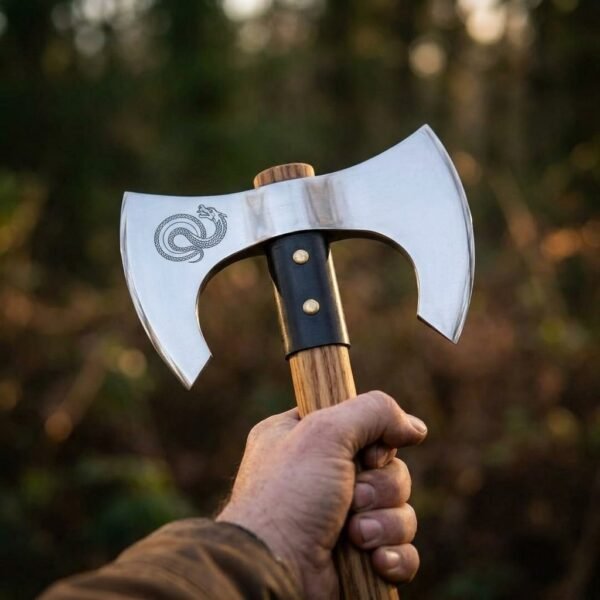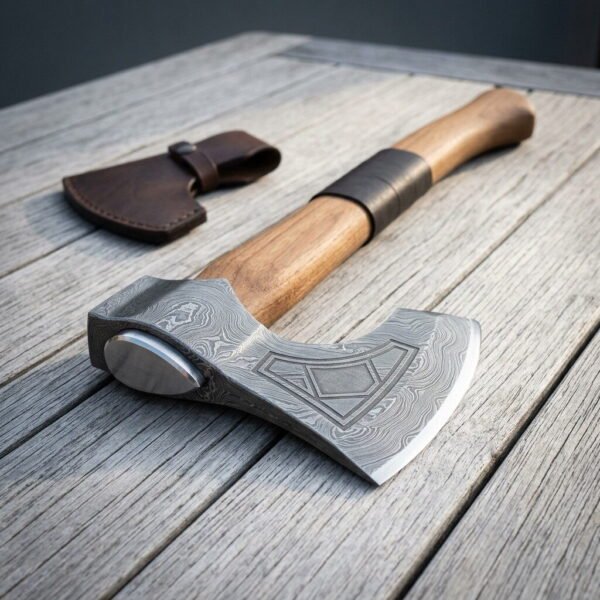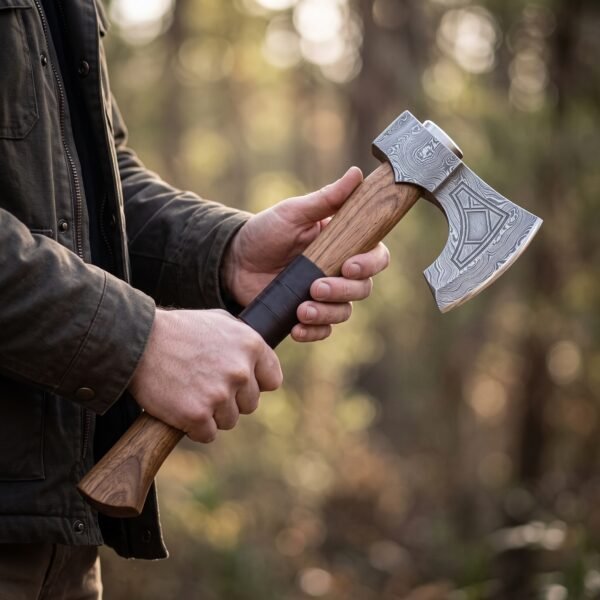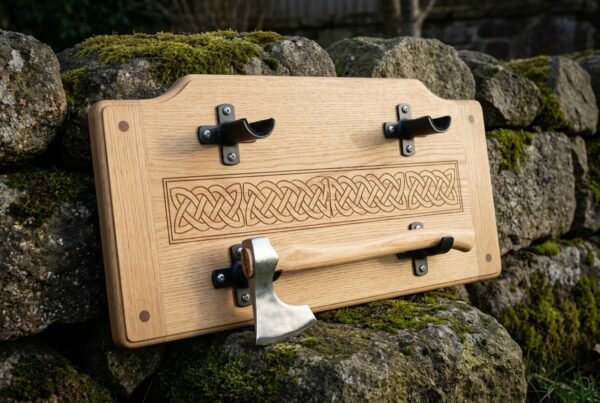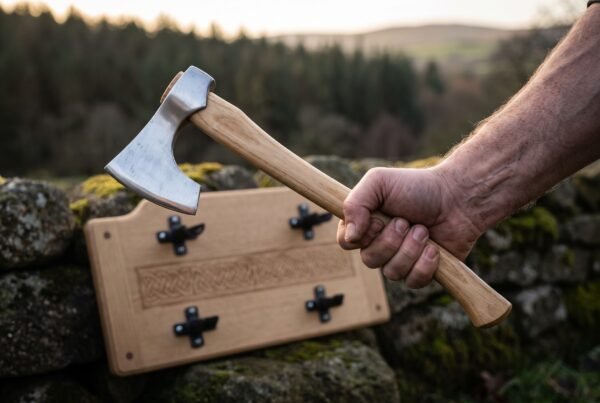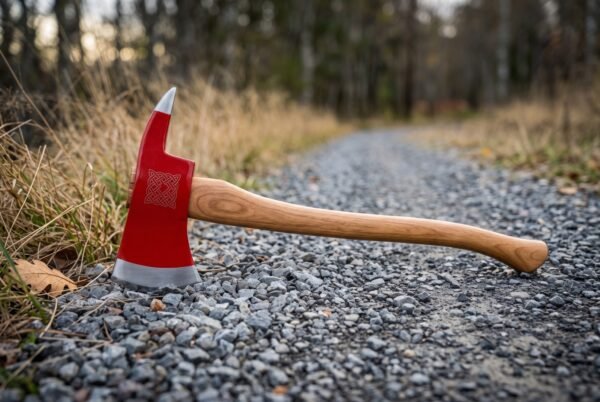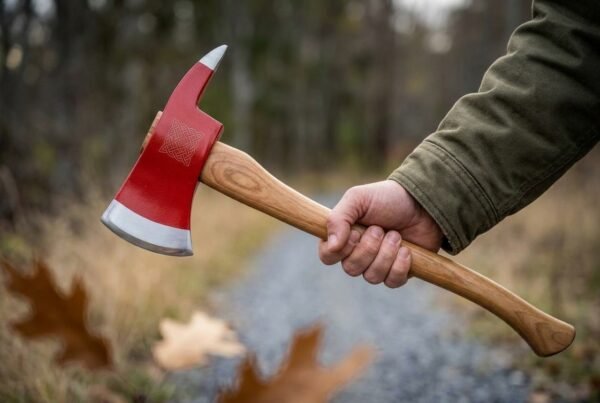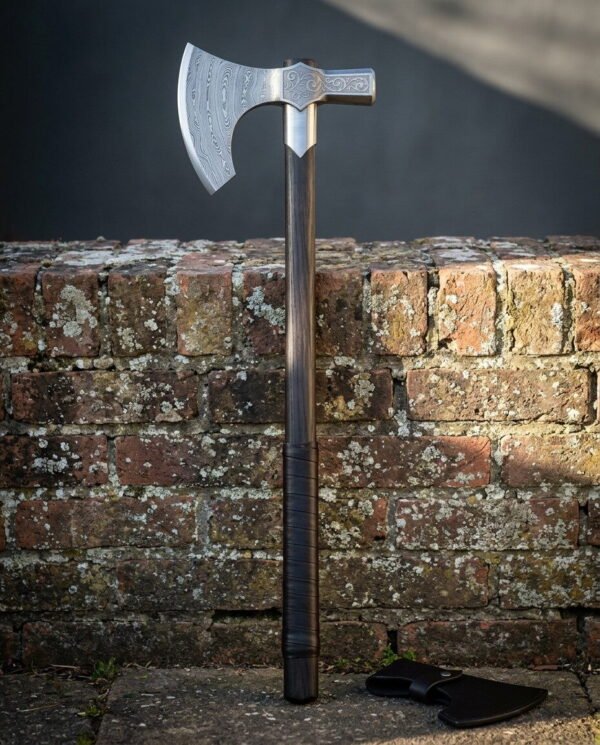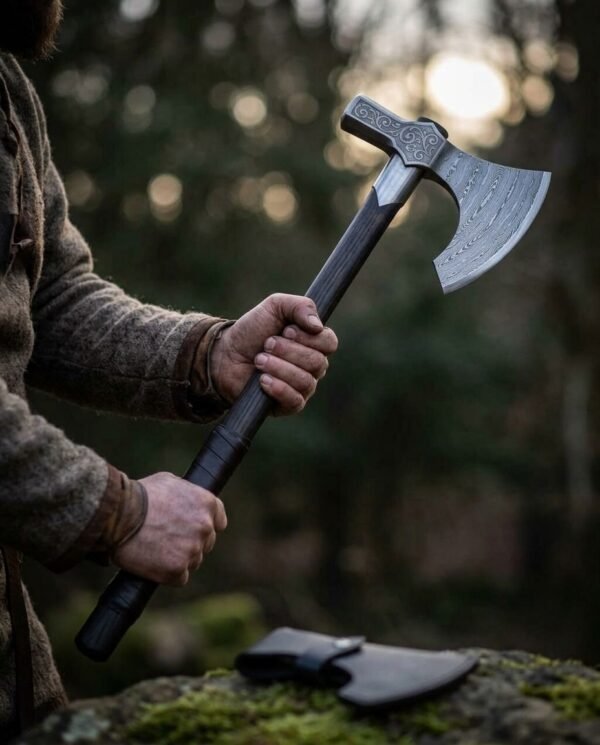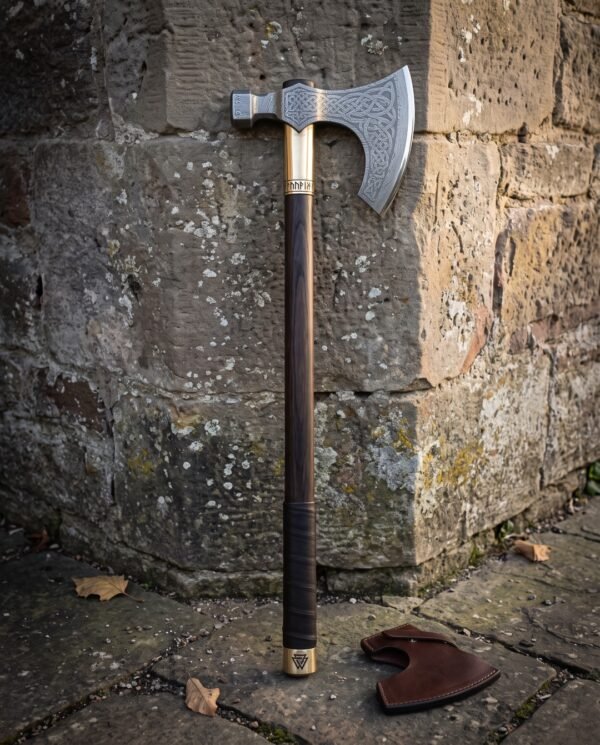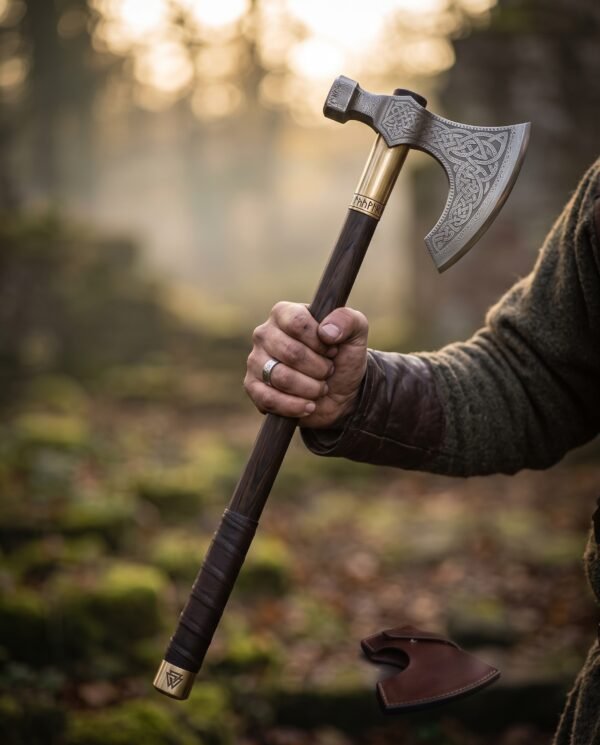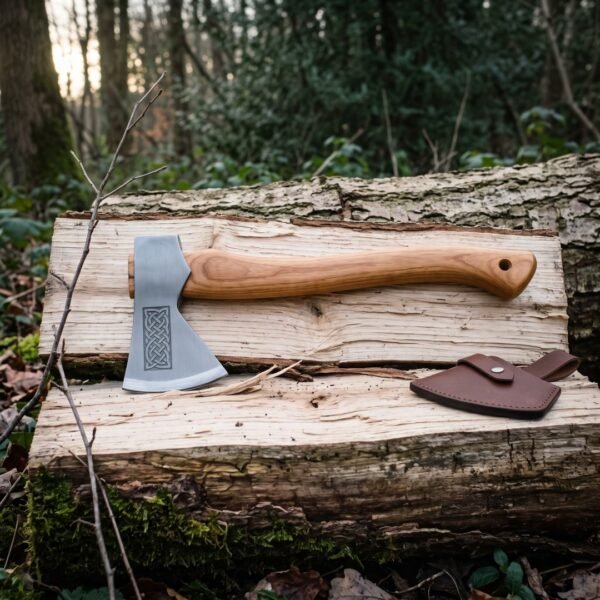
A hand forged axe head is made by drifting an eye through hot steel and shaping the blade around it, rather than casting or stamping the whole thing. The eye is the part that matters. Drifted properly it is a slight taper, so the haft seats tighter the harder the axe is swung, which is why this construction has outlived every attempt to improve on it.
What is on this tag
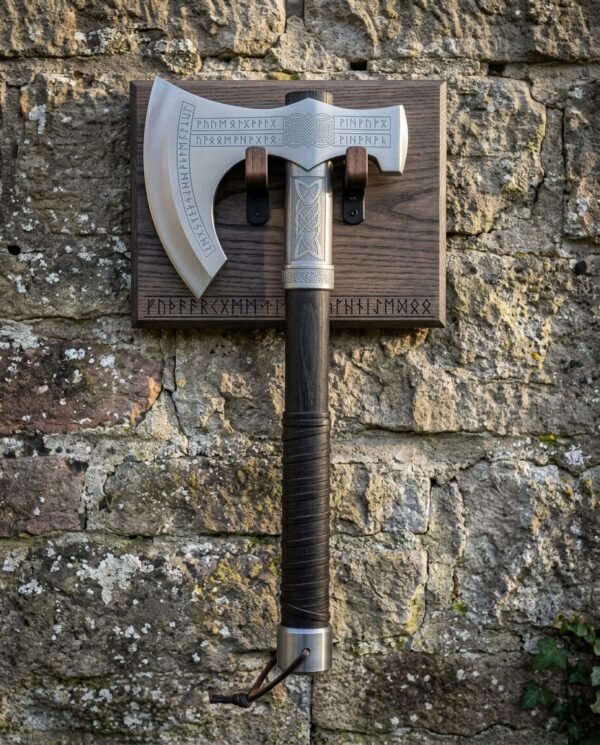
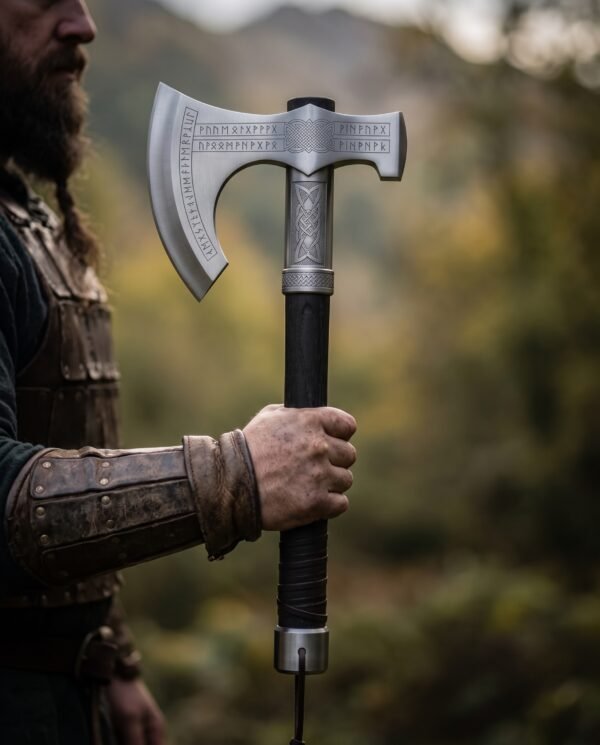
Viking bearded axes on 19 inch walnut hafts, felling axes on 20 inch hickory, double headed axes on hafts up to 34 inches, battle axes and valknut engraved patterns. Heads are plain 1095 high carbon at 54 to 58 HRC or Damascus of 1095 and 15N20, forge welded and acid etched, at 58 to 60 HRC. Several carry rune and stave etching or knotwork engraving on the cheek. Hafts are walnut, hickory, ash and oak, wedged rather than glued, and each axe ships with a leather blade cover.
Bearded, battle or felling
A bearded head is thin, light and Norse, with the hook at the lower rear of the edge giving a long cutting edge for very little weight. A battle axe head is broader and hits harder. A felling axe is a different animal entirely, thick through the cheeks with a convex grind designed to split fibers rather than slice them, which is why it is a poor cutting tool and an excellent wood tool. The axe history guide traces how these shapes diverged, and the wood tools are in the splitting and felling axes.
Rust, which will happen
Carbon steel left in a shed will spot within a season. It is recoverable rather than fatal, and the rust removal guide covers taking a head back without destroying the etching. Keep a light film of oil on the head and store it with air moving. The full range is in the Viking axes.
Sharpening a hand forged head
A file first for the shape, then a stone, then a strop. Not a grinder, which will draw the temper out of an edge in seconds and leave you with a soft axe and no way back. A convex edge on a felling head and a slightly flatter one on a bearded head, and either will hold through a winter of ordinary use.
Free US shipping
On most pieces. Heavier and oversized ones carry a flat charge.
Hand Forged
Heated, hammered and ground by hand.
Engraving available
Names, dates or Norse runes on most pieces.