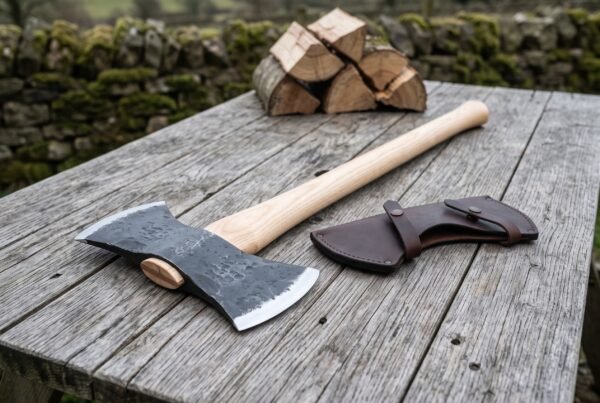
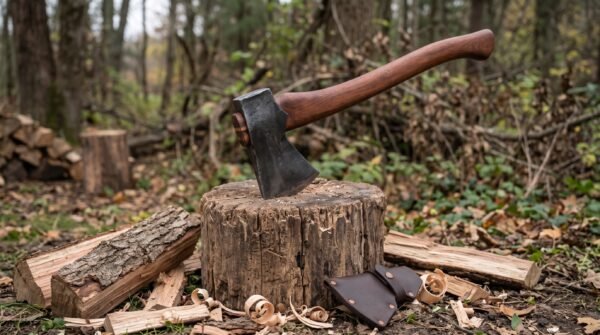
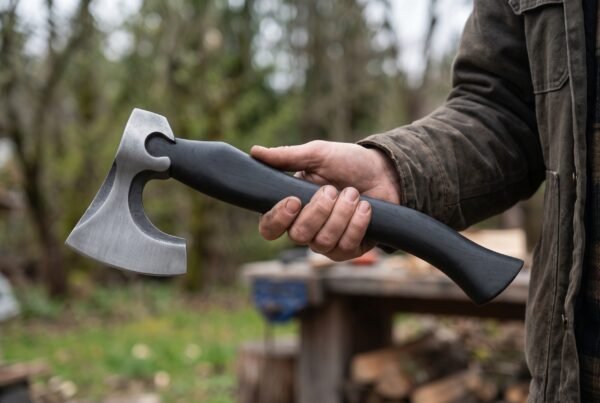
A hunting axe is the one that goes in the pack rather than the truck. It has to break through a pelvis, split a sternum, clear a shooting lane and knock in a stake, all without weighing enough to make you leave it behind. That means a short haft, a modest head and an edge that comes back with a stone in the field rather than a workshop.
The heads and hafts
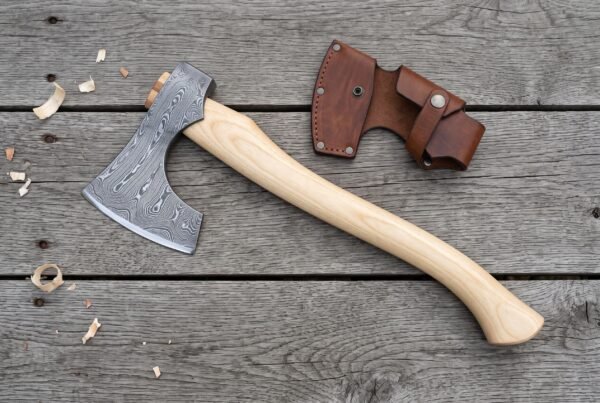
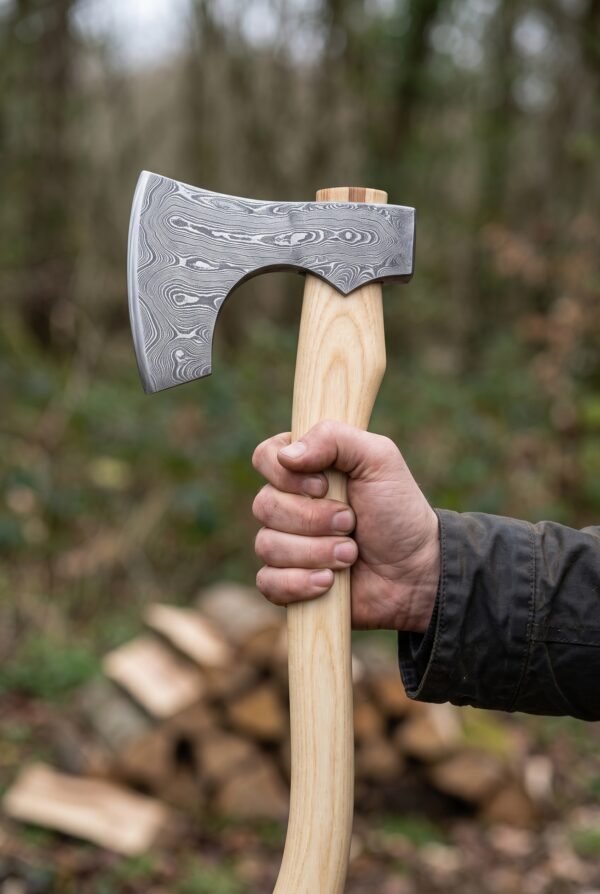
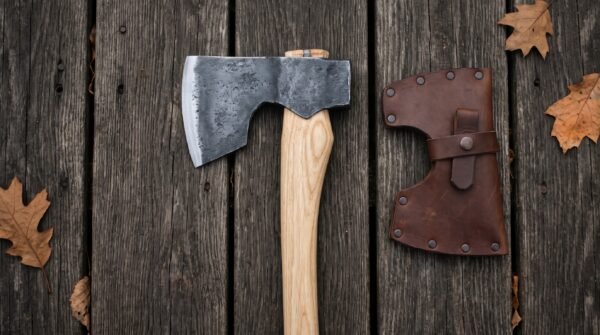
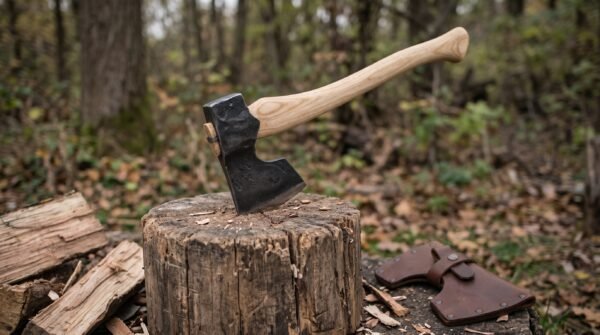
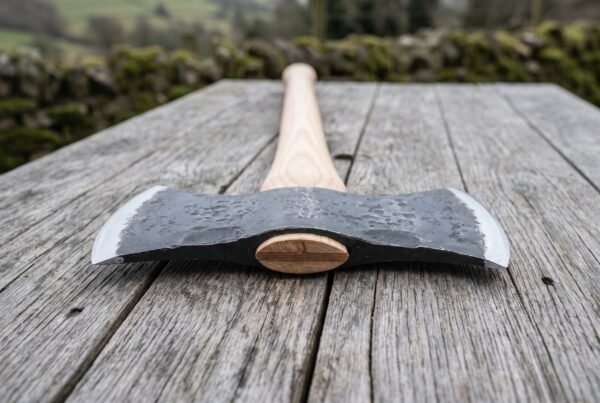
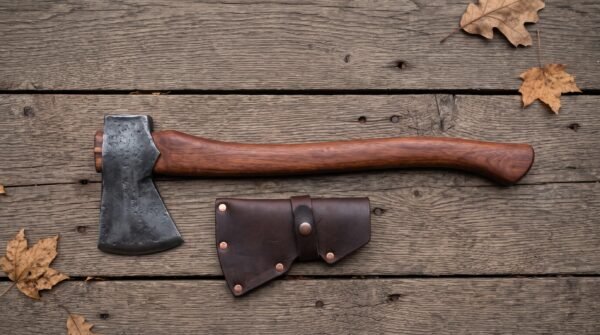
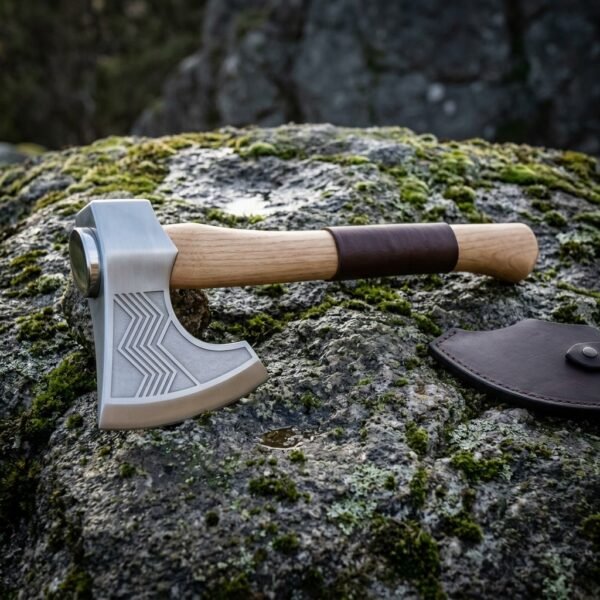
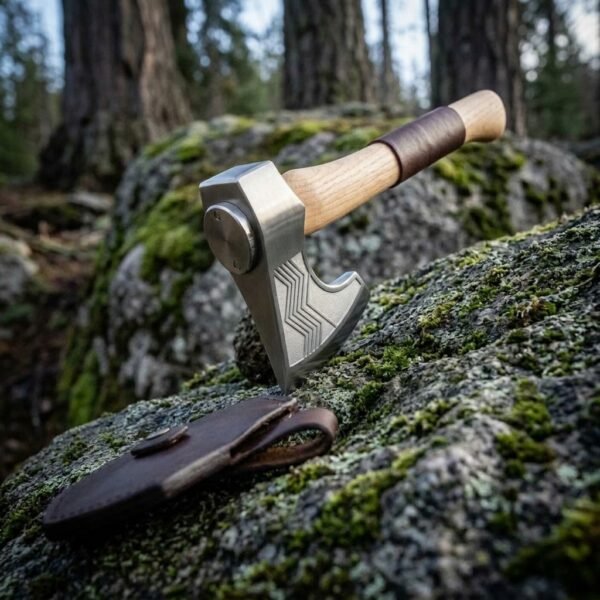
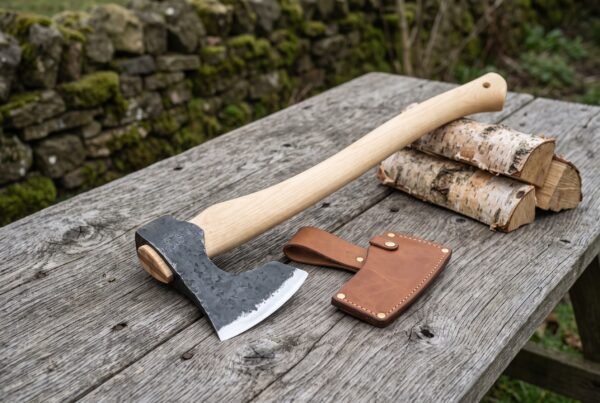
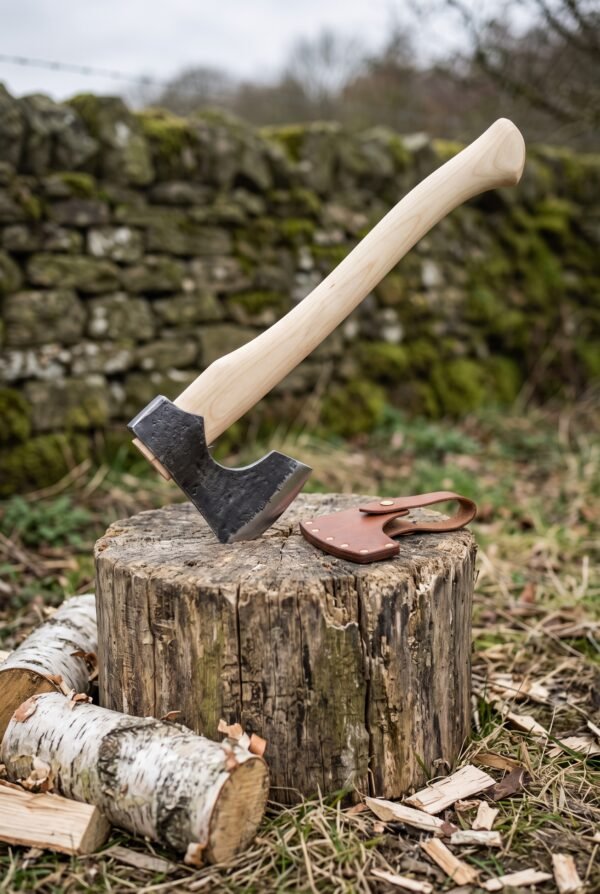
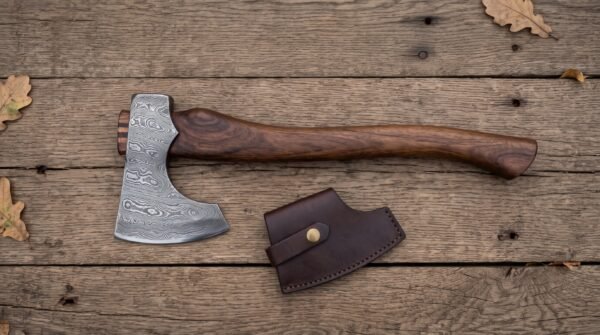
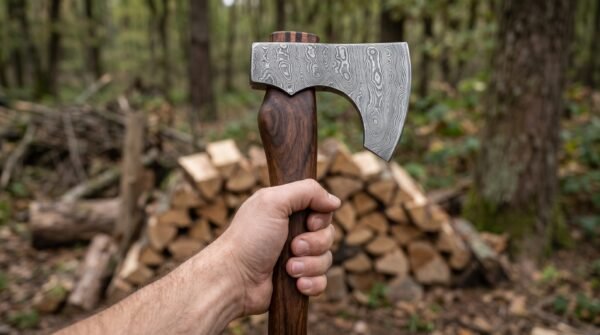
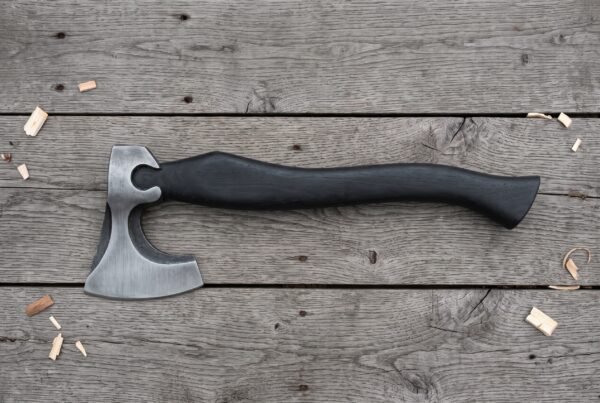
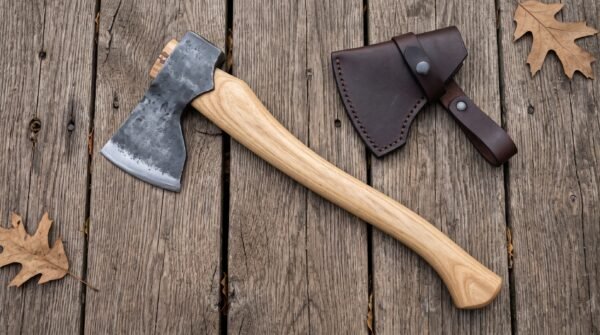
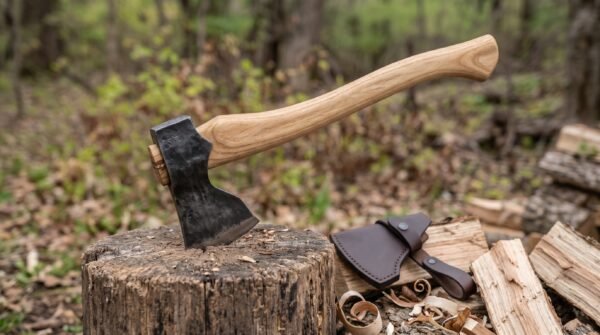
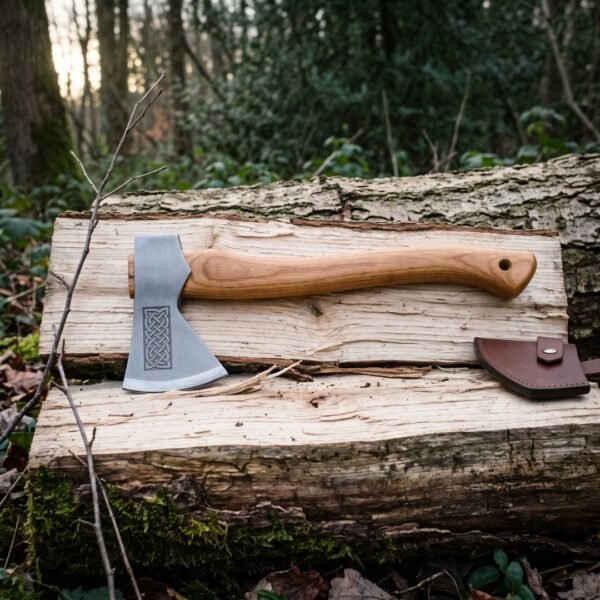
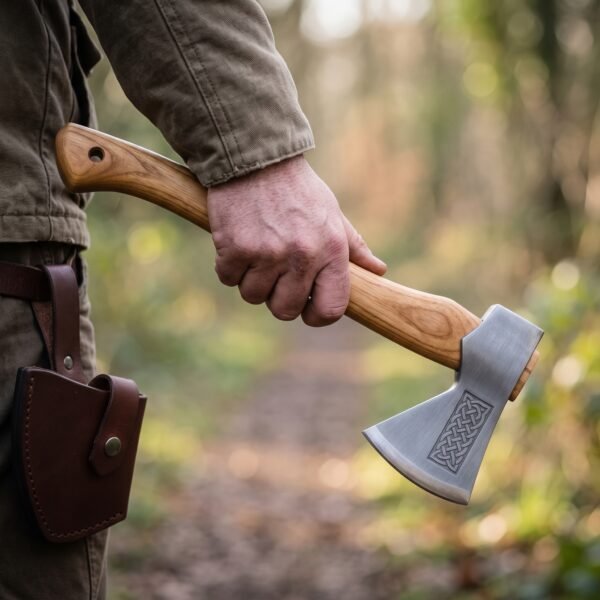
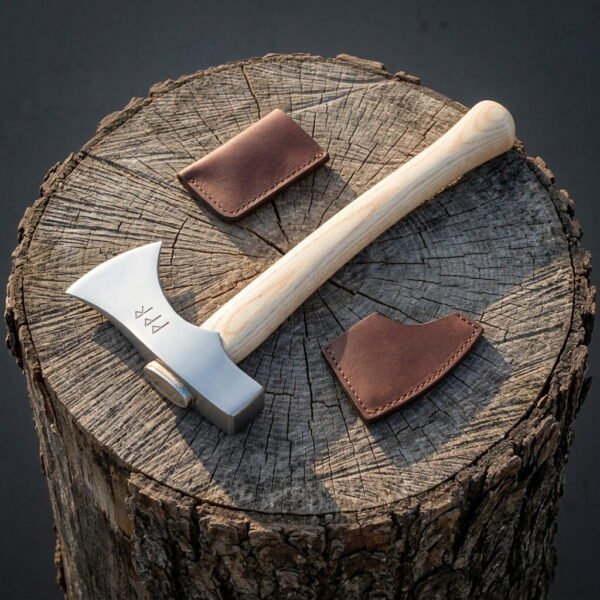
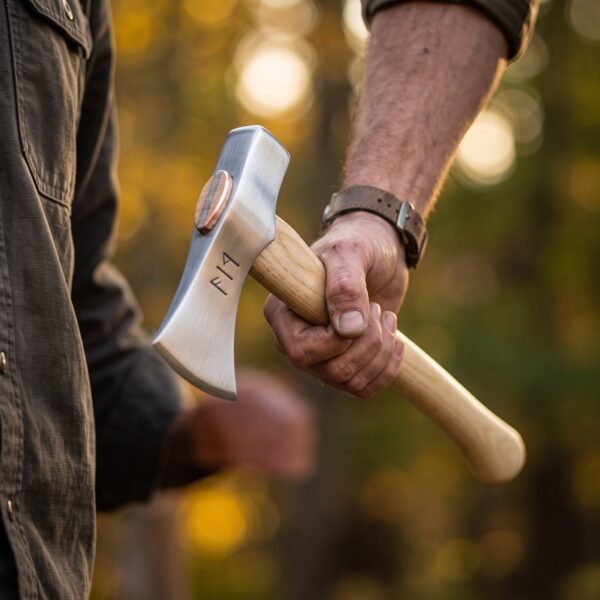
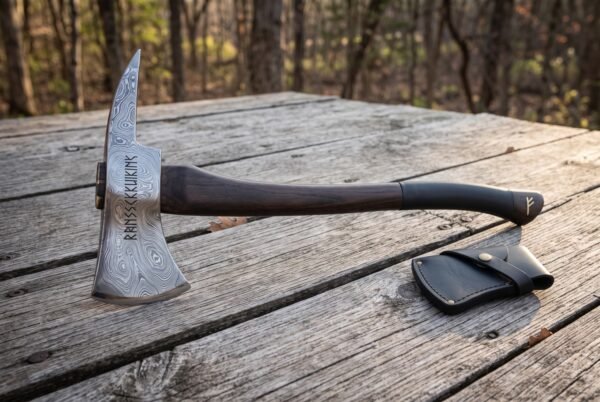
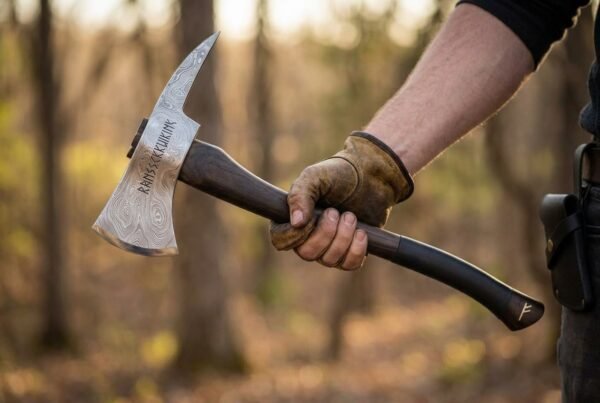
The hand axes are the useful end of this page. There is a 14 inch hickory handled piece with a Celtic knotwork etched cheek and a leather blade mask, a 15 inch ash handled axe with struck rune marks, a polished bearded head, a leather edge sheath and a pouch, and a 16 inch ash hafted axe with a chevron etched cheek and a hammer poll for driving pegs, with a snap closed leather mask. A Damascus bearded hatchet sits alongside them on a walnut haft with a rune line and a leather mask. The rest of the archive is the standard run of Viking bearded axes at 19 inches on ash, birch, rosewood and plain hardwood, plus a double headed axe at 19 inches, most arriving with a fitted leather blade cover and a gift box. Heads are plain 1095 high carbon at 54 to 58 HRC, which is the sensible field steel because it sharpens back fast and forgives a bad angle, or forge welded 1095 and 15N20 Damascus at 58 to 60 HRC. Prices run from 149 dollars to 289 dollars.
Using and keeping it
An axe is not a substitute for a knife on an animal, and knowing which does what saves a lot of ruined meat. Our notes on skinning a deer cover where an axe helps and where it does not. Field sharpening on a short bevel is a file and then a stone, set out in how to sharpen an axe, and if you are still choosing weight and length, the guide to choosing an axe works through it. The blades that do the fine work are in hunting knives.
Ransack Viking is a US company based in Chicago, Illinois. These pieces are handmade in the Czech Republic, then imported, inspected and shipped from Chicago. Engraving is done in the US after arrival: text 19 dollars, symbol 39 dollars, family crest 49 dollars.
Free US shipping
On most pieces. Heavier and oversized ones carry a flat charge.
Hand Forged
Heated, hammered and ground by hand.
Engraving available
Names, dates or Norse runes on most pieces.