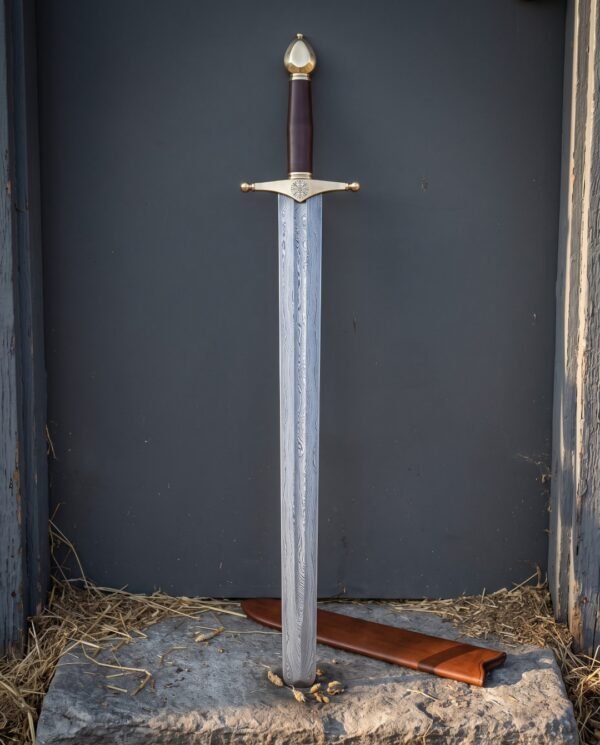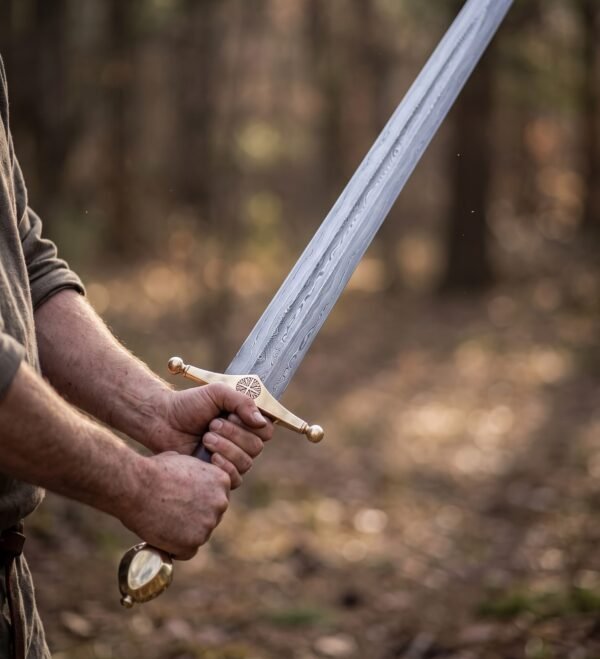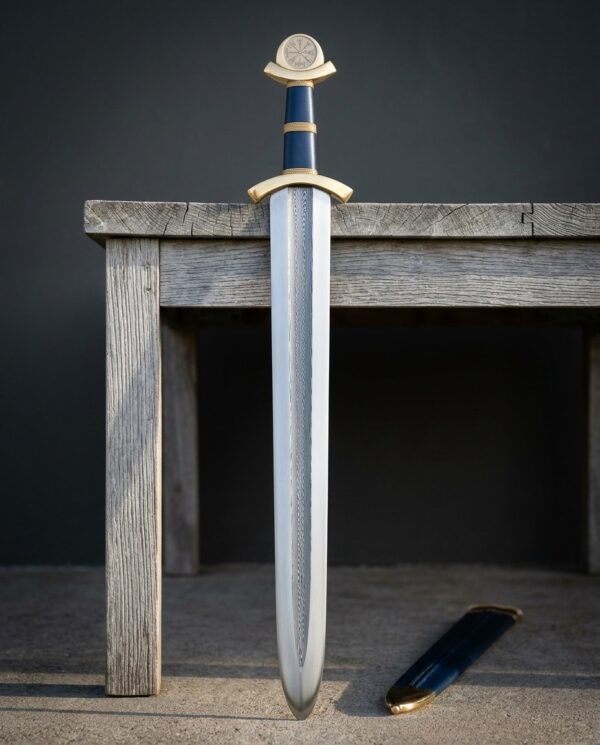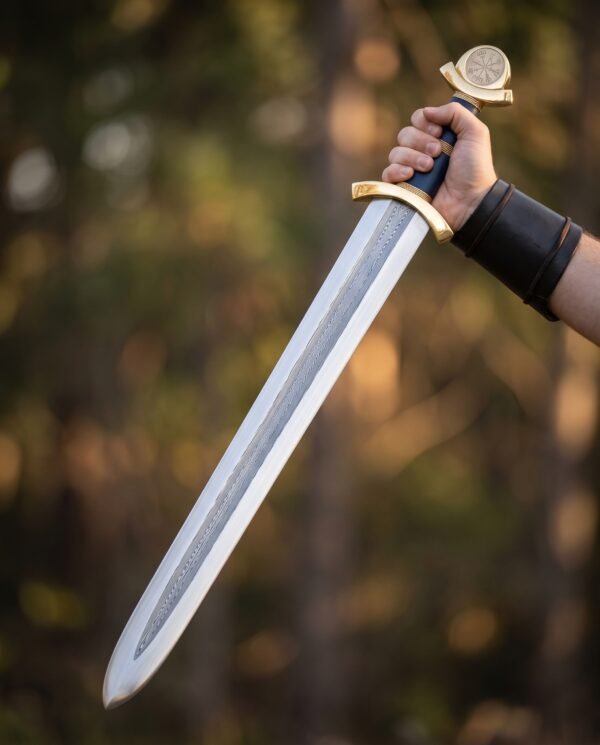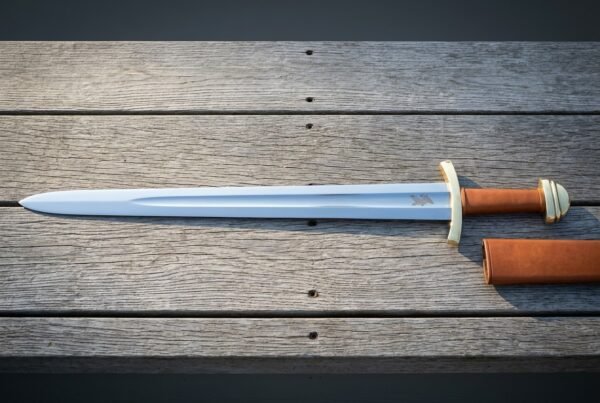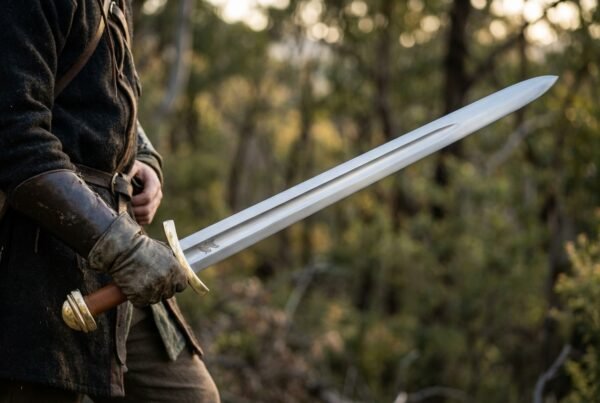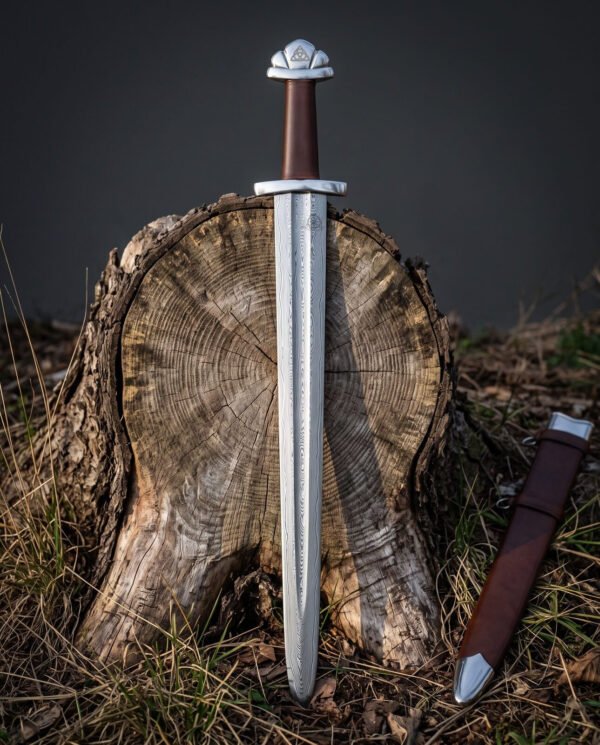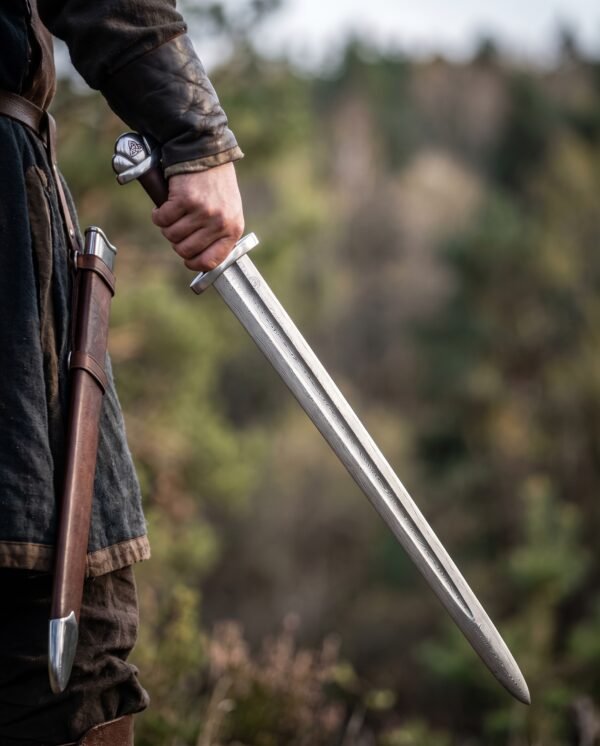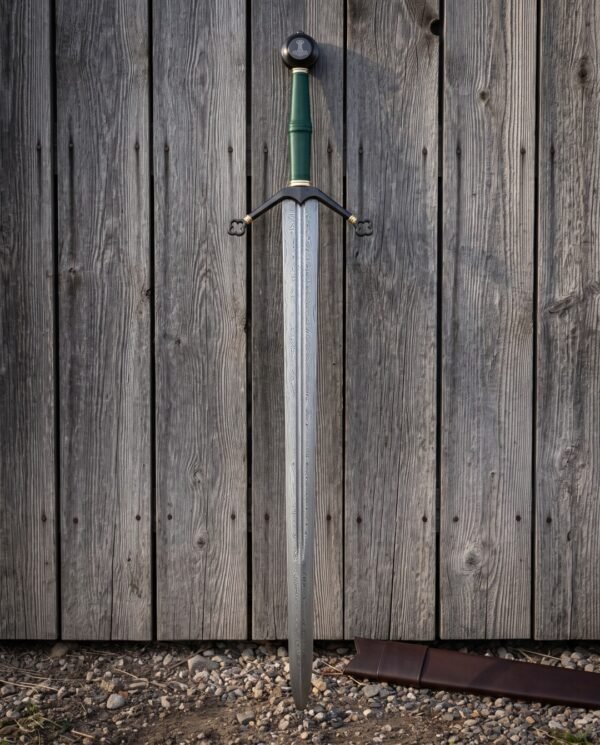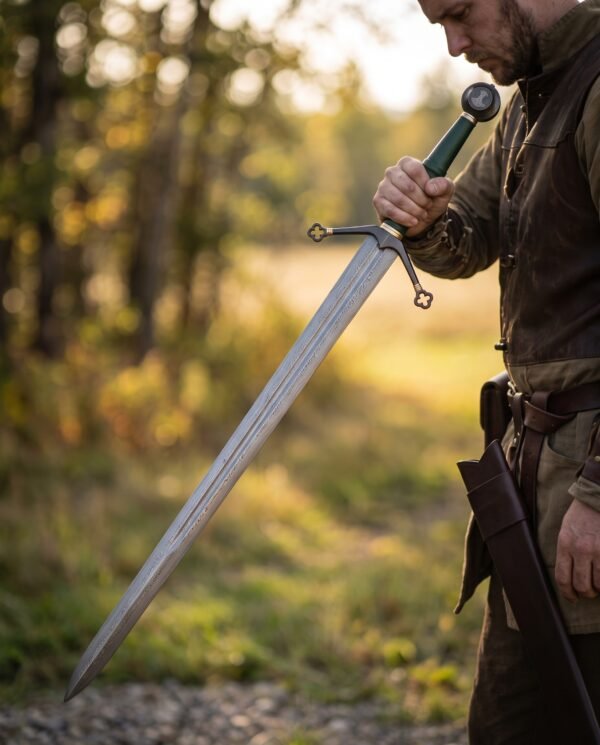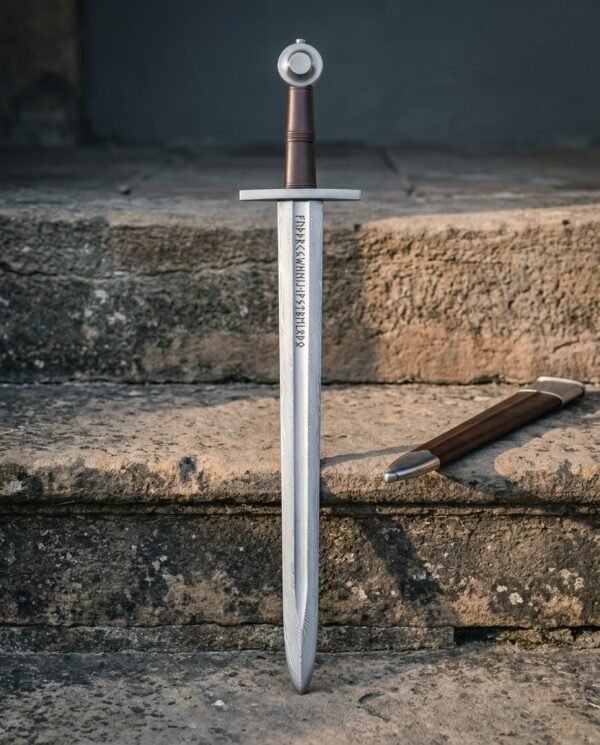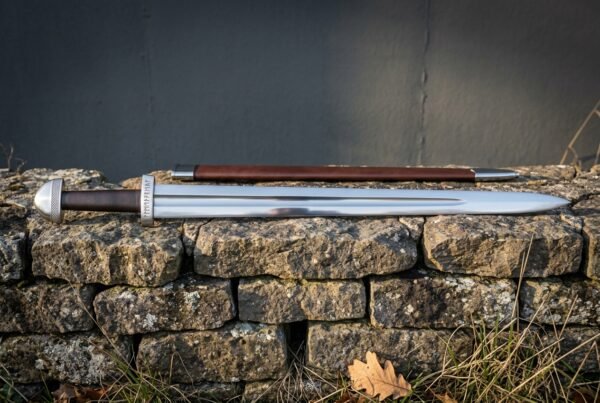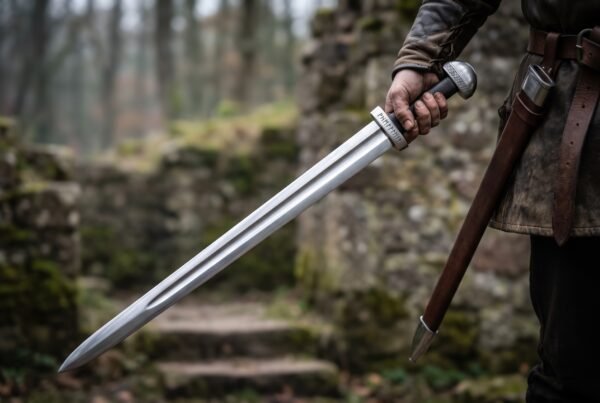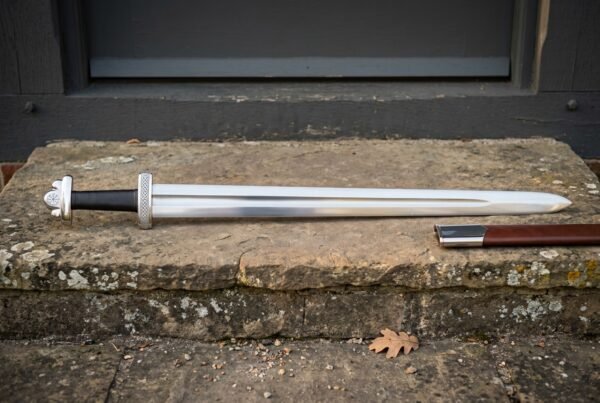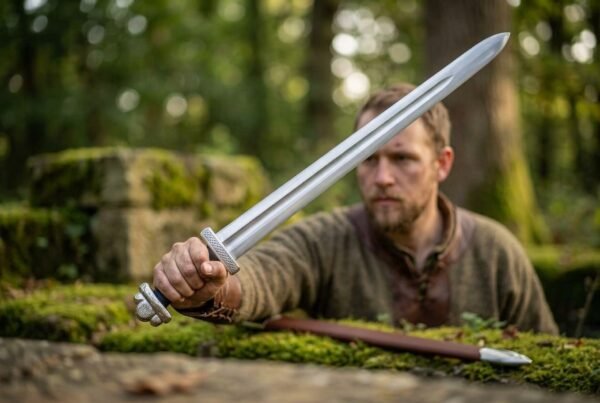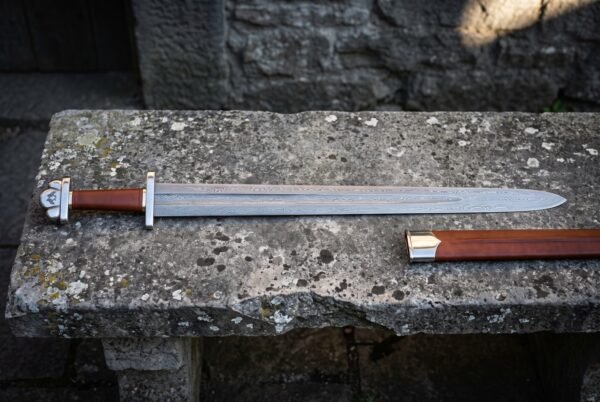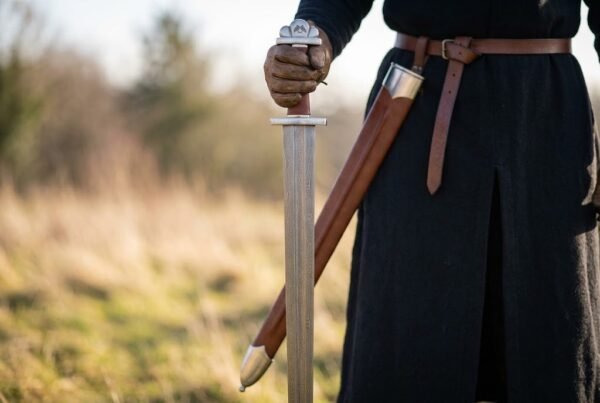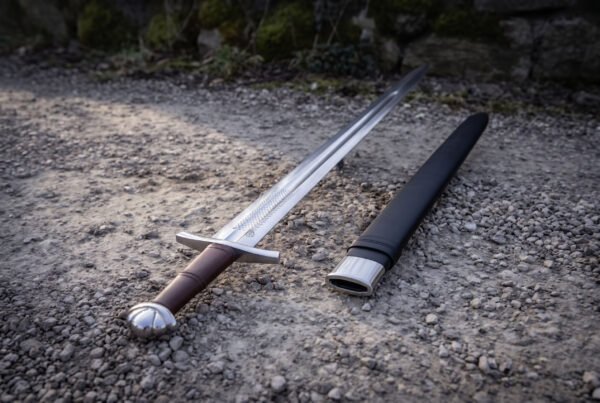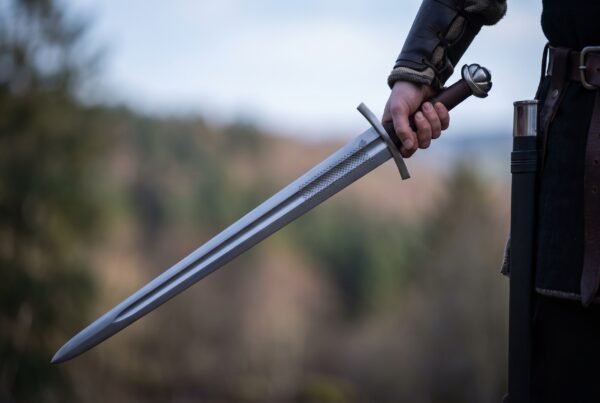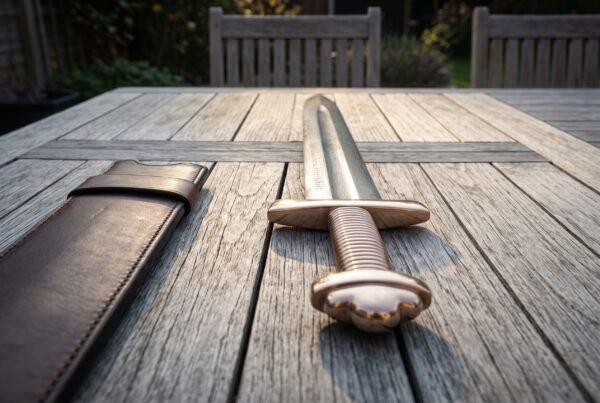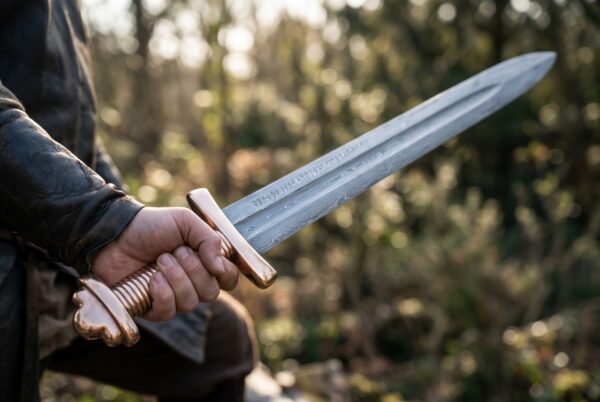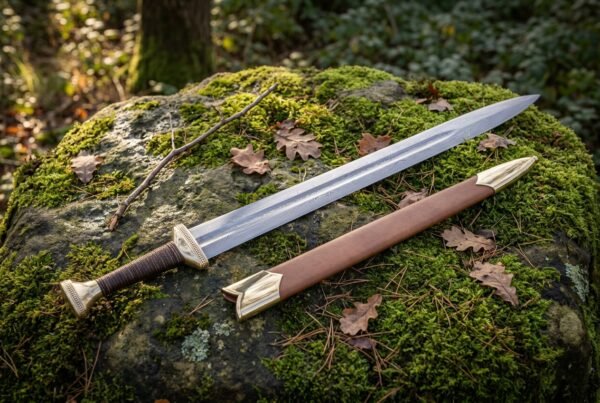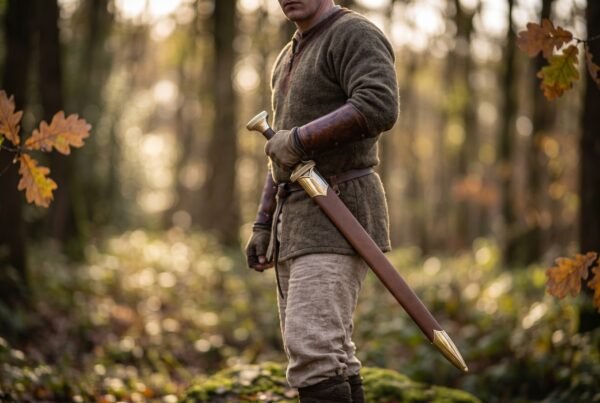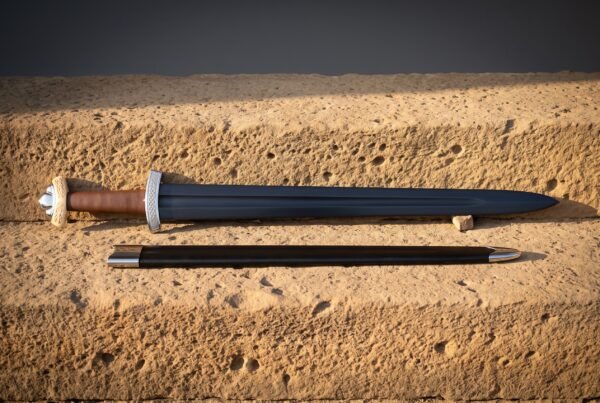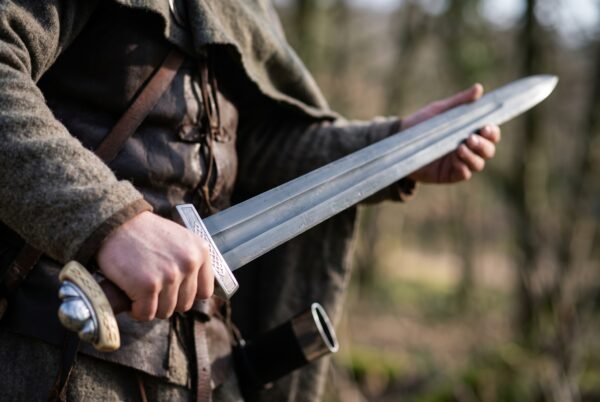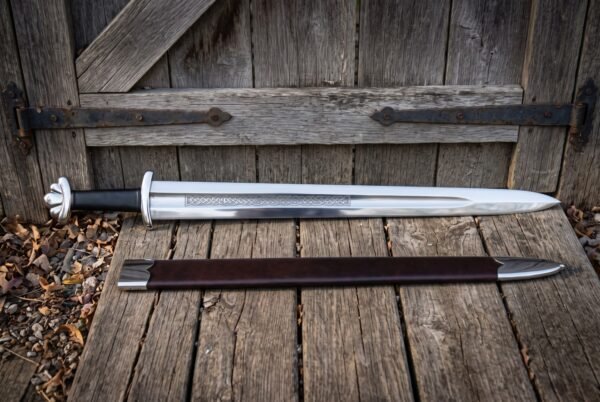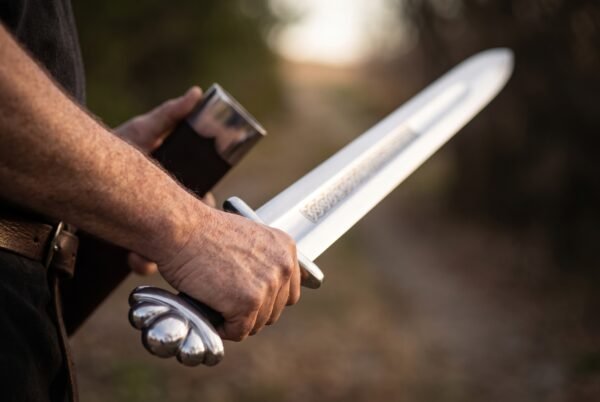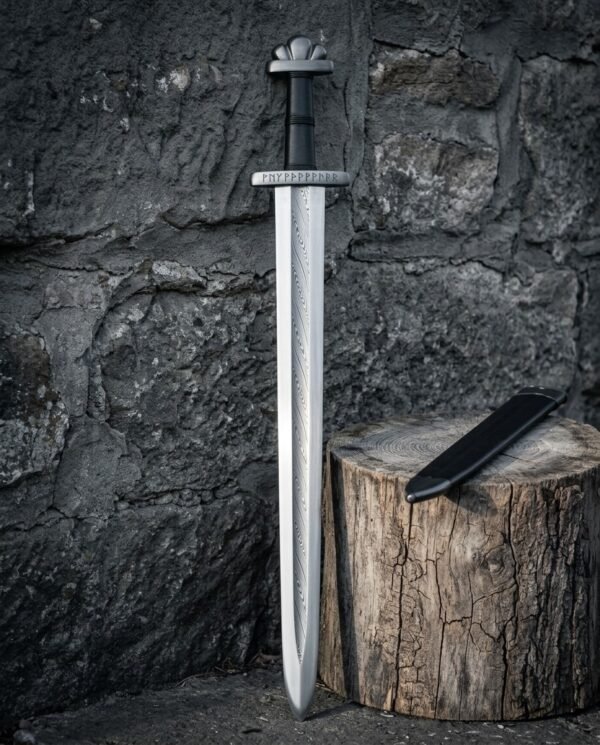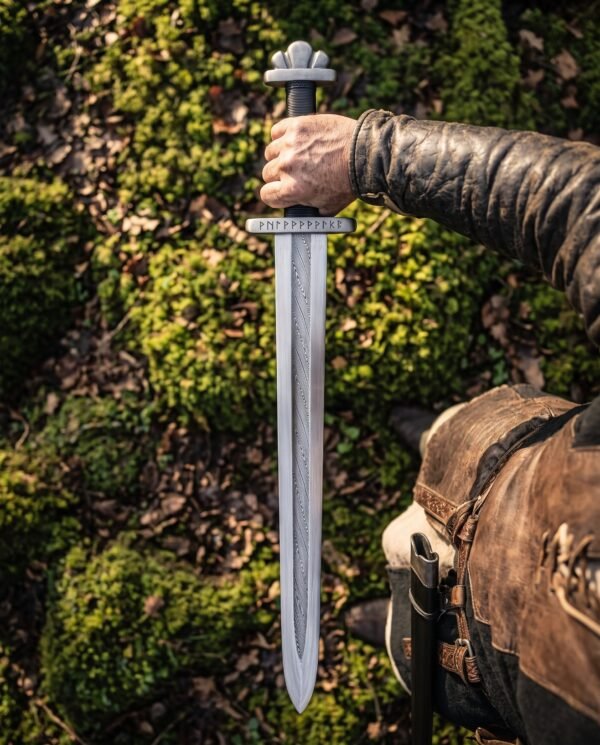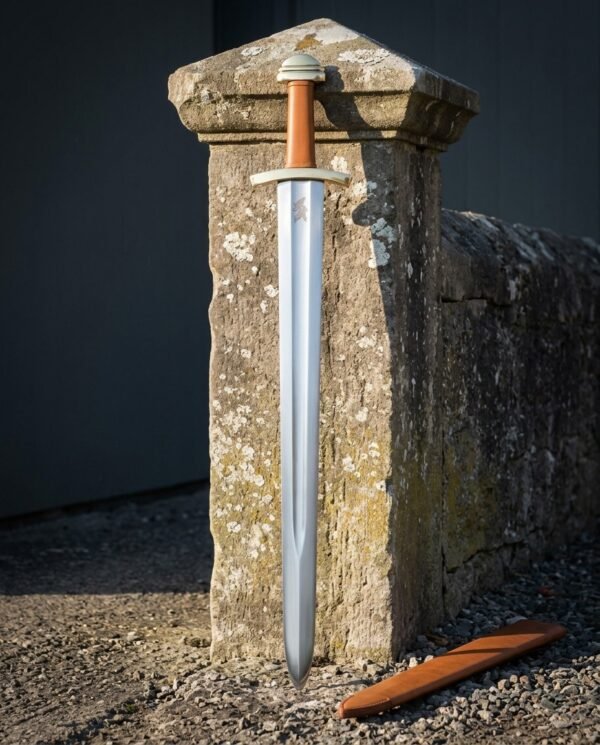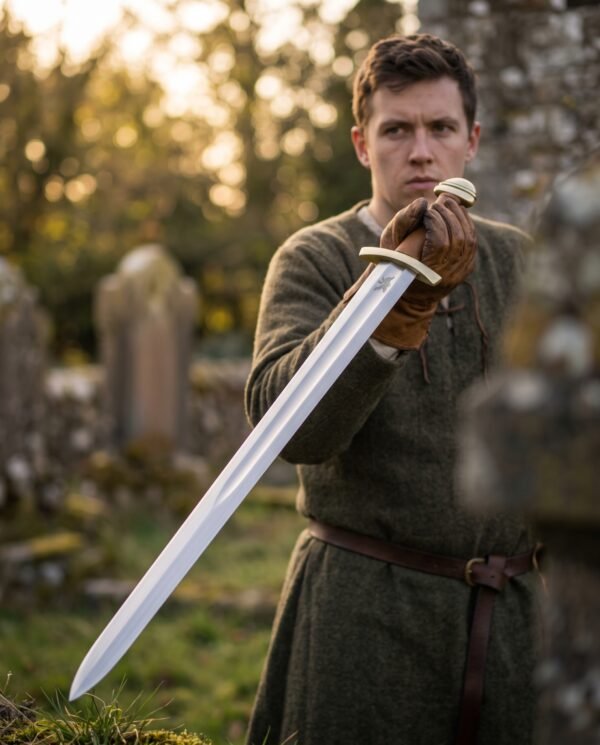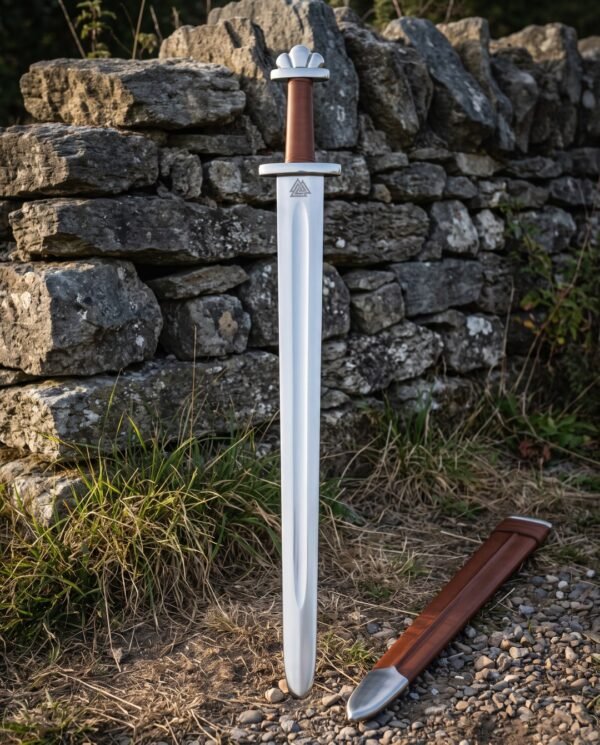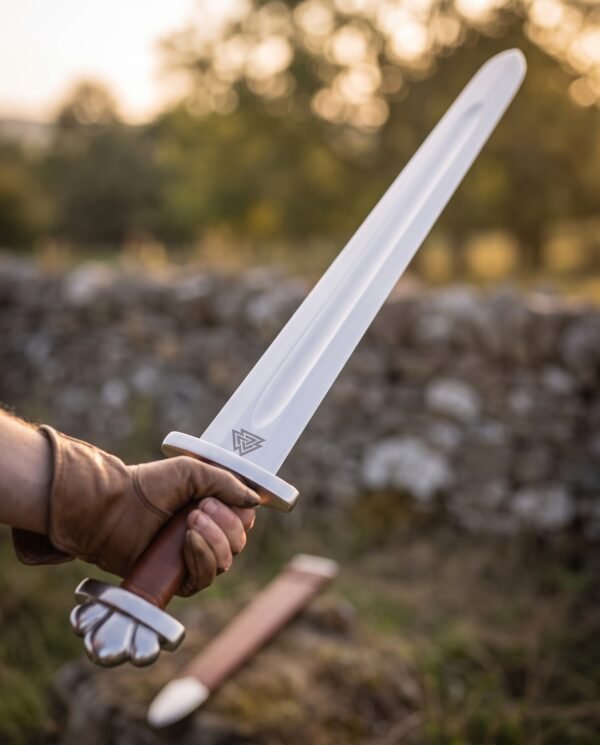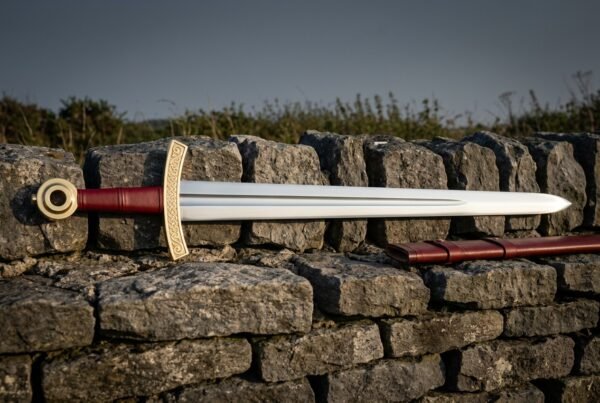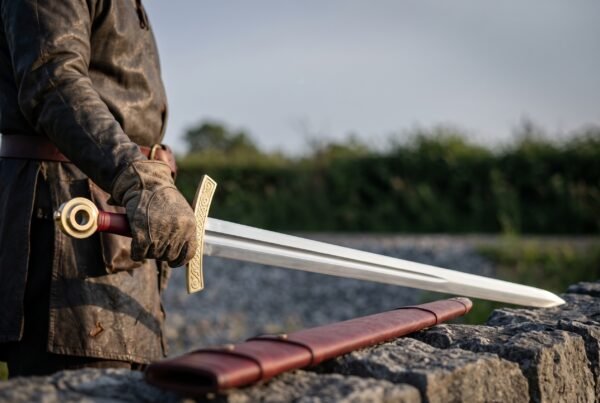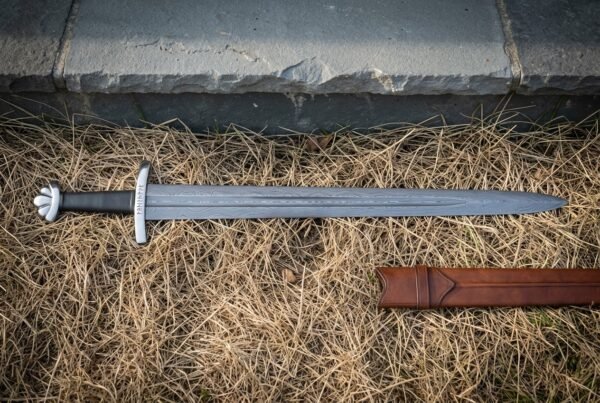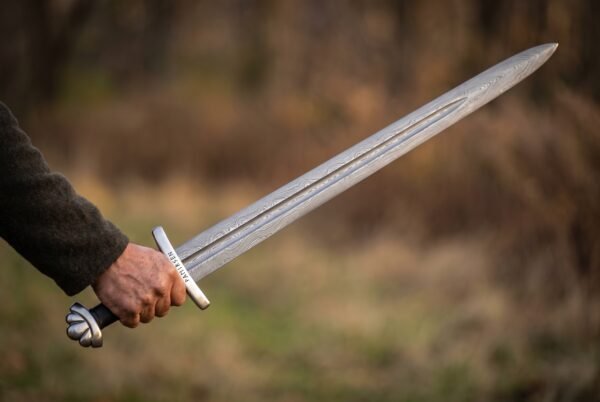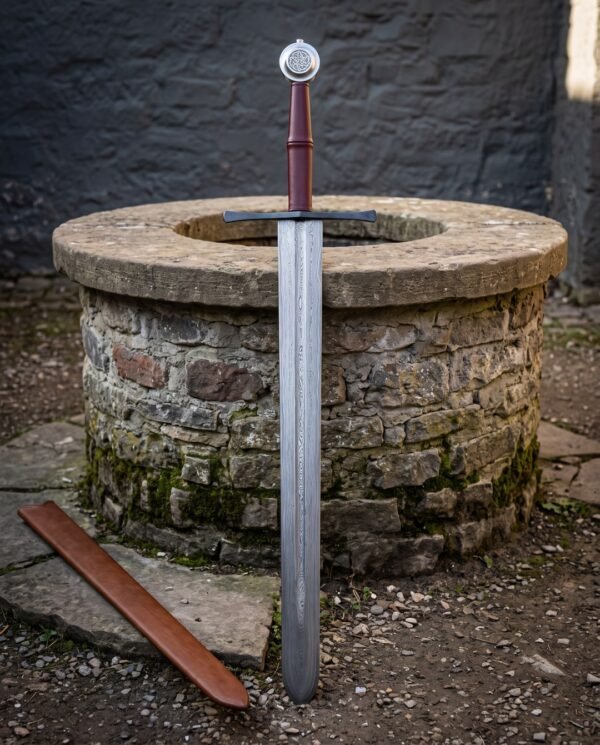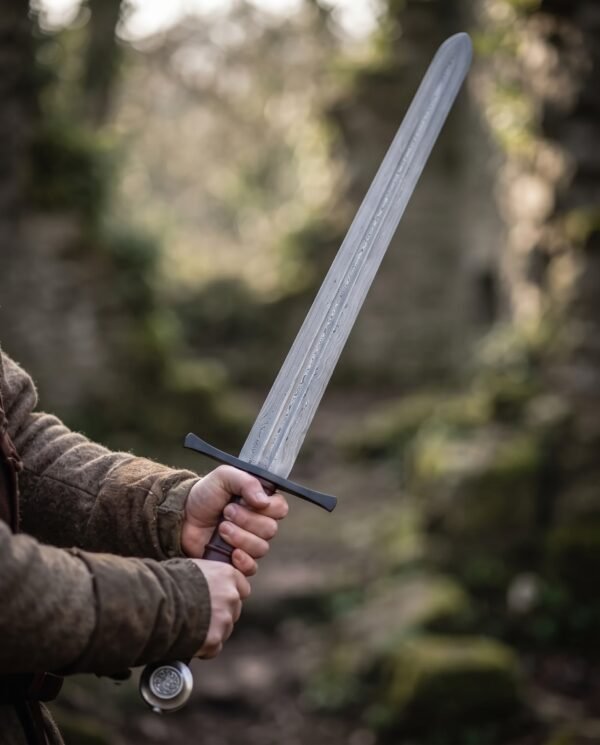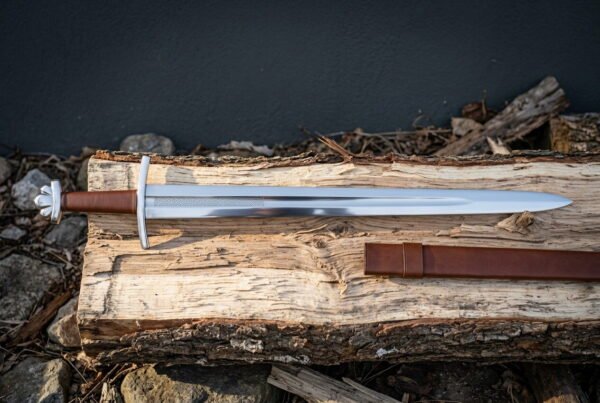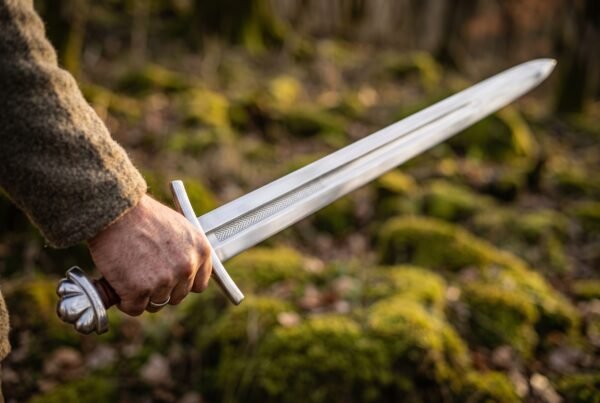
A Norse sword is a Viking Age single hand blade with a broad fullered profile, a short crossguard and a lobed or disc pommel. It was a status object as much as a fighting one, which is why so many surviving examples carry inlaid names, pattern welded cores and decorated hilts. The modern versions on this tag follow the same shapes rather than inventing new ones.
The blades in this group
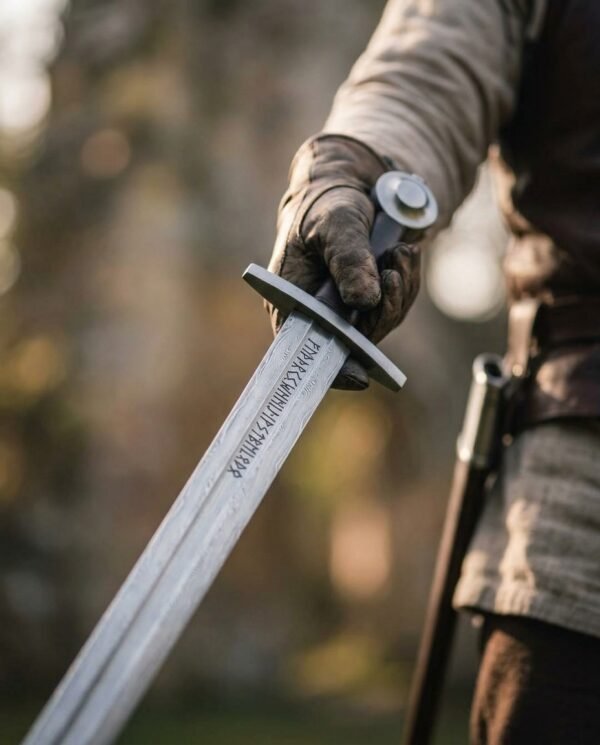
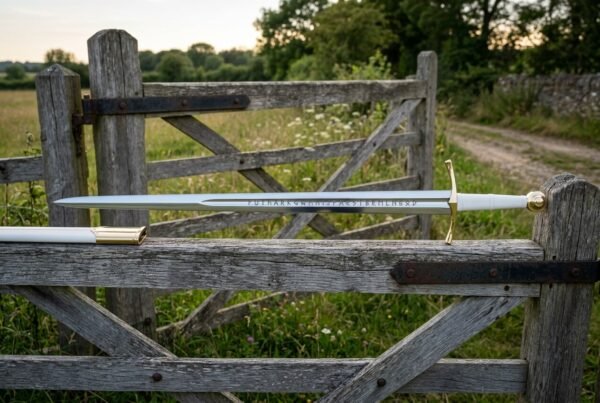
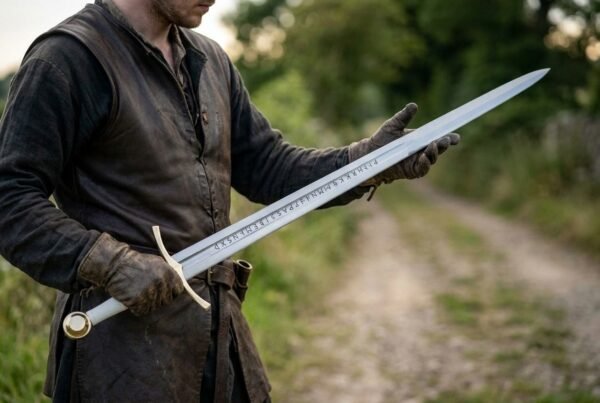
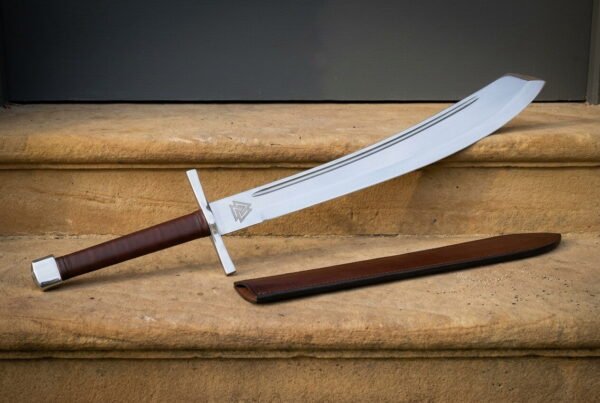
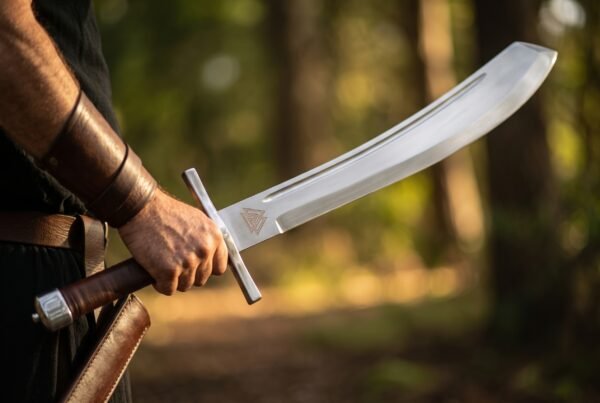
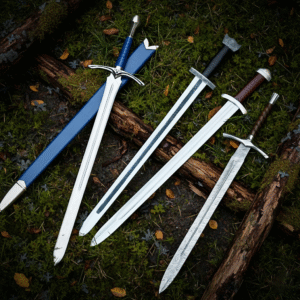
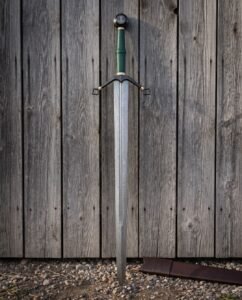
Overall lengths sit mostly between 30 and 37 inches, with blades from about 24 to 31. Steel is plain 1095 high carbon at 54 to 58 HRC or Damascus of 1095 and 15N20, forge welded and acid etched, at 58 to 60 HRC. Pommels are three lobed, five lobed, brass faceted or disc, and guards run from straight bars to runic arched shapes. Grips are leather wrapped, cord wrapped or wood. A good number carry Elder Futhark rune rows etched into the fuller, valknut marks on the blade or knotwork cut into the guard. There are falchions here too, curved and single edged, which sit at the later end of the Norse period.
What makes the shape work
The fuller is the important detail. It is not a blood groove, whatever anyone tells you at a party. It removes steel from the middle of the blade where it does the least good, which drops weight and moves the balance back toward the hand without losing stiffness. The lobed pommel does the same job at the other end, acting as a counterweight rather than decoration. Together they are why a 37 inch sword can feel lighter than a 30 inch one that lacks both.
Runes, marks and accuracy
If the marking matters to you, get it right before it is cut. The Elder Futhark is the older row and the correct one for the Viking Age depending on region and date, and the rune guide lists every character and its sound. The valknut appears on real Viking Age stones and its meaning is genuinely unsettled, which the valknut article is honest about. For what to look for in a collector piece, read the Viking sword notes, then browse the Viking swords.
Falchions and the later shapes
A few pieces here are curved and single edged rather than the classic straight double edged Norse profile. Those sit at the end of the period and into the medieval, and they cut very differently, putting more mass forward for a heavier chop at the expense of the point. Worth knowing before you buy one expecting a Viking sword.
Free US shipping
On most pieces. Heavier and oversized ones carry a flat charge.
Hand Forged
Heated, hammered and ground by hand.
Engraving available
Names, dates or Norse runes on most pieces.