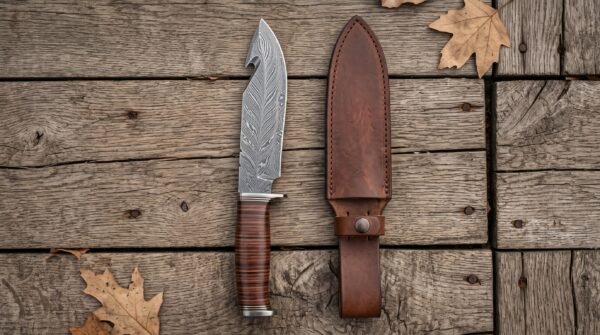
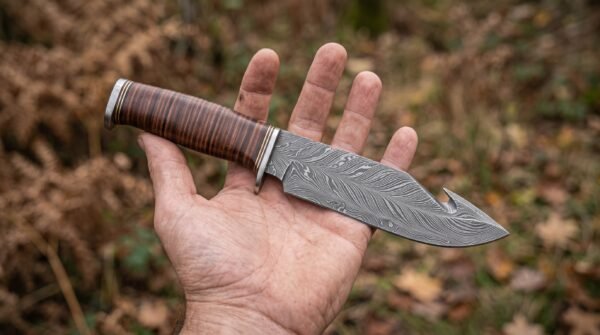
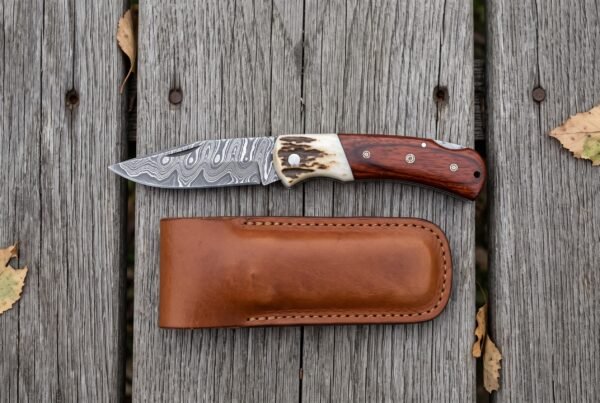
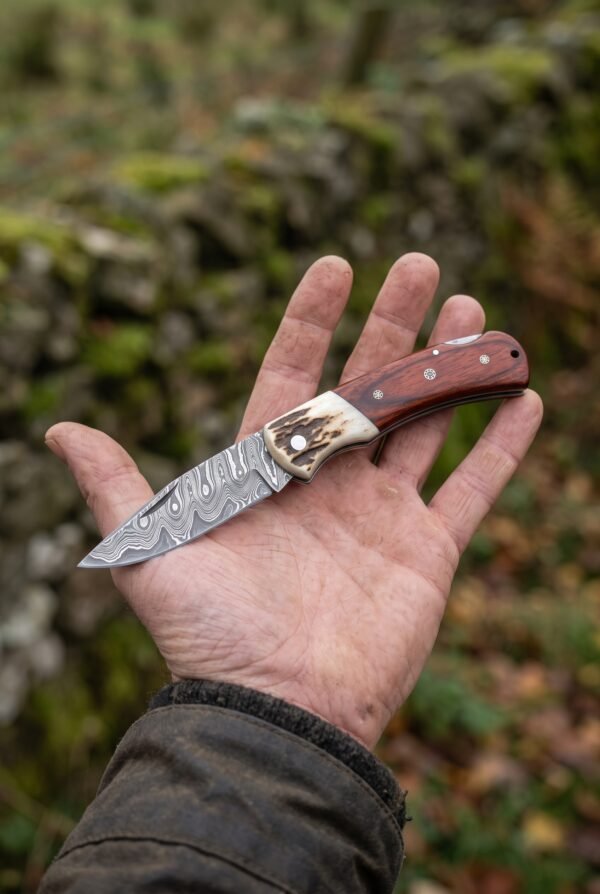
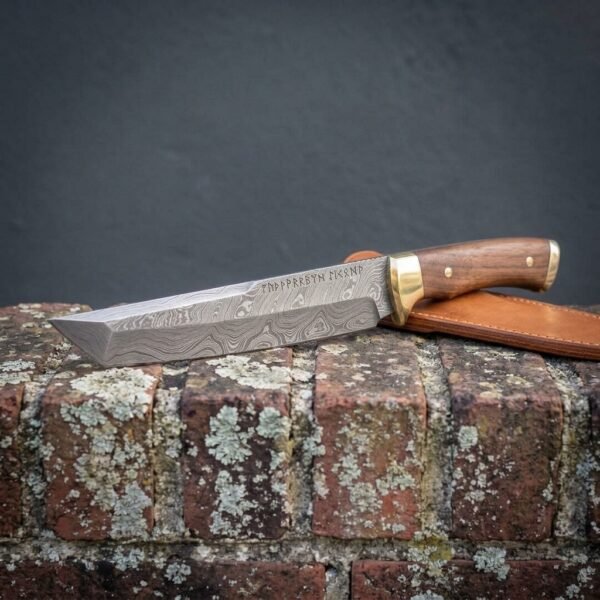
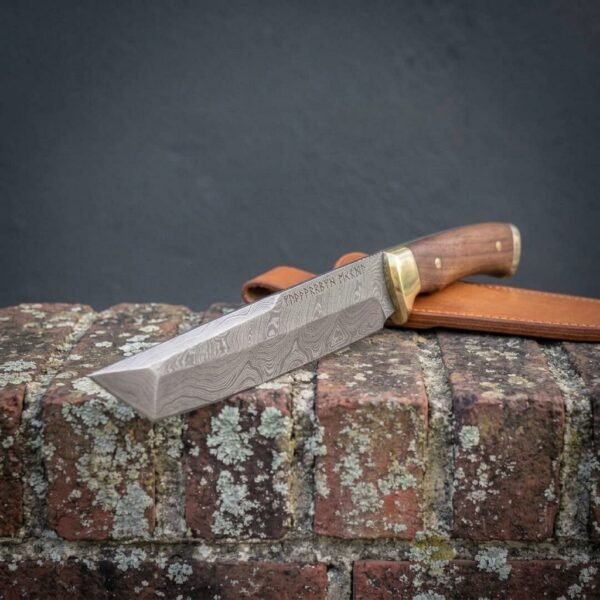
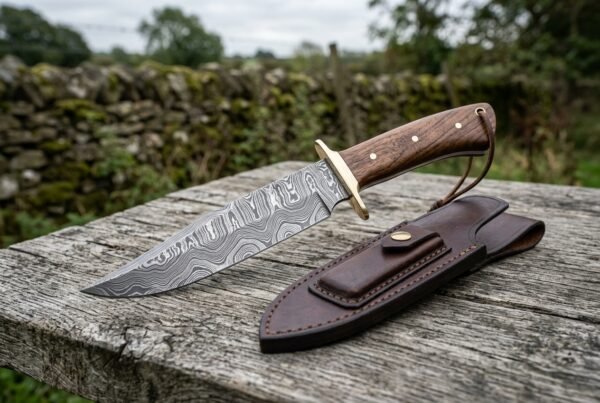
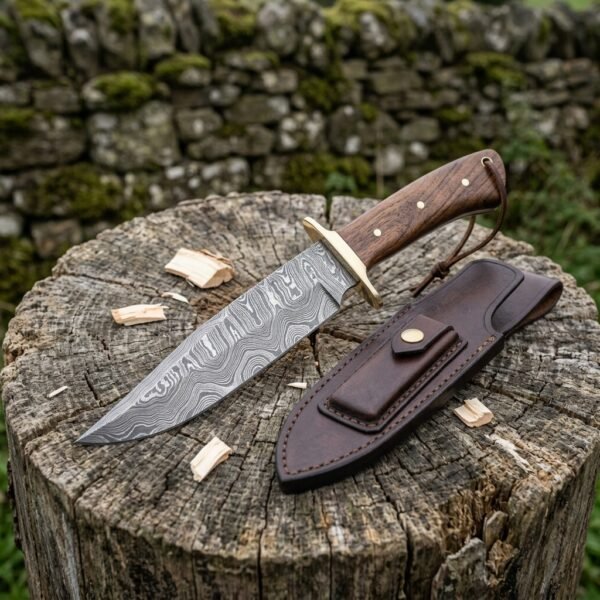
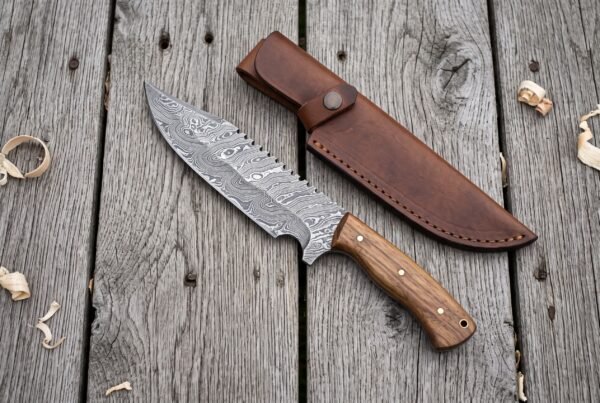
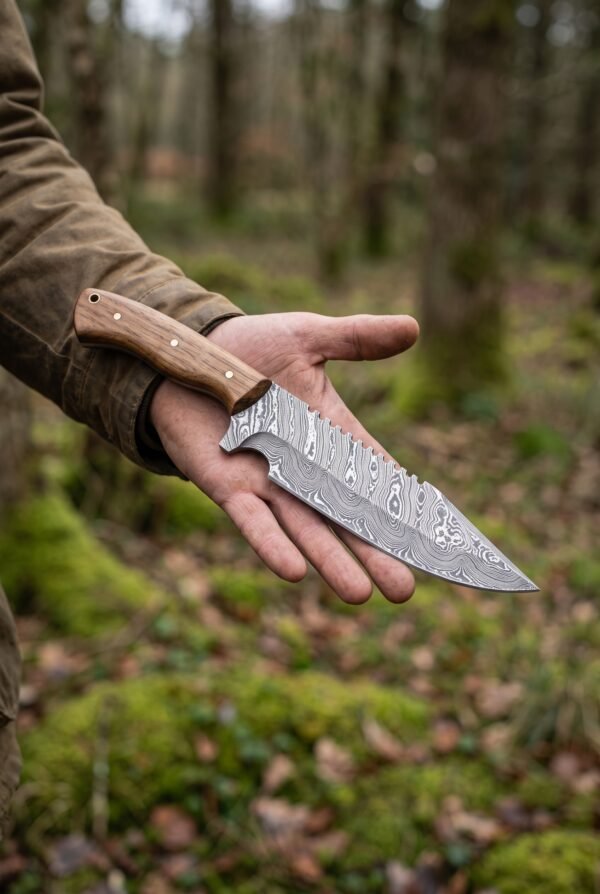
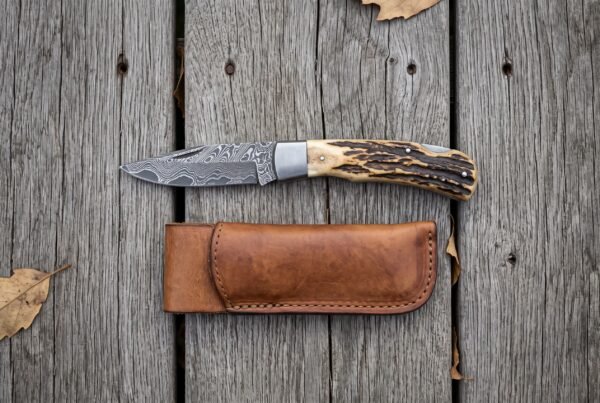
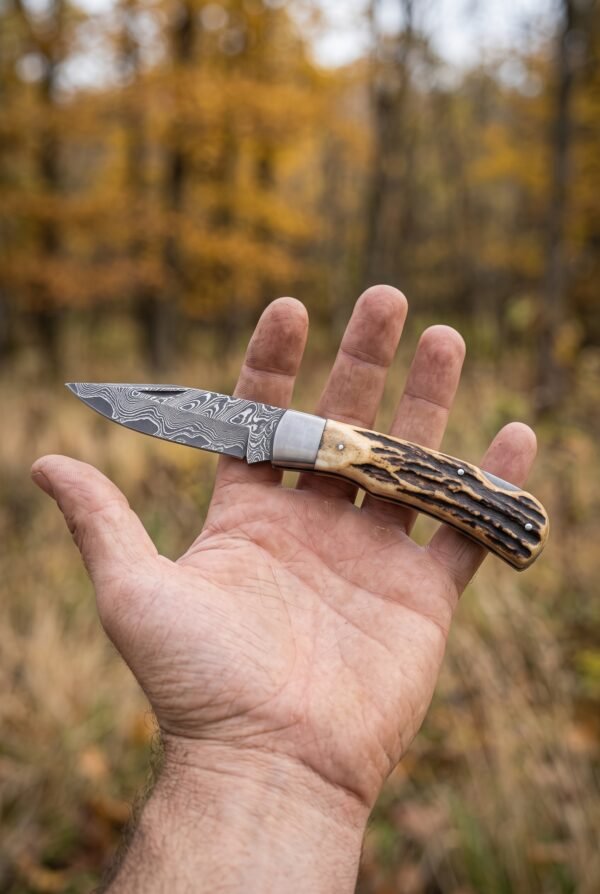
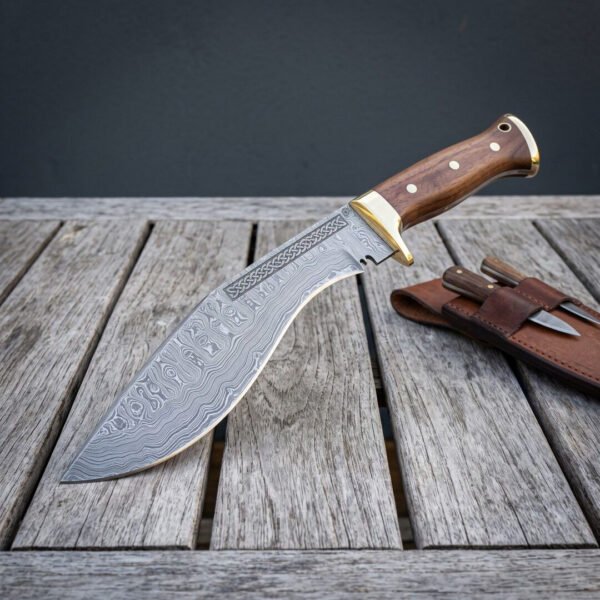
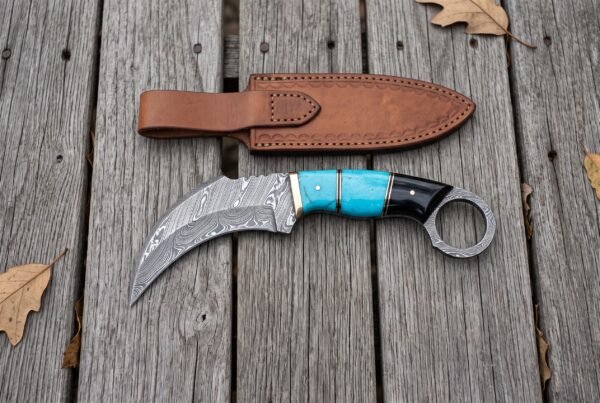
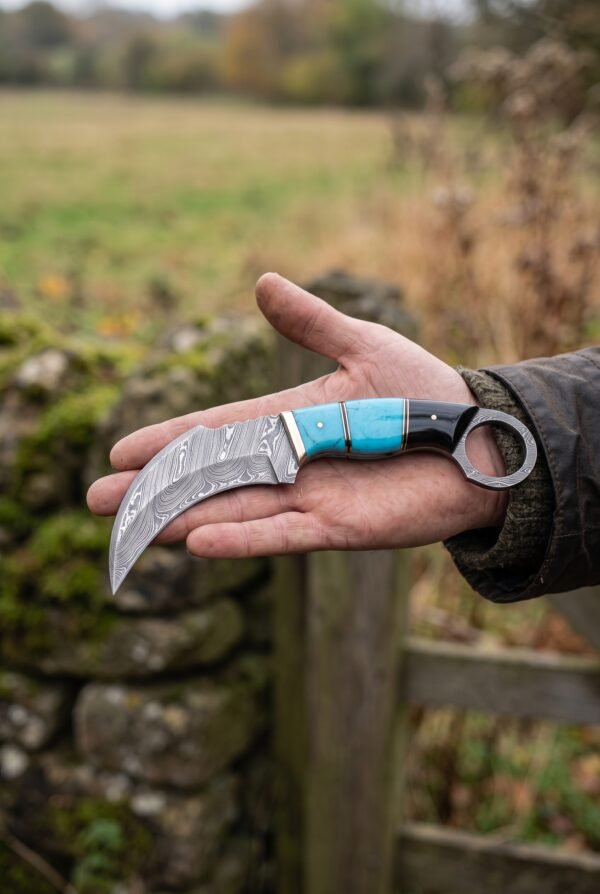
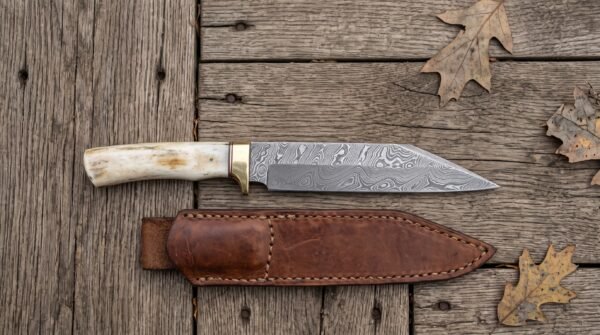
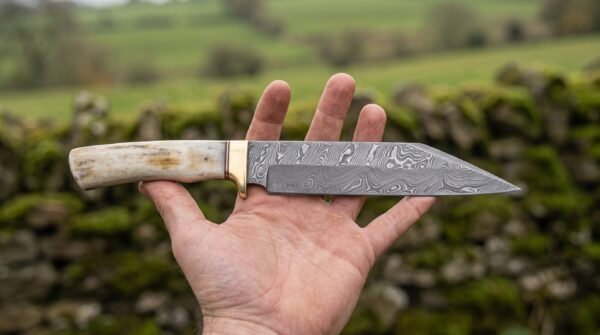
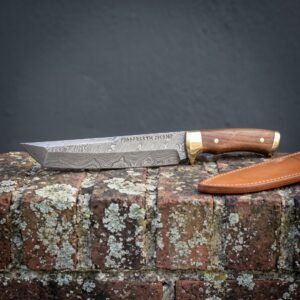
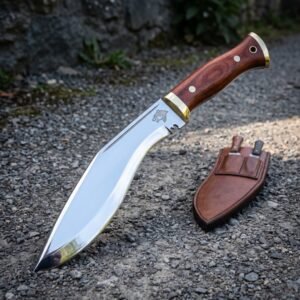
A walnut handle knife uses American or European walnut for the scales. Walnut is the sensible choice among handle woods. It is stable, it takes an oil finish that can be renewed rather than stripped, it is hard enough to resist dents without being brittle, and the grain is interesting without being loud. It is what gunstocks are made from, for exactly these reasons.
What is on this tag
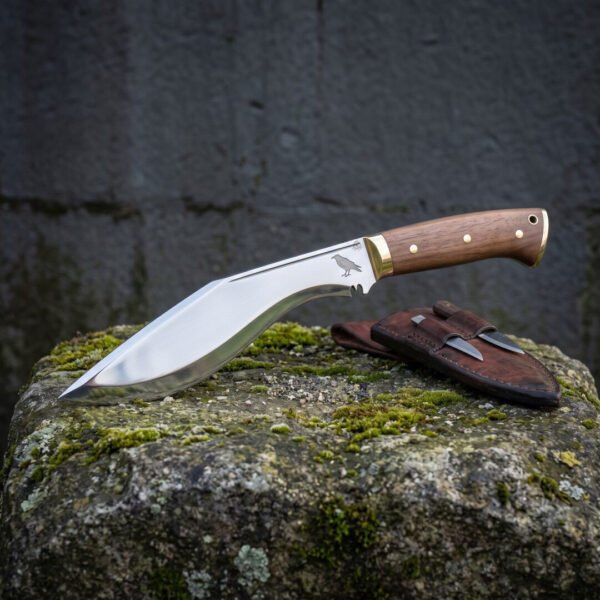
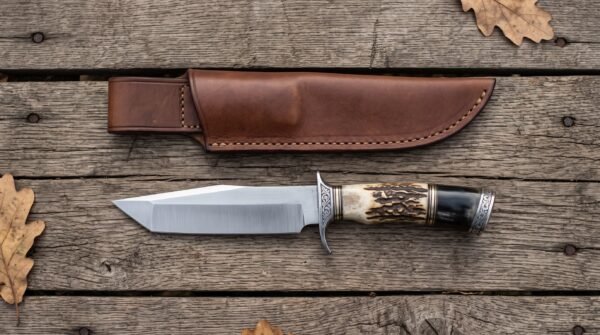
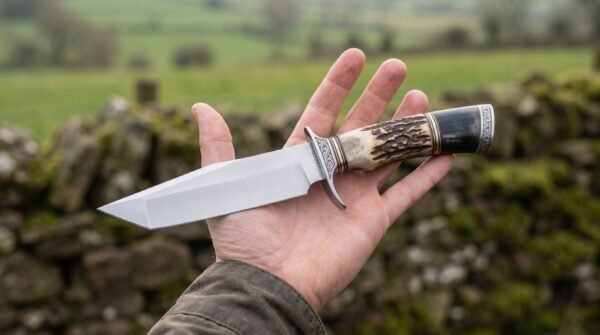
Skinners, hunting knives, bowies, kukris, camp knives and folding pocket knives. Blade lengths run 3.5, 4, 5, 7 and 8 inches, with overall lengths from about 6.5 to 16 on the larger kukri patterns. Steel is mostly Damascus of 1095 and 15N20, forge welded and acid etched, at 58 to 60 HRC, with plain 1095 high carbon at 54 to 58 HRC and a little D2 and stainless. Walnut is often paired with stag horn, pakka wood or brass bolsters. Every fixed blade ships in a stitched cowhide sheath.
Walnut against the alternatives
Rosewood is denser and darker and takes a higher polish, which also makes it slicker when wet. Antler grips better and looks less uniform. Micarta beats both in the rain and looks like nothing at all. Walnut sits in the middle and ages better than any of them, darkening slowly under the hand rather than wearing through a finish. The materials guide compares them properly, including how each behaves once it has been soaked.
Looking after wood scales
Oil, not varnish. A wipe of boiled linseed or a hard wax oil once a year keeps the grain fed and the surface repairable. Avoid dishwashers and long soaking, which lifts the wood around the pins and eventually loosens them. The care guide covers blade, handle and sheath together. The kukri patterns are in the kukri knives and the field blades in the hunting knives.
Kukris and the bigger walnut pieces
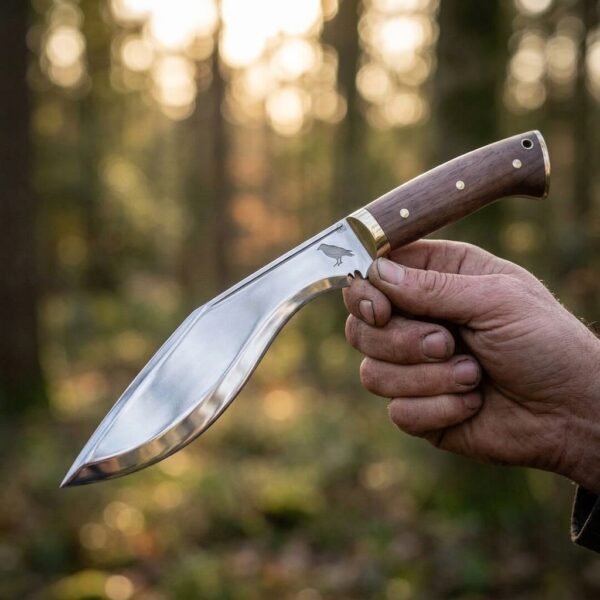
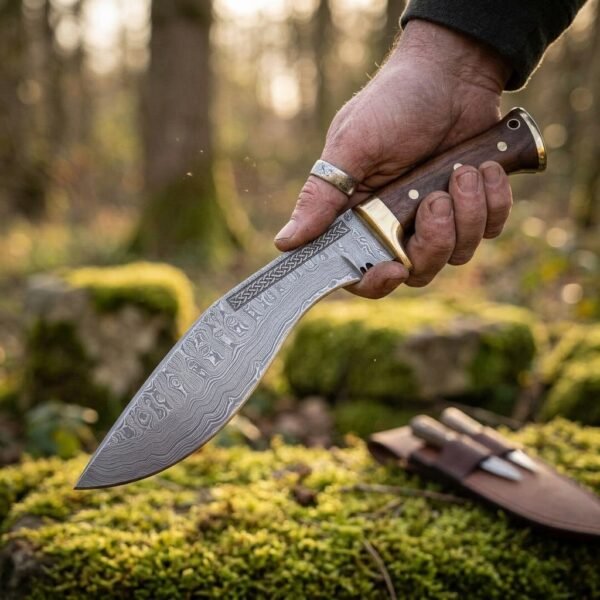
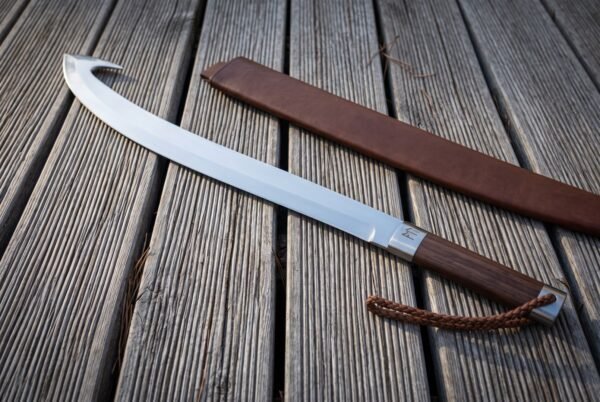
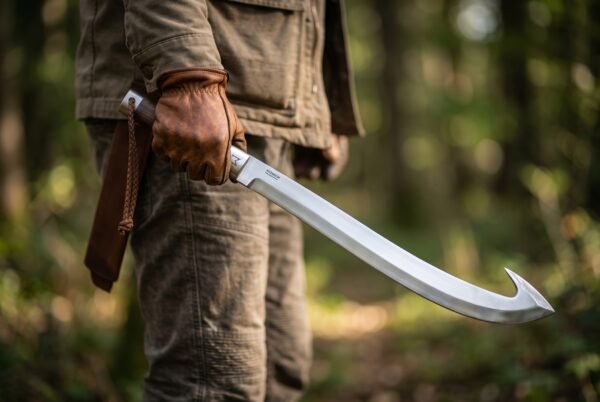
The kukri patterns here run to about 16 inches overall with walnut scales and a brass bolster, and they are chopping tools with a forward weight bias. That is a lot of leverage on a handle, which is where walnut earns its place, since it takes repeated shock without splitting the way a brittle wood does.
Two woods on one knife
Several of these pair walnut with a second material, a stag bolster, a pakka wood spacer or a strip of pale hardwood. That is partly decoration and partly structure, since a bolster protects the front of the scale where a knife gets knocked and gives the hand something to stop against on a wet handle.
Free US shipping
On most pieces. Heavier and oversized ones carry a flat charge.
Hand Forged
Heated, hammered and ground by hand.
Engraving available
Names, dates or Norse runes on most pieces.