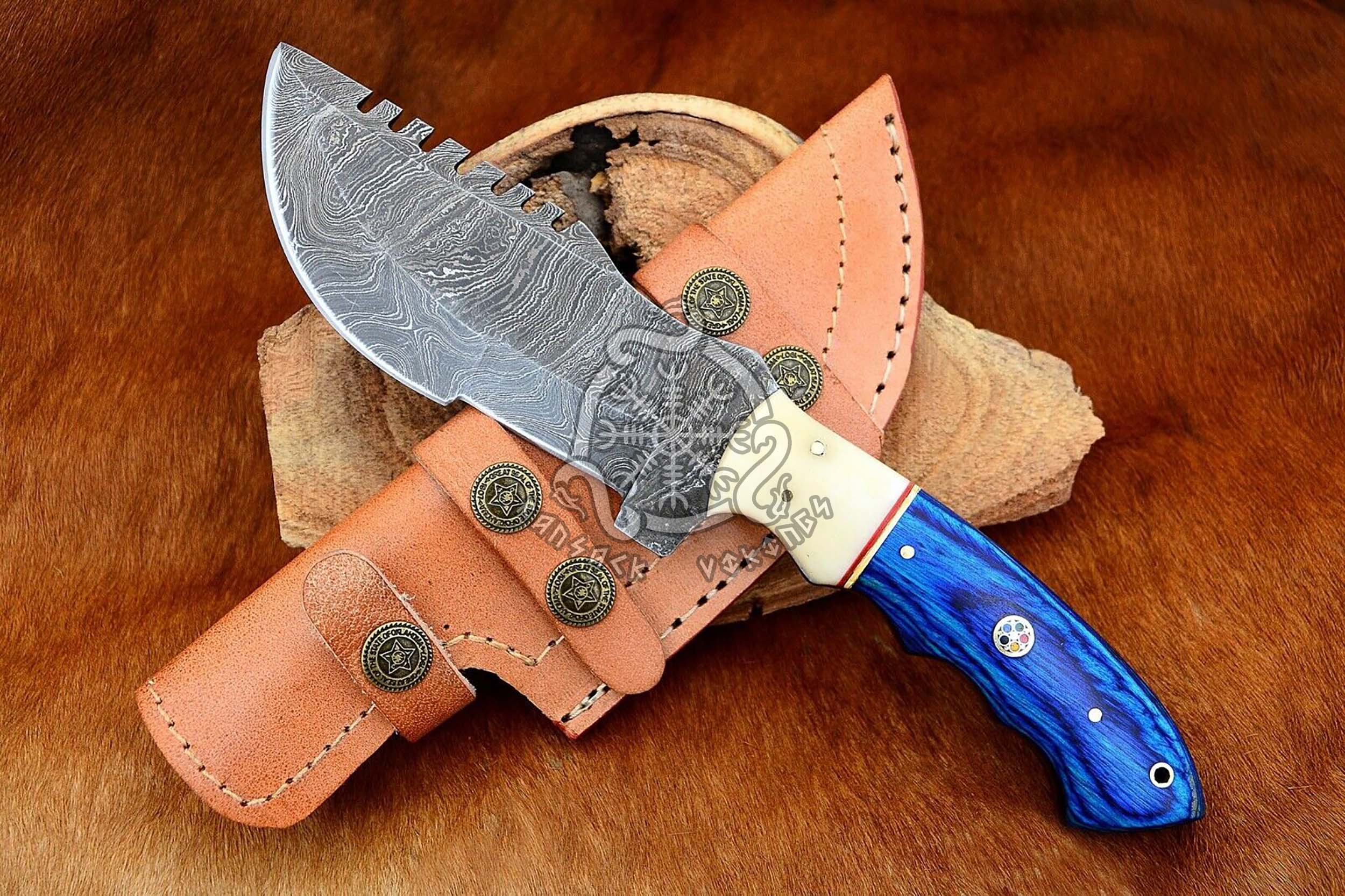
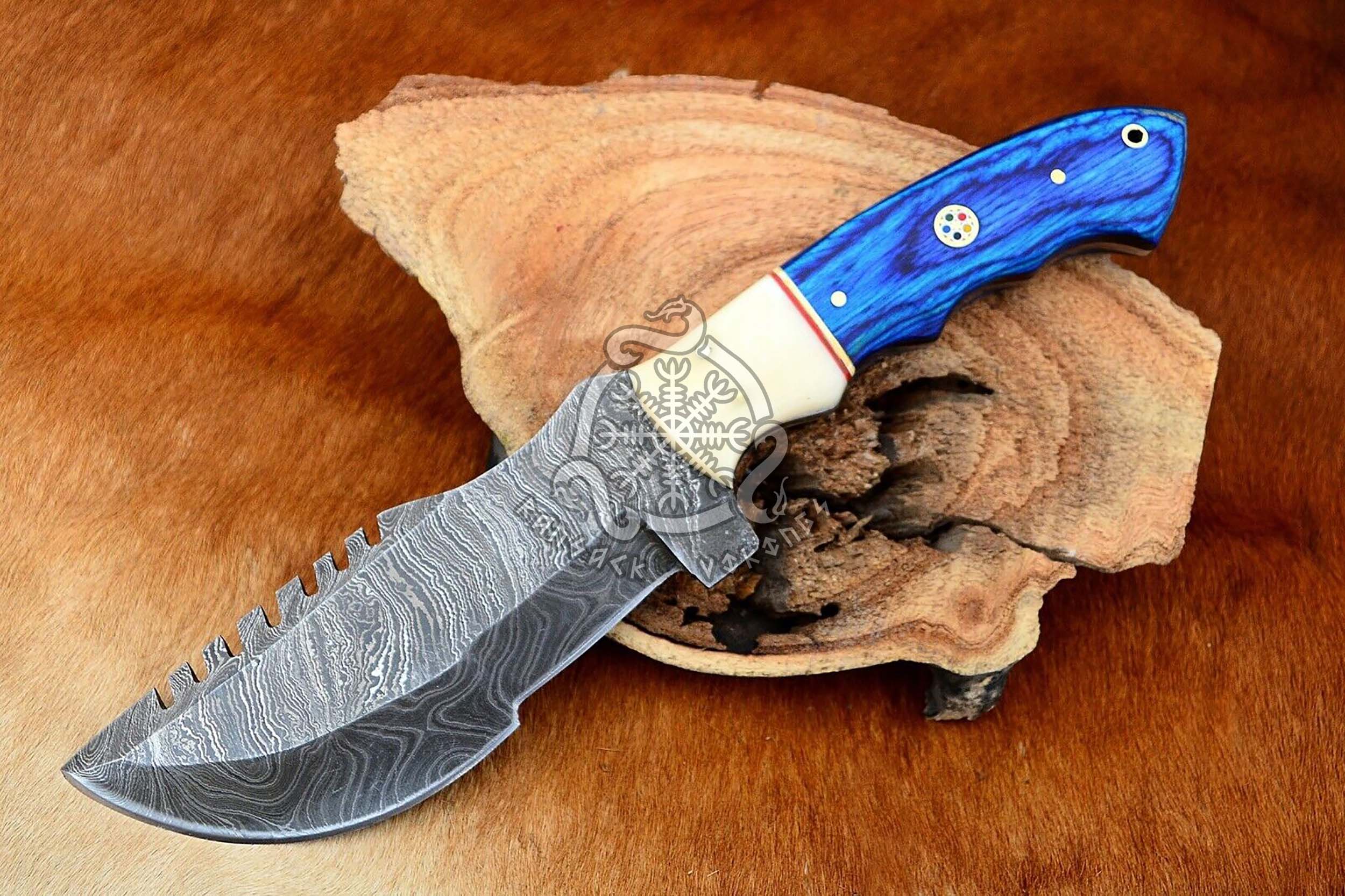
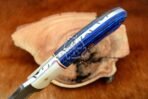
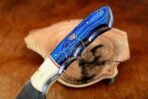
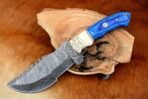
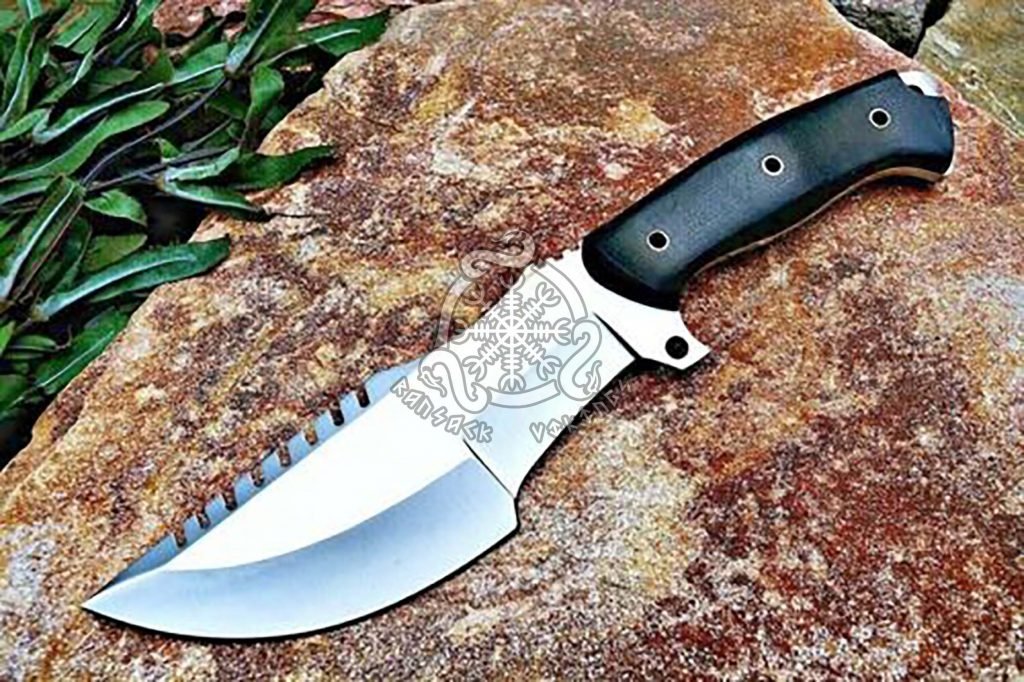
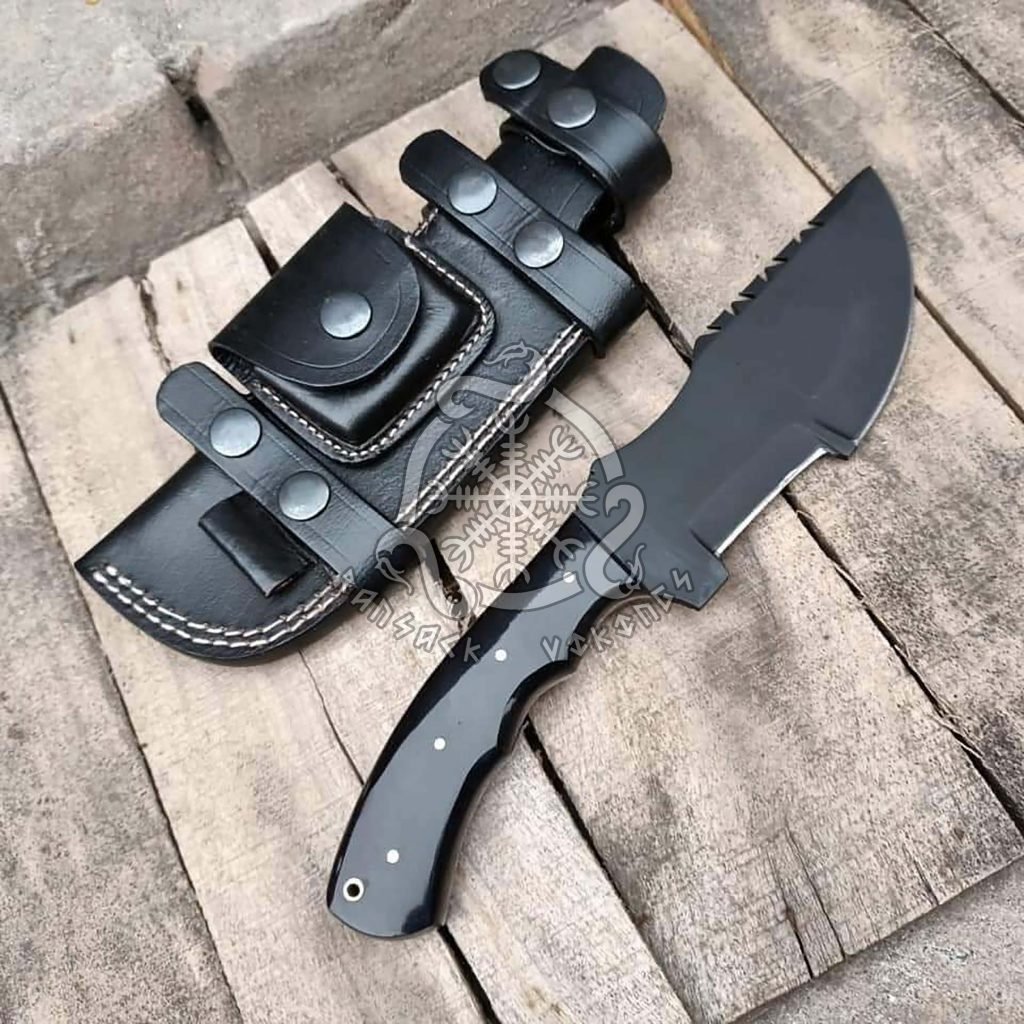
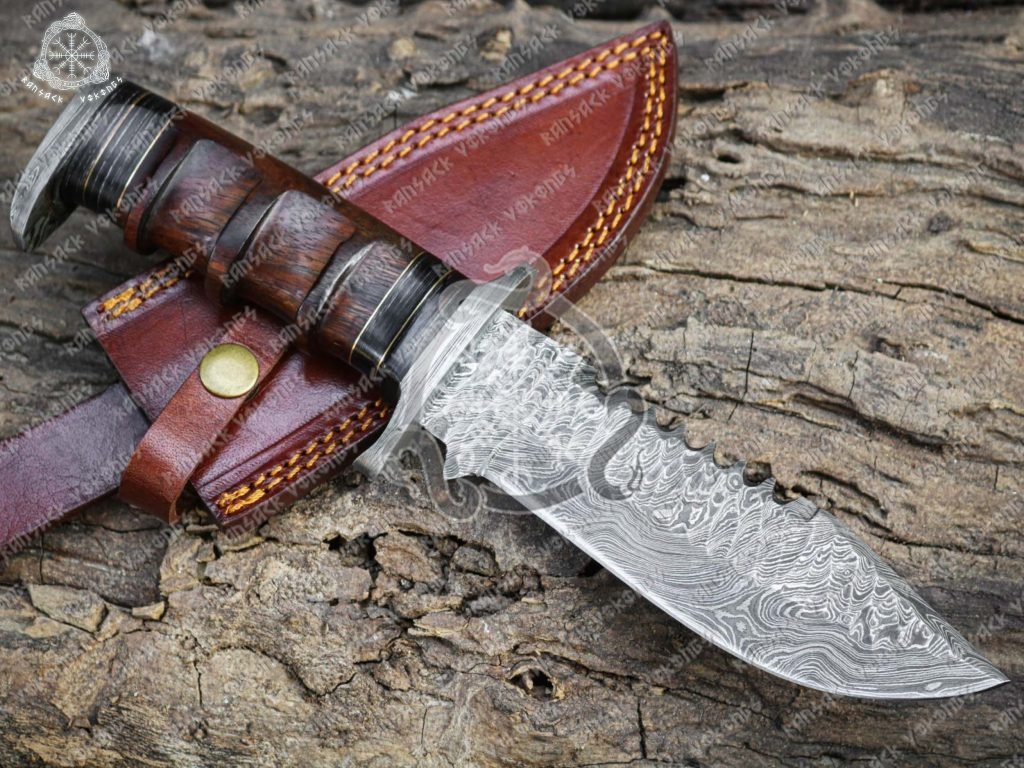
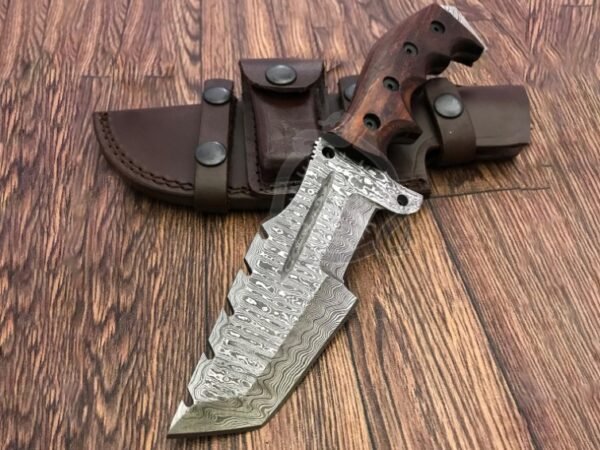
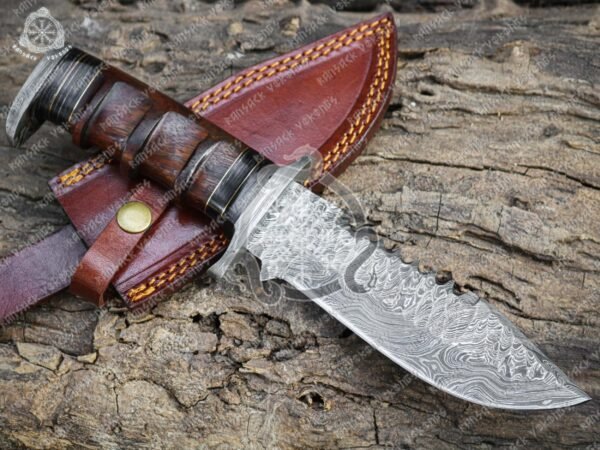
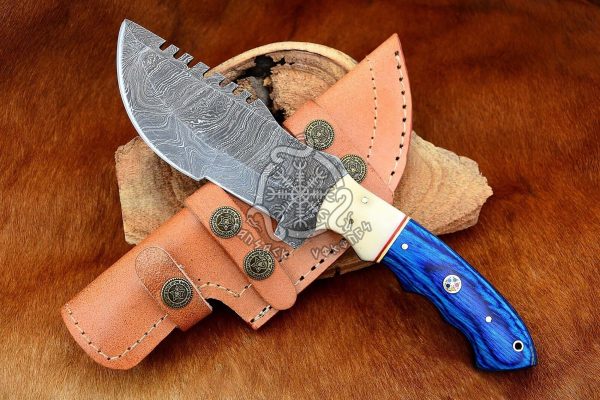
Forged in Damascus and handled in hardwood, the Trailwood is a tracker knife built around one idea: a blade you will actually reach for. It runs 10 inches overall with a 5 inch blade and a 5 inch handle, which is a deliberately even split. Half the length is grip, because a tracker is a knife you hold at different points depending on the job.
The tracker pattern is younger than most people assume. It was worked out by the American tracker and survival instructor Tom Brown Jr, first built as a production knife by the smith David Beck, and it went from a niche bushcraft tool to something everybody recognised after it appeared in the 2003 film The Hunted. The design brief was unusual: Brown wanted one blade that could do the work of a hatchet, a carving knife and a saw, because a person who is genuinely lost is carrying one tool and not three. Almost every odd feature on the profile comes from that constraint.
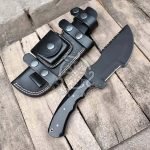
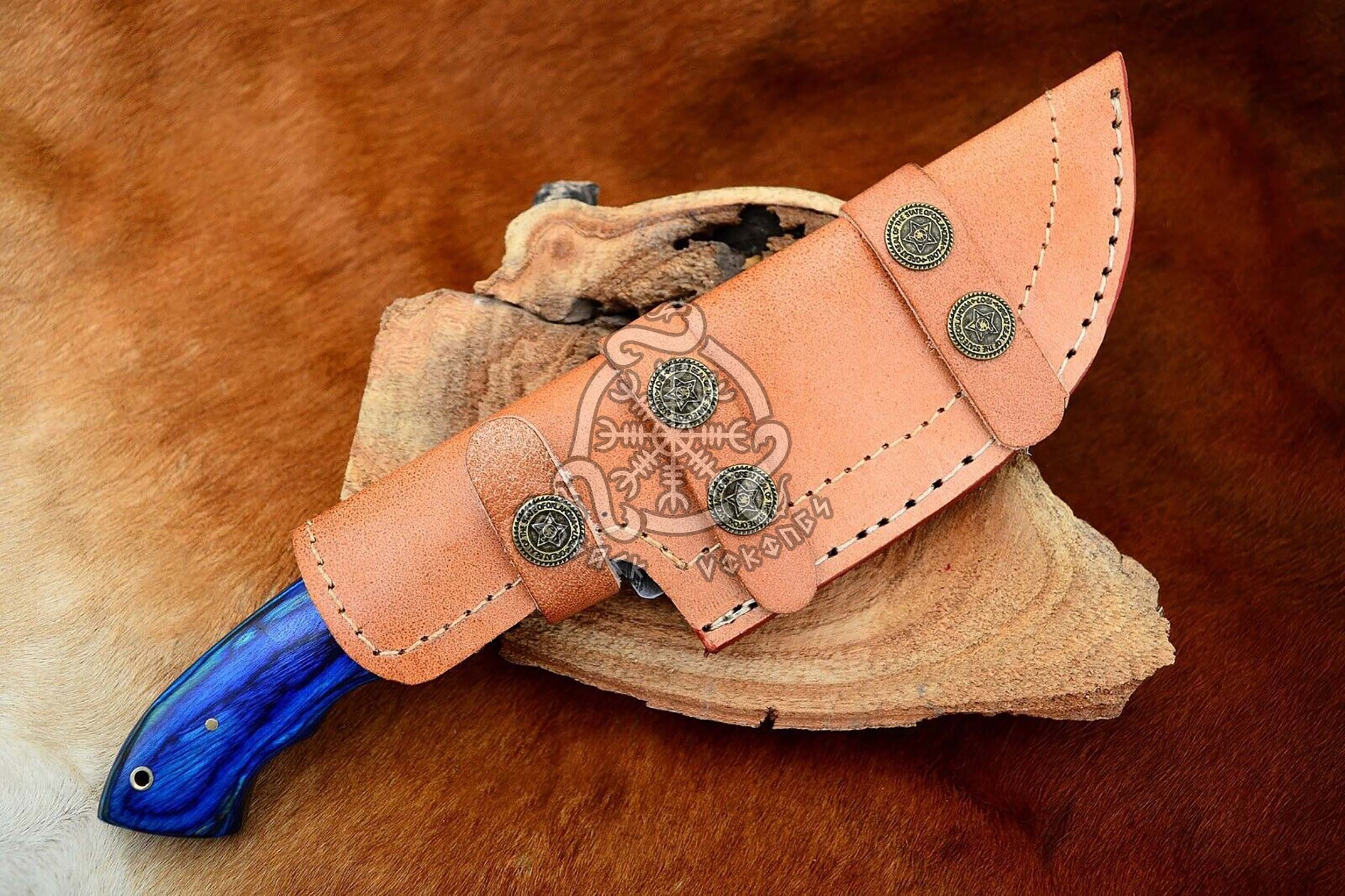
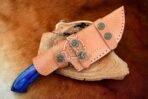
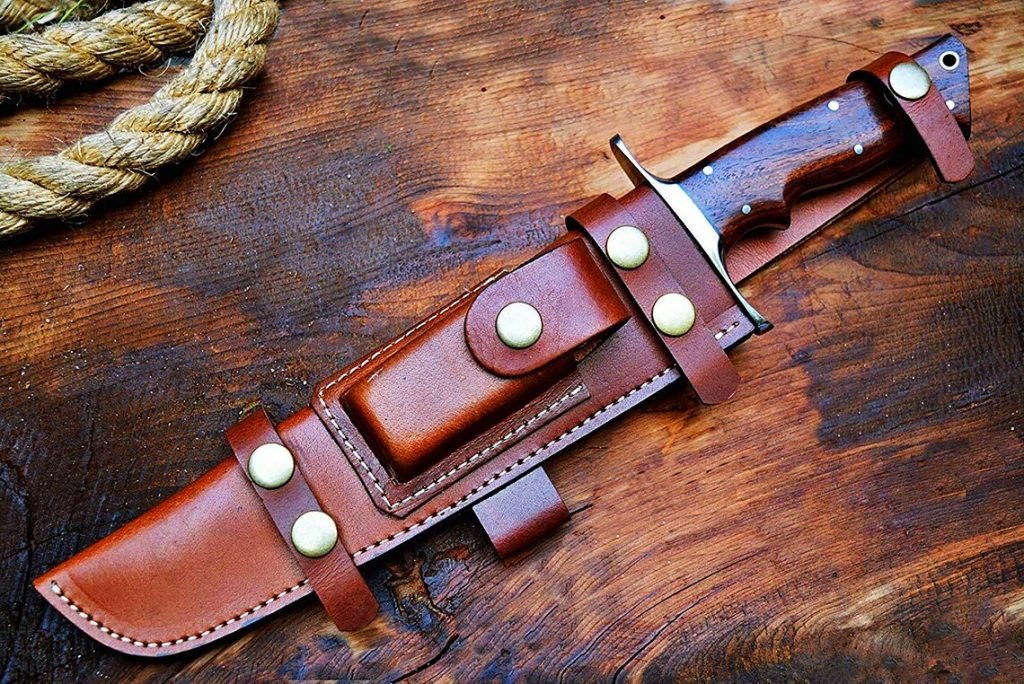
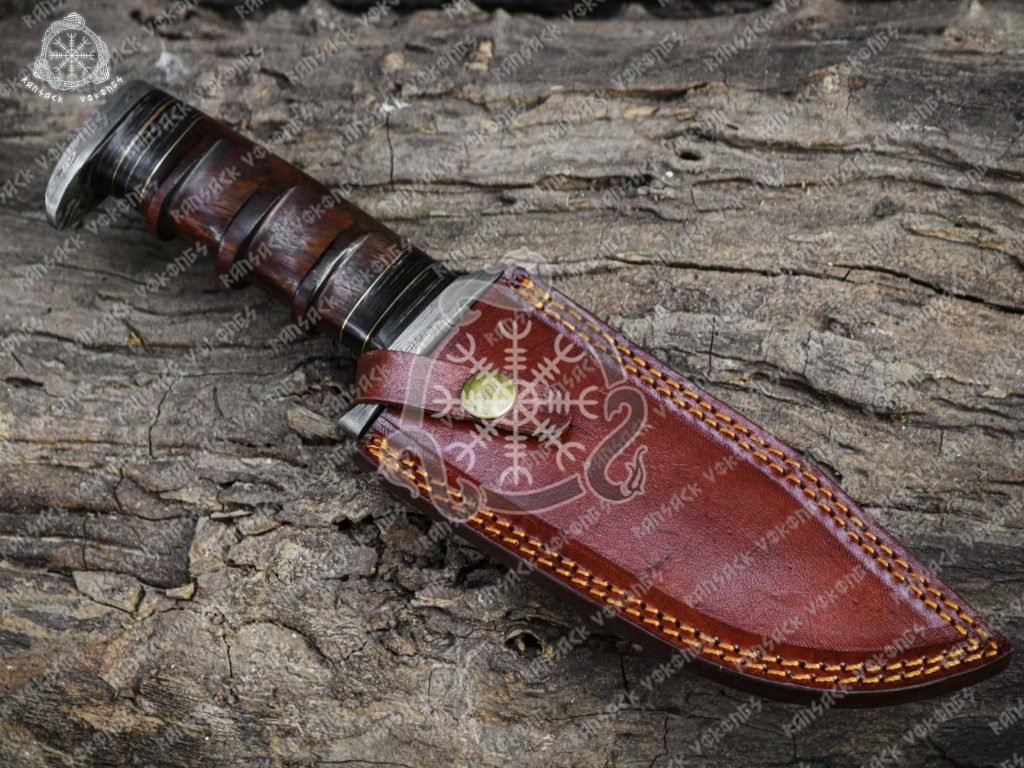
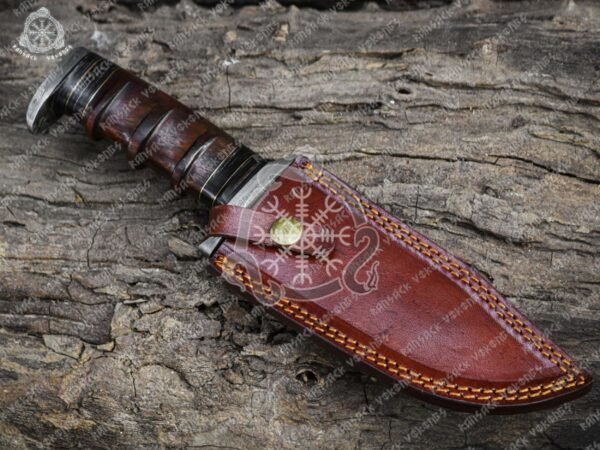
The Trailwood is forged and finished in the Czech Republic and ships with a fitted leather sheath and free shipping inside the United States.
Specifications
| Steel | Hand forged Damascus, 1095 and 15N20 |
|---|
| Hardness | 58 to 60 HRC |
|---|
| Damascus layers | 352 layers |
|---|
| Pattern | Fire pattern |
|---|
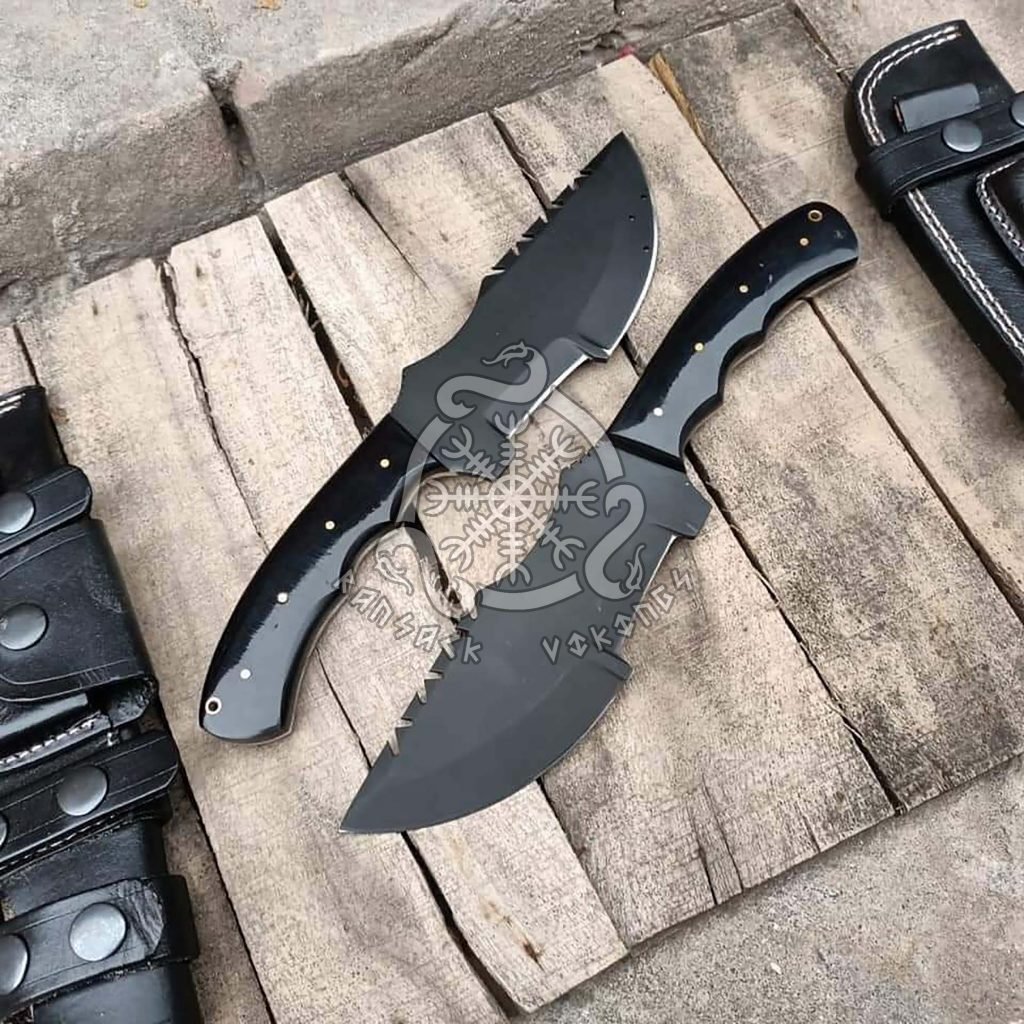
| Blade shape | Tracker profile with saw spine |
|---|
| Overall length | 10 inches |
|---|
| Blade length | 5 inches |
|---|
| Handle length | 5 inches |
|---|
| Handle | Hardwood |
|---|
| Sheath | Leather sheath |
|---|
| SKU | RK-539 |
|---|
Reading a tracker blade from the tip backwards
A tracker knife looks strange until you understand that it is three tools laid end to end on one piece of steel, and that each one is used with a different grip.
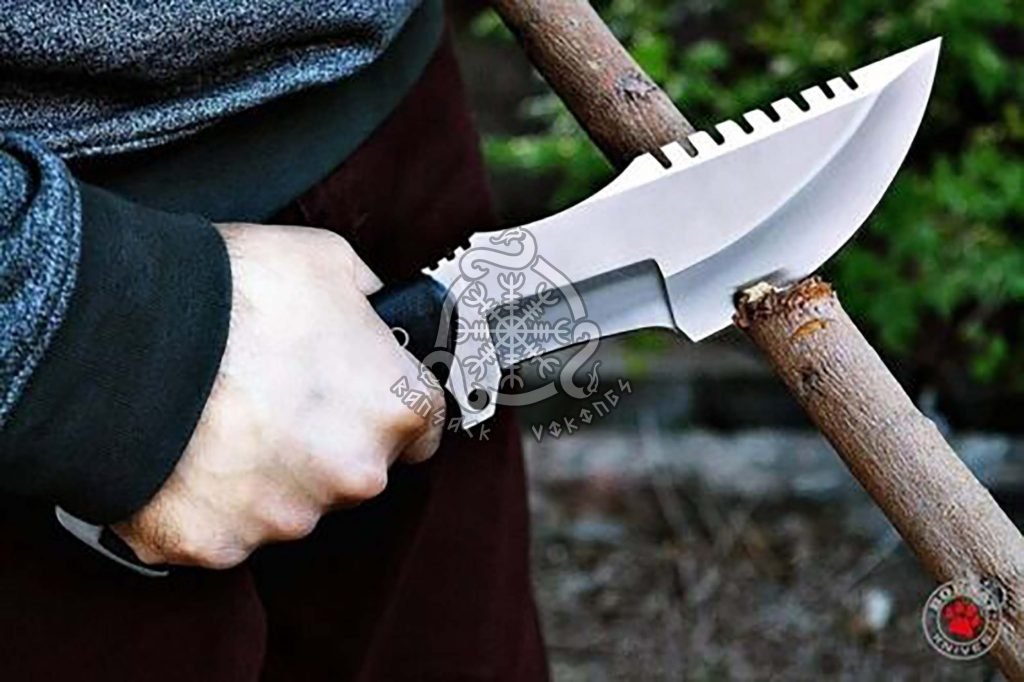
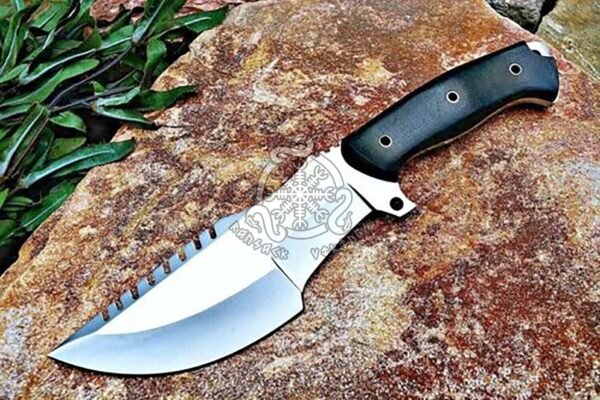
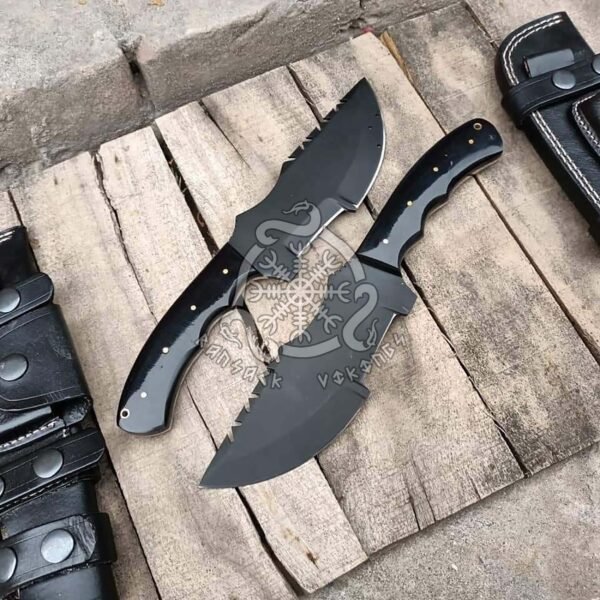
The forward section is the chopping belly. It is the deepest part of the blade, which puts mass out ahead of your hand, and it is ground at a more obtuse angle than the rest so it can take impact into green wood without chipping. Held at the back of the handle it swings like a very short hatchet.
The straight section behind it is the fine work edge. Choke up so your index finger sits just behind the ricasso and this becomes a carving knife with excellent control, because the cutting edge is now only an inch or two from your fingers. This is the section you feather sticks with, trim cordage with and do any job where accuracy matters more than force.
The saw spine is the part people misunderstand. It is not for felling anything and it will disappoint you if you try to cut a limb through with it. What it is genuinely good at is notching. Cross cut two shallow kerfs into a stick and you can snap out a clean notch for a figure four deadfall, a pot hanger, a tent peg or a trap trigger, and that kind of joinery is what actually gets built in a camp. Used that way the saw earns its place on the blade many times over.
Because the whole knife is asked to take impact, the tang matters more here than on almost anything else in the range. We cover why in full tang versus partial tang.
Why Damascus and not stainless
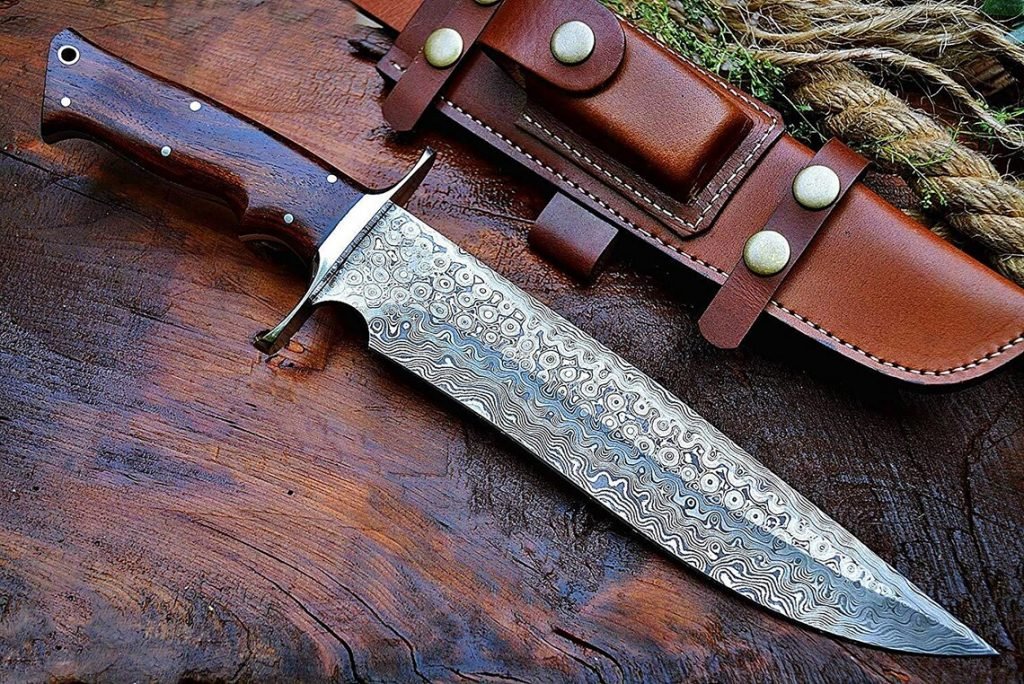
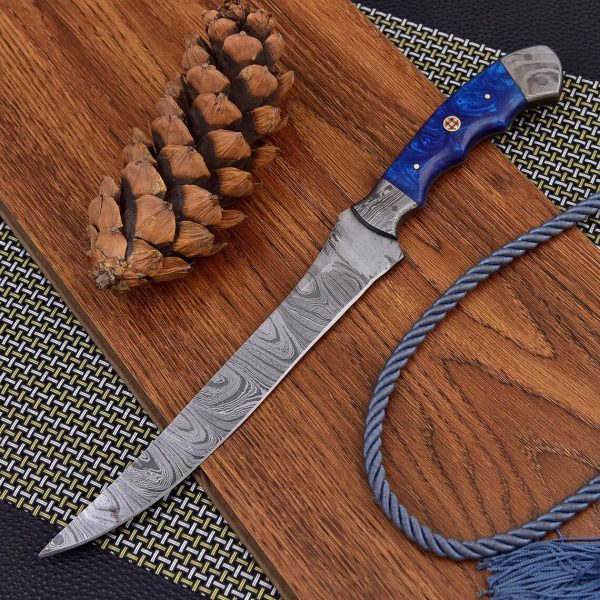
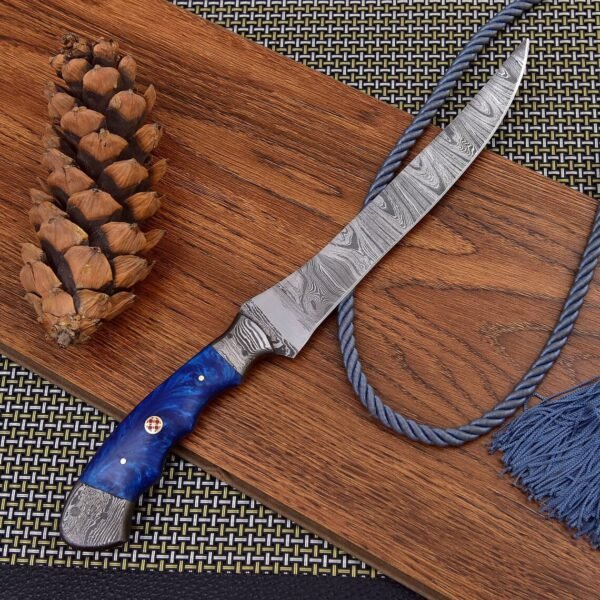
Real Damascus is a stack of steels, not a finish. Layers of 1095 high carbon and 15N20 nickel steel are forge welded, folded, drawn out and finally etched, which is when the pattern appears. Hardened to 58 to 60 HRC, it holds an edge through fibrous green wood far better than the soft stainless used on budget survival knives, and it is tough enough to be batoned without chipping out.
Stainless would rust less. That is the only argument for it here, and on a knife that is going to live in a damp sheath in the woods it is a fair one, so be honest with yourself about whether you will oil it. If you will, high carbon Damascus is the better steel by a distance. We lay the comparison out in Damascus versus stainless, and what Damascus steel is covers how the billet is built.
The hardwood handle
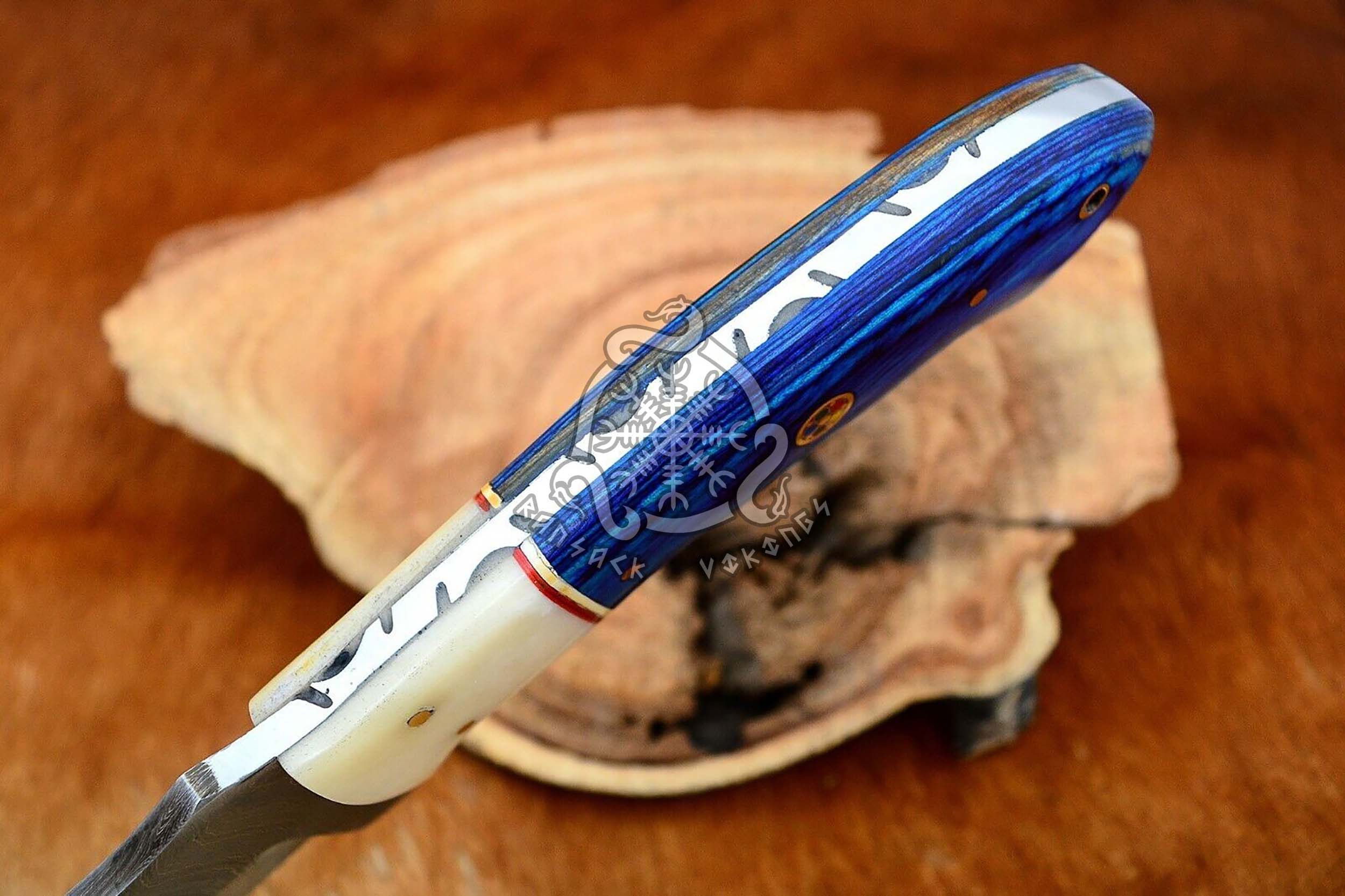
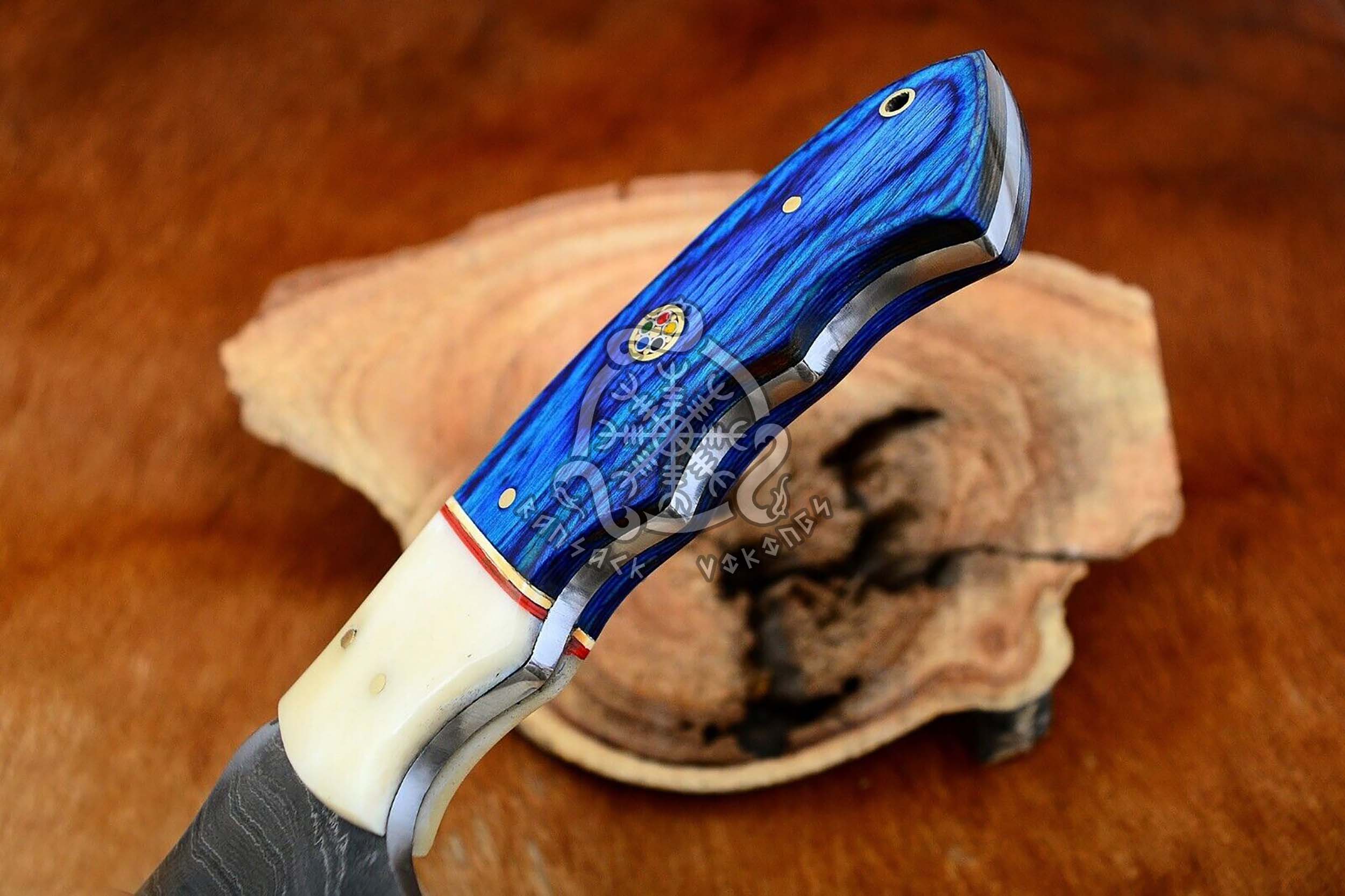
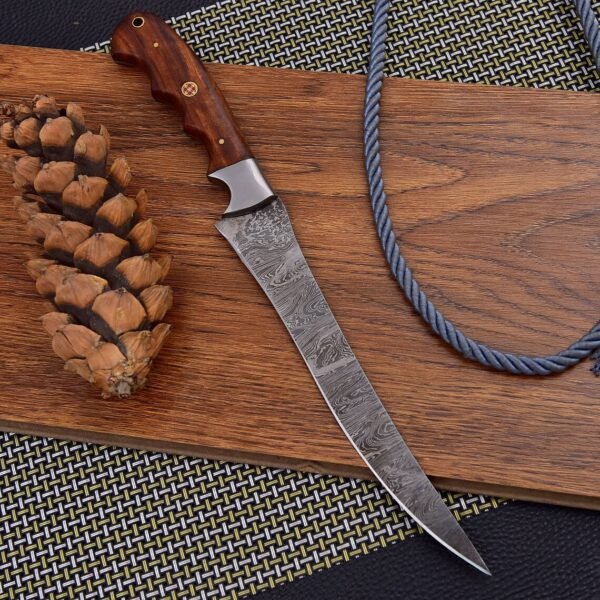
Hardwood carries the weight of this piece without adding bulk. On a chopping knife that matters, because a heavy grip pulls the balance back behind your hand and kills the swing. Timber also does something no synthetic does well: it absorbs shock. Every impact into wood sends a jolt back up the blade, and a dense hardwood grip damps it enough that you can work for an hour without your hand aching.
Every handle is shaped from a different piece of timber, so the figure and the colour shift from one to the next. Feed it with oil once or twice a year and the grain stays sealed and the fit stays tight through changes in humidity, which is exactly what you want on a knife that goes from a cold truck to a warm house. The method takes a couple of minutes and is set out in wooden handle care.
Engraving, runes and your own design
Use the rune converter on this page to turn a name, a date or a short phrase into Elder Futhark and we will cut it into the steel or the handle. If you would rather have a Viking pattern than a rune line, choose your own design in the engraving option above the add to cart button and tell us whether it goes on the blade or the handle. Where a piece already carries an engraved design, your chosen engraving replaces it rather than sitting alongside it. On a tracker the broad flat between the saw teeth and the edge is the obvious place for a line of runes, and it is one of the largest engraving surfaces in the catalogue. Details are on the engraving page.
Care and sharpening
Wipe it dry, oil it lightly, and store it out of the sheath for long periods so trapped moisture cannot work on the steel. Leather care is its own subject and is covered in leather sheath care.
Sharpening a tracker is not one job. The chopping belly wants a slightly steeper angle than the straight section so it survives impact, so treat them as two bevels and blend the transition rather than trying to hold one angle along the whole edge. The saw teeth are not sharpened on a stone at all: if they ever dull, a small triangular file run down each gullet restores them. Full method in steel care and sharpening with a whetstone.
Made in the Czech Republic
This piece is made by hand in the Czech Republic, in a workshop that still works the old way. The steel is forged, ground, heat treated and finished by smiths who learned the trade from the people before them, and the wood, horn and leather are cut and fitted by hand rather than pressed out on a line. That is also why no two pieces come out exactly the same.
Ransack Viking is a United States company. We import these pieces ourselves, check every one when it lands and ship from our warehouse in Memphis, Tennessee. Engraving is done here in the United States after the piece arrives, so your runes or your own design go on before it leaves for you.
A note on handmade variation
This tracker is hand forged. It is not machine made and it is not bulk produced, so what arrives will not be a pixel for pixel copy of the photograph. The Damascus pattern is different on every blade, the hardwood grain and tone belong to the tree the handle came from, the saw teeth are cut by hand, and the profile shifts by fractions because a person ground it. The dimensions, the steel and the build are the same every time. The character is not.
Frequently asked questions
Can I baton with this
Yes. The blade is thick through the spine and the tang runs the full length of the handle. Baton on the forward chopping section and keep the strikes off the saw teeth.
Will the saw spine cut through a branch
Slowly and badly. It is designed for notching and scoring, not felling. Use it to cut kerfs and snap the waste out, and it will do more useful work than a folding saw of the same weight.
Is it sharp on arrival
Yes. The edge is set and honed before packing. The saw spine is deliberately not sharpened as a cutting edge.
How is this different from a bushcraft or camp knife
A camp knife is one continuous edge optimised for slicing and light chopping. A tracker splits the blade into specialised zones and adds a saw, so it does more jobs and none of them quite as elegantly.
Will it rust in a damp pack
It will if you leave it wet and sheathed. A wipe and a smear of oil after each trip prevents it entirely, and any surface spotting that does appear lifts off with fine abrasive.
Can I have the handle made left handed
The handle is symmetrical and works either way. If you want the leather sheath built specifically for a left hand draw, put it in the order notes.
What is in the box
- One Trailwood Damascus tracker knife
- Fitted leather sheath
- Protective packaging
- Forged and finished in the Czech Republic
Explore the range
Look through the rest of Tracker Knives, the field blades in Hunting Knives, the chopping tools in Camping Axes and Hatchets and the Norse pieces in Viking Knives. Background reading is in the guides.





Reviews
There are no reviews yet