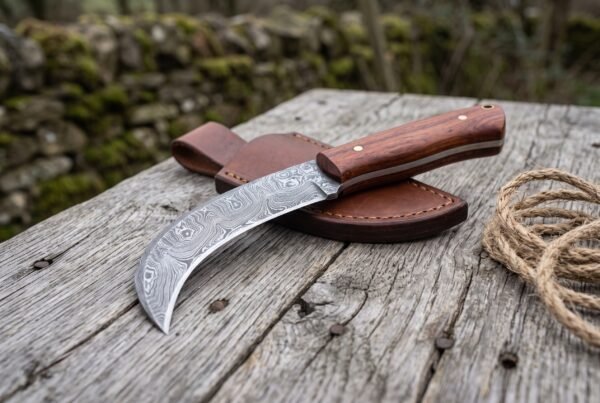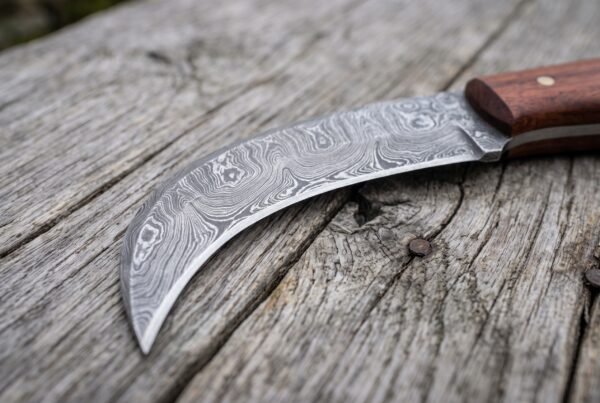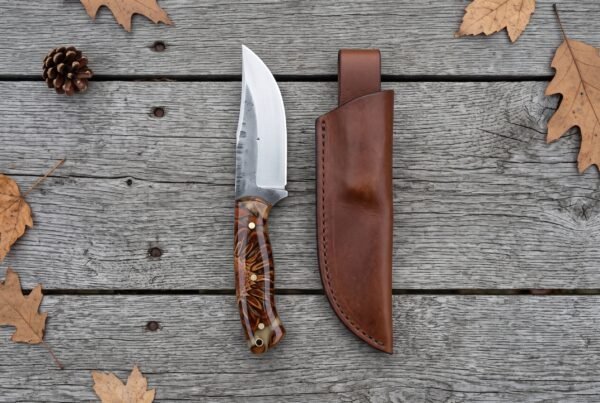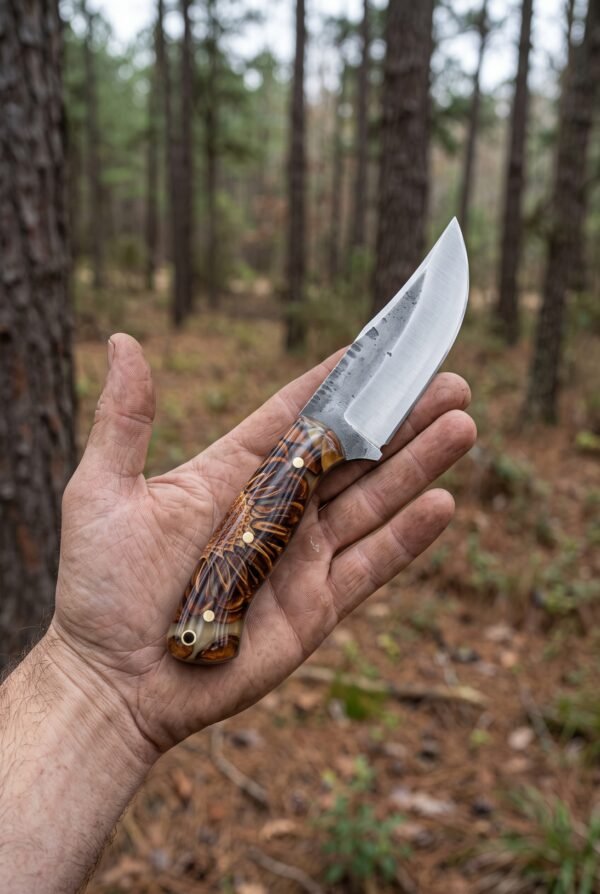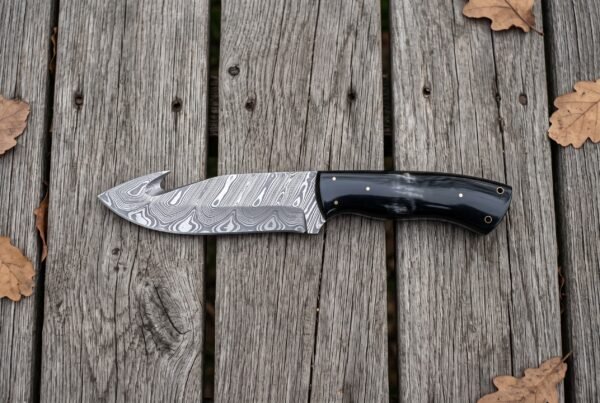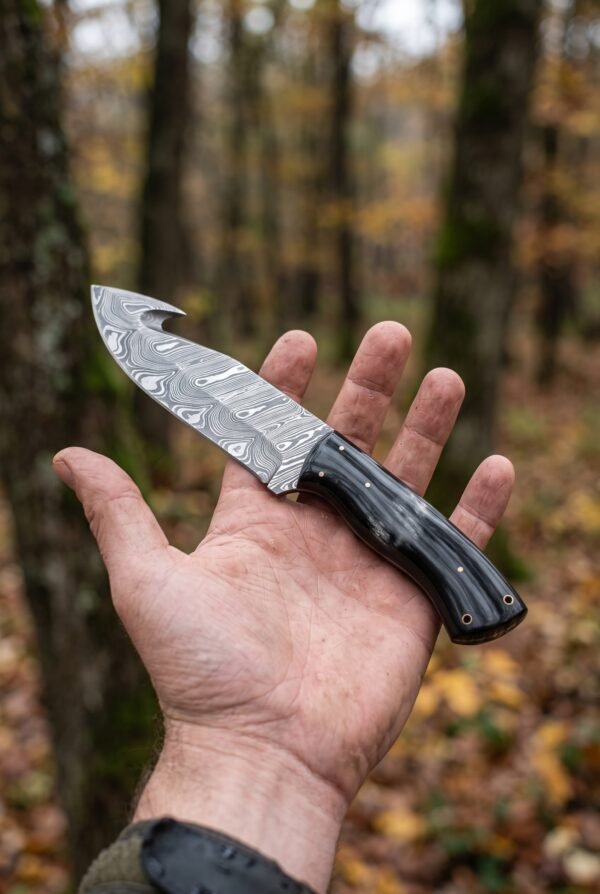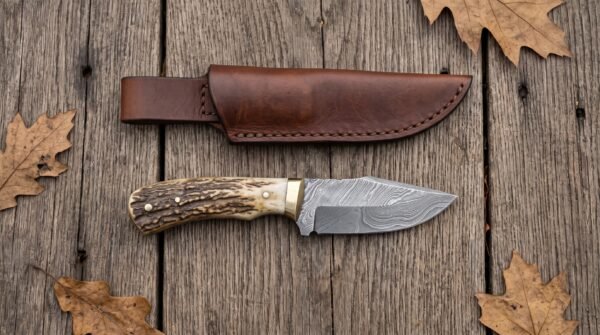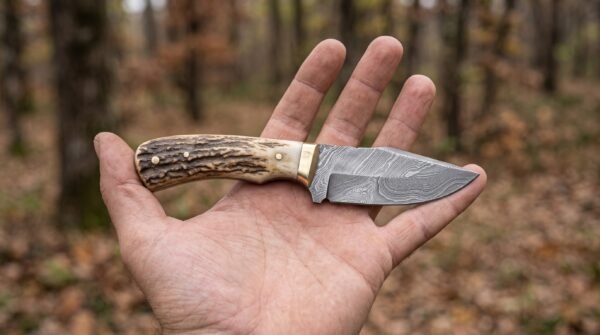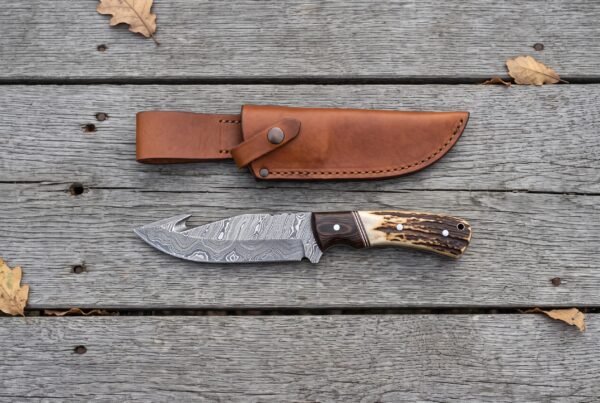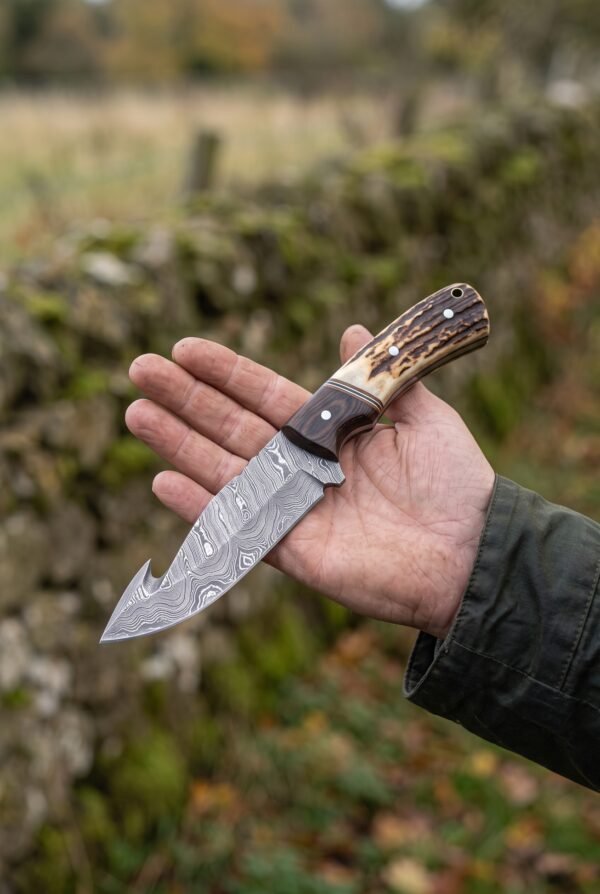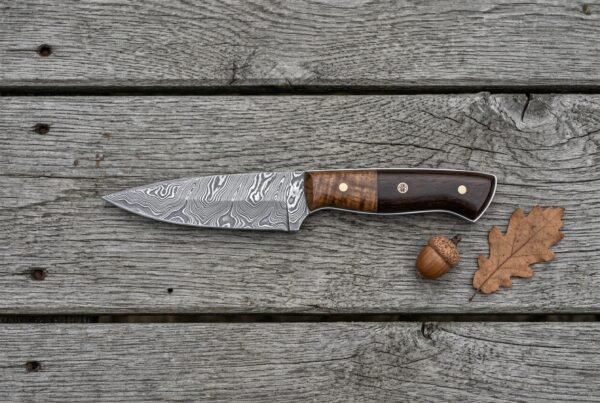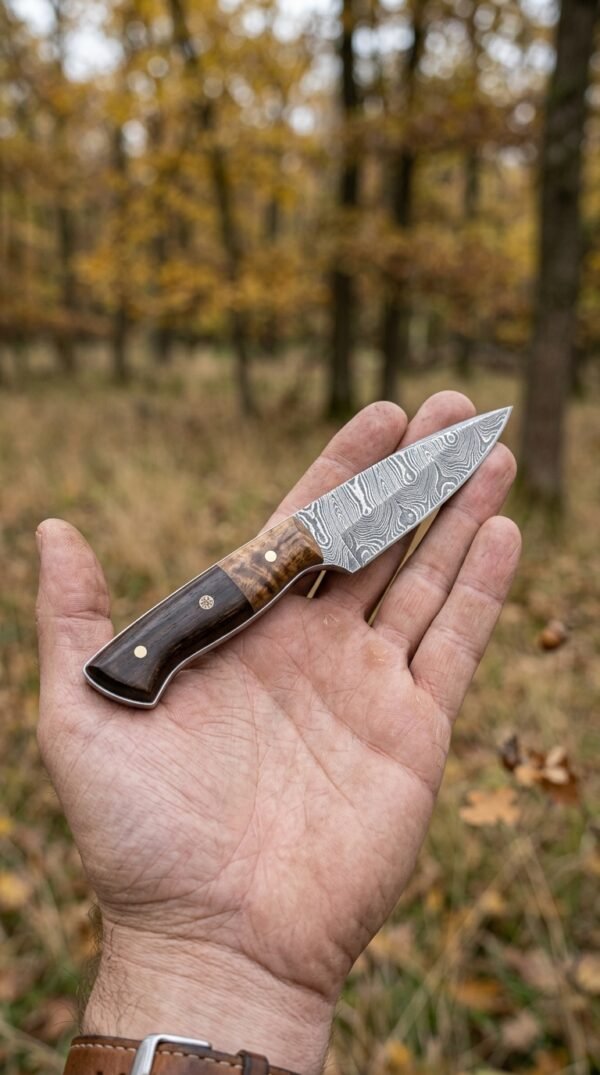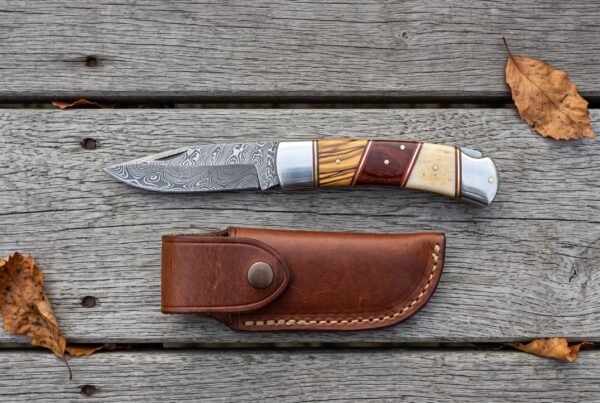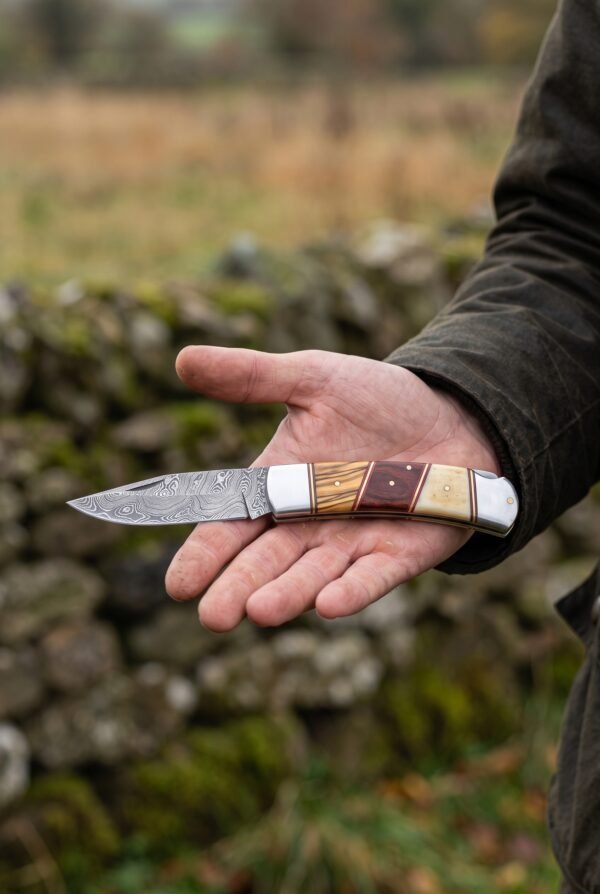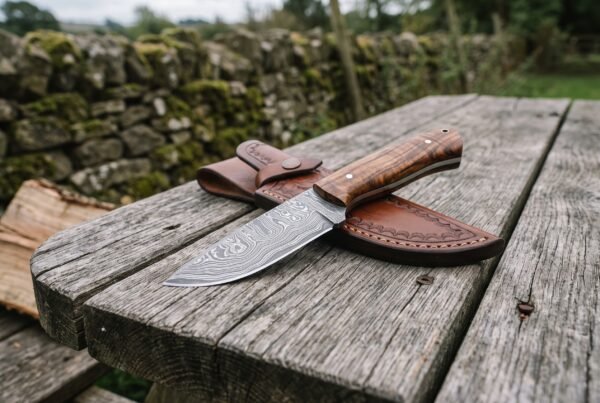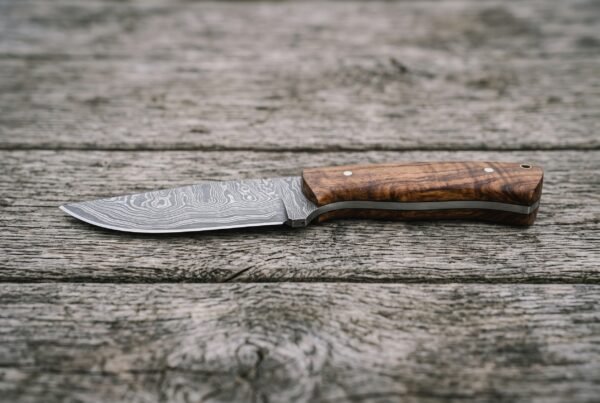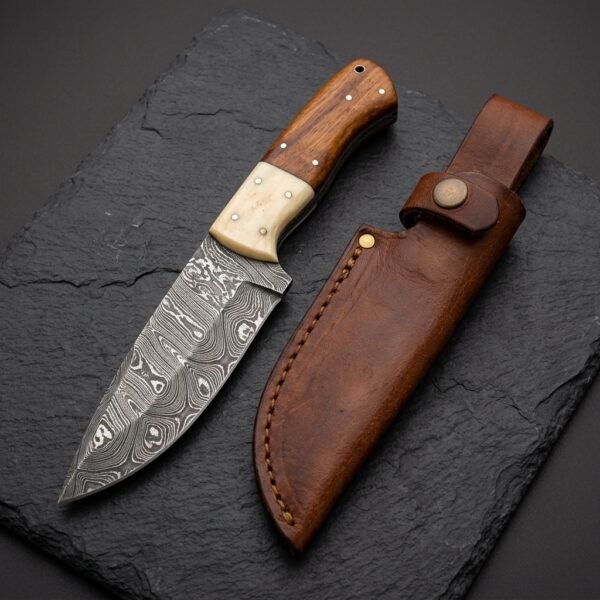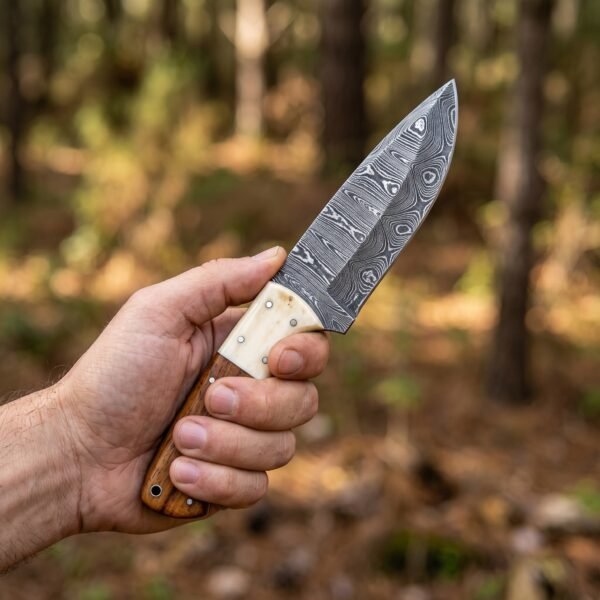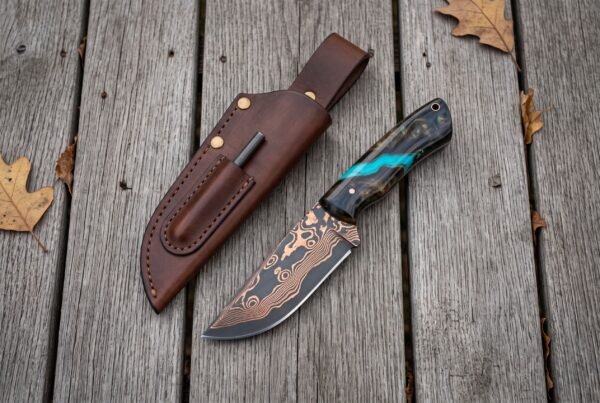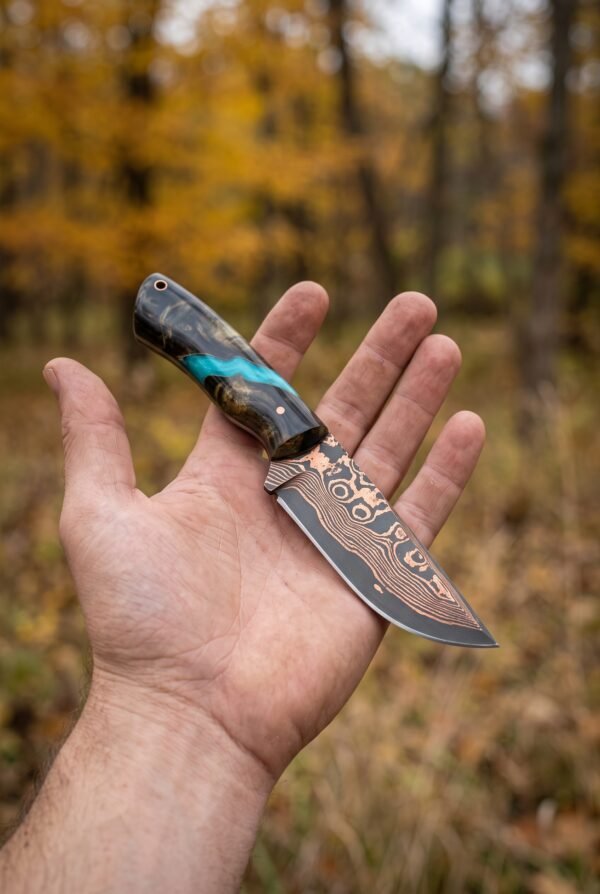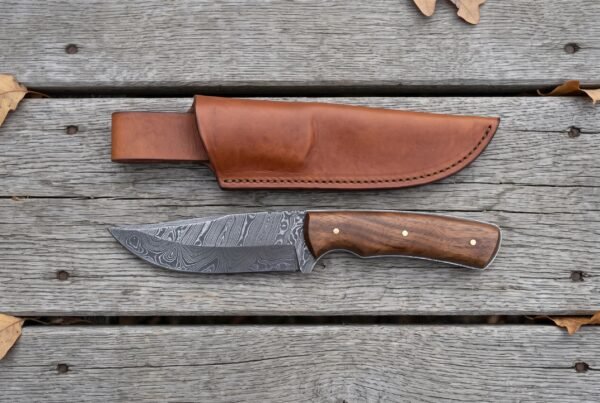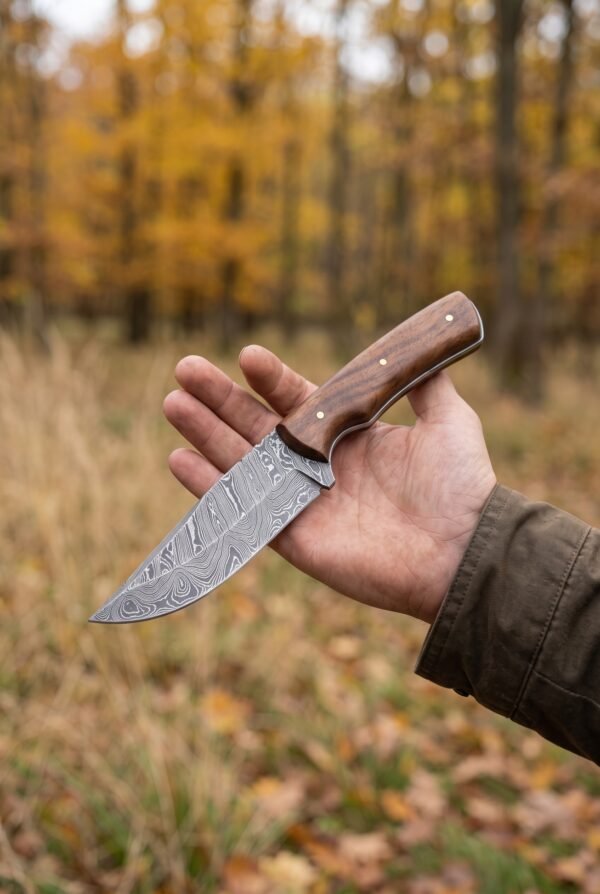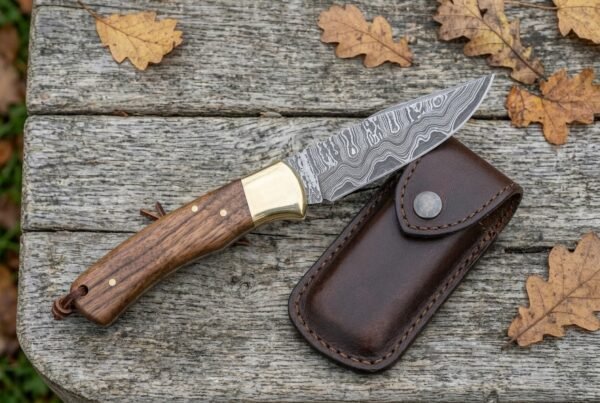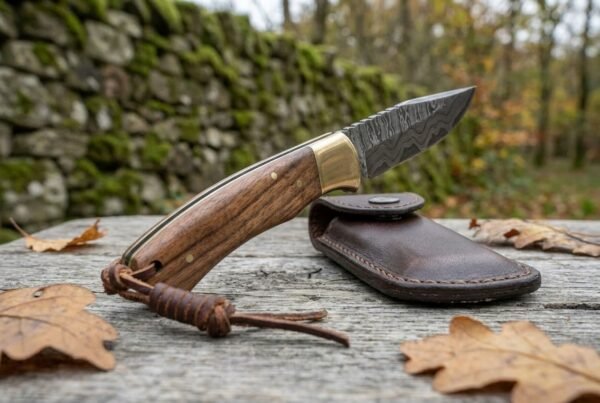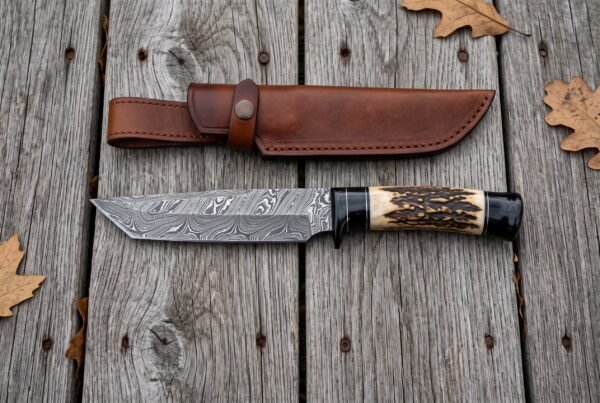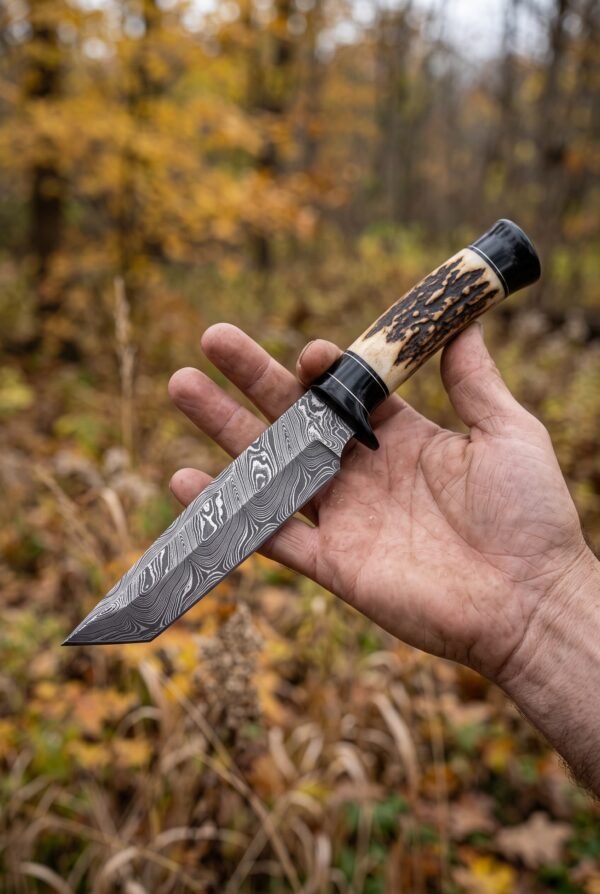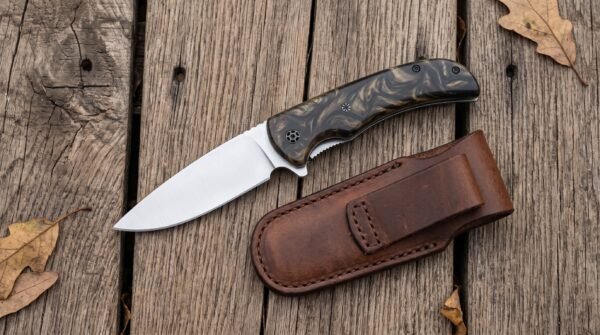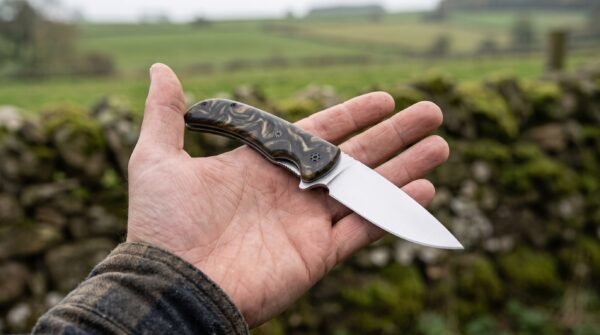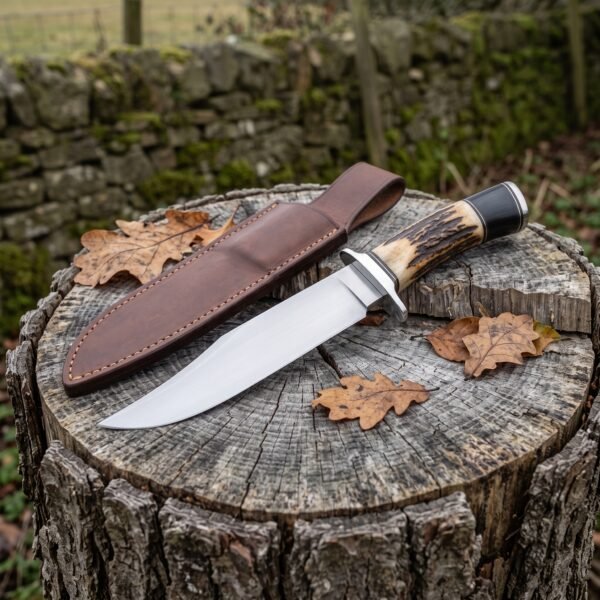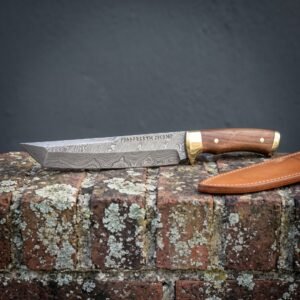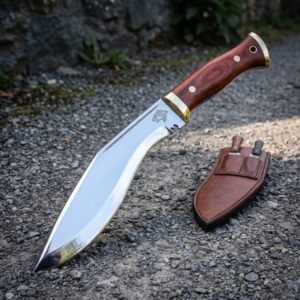
A trailing point knife has a spine that curves upward so the tip finishes above the line of the handle. That upsweep buys you the longest possible cutting edge for a given blade length and the deepest belly of any common shape, which is why it is the classic skinning profile and why it is a poor choice for anything that involves stabbing or drilling.
What is on this tag
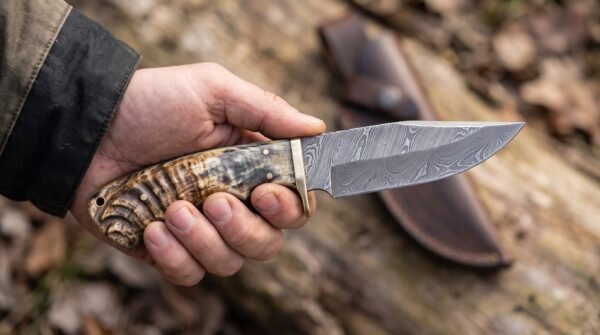
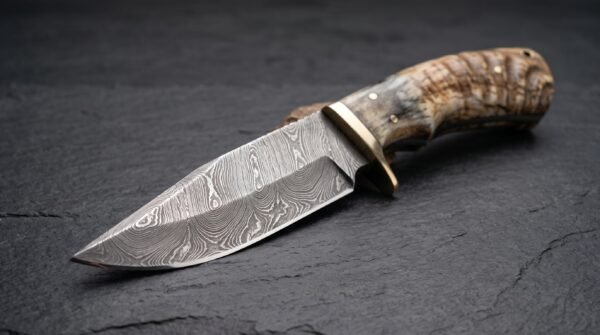
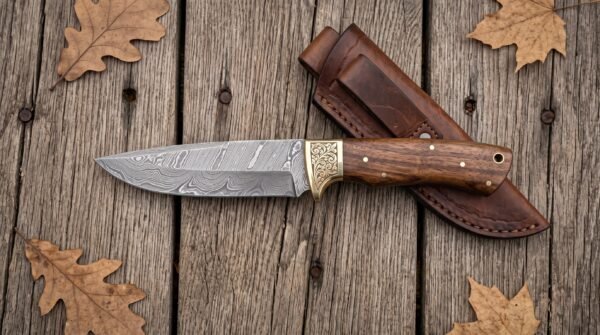
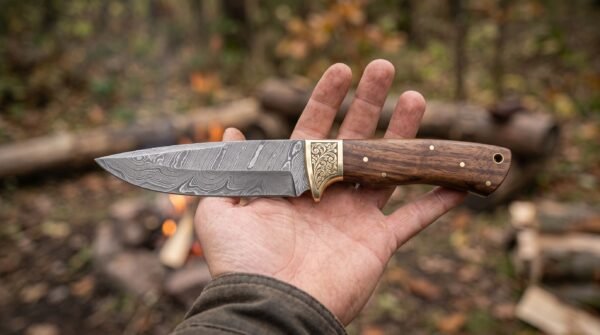
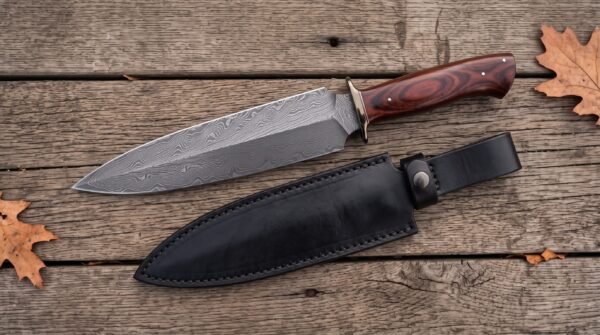
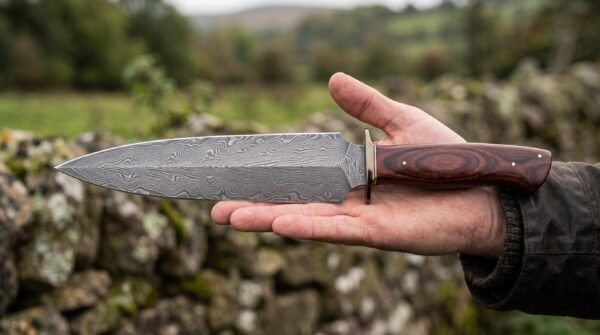
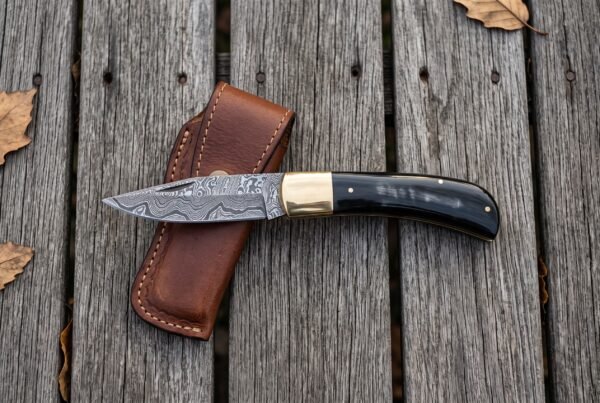
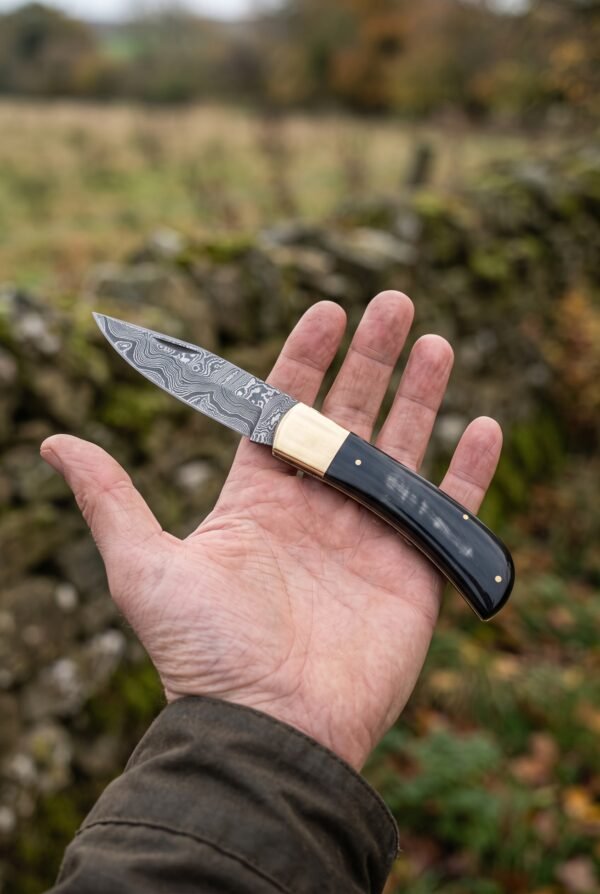
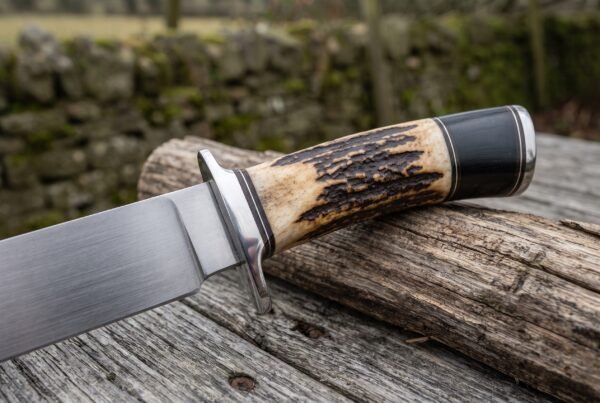
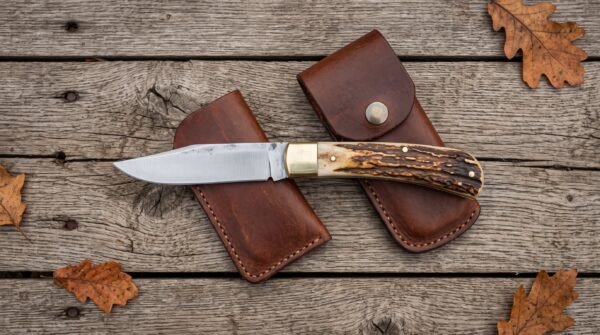
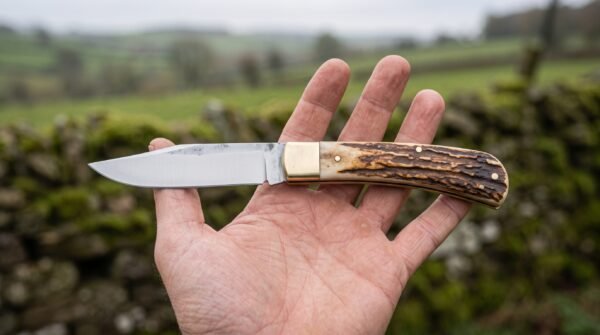
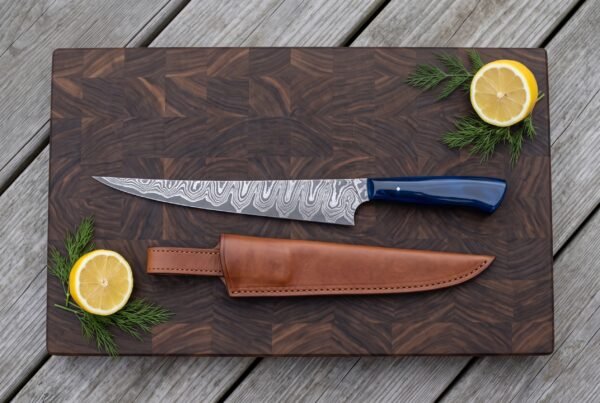
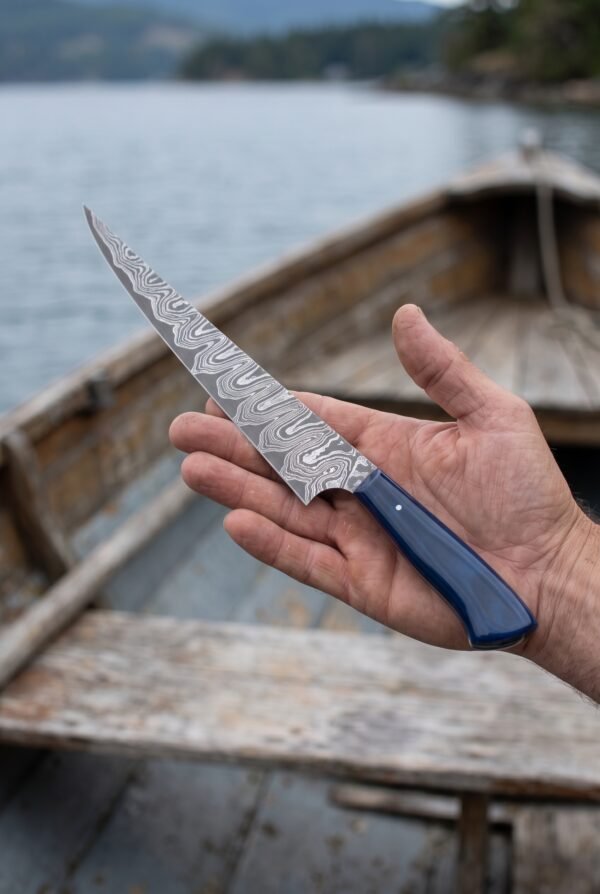
Skinners, hunting knives, bowies, fillet blades, camp knives and folding pocket knives. Blade lengths run 3, 3.5, 4, 5 and 8 inches, with overall lengths from about 6.5 to 13. Steel is mostly Damascus of 1095 and 15N20, forge welded and acid etched, at 58 to 60 HRC, with plain 1095 high carbon at 54 to 58 HRC, some D2 and a little stainless. Handles are wood, stag horn, rosewood, walnut, micarta and stabilized resin. Every fixed blade ships in a stitched cowhide sheath.
What the shape is good and bad at
Good at long slicing strokes where the edge does the work and the tip stays out of the way. Excellent at separating hide from a carcass. Good at filleting, which is why the shape survives in fish knives. Bad at piercing, because the tip is thin and sits high, and bad at fine detail work near a joint because you cannot see where the point is. It also sharpens slightly differently, since the belly is long and a short stone wants you to sweep the blade rather than push it straight. If you are choosing between profiles the hunter against skinner comparison is the practical version, and the skinning knife notes go into belly depth and length for deer.
Sizes worth having
Around 4 inches is the sweet spot for a skinner. Above 6 the upsweep starts to make the knife awkward for anything but bulk work. The compact patterns are in the Damascus skinner knives and the wider pattern welded range in the Damascus knives.
Sharpening the upsweep
A long belly wants a sweeping motion on the stone rather than a straight push, lifting the handle as you reach the tip so the angle stays constant around the curve. Done straight, you flatten the belly over time and lose the shape that made you buy the knife. It takes practice and it is the main reason people find skinners harder to maintain.
Free US shipping
On most pieces. Heavier and oversized ones carry a flat charge.
Hand Forged
Heated, hammered and ground by hand.
Engraving available
Names, dates or Norse runes on most pieces.