The part of a katana that decides whether it survives is the part nobody sees. The tang, the nakago, runs the full length of the handle in one unbroken piece of the same steel as the blade, and it is held in place by a tapered bamboo peg driven through the tsuka. There is no glue and no threaded pommel doing structural work. That arrangement is not a shortcut. It means a sword can be taken apart with a wooden punch and a light tap, inspected, dried and put back together, which is exactly why so many centuries old blades still exist in fresh mounts. Nightreed is built that way, in 1095 high carbon steel hardened to 54 to 58 HRC, with a 28.5 inch blade cut with a bo hi fuller. The three Japanese lengths do different jobs, compared in katana, wakizashi and tanto compared.
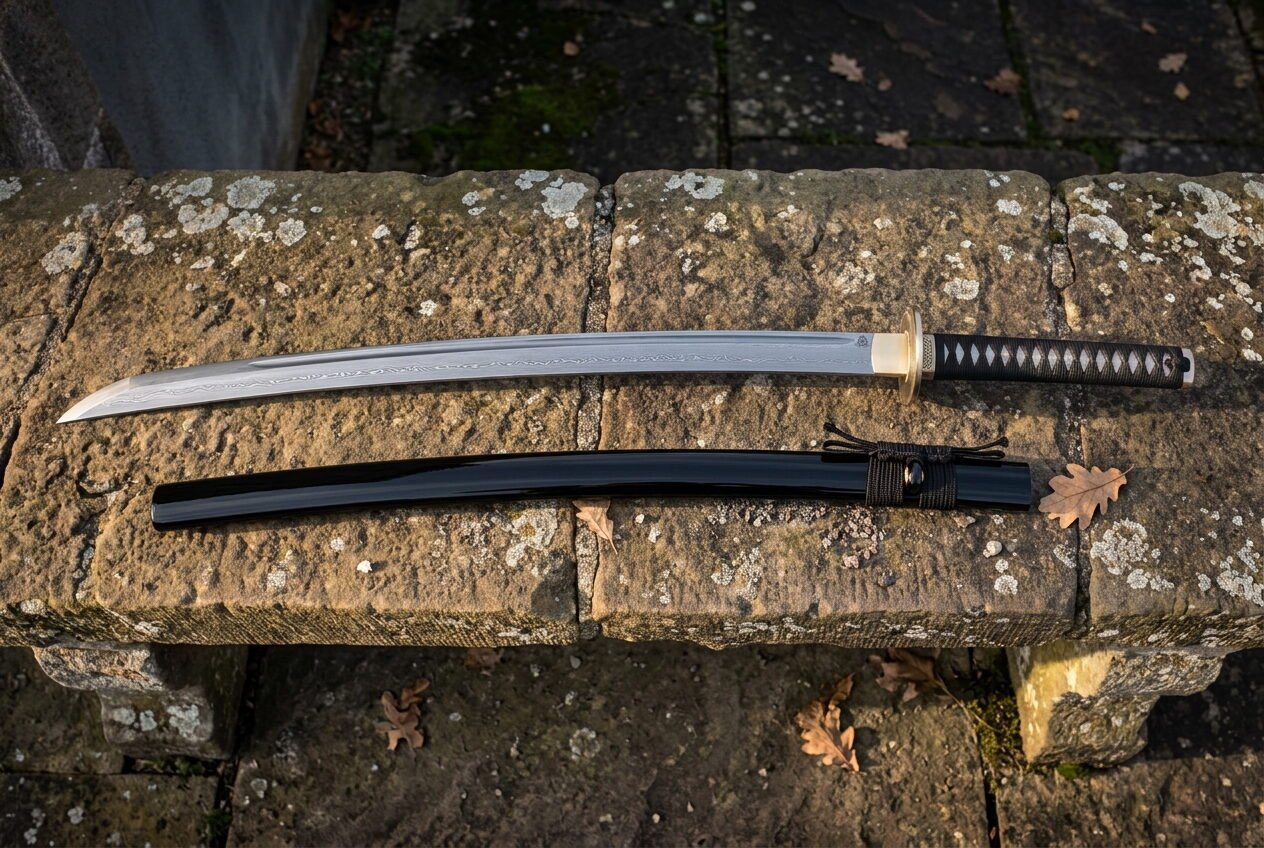
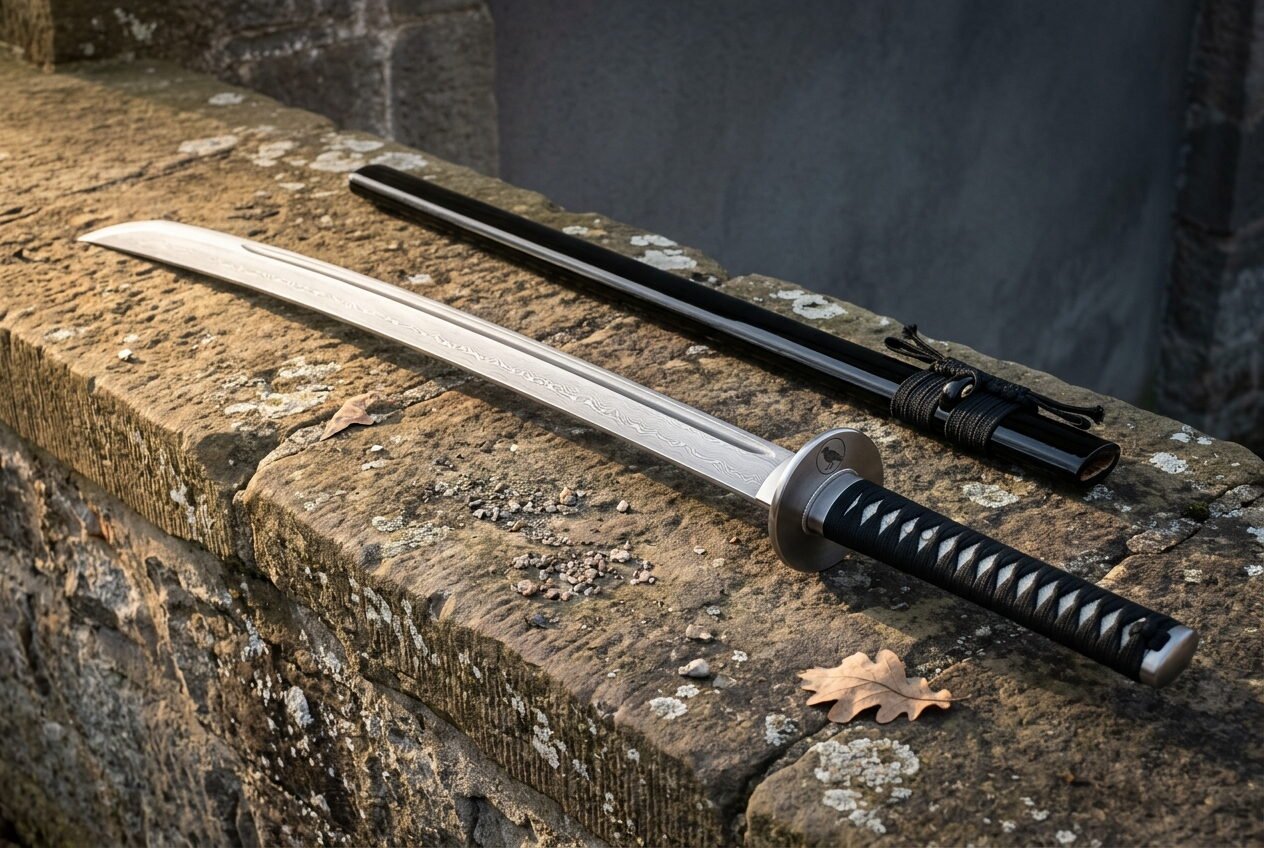
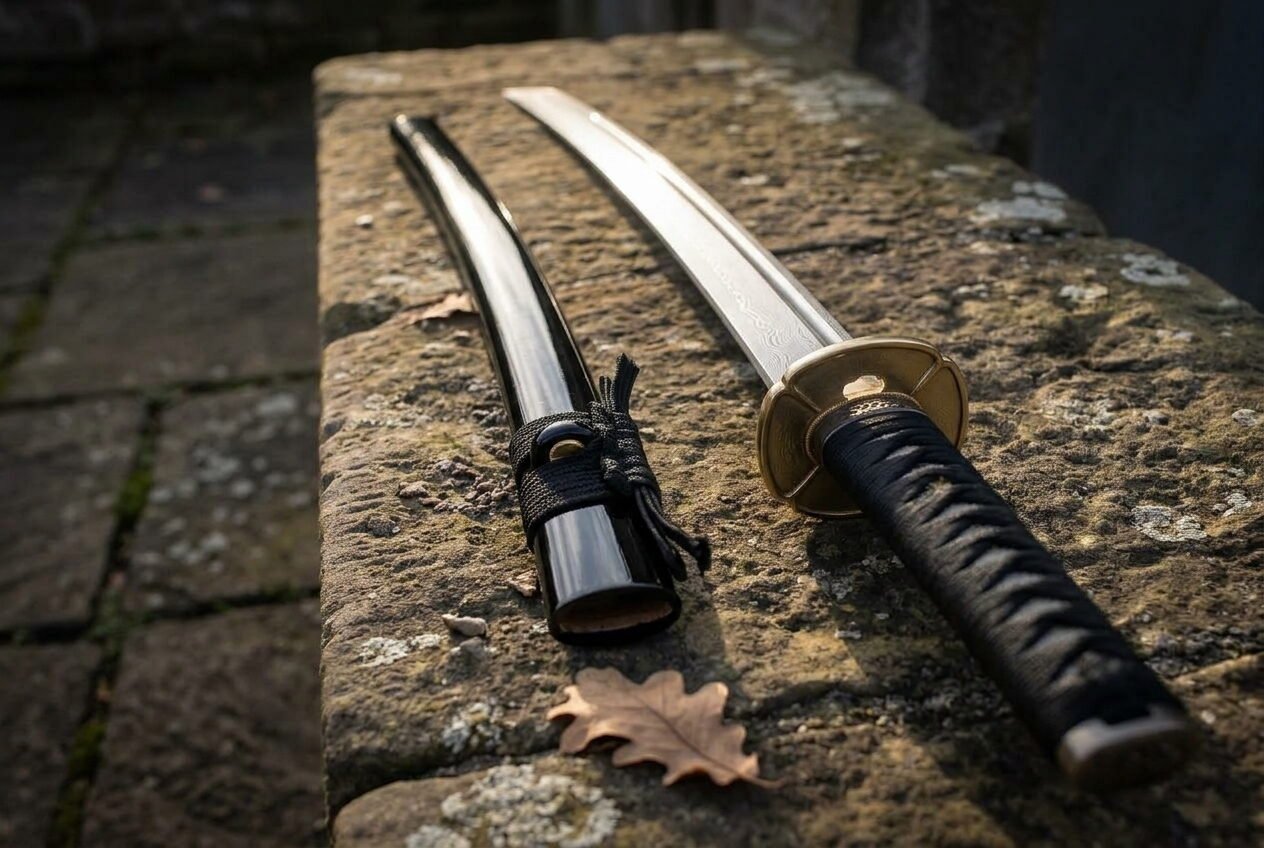
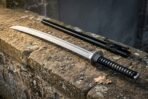
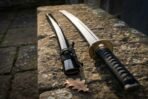
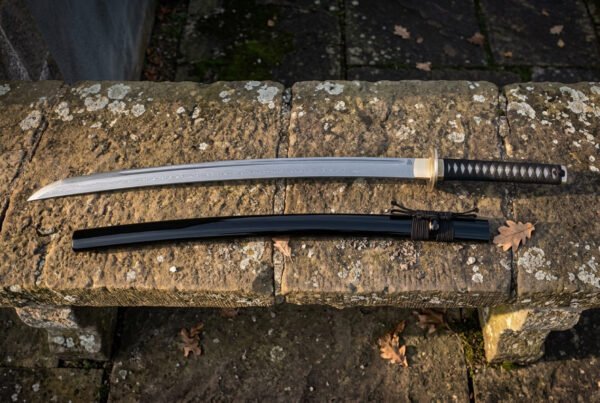
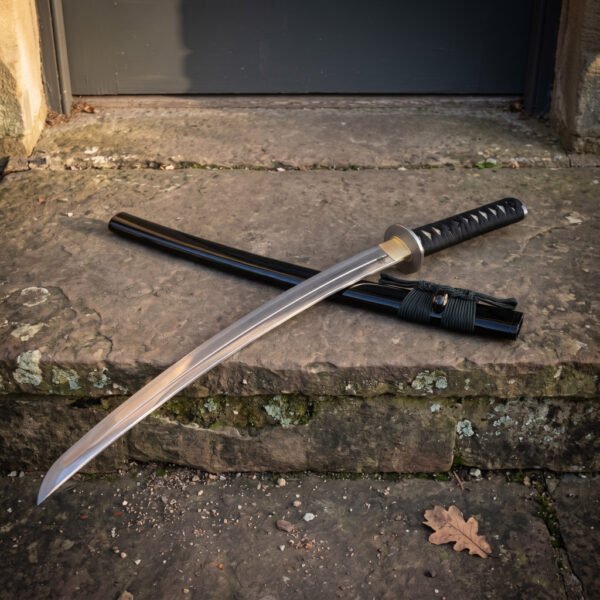
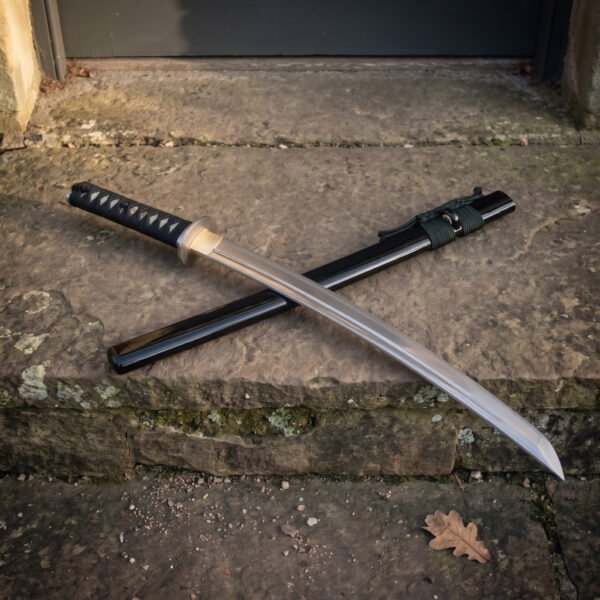
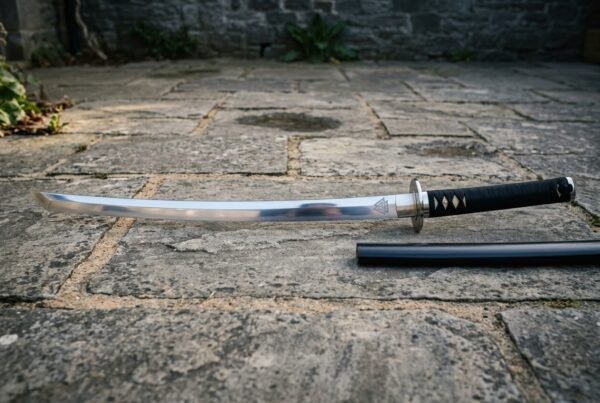
Forged, ground, heat treated and mounted by hand in the Czech Republic. It ships with the black lacquered wooden saya shown, a cord sageo, and a protective film of oil on the blade. Shipping within the United States is free.
Specifications
| Steel | 1095 high carbon steel |
|---|
| Hardness | 54 to 58 HRC |
|---|
| Overall length | 41 inches |
|---|
| Blade length | 28.5 inches |
|---|
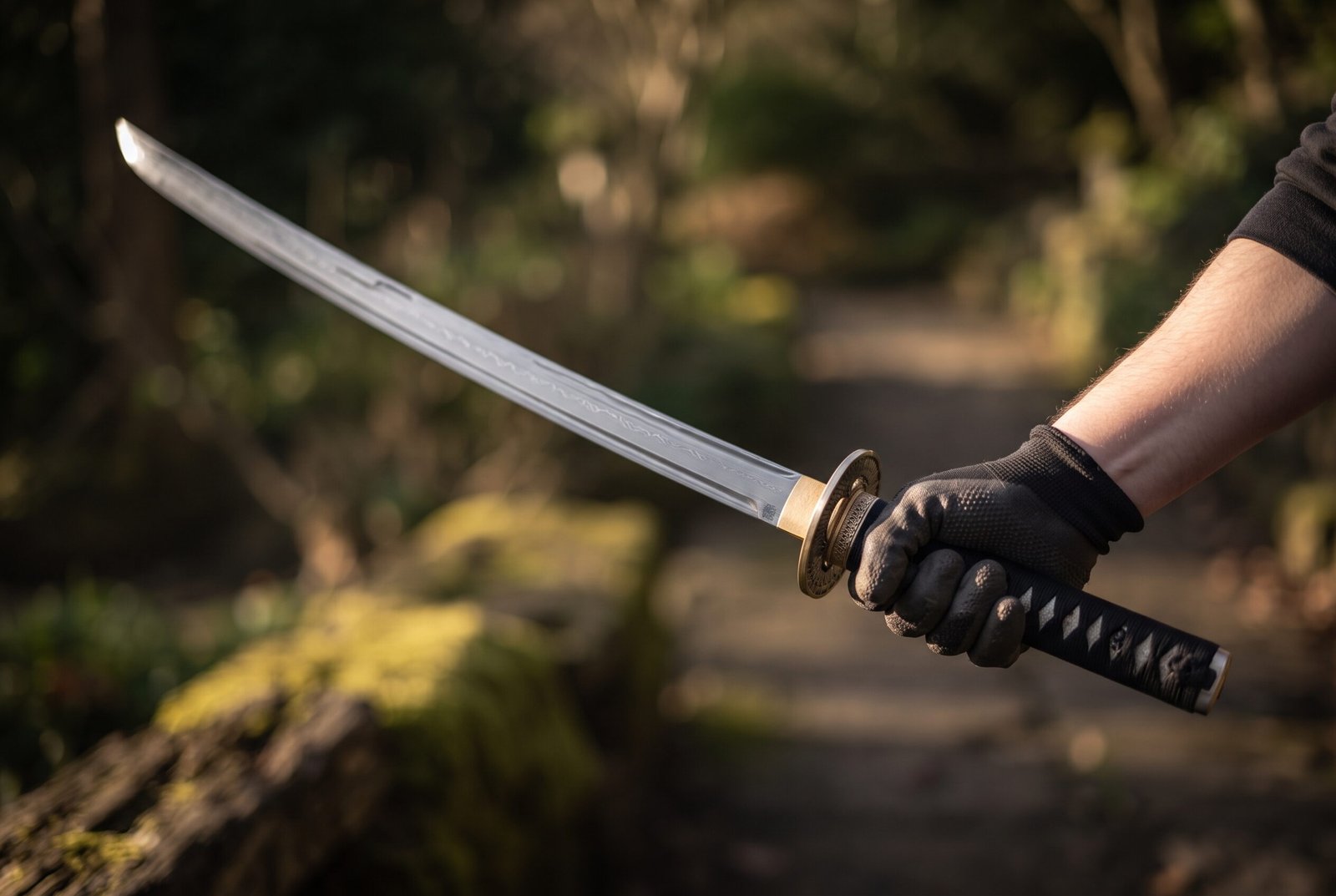
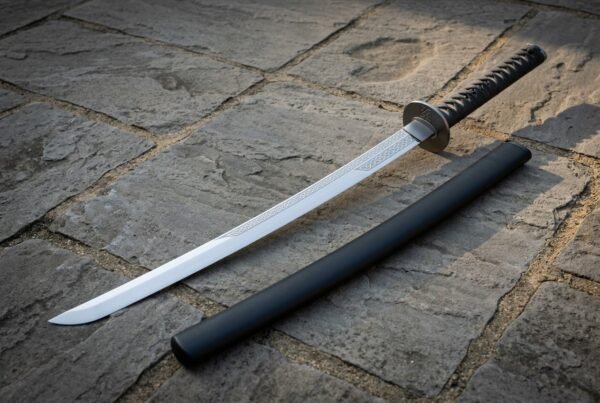
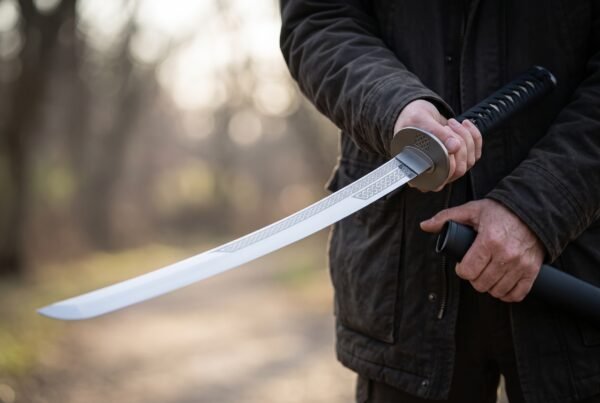
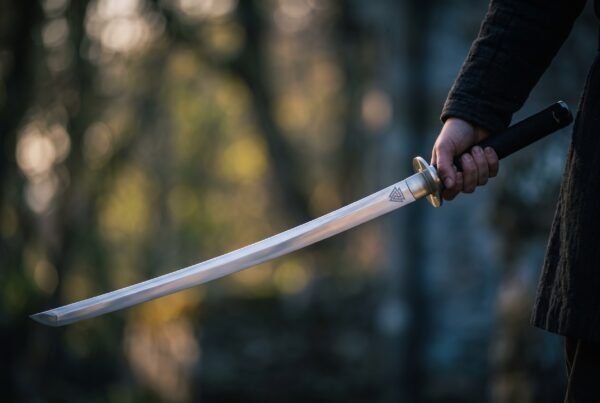
| Blade profile | Curved shinogi zukuri blade with a bo hi fuller, a wavy hamon line along the edge and a satin hand polish |
|---|
| Handle | Hardwood tsuka core wrapped in black cord over white same, twin mekugi pegs, metal kashira |
|---|
| Guard | Round brass tsuba with brass seppa and habaki |
|---|
| Scabbard | Black gloss lacquered wooden saya with black cord sageo tied at the kurikata |
|---|
| Weight | Approximately 2.5 pounds bare, 3.3 pounds in the saya |
|---|
| SKU | RK-1271 |
|---|
What the bo hi fuller is for
The long groove running down the flat of this blade is a bo hi, and it is not a blood channel. That story has been repeated for a century and it is simply wrong. The groove is a stiffness and weight device, and the engineering behind it is the same reason a steel I beam is shaped the way it is. Material sitting near the centre line of a bending blade carries almost no load. Material out at the edge and the spine carries nearly all of it. Grinding away the middle removes weight from where it does the least work and leaves the load bearing edges intact, so the blade loses mass without losing much resistance to bending.
The practical effect is that the sword comes alive in the hand. Weight disappears from the forward half, the balance point moves back towards the guard, and the blade changes direction faster at the end of a cut. There is a second, unintended benefit that anyone who has swung one knows immediately. A correctly cut hi sings as it passes through the air, and the note changes if your edge is not aligned with the line of the cut. It is an honest and unforgiving feedback device for practice.
Why 1095 high carbon steel and not stainless
1095 carries just under one percent carbon in plain iron with almost nothing else added. Because there is no chromium in the mix, none of the carbon is locked away in coarse carbides, and all of it is free to form the fine hard structures that let the steel take and hold a genuinely keen edge. It also means the steel is predictable under heat treatment, which matters when you are quenching a 28 inch blade and asking it to come out straight and hard along the edge and tough along the spine.
Stainless works the other way. Its chromium content buys corrosion resistance and pays for it with coarser carbides and, at sword length, a tendency to fail suddenly instead of taking a bend. A long blade should give warning before it lets go. The price of 1095 is that it rusts if it is left wet or fingerprinted, which is what the oil and the wipe down are for. The full comparison is set out in our steel and hardness notes.
The tsuka, the wrap and the mekugi
Two shaped halves of hardwood are fitted to the tang so closely that the handle would stay on with friction alone. They are closed over the nakago, covered in white same for grip and texture, then wrapped in black cord in alternating diamonds. Two bamboo mekugi pegs pass through handle and tang. Bamboo is used rather than steel on purpose. It is strong in shear but it will fail visibly and gradually rather than wearing an invisible groove into the tang, and it can be replaced in a minute with nothing more than a knife and a scrap of dowel.
Check the pegs occasionally and press the handle for movement before you use the sword. The core and the saya are both wood, and both do best kept out of prolonged damp and away from direct sun. Our notes on handle and sheath care cover the treatment they want.
Engraving, runes and your own design
Use the rune converter on this page to turn a name, a date or a short phrase into Elder Futhark and we will cut it into the steel or the handle. If you would rather have a Viking pattern than a rune line, choose your own design in the engraving option above the add to cart button and tell us whether it goes on the blade or the handle. Where a piece already carries an engraved design, your chosen engraving replaces it rather than sitting alongside it. Placement, depth and the layout of a longer line are covered on the engraving page.
Care and sharpening
Wipe the blade after every handling session, including the inside of the fuller where oil and dust collect and sit. A cloth with a little light mineral oil is enough. Avoid long term storage inside the saya in a humid room, because a wooden scabbard traps moisture against the steel and will mark a polish over a season.
The edge sharpens on ordinary water stones. Match the angle it was ground at, work along the curve rather than across it so the sori stays true, and finish on a fine stone and a strop. Reach for a coarse stone only when there is real damage to remove. The step by step is in steel care and sharpening with a whetstone.
Made in the Czech Republic
This is a handmade piece from the Czech Republic, made in a workshop that still forges, grinds and finishes by hand instead of stamping parts out. The smiths there have kept the older way of working, and the wood, horn and leather are shaped and fitted by hand as well. Two pieces of the same design will never be identical, and that is part of what you are buying.
Ransack Viking is a United States company. We handle the import ourselves, look over every piece when it lands and ship from our warehouse in Chicago, Illinois. Engraving is done in the United States after the piece arrives, so your design goes on before we send it out.
A note on handmade variation
This katana is hand forged. It is not machine made and it is not bulk produced, so what arrives will not be a pixel for pixel copy of the photograph. The polish will carry its own light, the line of the fuller will have been cut by eye and hand, and the grain and tone of the wood in the tsuka core and the saya will be their own. Even the exact profile of the curve varies slightly from blade to blade, because the sori is set in the quench rather than pressed into a die. Dimensions, steel and build are the same every time. The character is not.
Frequently asked questions
Is the fuller a blood groove?
No. It is a weight and stiffness feature, the same idea as the web of an I beam. It removes steel from the middle of the section where it does the least work, so the blade gets lighter and quicker without giving up much resistance to bending.
Does it come sharp?
Yes, sharpened and ready to cut. If you want it blunt for display or for a venue that requires it, say so in the order notes and we will send it unsharpened at no extra charge.
Can I practise cuts with it?
Yes, on soft targets. Rolled tatami, water bottles and light bamboo are what it is for. Keep it away from hard targets, wood, metal and sand filled cores, and never use it for contact sparring. Steel against steel chips a hardened edge.
Can I have runes engraved on it?
Yes. The rune converter on this page handles Elder Futhark, or you can choose your own Viking pattern in the engraving option above the add to cart button. Tell us whether it goes on the blade or the tsuka.
Will mine look like the photographs?
Very close. Same length, same steel, same black wrap and same fittings. The polish, the wood figure and small differences in the curve are individual to each sword.
How long does shipping take?
Free inside the United States. Most swords leave the shop in one to two weeks, a little longer if you have added engraving, then two to five days in transit.
What is in the box
- Nightreed hand forged 1095 high carbon steel katana
- Black lacquered wooden saya with black cord sageo
- Spare bamboo mekugi peg
- Protective oil coat on the blade
- Care and sharpening card
- Elder Futhark rune engraving where selected
- Forged and finished in the Czech Republic
Explore the range
Browse the rest of the katana and Japanese swords, the companion wakizashi, the straight bladed short swords, or read the guides.
Worth a look beside this
Sitting beside it in the catalogue is the Nightbraid Japanese sword. Another in the same line is the Knotcurve Japanese sword, forged from 1095. Next along the rack is the Stormfold Japanese sword, pattern welded Damascus.
Fitting out further, the Palefrost longsword belongs with it. Or start from a blank sheet on the design your own page.

This sword is well made. Just a couple small things kept it from 5 stars. Wood handle looks great though it’s a little smaller than I imagined. Still very happy with it and would recommend. Good to know it ships domestically from the US despite being made overseas.
Feels way more premium than the price suggests. Even the small engravings are crisp and clean. High Carbon Steel blade holds a razor edge right out of the box. Fit and finish is museum quality. You can tell real craftsmen made this by hand. Can’t recommend this enough.
Got this as a gift and now I want one for myself too. High Carbon Steel blade holds a razor edge right out of the box. Edge retention has been great even after regular use. Fit and finish is museum quality. You can tell real craftsmen made this by hand. So worth it.