Blog
Gifts for History Buffs: Viking and Medieval Pieces Worth Giving

The best gifts for history buffs are objects with a real find behind them: a helmet copied from the one surviving Viking Age example, a board game that turns up in graves, a knife shape that sits in the British Museum. A history lover can tell a costume prop from a piece with a source, and will tell you so at length. Below are Viking and medieval pieces worth giving, each tied to the history it comes from, with regular prices and an honest note on where the reproduction parts company with the original.
A word on where these come from. Every piece is handmade in the Czech Republic by workshops that still work by hand, and imported by Ransack Viking. Prices quoted are the regular prices; if a sale is running when you read this, the cart shows the current offer.
Quick picks for history lovers
| If they love | Pick | Price | The history behind it |
|---|---|---|---|
| The Viking Age, seriously | Skyglass spectacle helmet | $359 | The Gjermundbu helmet, found in Norway in 1943 |
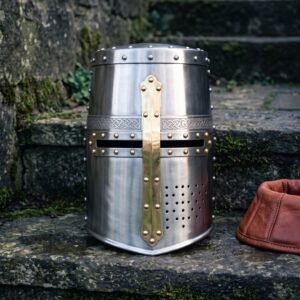
| Knights and crusades | Grimward great helm | $409 | The flat topped helm of the early thirteenth century |
| Games and long evenings | Kingsnare oak hnefatafl board | $199 | The tafl games of the Norse world |
| Anglo Saxon England | Hornsax broken back seax | $259 | The Seax of Beagnoth, found in the Thames |
| Weapons that did real work | Langbeard bearded axe | $299 | The skeggøx, the bearded axe of the north |
| Feasting and the hall | Hornmead drinking horn | $159 | From Gallehus gold to Sutton Hoo aurochs horn |
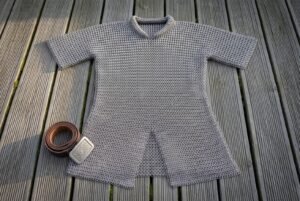
| Armour and how it was made | Ringwarden mail hauberk | $329 | The mail fragments from the Gjermundbu grave |
| Ships and sea raids | Emberward round shield | $399 | The 64 shields of the Gokstad ship |
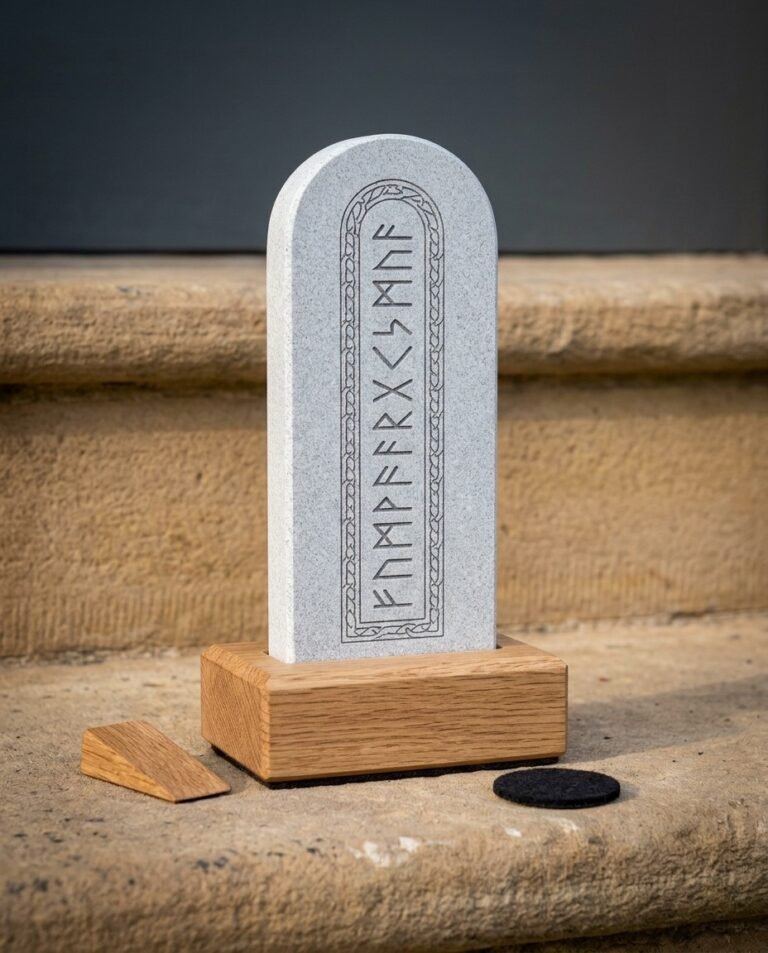
| Runes and inscriptions | Slatestave rune stone | $159 | Thousands of Scandinavian runestones |
Viking helmets with a real original
Most Viking helmets sold online are based on films, which is a problem for a gift aimed at somebody who knows better. The one complete enough to copy properly is the Gjermundbu helmet, found on a farm in Ringerike in Norway in 1943 and dated to the tenth century. It is a rounded cap with a spectacle guard riveted across the eyes and nose, and it has no horns, which will disappoint nobody who reads history.
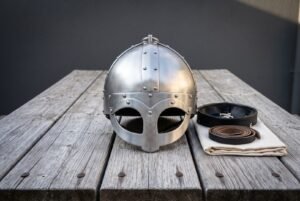 Skyglass Hand Forged Steel Viking Spectacle Helmet | 18 Gauge Mild Steel | Riveted Eye Guards and Padded Leather Liner | Norse Reenactment Gift | RK-1590
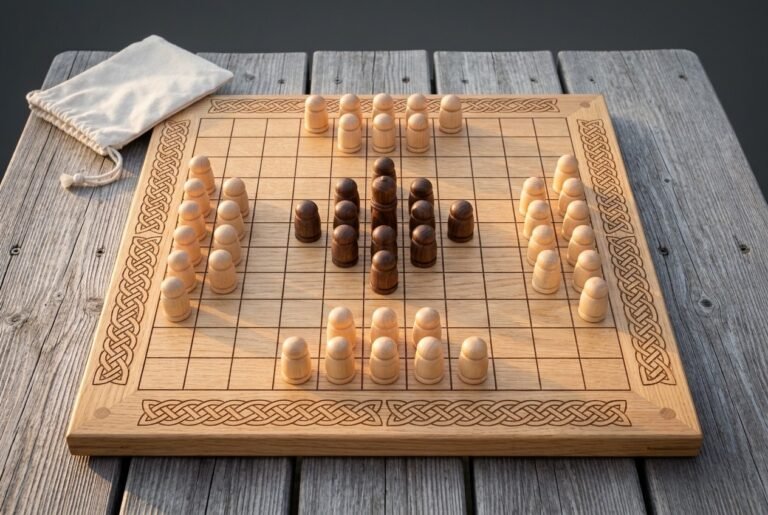
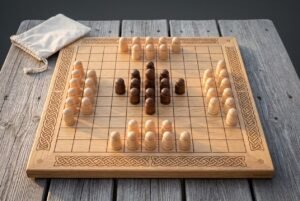 Kingsnare Hand Made Oak Hnefatafl Viking Chess Board Game | 11 by 11 Grid with 37 Turned Pieces | Burned Celtic Knotwork Border and Canvas Pouch | Norse Family Gift | RK-1752
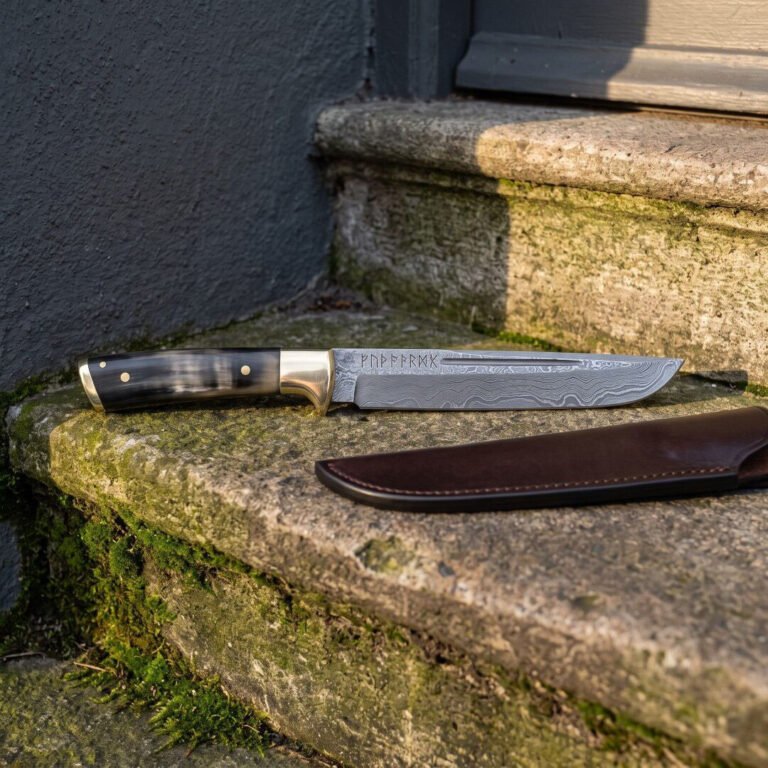
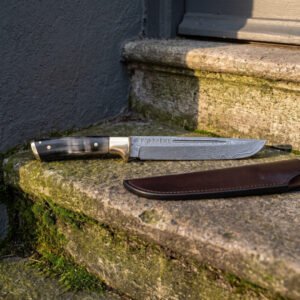 Hornsax Hand Forged Damascus Steel Broken Back Seax | 12 Inch Overall Length | Horn Handle with Rune Etched Blade and Brass Fittings | Norse Belt Knife Gift | RK-2157
The Skyglass spectacle helmet follows the Gjermundbu pattern in polished 18 gauge mild steel over a four panel skull, with a riveted brow band, a padded leather liner and a chin strap. It is $359. Eighteen gauge suits display and costume; for contact reenactment most groups want 16 gauge or heavier, so check first. If they want the full argument about what Vikings wore on their heads, our article on what Viking helmets looked like goes through every surviving fragment.

Medieval gifts: the great helm
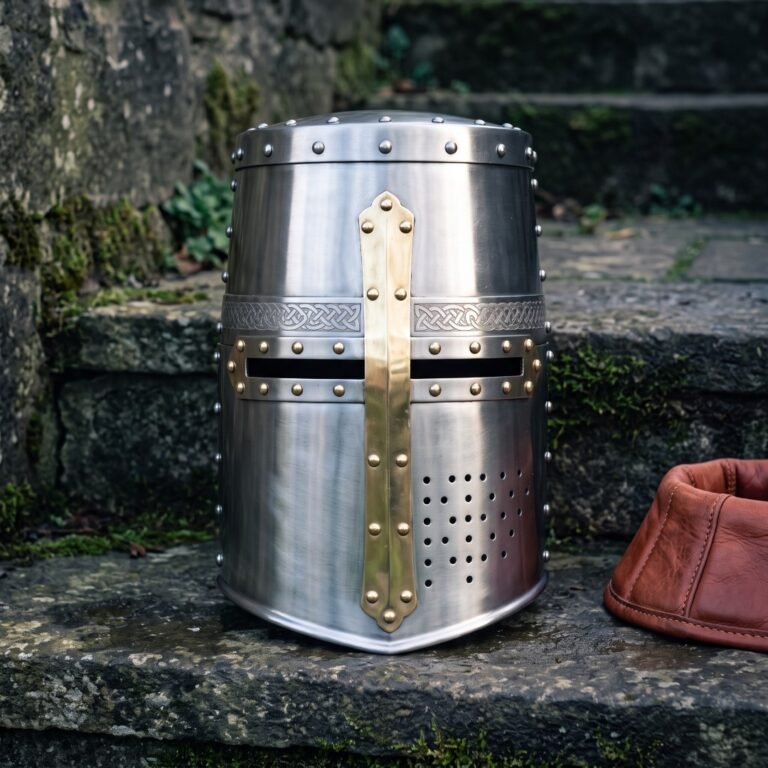
For the history lover whose period starts after 1066, the great helm is the medieval helmet people picture. It appears around 1200, closes the face completely behind eye slits and breathing holes, and belongs to the knights of the thirteenth century, crusaders included. The early ones had flat tops, which turned out to be a poor idea, since a blow from above lands square instead of glancing off. Later helms grew taller and more rounded for exactly that reason.
The Grimward great helm is the flat topped form, riveted from 16 gauge plates with a brass cross reinforce down the face and a field of breathing holes on one cheek. It is $409 and rated 5.0 from 5 reviews. The wider range of knightly and later helmets is under medieval helmets.
Hnefatafl, the board game in the graves
Before chess reached Scandinavia, the Norse played tafl games, of which hnefatafl is the best known. Playing pieces and boards turn up in graves across the Norse world, a wooden board with a seven by seven grid was found at Ballinderry in Ireland, and the game turns up again and again in the sagas and poems. The catch, which a history buff will raise before the wrapping paper is off, is that no Viking wrote down the rules. Modern rules are reconstructed, largely from a version called tablut that Carl Linnaeus watched being played in Lapland in 1732.
The Kingsnare oak hnefatafl board has an eleven by eleven grid cut into solid oak, a burned knotwork border and 37 turned pieces: 24 attackers, 12 defenders and a taller king. It is $199. Our guide to the hnefatafl board and how it is played explains the rules, the variants and what is reconstructed. More sets are under Hnefatafl Viking games.
The drinking horn, from Gallehus to Sutton Hoo
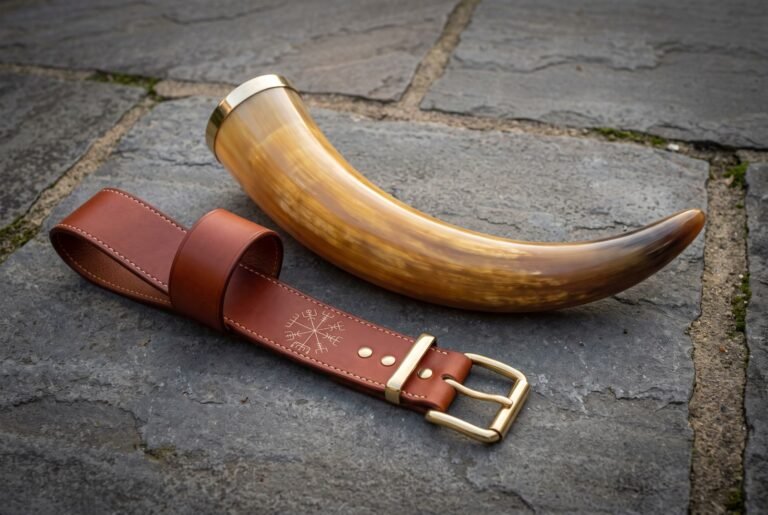
Drinking horns run right through northern history. The two golden horns found at Gallehus in Denmark in 1639 and 1734 date from the fifth century and carry one of the most famous early runic inscriptions. They were stolen and melted down in 1802, so the ones in the museum today are copies. The Sutton Hoo ship burial in England held a pair of huge aurochs horns with silver gilt fittings, and Gotland picture stones show women greeting riders with a horn in hand. Most horns did not survive the ground, but their metal fittings did.
The Hornmead drinking horn is natural ox horn with a polished brass rim, sealed inside for drinking, and comes with a leather belt hanger stamped with a Vegvisir. It is $159. A horn is a useful gift for someone who reads about feasts and would like to attend one; our article on Viking food and the midwinter feast explains what went in it and what went on the table beside it.
The seax, and the one in the British Museum
The seax was the single edged knife carried across the Germanic world, from Anglo Saxon England to Scandinavia, in sizes from a small belt knife to a long fighting blade. The best known has the broken back profile, where the spine runs straight and then angles down sharply to the point. The Seax of Beagnoth, pulled out of the Thames at Battersea in 1857 and now in the British Museum, is a tenth century broken back seax inlaid with the complete Anglo Saxon runic alphabet and the name Beagnoth, probably the owner or the smith. Nobody is quite sure which, which is the kind of uncertainty a history lover enjoys.
The Hornsax broken back seax is about 12 inches overall with a 7 inch blade in etched Damascus, a horn handle, brass fittings and a leather belt sheath. It is $259. For the long form, the Broadsax langseax runs to 28 inches overall with a 22 inch broken back blade and is $299. The rest are under Viking seax.
The bearded axe
The axe was among the most common weapons of the Viking Age, not least because every farm already had one. The bearded axe, skeggøx in Old Norse, has a lower edge that drops below the line of the head, which gives a long cutting edge without much extra weight and lets the user hook behind things. The most famous single axe of the period is the one from Mammen in Denmark, from a grave dated to the winter of 970 to 971, inlaid with silver so finely that it gave its name to a whole art style.
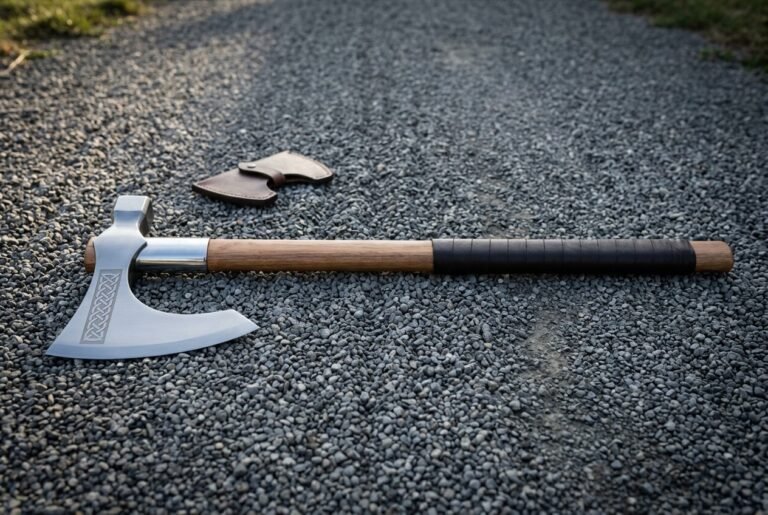
The Langbeard bearded axe is a one hand axe of about 21 inches with a 1095 steel head, a 7 inch sweeping beard, knotwork cut into the cheek, an ash haft and a leather edge guard. It is $299 and rated 4.2 from 5 reviews. It is sized for one hand and the belt, rather than the long hafted Dane axe of the later Viking Age. More are under bearded axes.
Mail, and why it was rare
Mail was expensive in the Viking Age. Every ring had to be drawn, cut, linked and closed by hand, and a full shirt meant tens of thousands of them. Very little Viking Age mail survives in Scandinavia, and the best known fragments come from the same Gjermundbu grave that gave us the helmet. Most men fighting in the period probably went without. The word chainmail itself is a modern invention, which is a fact your history buff will either enjoy or already know.
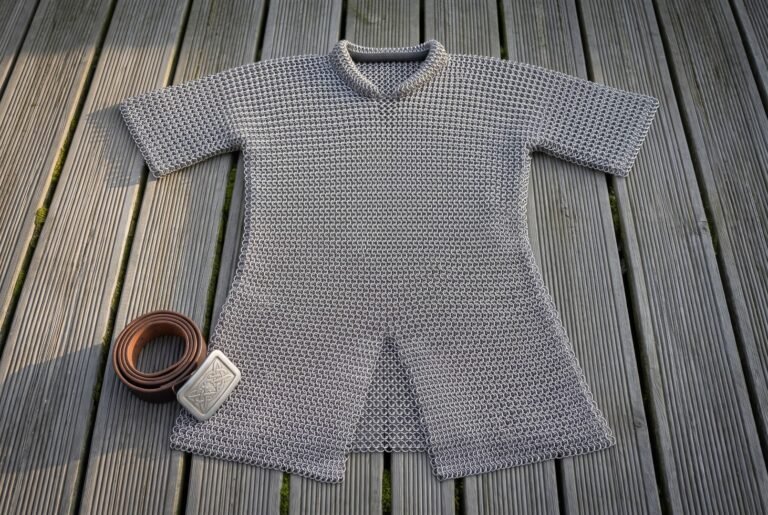
The Ringwarden mail hauberk is woven from about 9 mm mild steel rings in the four in one pattern, thigh length with short sleeves and a split skirt, made to the wearer’s chest measurement. It is $329. The rings are butted rather than riveted, which suits display and costume; original mail was riveted, and groups that do contact fighting often require it. Our article on Viking armour covers what was actually worn.
The round shield and the Gokstad ship
The Gokstad ship, excavated in Norway in 1880 from a burial of around 900, carried 64 round shields along its sides, painted alternately black and yellow and each a little under a metre across. They are the best evidence there is for how Viking shields were built: planks laid edge to edge, a central hand hole covered by an iron boss, and a single grip behind it.
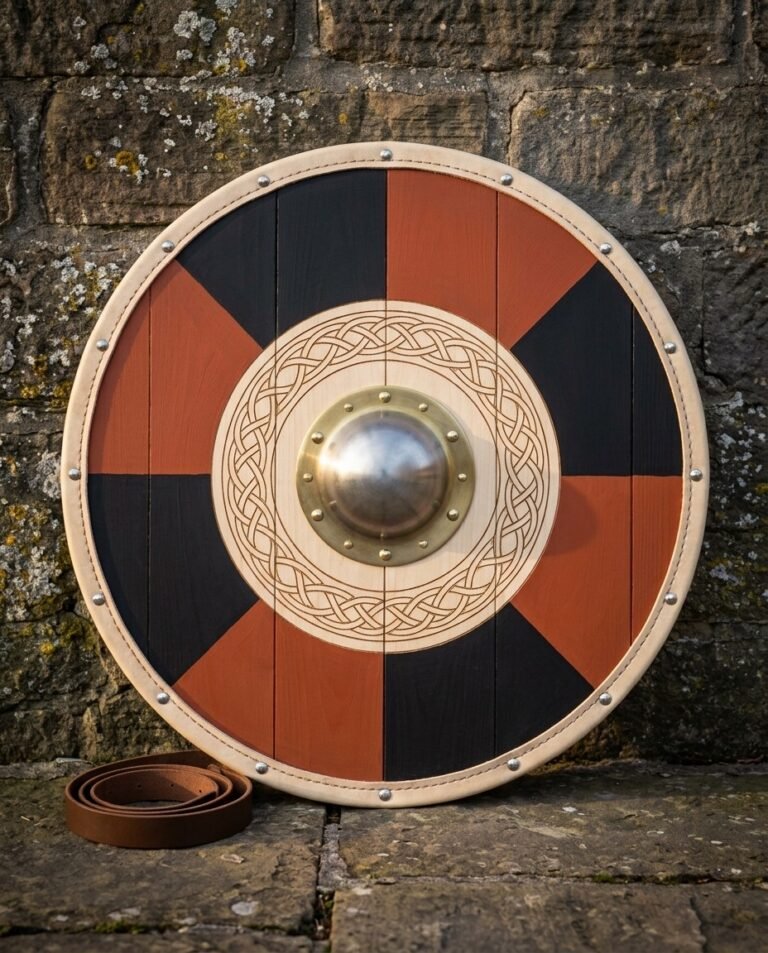
The Emberward round shield is about 30 inches across, built from linden planks glued edge to edge, painted in red and black segments with a carved knotwork ring, a domed steel boss and a rawhide bound rim. It is $399. Other designs are under round shields.
A rune stone for the desk
Scandinavia is full of runestones, mostly memorials raised in the eleventh century, with Sweden alone holding roughly two and a half thousand. The best known are the stones at Jelling in Denmark, where Harald Bluetooth recorded around 965 that he had won all of Denmark and Norway and made the Danes Christian, an early example of a king writing his own press release in stone.
The Slatestave rune stone stands about 10 inches tall in a solid oak base and carries a column of Elder Futhark runes inside a knotwork arch. It is $159. One honest note: the Elder Futhark, with 24 runes, had gone out of use before the Viking Age, and the stones raised by Vikings used the shorter Younger Futhark of 16. A history buff will spot this. Consider it a conversation piece. Rune sets and plaques are under runestones and rune sets.
What to skip
Horned helmets, unless the person you are buying for is under ten or works in opera. The horns came from nineteenth century costume design, and a history lover will thank you politely and put it in the loft. Skip anything sold as a replica of a famous original without saying which original, and be wary of steel thickness that is not stated. A fantasy sword is fine if they love the film, but it is a different gift for a different person.
If you are shopping for a partner in particular, Christmas gifts for your husband sorts the picks by the kind of man he is, and Viking Christmas gifts covers stocking stuffers and every budget. For the history lover who wants to argue about Santa Claus over dinner, is Father Christmas really Odin? should keep them busy.
For something smaller to wear, Viking jewelry for men covers rings, Mjolnir pendants and arm rings.
Questions people ask
What is a good gift for a history buff?
Something with a real original behind it, so they can look up the find. A helmet based on Gjermundbu, a hnefatafl board, a broken back seax or a drinking horn all tie to specific objects or graves. History buffs tend to value accuracy over size, so a smaller accurate piece usually beats a larger fantasy one.
What are good medieval gifts?
A great helm, a mail coif or hauberk, a sallet or a period style sword all suit someone interested in the high and late Middle Ages. Pick the period first. A thirteenth century great helm and a fifteenth century sallet belong to different worlds, and the recipient will notice.
Are these pieces historically accurate?
They follow historical patterns but are made for display, costume and light use rather than as museum reproductions. Each section above notes where a piece departs from the original, such as butted rather than riveted mail or Elder Futhark runes on a Viking style stone.
Can these gifts be engraved?
Many can. Names in Elder Futhark runes, Norse symbols and initials are offered on a large part of the range, and the product page shows the options for each piece. Engraving is cut in the United States after the piece arrives.
Is a Viking helmet a good gift for someone who does reenactment?
Only if you check the rules of their group first. Most require a minimum steel thickness for contact fighting, often 16 gauge, and some require specific helmet styles for their period. For display or costume, 18 gauge is fine.
What history gifts are good for the whole family?
A hnefatafl board is the safest choice. It is easy to learn, a game lasts an evening, and nobody needs a sheath for it. A drinking horn for the adults and a board game for everyone covers most households.
Shop the range
Skyglass Hand Forged Steel Viking Spectacle Helmet | 18 Gauge Mild Steel | Riveted Eye Guards and Padded Leather Liner | Norse Reenactment Gift | RK-1590Kingsnare Hand Made Oak Hnefatafl Viking Chess Board Game | 11 by 11 Grid with 37 Turned Pieces | Burned Celtic Knotwork Border and Canvas Pouch | Norse Family Gift | RK-1752Hornsax Hand Forged Damascus Steel Broken Back Seax | 12 Inch Overall Length | Horn Handle with Rune Etched Blade and Brass Fittings | Norse Belt Knife Gift | RK-2157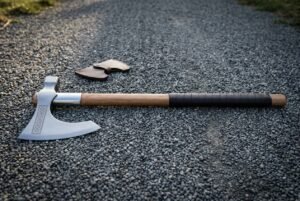 Langbeard Hand Forged 1095 Steel Bearded Axe | 21 Inch Ash Haft | Knotwork Engraved Head with Steel Collar and Leather Edge Guard | Norse Reenactment Gift | RK-1914
 Ringwarden Hand Made Butted Chainmail Hauberk | Thigh Length with Short Sleeves | 9 mm Mild Steel Rings and Split Skirt | Norse Reenactment Gift | RK-1519
 Grimward Hand Forged Steel Great Helm | 16 Gauge Riveted Crusader Helmet | Brass Cross Reinforce and Knotwork Engraved Band | Display Gift | RK-1523
