
Blog
Baldur and the Death That Started Ragnarok

Baldur is the god everyone liked, killed by a plant nobody thought to ask, using a brother who could not see what he was throwing. His death is the hinge the whole Norse apocalypse turns on, and it is the one myth where the gods lose entirely before the fighting even starts.
It is also a story with two completely different surviving versions, which most retellings quietly ignore. This page gives both, along with where each comes from, because the difference is more interesting than the smoothed-over composite.
The name and the spellings
The Old Norse is Baldr. Baldur is the Icelandic form, Balder the mainland Scandinavian one, and all of them are legitimate. Old English has Bældæg and Old High German has Balder or Palter, so the name is Germanic rather than purely Norse.
The etymology is contested. The most common reading takes it back to a Proto-Germanic word meaning brave or bold, giving something like hero or prince. Jacob Grimm proposed a link to a root meaning white, then shining, then strong, which would make him a light god and is the reading most popular retellings use. Rudolf Simek has pointed out the obvious problem, which is that a warlike etymology sits badly with a figure who does nothing warlike in any surviving story. Nobody has resolved it.
Where the story comes from
Four Norse sources carry it, and they carry different amounts.
 Runeleaf Hand Forged Elder Futhark Spear | 44 Inch Overall with 11 Inch Head | Ash Haft, Red Leather Grip and Brown Leather Head Sheath | Norse Reenactment Gift | RK-1981
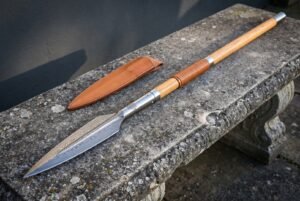 Serpentcast Hand Forged Damascus Spear | 42 Inch Overall with 12 Inch Head | Ash Haft, Leather Grip Wrap and Brown Leather Head Sheath | Norse Reenactment Gift | RK-1976
 Skybridge Hand Made Silver Tone Bifrost Pendant with a Rope Twist Border & Heavy Curb Chain | Norse Necklace Gift | RK-1664
Voluspa gives the bare bones in a handful of stanzas: the mistletoe, the bleeding god, Hodr as the one who threw, Frigg weeping, and a son born to avenge him. Baldrs draumar is a short poem in which Odin rides down to the world of the dead and wakes a dead seeress to ask why his son is having bad dreams. She tells him. Lokasenna has Loki, at a feast, claim the credit to Frigg’s face. And Snorri’s Gylfaginning gives the long narrative version, with all the furniture.
The first three are older material. Snorri is the one with the details everyone remembers, and it is worth keeping that in mind. Where a detail appears only in Snorri, it is a thirteenth century Christian Icelander telling you what a pagan story meant.
What Snorri says happened
The dreams
Baldur begins dreaming about his own death. The gods take this seriously, because in this literature dreams are information rather than anxiety. Frigg goes out and takes an oath from everything in the world not to harm her son: fire, water, iron, stones, trees, sicknesses, animals, poisons, snakes. Everything agrees.
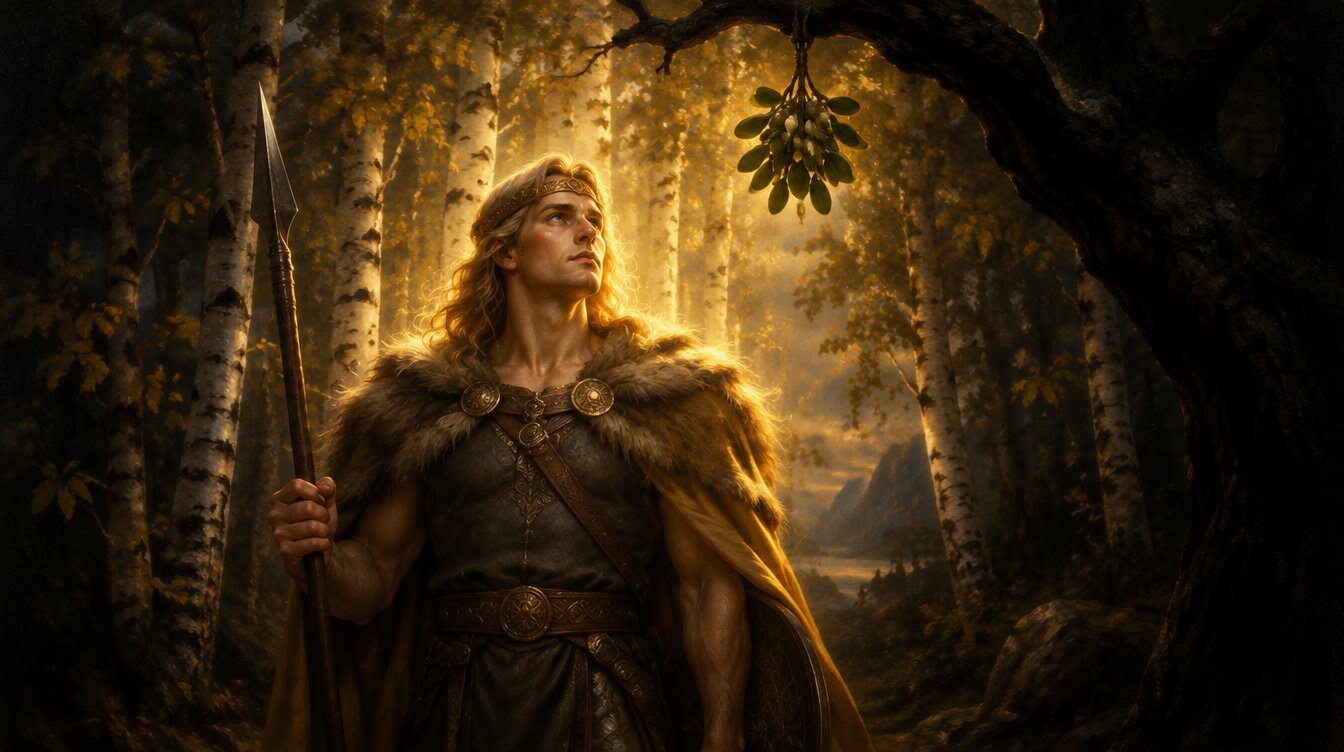
She skips one plant. Mistletoe, growing west of Valhalla, which she judged too young and too small to bother with. In the source that judgement is stated flatly, with no dramatic irony flagged. The story does not need to flag it.
The game
With Baldur now invulnerable, the gods invent a pastime. They stand him up and throw things at him, shoot at him, hit him with axes, and it all bounces off, and they find this hilarious. Everyone joins in except Hodr, Baldur’s brother, who is blind and has nothing to throw.
Loki, disguised as a woman, gets the mistletoe detail out of Frigg by asking politely. He cuts a shaft from the plant, goes to Hodr, and offers to help him take part, guiding his aim. Hodr throws. Baldur falls dead. Snorri says that was the greatest misfortune ever worked among gods and men, and then adds the detail that undoes them completely: they could not avenge him, because they were standing in a sanctuary where blood could not be shed.
The funeral
They carry the body to Baldur’s ship Hringhorni to burn it. The ship will not move. A giantess called Hyrrokkin is sent for, arrives on a wolf with vipers for reins, and shoves the ship down the rollers hard enough to strike fire from them and shake the whole earth. Thor, embarrassed, wants to kill her and is talked out of it.
Nanna, Baldur’s wife, dies of grief on the spot and is placed on the pyre beside him. Odin lays his ring Draupnir on the fire. Baldur’s horse goes on with all its harness. A dwarf named Litr wanders in front of Thor, and Thor kicks him into the flames, which is presented as a thing that simply happened rather than as something requiring explanation.
The ride to Hel
Hermod, another son of Odin, rides Odin’s horse Sleipnir down for nine nights to negotiate. Hel names her terms. If everything in the world, alive and dead, weeps for Baldur, she will let him go. If one thing refuses, she keeps him.
Messengers go out and everything weeps. Then they find a giantess in a cave called Thokk, who says she has no use for Baldur and that Hel can keep what she has. Snorri adds the line that closes it: people think that was Loki.
Saxo’s version, which is nothing like it
Saxo Grammaticus, writing in Latin in Denmark in the late twelfth century, gives the story in book three of the Gesta Danorum, and almost nothing survives the translation.
Balderus is a demigod. Hotherus is a mortal prince, not blind, not a brother, and not a tool of anyone. They are rivals for Nanna, daughter of King Gewar, and she prefers Hotherus on the grounds that a demigod is an unsuitable husband. There is no mistletoe. Hotherus obtains a particular sword from a forest being, fights Balderus twice, loses twice, and finally wounds him with it. Balderus takes three days to die and receives a royal burial. Loki is nowhere in it.
The usual explanation is that Saxo was working from a euhemerised Danish tradition that treated the gods as ancient kings, and possibly from a genuinely different regional version. Which of the two accounts is closer to what people in the ninth century believed is not knowable. What is knowable is that the Norse material was not uniform, and anyone presenting Snorri’s version as the myth is presenting one manuscript tradition as the whole.
Why the death matters
Baldur’s killing is the point at which the gods stop being able to manage their situation. Voluspa runs it directly into the binding of Loki, and from there into the winter, the breaking of the bonds and the end. There is no recovery arc. The gods do not learn anything.
Voluspa also gives the other half, though, and it is easy to miss. After the world burns and the earth rises again from the sea, Baldur comes back, and Hodr comes with him, and the two of them live in peace in the halls of the gods. The brother who threw is not punished in the new world. The sequence in full is on the page for Ragnarok, and the hall the battle dead go to instead is covered on the page for Valhalla.
What we know about his cult
Very little, and this is where honesty is required. Baldur has almost no place name evidence in Scandinavia, which is the usual measure of whether a god was actually worshipped. Thor, Odin, Freyr and Ull all leave heavy traces in the landscape. Baldur does not.
His hall Breidablik, broad-gleaming, is named in Grimnismal and described by Snorri as a place where nothing impure can be. That is a literary detail, not evidence of a cult. The Merseburg Incantation, an Old High German charm, names a Balder, but scholars are divided on whether that is the same figure at all.
The reasonable conclusion is that Baldur was a figure of story rather than of offerings, at least by the time we can see anything. Who the Norse actually prayed to is set out on the page for the Norse gods.
Carrying the story
Ransack Viking is a US company in Chicago, Illinois. The pieces are handmade in the Czech Republic, then imported, inspected and shipped from Chicago, with engraving cut here after arrival. Plain 1095 runs 54 to 58 HRC and Damascus of 1095 and 15N20 runs 58 to 60. US orders ship free and tracked with no import duty, and everything carries a lifetime warranty against defects. The ranges most often engraved with Norse work are Norse pendants, runestones and rune sets and Viking spears. The rest of the writing is in the guides.
Questions people ask
Who is Baldur in Norse mythology?
A son of Odin and Frigg, described as the fairest and most gracious of the gods, who lives in the hall Breidablik. He is killed by a mistletoe shaft thrown by his blind brother Hodr under Loki’s guidance, and his death sets the sequence leading to Ragnarok in motion. He returns after the world is remade.
How did Baldur die?
Frigg took an oath from everything in the world not to harm him, but passed over mistletoe as too young to matter. Loki learned this, made a shaft from it, and put it in the hands of Hodr, who was blind and could not join the game of throwing things at his invulnerable brother. The throw killed him.
Why is mistletoe the thing that kills him?
The sources give no reason beyond Frigg’s judgement that it was too young to swear an oath. Attempts to explain it through plant symbolism or Christian influence are speculation. Some scholars have noted that mistletoe is a parasite growing on other trees and therefore neither properly of the earth nor of the wood, though the texts themselves never say that.
Did Loki kill Baldur?
Hodr threw the shaft, but Loki supplied it and aimed him. In Lokasenna, Loki claims the credit directly in front of Frigg, which is the earliest source to name him. He is also the giantess Thokk who refuses to weep and so keeps Baldur in Hel. Voluspa is less explicit about his role than the later prose is.
How does Saxo Grammaticus tell the story differently?
Almost entirely differently. In the Gesta Danorum, Hotherus is a mortal prince rather than a blind brother, he and Balderus are rivals for Nanna, there is no mistletoe and no Loki, and Balderus is killed with a sword after losing two battles. Saxo treats the gods as ancient kings, which was a common medieval approach.
Does Baldur come back?
Yes. Voluspa says that after the world burns and rises again from the sea, Baldur returns and Hodr comes with him, and they live together without conflict in the new order. Snorri repeats this. It is one of the few unambiguously hopeful passages in the whole corpus.
Was Baldur actually worshipped?
There is very little sign of it. Place name evidence, which is the strongest indicator of real cult activity, is heavy for Thor, Odin, Freyr and Ull and close to absent for Baldur. He appears to be a figure of narrative rather than of offerings, at least in the period we can see.
Is Baldur a god of light?
That description comes from Jacob Grimm’s nineteenth century etymology, which took the name back to a root meaning white and then shining. It is not the only reading, and the competing derivation from a word meaning bold does not fit a light god at all. The sources call him fair and gracious. They do not call him a god of light.
Pieces in the catalogue
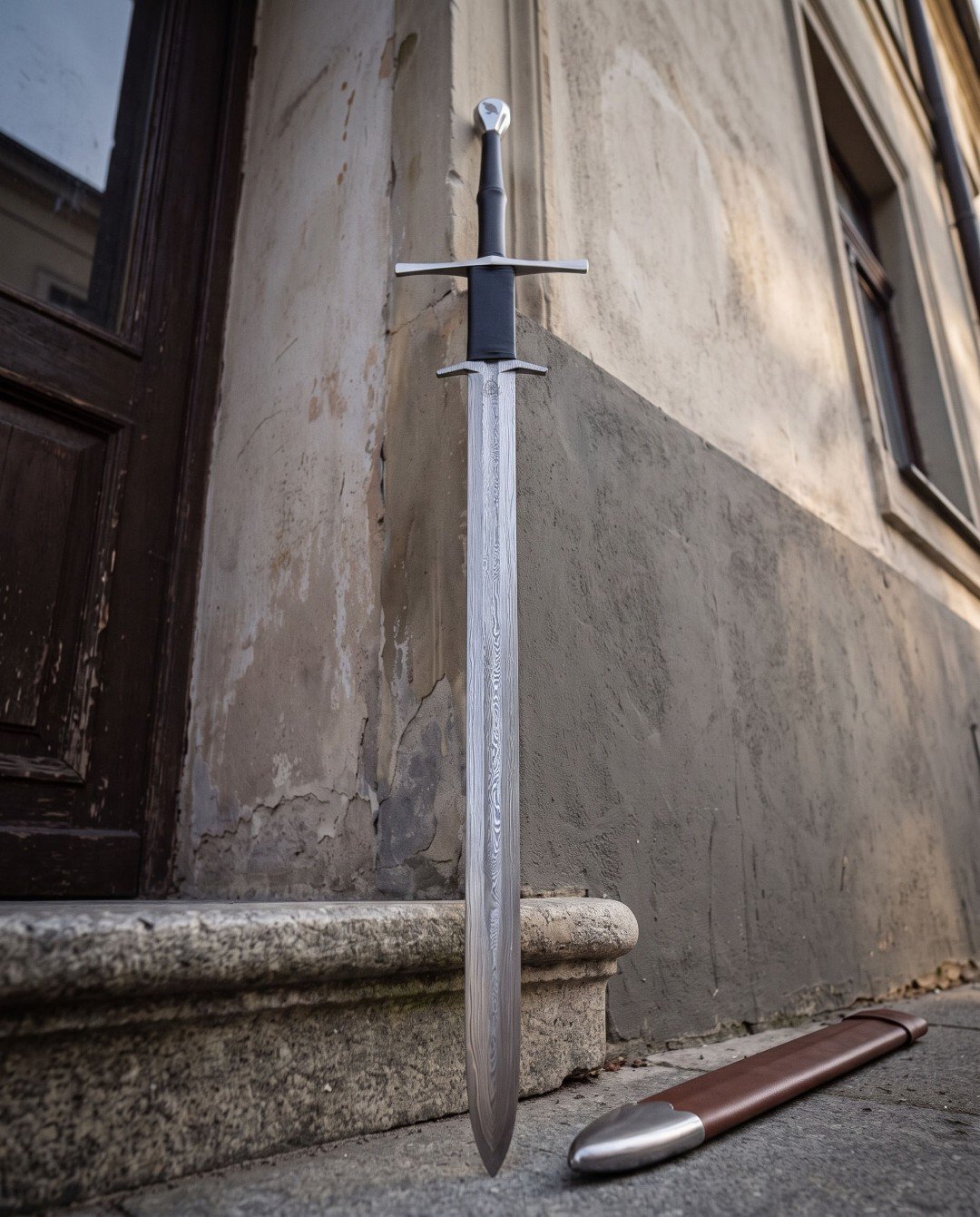
Pieces in the catalogue that fit, the Bonecrest Norse sword and the Longkeel Norse sword. So are the Duskthorn Norse dagger and the Runeleaf Elder Futhark spear.
Shop the range
Runeleaf Hand Forged Elder Futhark Spear | 44 Inch Overall with 11 Inch Head | Ash Haft, Red Leather Grip and Brown Leather Head Sheath | Norse Reenactment Gift | RK-1981Serpentcast Hand Forged Damascus Spear | 42 Inch Overall with 12 Inch Head | Ash Haft, Leather Grip Wrap and Brown Leather Head Sheath | Norse Reenactment Gift | RK-1976Skybridge Hand Made Silver Tone Bifrost Pendant with a Rope Twist Border & Heavy Curb Chain | Norse Necklace Gift | RK-1664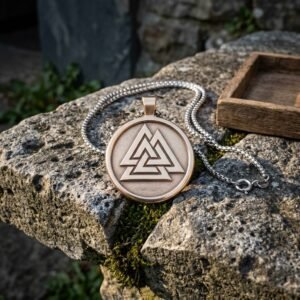 Kinbound Hand Made Bronze Tone Valknut Pendant with Raised Triple Triangle & 22 Inch Box Chain | Norse Memorial Gift | RK-1601
 Slatestave Hand Made Engraved Pale Grey Rune Stone with Full Elder Futhark Row & Knotwork Arch | 10 Inch Standing Height | Solid Oak Display Base | Norse Home Decor Gift | RK-1705
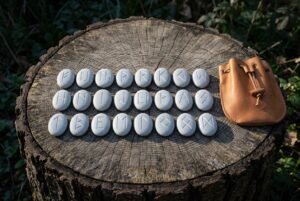 Stonecast Hand Made Elder Futhark Rune Set | 24 Engraved Casting Stones | Tumbled Stone with Tan Leather Drawstring Pouch | Norse Divination Gift | RK-1780