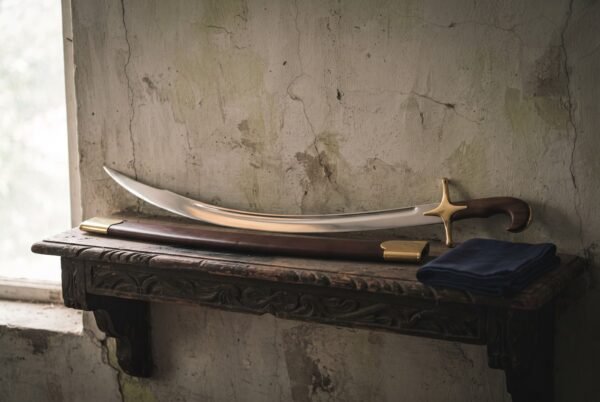
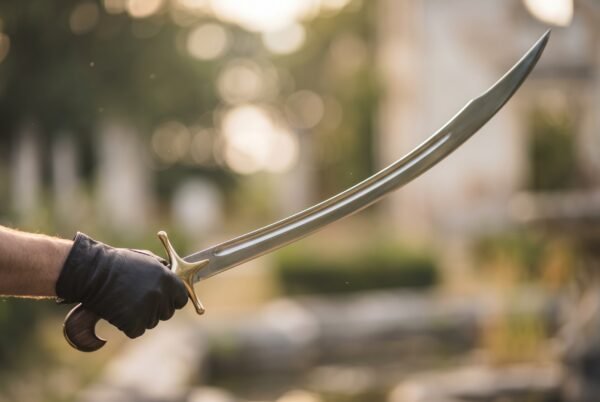
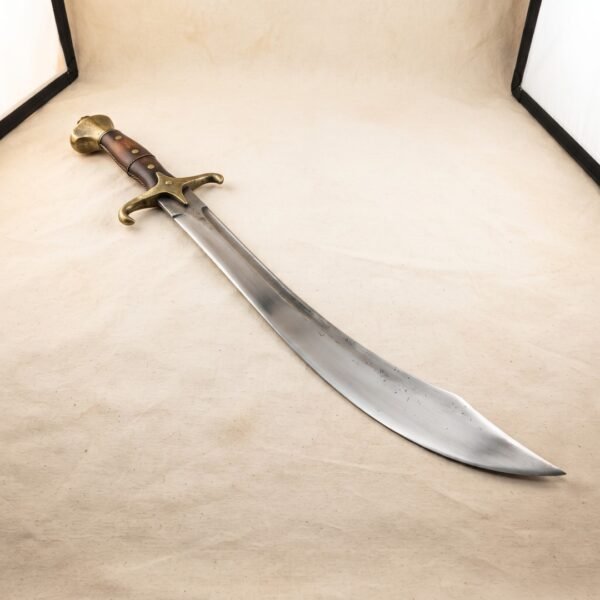
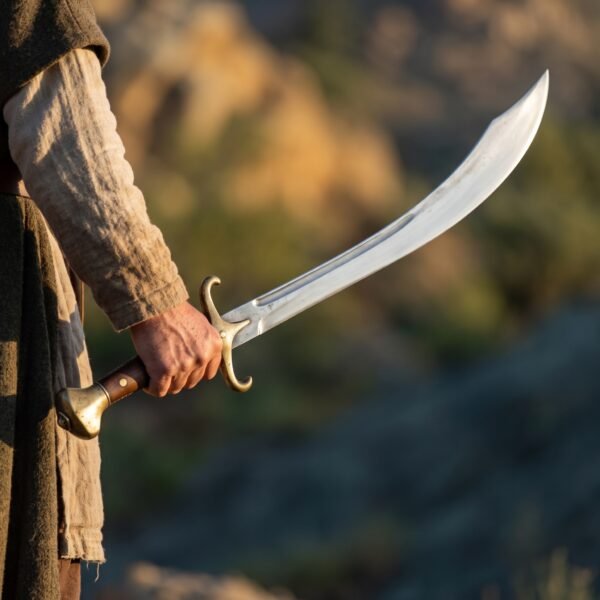
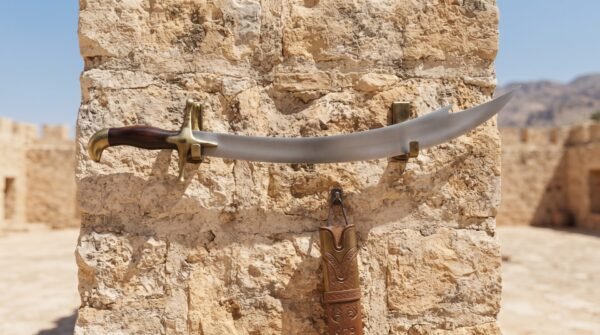
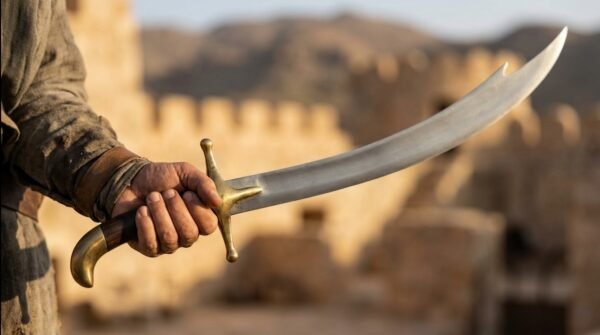
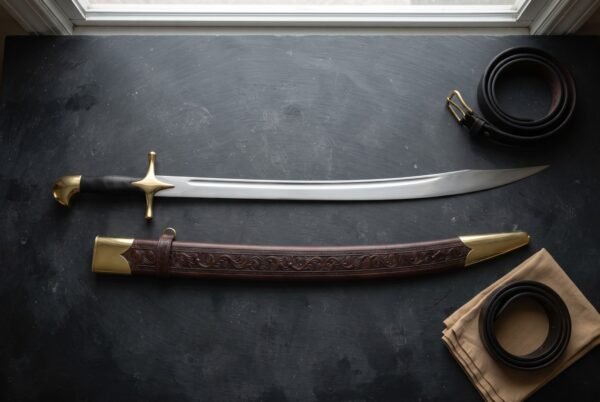
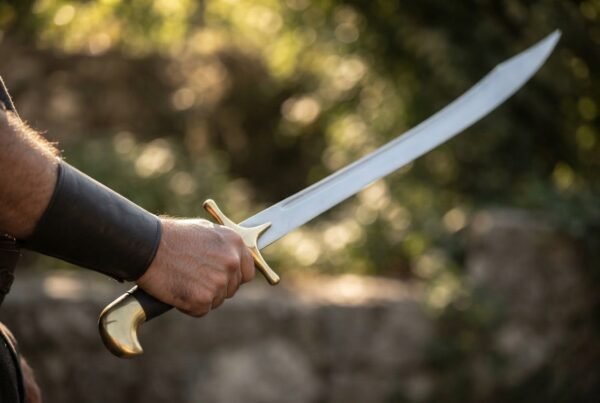
Scimitar is a European catch all for the curved single edged swords of the Islamic world, and it covers several genuinely different things. The Persian shamshir has a deep even curve and a narrow blade built for the draw cut from horseback. The Indian talwar, sometimes written tulwar, has a broader belly and a disc pommel that stops the hand sliding. A sellers scimitar could be either. This page has all of them, named properly.
The blades in the rack
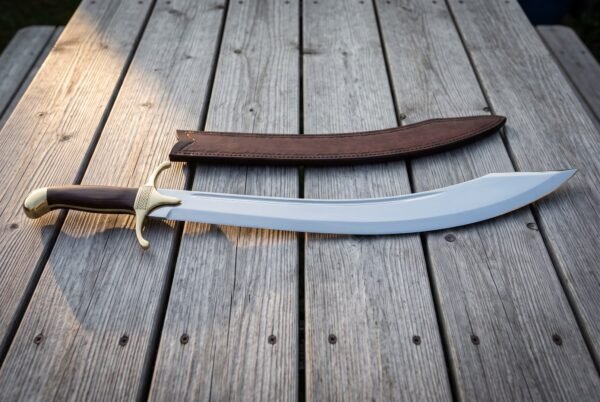
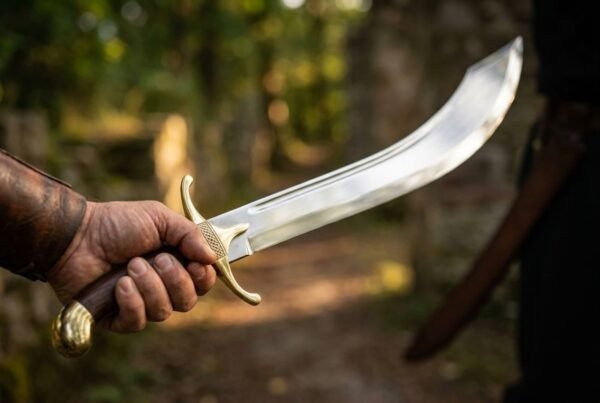
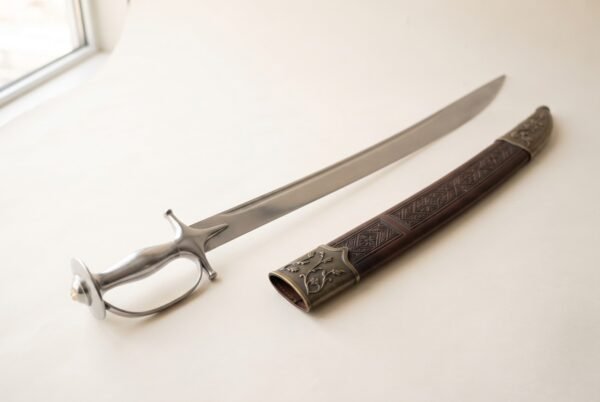
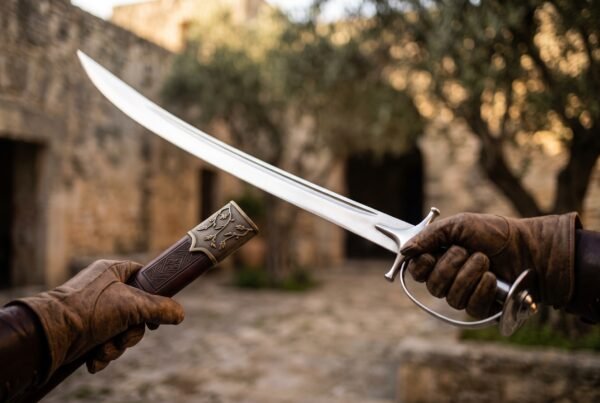
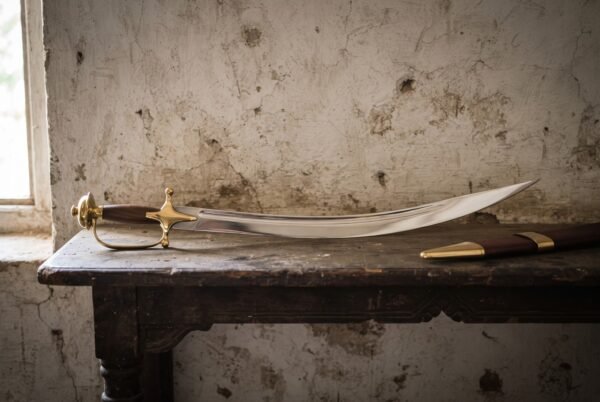
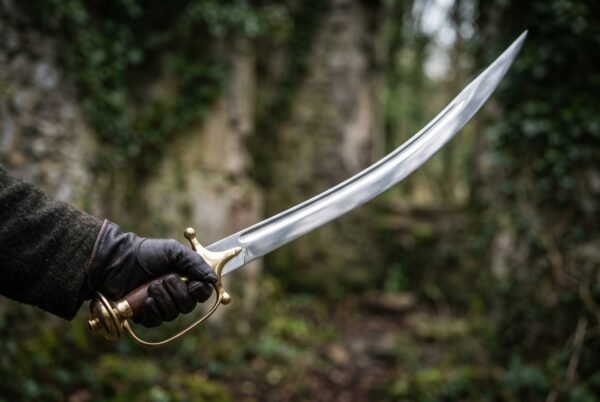
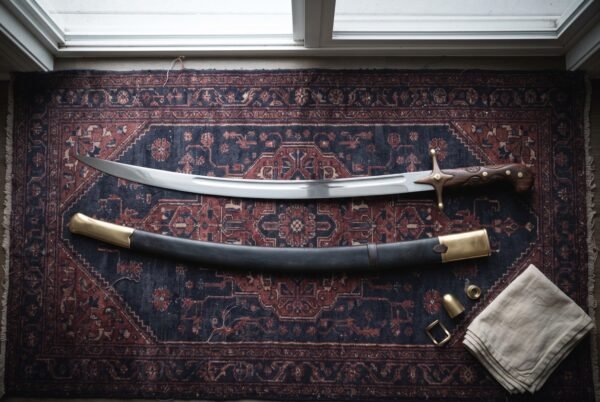
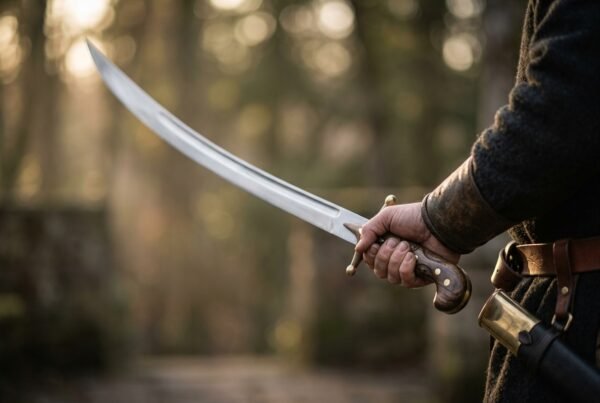
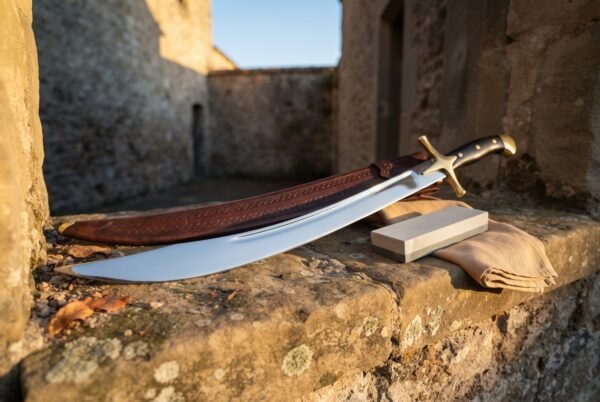
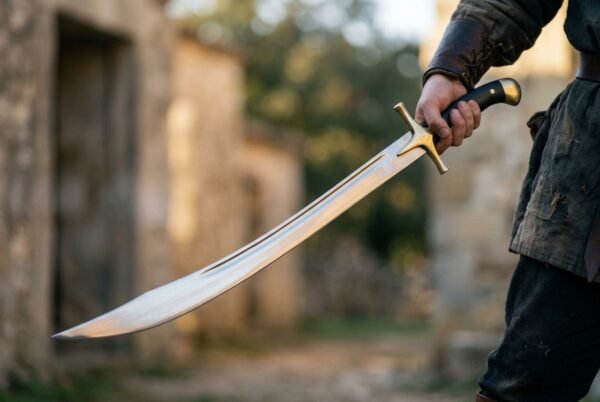
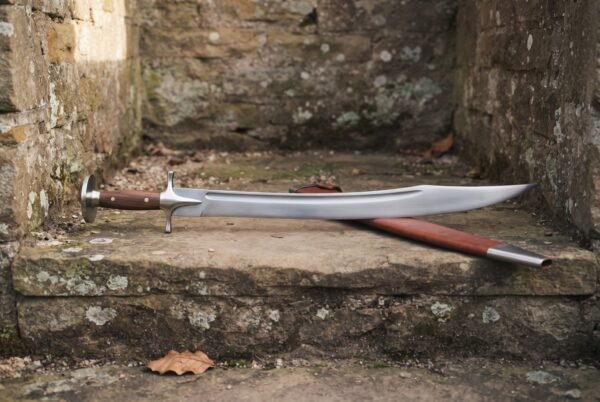
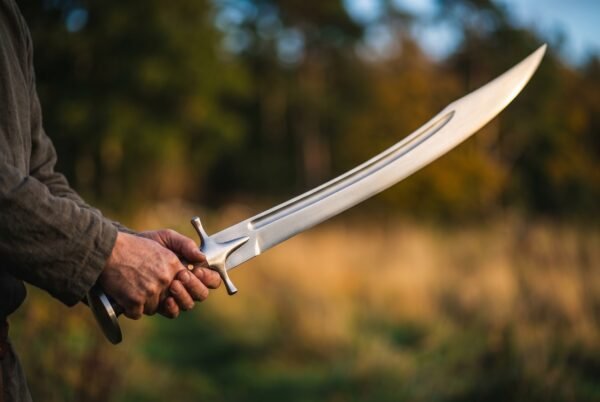
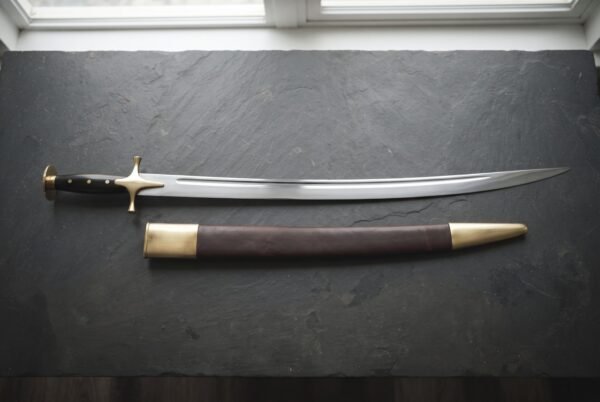
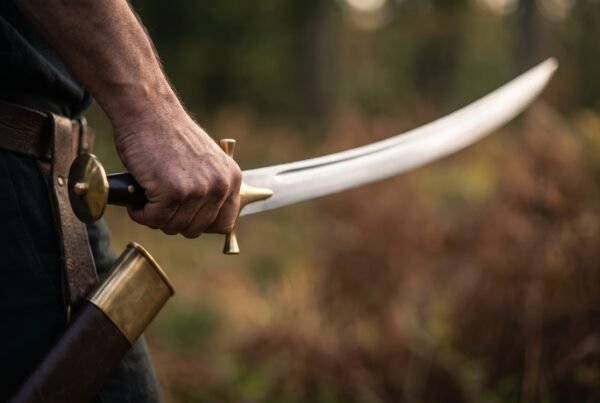
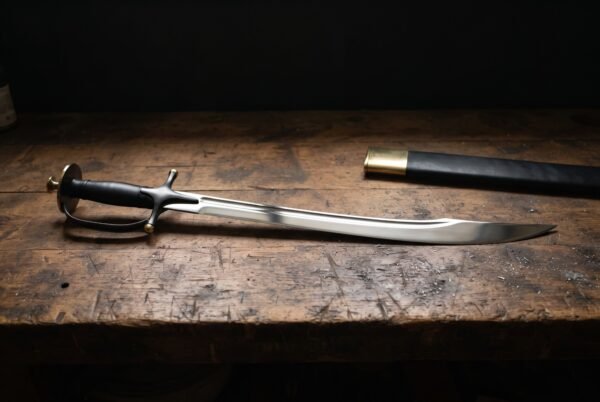
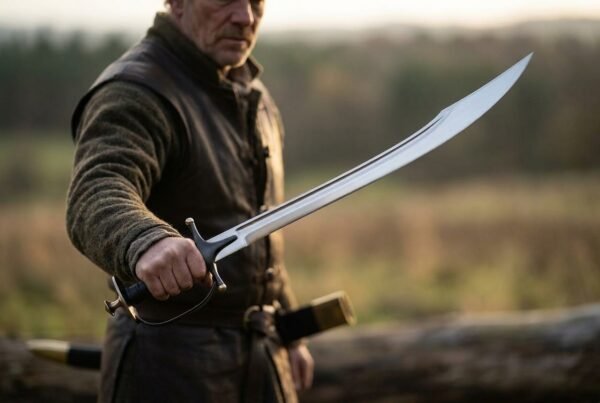
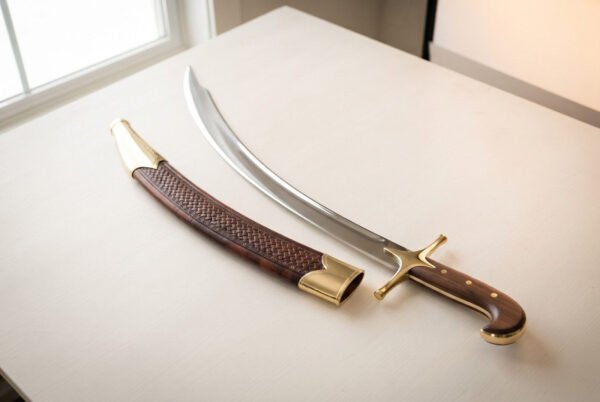
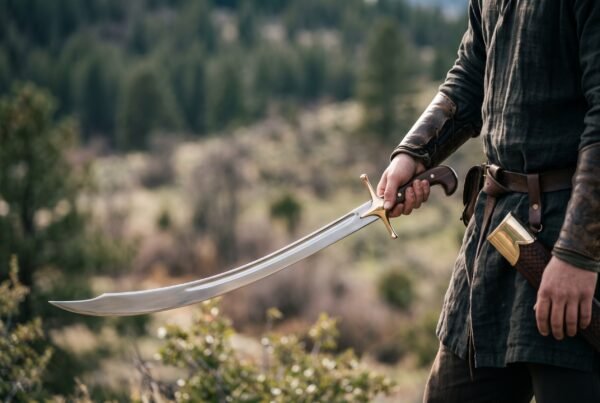
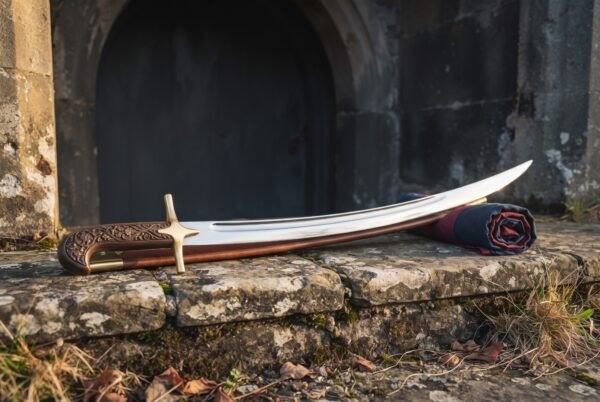
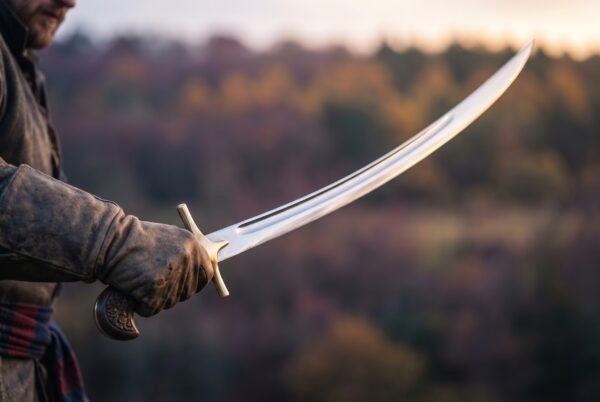
Overall lengths run 33 to 39 inches with blades between 27 and 33 inches. The shamshirs are the deepest curves at 36, 37, 38 and 39 inches overall, including one described as Persian at 38 inches with a 32 inch blade. The talwars sit at 34, 35, 36 and 38 inches, with the tulwar at 36 inches and a 30 inch blade. The pieces sold as scimitars run 33 to 37 inches, one with a brass cross guard and a hooked pommel over a leather grip, one with a riveted hardwood grip, brass quillons and a lobed pommel, and one with a rosewood grip, a deep curved single edge and a brown leather scabbard. There is also an Arabian sword at 35 inches with a 29 inch blade. Every blade here is plain 1095 high carbon at 54 to 58 HRC, which is the tougher of the two house steels and the right choice for a cutting blade this long. Prices run from 379 dollars to 615 dollars.
Which name means what
If the terminology is doing your head in, that is because sellers have been using the words interchangeably for two hundred years. Our page on what a scimitar actually is untangles which name belongs to which region and what the curve was for. For the metallurgy behind a long curved blade, steel and materials covers the heat treatment. To shop by shape, the deep bellied blades are in scimitars and the European cavalry curves are in sabres.
Ransack Viking is a US company based in Chicago, Illinois. These pieces are handmade in the Czech Republic, then imported, inspected and shipped from Chicago. Engraving is done in the US after arrival: text 19 dollars, symbol 39 dollars, family crest 49 dollars.
Free US shipping
On most pieces. Heavier and oversized ones carry a flat charge.
Hand Forged
Heated, hammered and ground by hand.
Engraving available
Names, dates or Norse runes on most pieces.