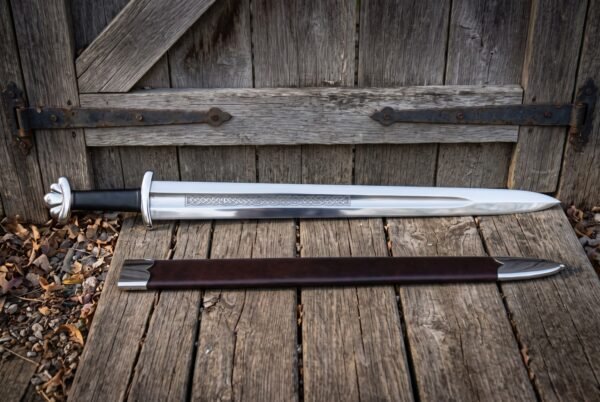
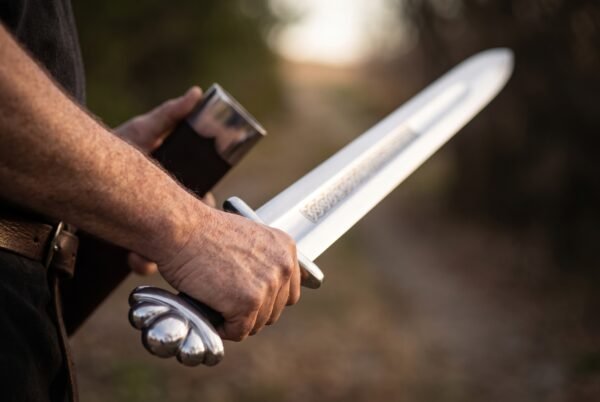
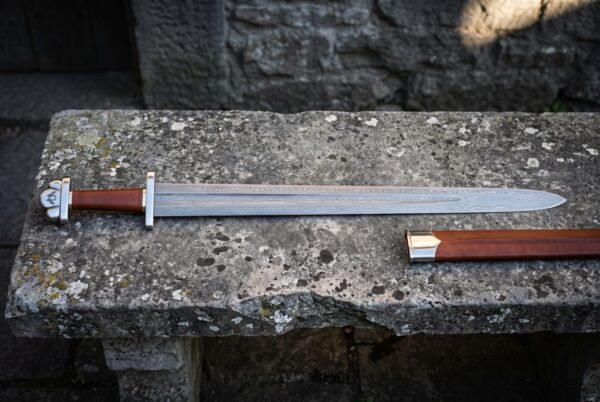
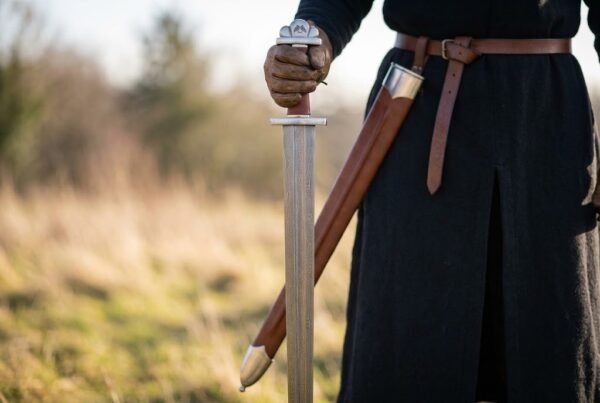
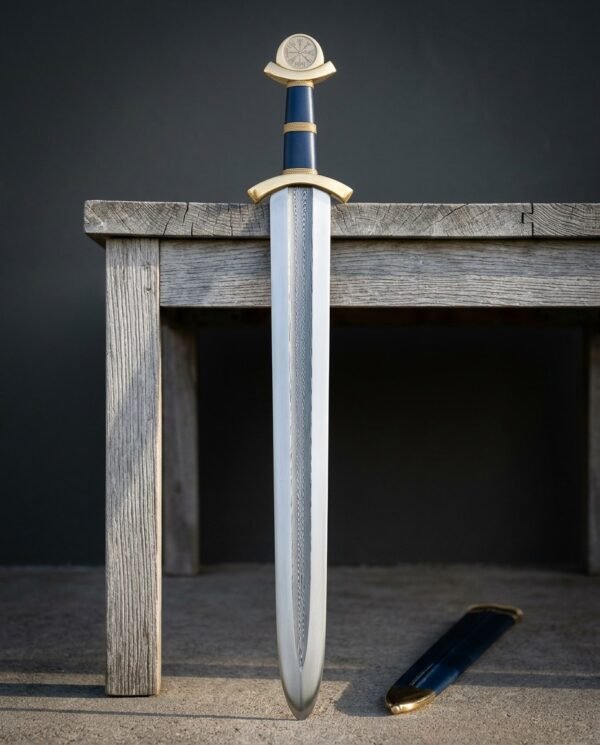
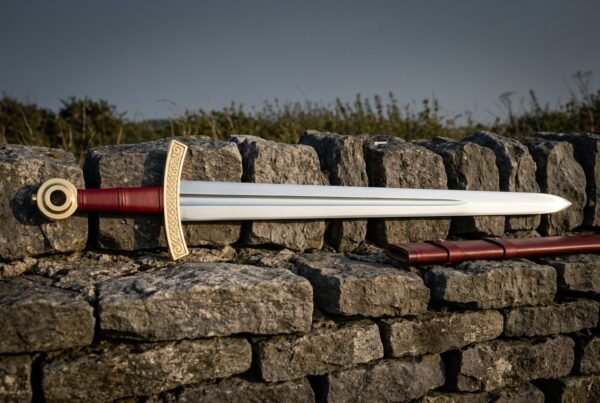
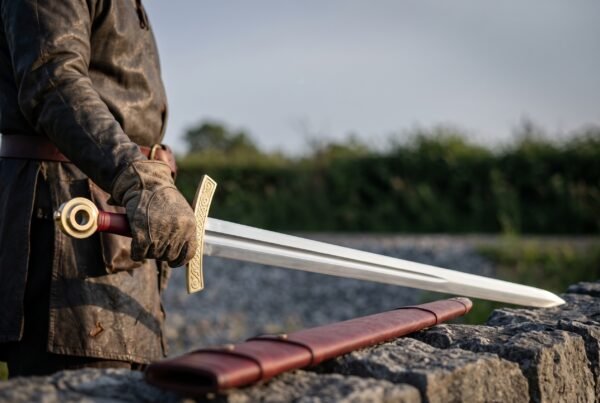
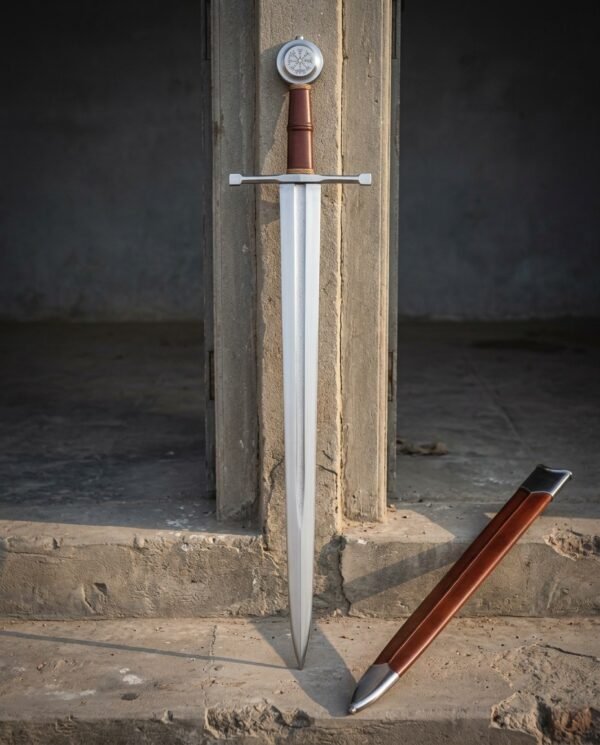
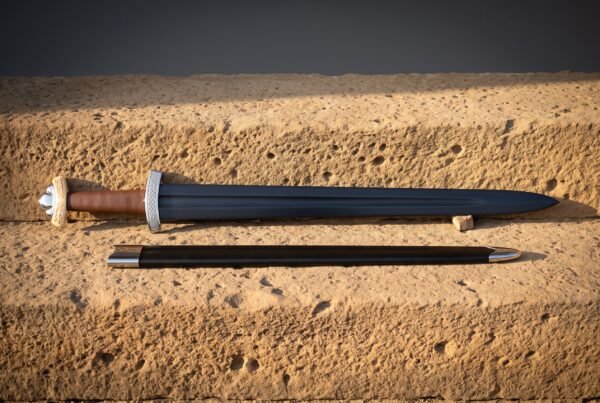
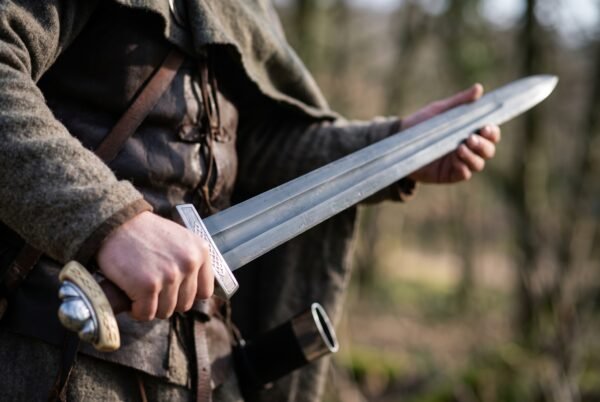
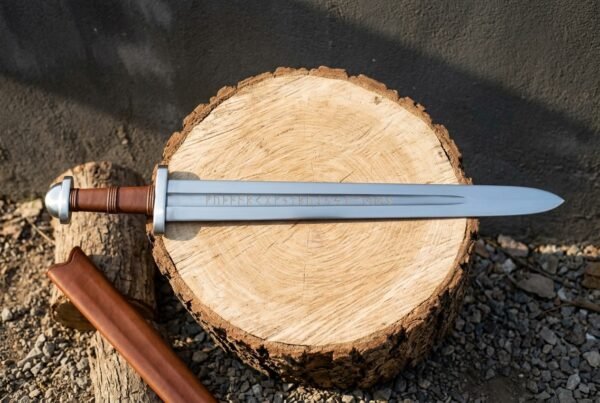
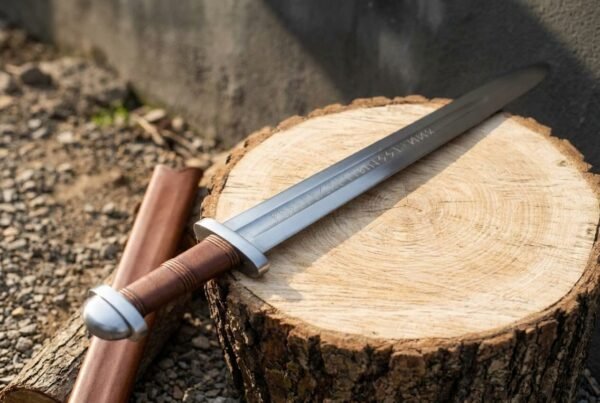
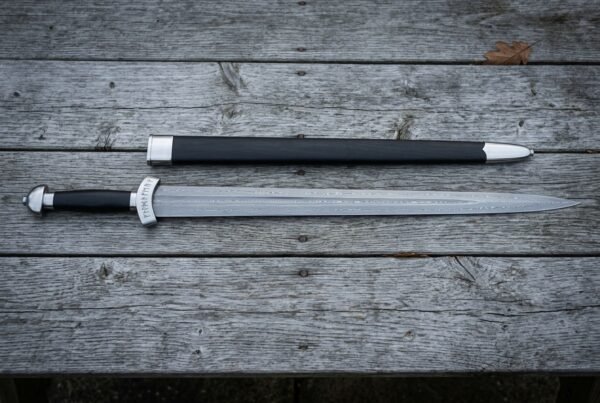
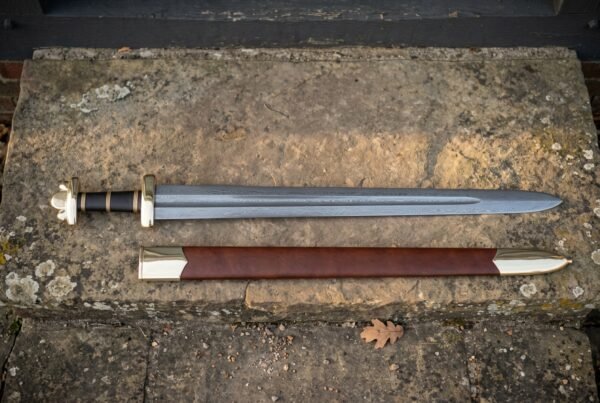
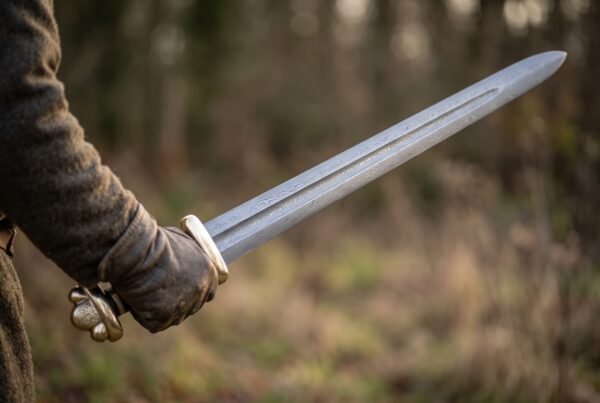
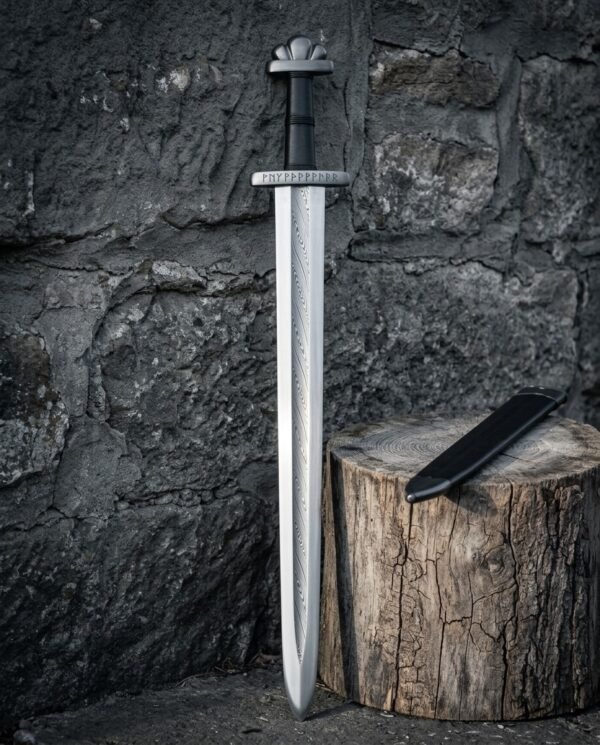
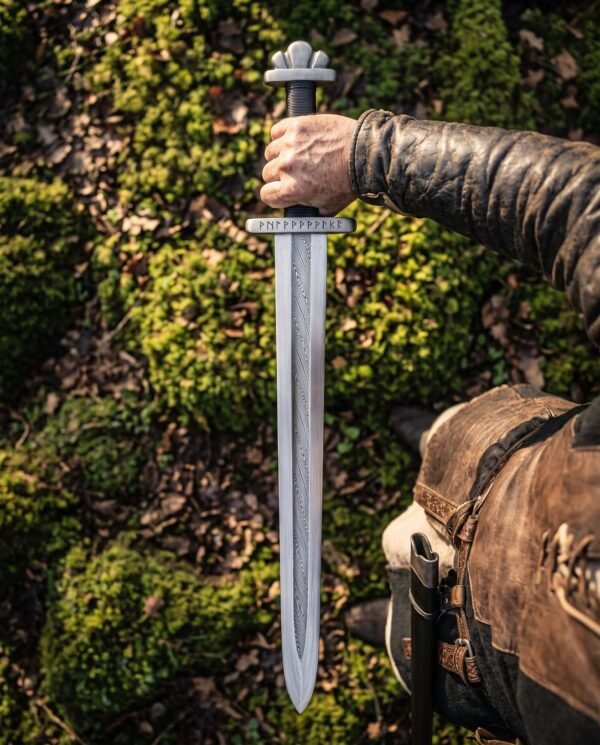
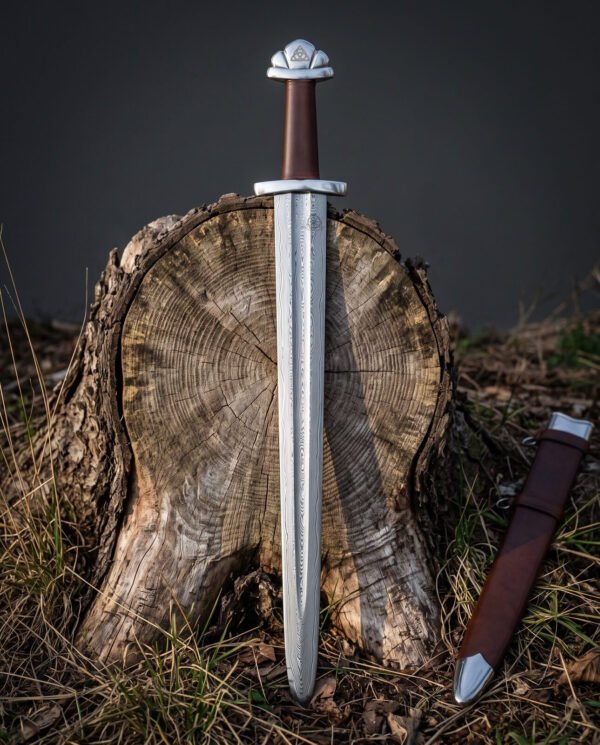
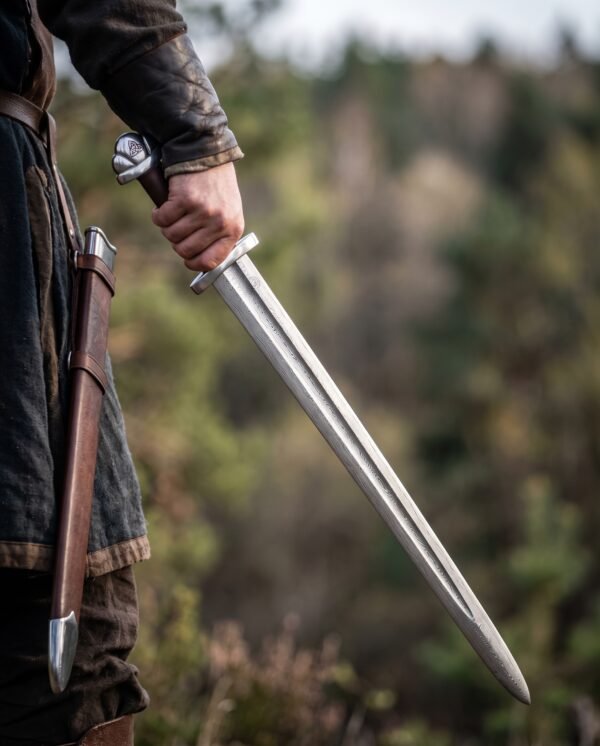
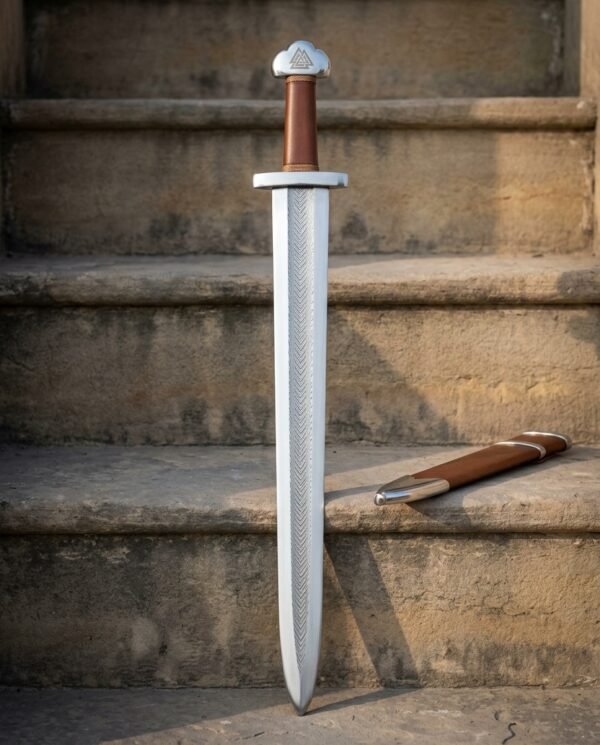
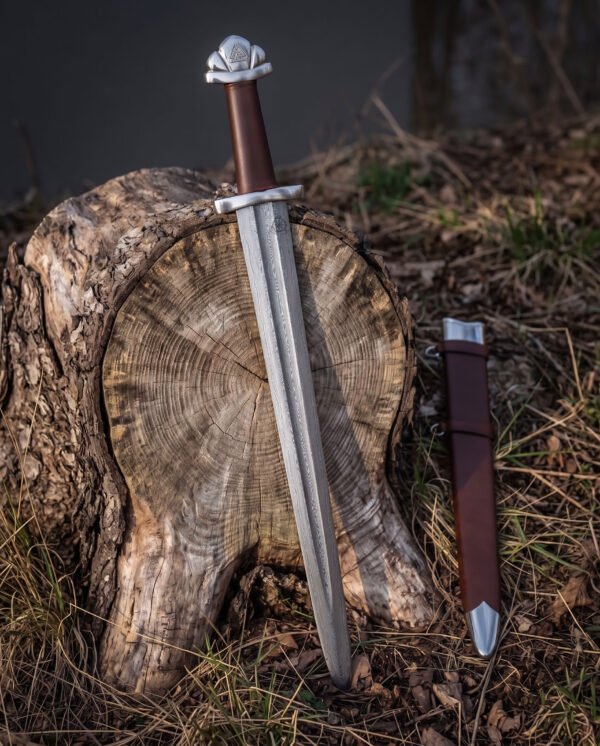
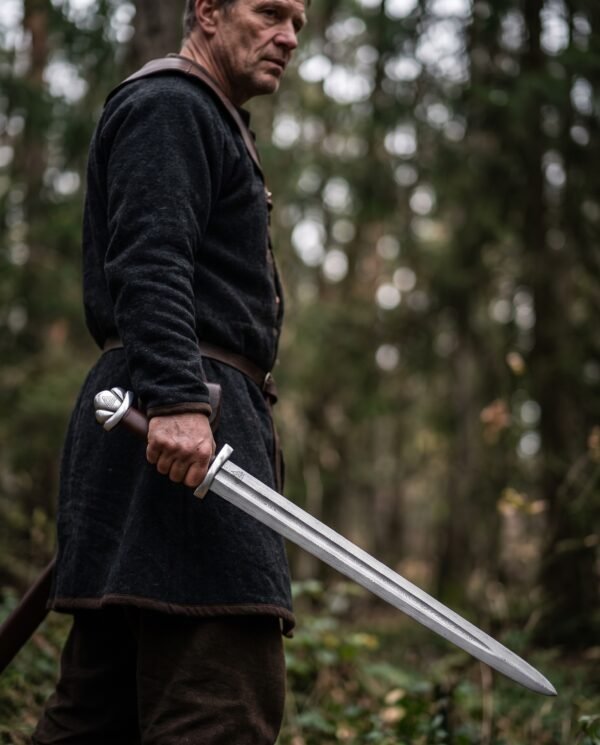
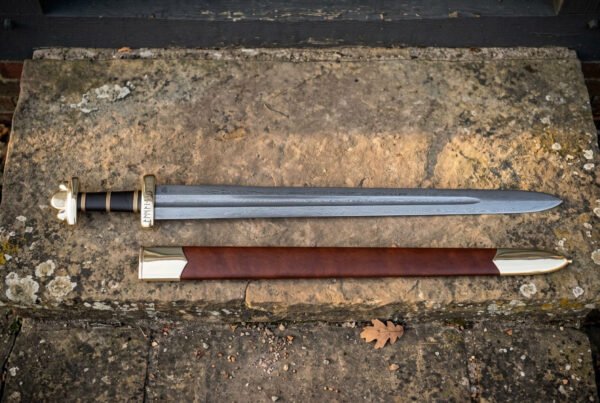
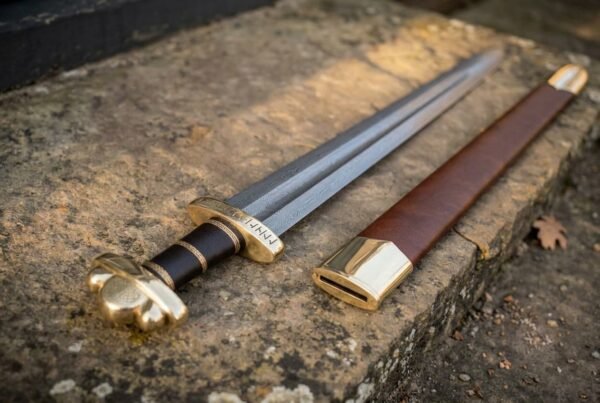
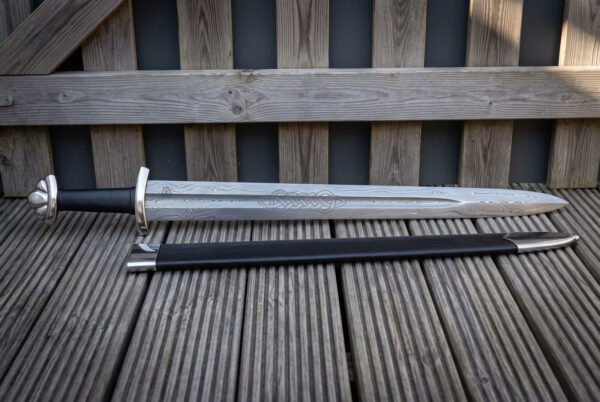
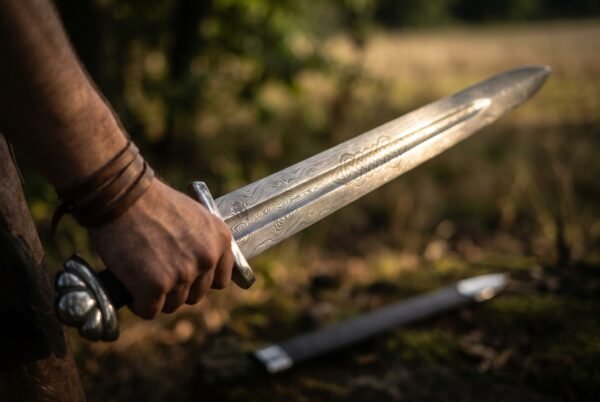
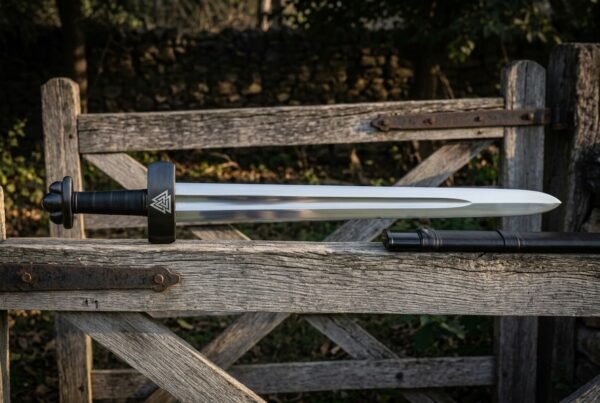
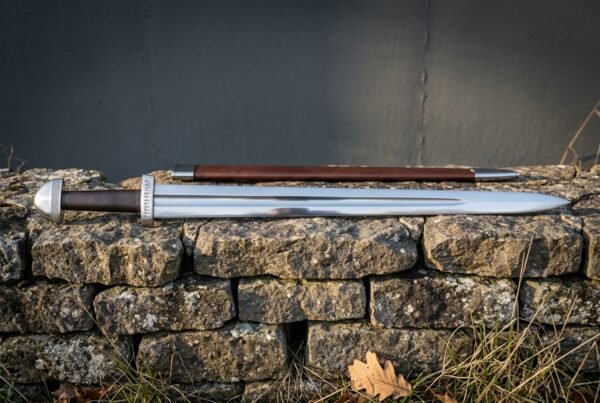
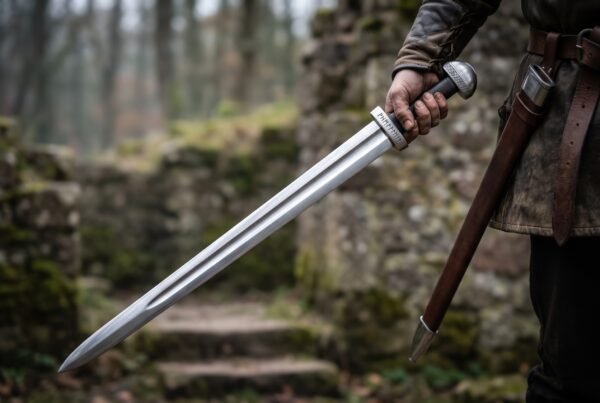
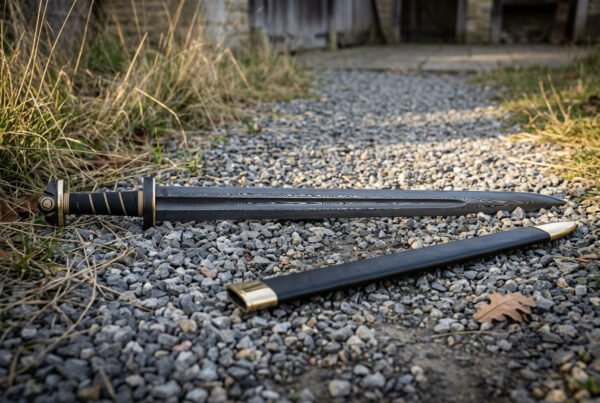
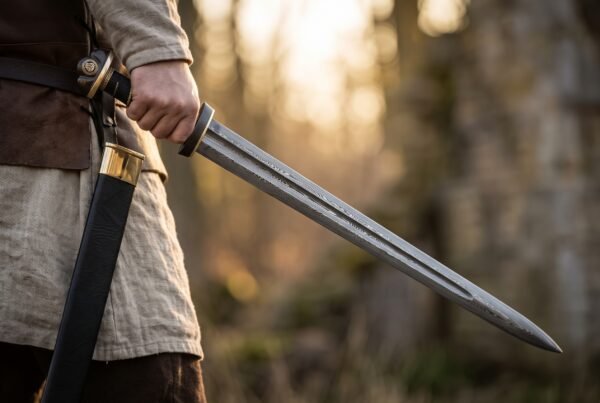
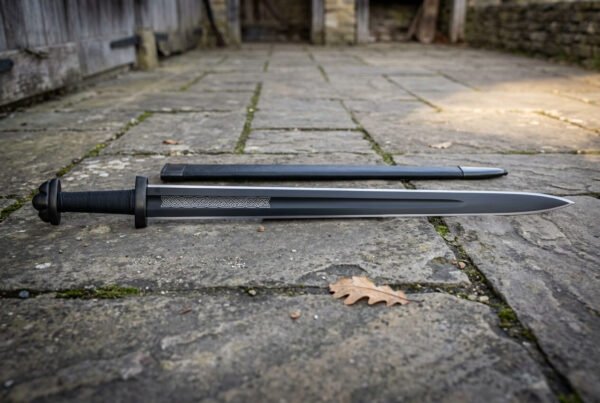
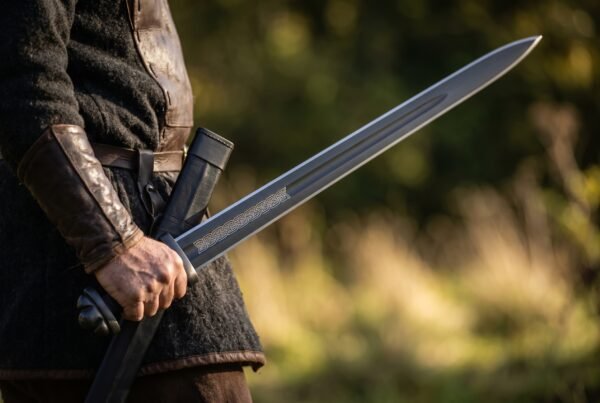
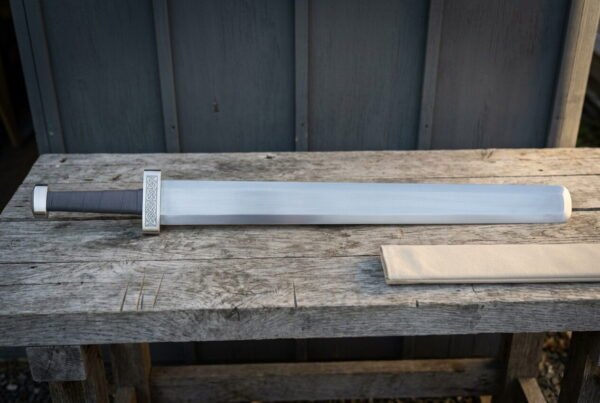
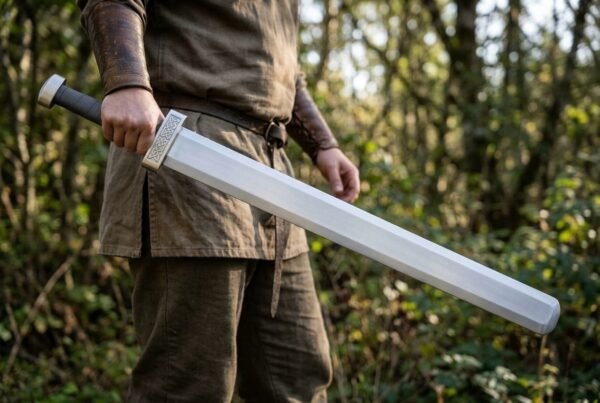
A Viking sword is a broad, straight, double edged blade with a short guard and a lobed or disc pommel, carried across northern Europe from roughly the eighth century to the eleventh. It was expensive then and it was a status object as much as a fighting one. The best of them were pattern welded, some carried inlaid names in the fuller, and the ones that survive are usually river finds and grave goods rather than battlefield scrap.
What is on this tag
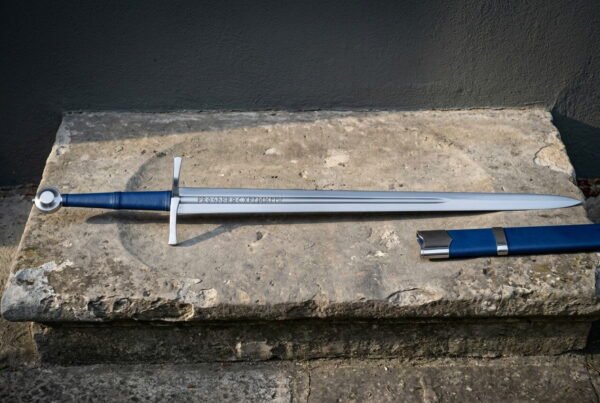
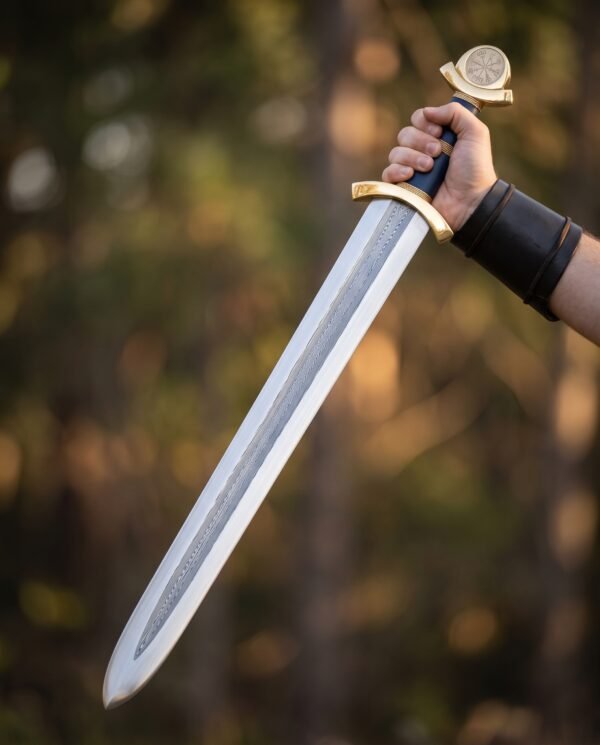
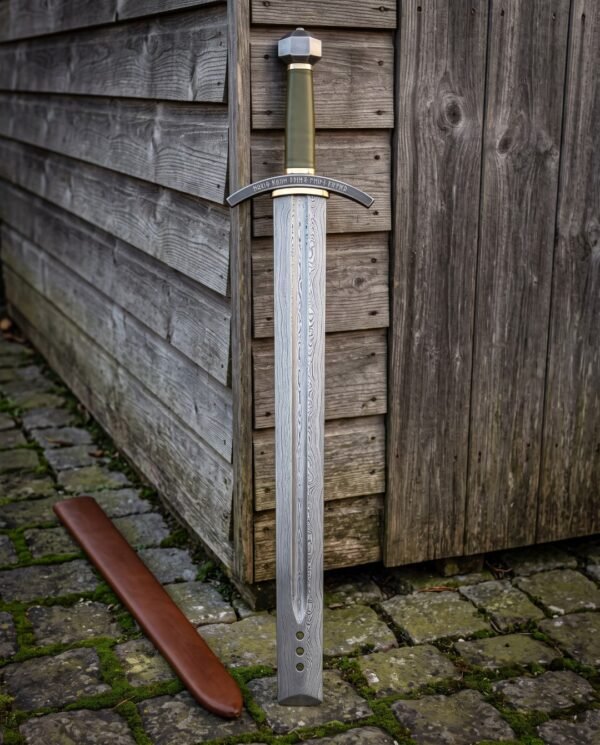
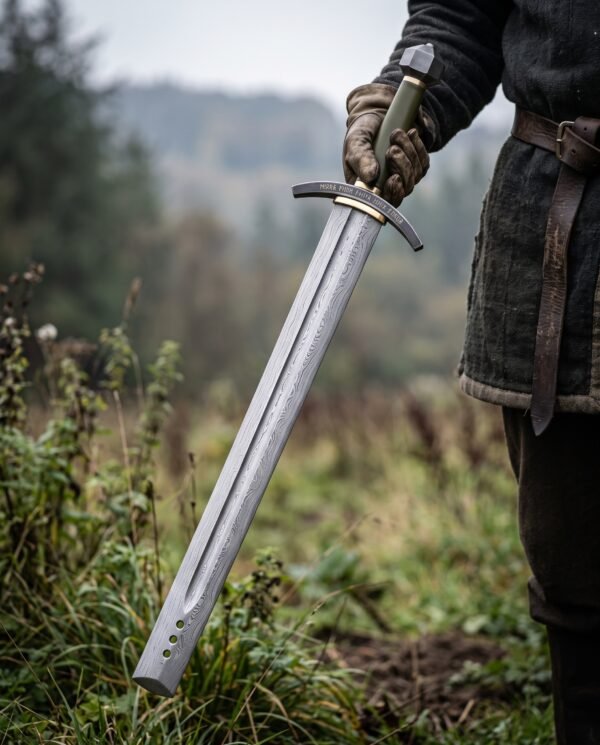
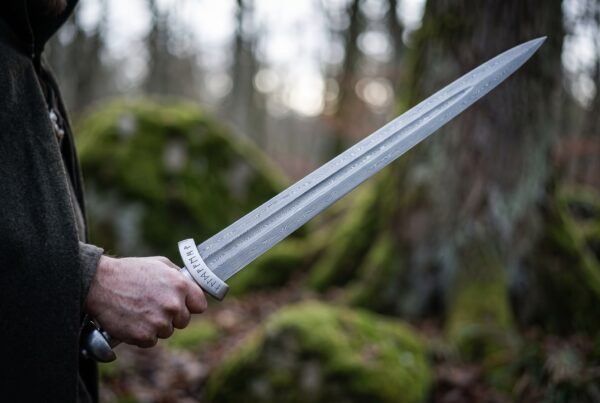
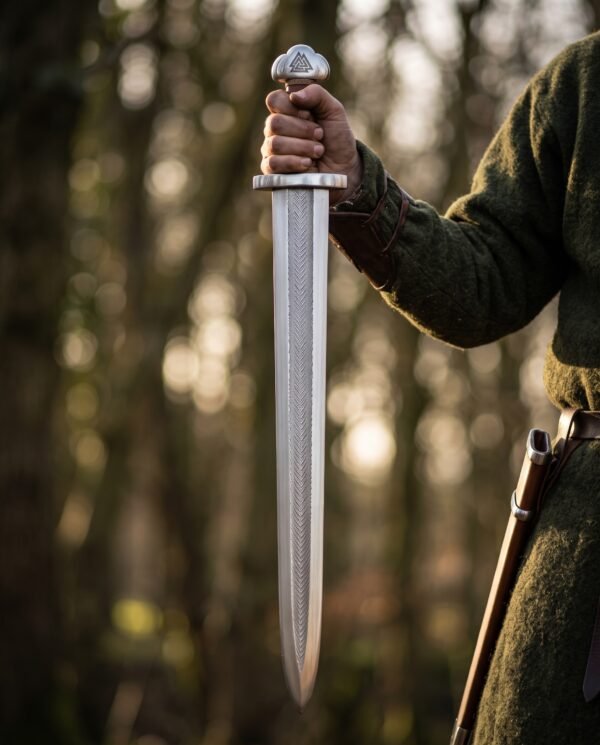
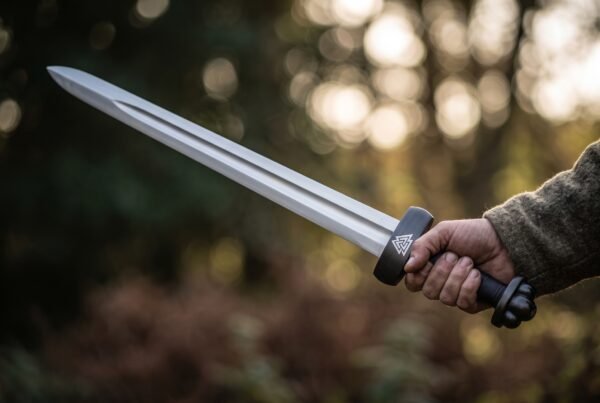
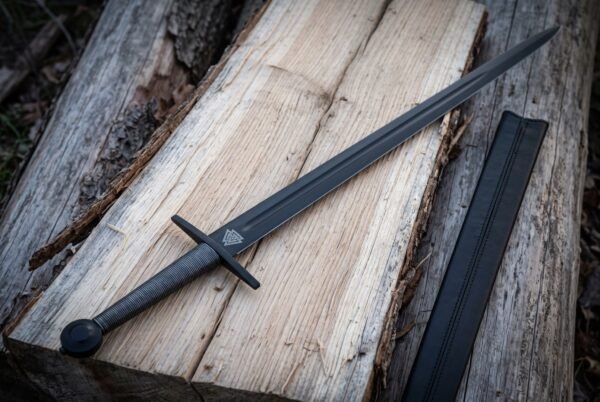
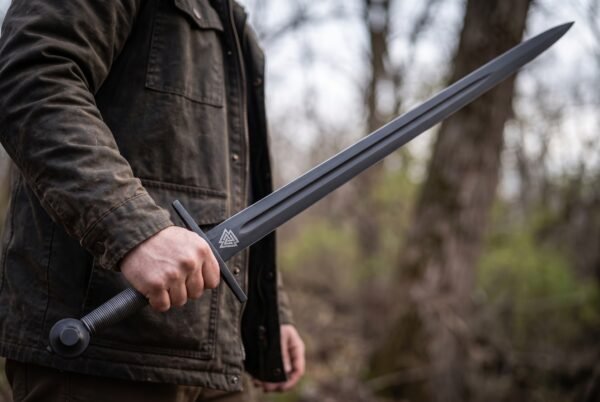
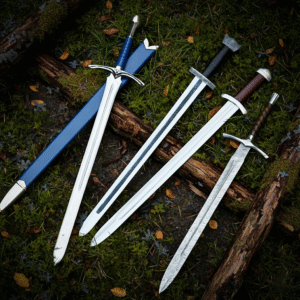
Overall lengths run from about 34 to 37 inches with blades around 29 to 31. Steel is plain 1095 high carbon at 54 to 58 HRC or Damascus of 1095 and 15N20, forge welded and acid etched, at 58 to 60 HRC. Pommels are three lobed, five lobed, brass faceted or disc. Guards run from straight bars to runic arched forms. Grips are leather wrapped in brown, black or blue, or cord wrapped over a wooden core. Several blades carry etched Elder Futhark rune rows, valknut marks or knotwork panels.
What the archaeology says
The famous group is the Ulfberht blades, several dozen swords carrying the same inlaid name over two centuries, made from steel of a quality that was not supposed to be available in northern Europe at the time. They are also the most faked objects of the period, with contemporary counterfeits carrying misspelled inlays. The Ulfberht article covers what is known and what is guessed, which is a more interesting story than the television version.
Screen against reality
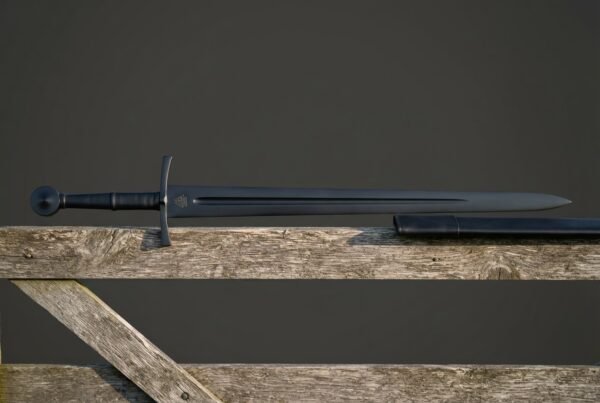
If your reference point is a television series, be aware that a good deal of what is carried on screen is shaped for the camera rather than for the period, and the accuracy article rates the props honestly. The Norse blades are in the Viking swords and the pattern welded ones in the Damascus swords.
Handling and balance
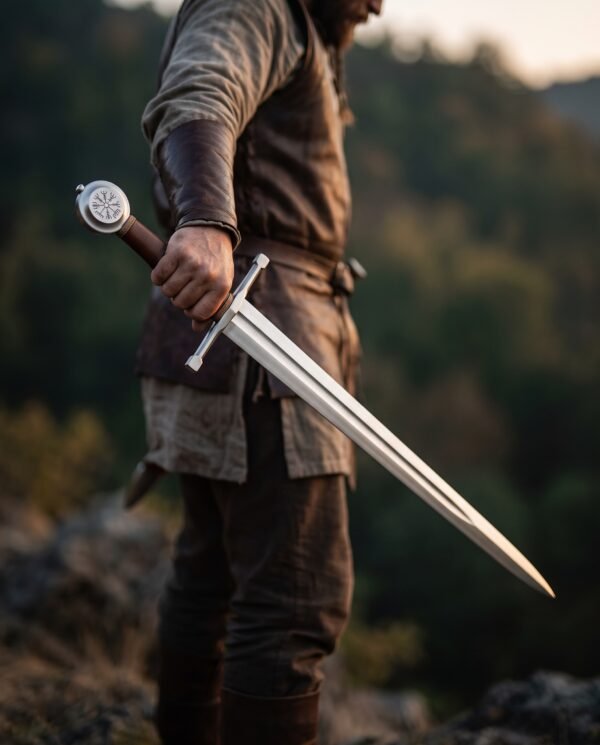
A Viking sword is shorter and considerably livelier than most people expect. The lobed pommel is a counterweight, not decoration, and it pulls the balance point back toward the hand so the blade turns quickly. Pick one up and it feels lighter than a longsword half a foot longer, which is exactly the point of the design.
Storage
Carbon steel and a damp leather scabbard are a bad combination. Store the blade out of the scabbard, or wipe it with a thin film of oil before it goes back in, and keep it off a wall that gets direct afternoon sun.
Free US shipping
On most pieces. Heavier and oversized ones carry a flat charge.
Hand Forged
Heated, hammered and ground by hand.
Engraving available
Names, dates or Norse runes on most pieces.