
Blog
Best Skinning Knives for Deer Hunting: Styles, Steel, and Technique

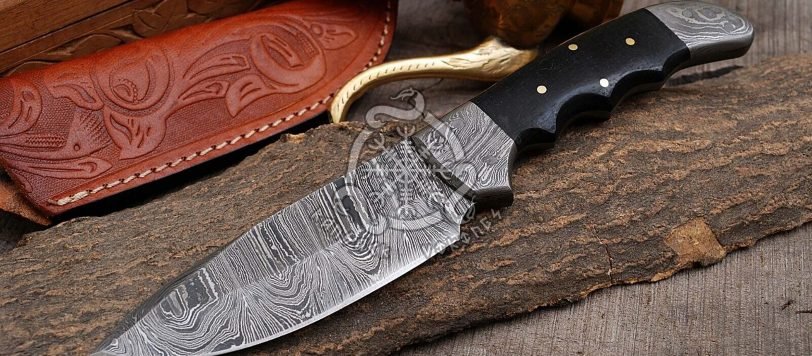
The best skinning knife for deer has a short, wide blade with a deep sweeping belly, usually 3 to 4.5 inches, a blunt or dropped tip that will not nick the hide, and a handle that stays secure when slick. Note what is missing from that description: a point. A purpose-built skinner separates hide from carcass in long, clean strokes and leaves both in better condition than a general-purpose blade doing the same job slower, and most of the aggressive-looking blades sold to hunters are simply the wrong shape for it. This guide explains why skinner geometry matters, the styles worth considering, blade steel choices, and the technique details that make skinning a whitetail a twenty-minute job instead of an hour. Our hand-forged Damascus skinner knives ship from Chicago, IL, and most can be engraved in the US after they land, from 19 dollars for text.
What Makes a Skinning Knife Different
Skinning is a slicing job, not a stabbing one. The cut runs between the hide and the membrane over the meat, and the knife’s belly does nearly all the work while the tip mostly stays out of the way. That is why dedicated skinners share three traits: a wide blade with a continuous curve (so more edge contacts the work per stroke), a tip that is dropped, rounded, or swept up out of the cutting line (so you do not punch through the hide you are trying to save), and a short overall length for control in tight spots like legs and neck.
You can absolutely skin a deer with a drop-point hunter. Hunters have done it forever and will carry on doing it. But if you process several deer a season, cape shoulders for mounts, or save hides, the dedicated skinner earns its pack space inside one animal.
Skinning Knife Styles for Deer
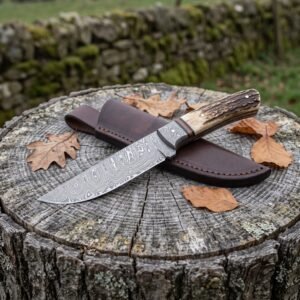 Scorpio Hand Forged Damascus Skinner Knife with Stag Antler Handle and Buffalo Horn and Walnut Spacers and Damascus Bolster | Deer Skinning Gift | RK-338
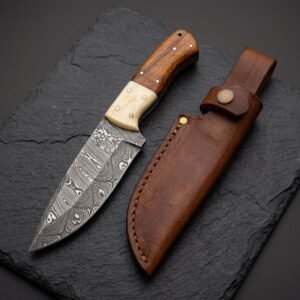
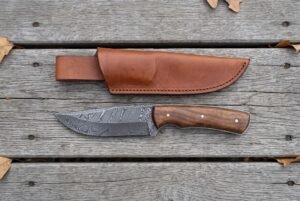 Bobcat Hand Forged Damascus Skinner Knife with Walnut Wood Handle & Leather Sheath | Full Tang Hunting and Skinning Gift | RK-331
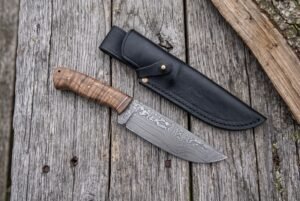 Vampire Hand Forged Damascus Skinner Knife with Stabilized Wood Handle and Fiber and Brass Spacers & Leather Sheath | Full Tang Hunting Camping and Anniversary Gift | RK-330
Classic Sweeping Skinner
The traditional teardrop profile with a deep belly and upswept edge. Fastest hide removal of any style and the best all-around choice for whitetail.
Gut-Hook Skinner
Adds a sharpened hook on the spine for unzipping the abdomen without piercing organs. Genuinely convenient in the field. The hook also needs a round file or a small stone, which is the part nobody mentions until you own one. What a gut hook is actually for covers the rest.
Drop-Point Hunter-Skinner
A compromise blade with enough belly to skin and enough point to field dress. The right call if you carry only one knife. Browse examples in our hunting knife collection.
Caping Knife
Small, fine-tipped, and precise for the detail work around the eyes, ears, and nose of a shoulder mount. A specialist tool for hunters working with a taxidermist.
Deer Skinning Knife Comparison
| Style | Blade Length | Best For | Limitations |
|---|---|---|---|
| Sweeping skinner | 3 to 4.5 in | Fast, clean hide removal | Poor piercing ability |
| Gut-hook skinner | 3.5 to 4.5 in | Field dressing + skinning | Hook sharpening |
| Drop-point hunter | 3.5 to 5 in | One-knife hunters | Slower on hides |
| Caping knife | 2 to 3 in | Trophy detail work | Too small for general use |
How to Choose Your Deer Skinner
Blade Steel
Skinning is hard on edges. Hair and hide are abrasive, and you are usually working a few inches from dirt. High-carbon steel and pattern-welded Damascus hold a working edge through a whole deer and resharpen easily in camp; stainless shrugs off blood and moisture but often needs more frequent touch-ups at the same price point. Our steel glossary walks through it properly, and the hardness page gives the numbers: plain 1095 at 54 to 58 HRC, Damascus at 58 to 60.
Fixed Blade, Full Tang
Skinning applies steady pulling force, sometimes with a bloody glove. A fixed blade with a full tang has no pivot to foul with fat and no joint to fail, and the tang argument is worth ten minutes before you spend money. Save folders for the pocket.
Handle Texture and Guard
By the second leg your hand will be wet. Stabilized wood, bone, Micarta, or textured horn all grip well; a small guard or deep finger choil keeps fingers off the edge when a stroke stalls on connective tissue and suddenly releases.
Comfort Over an Hour
Skinning is repetitive. A palm-filling handle with no sharp corners matters far more than an ounce of weight either way. If you can, grip the knife in a fist and mimic long draw strokes. Hot spots announce themselves quickly, and never at a convenient moment.
Technique: Getting the Most from a Skinner
Hang the deer, start your cuts from the inside of the hide outward where possible, and let the belly of the blade do long, shallow, sweeping strokes at a low angle, almost parallel to the carcass. Pull the hide with your free hand as you go; tension does half the cutting. Keep the edge working against the membrane, not the meat, and strop or touch up mid-job the moment strokes start tearing instead of gliding. A sharp skinner and steady hide tension will finish a whitetail cleanly without a single hole.
Who Should NOT Buy a Dedicated Skinner?
If you hunt one deer a year and your processor does the skinning, a good drop-point hunting knife covers you, and a dedicated skinner will live in a drawer being admired. If you refuse blade maintenance entirely, skip high-carbon steel and buy stainless. And if you want one knife for the whole camp, food prep, rope, kindling, field dressing, a skinner’s blunt, bellied profile is the wrong shape; pick a general-purpose fixed blade instead and read more buying guides on the Ransack Viking guides.
A lot of people buying a skinner already own a Norse blade or want one next. The seax pattern makes a poor skinner because the belly is too shallow, but it is the better camp and food knife of the two, which is why hunters often end up carrying one of each. The Viking knives collection has the seax and belt knife shapes in the same 1095 and Damascus steel.
Deer Skinning Knife FAQ
What size knife is best for skinning deer?
A blade between 3 and 4.5 inches is ideal for whitetail and mule deer. That length gives enough belly for long skinning strokes while staying controllable around legs, brisket, and neck. Bigger knives skin flat areas slightly faster but cause more accidental cuts in the hide everywhere else.
What is the difference between a skinning knife and a hunting knife?
A skinning knife is a specialist: wide blade, deep continuous belly, and a tip kept out of the cutting line so it will not puncture hide or meat. A general hunting knife balances belly with a usable point for field dressing and camp tasks. The hunting knife does everything acceptably; the skinner does one job noticeably better. If you would still rather own the generalist, Black Mamba Knives sells hand forged hunting knives, and nobody at camp needs to know you changed your mind.
Do I need a gut hook on a deer skinning knife?
It is a convenience, not a requirement. A gut hook opens the abdominal wall quickly with zero risk of nicking intestines, which beginners rightly appreciate. Experienced hunters get the same result with the tip of the knife and two careful fingers. If you take the hook, buy the round sharpening tool at the same time, because you will not track one down in a hurry the day you need it.
Is Damascus steel good for a skinning knife?
Yes. Skinning rewards exactly what quality pattern-welded Damascus offers: a keen, wear-resistant edge that survives an entire animal without resharpening. The high-carbon steel needs washing and a light oil wipe after processing, but that is one extra minute on a day you already spent cleaning gear.
How do you keep a skinning knife sharp through a whole deer?
Start genuinely sharp, and be honest with yourself about what that means. Cut membrane rather than hair whenever possible (entering from the flesh side saves your edge), keep the work off the ground and away from dirt, and carry a small strop or fine stone for a thirty-second touch-up halfway through. A quality high-carbon skinner maintained this way finishes a whitetail with edge to spare.
Can a skinning knife be engraved as a gift?
Yes, and a skinner outlasts most things bought for hunters. A name, date, or “first buck” inscription on the blade or handle personalizes the knife without changing how it cuts. Engraving runs 19 dollars for text, 39 for a symbol and 49 for a family crest, and engraved skinners are popular for birthdays, retirements and hunting traditions handed down a generation.
The job these are built for is walked through in our deer skinning walkthrough, and the wider Damascus field range is in our Damascus hunting knife picks.
If you would rather have one made to your own spec, build a custom hunting knife and choose the blade profile, the steel, the length and the sheath.
From the shop
Ready to ship, the Bobcat skinner knife and the Camelbone skinner knife. The Stagrose skinner knife and the Pinecrest skinner knife are the other two.
Shop the range
Scorpio Hand Forged Damascus Skinner Knife with Stag Antler Handle and Buffalo Horn and Walnut Spacers and Damascus Bolster | Deer Skinning Gift | RK-338Bobcat Hand Forged Damascus Skinner Knife with Walnut Wood Handle & Leather Sheath | Full Tang Hunting and Skinning Gift | RK-331Vampire Hand Forged Damascus Skinner Knife with Stabilized Wood Handle and Fiber and Brass Spacers & Leather Sheath | Full Tang Hunting Camping and Anniversary Gift | RK-330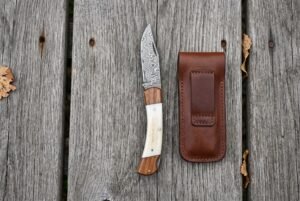
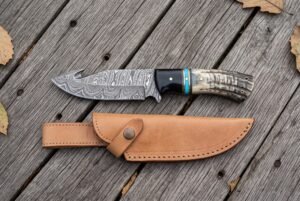 Hornreaver Hand Forged Damascus Gut Hook Hunting Knife with Buffalo Horn and Ram Horn Handle and Turquoise and Brass Spacers | Hunting Gift | RK-360