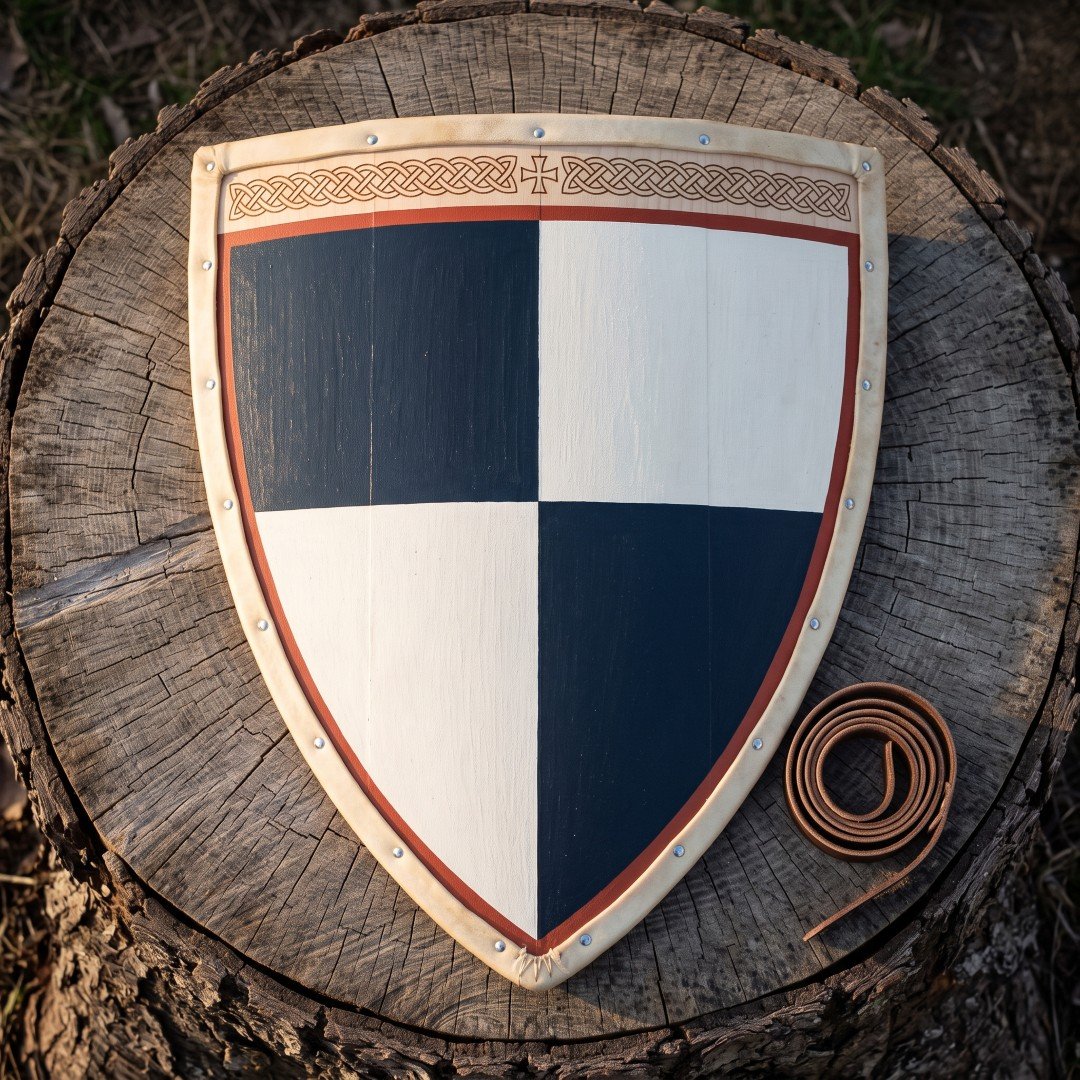
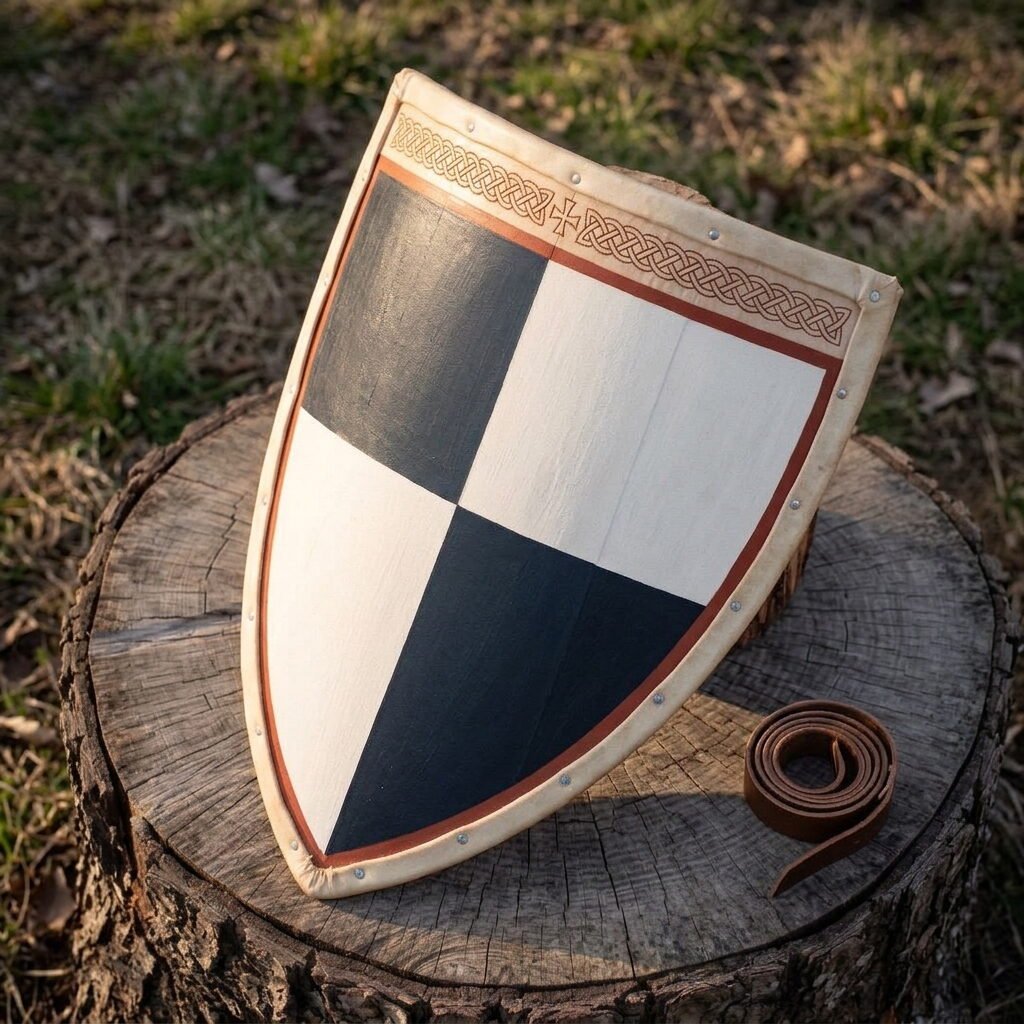
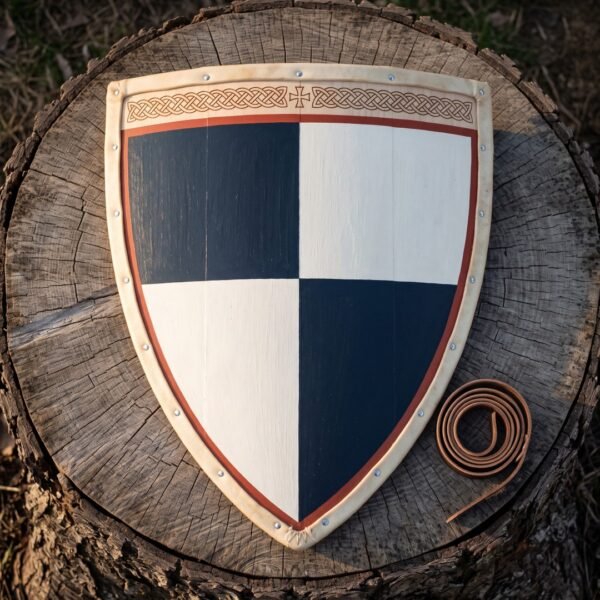
Quarterfell is a hand made heater shield, planked in wood, painted, rawhide bound around the whole edge and finished across the flat top with a hand cut knotwork band carrying a small cross at its centre. The field is quartered in navy and white, the standard heraldic arrangement of four alternating quarters, and a red fillet runs inside the rim to frame the whole design. It is the shape most people picture when they think of a knight, and it is the shape a coat of arms is still drawn on today.
The heater is what the kite shield turned into. Through the twelfth century, mail leg armour became common and the great helm arrived, which meant a rider no longer needed a board long enough to cover his thigh and knee. So the long lower point was cut away, the shield shrank to about two thirds of its former height, and what was left was lighter, easier to handle on foot and far better suited to being used aggressively rather than just hidden behind. The name comes from the shape, since it looks like the base of a clothes iron, a heater, which is a distinctly unromantic origin for the most heroic silhouette in medieval Europe. Ours is planked, painted, bound and engraved in a Czech Republic workshop. Why the shape changed from round to kite is set out in round shield versus kite shield.
Specifications
| Item type | Heater shield, flat top with curved sides drawing to a point |
|---|
| Material | Planked wood body, hand painted face, rawhide bound edge |
|---|
| Size | Approximately 26 inches tall by 22 inches across the top |
|---|
| Design | Quartered navy and white with a red fillet inside the rim |
|---|
| Border | Hand cut knotwork band across the flat top with a small cross at its centre |
|---|
| Rim | Natural rawhide edging, riveted with steel rivets at intervals around the full perimeter |
|---|
| Fittings supplied | Brown leather strapping supplied loose for you to set and rivet |
|---|
| Intended use | Display, wall mounting, costume and light reenactment |
|---|
| SKU | RK-1442 |
|---|
Why the kite became a heater
Armour and shields evolve together, and the heater is a direct consequence of what happened to armour in the twelfth century. Two changes did it. Mail chausses, which are mail stockings covering the leg, became normal for anyone who could afford them, and the great helm replaced the open nasal helmet for mounted men. Once a rider had his legs in mail and his head in a bucket, the two jobs the kite shield existed to do were being done by something else.
So the shield lost the part that was no longer earning its weight. The long taper went, the board came up to around two thirds of the old height, and the top edge was cut straight rather than rounded because there was no longer a helmet less head to shelter behind it. What remains is a shield you can move fast, punch with, and drop the edge of into an opponent, which is exactly how the fighting manuals of the following century describe using one.
It also became the canvas. A shorter, wider board with a flat top is a far better field for a device than a long tapering one, and the heater shape is precisely why the heraldic shield outline still used on every coat of arms in Europe looks the way it does. Nobody has drawn arms on a kite shape in seven hundred years.
The board, the fillet and the rawhide
The body is planked, boards butted and glued edge to edge, which is how medieval boards were built and which gives the face a little flex under impact and a predictable failure line along a joint rather than a brittle split across the grain. The plank lines remain faintly visible through the paint and are meant to be.
The red fillet running inside the rim is doing more than decoration. A narrow band of a third tincture between the field and the edge separates the design from the rawhide binding so the quarters read cleanly instead of running into the rim, and it visually thickens the edge, which is why bordures and fillets are so common in real heraldry. The knotwork band across the flat top does the same for the strongest sight line on the shield.
The rawhide edging is the structural piece and it is applied wet. As it dries it shrinks hard around the perimeter and clamps the end grain of every plank, turning the rim from the weakest part of the board into a hide covered edge that a cut bites into instead of splitting. Say the honest thing though. This is built for display, wall mounting, costume and light reenactment. It is not made to any full contact combat standard.
Engraving, runes and your own design
Use the rune converter on this page to turn a name, a date or a short phrase into Elder Futhark and we will cut it into the shield. If you would rather have a Viking pattern than a rune line, choose your own design in the engraving option above the add to cart button and tell us where it goes. Where a piece already carries an engraved design, your chosen engraving replaces it rather than sitting alongside it. On this shield the knotwork band across the top is the engraving field, so a family name, a date, a motto or your own device takes the place of the knotwork shown. See the engraving page for how much text sits comfortably in that band.
Mounting and display
The heater is the easiest shield shape to live with on a wall, because it is close to square in proportion and it fits above a door, over a mantel or in an alcove where a kite shield simply will not go. Hang it from two fixings, heavy picture hooks or a French cleat catching the rim at the two top corners, so the weight is shared and the flat top stays level.
Do not hang it from a strap. Leather creeps under a constant load over years and eventually stretches enough to let go. If you want to use it as well as display it, fit and rivet the strapping first, then hang the board from the rim and leave the straps hanging free on the back. Side lighting flatters it far more than overhead lighting, because a raking light picks up the plank lines and the cut knotwork that flat top light erases.
Care
Keep it dry and indoors. Painted plank and rawhide both take up moisture, and a shield stored in a damp garage will lift paint at the joints and soften the binding. Indoors it wants nothing more than an occasional dusting with a soft dry cloth.
If the face is marked, use a barely damp cloth and nothing stronger. Household cleaners and solvents will lift hand laid paint straight off, and abrasive sponges will take the paint with the mark. Keep it out of hard direct sunlight, which fades a navy faster than most people expect. The steel rivets take a light wipe of oil once or twice a year, and the general principles are on the steel care page. If it is going on a wall rather than into a line, choosing a shield for display covers size and mounting.
Made in the Czech Republic
This is a handmade piece from the Czech Republic, made in a workshop that still forges, grinds and finishes by hand instead of stamping parts out. The smiths there have kept the older way of working, and the wood, horn and leather are shaped and fitted by hand as well. Two pieces of the same design will never be identical, and that is part of what you are buying.
Ransack Viking is a United States company. We handle the import ourselves, look over every piece when it lands and ship from our warehouse in Chicago, Illinois. Engraving is done in the United States after the piece arrives, so your design goes on before we send it out.
A note on handmade variation
This is hand made rather than machine made or bulk produced, so what arrives will not be a pixel for pixel copy of the photograph. Plank lines fall where the boards fall, the painted quarter divisions are laid by hand so the line weight varies a little, the rawhide takes its own tone as it dries and the cut knotwork has its own rhythm. The dimensions, the material and the build are the same every time. The character is not.
Frequently asked questions
What is the difference between a heater and a kite shield
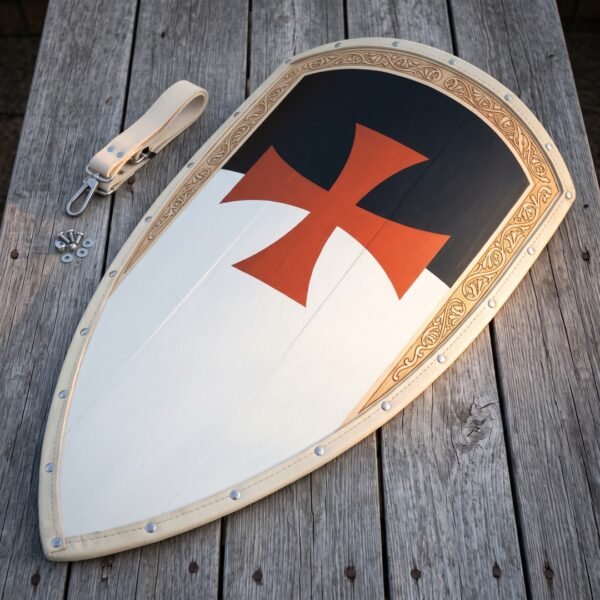
A kite is long and tapering with a rounded top, made to cover a rider leg. A heater is shorter and wider with a flat top, which is what the kite became once mail leg armour and the great helm made the long point unnecessary. This is a heater.
Are the straps fitted
No. The leather strapping comes loose in the box so you can set the arm loops to your own forearm and rivet them where they actually suit you. Straps riveted at an average position fit nobody properly.
Can I use it for full contact combat
No. It is built for display, wall mounting, costume and light reenactment. Full contact groups specify board thickness, rim construction and edge padding and inspect against those requirements, and this shield is not made to them.
Does the quartered design mean anything
Quarterly of two tinctures is one of the oldest and simplest heraldic field divisions, used across Europe from the twelfth century onward. This particular navy and white arrangement is our own design rather than the arms of any specific family or order.
How big is it
Roughly 26 inches tall by 22 inches across the flat top. That is a comfortable size for a wall above a mantel or a door and a practical size to carry, which is exactly why the heater replaced the kite.
How long does it take to ship
Processing is one to two weeks because each shield is planked, painted and bound to order, then shipping is free within the United States. Returns are accepted within seven days. Custom engraving on the band adds a few days.
What is in the box
- One planked heater shield, quartered navy and white with a red fillet
- Rawhide bound and riveted edge with a cut knotwork band across the top
- Leather strapping and rivets, supplied loose
- Fitting notes for setting the arm loops to your forearm
- Made and finished in the Czech Republic
Explore the range
See more in kite shields and bucklers, round shields and medieval helmets, or read the guides.
Also in this part of the catalogue
Worth putting side by side with this is the Palecross buckler. In the same category sits the Lionward buckler. A near match for this one is the Palewing buckler.
For a different piece from the same family, look at the Stormeye shield boss. Or start from a blank sheet on the design your own page.






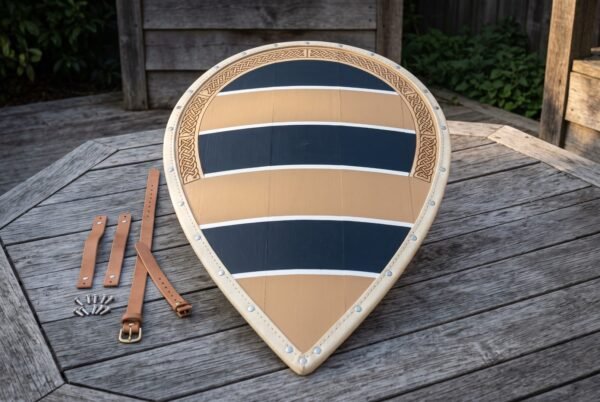
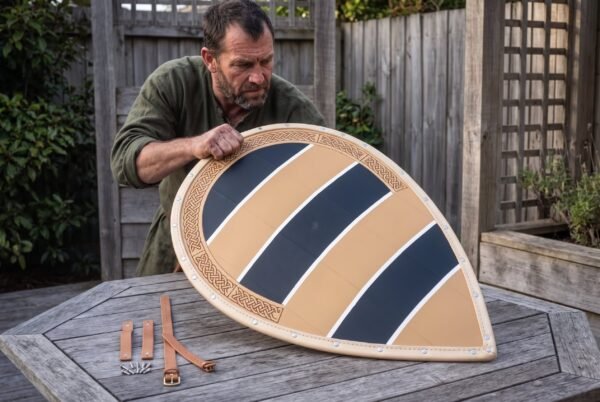

This thing is a beast in the best way. Exactly the look I wanted for my collection. I keep coming back to Ransack Viking because it’s always this good. Looks incredible with the rest of my reenactment kit. Already planning my next purchase from this shop.
Bought this on a whim and it turned out to be one of my favorite purchases this year. Fit is excellent and the steel gauge feels genuinely protective. So worth it.
Solid shield. Glad I ordered it. Good solid build. Finish could be a touch more even. Minor nitpicks aside, good quality piece.