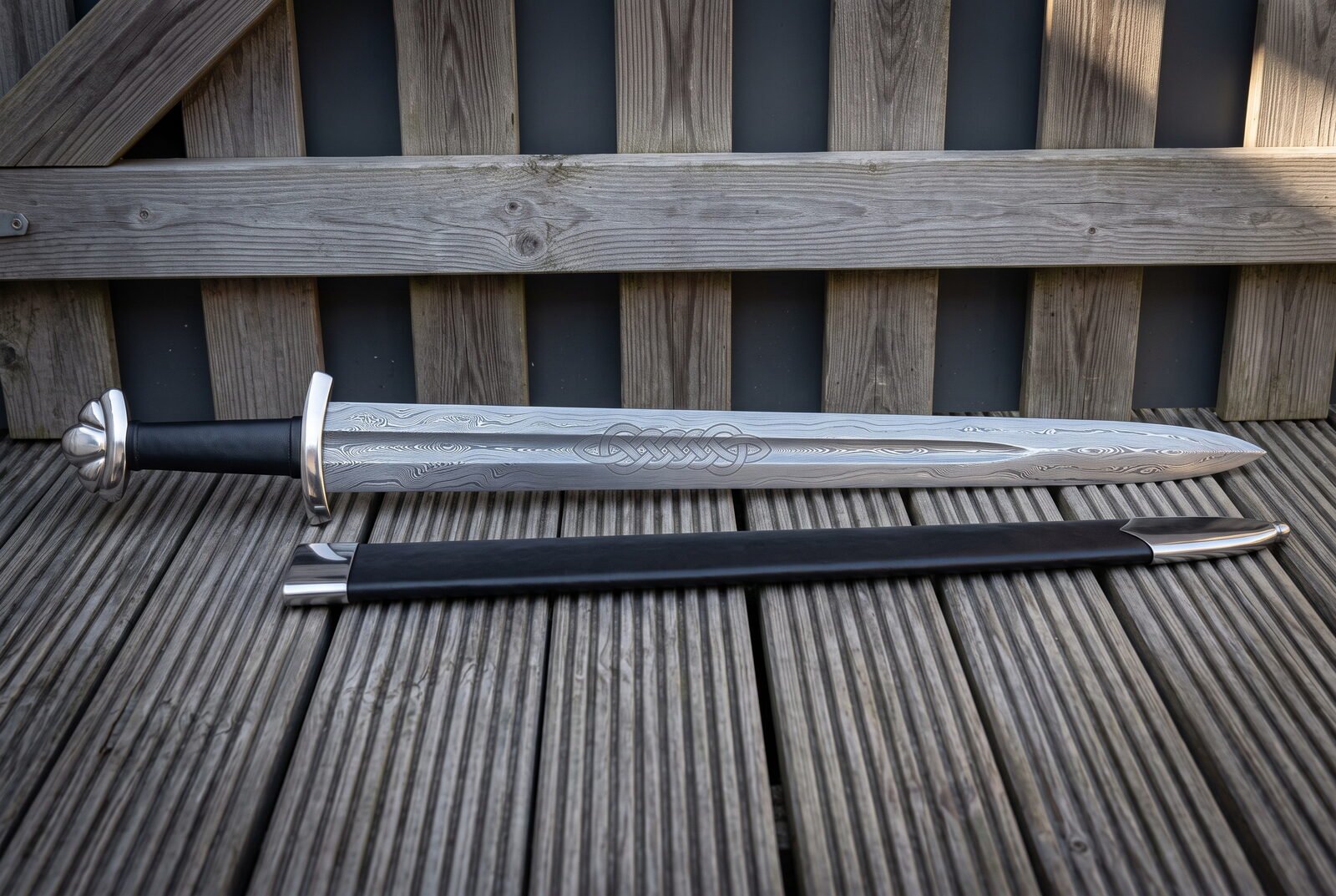
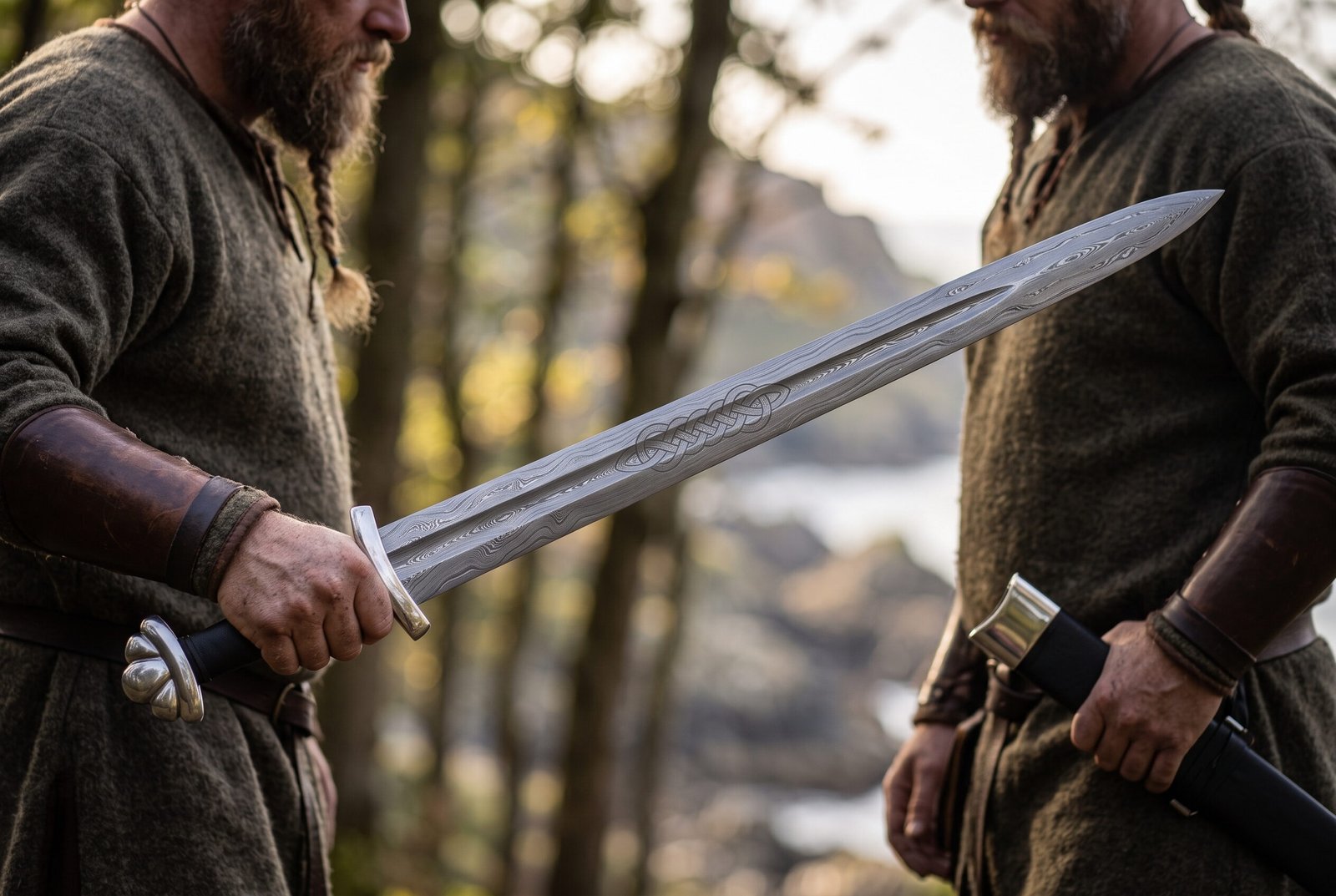
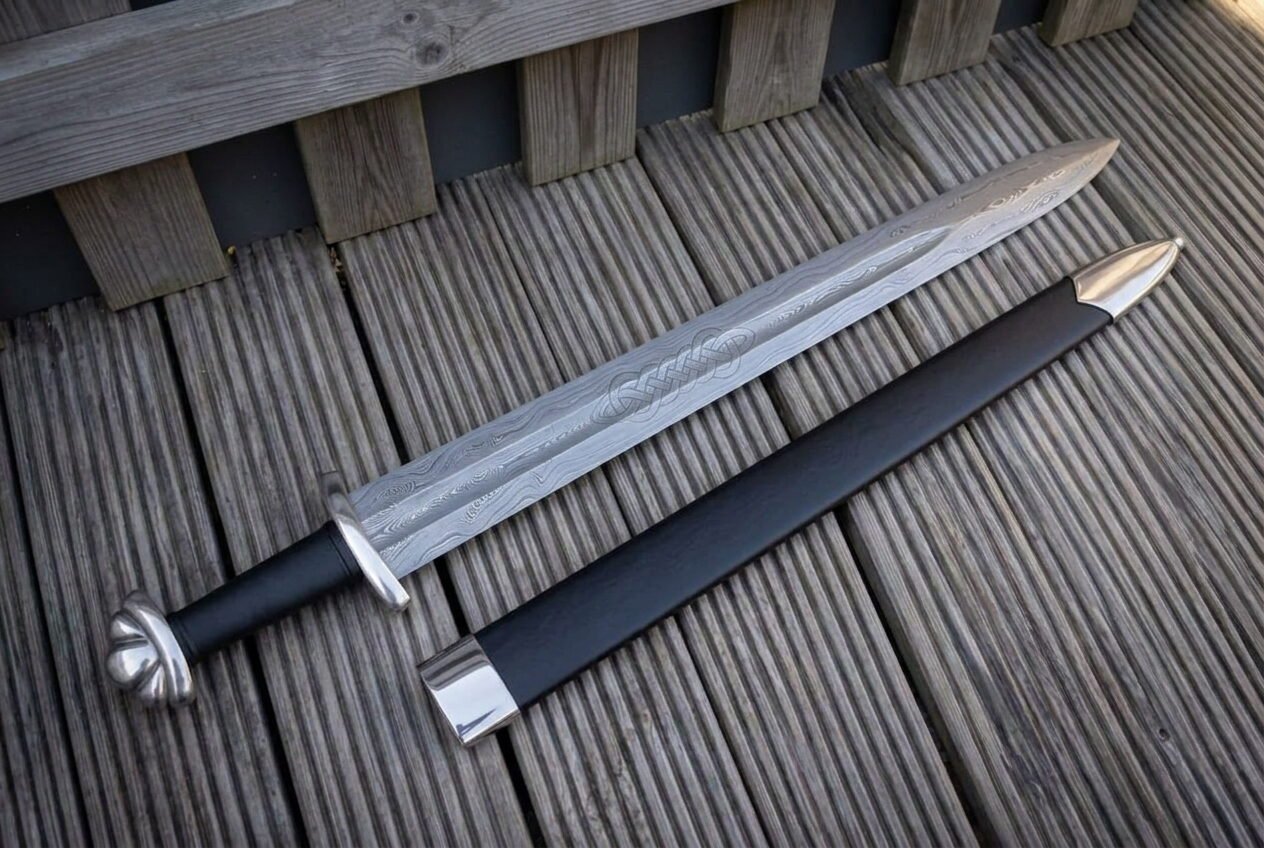
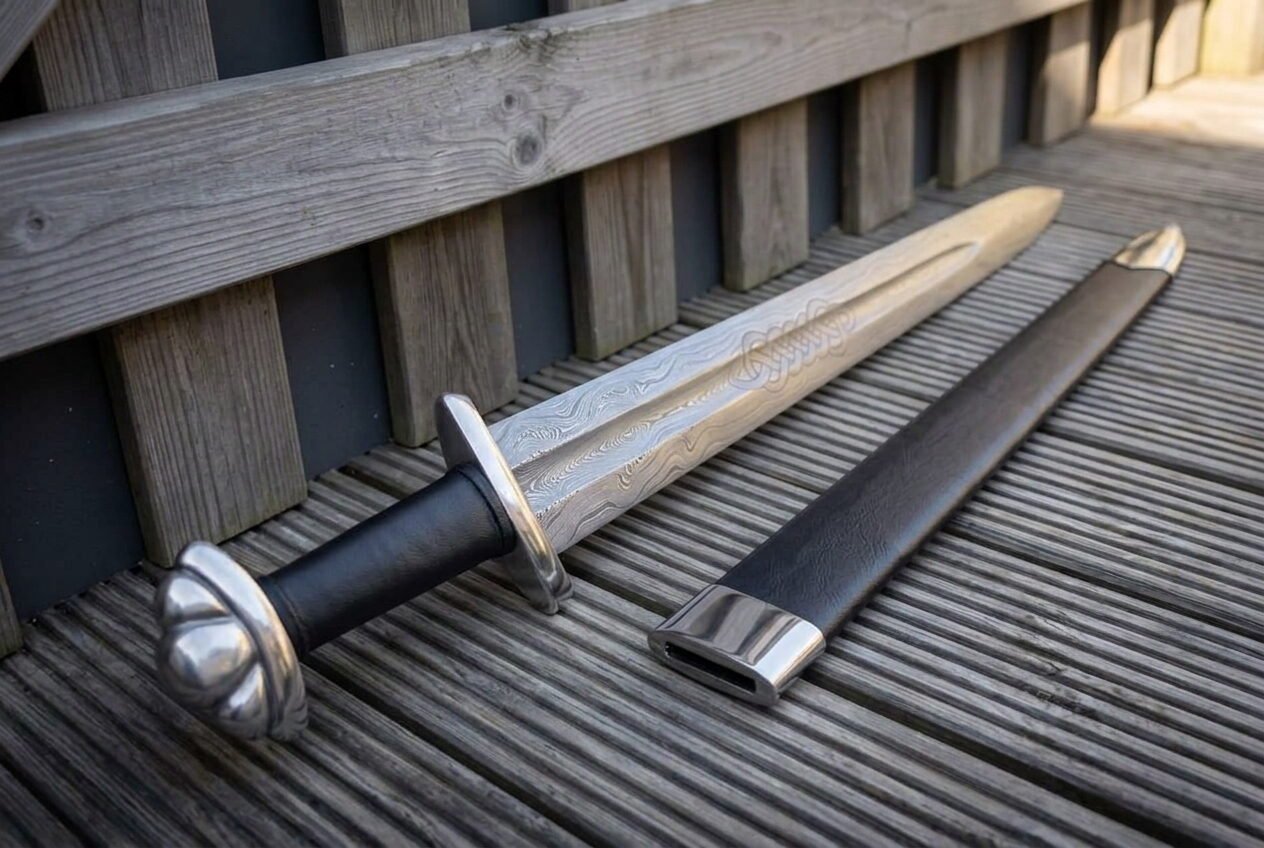
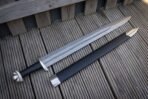
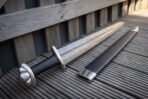
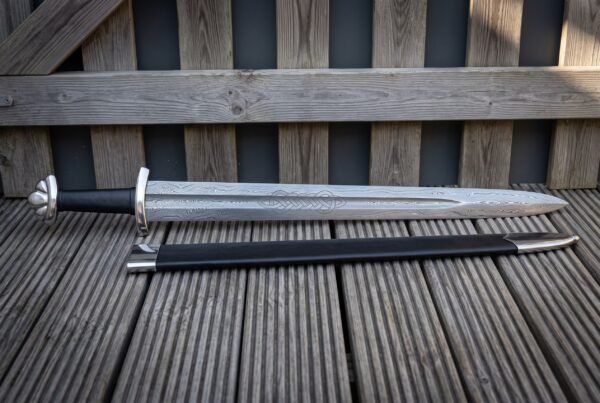
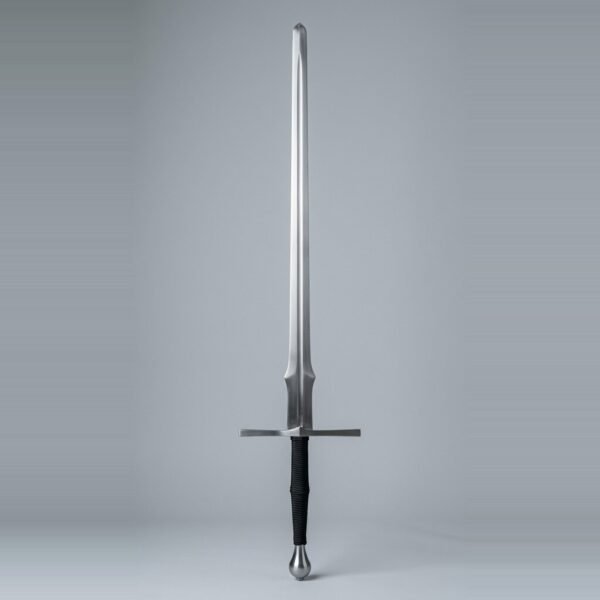
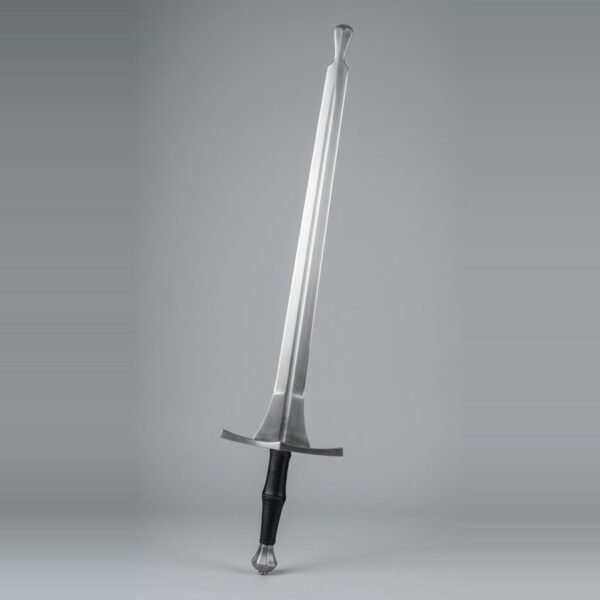
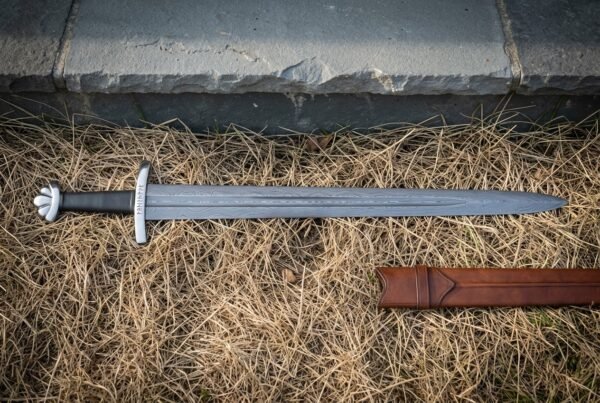
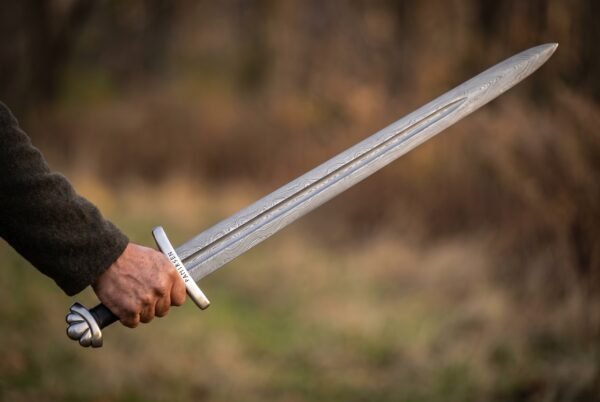
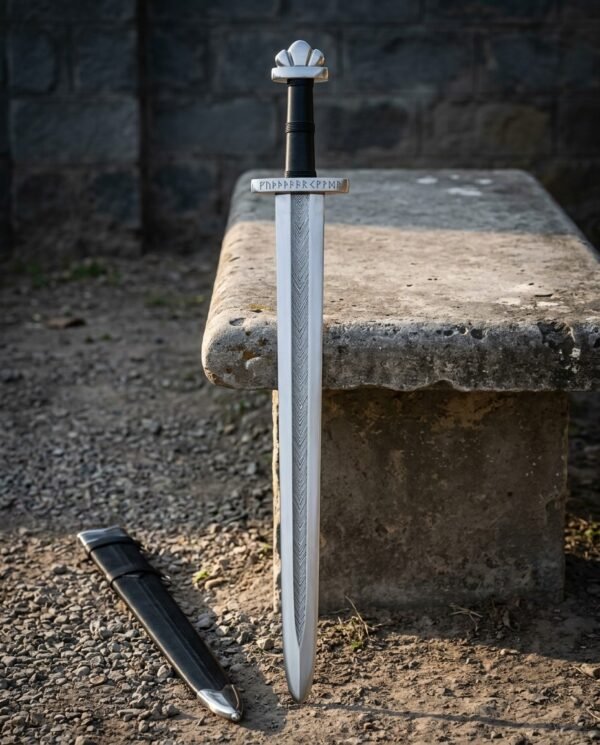
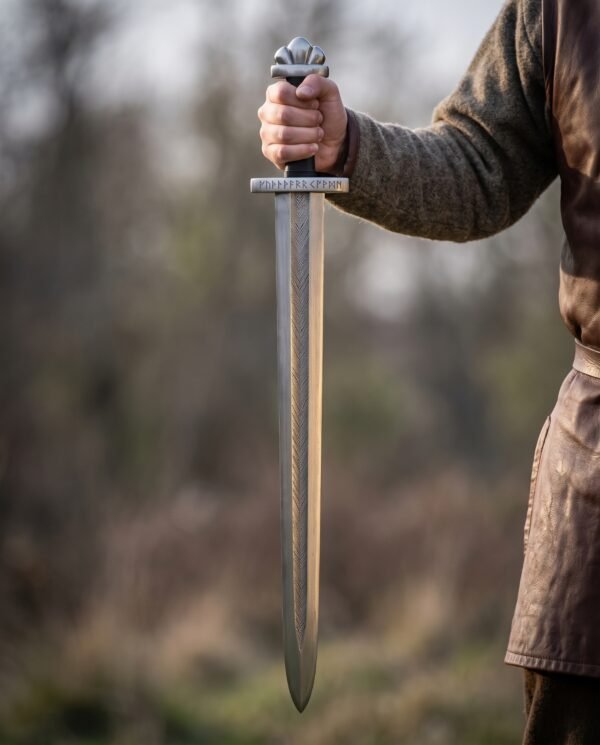
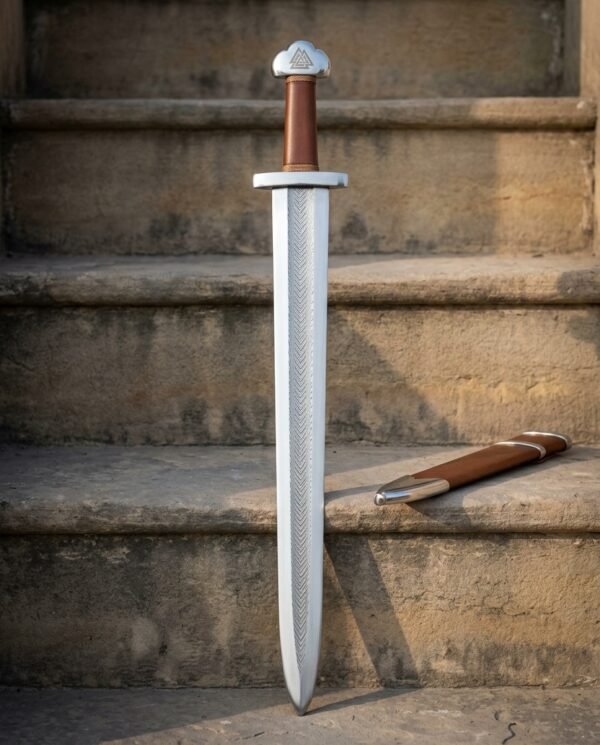
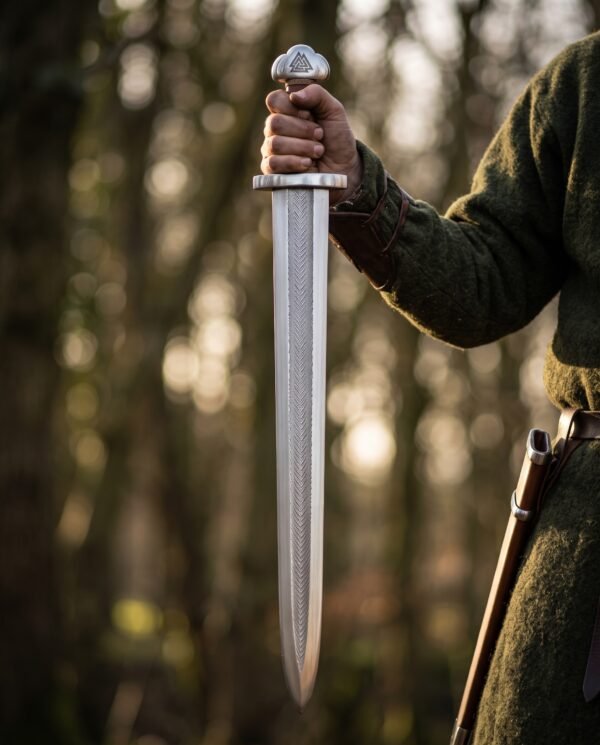
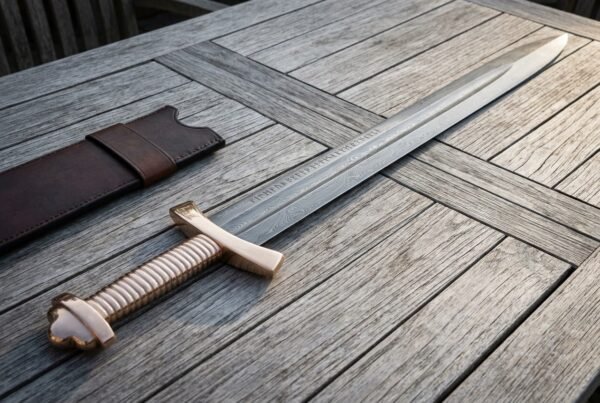
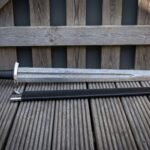
The Knotwake is a broad bladed Viking sword on pattern welded Damascus, with a large Norse interlace knot cut into the flat of the blade, a short straight guard, a smooth black grip and a polished lobed pommel. It ships with a black scabbard fitted with a polished steel throat and chape. The blade is wide and only lightly tapered, which is the correct profile for a sword meant to cut rather than to punch through plate.
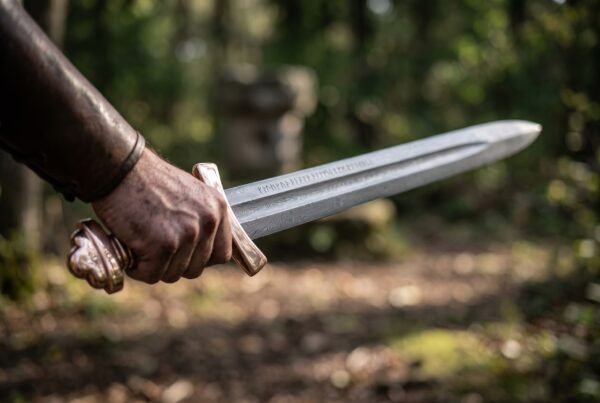
There is a reason so many surviving Viking blades carry marks on the flats. Frankish workshops of the ninth and tenth centuries inlaid names into the fuller in twisted iron wire, hammered into a chiselled channel and then ground flush, so the letters sat inside the steel rather than on it. The Ulfberht group is the famous example, and there are enough misspelled copies among the finds to prove that the name carried commercial value in its own time. That is roughly the oldest brand counterfeiting anyone has physical evidence for. The knot on the Knotwake is cut rather than inlaid, but it sits in the same tradition of a mark placed where the owner would see it every time the sword was drawn. Forged, ground, heat treated, etched and hilted in the Czech Republic.
Screen Norse kit gets the sword wrong more often than it gets it right, and the screen arms rated for accuracy rates the ones you have seen. Interlace of this kind was the standard decorative language of the period, and the symbols guide covers the patterns that keep coming back. A board from the round shields is what usually stands beside one.
Specifications
| Blade material | 1095 and 15N20 Damascus, 58 to 60 HRC |
|---|
| Overall length | 34 inches |
|---|
| Blade length | 27 inches |
|---|
| Blade width at guard | 2.2 inches |
|---|
| Fuller | Central fuller running most of the blade |
|---|
| Blade finish | Acid etched Damascus with a large cut interlace knot across the fuller |
|---|
| Guard | Short straight polished steel guard |
|---|
| Grip | Smooth black grip on a shaped core, single hand |
|---|
| Pommel | Five lobed polished steel pommel, peened over the tang |
|---|
| Edge | Sharpened on both edges |
|---|
| Weight | Approximately 2 lb 12 oz |
|---|
| Scabbard | Black scabbard with polished steel throat and chape |
|---|
| SKU | RK-1922 |
|---|
What a broad blade buys you
Two and a bit inches at the guard is wide for a sword, and the width is held most of the way down before the blade turns into its point. That distribution is the whole design. A wide blade has more mass out along its length, so it carries more energy into a cut, and it has more steel behind the edge, so it survives hitting something hard without deforming. It also presents a bigger flat to bind against an opposing blade.
The cost is agility and thrusting. A wide blade with little taper does not accelerate as quickly as a narrow one and its point is comparatively blunt. Viking age fighting was a shield and cutting blade business, and the blades reflect it. This one is honest about what it is. If you want a sword that thrusts through gaps in armour, that is a different sword from a different century.
The steel and the etch
The blade is welded from 1095 high carbon steel and 15N20, layered, drawn out, folded and welded again. Etching in acid darkens the 1095 and leaves the nickel bearing 15N20 bright, producing the flowing figure across the flats. On a blade this wide the pattern has room to open out, which is why the figure here reads larger and looser than it does on a narrow blade from the same billet.
The large interlace knot is cut into the flat after the etch, so the bright cut lines sit against the darker etched ground. Hardness is 58 to 60 HRC, tempered back from the quench so the blade will flex rather than shatter. The lobed pommel is peened over the tang and you can see the peen on the top face.
Engraving, runes and your own design
Use the rune converter on this page to turn a name, a date or a short phrase into Elder Futhark and we will cut it into the steel, the leather or the wood. If you would rather have a Viking pattern than a rune line, choose your own design in the engraving option above the add to cart button and tell us where it goes. Where a piece already carries an engraved design, your chosen engraving replaces it rather than sitting alongside it. On the Knotwake that means your runes or your pattern take the place of the large knot on the flat, which is the most visible spot on the sword. See the engraving page.
Handling and balance
Balance is around five inches ahead of the guard, further out than most swords of this length, which is what a wide near parallel blade does. It feels solid rather than nimble and it wants to be swung in arcs rather than flicked. Recovery after a big cut is where you notice the mass, so use the pommel against the heel of the hand to stop the blade rather than braking with the wrist.
The grip is short at around three and three quarter inches, which is period correct. Both edges arrive sharp. This is a cutting sword and a collector piece, and it is not intended for edge on edge contact or for full contact reenactment or sparring.
Care
Oil the blade after every handling session and before storage. The etch that reveals the Damascus also leaves the surface more open than a mirror polish, and 1095 has no corrosion resistance at all. A thin film of light oil, wiped guard to point, is all it needs. Feed the leather of the scabbard occasionally with a neutral balm and store the sword out of it. Wipe the steel throat and chape at the same time. There is more on steel care on the site.
Damascus wants oil more than plain steel does, because the etch that shows the pattern also opens the surface, and caring for a Damascus pattern covers what to use.
Made in the Czech Republic
This piece is made by hand in the Czech Republic, in a workshop that still works the old way. The steel is forged, ground, heat treated and finished by smiths who learned the trade from the people before them, and the wood, horn and leather are cut and fitted by hand rather than pressed out on a line. That is also why no two pieces come out exactly the same.
Ransack Viking is a United States company. We import these pieces ourselves, check every one when it lands and ship from our warehouse in Chicago, Illinois. Engraving is done here in the United States after the piece arrives, so your runes or your own design go on before it leaves for you.
A note on handmade variation
Every Knotwake is hand made rather than machine made or bulk produced, so what arrives will not be a pixel for pixel copy of the photograph. The Damascus figure is different on every blade because no two billets move the same way under the hammer. The knot is cut freehand and its proportions shift slightly. The black grip is polished by hand and reads different in different light. The dimensions, the material and the build are the same every time. The character is not.
Frequently asked questions
Is the knot etched on or cut in?
Cut in, with a graver, after the blade has been etched. You can feel the lines with a fingernail and they show bright against the darker etched surface.
Why does the blade barely taper?
Because it is a cutting sword. Holding width along the blade keeps mass and edge out where the cut lands. Narrow tapering blades belong to a later period and a different problem.
Is it heavy?
Around two and three quarter pounds, which is at the heavier end for a single hand sword. That is the price of the wide blade and it is why it cuts as well as it does.
Can I display it with the scabbard on?
You can for short periods, but do not store it that way. Leather and lined scabbards hold humidity against steel and an etched Damascus blade is the last thing you want sitting in damp.
Will you engrave and keep the knot?
Not on the same spot. If you want both, we will put your runes on the opposite flat or on the scabbard. Say so in the engraving option.
How soon does it ship?
One to two weeks to forge and finish, then free shipping inside the United States.
What is in the box
- One Knotwake Damascus Viking broadsword, 34 inches overall
- Black scabbard with a polished steel throat and chape
- Care card with oiling instructions for etched Damascus
- Lifetime warranty against defects in forging, grind, heat treat and fittings
- Forged and finished in the Czech Republic
Explore the range
See more in Viking swords, Damascus swords and Norse arms, or read the guides.
Other pieces in this group
For a straight comparison, see the Trinelobe short sword, 28 inches overall. Worth putting side by side with this is the Knotflame flamberge sword, 38 inches overall. In the same category sits the Thornbite flamberge sword, 40 inches overall.
From the same corner of the shop, there is the Valknight cutlass. Nothing here exactly right, build one to your own spec on the custom Viking sword page.
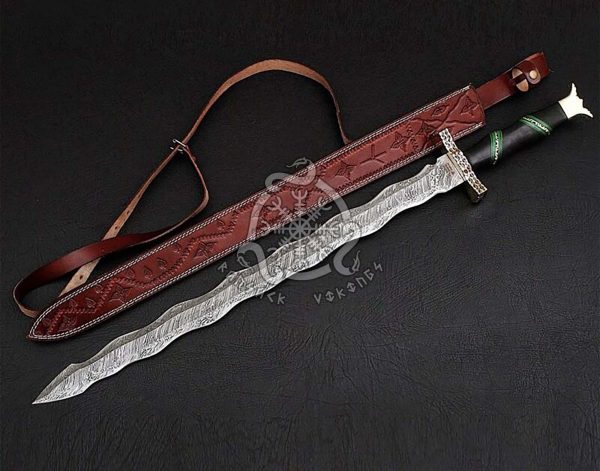
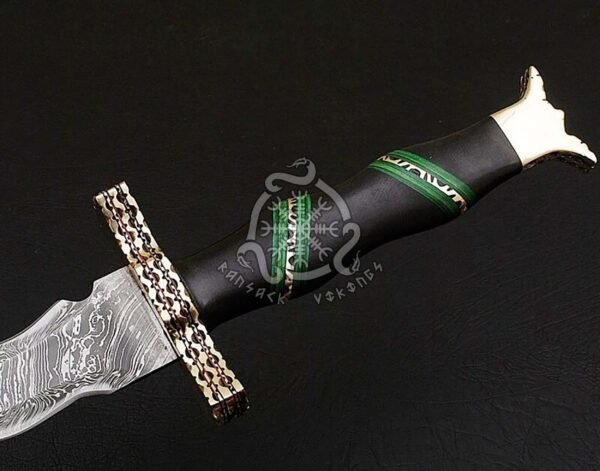
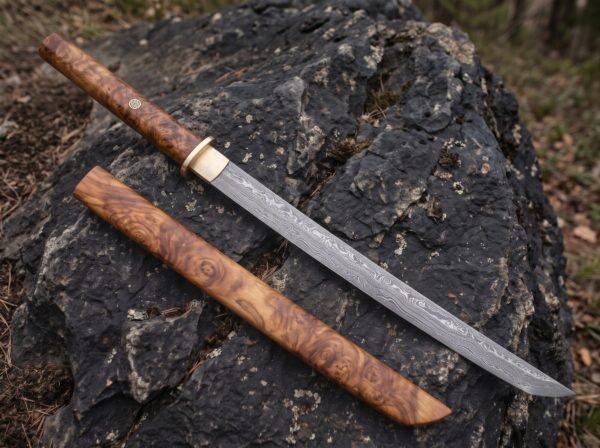
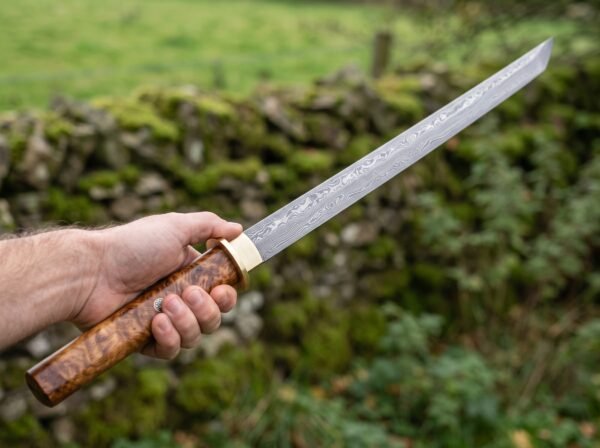
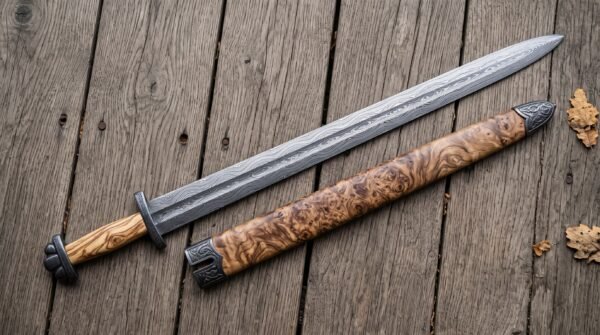
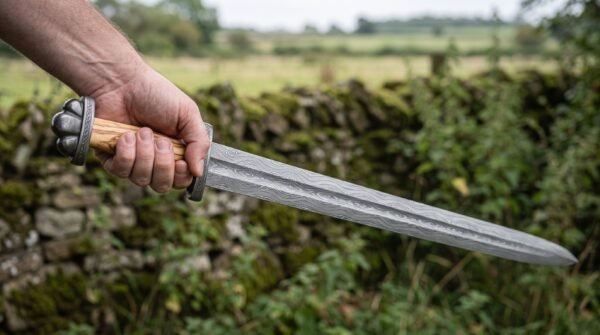
This sword is fine. Just didn’t wow me. Blade edge needed some sharpening out of the box. It’s fine but I expected a little more for the price. Not bad, not amazing either.
Feels way more premium than the price suggests. Great buy overall. Ransack Viking’s attention to detail is honestly unmatched.
My husband was speechless when he opened this. Damascus blade holds a razor edge right out of the box. Leather sheath is thick and well stitched. Not the cheap stuff you usually get. The wood handle feels amazing and the balance is perfect. This will be a family heirloom for sure.
This thing is a beast in the best way. Weight and balance make it feel like a real functional piece not some cheap replica. Highly recommend this one.
Been eyeing this sword for months and it did not disappoint. Ransack Viking’s attention to detail is honestly unmatched. Even the small engravings are crisp and clean. 10/10 would buy again.