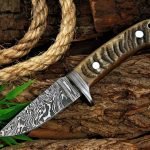
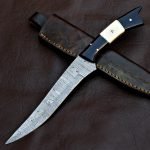
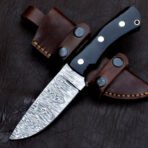
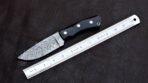
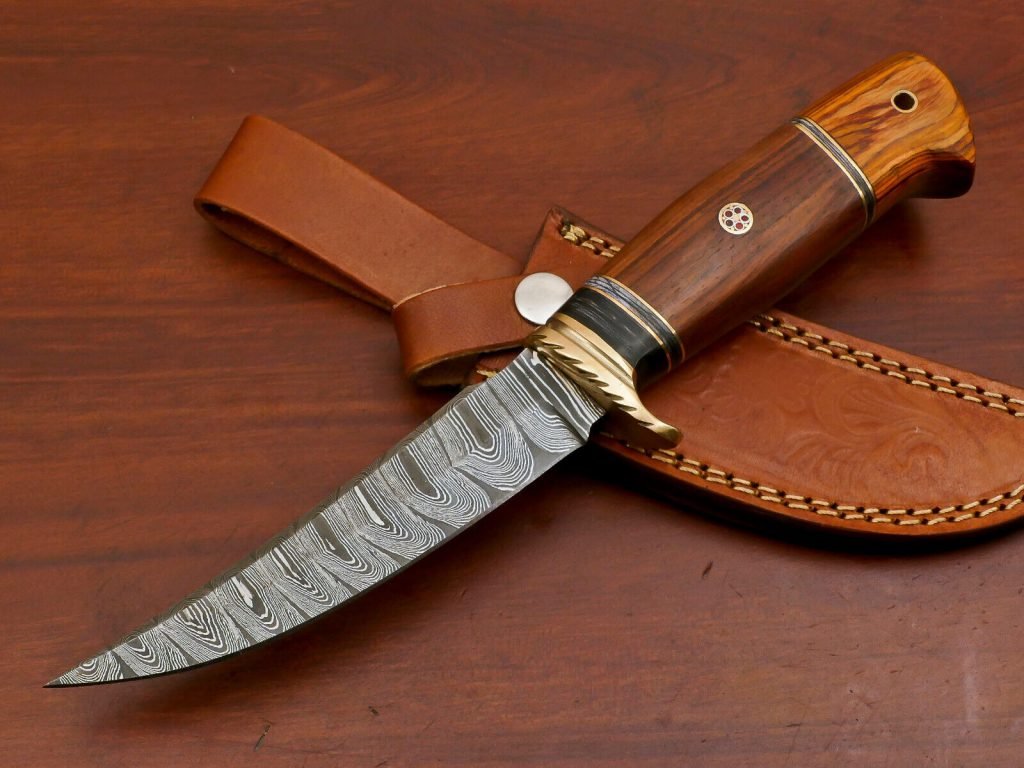
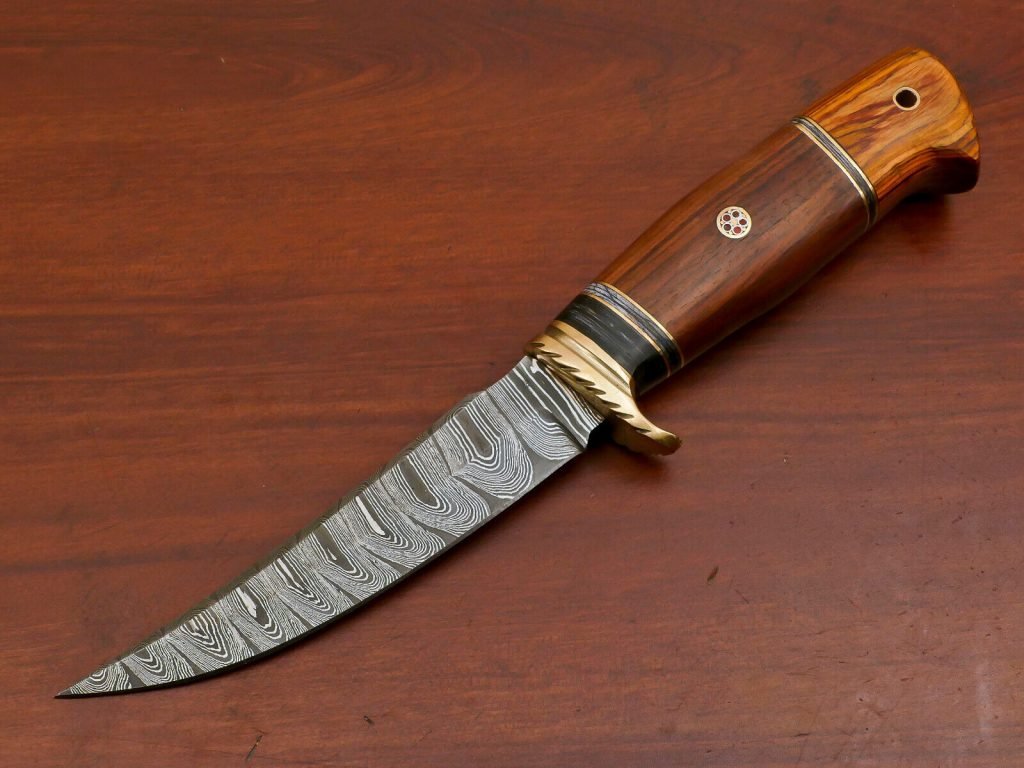
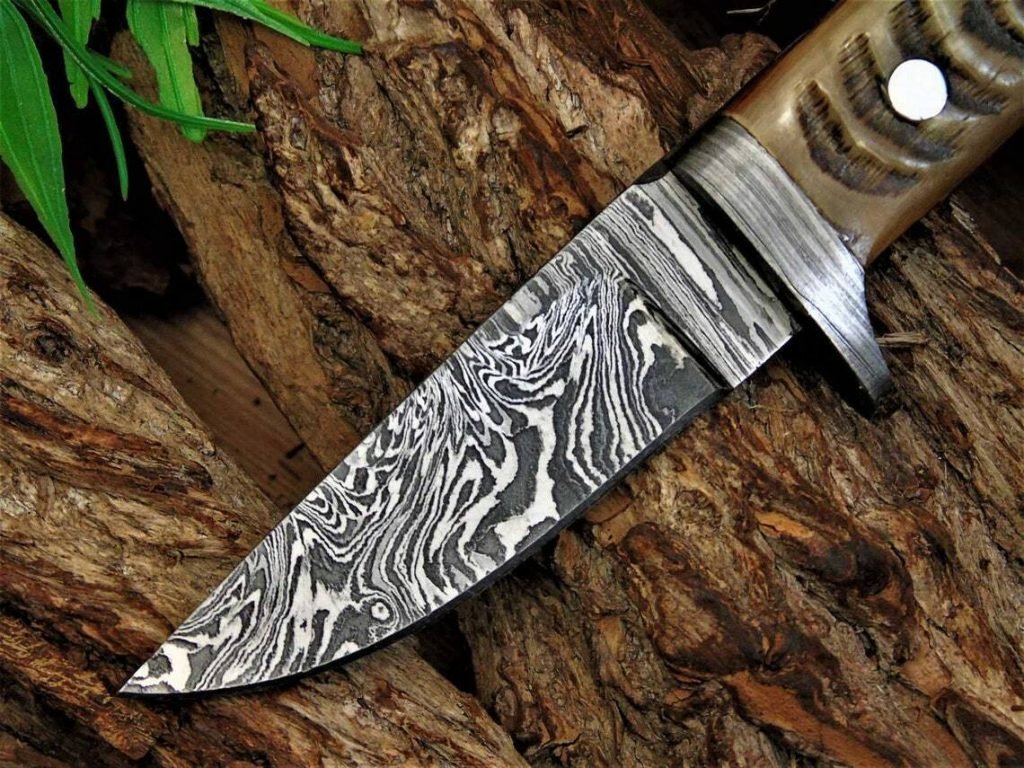
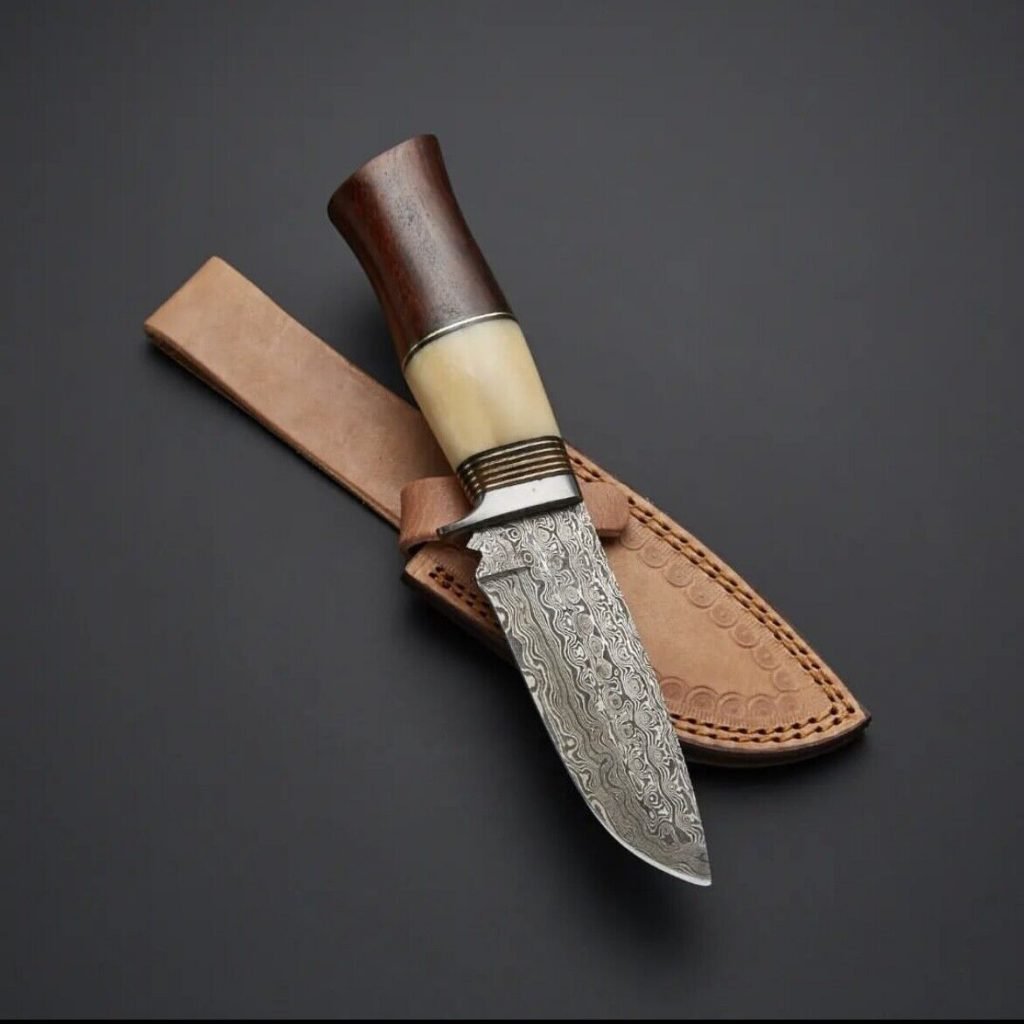
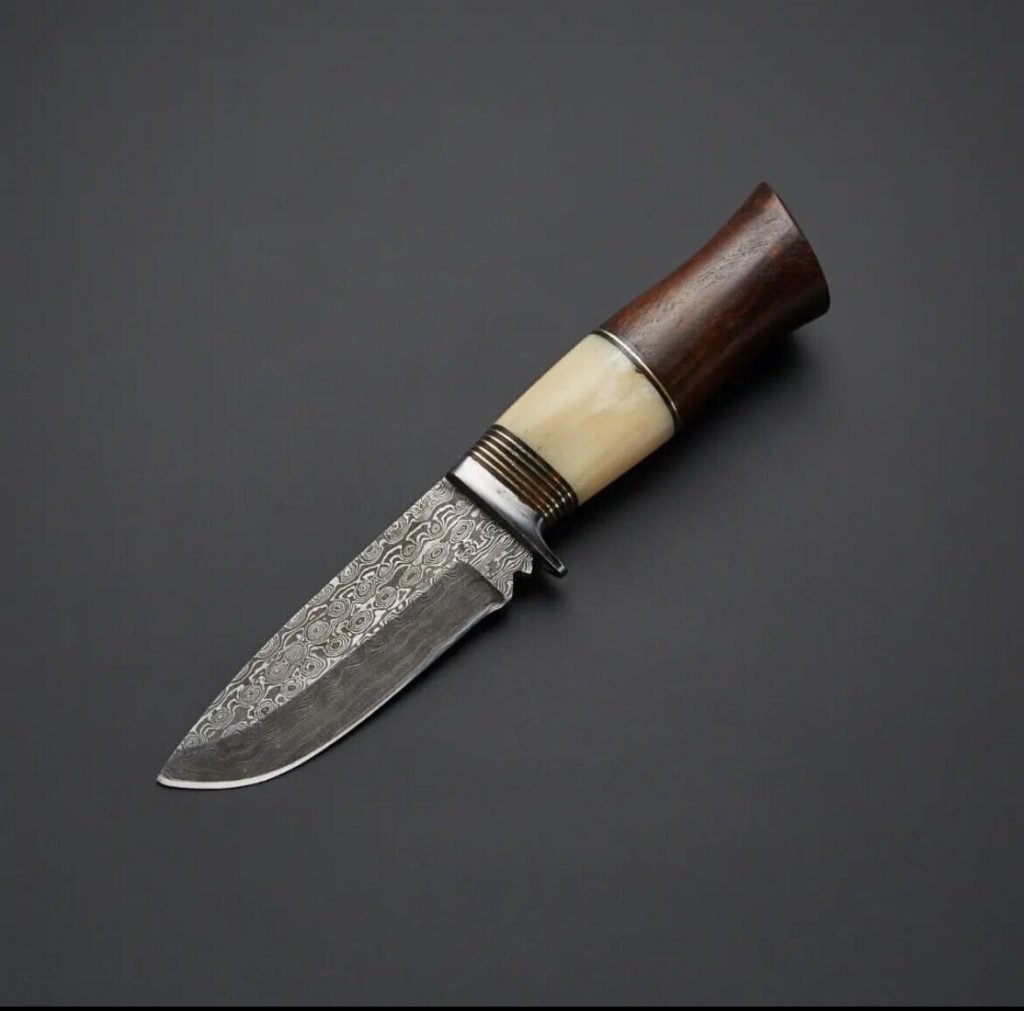
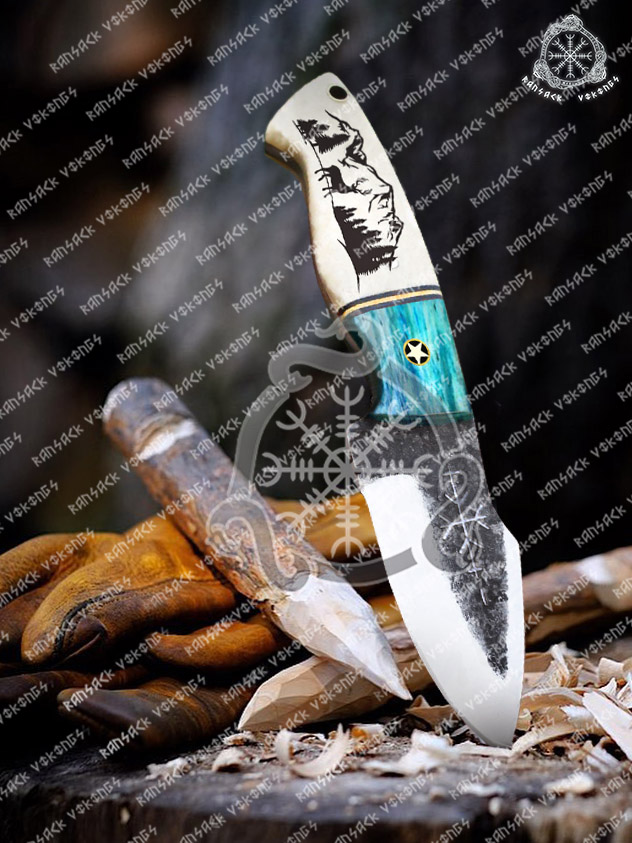
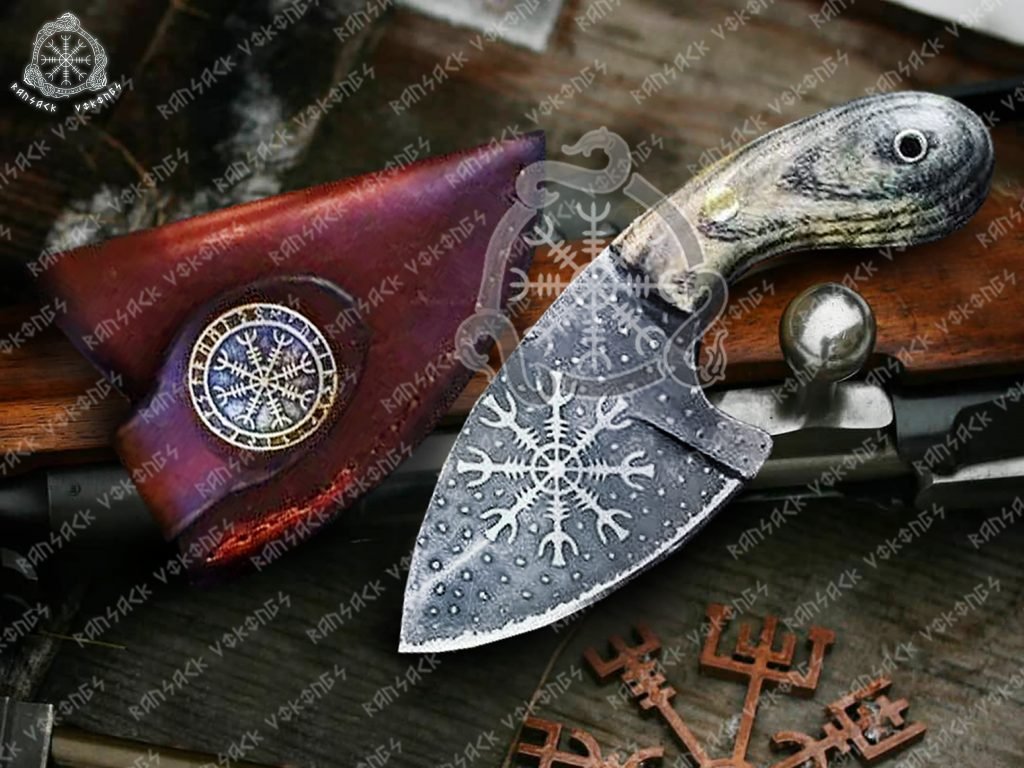
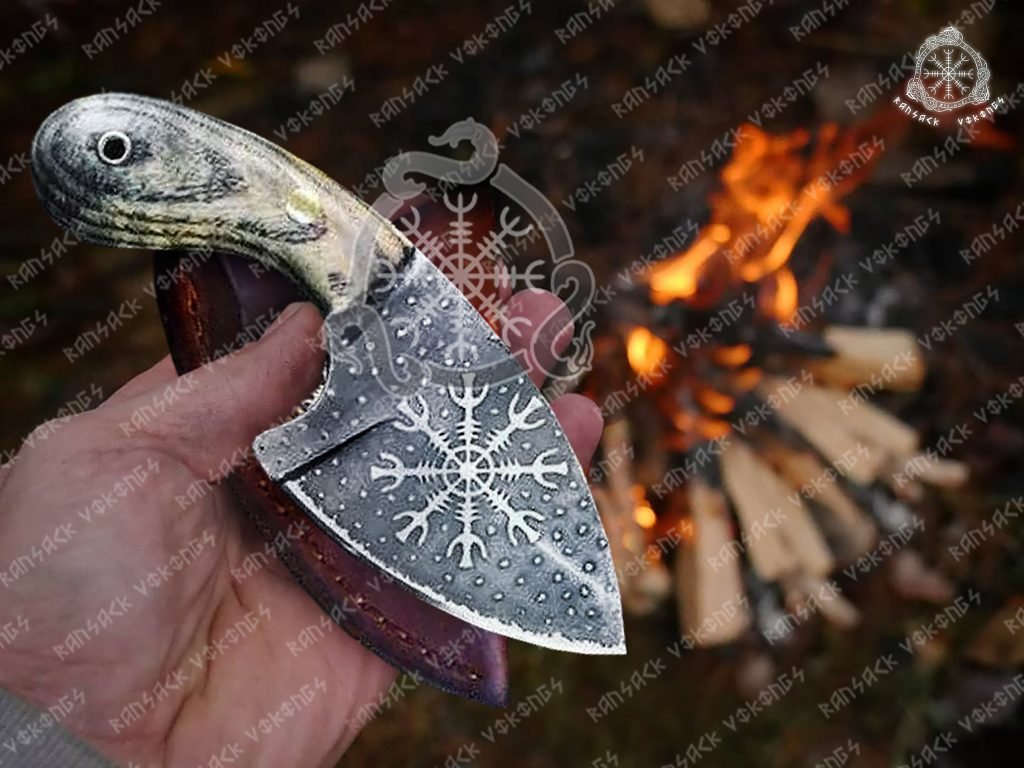
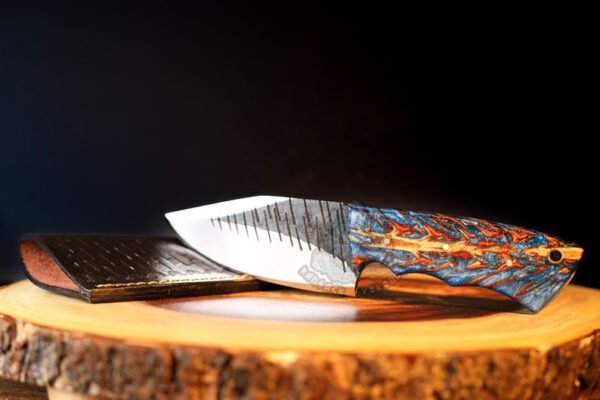
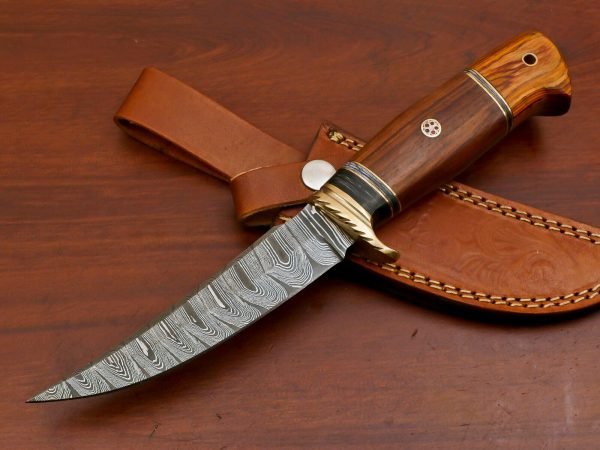
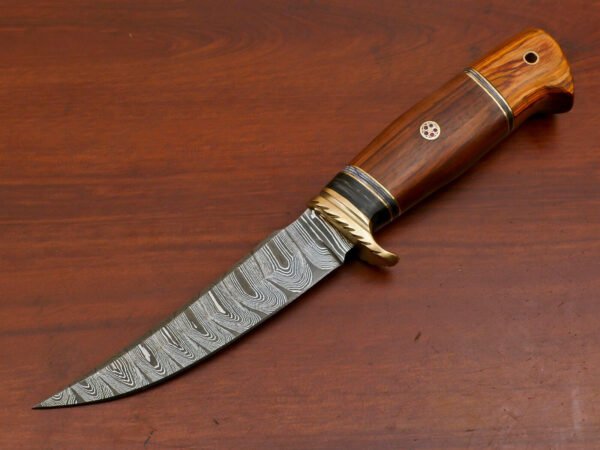
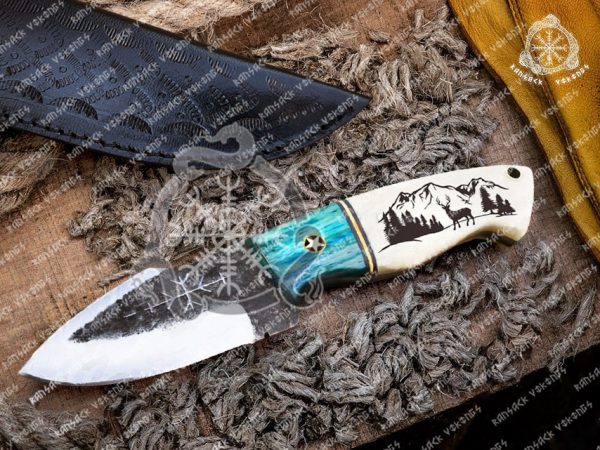
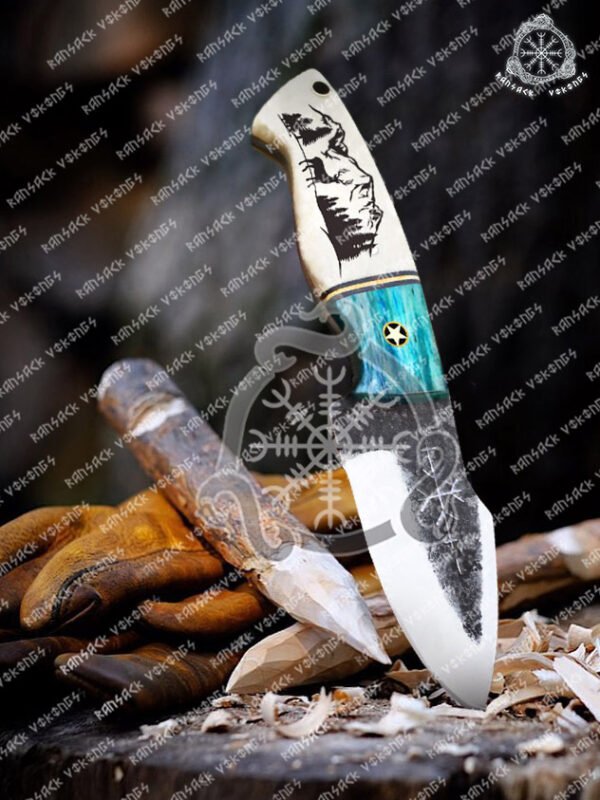
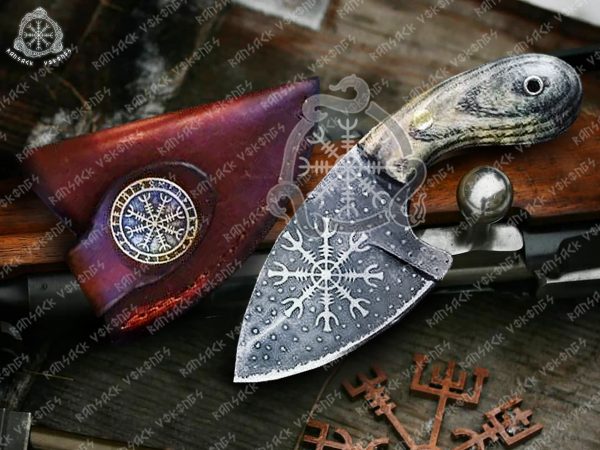
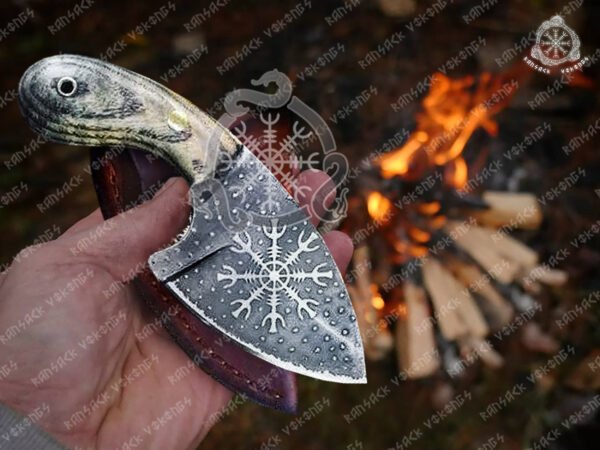
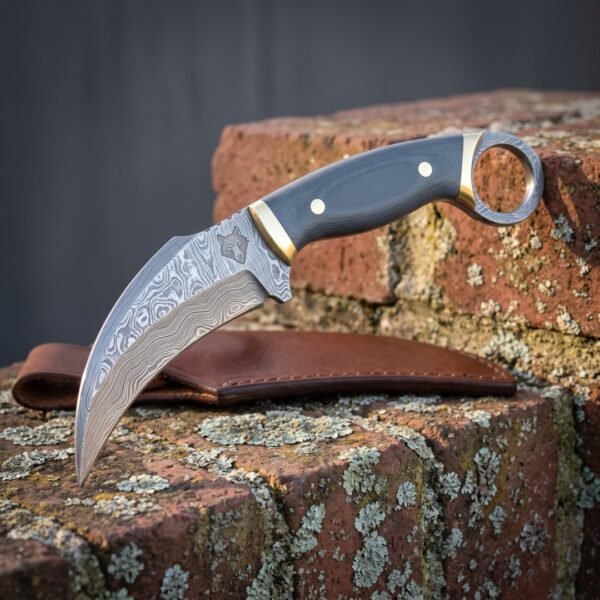
This Greyfell is a working skinner, not a drawer piece. A 4.5 inch hand forged Damascus blade drawn from a 393 layer billet, 9.5 inches overall, on a 5 inch micarta handle that does not care whether it is wet. The edge arrives ready to cut and the whole knife is built to be used outdoors rather than looked at indoors. The overlap between hunter, skinner and bowie is untangled in which knife you actually need.
Micarta was not invented for knives. Westinghouse patented it in 1910 as an electrical insulator, made by soaking sheets of linen, canvas or paper in phenolic resin and pressing them under heat until the whole stack cured into a single solid block. It went into switchgear, aircraft and machine tooling for decades before anyone thought to make a knife handle out of it, and when they did it was largely because the offcuts were cheap and the material turned out to be almost indestructible. It does not absorb water, it does not rot, it does not shrink, and the woven texture of the cloth inside it means that as it wears the surface actually gets grippier rather than smoother. A hundred years on it is still the default choice for knives that live hard lives.
Forged and finished in the Czech Republic. It ships with a leather sheath, protective packaging and a working edge.
Specifications
| Steel | Hand forged Damascus, 1095 and 15N20 |
|---|
| Hardness | 58 to 60 HRC |
|---|
| Damascus layers | 393 layers |
|---|
| Overall length | 9.5 inches |
|---|
| Blade length | 4.5 inches |
|---|
| Handle length | 5 inches |
|---|
| Handle | Micarta |
|---|
| Sheath | Leather sheath |
|---|
| SKU | RK-420 |
|---|
The grind, and why a skinner is ground the way it is
The belly of a skinner gets all the attention. The cross section of the blade is doing at least as much work, and it is the thing most buyers never look at.
There are three ways to take a blade from spine to edge. A hollow grind cuts a concave scoop into each side, leaving very little metal immediately behind the apex. It gives the thinnest, keenest edge possible and the least drag through soft material, and it is the traditional grind for skinning knives and straight razors for exactly that reason. What it gives up is strength at the edge and depth of cut once the blade sinks past the hollow.
A flat grind runs straight from somewhere on the flank down to the edge. It is a compromise: strong enough for camp work, thin enough to cut well, and easy to sharpen because the geometry does not change as metal is removed.
A convex grind swells outward all the way to the apex, which puts the most metal behind the edge. It is the strongest and it is what axes and heavy choppers use, and it is the wrong answer for hide because it wedges rather than slices.
What matters in practice on a skinner is the same thing that matters on a kitchen knife: how thin the steel is in the last couple of millimetres behind the apex. Hide is tough and elastic and it grips a blade. A thin cross section slips through it; a thick one drags and forces you to push harder, which is exactly when a knife goes somewhere you did not intend. The 4.5 inch blade here is ground thin behind the edge with enough spine left for stiffness, which is the balance the whole pattern is aiming at.
Why Damascus and not stainless
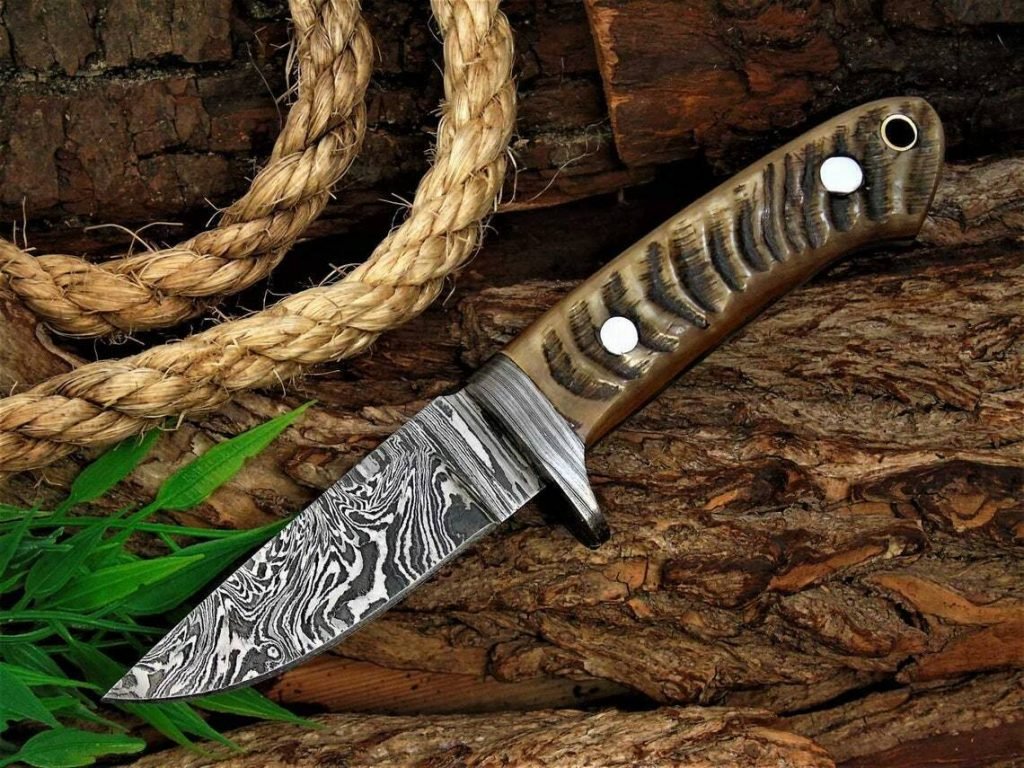
Forge welded from 1095 and 15N20, this blade carries a pattern that goes all the way through the steel. Printed and laser etched blades look similar in a photograph and disappear the first time a file touches them. At 393 layers the figure is fine and dense, and at 58 to 60 HRC the edge is genuinely hard.
Stainless would be the low maintenance answer, and for a knife that is going to live in a wet tackle box and be ignored for a year, it is the right one. This is not that knife. Hard carbon Damascus gives a keener edge that survives a whole animal without stopping to strop, in exchange for a wipe and a film of oil. Blood, fat and salt will mark it if they are left, so wipe as you work. The full comparison is in Damascus versus stainless.
The micarta handle
Micarta is the practical choice on a working blade. It does not swell, shrink, rot or care about being wet, and there is no oiling, feeding or seasonal maintenance to remember. If this knife is going to live in a pack, a truck or a tackle box rather than a display case, that matters far more than how the handle looks in a photograph.
The other advantage is grip. Because micarta is cloth laminated in resin, wear exposes more of the weave rather than polishing the surface smooth, so an old micarta handle grips better than a new one. Wet hands, cold hands and gloved hands all work on it. Cleaning is a scrub with warm soapy water and nothing else. It is the one part of this knife that genuinely asks nothing of you.
Engraving, runes and your own design
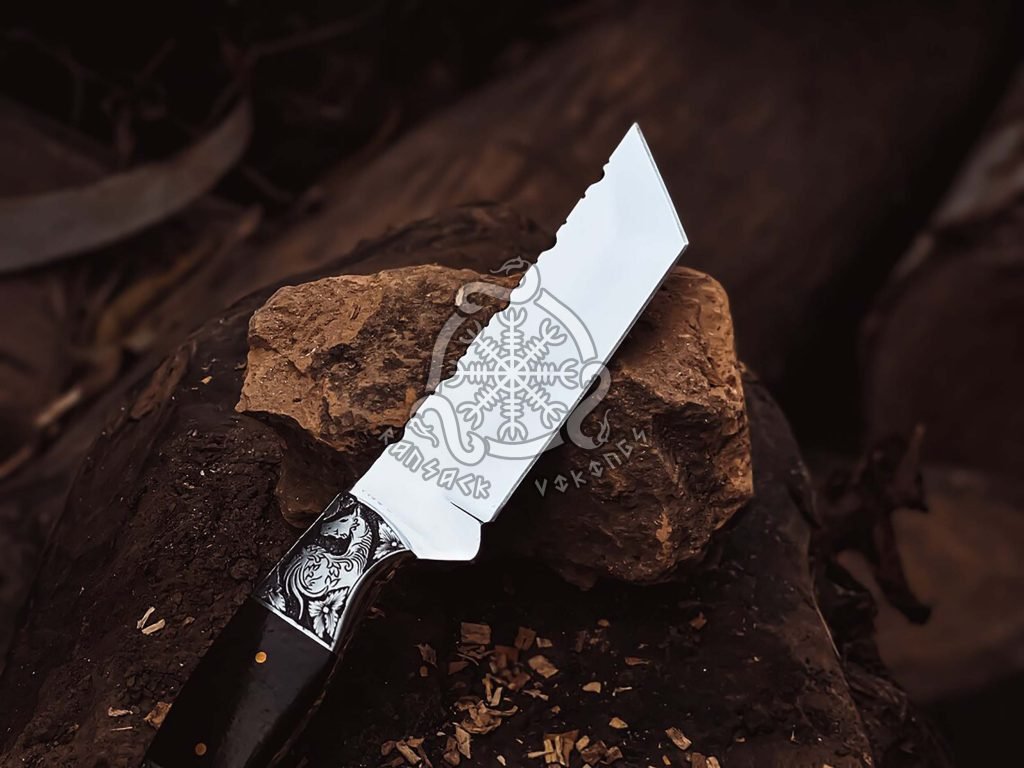
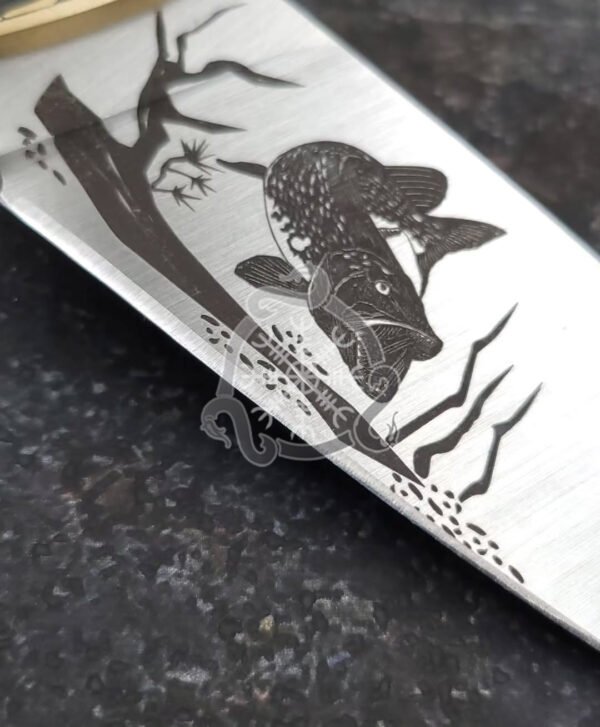
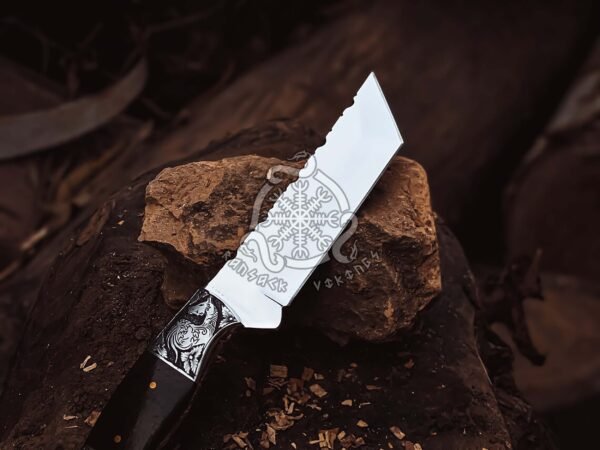
Use the rune converter on this page to turn a name, a date or a short phrase into Elder Futhark and we will cut it into the steel or the handle. If you would rather have a Viking pattern than a rune line, choose your own design in the engraving option above the add to cart button and tell us whether it goes on the blade or the handle. Where a piece already carries an engraved design, your chosen engraving replaces it rather than sitting alongside it. On this piece the blade flat is the better surface, since engraving cut into micarta reads with less contrast than engraving cut into Damascus. See the engraving page.
Care and sharpening
A minute after use is all it asks. Wipe the blade as you work rather than letting blood dry on it, wash with warm water and mild soap, dry it completely, and put a thin film of mineral or camellia oil on the steel. The micarta needs nothing beyond a wash.
Sharpen along the belly with a rolling motion that follows the curve rather than dragging a curved edge flat across a stone. A 1000 grit stone does the cutting, a 3000 refines, and a strop finishes. Keep to the angle already on the blade. Leather holds moisture and tanning salts against steel, so store the knife out of the sheath for long spells even though the handle itself does not care. Both jobs are covered in steel care and sharpening with a whetstone.
Made in the Czech Republic
The work behind this piece happens in a Czech Republic workshop that has kept to the old methods. Steel is forged and heat treated by hand, the grind is taken down by eye rather than by machine, and the handle, fittings and sheath are cut and finished one at a time. Because of that, every piece carries small marks of the hand that made it.
Ransack Viking is a United States company. We import direct, check each piece when it reaches us, and ship from our Memphis, Tennessee warehouse. Engraving is added here in the United States after arrival, so the piece you receive is finished to your order.
A note on handmade variation
The Greyfell is hand forged. It is not machine made and it is not bulk produced, so what arrives will not be a pixel for pixel copy of the photograph on this page. The Damascus pattern is drawn out and folded by hand and lands differently on every blade, and how the etch takes depends on how the surface finished, so contrast and tone move from one piece to the next.
Micarta is the most consistent material in the build, but even there the cloth weave shows differently depending on how the block was cut and ground. The dimensions, the steel, the hardness and the build stay the same every time. The character does not.
Frequently asked questions
Is micarta better than a natural handle
It is more practical and less interesting to look at. Micarta will outlast bone, horn and timber in wet, cold and hard use with no maintenance at all. Natural materials give you depth, warmth and variation that micarta cannot.
Is the Greyfell full tang
Yes. The steel runs the full length of the handle between the micarta scales and is pinned through, which is what allows it to take the twisting loads that skinning generates.
Will 4.5 inches work on elk and hogs as well as deer
Yes. Four and a half inches covers ground quickly on larger animals while still turning well at the joints. It is arguably the most versatile single skinner length.
Can I put it in a dishwasher since the handle is synthetic
No. The handle would survive it but the carbon steel blade would not. Heat and detergent will pit and stain the Damascus. Wash by hand and dry immediately.
Does micarta get slippery when wet
Less than almost anything else. The cloth weave under the resin gives it grip, and it improves as the surface wears rather than polishing smooth like a moulded plastic handle would.
How does this compare with the bone and horn handled skinners
Identical steel and the same job. Choose micarta if the knife is going to be used hard and stored carelessly, and choose bone, horn or timber if you want a piece with more character and are willing to feed it once a year.
What is in the box
- One Greyfell Damascus skinner knife
- Leather sheath
- Protective packaging
- Care notes for carbon steel
- Forged and finished in the Czech Republic
Explore the range
Compare it with the rest of the Damascus skinner knives, the hunting knives and the Bowie knives for a bigger camp blade. Grinds, steels and sharpening are covered in the guides.









Reviews
There are no reviews yet