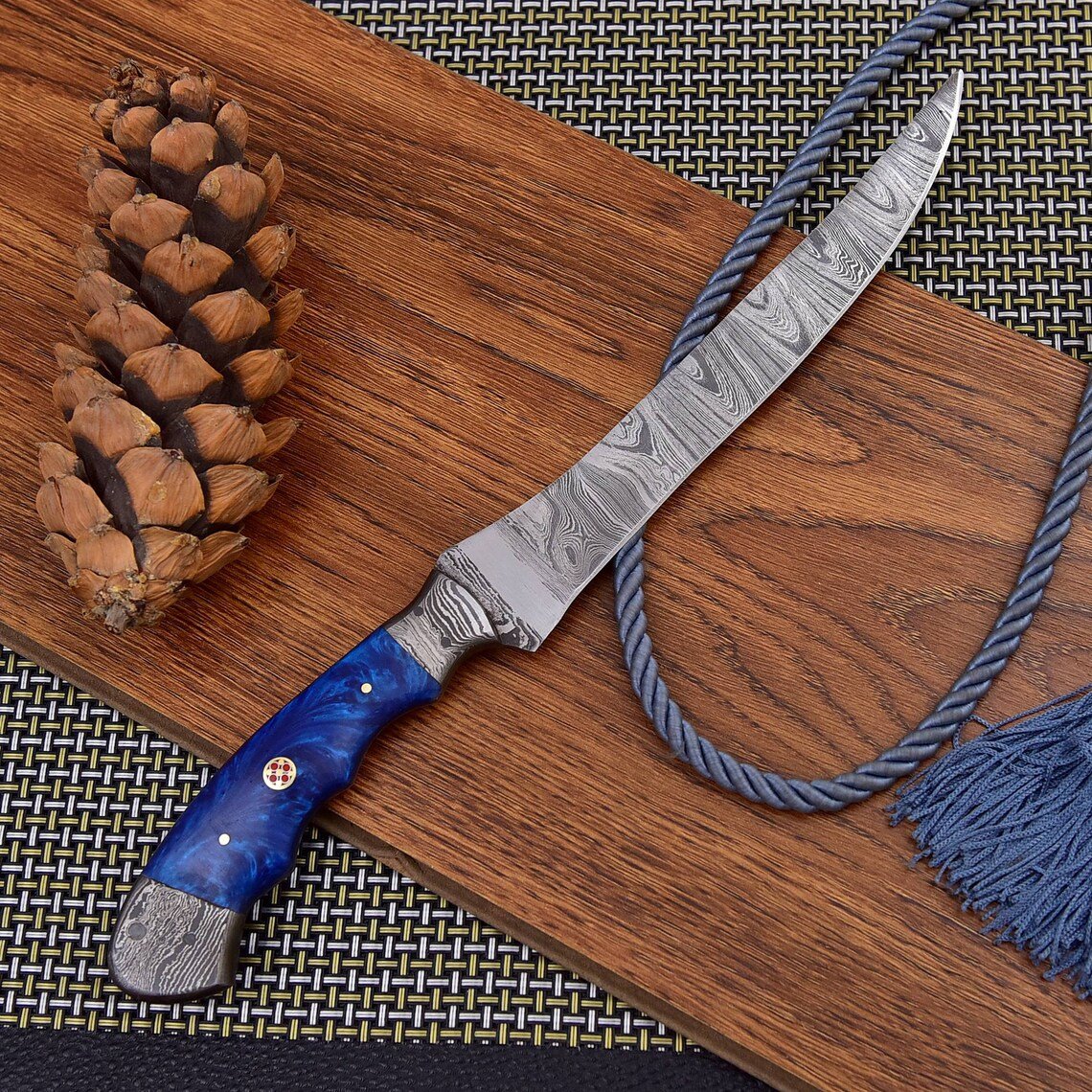
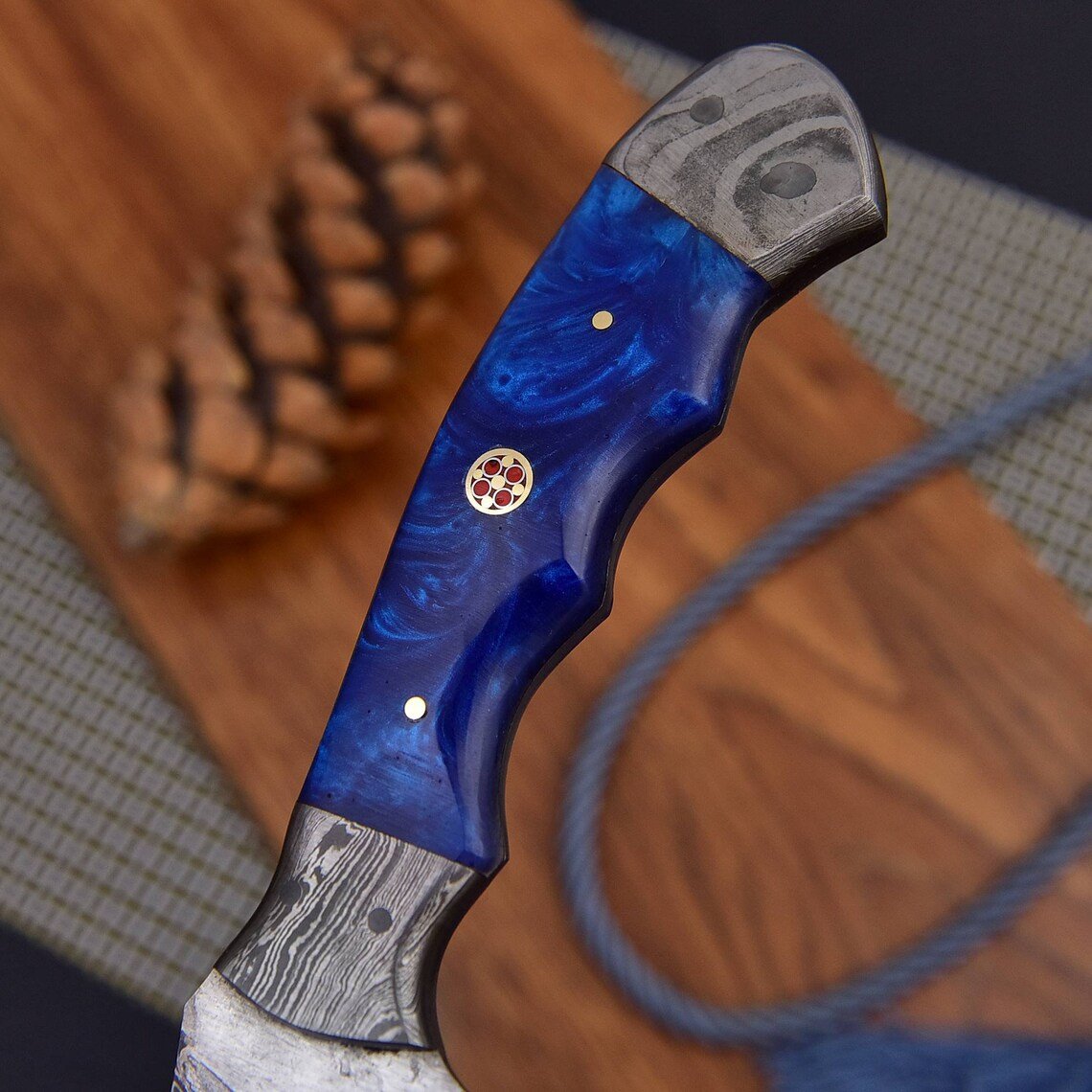
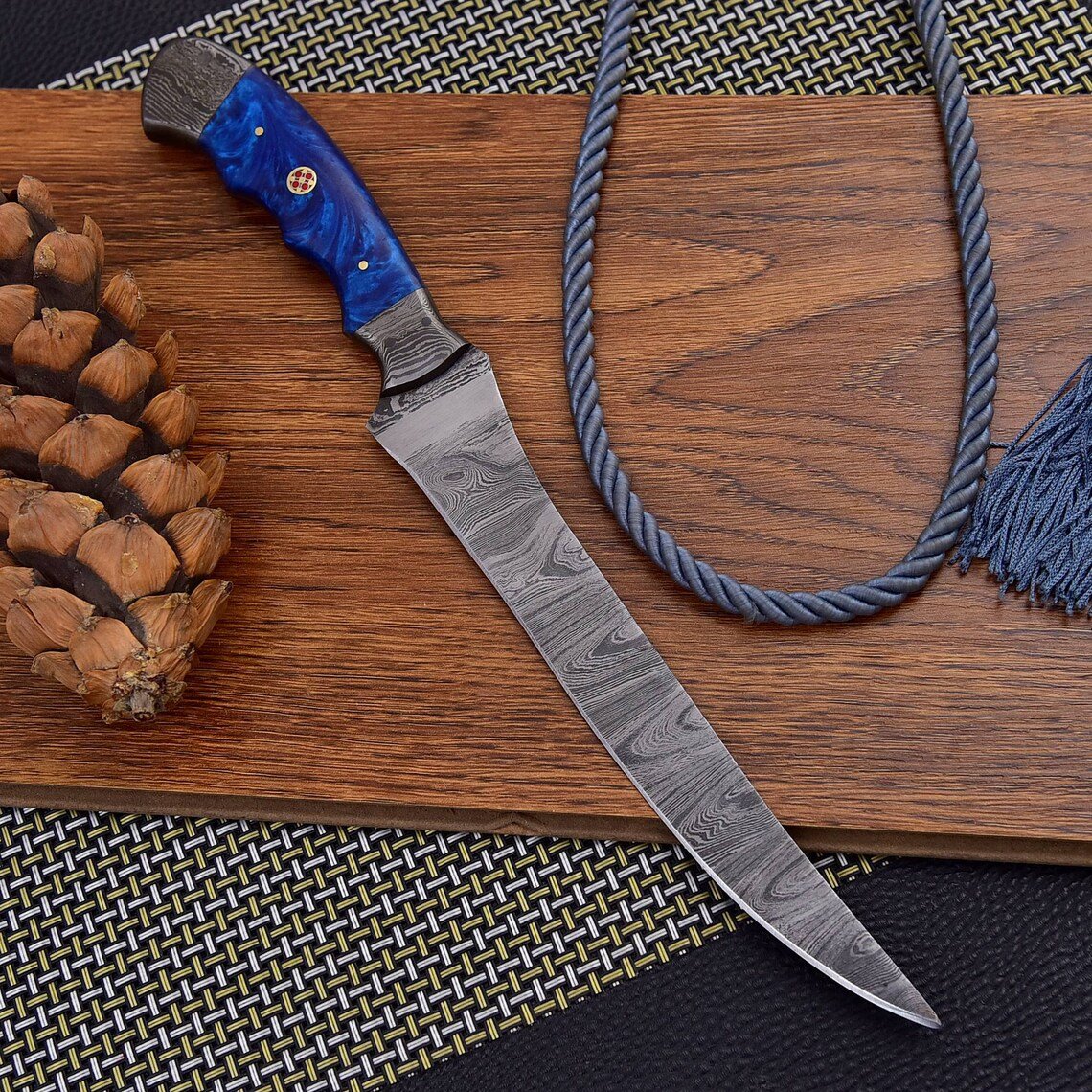
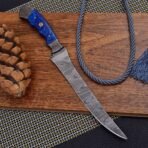
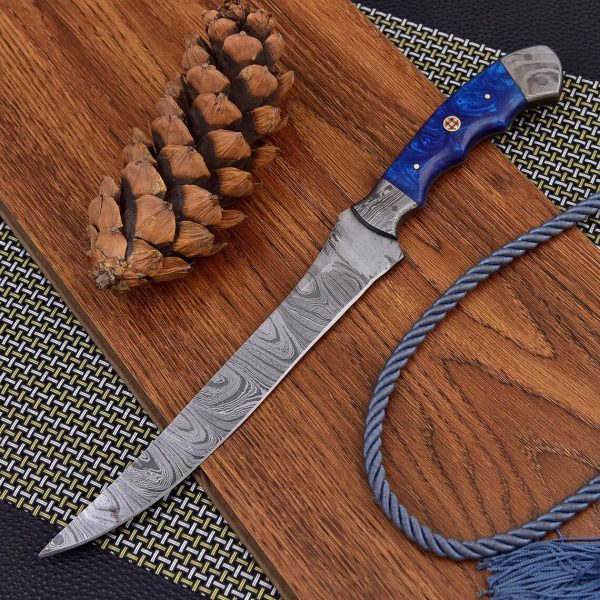
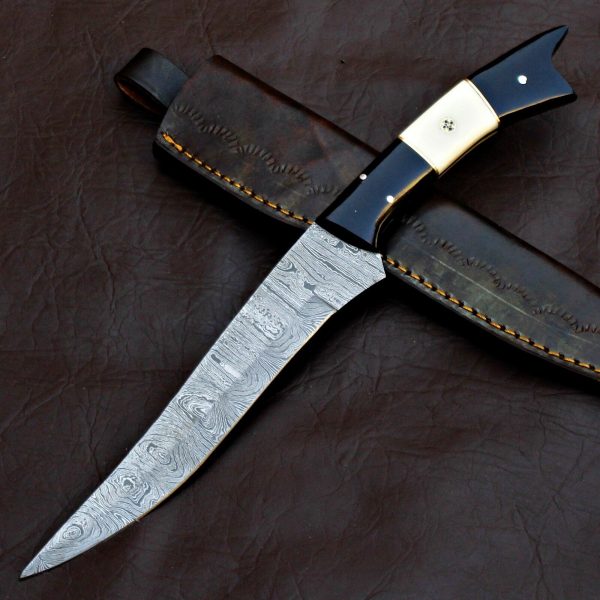
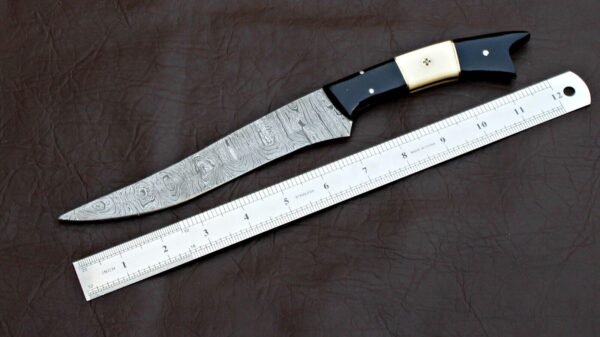
Blue resin at the grip and 393 layers of fire pattern Damascus in the blade. The Bluetide is an 8.0 inch flexible fillet knife on a 5.0 inch handle, 13.0 inches overall, and it is the version of this pattern to buy if you want a handle that will never absorb water, never need feeding and never care how long it sits in a wet tackle bag. How to pick a fillet knife is set out in the fillet knife notes.
There is a reason fish knives ended up narrow rather than broad. A wide blade has to displace flesh sideways as it travels, and on a fillet that displacement tears the muscle fibres and leaves a ragged surface. A narrow blade passes through with almost no lateral pressure, which is why a proper fillet knife leaves a face so smooth it looks polished. The trade is that a narrow blade has very little material to resist bending, which is exactly why the shape and the flex evolved together rather than separately.
This one is forged, hardened, ground and fitted in the Czech Republic, and it ships sharpened in a fitted leather sheath with free shipping inside the United States.
Specifications
| Steel | Hand forged Damascus, 1095 and 15N20 forge welded |
|---|
| Hardness | 58 to 60 HRC |
|---|
| Damascus layers | 393 layers |
|---|
| Pattern | Wind and mix twist fire pattern, flexible blade |
|---|
| Overall length | 13.0 inches |
|---|
| Blade length | 8.0 inches |
|---|
| Handle length | 5.0 inches |
|---|
| Handle | Blue resin |
|---|
| Sheath | Leather sheath |
|---|
| SKU | RK-481 |
|---|
The tip, the taper and what a fillet knife is really doing
Watch somebody who fillets for a living and you will see the knife used in three distinct ways within about twenty seconds, and the blade is shaped to allow all three.
First the tip goes in behind the pectoral fin and traces the rib cage. That needs a fine, slightly upswept point that can be steered with the fingertips and a front section that flexes so it rides the bones instead of cutting through them. Second the whole edge runs the length of the backbone in one pass, which needs length and a smooth uninterrupted profile with no belly to make the blade climb. Third the fillet is laid skin down and the knife is turned almost flat to separate flesh from skin, which needs the blade to bend under the pressure of your other hand and lie along the board.
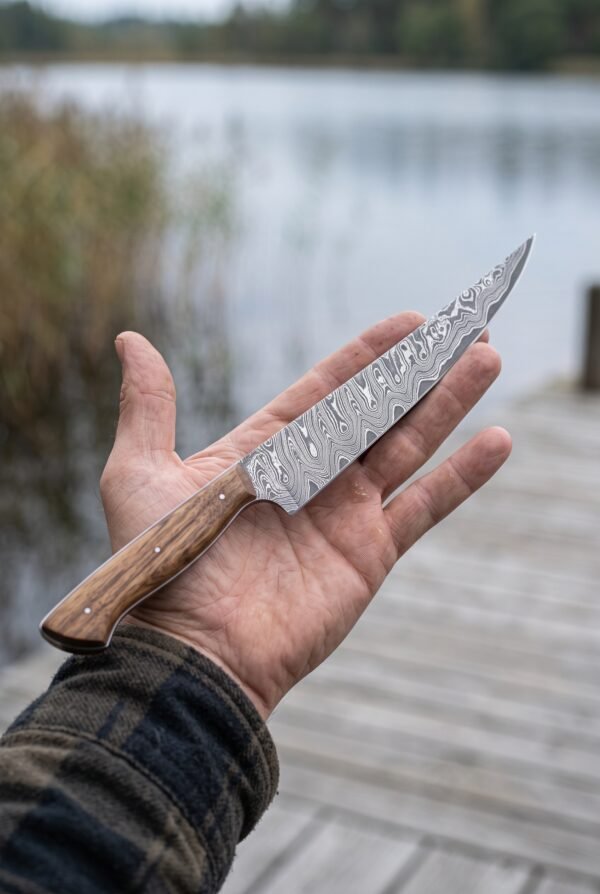
Three jobs, one blade, and the geometry that serves all three is a long narrow profile with a thin cross section, progressive stiffness from tip to heel and a point that sits above the centre line rather than below it. Eight inches is the length that covers medium and large fish comfortably. On the same knife the profile is also excellent for boning poultry and trimming silverskin from a loin, so it earns its place in a kitchen as well as on a dock.
Why Damascus and not stainless
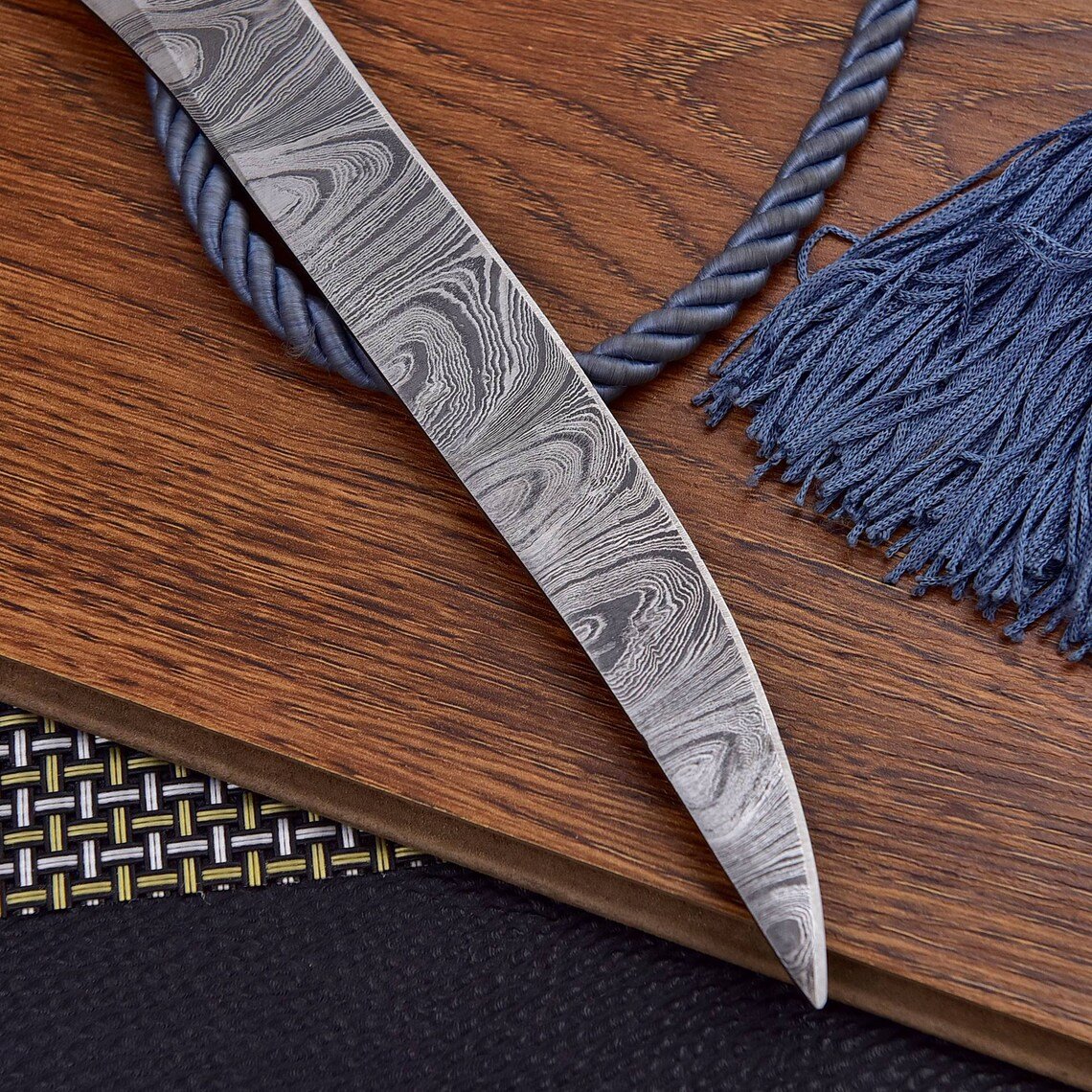
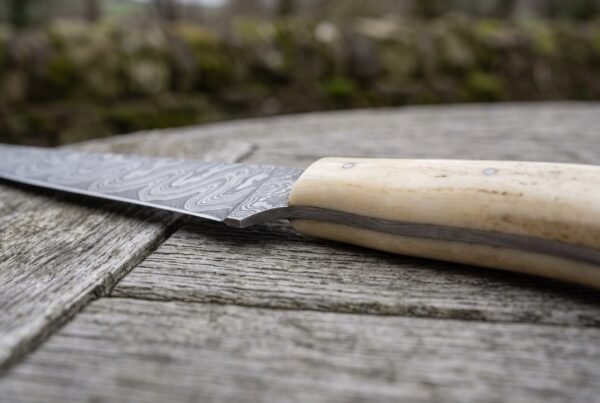
The blade is pattern welded Damascus, made by forge welding 1095 and 15N20 into a single billet, folding and drawing it out to 393 layers until the layers show as a pattern through the steel. The two steels take the etch differently, which is what makes the light and dark bands. It is not a coating and it will not wear off.
Thin blades punish soft steel. A fillet edge that is not hard enough rolls over on the first rib it meets and then slides rather than cuts, which is how most cheap fish knives fail. At 58 to 60 HRC the 1095 in this blade takes and keeps a genuinely thin edge, and the nickel bearing 15N20 supplies the toughness that lets it be ground that thin in the first place. What you accept in return is that this is not stainless and does not pretend to be. Fresh water rinse, dry cloth, thin film of oil. The comparison is set out honestly in Damascus versus stainless.
The blue resin handle
Resin is the practical choice for a knife that lives around water, and that is the whole reason this version exists alongside the wood handled one. It is fully non porous, so it cannot take up fish blood, brine or moisture. It is dimensionally stable, so it will not swell in a humid boat locker and shrink again in a dry garage, which is the mechanism that eventually loosens a natural handle. It is unaffected by detergents and solvents, and it needs no oiling, no feeding and no seasonal attention of any kind.
The grip is also easier to keep clean than any natural material, which matters when you are handling food. Warm water, a little dish soap and a cloth, and it is back to new. The colour runs through the material rather than sitting on the surface as a coating, so scuffs polish out and nothing can chip off. Each handle is cast and shaped individually, so the depth and swirl of the blue varies from one to the next.
Engraving, runes and your own design
Use the rune converter on this page to turn a name, a date or a short phrase into Elder Futhark and we will cut it into the steel or the handle. If you would rather have a Viking pattern than a rune line, choose your own design in the engraving option above the add to cart button and tell us whether it goes on the blade or the handle. Where a piece already carries an engraved design, your chosen engraving replaces it rather than sitting alongside it.
On this piece most people put the engraving on the blade flat, because a cut line in the steel reads more clearly than one in resin and it sits well against the pattern. All engraving is cut in the workshop that forged the blade, before packing, and never sent out afterwards. Options are on the engraving page.
Care and sharpening
The handle needs nothing. The blade needs the same discipline as any carbon steel around water: rinse in fresh water after use, dry it completely including the shoulder where the blade meets the handle, and wipe a thin film of food safe mineral oil onto the steel before it goes away. Do not store it damp inside the leather sheath.
Sharpen at a shallow angle, about fifteen degrees per side, and support the flexible front section with your fingers so it does not spring off the stone. Light pressure, plenty of passes, then a strop to remove the burr. A 1000 grit stone handles everything routine. Full detail in steel care and sharpening with a whetstone.
Made in the Czech Republic
This is a handmade piece from the Czech Republic, made in a workshop that still forges, grinds and finishes by hand instead of stamping parts out. The smiths there have kept the older way of working, and the wood, horn and leather are shaped and fitted by hand as well. Two pieces of the same design will never be identical, and that is part of what you are buying.
Ransack Viking is a United States company. We handle the import ourselves, look over every piece when it lands and ship from our warehouse in Chicago, Illinois. Engraving is done in the United States after the piece arrives, so your design goes on before we send it out.
A note on handmade variation
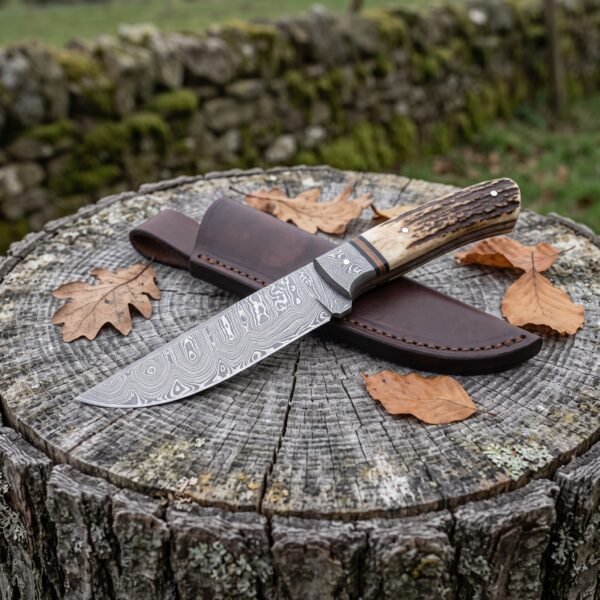
This fillet knife is hand forged. It is not machine made and it is not bulk produced, so the piece that arrives will not be a pixel for pixel copy of the photograph on this page. Every billet draws out differently, so the Damascus figure on your blade is unique to it, and the blue resin is cast and finished individually, so the depth and movement of the colour will differ.
The dimensions, the steel, the layer count, the hardness and the build stay the same on every one. The pattern, the tone and the exact profile do not, because each is worked by hand. That is what buying from a forge means rather than buying from a production line.
Frequently asked questions
Why choose resin over a wooden handle
Because it is maintenance free and completely waterproof. If your knife lives in a boat, a cooler or a tackle bag, resin is the sensible answer. Wood is warmer in the hand and more traditional, but it needs oiling and it does not enjoy being stored damp. Both are on the same blade.
Is the blade sharp when it arrives
Yes. It is finished on a stone before packing and will glide through a fillet straight out of the sheath. On a thin blade like this, a few passes on a strop before each trip keeps it at that level almost indefinitely.
Can I put it in the dishwasher since the handle is synthetic
No. The handle would survive it, the carbon steel blade would not. Dishwasher detergent is aggressive and the drying cycle leaves moisture on steel. Wash it by hand and dry it straight away.
How does it compare to the chef knives in the range
A chef knife is broad, stiff and curved, built to rock on a board and go through dense vegetables. This is narrow, flexible and straight, built to trace bone and separate skin. Neither does the other job well, which is why most kitchens end up with both.
Will my handle be the same shade of blue
It will be the same blue resin, and it will not be an identical piece. The colour runs through the material and moves as it sets, so the depth and the swirl vary between handles.
How long does it take to arrive
Processing is one to two weeks while the piece is made and finished by hand, plus transit. Shipping inside the United States is free and returns are open for seven days after delivery.
What is in the box
- One Bluetide Damascus fish fillet knife
- Leather sheath
- Protective packaging
- Forged and finished in the Czech Republic
Explore the range
Related collections: Fish Fillet Knives, Chef Knives and Viking Knives. The how and why behind the steel is covered in the guides.
Also in this part of the catalogue
Next along the rack is the Streamwood fish fillet knife, pattern welded Damascus. For a straight comparison, see the Riverstag fish fillet knife, pattern welded Damascus. Worth putting side by side with this is the Palebone fish fillet knife, pattern welded Damascus.
If you are putting a set together, the Olivespire dagger knife sits alongside it. Or start from a blank sheet on the custom Damascus knife page.


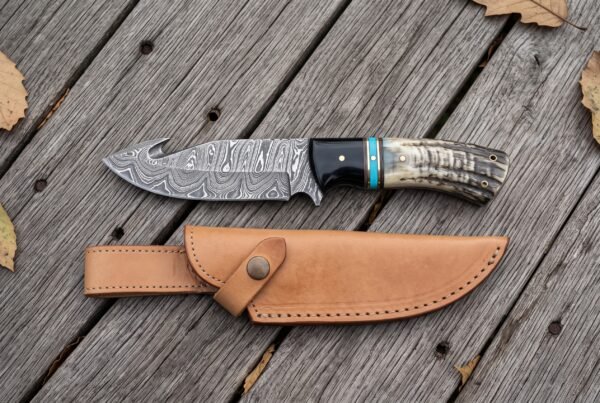
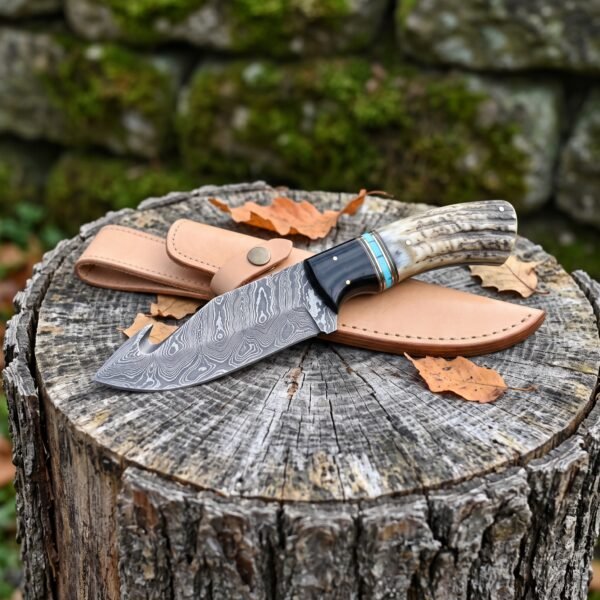

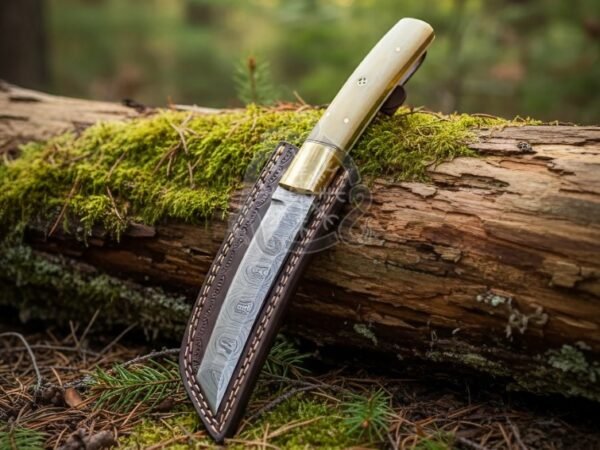
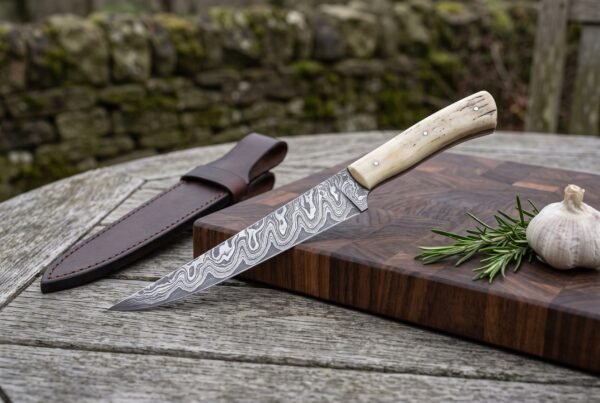
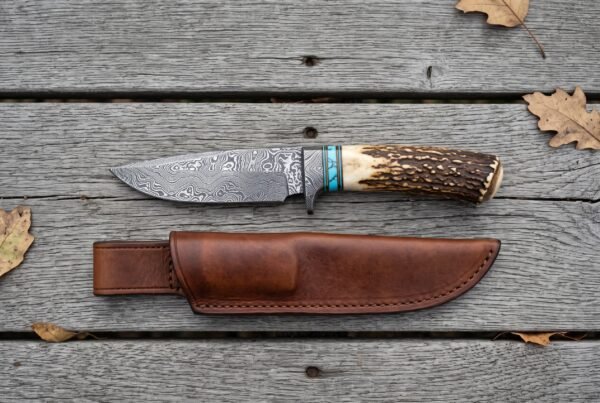
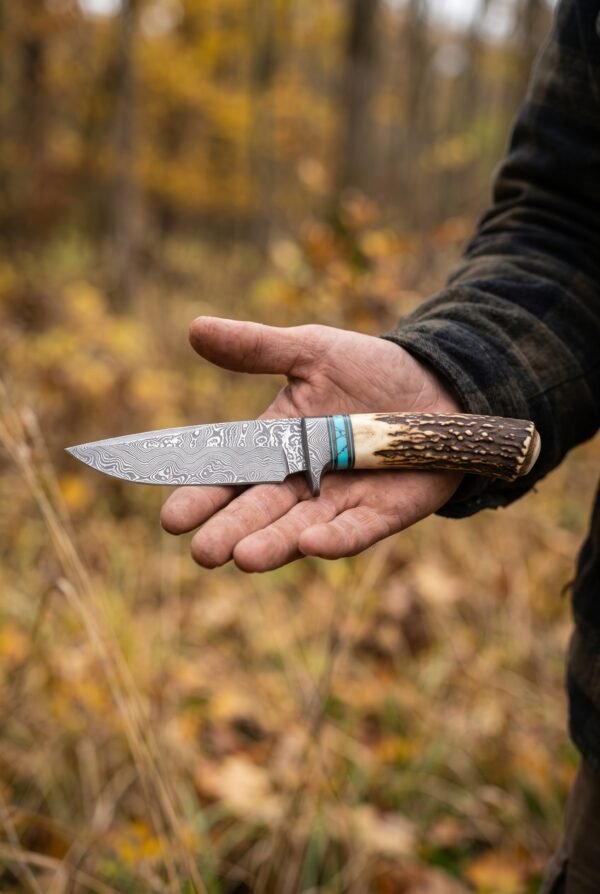
Feels way more premium than the price suggests. Damascus blade holds a razor edge right out of the box. This is going straight into my display case. Nice touch that it ships from within the US even though it’s crafted in the Czech Republic.