The seax is the knife that gave the Saxons their name. Across early medieval northern Europe it was the one blade almost everybody owned, from a farmhand to a jarl, and it did everything: skinning, whittling, eating, cutting leather and rope, and standing in as a sidearm when it had to. Archaeologists sort them by size, from the small hadseax through the broken back seax with its sharply angled spine to the langseax that runs close to sword length. The most famous survivor of all, the Seax of Beagnoth pulled out of the Thames, carries the only complete Anglo Saxon runic alphabet ever found on an object, along with the name of the man who made it. Runes cut into a seax blade are not a modern invention.
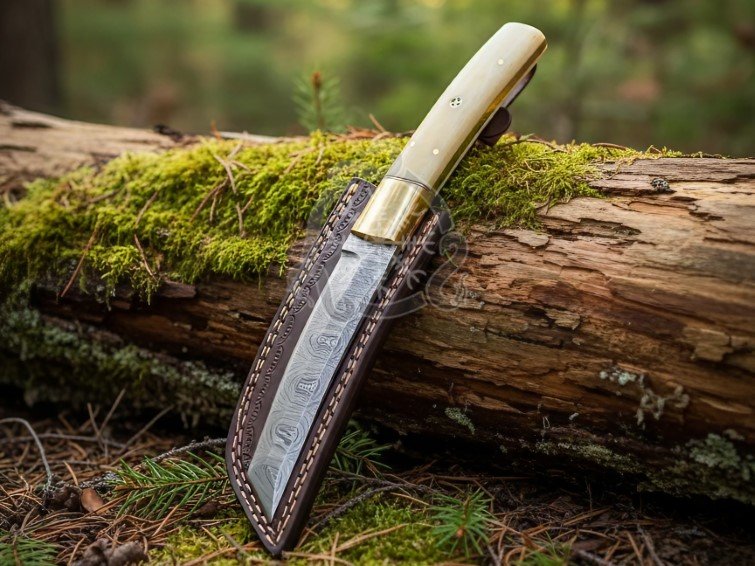
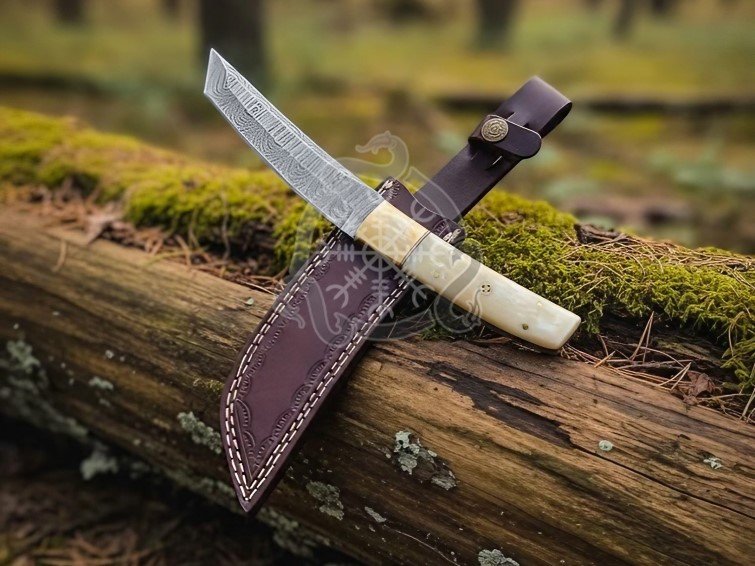
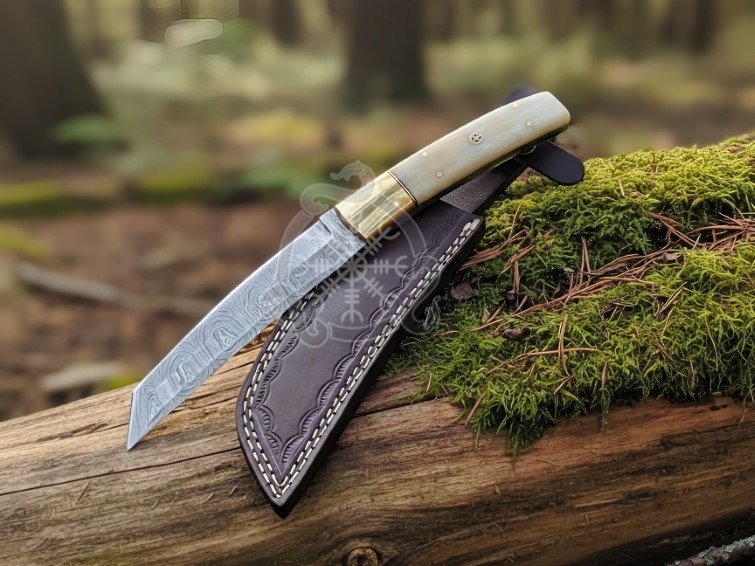
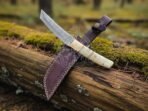
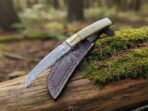
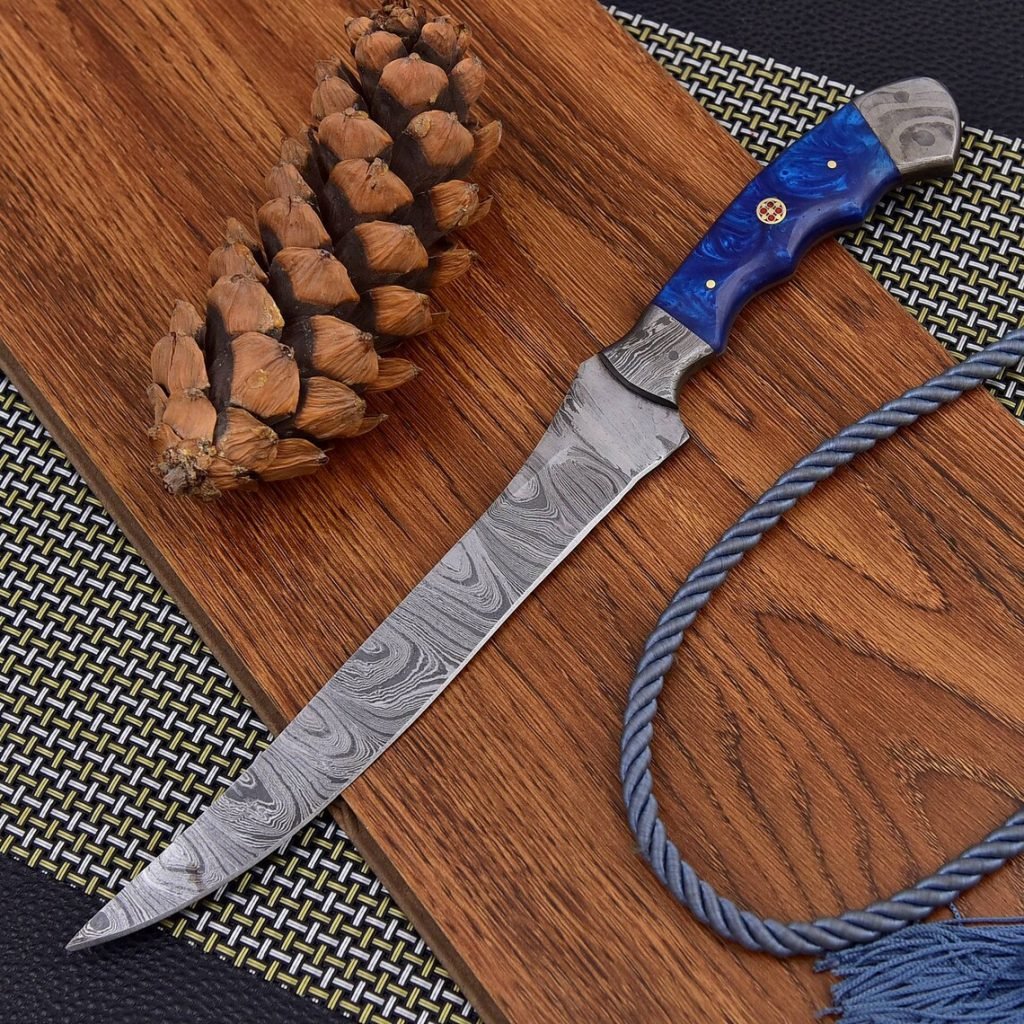
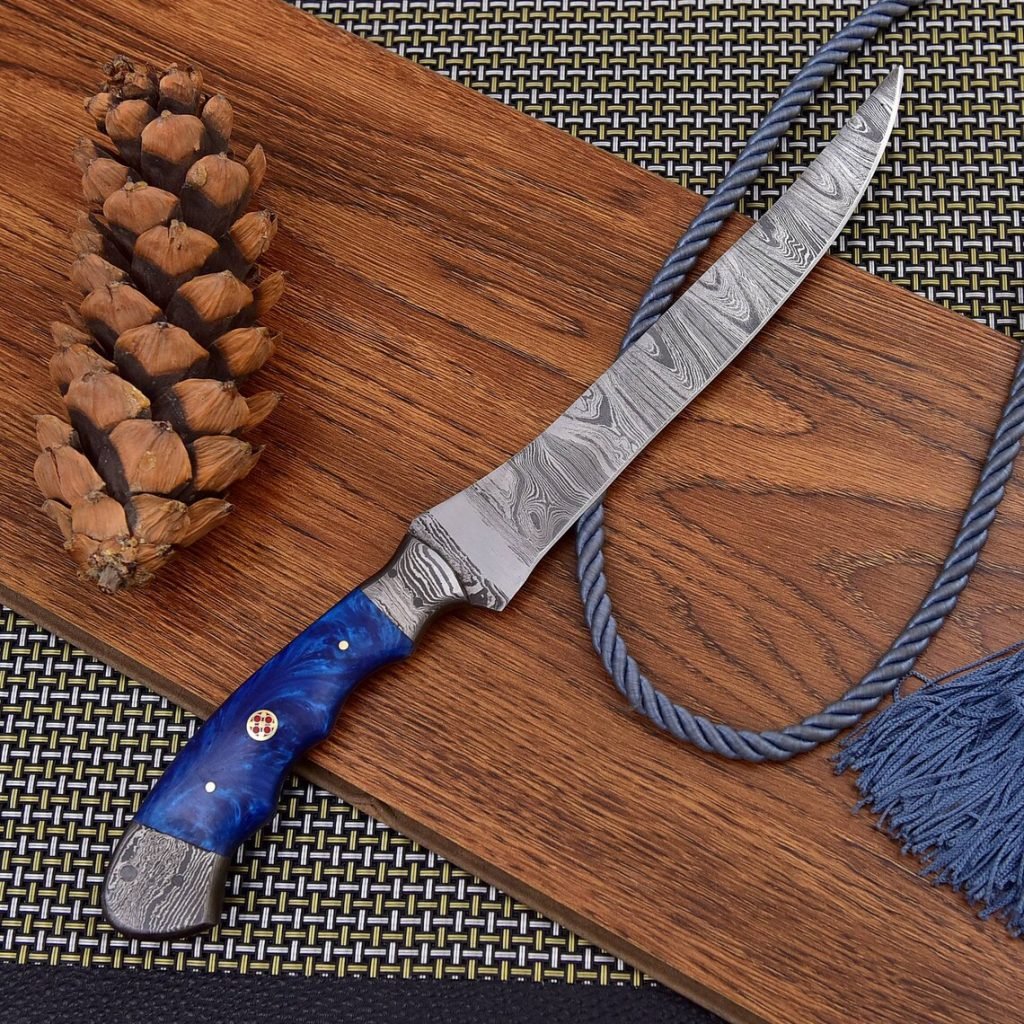
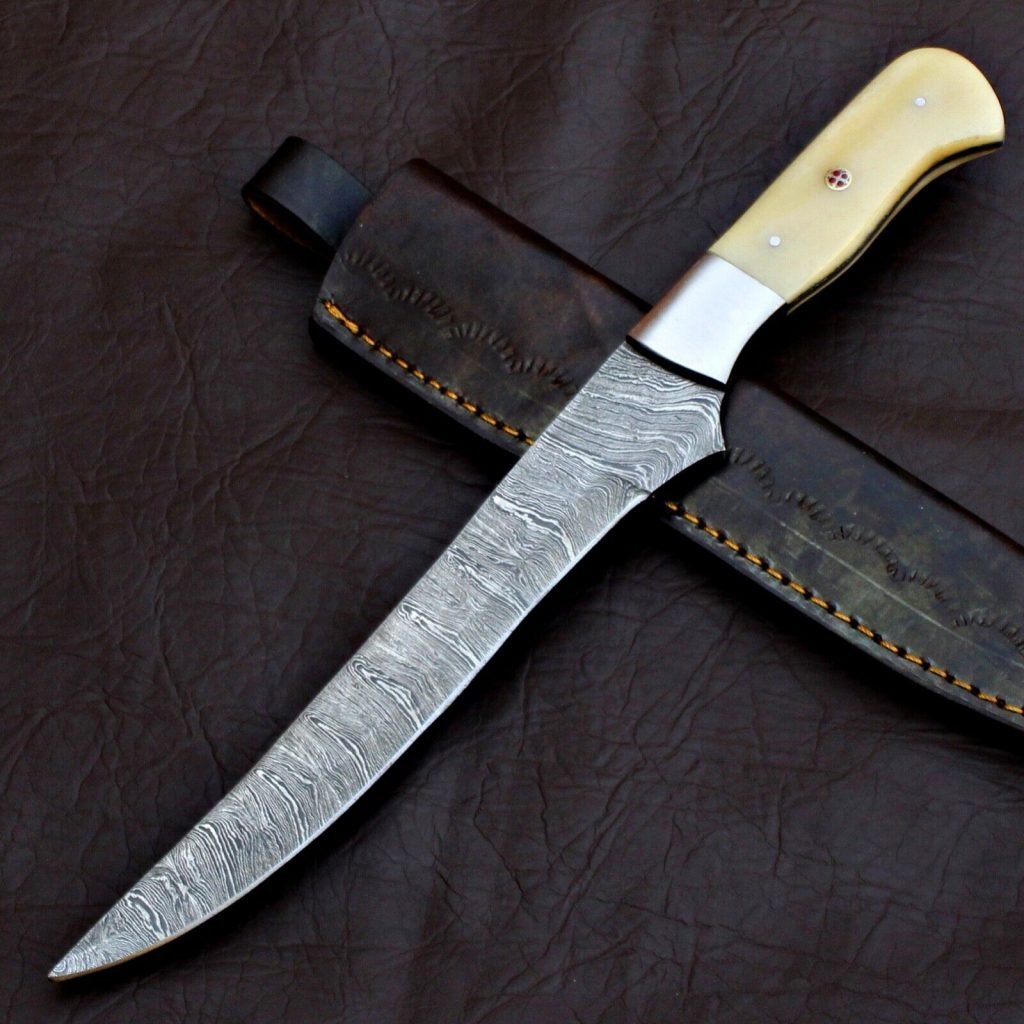
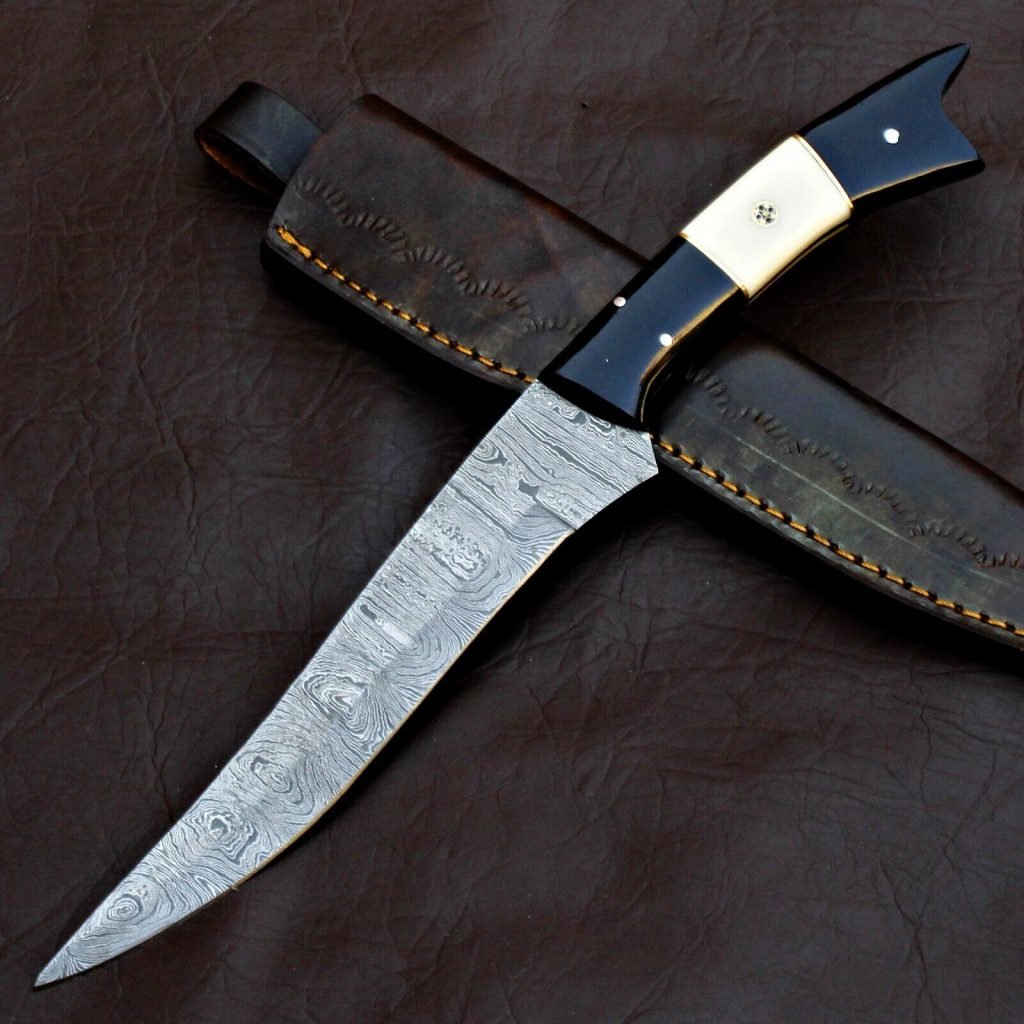
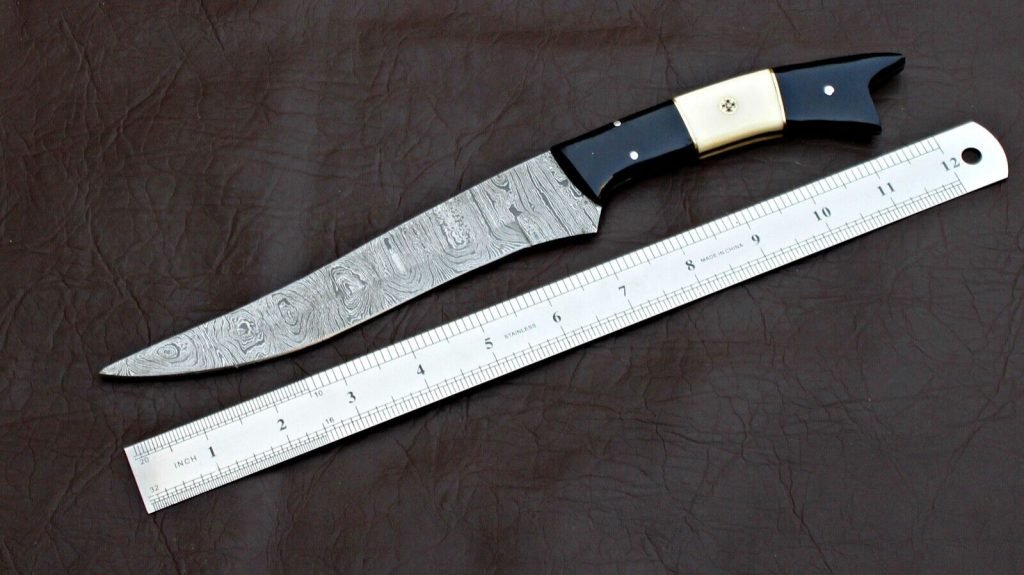
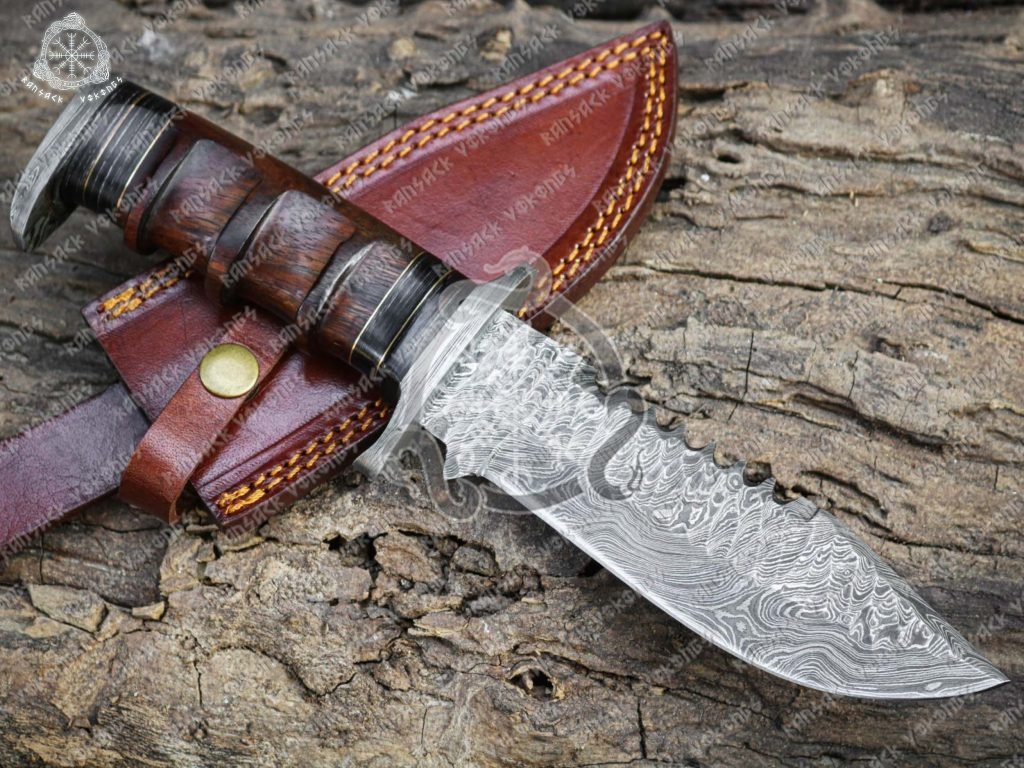
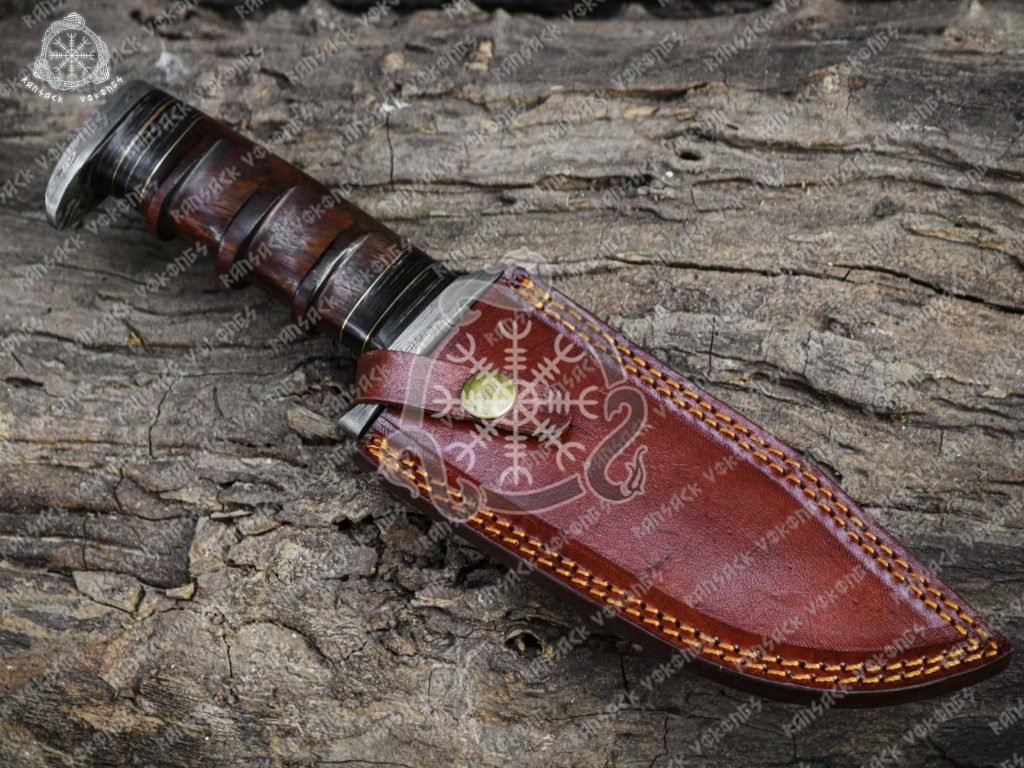
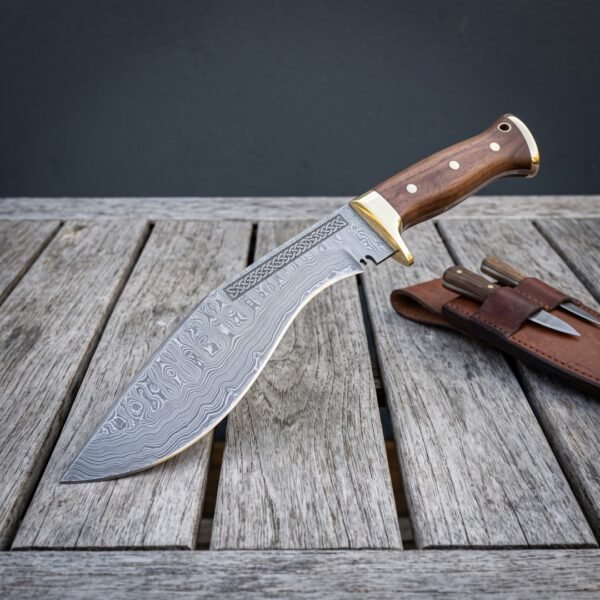
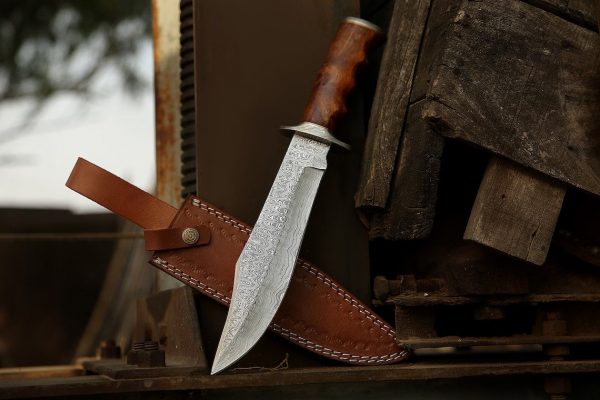
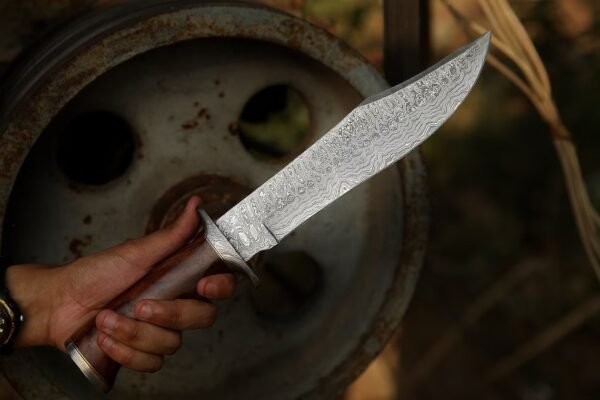
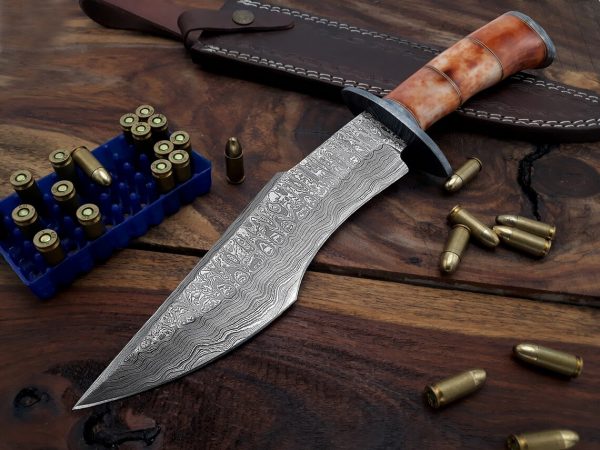
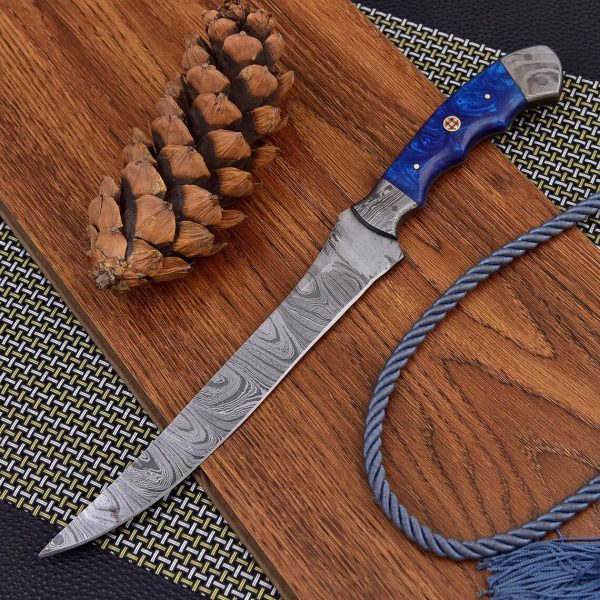
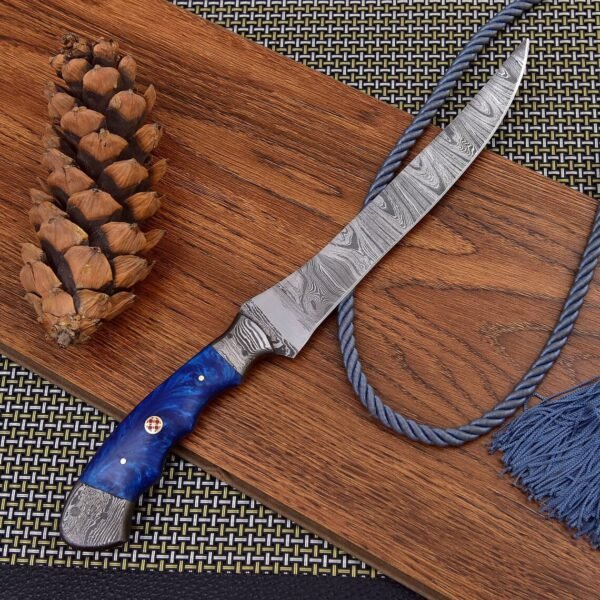
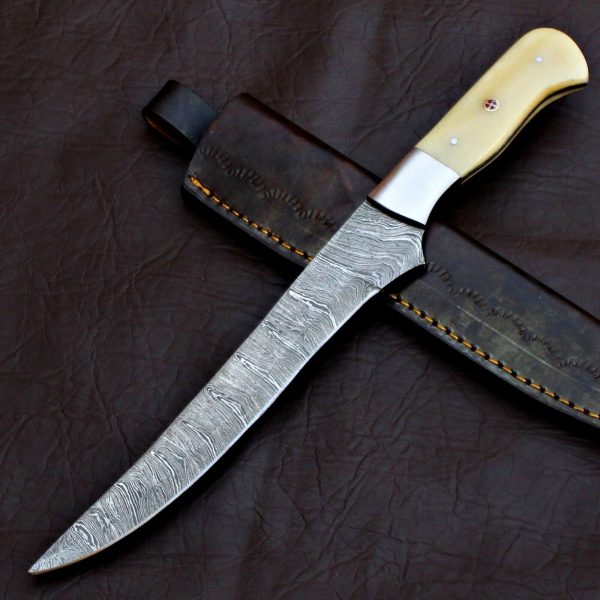
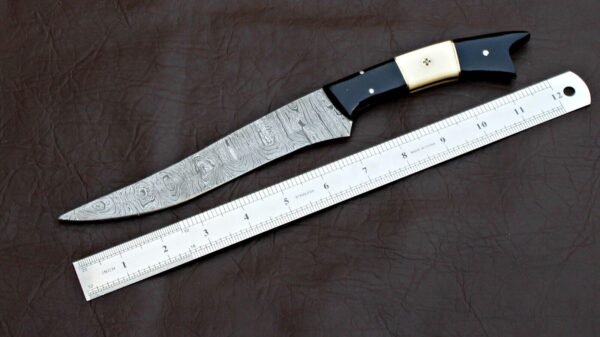
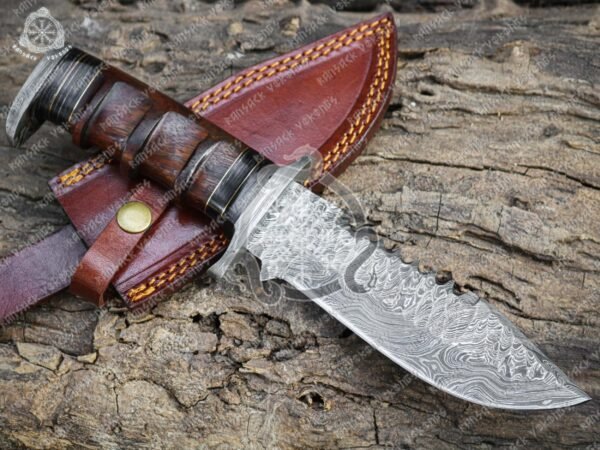
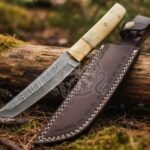
The Mosaicsax follows that pattern at working size. The blade is hand forged Damascus from 1095 and 15N20, hardened to 58 to 60 HRC, 5 inches long on a knife that measures 9.5 inches overall. The 4.5 inch handle is mosaic bone with a brass bolster, and the whole thing is finished before it is boxed rather than assembled from parts made elsewhere.
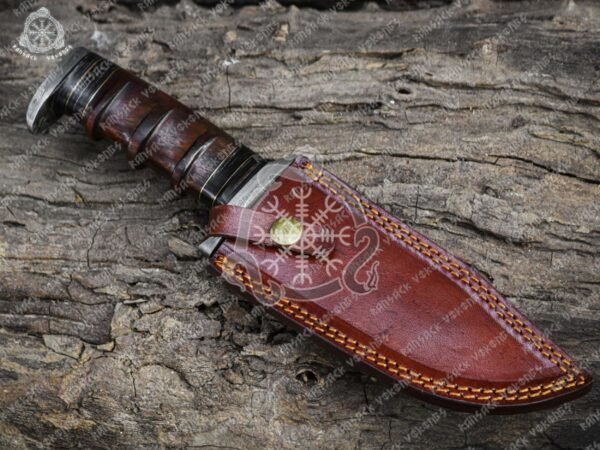
It is forged and finished in the Czech Republic, and it ships with a hand stitched genuine cowhide sheath, protective packaging and an edge already put on the stone.
Specifications
| Steel | Hand forged Damascus, 1095 and 15N20 |
|---|
| Hardness | 58 to 60 HRC |
|---|
| Overall length | 9.5 inches |
|---|
| Blade length | 5 inches |
|---|
| Handle length | 4.5 inches |
|---|
| Handle | Mosaic bone with brass bolster |
|---|
| Sheath | Hand stitched genuine cowhide leather |
|---|
| SKU | RK-1029 |
|---|
What makes a seax a seax
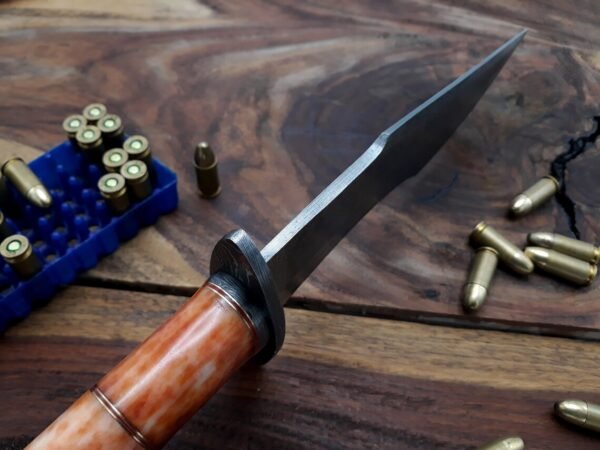
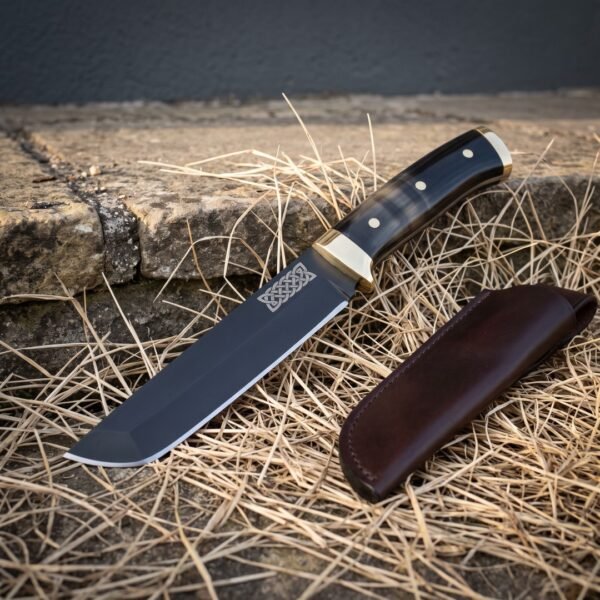
Three things. It is single edged, which puts a thick unsharpened spine opposite the cutting edge and lets you drive the blade with a thumb or the heel of the other hand without cutting yourself. It is broad through the middle rather than tapering evenly from the guard, so the mass sits where the work happens instead of out at the point. And it has almost no guard, because a knife carried horizontally across the front of the belt has nowhere to put one.
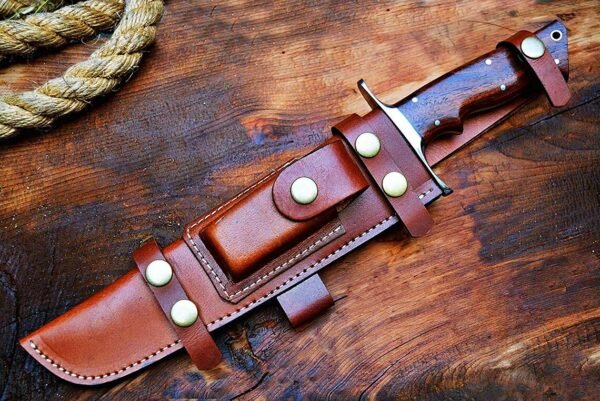
That belt carry is the detail most people miss. Seax sheaths were not hung from a hanger at the hip like a sword scabbard. They were riveted flat and worn edge up across the stomach, which is why so many recovered blades show wear on the spine side rather than the edge side. Edge up meant the sharp side never rested against the stitching and the knife could be drawn with either hand. The background and the archaeology are set out in the seax history.
Why Damascus and not stainless
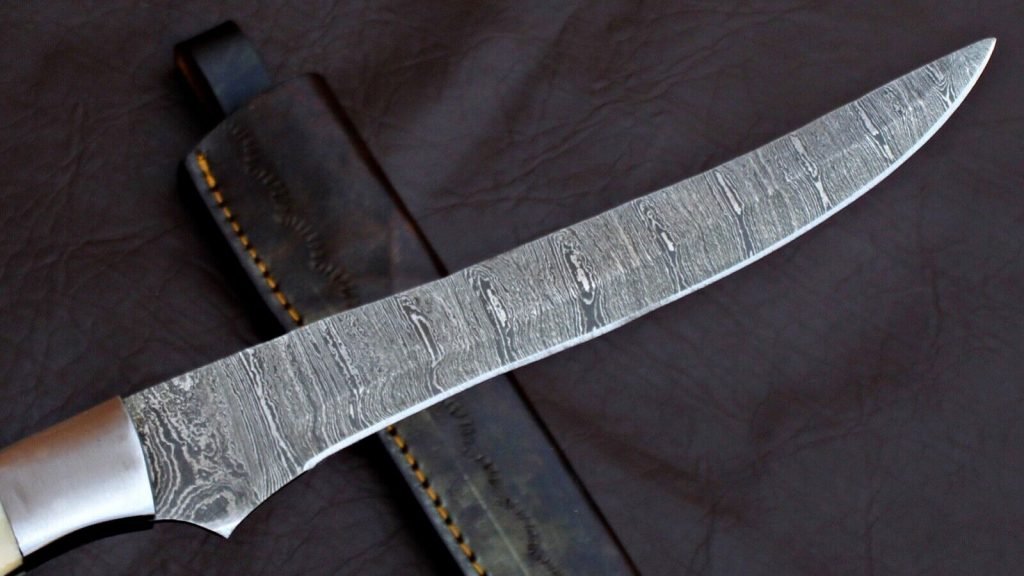
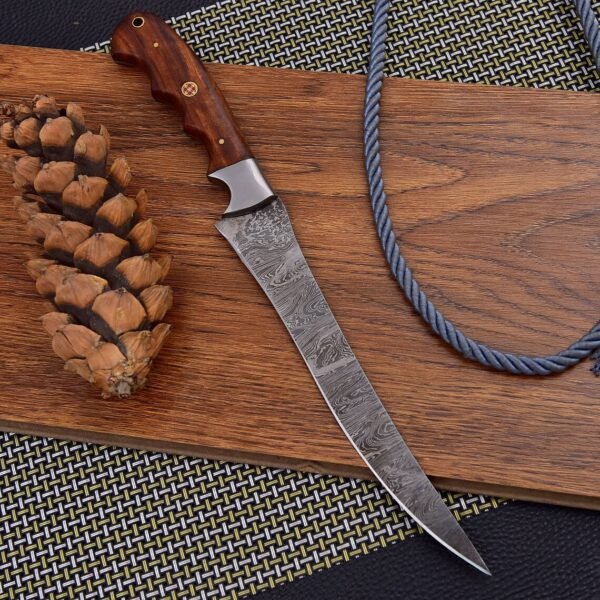
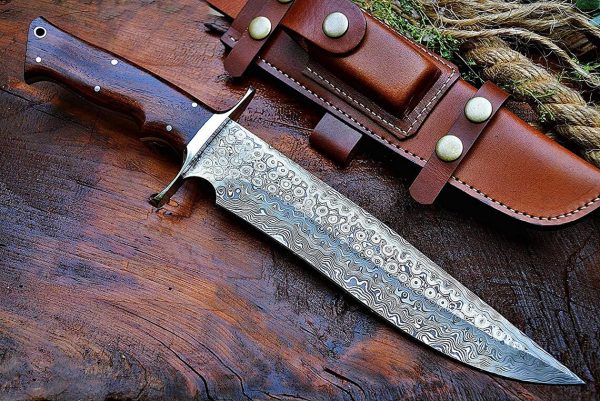
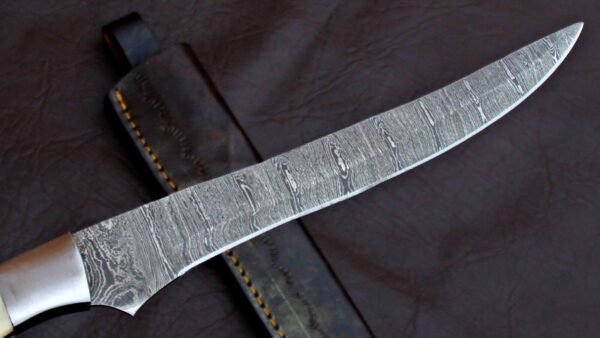
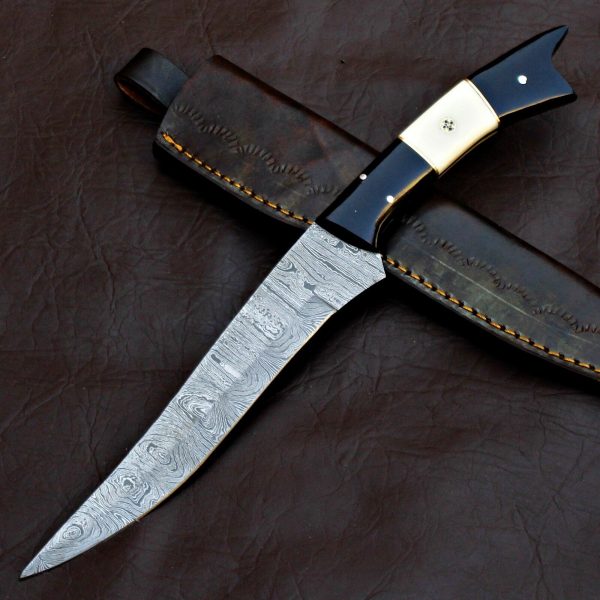
This blade is pattern welded, which is the same construction the Norse and Anglo Saxon smiths used, although they were doing it to make usable steel out of inconsistent bloomery iron rather than to make a pattern. Bars of 1095 high carbon and 15N20 nickel steel are stacked, forge welded at yellow heat, folded and drawn out until the layers are counted in the hundreds. The two steels respond differently to the etchant at the end, the 1095 going dark and the nickel bearing 15N20 staying bright, and that is where the banding comes from. It runs through the blade, not across the surface, so grinding exposes more of it rather than removing it.
Set against stainless, this steel is harder, holds a working edge for longer and comes back on a stone in a fraction of the time. What it will not do is look after itself. Left wet it will spot, and left in a damp sheath for a season it will pit. The trade is laid out honestly in Damascus versus stainless, and the reason those two particular steels are paired is in our note on 1095 and 15N20.
The mosaic bone handle and the brass bolster
Mosaic bone is real bone, cut into small sections, dyed, laid up in a pattern and set solid before the block is ground down and shaped. Because the pattern is built through the thickness rather than printed on the outside, sanding and polishing bring it up rather than wearing it away. Bone has been used for knife handles for as long as there have been knives, and it earns the place: it is hard, it takes a deep polish, it warms in the hand quickly and it does not go slippery when your palm is damp the way a lacquered surface does.
Being a natural material, it varies. Colour, density and the way the dye takes all shift between one handle and the next. Care is minimal. Keep it out of long soaks, keep it away from sustained heat, and give it an occasional wipe with a light oil if the surface starts to look dry. The same routine covers wood, horn and antler grips, and it is written up in wooden handle care. The brass bolster will dull to a soft gold over time and comes back with a metal polish if you prefer it bright.
Engraving, runes and your own design
Use the rune converter on this page to turn a name, a date or a short phrase into Elder Futhark and we will cut it into the steel or the handle. If you would rather have a Viking pattern than a rune line, choose your own design in the engraving option above the add to cart button and tell us whether it goes on the blade or the handle. Where a piece already carries an engraved design, your chosen engraving replaces it rather than sitting alongside it. Of everything in the catalogue this is the piece with the strongest claim to a rune line, given what was cut into the Beagnoth blade over a thousand years ago. Full options are on the engraving page.
Care and sharpening
A minute after use is all it asks. Wipe the blade dry, put a thin film of mineral or camellia oil on the flats, and put it away. For long storage keep it out of the leather, because vegetable tanned hide holds moisture and will mark a carbon steel blade left inside it for months. The detail is in steel care.
Sharpening a single edged blade with a broad flat grind is about the easiest job on a stone there is. Lay the bevel down, find the angle by feel, and work each side evenly until a burr forms and then falls. A medium stone followed by a fine one is enough for anything short of a repair. The full method is in sharpening with a whetstone.
Made in the Czech Republic
This is a handmade piece from the Czech Republic, made in a workshop that still forges, grinds and finishes by hand instead of stamping parts out. The smiths there have kept the older way of working, and the wood, horn and leather are shaped and fitted by hand as well. Two pieces of the same design will never be identical, and that is part of what you are buying.
Ransack Viking is a United States company. We handle the import ourselves, look over every piece when it lands and ship from our warehouse in Memphis, Tennessee. Engraving is done in the United States after the piece arrives, so your design goes on before we send it out.
A note on handmade variation
This seax is hand forged, not machine made and not bulk produced, so the one that arrives will not be a pixel for pixel copy of the photograph. The Damascus pattern is drawn out of a billet under a hammer and lands differently on every blade. The bone is a natural material and takes colour at its own pace, so the mosaic runs lighter or darker from handle to handle. Even the brass will have its own tone once it starts to age. The dimensions, the steel, the hardness and the build are identical every time. The character is not.
Frequently asked questions
What is the difference between a seax and an ordinary hunting knife?
Mostly the profile and the carry. A seax is broader through the middle with a thick straight spine and almost no guard, and it was designed to be worn flat across the belt. A modern hunting knife usually tapers more evenly, carries a guard and hangs vertically at the hip.
Does it arrive sharp?
Yes. It is sharpened by hand before packing and will shave hair off an arm. There is no factory coating to remove and no break in period.
Is the handle genuine bone?
It is. The mosaic effect is made from real bone sections that are dyed and set in a pattern, then ground and polished flat. It is not printed plastic and the pattern goes through the material.
Can I have a full rune line down the blade?
Yes. A 5 inch blade will take a short phrase comfortably. Type the words into the rune converter on this page, and if the line is long we will tell you before cutting whether it reads better on the blade or across the bone.
How do I look after the leather sheath?
Keep it dry, let it dry slowly and away from heat if it does get wet, and treat it once or twice a year with a leather conditioner. Do not store the knife inside it for months at a time.
Is a knife like this legal to own?
A 5 inch fixed blade is legal to own throughout the United States, but rules on carrying a fixed blade in public vary by state and by city, and import rules vary by country. Check your local law before you carry it rather than after.
What is in the box
- One Mosaicsax Damascus Viking seax knife
- Hand stitched genuine cowhide leather sheath
- Protective packaging for storage or gifting
- Forged and finished in the Czech Republic
Explore the range
Sitting beside it in the catalogue are Viking Seax, Viking Knives, Hunting Knives and Dagger Knives. The longer reading on steel, sheaths and Norse blade history is in the guides.



This thing is a beast in the best way. Made overseas in the Czech Republic yet shipped from a US location so no long customs wait. Edge retention has been great even after regular use. Fit and finish is museum quality. You can tell real craftsmen made this by hand. The bone handle feels amazing and the balance is perfect. 10/10 would buy again.
This knife beat every expectation I had. Ransack Viking is quickly becoming my go to shop for anything Norse themed. Even the small engravings are crisp and clean. If you’re on the fence just get it. You won’t regret it.
Middle of the road experience with this one.