Layer counts are the most quoted and least understood number in knife making, so it is worth starting there. This blade is forged from 1095 and 15N20 in a layered billet of 280 to 350 layers. That sounds like an enormous number, and it is arrived at very quickly: a stack of a dozen or so bars folded five times gets you there, because every fold doubles the count. Beyond a few hundred layers the individual layers are thinner than the grain of the steel itself, and adding more does nothing for performance. What the count actually controls is the look of the pattern, fine and tight at high counts, bold and open at low ones. Anyone selling a blade on layer count alone is selling arithmetic.
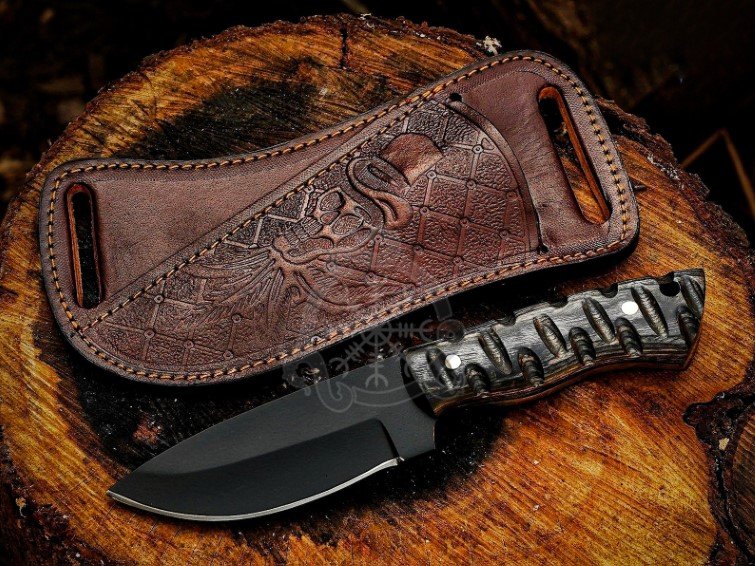
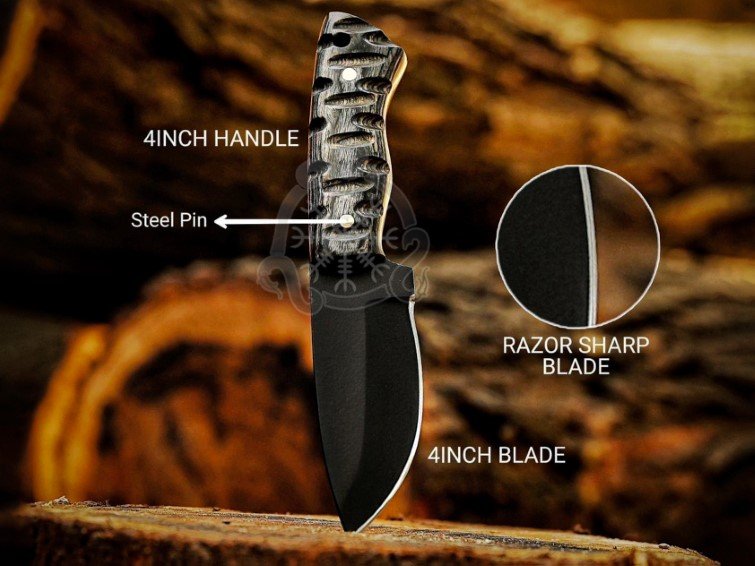
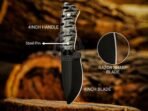
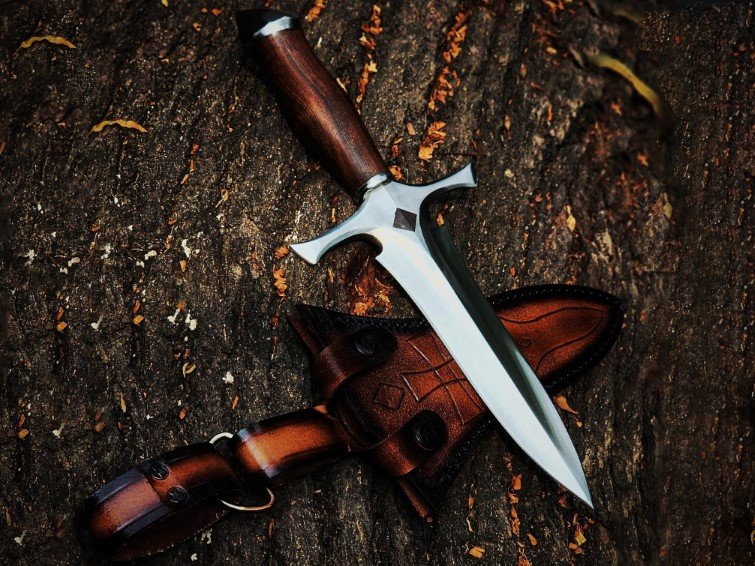
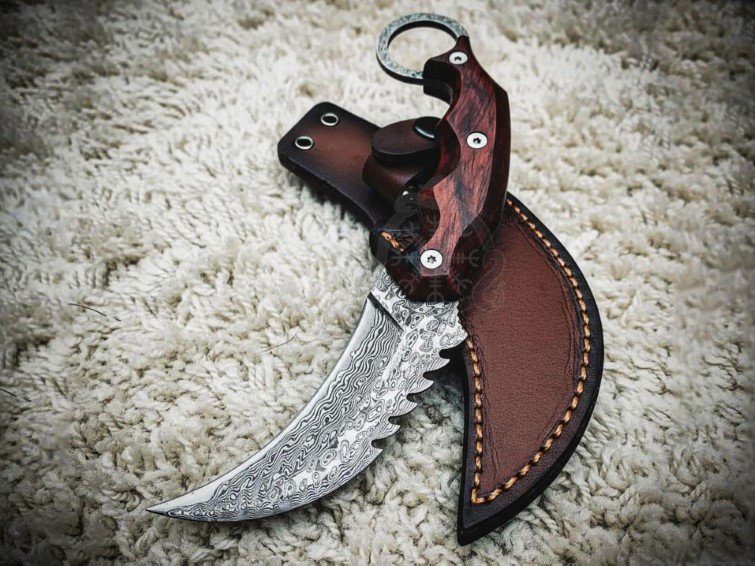
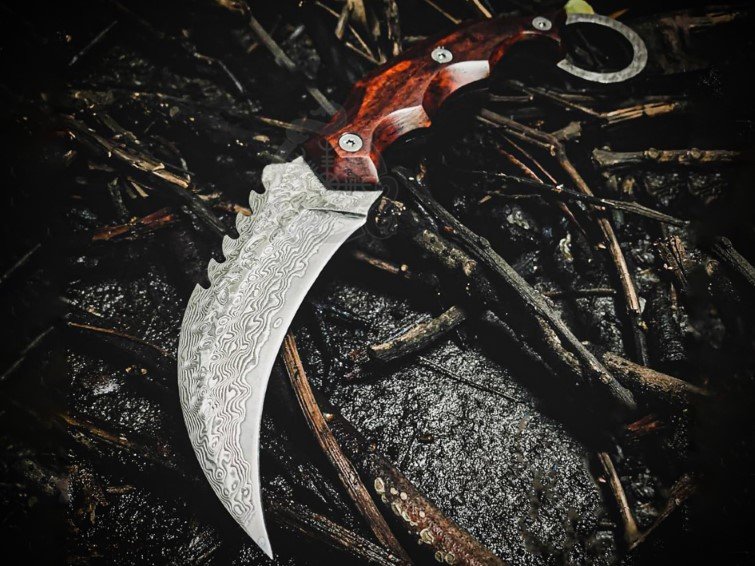
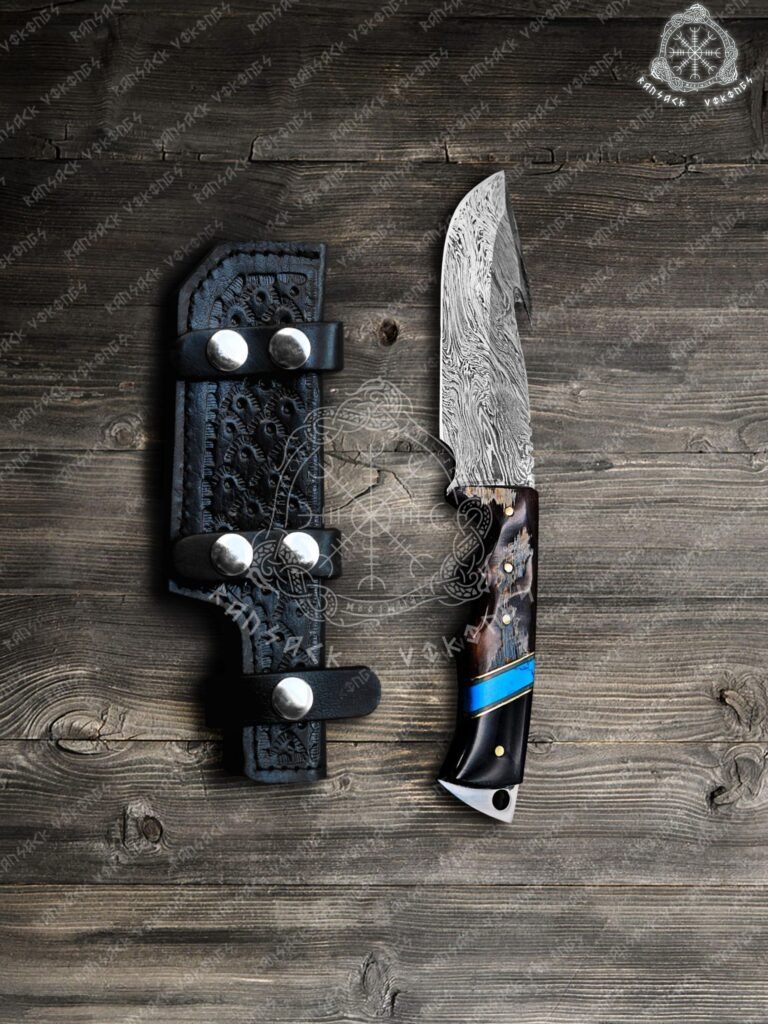
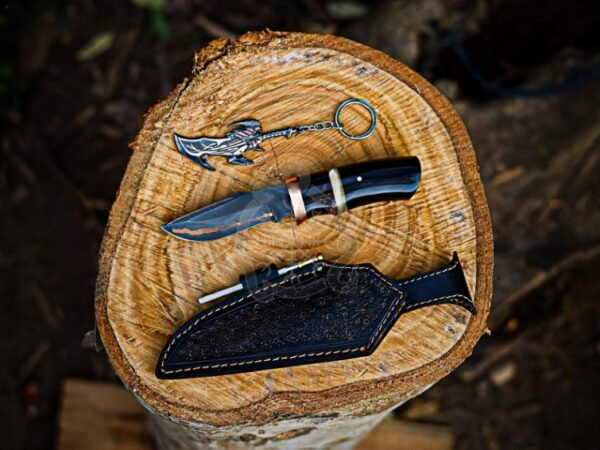
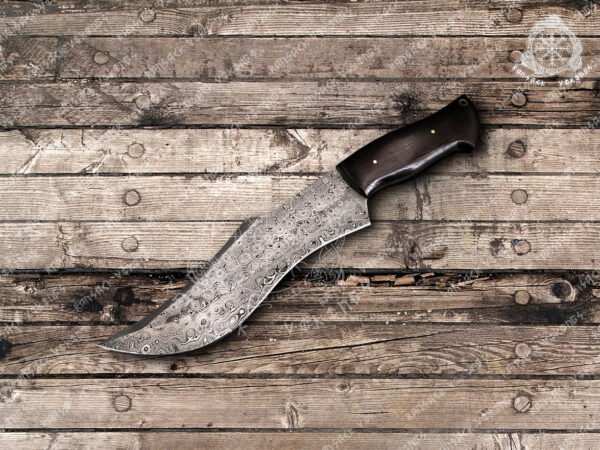
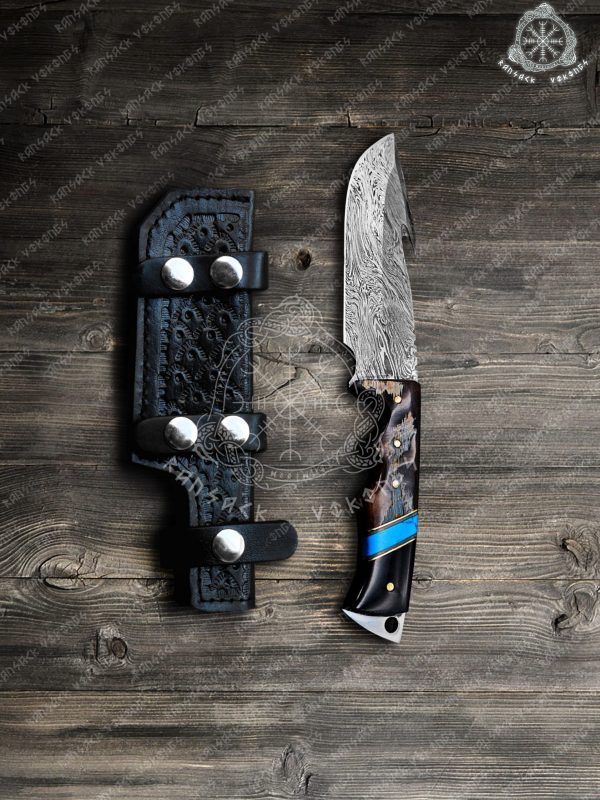
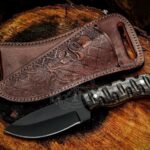
The Forgeskin is a high carbon skinner made one at a time, so the grind, the pattern and the fit belong to this knife and no other. The blade is 4 inches on a knife that runs 8 inches overall, built full tang with a 4 inch exotic wood handle, hardened to 58 to 60 HRC, and it weighs 280 grams.
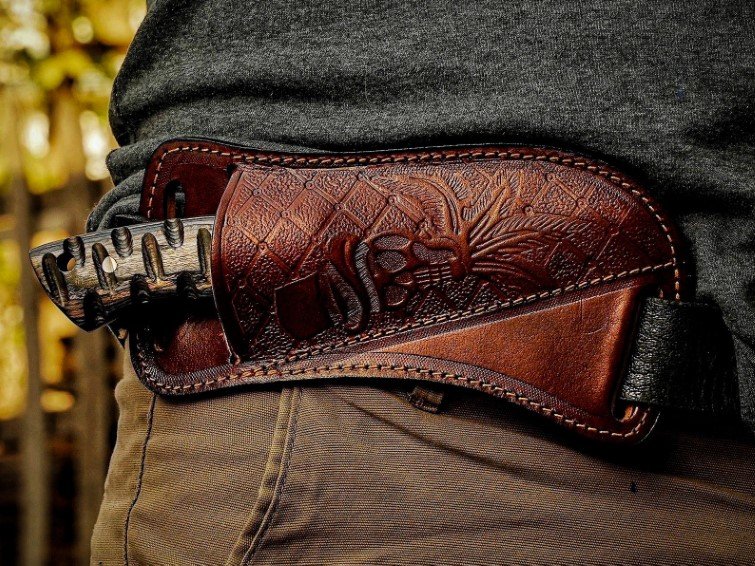
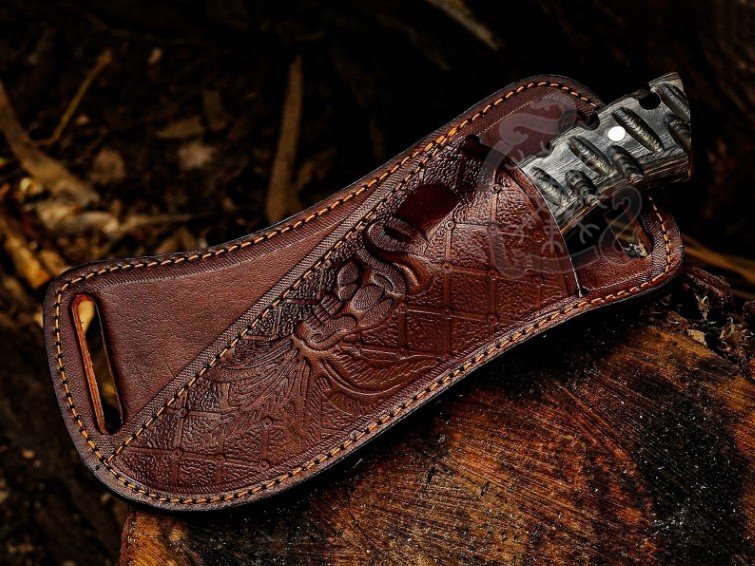
Every stage happens in the Czech Republic. It ships with a tooled leather sheath with a belt loop and snap closure, protective packaging and a working edge already on it.
Specifications
| Steel | Hand forged layered high carbon steel, 1095 and 15N20 |
|---|
| Layers | 280 to 350 |
|---|
| Hardness | 58 to 60 HRC |
|---|
| Construction | Full tang |
|---|
| Overall length | 8 inches |
|---|
| Blade length | 4 inches |
|---|
| Handle length | 4 inches |
|---|
| Weight | 280 grams |
|---|
| Handle | Exotic wood |
|---|
| Sheath | Tooled leather with belt loop and snap closure |
|---|
| SKU | RK-1074 |
|---|
Why a skinner is ground the way it is, and why it is left this hard and no harder
A skinner has a sweeping belly and almost no straight edge, because the point of contact on a curve is always moving as you draw the blade. That keeps the edge slicing continuously rather than stalling, which is what separates opening a hide cleanly from tearing at it. The tip is swept up and out of the way so that while the belly cuts, the point rides clear of the membrane underneath. Every hole in a hide comes from a point that went somewhere it was not wanted, and the shape is designed to stop that happening. The full technique is in how to skin a deer.
The hardness is the part worth explaining. At 58 to 60 HRC this blade is deliberately left a shade softer than the 58 to 60 we run on the Damascus display pieces, and that is not a compromise, it is the right answer for the job. A very hard edge is brilliant until it meets bone or grit, at which point it chips, and a chip has to be ground out. A slightly softer edge rolls instead, and a rolled edge can be pushed straight again with a steel or a few passes on a stone in the field, in a minute, with cold hands. On a knife that will be used away from a workshop on animals that contain bone and hair and dirt, an edge you can fix beats an edge you cannot. The comparison of shapes is in hunting knife versus skinner.
Why layered high carbon steel and not stainless
This is plain high carbon steel forged, hardened and tempered by hand, built up in layers of 1095 and 15N20 so the pattern runs through the bar. 1095 supplies the carbon that lets it harden. 15N20 carries around two percent nickel, which makes it tougher and, usefully, makes it resist the etchant at the end so the layers show as bright lines against dark. The result sharpens faster than stainless, holds an edge longer under load, and will show a patina with use.
That patina is protection, not damage. Carbon steel reacts with the air and with everything it cuts, and the stable grey blue oxide that forms is far less reactive than bare bright steel, which is why an old working knife looks the way it does. Stainless will never do that, and in exchange it will never rust in a damp sheath either. If you want a knife that asks nothing of you, stainless is the honest choice. If you want the edge, take the ten seconds of drying. The trade is set out in Damascus versus stainless and the comparison with fully pattern welded pieces is in high carbon steel versus Damascus.
The exotic wood handle
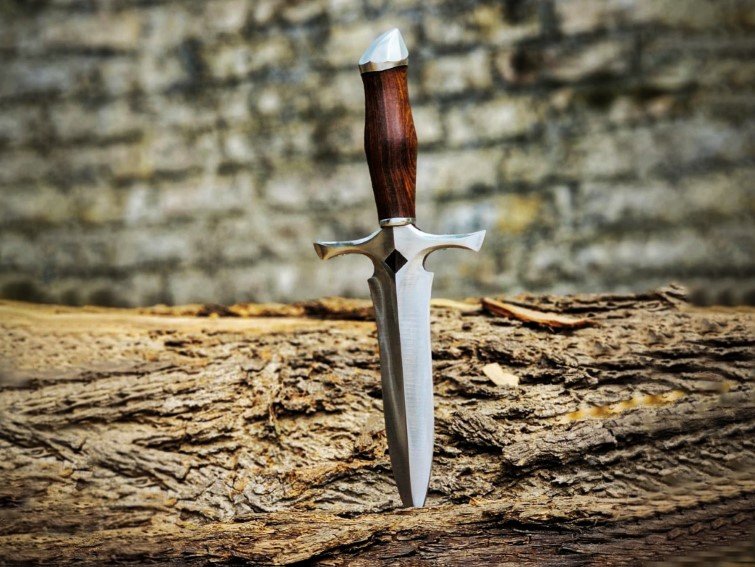
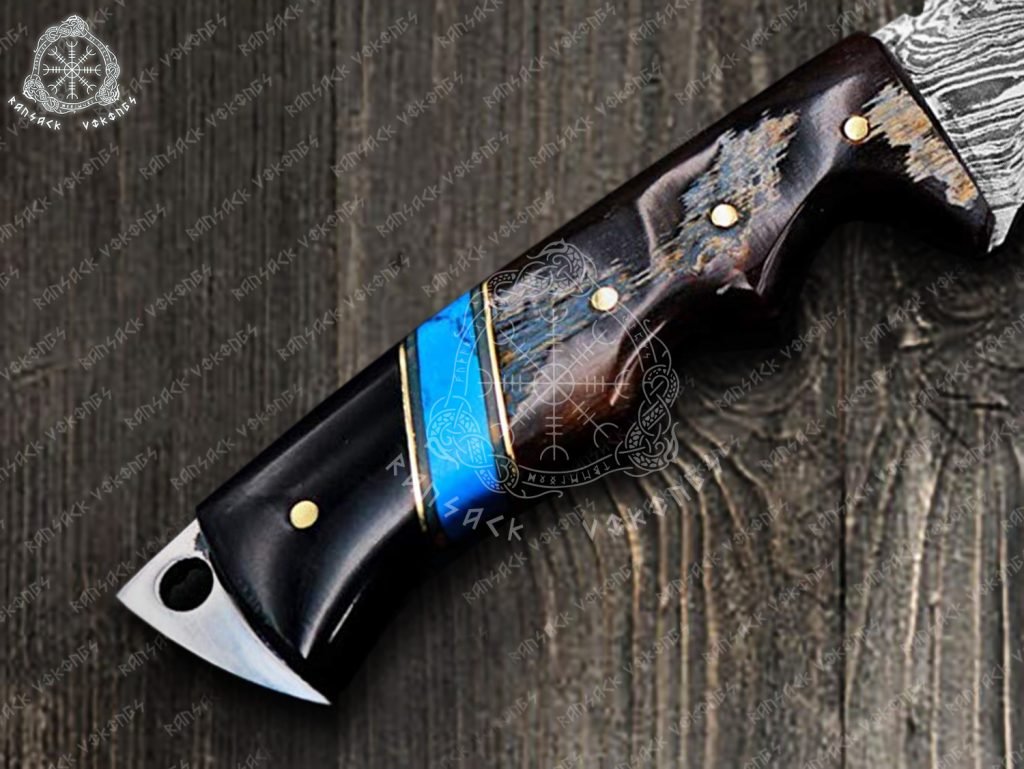
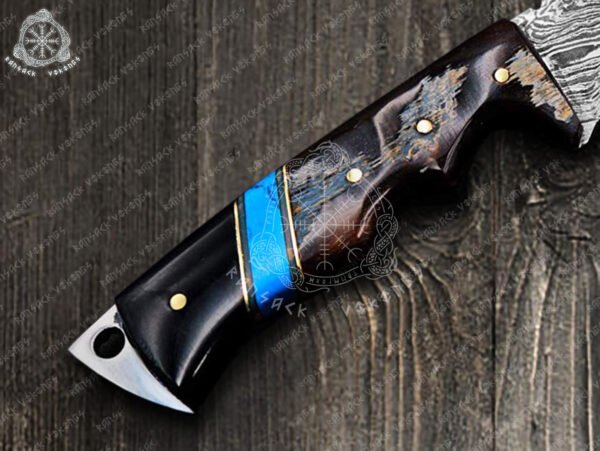
The handle is exotic hardwood, dense enough to counter the blade so the knife balances at the hand rather than the tip, and light enough not to fight you through an hour of work. It takes a finish that ages rather than flaking, and it warms in the palm within seconds, which matters more than it sounds when you are working outdoors in November. At 280 grams the whole knife is substantial without being heavy, and most of that weight sits behind the guard.
A wipe of oil now and then is the whole maintenance routine. Once or twice a year keeps the grain tight, stops it drying out at the pins and deepens the colour instead of building a surface film. Because each set of scales is cut from a different piece of timber, the figure and the tone shift from one knife to the next, and both will darken with handling. The method is in wooden handle care.
Engraving, runes and your own design
Use the rune converter on this page to turn a name, a date or a short phrase into Elder Futhark and we will cut it into the steel or the handle. If you would rather have a Viking pattern than a rune line, choose your own design in the engraving option above the add to cart button and tell us whether it goes on the blade or the handle. Where a piece already carries an engraved design, your chosen engraving replaces it rather than sitting alongside it. On a skinner the flat behind the ricasso is the usual place, since a line further forward will eventually be worked over by sharpening. Everything is cut here in the same shop that forged the blade. Details on the engraving page.
Care and sharpening
Carbon steel darkens with use and that patina should be left alone. What you do want to avoid is standing water, so dry it after use and put a thin film of mineral or camellia oil on it before it goes away for the season. Blood and stomach contents are acidic, so a wipe at the end of the day matters more than a deep clean a week later. Keep it out of the sheath for long storage, since vegetable tanned leather holds moisture against steel. The routine is in steel care.
At this hardness the edge comes back very easily. A medium stone raises a burr in a few passes, a fine stone or a strop finishes it, and a steel will straighten a rolled edge in the field without removing metal at all. Work the curved belly in short sections, rotating the knife so the contact point travels round the sweep rather than trying to drag the whole edge along the stone in one stroke. Method in sharpening with a whetstone.
Made in the Czech Republic
This piece is made by hand in the Czech Republic, in a workshop that still works the old way. The steel is forged, ground, heat treated and finished by smiths who learned the trade from the people before them, and the wood, horn and leather are cut and fitted by hand rather than pressed out on a line. That is also why no two pieces come out exactly the same.
Ransack Viking is a United States company. We import these pieces ourselves, check every one when it lands and ship from our warehouse in Memphis, Tennessee. Engraving is done here in the United States after the piece arrives, so your runes or your own design go on before it leaves for you.
A note on handmade variation
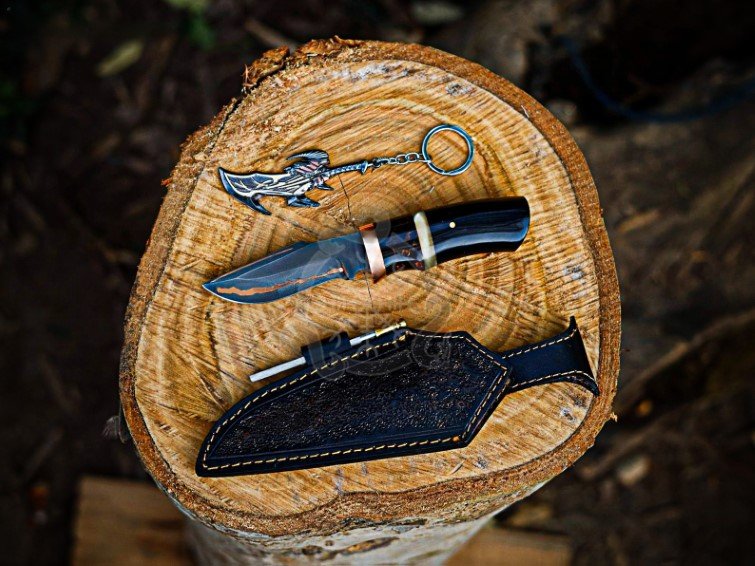
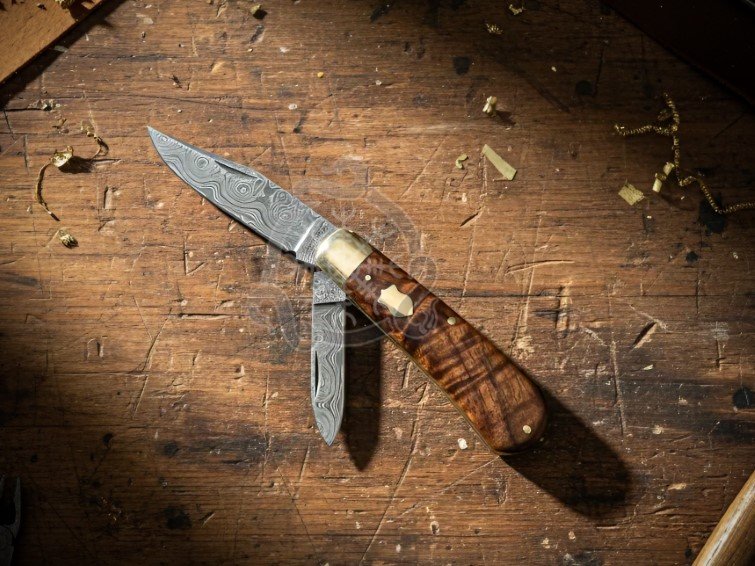
This skinner is hand forged, not machine made and not bulk produced, so what arrives will not be a pixel for pixel copy of the photograph on this page. Layer counts run from 280 to 350 depending on the billet, which changes how fine or open the pattern reads. The wood comes from a different board every time, so the figure, the colour and the way the grain runs through the scales all shift. Even the tooling on the leather is done by hand and carries its own small differences. The dimensions, the steel, the hardness and the full tang build are the same every time. The character is not.
Frequently asked questions
How hard is the blade, and why does that matter on a skinner?
It runs 58 to 60 HRC. Hard enough to hold a fine edge through a long job, and still soft enough that the edge rolls instead of chipping when it meets bone or grit. A rolled edge comes back on a steel in the field in a minute. A chipped edge needs a workshop.
Does the layer count actually matter?
Only for the look. Past a few hundred layers the layers are thinner than the grain of the steel and performance stops changing. High counts give a fine tight pattern, low counts give a bold open one. Anyone quoting layer count as a performance figure is quoting arithmetic.
The blade is going dark. Is that a problem?
No, that is patina and it is doing you a favour. The grey blue oxide that forms on carbon steel is far less reactive than bare bright steel. Leave it. What you should remove is any orange rust, which means the knife was put away wet.
Is it full tang?
Yes. The tang runs the length of the handle with the scales pinned to it, which is what you want on a knife that gets levered slightly at every joint.
How does the sheath carry?
It is tooled leather with a belt loop and a snap closure, so it rides vertically on a belt and the strap holds the knife in through a day of walking. Take the knife out of it for long term storage.
Can I have it engraved as a gift?
Yes. A name, a date or an Elder Futhark line can be cut into the blade flat or the wood before it ships. Allow the longer end of the one to two week processing window.
What is in the box
- One Forgeskin layered high carbon skinner knife, full tang
- Tooled leather sheath with belt loop and snap closure
- Protective packaging for storage or gifting
- Forged and finished in the Czech Republic
Explore the range
Compare it against Damascus Skinner Knives, Hunting Knives, Damascus Tracker Knives and New Arrivals. The reasoning behind the steel and the leather is in the guides.










Reviews
There are no reviews yet