The karambit has a reputation in the West that has very little to do with what it was. In Indonesia and Malaysia it stayed what it always had been well into the twentieth century: an ordinary agricultural knife, kept in a kitchen or a field bag, used for cutting rice stalks, raking roots out of the soil, stripping husks and butchering small animals. The Minangkabau of West Sumatra are usually credited with the pattern, and it travelled the archipelago along trade routes long before anyone thought of it as a fighting knife. The tiger claw comparison and the tactical reputation came much later, once the shape had been absorbed into silat and the Filipino arts and, more recently, into American folder design.
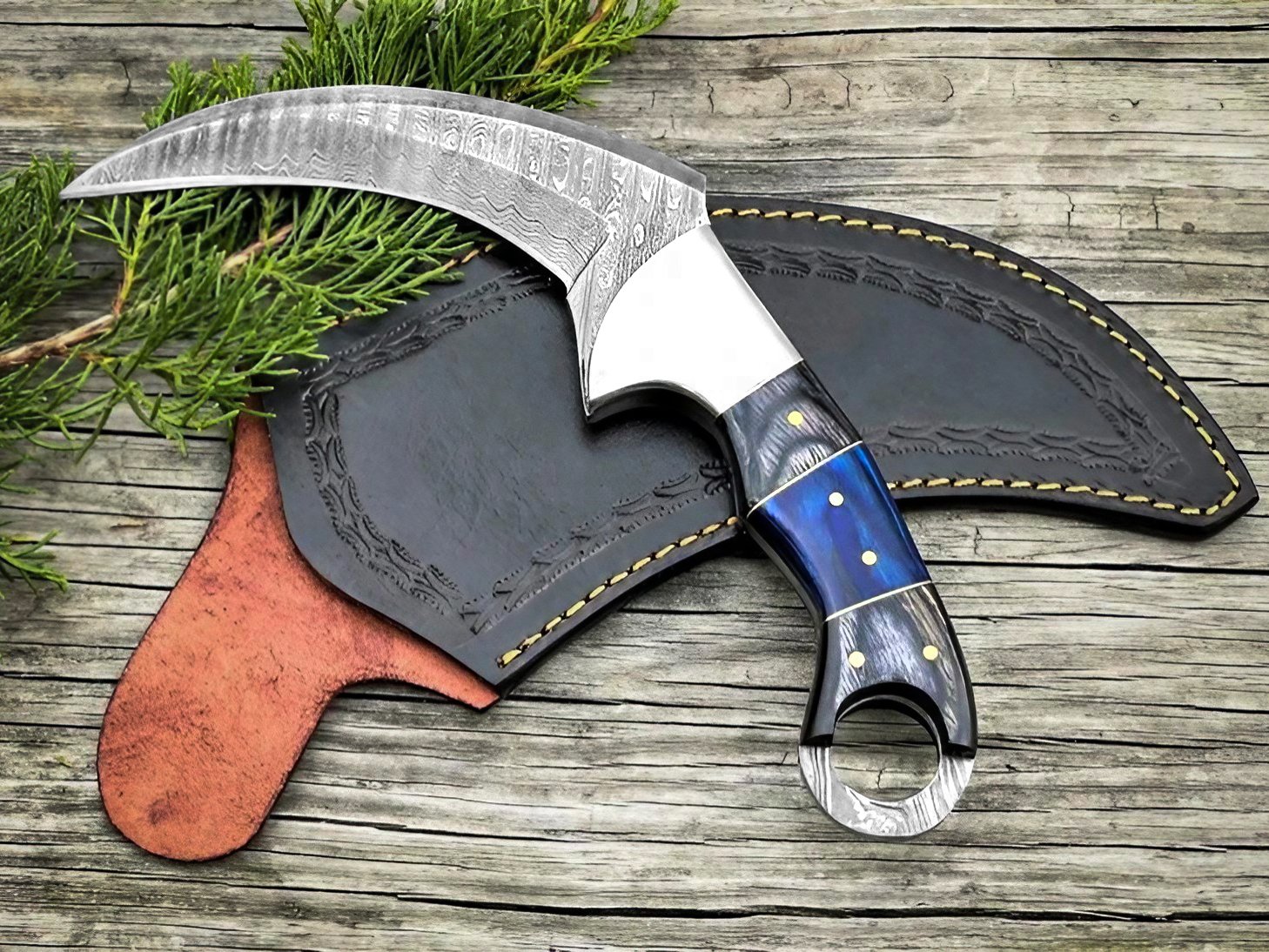
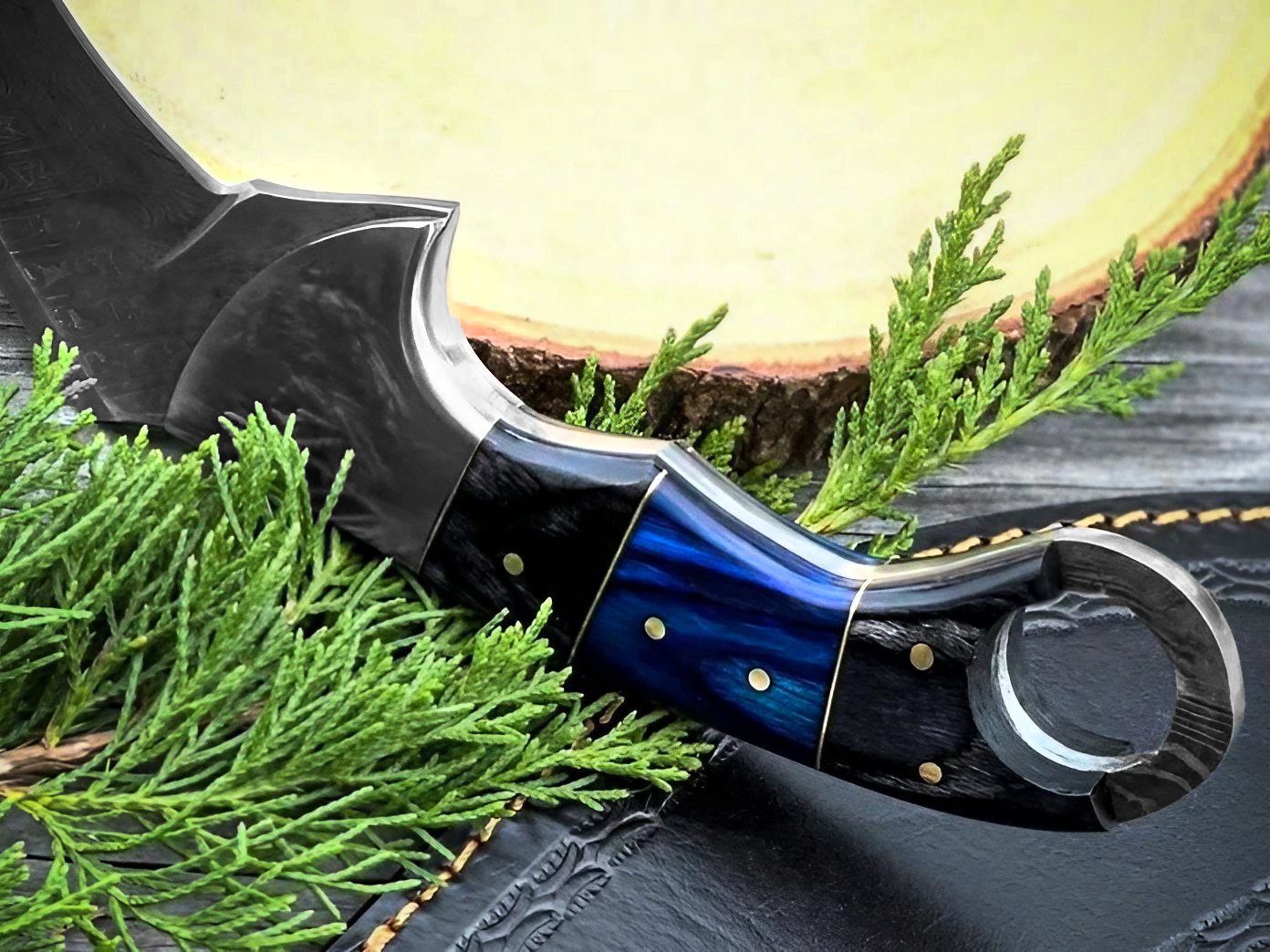
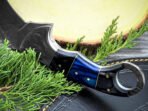
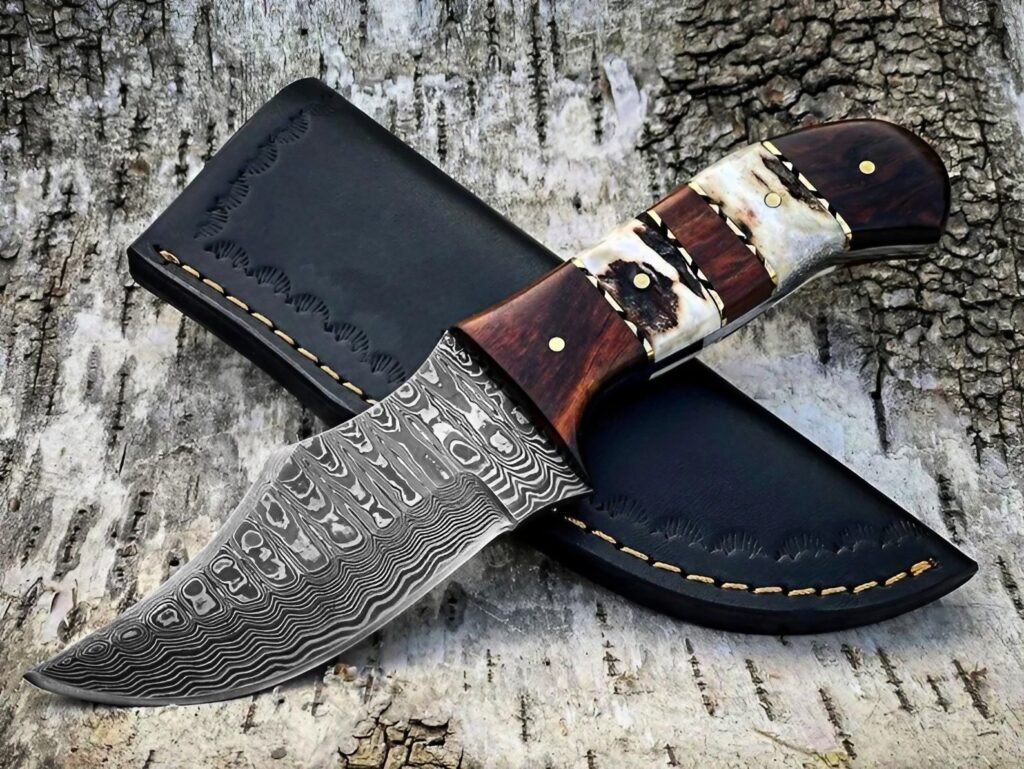
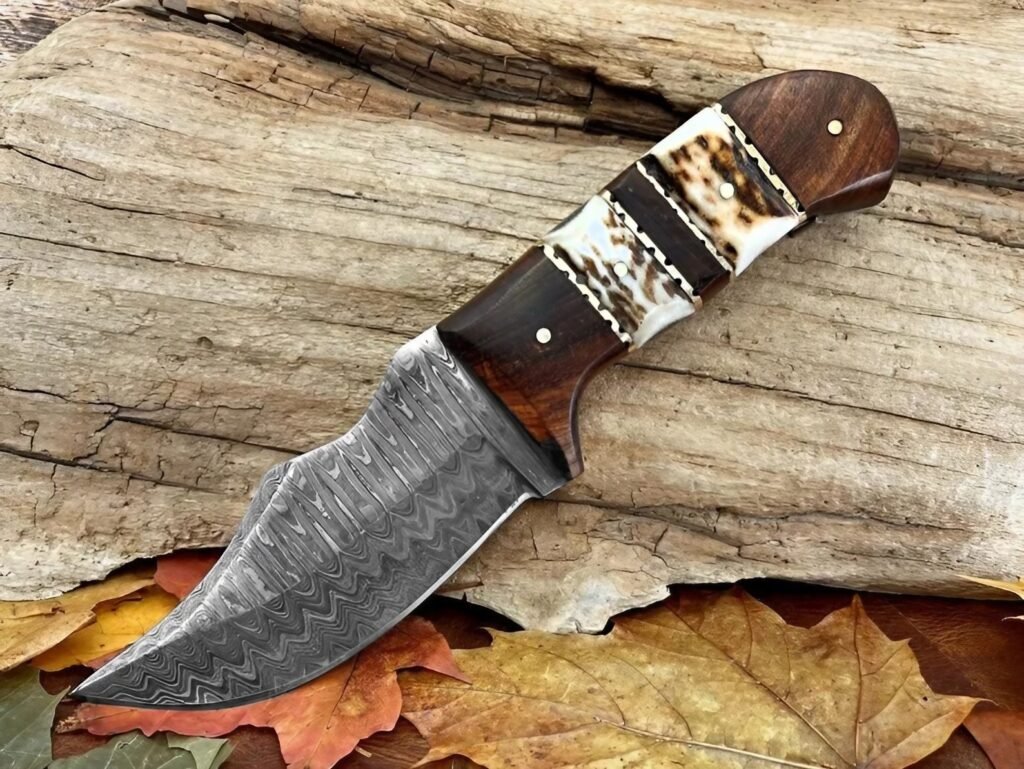
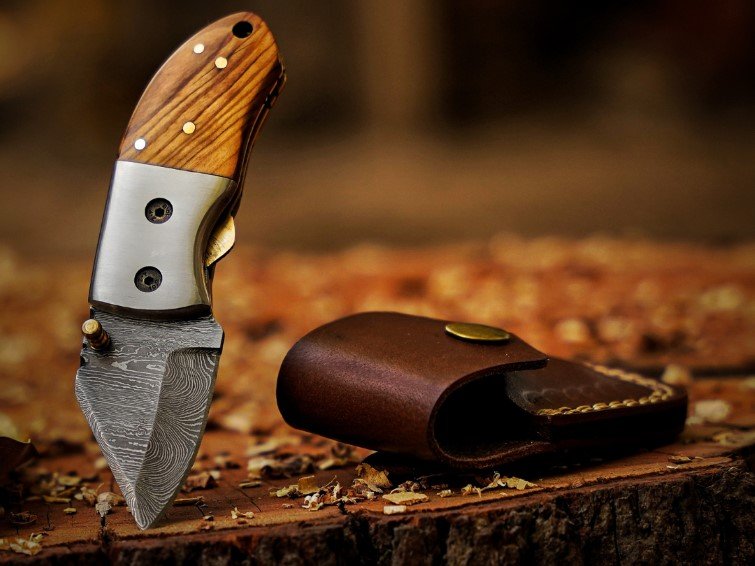
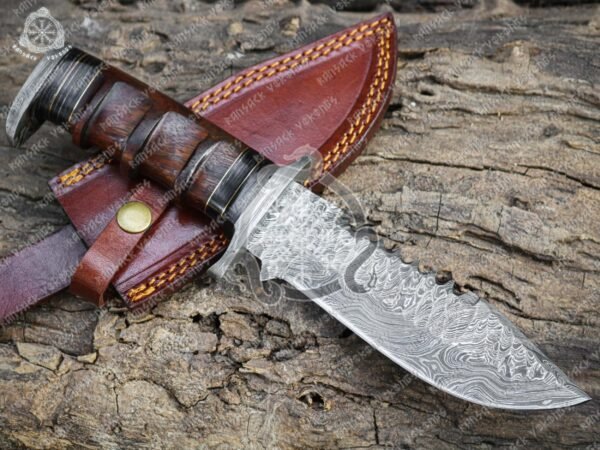
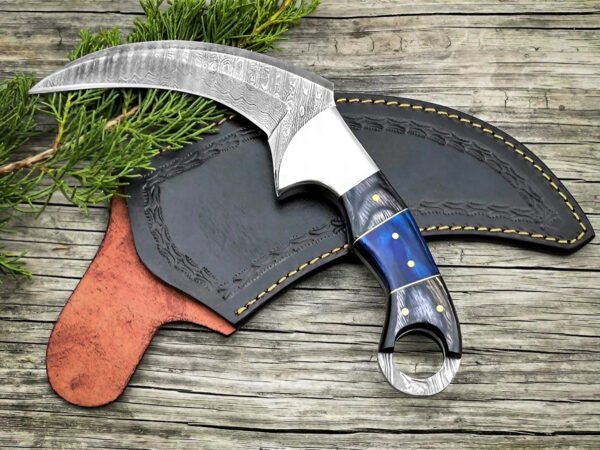
Every Pakkaclaw is forged, ground and finished by hand. The blade is Damascus from 1095 and 15N20 at 58 to 60 HRC, 4 inches long, built full tang on a knife that runs 8.5 inches overall with a 4.5 inch handle in coloured pakka wood over a steel bolster. The two are fitted so the knife sits balanced in the palm rather than hanging forward.
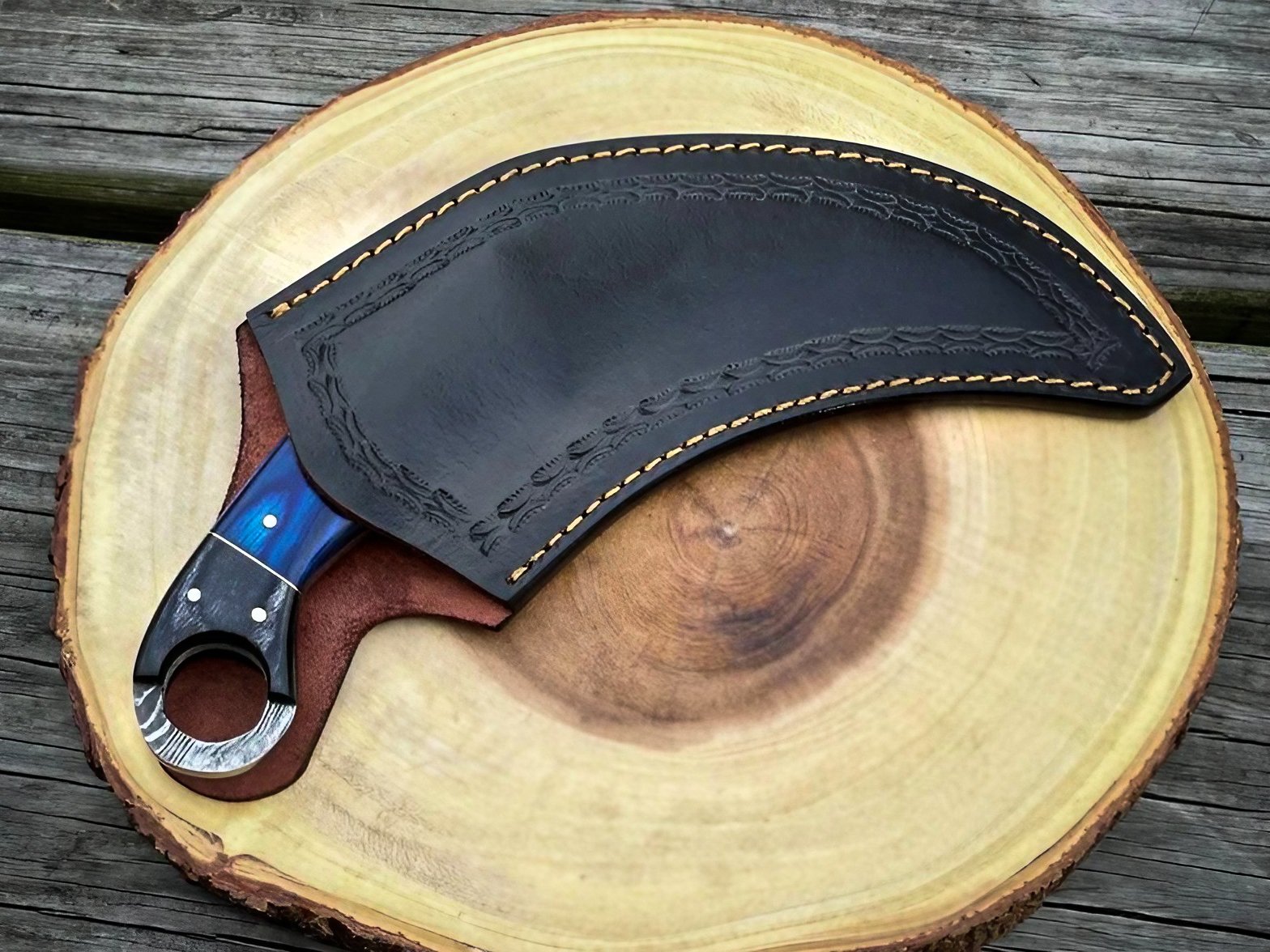
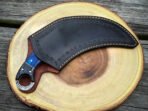
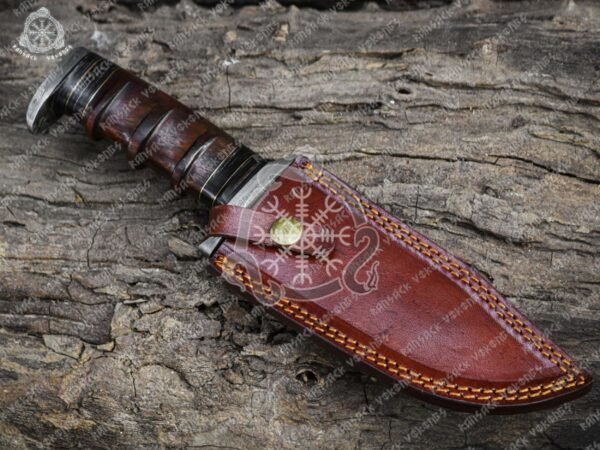
It is forged in the Czech Republic, and ships with a genuine leather sheath, protective packaging and an edge already set on the stone.
Specifications
| Steel | Hand forged Damascus, 1095 and 15N20 |
|---|
| Hardness | 58 to 60 HRC |
|---|
| Construction | Full tang |
|---|
| Overall length | 8.5 inches |
|---|
| Blade length | 4.0 inches |
|---|
| Handle length | 4.5 inches |
|---|
| Handle | Coloured pakka wood with steel bolster |
|---|
| Sheath | Genuine leather |
|---|
| SKU | RK-1098 |
|---|
What the curve does, and the honest truth about the ring
The working principle of a karambit is that the edge sits on the inside of the curve. Anything you pull through it is trapped between the point and the belly instead of rolling away, and the edge meets it at a shallow slicing angle rather than a square pushing one. That is why the shape bites first time on rice stalks, on rope, on webbing, on garden growth and on packing strap, and why it was a good farm knife for four hundred years before anyone filmed one. It is also why cutting toward yourself, which is how the pattern is used, gives far better depth control than pushing a straight blade away from you.
The finger ring is the feature people ask about and it deserves a straight answer rather than a sales one. Not every karambit has one, so check the title and the photographs on this page for how this piece is finished. Where a ring is fitted, it locks the knife to the hand: you cannot drop it, you can carry a load with the same hand, and you can let the handle rotate in the palm and recover it. What it costs is versatility. A finger through a ring stops you changing grip quickly, stops you choking up on the blade for fine work, and makes food prep, carving and general utility cutting awkward. It is a specialist grip that does one family of jobs unusually well, not a general purpose improvement on a normal handle. Profiles are compared in blade shapes explained.
Why Damascus and not stainless
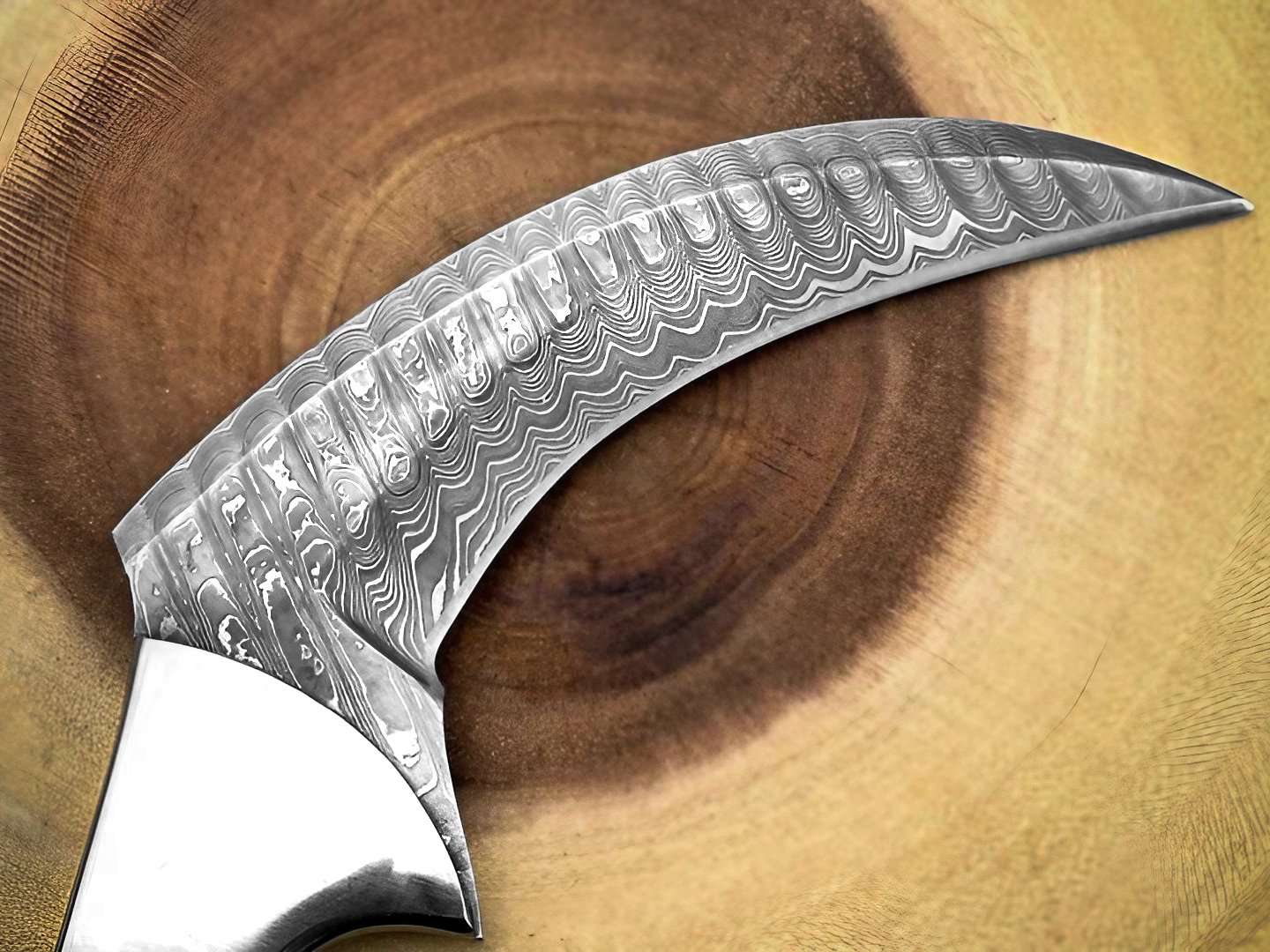
The blade is pattern welded Damascus, made by forge welding 1095 and 15N20 into a single billet, then folding and drawing it out until the layers show as a pattern through the steel. The two alloys take the etchant differently at the end, the 1095 going dark and the nickel bearing 15N20 staying bright, which is what makes the light and dark bands. It is not a coating and it will not wear off, because you are looking at a cross section of the bar. The long version is in what Damascus steel is.
The reason to choose it over stainless is edge behaviour. At 58 to 60 HRC this steel takes a finer edge and holds it longer through cutting than a soft stainless blade, and it comes back on a stone faster, which matters on a curved edge because a curve takes more time to work. The cost is that it is high carbon underneath the pattern and it will spot if it is put away wet. On this shape, water sits in the inside of the hook, which is the one place people forget to dry. The comparison is in Damascus versus stainless.
The coloured pakka wood handle
Pakka wood is not a timber, and knowing that changes how you look after it. It is a laminate: thin hardwood veneers are dyed, stacked in layers, saturated with phenolic resin and then compressed under heat and pressure until the whole block is dense and solid. The colour goes right through because the veneers were dyed before pressing, and the banding you see on the finished handle is the edge of those layers exposed by the grinding.
What that means in practice is that it behaves like a synthetic rather than like wood. It does not swell, shrink, split or lift when it gets wet, it is unaffected by humidity or by going from a cold pocket to a warm room, and it will not dry out. It needs no oiling at all, and there is nothing to feed. Wash it, dry it, and keep it away from sustained heat and solvents. That is the whole routine. If you also own genuinely wooden handled pieces from the forge, those do need an annual light oil and the method for them is in wooden handle care, but do not apply it here. The steel bolster wants nothing more than the wipe of oil you give the blade.
Engraving, runes and your own design
Use the rune converter on this page to turn a name, a date or a short phrase into Elder Futhark and we will cut it into the steel or the handle. If you would rather have a Viking pattern than a rune line, choose your own design in the engraving option above the add to cart button and tell us whether it goes on the blade or the handle. Where a piece already carries an engraved design, your chosen engraving replaces it rather than sitting alongside it. On this knife we would usually cut into the blade flat or the steel bolster, since a mark in pakka wood exposes the pale core of the veneers and reads differently from a cut in steel. Everything is done here before the knife is packed. See the engraving page.
Care and sharpening
Damascus is carbon steel underneath the pattern, so treat it like carbon steel. Dry it after use, put a thin film of oil on it before storage, and keep it out of the sheath for long spells because leather holds moisture. Pay particular attention to the inside of the hook and the join where the tang meets the bolster. The routine is in steel care.
Sharpening a hooked edge is ordinary stone work done in short sections. Work an inch or two at a time and rotate the knife as you go so the point of contact travels around the curve toward the tip, rather than trying to make a full length pass. A narrow stone or a round rod is much easier than a wide bench stone for the tight part of the hook. The basics are in sharpening with a whetstone.
Made in the Czech Republic
This piece is made by hand in the Czech Republic, in a workshop that still works the old way. The steel is forged, ground, heat treated and finished by smiths who learned the trade from the people before them, and the wood, horn and leather are cut and fitted by hand rather than pressed out on a line. That is also why no two pieces come out exactly the same.
Ransack Viking is a United States company. We import these pieces ourselves, check every one when it lands and ship from our warehouse in Memphis, Tennessee. Engraving is done here in the United States after the piece arrives, so your runes or your own design go on before it leaves for you.
A note on handmade variation
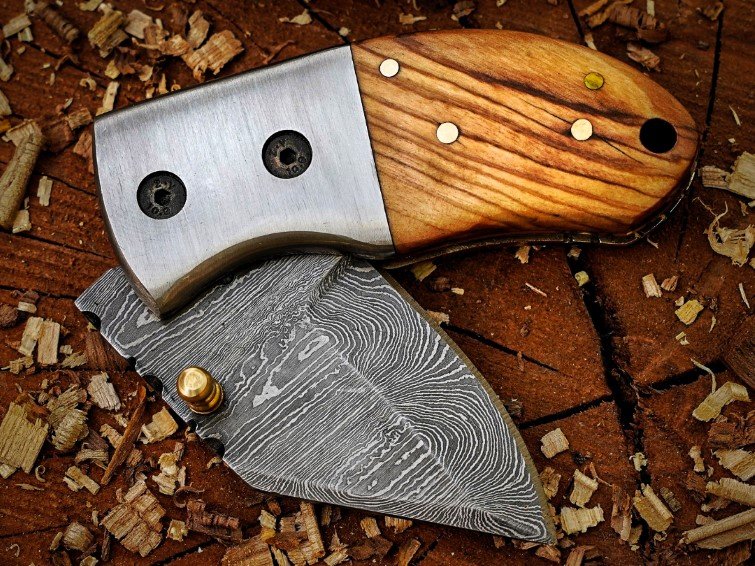
This karambit is hand forged, not machine made and not bulk produced, so the piece that arrives will not be a pixel for pixel copy of the photograph. The Damascus is drawn out under a hammer and every billet lands differently, so the banding on your blade has its own angle and spacing. The pakka wood block is ground back by hand, and where the grind cuts through the dyed layers decides which colours show and how wide each band appears, so no two handles are the same. The dimensions, the steel, the hardness and the full tang build are identical every time. The character is not.
Frequently asked questions
Is pakka wood real wood?
Partly. It is made from real hardwood veneers, but they are dyed, stacked and impregnated with resin under heat and pressure, so the finished material behaves like a hard synthetic rather than like timber.
Does the handle need oiling?
No. Pakka wood is resin saturated and completely stable, so there is nothing to feed and nothing to dry out. Wash it, dry it, keep it away from sustained heat. Only genuinely wooden handles need an annual oil.
Will the colours fade?
Not with normal use. The dye goes into the veneers before the block is pressed, so the colour runs through the material rather than sitting on the surface, and sanding or scratching exposes more of the same colour rather than wearing it away.
What is a karambit actually good for day to day?
Anything you pull through: cordage, strapping, tape, netting, garden growth, opening sacks. It is poor at pushing cuts and at anything that wants a flat edge on a board, so most owners keep one alongside a straight knife rather than instead of one.
Is it full tang?
Yes. The tang runs the length of the handle with the pakka wood scales fixed to it and a steel bolster at the front, which is why the balance sits at the hand rather than out at the point.
How do you carry a curved blade safely?
In the sheath it came with. It is cut and stitched to this blade rather than to a template, which matters far more on a hooked knife than a straight one, because a generic sheath will let a curved edge work its way against the stitching.
What is in the box
- One Pakkaclaw Damascus karambit knife, full tang
- Genuine leather sheath
- Protective packaging for storage or gifting
- Forged and finished in the Czech Republic
Explore the range
Nearby in the range sit Karambit Knives, Hunting Knives, Dagger Knives and New Arrivals. Everything else worth knowing is written up in the guides.



Knew this knife was special the second I opened the box. Already planning my next purchase from this shop.
This one was a letdown compared to the listing. Handle was loose right out of the box. Considering asking for a return.
Been eyeing this knife for months and it did not disappoint. Ransack Viking’s attention to detail is honestly unmatched. Will definitely order again for another gift.
Middle of the road experience with this one. Not bad, not amazing either. Ships from the US even though it’s made in the Czech Republic. Arrived in a reasonable time.
This knife is a genuine work of art. This will be a family heirloom for sure.
Happy with this one for the most part. Blade quality is solid. Arrived a bit less sharp than expected but a few passes on a strop fixed it. Would buy from this shop again.
This thing is a beast in the best way. Damascus blade holds a razor edge right out of the box. Love that this is Czech craftsmanship and shipping from the US meant it showed up in just a few days. I keep coming back to Ransack Viking because it’s always this good. Edge retention has been great even after regular use. The pakka wood handle feels amazing and the balance is perfect. This is going straight into my display case.
This knife beat every expectation I had. The pakka wood handle feels amazing and the balance is perfect. Worth every penny.
Really happy with this knife overall. Blade quality is solid. Arrived a bit less sharp than expected but a few passes on a strop fixed it. Minor nitpicks aside, good quality piece.
Middle of the road experience with this one. Handle material felt a bit different than pictured. It’s okay for the price.