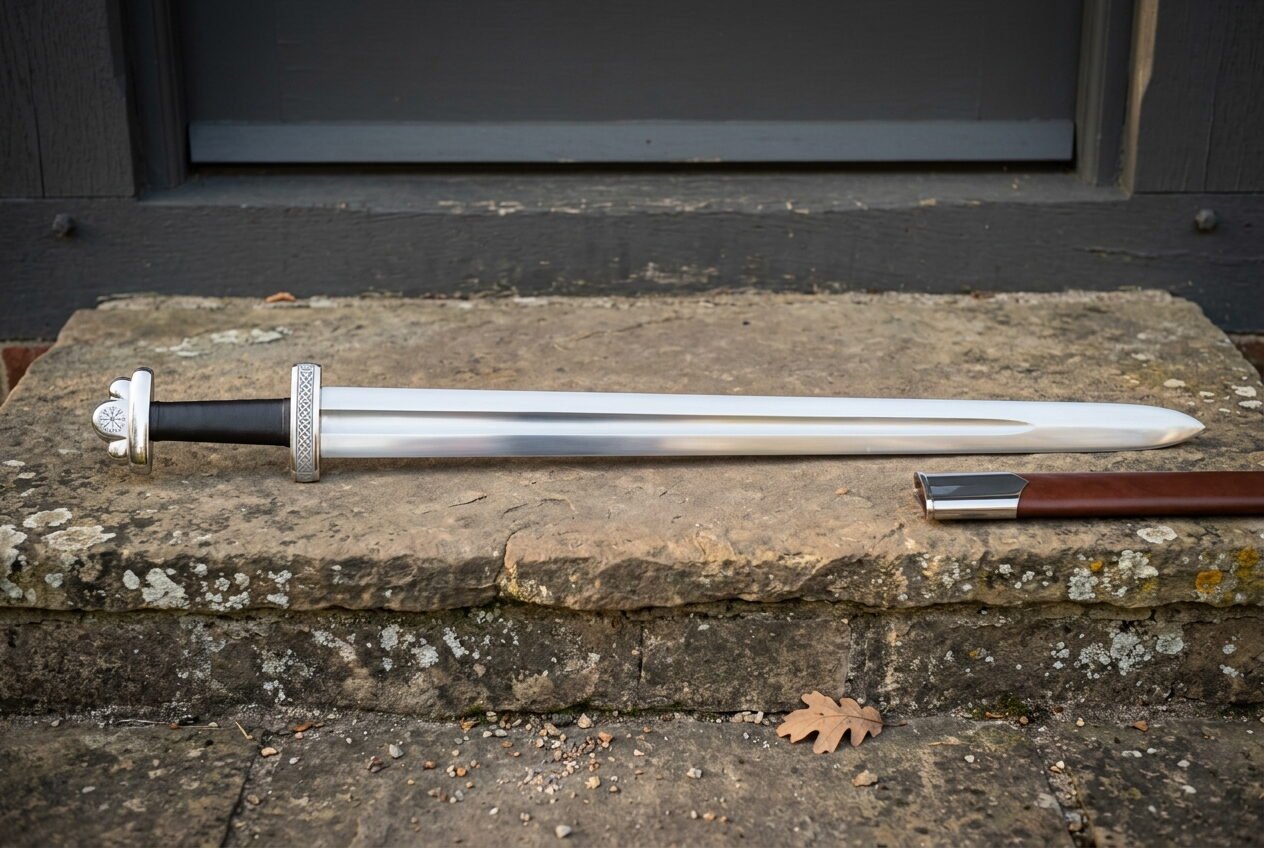
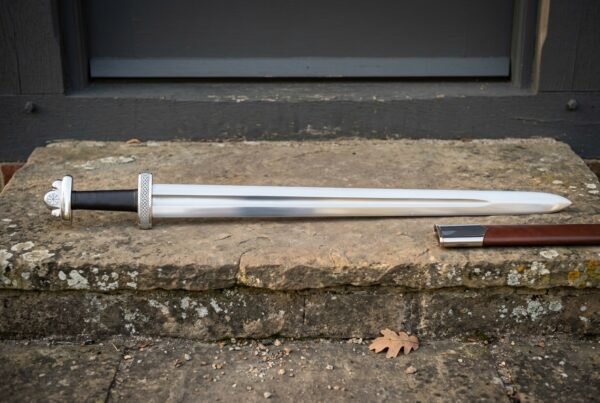
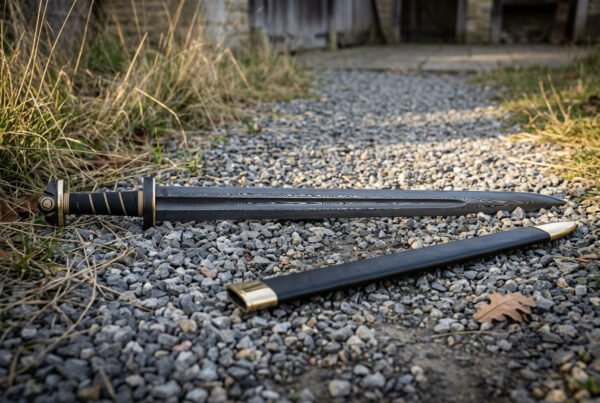
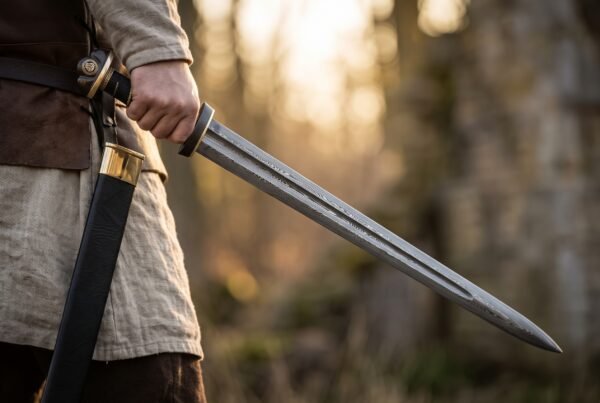
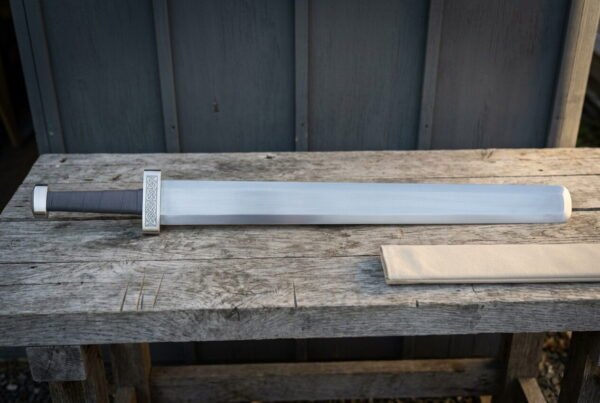
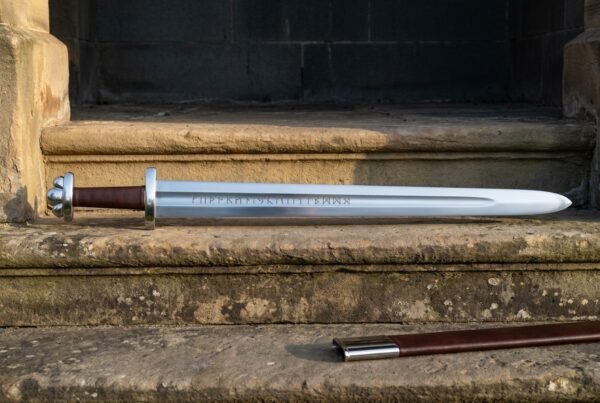
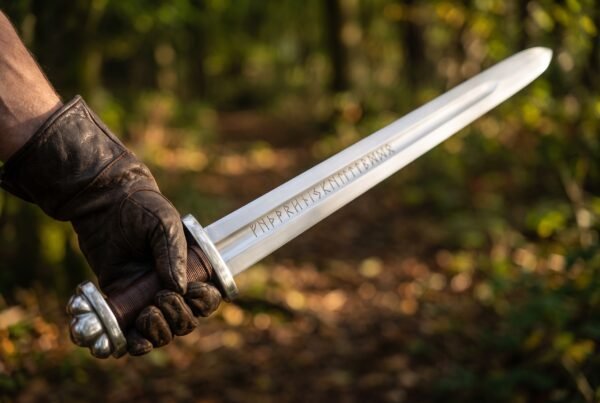
The Barrowlight is a Norse sword built on the classic Viking age hilt, a broad fullered blade of high carbon steel under a short straight lower guard and a three lobed pommel, running 35 inches overall with a 29 inch blade. This is the shape most people picture when they think of a Viking sword, and it was the most expensive object a free Norse farmer was ever likely to own. A sword of this quality represented the value of a small herd of cattle, well beyond what an ordinary man could put together in a season, which is why so many of them are inherited rather than bought in the sagas and why the literature treats them as characters in their own right. Named blades run through the whole corpus. Skofnung, taken from a burial mound and said to lose its power if the sun touched the hilt. Leg biter, carried by Magnus Barefoot. Gram, reforged from the shards of a broken sword in the Volsunga saga. Naming a sword only makes sense in a society where a good one lasts several generations and everybody in the district knows exactly whose it is. What to spend on and what to ignore is laid out in our first sword guide.
This one is forged and finished by hand in the Czech Republic. The blade is drawn out under the hammer, the fuller is ground in along its length by hand, and the sword is hardened and tempered here before the two piece upper hilt is fitted and the tang peened over. It ships with a fitted brown leather scabbard over a wooden core with steel throat and chape, a belt hanger, blade oil and a care card. Shipping inside the United States is free, and the engraving option above the add to cart button is available on every piece we make.
Specifications
| Steel | 1095 high carbon steel, hand forged, oil quenched and tempered |
|---|
| Hardness | 54 to 58 HRC |
|---|
| Overall length | 35 inches |
|---|
| Blade length | 29 inches |
|---|
| Blade width at guard | 2.1 inches, tapering to a rounded point |
|---|
| Fuller | Wide shallow central fuller, hand ground, running most of the blade |
|---|
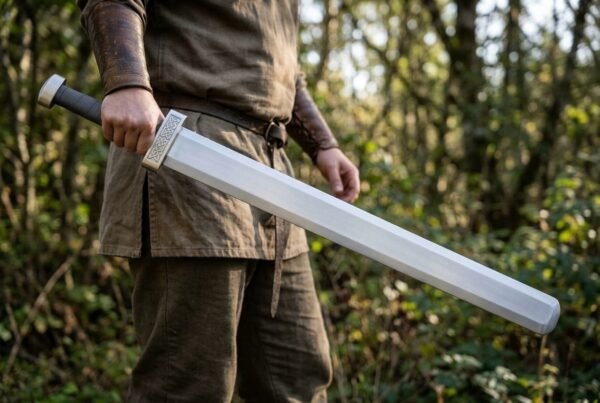
| Grip | Hardwood core wrapped smooth in black leather |
|---|
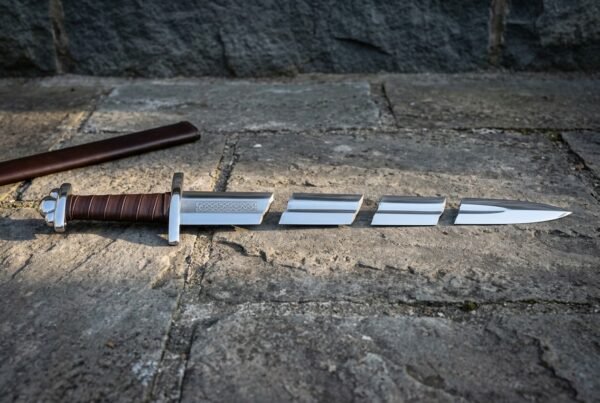
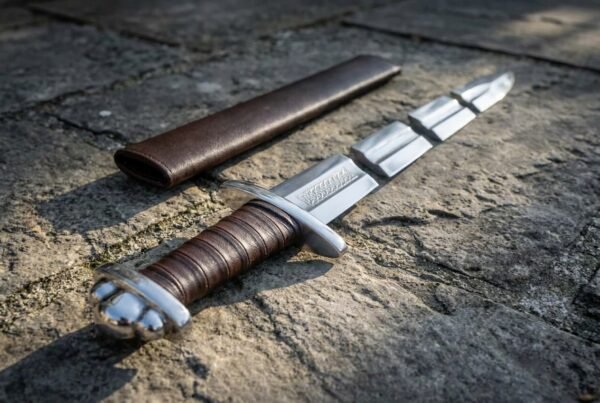
| Guard | Short straight polished steel lower guard with an engraved knotwork band |
|---|
| Pommel | Polished steel three lobed pommel with an engraved Vegvisir disc, over an upper guard, peened tang |
|---|
| Scabbard | Brown leather over a wooden core with steel throat and chape, belt hanger |
|---|
| Weight | Approximately 2 lb 9 oz |
|---|
| SKU | RK-1235 |
|---|
The two piece Norse hilt, and why the pommel is that shape
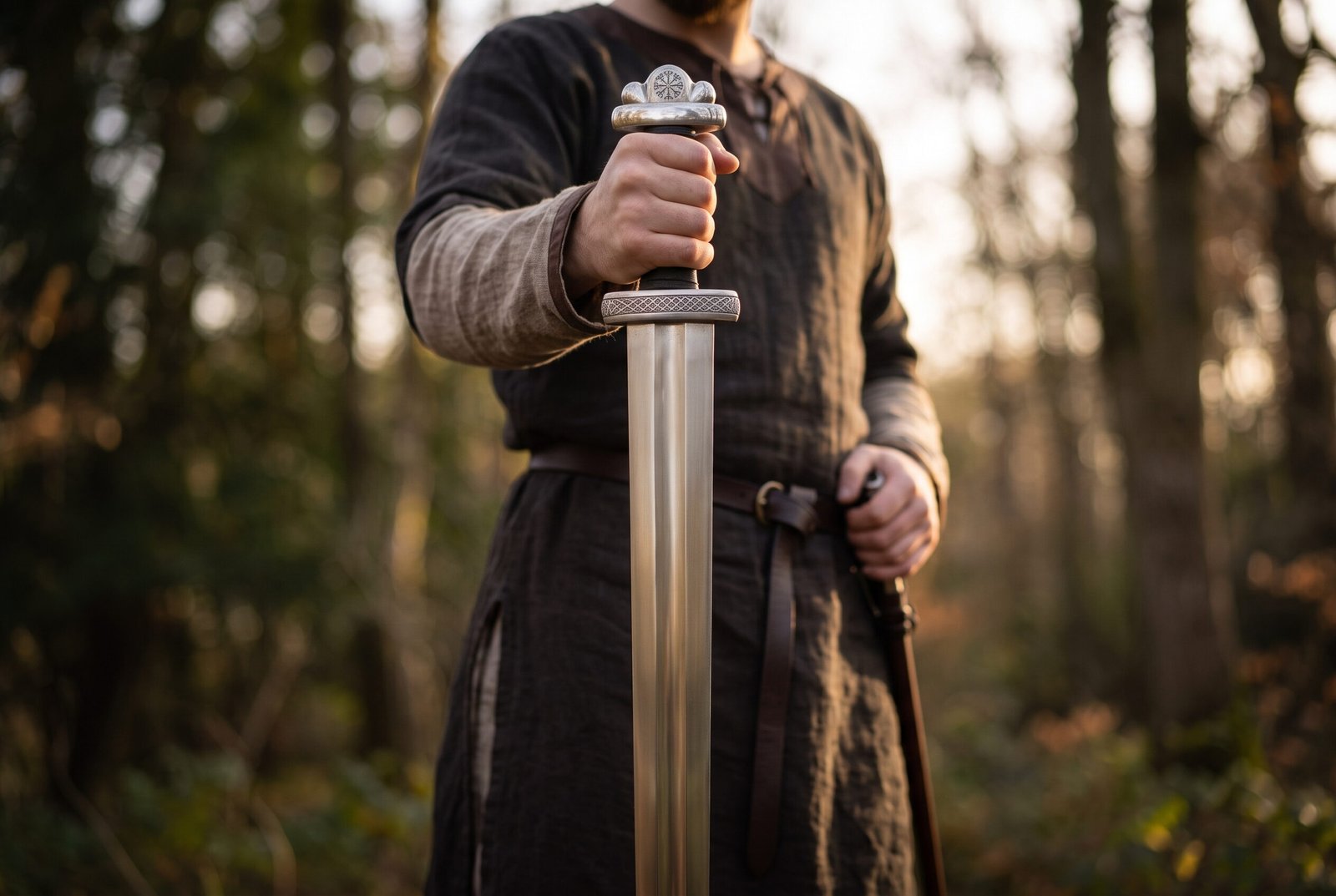
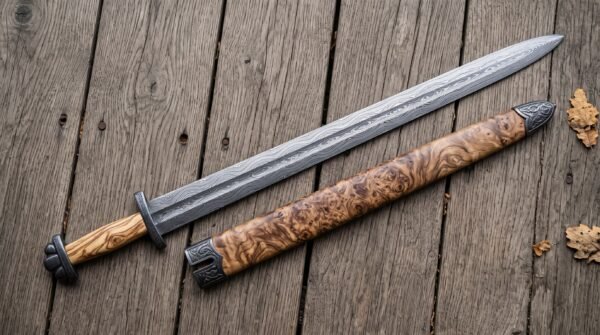
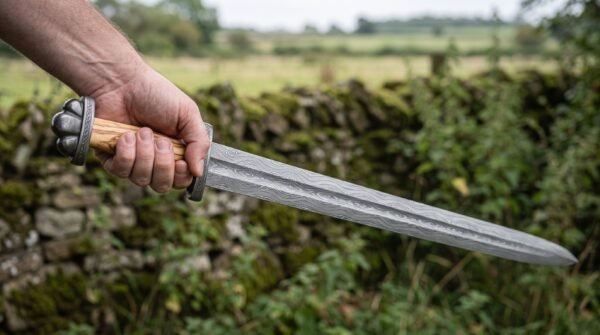
Look closely at the top of this sword and you will see it is not one lump of steel. A Viking hilt is built in three pieces: a lower guard slotted onto the tang shoulders, an upper guard sitting on top of the hand, and a pommel cap riveted or peened onto that upper guard. This is a genuinely different construction from a later medieval sword, where the pommel is usually a single block. The Norse method exists because it lets a smith build the counterweight from separate parts, decorate the faces of each one, and adjust the mass without reforging anything. The most elaborate surviving examples have silver, copper and brass wire hammered into hatched grooves on those faces in geometric bands, which is possible precisely because the pieces are worked separately before assembly.
The lobed cap, a shape found on many Viking age hilts, does the same work a brazil nut or a wheel pommel does on later swords. It puts mass behind the hand. A one handed sword swung from the shield wall needs to stop and change direction as fast as it accelerates, and the only way to get that without making the blade too light to cut is to load the far end of the lever. The rounded underside also gives the heel of the palm a surface to press against at the end of a downward cut, which is where a squared pommel starts to bruise.
The blade below it is the other half of the design. Broad at the guard, close to parallel through the first two thirds, then drawing in to a rounded point, with a wide shallow fuller taking weight out of the centre line. It is a cutting blade, built for a world where the enemy wore a padded coat and carried a limewood shield, and it is unapologetic about that.
Why high carbon steel and not stainless
1095 is a straightforward high carbon steel. It hardens all the way through, takes a keen edge, and at 54 to 58 HRC it flexes under load and returns rather than snapping. Stainless steel resists rust because it carries a great deal of chromium, and across a blade this long that chromium promotes coarse carbides and brittle failure. That is why serious long blades are made from carbon steel and why cheap stainless swords sometimes break at the tang. The cost of carbon steel is that it patinas and will spot if you leave it damp or fingerprinted, which a wipe and a film of oil solves. There is a full side by side comparison on our Damascus versus stainless page.
The grip and the fittings
The grip is a shaped hardwood core, waisted so that the hand indexes the edge by feel alone, and wrapped smooth in black leather. The leather is wet fitted so it shrinks onto the core as it dries, and the seam is stitched along the back edge away from the palm. The steel furniture is filed, fitted and polished by hand, and the tang is peened over the pommel so the assembly is held mechanically. There is no adhesive doing structural work anywhere in this sword.
Because there is wood under the wrap, look after it as wood. Keep it out of standing water, out of hot cars and away from radiators, wipe rather than wash, and let a damp grip dry at room temperature. The advice in our note on wooden handle care applies to this core directly, and a light dressing on the leather once or twice a year keeps the wrap supple and stops it splitting at the stitch line.
Engraving, runes and your own design
Use the rune converter on this page to turn a name, a date or a short phrase into Elder Futhark and we will cut it into the steel or the handle. If you would rather have a Viking pattern than a rune line, choose your own design in the engraving option above the add to cart button and tell us whether it goes on the blade or the handle. Where a piece already carries an engraved design, your chosen engraving replaces it rather than sitting alongside it. Given how much Norse sword culture revolves around naming a blade, this is the pattern people most often ask us to put a name on, and the wide fuller carries a longer rune line than any other surface on the sword. The flat faces of the guard and pommel suit short bands and single bindrunes. The engraving page shows the placements with worked examples.
Care and sharpening
Wipe the blade after handling and keep a light film of oil on it. Skin oils are mildly acidic and will mark a polished blade within days in a humid room, and that is the single most common reason a new owner sees spotting. Do not store the sword inside its scabbard for months at a time, because leather holds moisture and tanning salts that will pit steel over a season. Keep the sword on a rack or a wall mount with the scabbard beside it. Storage, patina and dealing with early rust are covered in our steel care guide.
Sharpening a sword is the same skill as sharpening a knife, applied over more length. Work in overlapping sections along a coarse stone and then a fine one, hold the angle steady, and finish with a strop to remove the burr. A long combination stone or a guided rod system both work well here. The angle control method in our guide to sharpening with a whetstone is exactly what we use on the bench.
Made in the Czech Republic
This is a handmade piece from the Czech Republic, made in a workshop that still forges, grinds and finishes by hand instead of stamping parts out. The smiths there have kept the older way of working, and the wood, horn and leather are shaped and fitted by hand as well. Two pieces of the same design will never be identical, and that is part of what you are buying.
Ransack Viking is a United States company. We handle the import ourselves, look over every piece when it lands and ship from our warehouse in Chicago, Illinois. Engraving is done in the United States after the piece arrives, so your design goes on before we send it out.
A note on handmade variation
This sword is hand forged. It is not machine made and it is not bulk produced, so what arrives will not be a pixel for pixel copy of the photograph on this page. The grain in the wood under the grip leather, the tone the hide takes, the way the satin polish runs along the fuller, the file finish on the guard and the exact curve of the pommel lobes all vary from piece to piece because each is worked by hand from natural materials. The specification does not vary. The steel, the heat treatment, the dimensions, the construction and the finish standard are the same on every one we send out. The character is what changes, and it is the reason to buy something a person actually made.
Frequently asked questions
Is this sword sharp?
Yes. It arrives with a hand cut and honed working edge, ground for durability rather than shaving sharpness. If you want it blunted for display or because there are children in the house, put a note on the order and we will finish it with a rounded edge at no extra cost.
Can it be used for cutting practice?
Yes, on soft targets. Through hardened 1095 with a peened full tang handles water bottles, tatami mats and green pool noodles well. Do not cut against steel, stone, bone or seasoned hardwood, do not use it against another blade, and never throw a sword.
Can I have a name put on it in runes?
Yes, and this is the pattern it suits best. Use the rune converter on this page to convert a name or phrase into Elder Futhark, then choose the engraving option above the add to cart button and tell us whether it goes into the fuller or onto the handle furniture.
Will mine be identical to the one photographed?
Same shape, same size, same specification, different character. Leather tone, wood grain, polish and hand file work differ from piece to piece. Treat the photograph as an accurate picture of the model rather than of the individual sword you will receive.
What is the difference between this and a Viking seax?
A seax is a single edged knife or short sword, usually between eight and twenty inches, carried by almost everybody in the Norse world because it was cheap and useful. A sword like this one is double edged, three feet long, and was a status object owned by a small minority. If you want the everyday Norse blade, look at the seax. If you want the one that got a name and a burial, this is it.
How long does shipping take?
Free inside the United States with tracking. In stock swords go out within two business days. Forged to order, allow two to three weeks of bench time, plus a few days more for custom engraving.
What is in the box
- One Barrowlight Norse sword, 35 inches overall with a 29 inch 1095 high carbon steel blade
- Fitted brown leather scabbard over a wooden core with steel throat and chape
- Leather belt hanger with buckle
- Blade oil and a lint free cloth for first storage
- Care and sharpening card
- Forged and finished in the Czech Republic
Explore the range
Browse the full Viking swords range, the Viking seax knives that sat on every Norse belt, the wider swords collection and the rest of the Norse arms we carry. Steel and sharpening are explained in the guides.
Worth a look beside this
If this one is not quite right, there is the Longkeel Viking sword, forged from 1095. Also in this group is the Oathbright Viking sword, 30 inches overall. Sitting beside it in the catalogue is the Loopcrown Viking sword, 36 inches overall.
From the same corner of the shop, there is the Ironmarch sabre. Or start from a blank sheet on the custom Viking sword page.


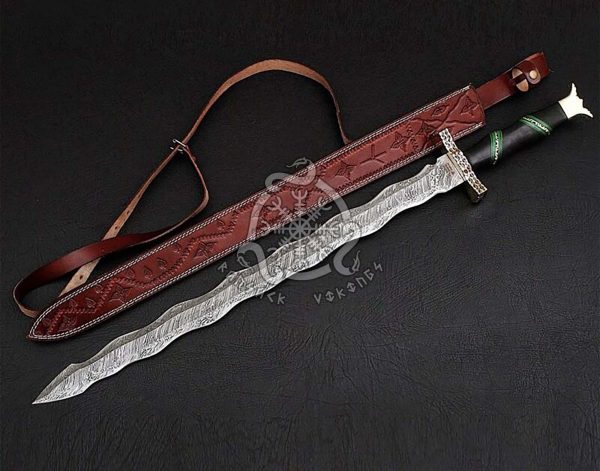
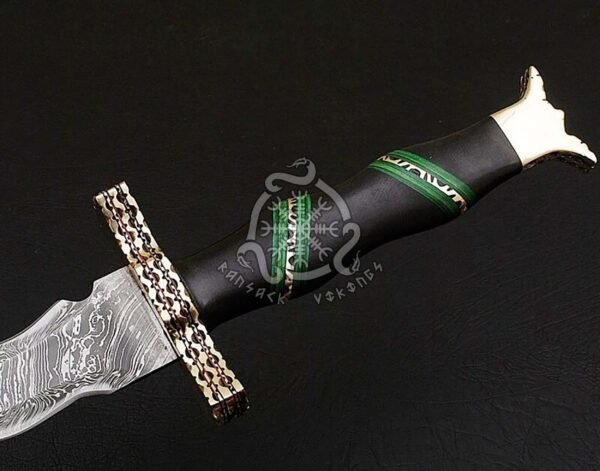
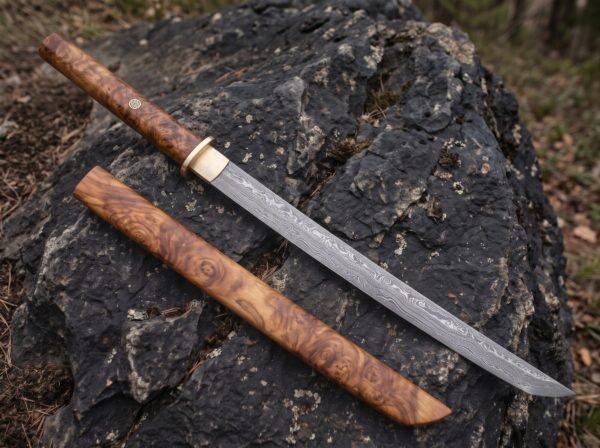
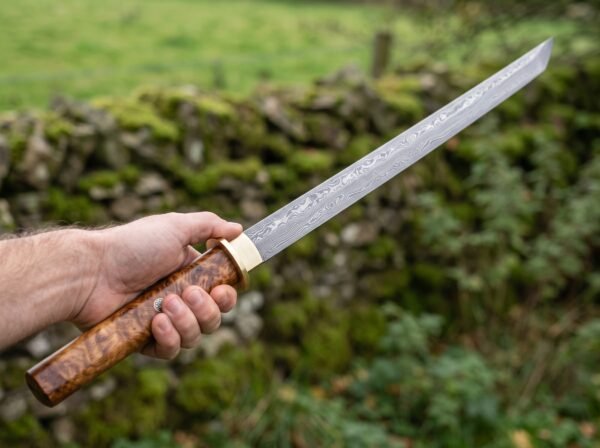
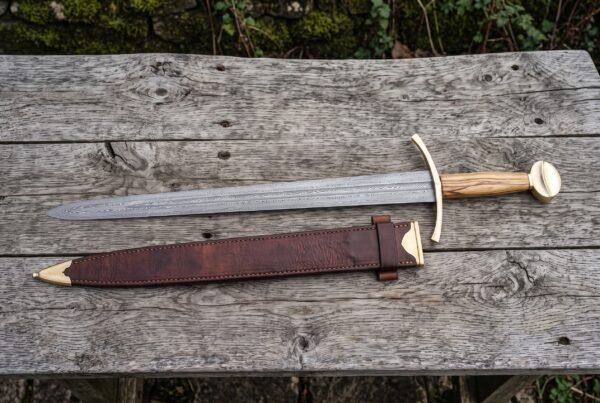
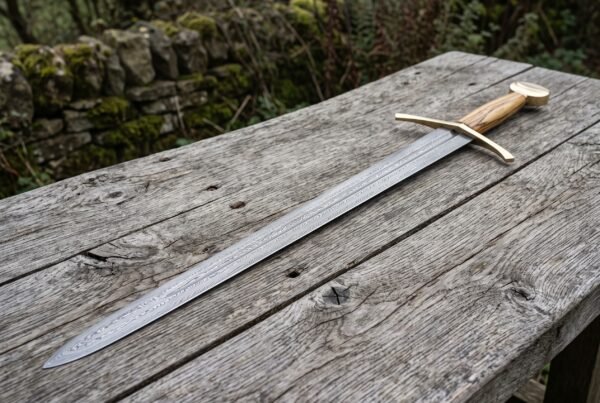
This sword is a genuine work of art. Came in a nice gift box which made it feel even more special. Fit and finish is museum quality. You can tell real craftsmen made this by hand. Beyond happy with how this turned out.