
Blog
The Dane Axe: The Long Axe of the Huscarls

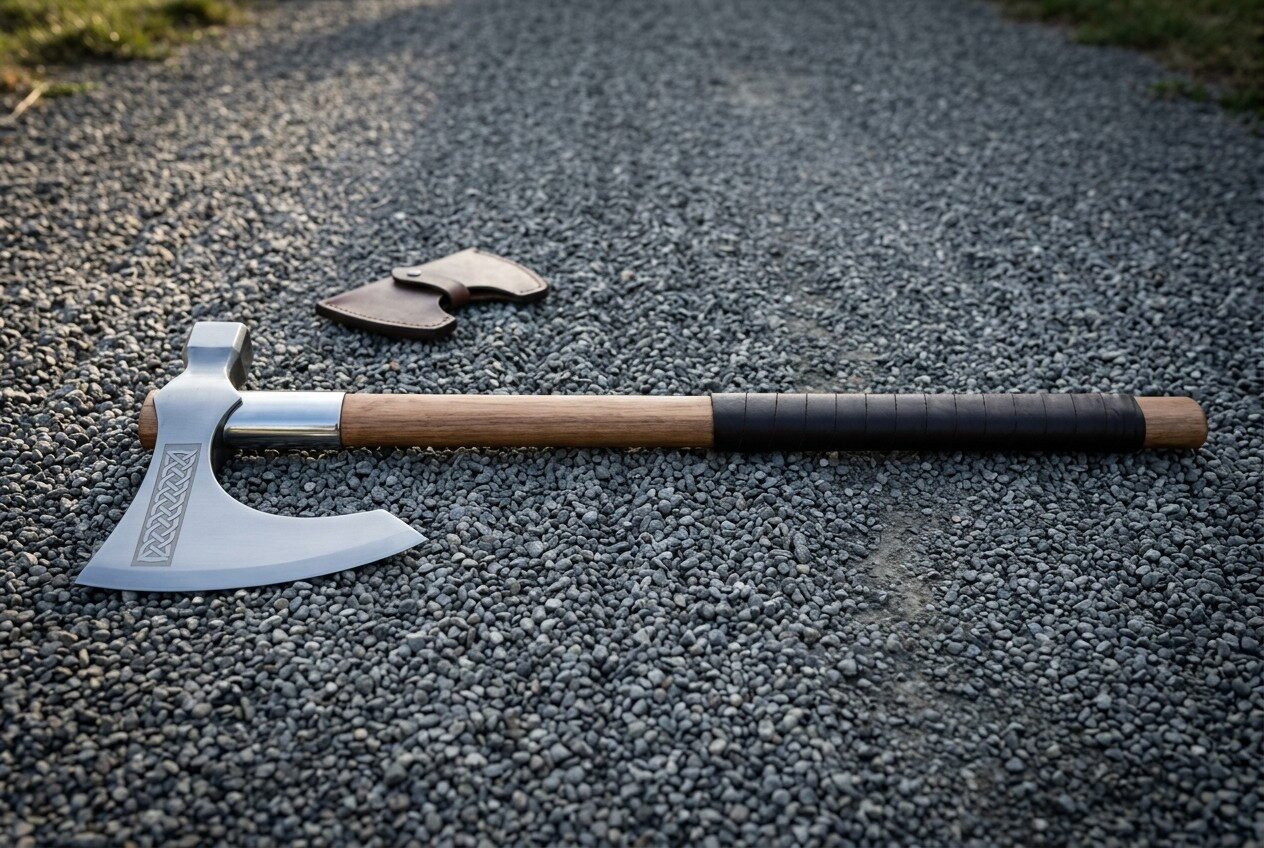
A Dane axe is a broad bladed axe on a long haft, swung with two hands, at its height in the tenth and eleventh centuries. The head is wide and thin with a sweeping crescent edge, and the shaft runs somewhere around a metre or more. English kings kept household troops who fought with them, which is why the name huscarl and the long axe travel together. It was carried by men who could afford to fight with both hands and no shield.
What a Dane axe actually is
Two features define it. The first is the blade: broad, thin in section, flaring out to a curved edge far wider than the eye it sits on. The second is the haft: long enough that the thing is used with both hands and cannot sensibly be paired with a shield in the same moment.
Everything else follows from those two choices. A wide thin edge concentrates a great deal of momentum into a narrow line of steel. A long haft gives reach and leverage. Together they produce a piece that cuts through mail, shield rims and helmet plate in a way a one handed hand axe simply cannot. The trade is that you are wide open while the head is travelling.
The Norse called the broad axe the breidox. Modern English writers use Dane axe, broad axe, long axe and sometimes hafted axe more or less interchangeably. They all describe the same family, whatever the product page calls it.
Where the name comes from
Danish and Norwegian raiders brought the long axe into England, and by the reign of Cnut in the early eleventh century the axe had become the signature arm of the royal household troops, the huscarls. When Harold Godwinson’s army met William at Hastings in 1066, English axemen were still fighting that way. The Bayeux Tapestry shows them clearly: two handed, shields slung or set aside, heads up and back over the shoulder.
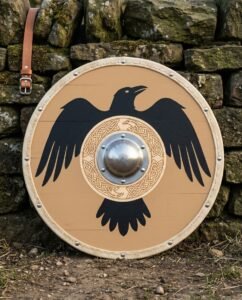 Huginward Hand Made Viking Round Shield | 30 Inch Planked Body | Steel Dome Boss with Engraved Knotwork Roundel and Rawhide Rim | Norse Reenactment Gift | RK-1498
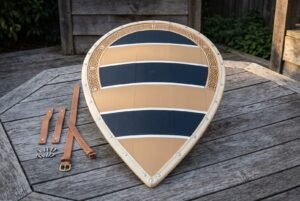 Wavewarden Hand Made Wooden Kite Shield | 34 Inch Teardrop Board | Painted Bands with Rawhide Edge and Leather Strap Set | Norman Reenactment Gift | RK-1573
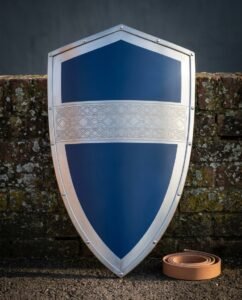 Cobaltward Hand Made Steel Heater Shield | 30 Inch Height | Blue Painted Face and Riveted Polished Border with Engraved Celtic Knot Band | Reenactment Gift | RK-1901
So the label is geographic in origin and occupational in practice. The axe came from Scandinavia and it stayed in service with elite English infantry for generations after the raiding stopped. Varangians in Byzantine service carried long axes too, which is how the axe ends up in Greek sources describing the emperor’s northern guard.
How the heads were made
The wrapped eye
Most Viking Age axe heads were not forged from a single billet with a hole punched through. The smith took a bar, folded it around a mandrel to form the eye, and forge welded the two tails together to make the body of the blade. You can often see the seam on radiographs of excavated heads, and sometimes on the corroded surface. That method saves steel, which mattered a great deal more then than it does now.
The welded edge
The body of the axe was frequently soft iron or low carbon steel. A separate strip of harder, higher carbon steel was welded into the cutting edge and hardened. This is the single most important thing to understand about early axes. The bulk of the tool is tough and forgiving, the edge is hard and takes a keen bevel, and the two are joined by forge welding. It is the same logic that produced pattern welded sword blades, which our article on what Damascus steel is takes apart in more detail.
Thin, not heavy
People expect a broad axe head to be a slab. Surviving heads say otherwise. The large late types are thin through the body, sometimes only a few millimetres behind the edge bevel, thickening only around the eye and the lugs. The result is a head that looks enormous and weighs far less than it appears to. Long axes are fast because the mass sits close to the edge and there is not much of it.
The haft
Wooden hafts rot. Almost every long axe you can look at in a museum case is a head with a modern shaft fitted, so haft length is largely a reconstruction from artwork, from grave layouts where the stain of the wood survived, and from what the geometry demands. The usual figure quoted is roughly 1.0 to 1.5 metres, which matches how the axes look in the Bayeux Tapestry against the height of the men holding them.
Ash is the obvious wood and hickory is the standard modern substitute. Both are springy and shock absorbing along the grain. Straight grain running the length of the haft matters more than the species does.
Iron langets, the straps that run down the shaft from the head, are common on reproductions. Their Viking Age evidence is thinner than the marketing suggests, and they belong more comfortably to later medieval polearms. They are a sensible modern reinforcement rather than a documented period feature, and a good seller will say so without being asked.
How the long axe was used
Reach, and the cost of it
The long axe outreaches a one handed sword by a wide margin. Against a shield line, an axeman standing in the second rank can strike over the shoulders of the men in front, or hook a shield rim and drag it down to open a target for someone else. That hooking function is why so many heads have a pronounced lower horn.
The cost is recovery time. A missed swing carries the head past the target and leaves the axeman committed. The counter is simple and old: close the distance, get inside the arc, and the reach that was an advantage becomes a liability.
The shield problem
You cannot hold a centre gripped round board and swing a long axe in the same instant. Period art shows the shield slung on the back, hung on the arm out of the way, or left with a comrade. That is a real tactical decision, not an artistic shortcut, and it is one of the reasons long axemen tended to be picked troops rather than the general levy. Confidence like that was not issued to everybody. If you want to understand the round shield they were setting aside, our guide to Viking shields and the wider Viking armour range covers the rest of the kit.
Against armour
Mail resists cuts well and resists concentrated impact badly. A long axe delivers a great deal of energy into a short length of edge, so it does not need to part the rings to break what is under them. The same is true of a helmet. This is the practical reason the axe stayed relevant long after the sword became the status arm.
What survives in the record
Jan Petersen’s 1919 study of Norwegian material remains the backbone of axe head classification. His later types, L and M, are the broad axes: thin, wide edged and clearly built for war rather than for timber. Type M is the largest and the most extreme in proportion. Anyone selling you a Dane axe is describing a shape that traces back to Petersen’s lettering, whether or not they say so.
Decorated examples exist. The axe head from the Mammen burial at Bjerringhoj in Denmark is inlaid with silver in a style so distinctive that art historians named a whole ornamental phase after the site. It is a smaller head rather than a great long axe, and it shows that these were objects people invested wealth in.
Beyond that, the record is heads. Thousands of them, from graves and rivers and settlement layers across Scandinavia, the British Isles and Ireland, with the wood almost always gone. There is a famous story in one manuscript of the Anglo Saxon Chronicle about a lone Norseman holding the bridge at Stamford Bridge in 1066 with an axe. It is a later addition to the text rather than part of the original entry, so enjoy the story and do not cite it.
What to look for if you are buying one
Start with honesty about purpose. A wall piece and a reenactment axe are built to different standards and there is no shame in either, but you should know which one you are paying for.
Look at the head geometry first. A convincing broad axe has a thin body that thickens toward the eye, a real curved edge that sweeps forward and back, and lugs where the eye meets the blade. A thick wedge with a curved front is a woodcutting axe wearing a costume.
Ask what steel the head is and what hardness it runs at. A vague answer means nobody measured. Ask how the head is fitted: a head that is wedged from the top and seated properly will not creep, and a head held on with a screw will.
Check the haft grain. Hold the shaft up and look along it. Grain that runs off the side of the shaft is a break waiting for a bad swing. Then check the overall length against what you actually want. A 32 inch haft handles like a fast two hander in a living room. A 48 inch haft is closer to the historic proportion and needs more room than most people have.
If you are new to the family, our overviews of Viking axe history and what a bearded axe is are the fastest way to work out which shape you are actually after, and the piece on the Ragnar Lothbrok axe is a useful reality check on screen designs.
What we sell
Our Viking axes range includes long hafted broad axes alongside bearded hand axes and camp axes, and the wider Norse arms section sits them next to swords, seaxes and spear points if you are building a set. House steel is plain 1095 run at 54 to 58 HRC. Where a piece is Damascus, it is 1095 and 15N20 forge welded and run at 58 to 60 HRC. Heads are hand forged and hafted in hardwood, and the engraving you see on the cheeks is decorative work rather than a copy of any specific excavated find. Ransack Viking is a US company in Chicago, Illinois. Every piece is handmade in the Czech Republic the old way, then imported, inspected and shipped from Chicago.
How the shape changed once the Norse period ended is covered in the Viking axe and the medieval axe. If the piece is going on a wall rather than into a wood pile, read how to hang swords and axes safely.
Questions people ask
How long was a Dane axe?
Hafts rarely survive, so length is reconstructed from artwork and from grave layouts. The figure usually quoted is around 1.0 to 1.5 metres of shaft, roughly 40 to 60 inches, which fits the proportions shown in the Bayeux Tapestry. Modern reproductions are often shorter at 32 to 36 inches which is a concession to ceilings rather than to history.
How heavy is a Dane axe head?
Lighter than the size suggests. The large late types are thin through the body, thickening only around the eye, so a head that looks enormous can weigh close to a kilogram rather than several. That thin section is deliberate. It puts the mass near the edge and keeps the axe fast in the hand, and speed settled more fights than mass ever did.
Is a Dane axe the same as a bearded axe?
No. A bearded axe has a blade that drops below the eye in a hook, usually on a shorter haft for one handed use, and it doubles as a tool. A Dane axe is the broad, wide edged, long hafted form built for two hands. Some long axes do have a lower horn, which blurs the line, but the working difference is haft length and how you hold it.
Who used the Dane axe?
Scandinavian raiders and settlers first, then English royal household troops. By Cnut’s reign in the early eleventh century the long axe was the recognisable arm of the huscarls, and English axemen were still fighting with it at Hastings in 1066. Varangians serving Byzantine emperors carried long axes as well, which is how the shape turns up in Greek accounts of the northern guard.
Could a Dane axe cut through mail?
Mail is excellent against a drawn cut and much weaker against concentrated impact. A long axe puts a great deal of energy into a short line of edge, so it does not have to burst the rings to break bone underneath, and against a helmet the physics are the same. That combination of reach and impact is why the axe stayed useful long after swords became the mark of status.
What should I check before buying a long axe?
Four things. The head geometry, which should be thin through the body with a proper sweeping edge and lugs at the eye. The steel and its hardness, stated as a number rather than dressed up in adjectives. The fit, which should be a wedged head rather than a screwed one. And the haft grain, which should run straight down the shaft with no run out at the sides.
For one built to your own measurements, build a custom Viking axe and choose the head profile, the steel, the haft timber and the haft length.
On the shelf
If you are shopping rather than reading, the Langbeard Dane axe and the Hallwarden runic bearded axe are the nearest match. Also worth opening, the Runecask runic bearded axe and the Frostrune bearded war axe.
Shop the range
Huginward Hand Made Viking Round Shield | 30 Inch Planked Body | Steel Dome Boss with Engraved Knotwork Roundel and Rawhide Rim | Norse Reenactment Gift | RK-1498Wavewarden Hand Made Wooden Kite Shield | 34 Inch Teardrop Board | Painted Bands with Rawhide Edge and Leather Strap Set | Norman Reenactment Gift | RK-1573Cobaltward Hand Made Steel Heater Shield | 30 Inch Height | Blue Painted Face and Riveted Polished Border with Engraved Celtic Knot Band | Reenactment Gift | RK-1901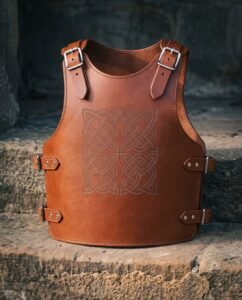 Knotwold Hand Made Tan Leather Medieval Cuirass | Celtic Knotwork Chest Panel | Buckled Shoulders and Side Straps | Larp Costume Gift | RK-1432
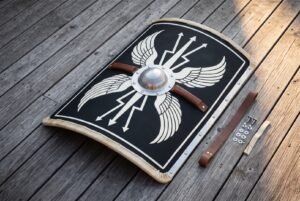 Legionwall Hand Made Curved Roman Scutum Shield | 37 Inch Tall | Steel Boss, Painted Wings and Rawhide Edge with Fitting Kit | Legionary Reenactment Gift | RK-1456
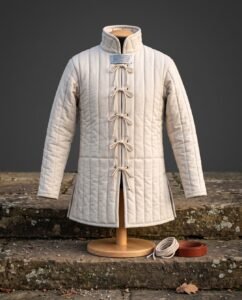 Palewarden Hand Made Linen Gambeson | Natural Undyed Cloth Over Wool | Channel Quilted Body, Tall Standing Collar and Cord Loop Lacing | Viking Gift | RK-1475