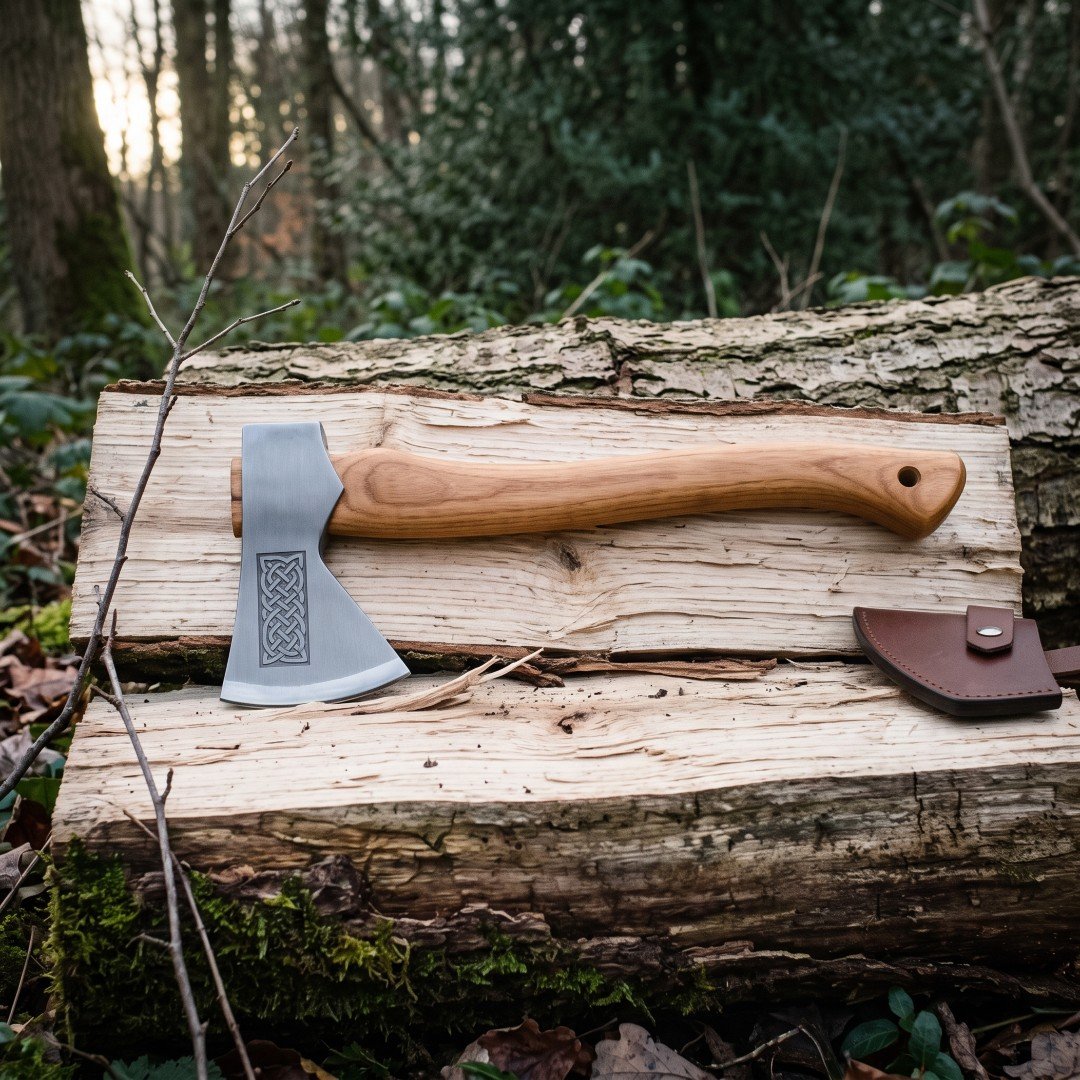
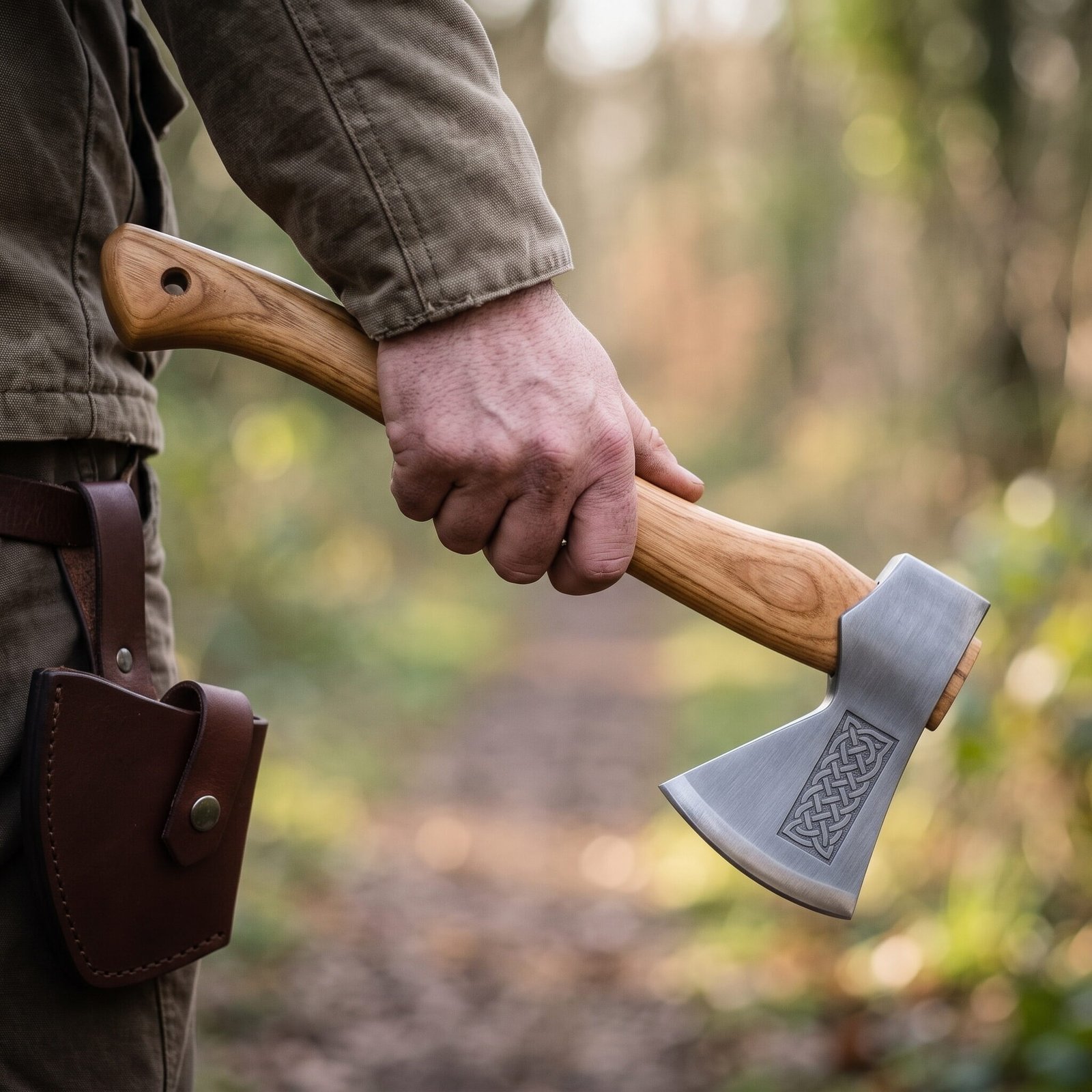
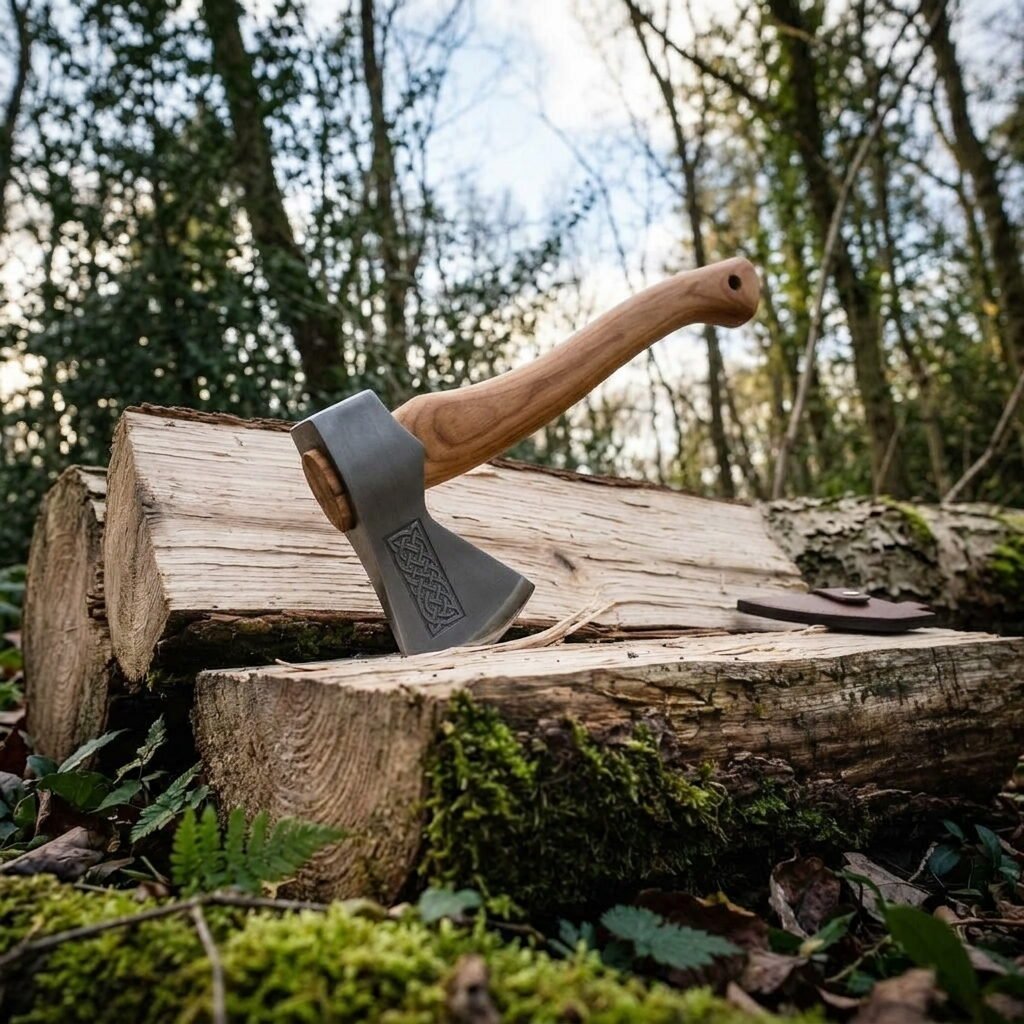
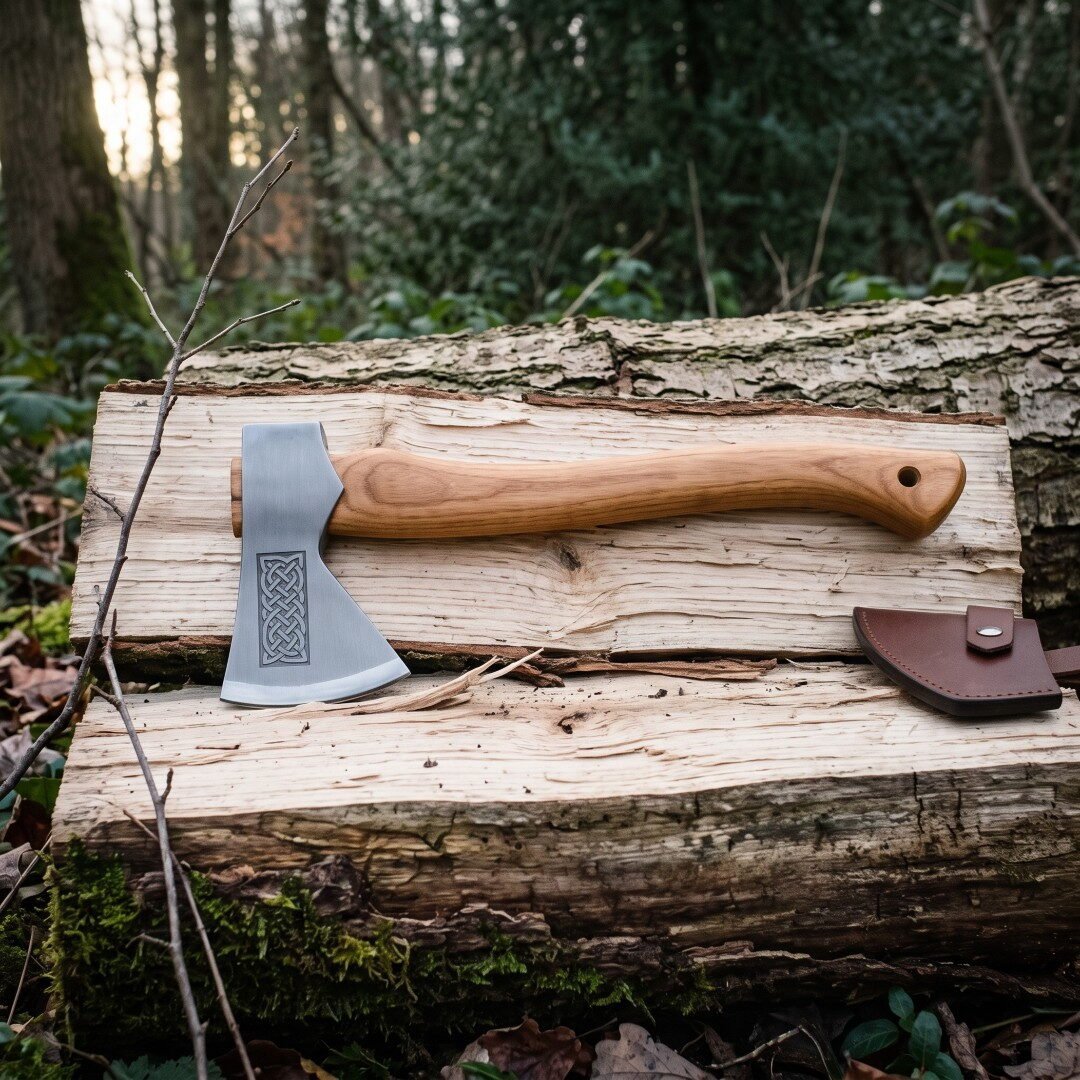
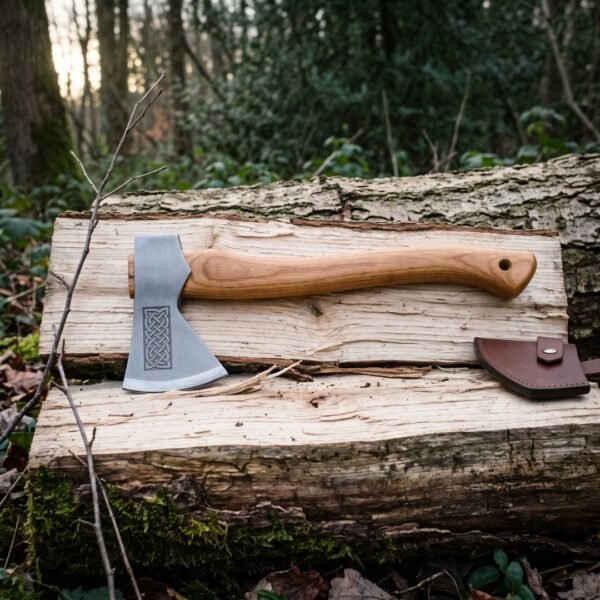
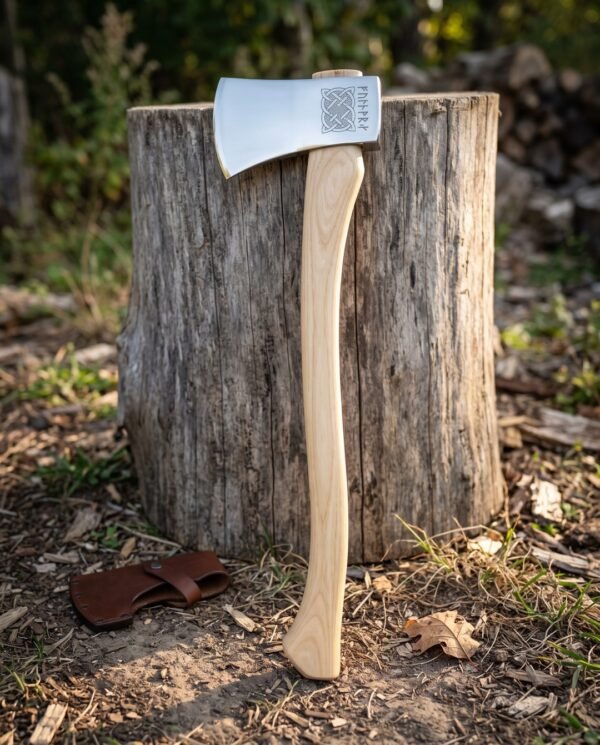
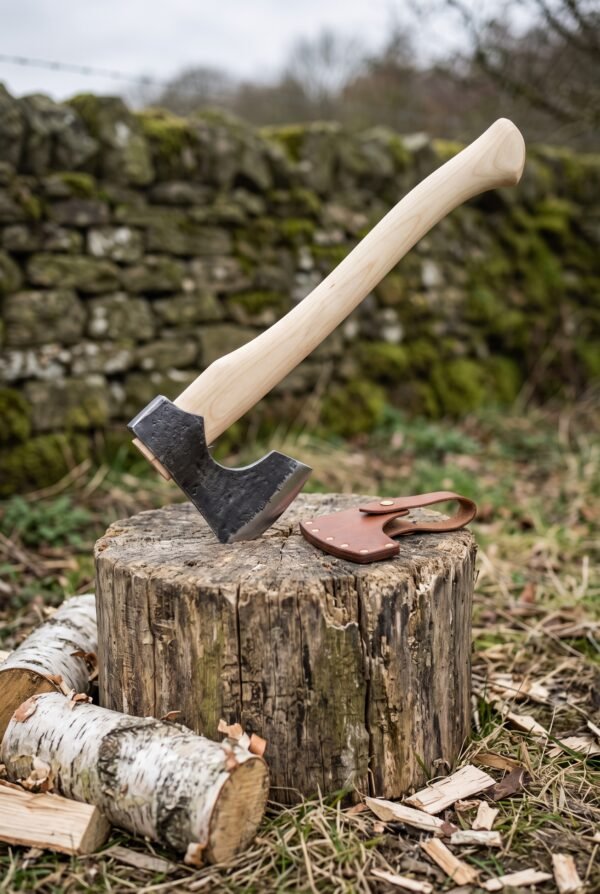
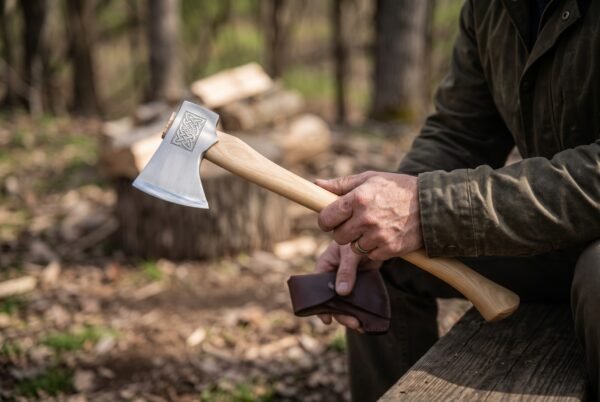
The Birchbite is a Viking hand axe built for one hand and for real work, with a wide flaring edge and a curved hickory handle that swells at the heel so it will not slide out of a cold grip. The head is hand forged from 1095 carbon steel and hardened to 54 to 58 HRC, which is soft enough that the edge takes a shock without chipping and hard enough to hold a shaving edge through an afternoon of limbing and splitting kindling. The cheek carries an etched Celtic knotwork panel. That pattern is an acid etch cut into the surface of a single piece of 1095, not a Damascus billet, and we say so plainly because the two are often sold as though they were the same thing.
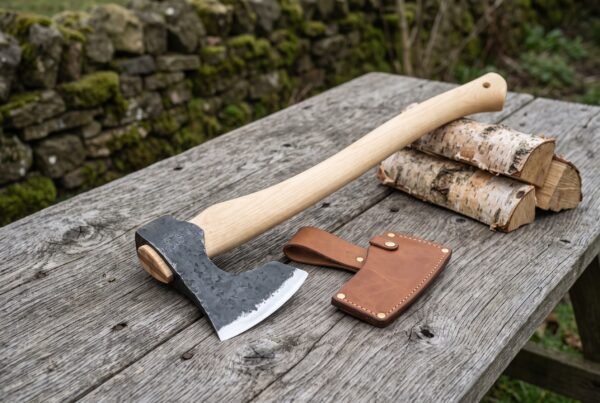
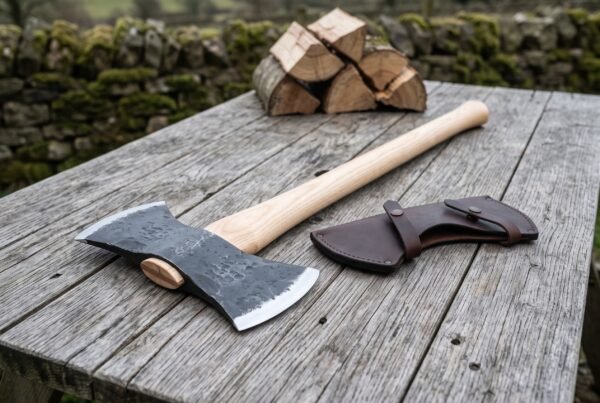
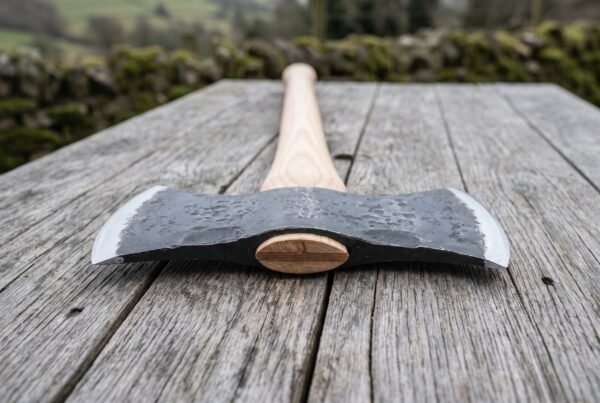
The head is short and light, with a straight top line and the edge flaring down into a short beard below the eye. Choke up and grip the haft just behind the head and it carves under close control, which is how a Norse woodworker used a small axe. Every Birchbite is forged, ground, heat treated and finished in a Czech Republic workshop, and it ships with the fitted leather blade mask shown in the photograph. Head weight, haft length and what each shape is for are set out in how to choose a Viking axe.
Specifications
| Head material | Hand forged 1095 high carbon steel |
|---|
| Hardness | 54 to 58 HRC |
|---|
| Finish | Satin grey head with a bright edge bevel |
|---|
| Head style | Single bit Viking hand axe, straight top line with the edge flaring down into a short beard |
|---|
| Cutting edge | Approximately 4 inches of usable edge |
|---|
| Overall length | Approximately 14 inches |
|---|
| Handle | American hickory, curved haft with a swelled heel and a drilled lanyard hole, oil finished |
|---|
| Hanging | Wedged through the eye, wooden wedge with a steel cross wedge |
|---|
| Decoration | Etched Celtic knotwork panel on the cheek, surface etch not pattern welded steel |
|---|
| Mask | Fitted brown vegetable tanned leather blade mask with a stud closure, included |
|---|
| SKU | RK-1490 |
|---|
How a short flared head cuts
The edge on this head flares down into a beard, wider than the eye it hangs from, so a light axe still gets a useful length of cutting edge. A longer edge on a light head means the axe slices rather than wedges, which matters when you are taking a limb off green wood or shaping a tent stake rather than trying to bury a splitting head in a round of oak.
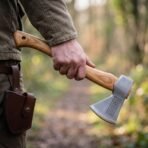
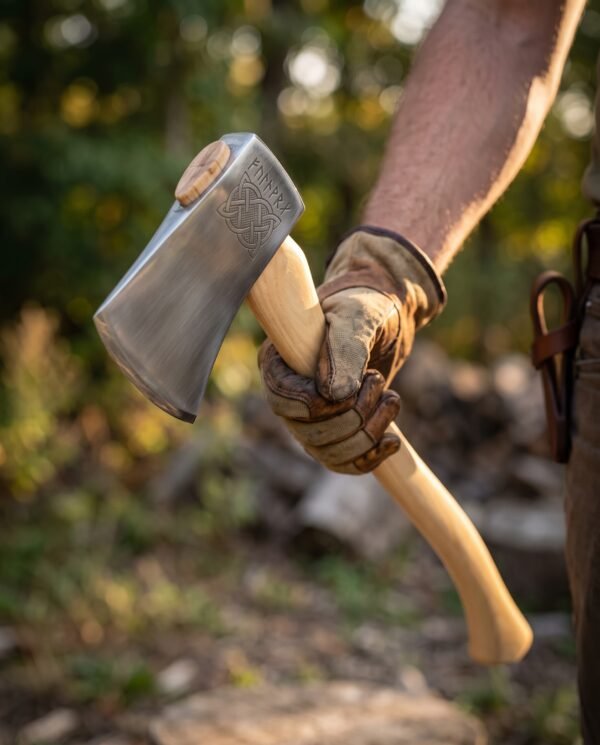
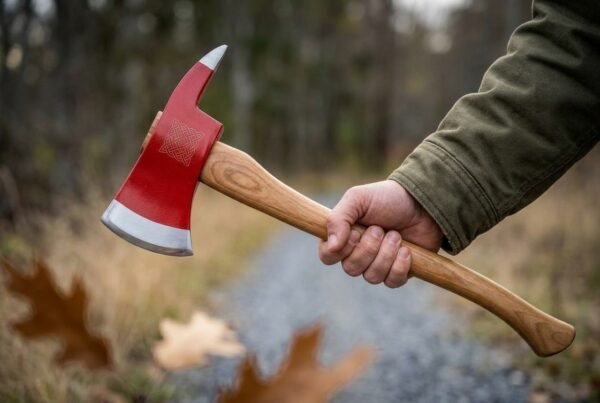
The short head also suits a choke grip. Slide your hand up the haft until your fingers sit just behind the head and your thumb rides the top of the handle, and you are holding a heavy carving knife with a very short lever. Norse carpenters worked bowls, spoons, mast steps and clinker planking with exactly this grip. Because all that force lands on a short edge, we keep the heat treat under 58 HRC. A harder edge would hold longer in clean pine and then chip out the first time it hit a knot or a nail buried in a fence post.
The head is hung the traditional way rather than glued. The eye is drifted to a slight taper so the handle is drawn tight as it is driven home, then a wooden wedge fills the kerf and a steel cross wedge locks it. That means the hang can be maintained. If the handle ever dries out and loosens after a few seasons in a hot truck, you can drive the wedges a little further or rehang it, which you cannot do with an epoxied head.
The steel and the handle
1095 is a simple high carbon steel with roughly one percent carbon and very little else. It is not stainless, it is not alloyed for corrosion resistance, and that is the point. It sharpens quickly on a coarse stone in the field, it takes a fine edge without a diamond plate, and it gives clear feedback when you are cutting. At 54 to 58 HRC on an axe head we are deliberately below where we would run a knife, because an axe edge is a chisel that gets hit. Toughness is worth more than the last two points of hardness.
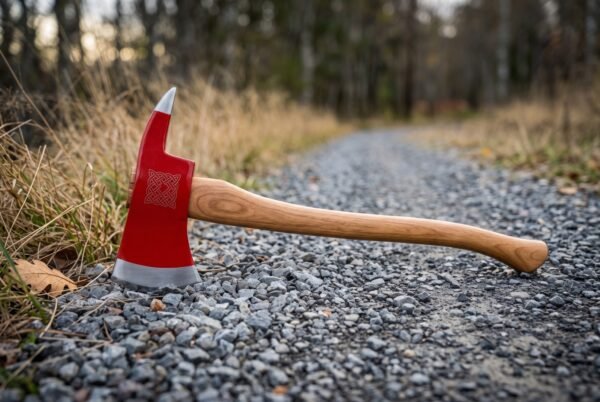
The etched knotwork panel is applied after heat treat with an acid resist. It sits a few thousandths below the surface of the steel, so it will not wear off with handling, but it will darken over time as the surrounding steel patinas. Some owners like that and leave it. Others take a light pass with a scouring pad now and again to keep the contrast bright. Both are correct.
The handle is American hickory, chosen for straight grain running with the length of the haft rather than across it, because a cross grained haft is the one that snaps on an overstrike. It is finished with oil rather than lacquer. Lacquer looks glossy on a shelf and then blisters into hot spots on your palm after twenty minutes of work. Oil goes dull, feels better, and can be topped up with anything from boiled linseed to plain mineral oil.
Engraving, runes and your own design
Use the rune converter on this page to turn a name, a date or a short phrase into Elder Futhark and we will cut it into the steel or the leather. If you would rather have a Viking pattern than a rune line, choose your own design in the engraving option above the add to cart button and tell us where it goes. Where a piece already carries an engraved design, your chosen engraving replaces it rather than sitting alongside it. On the Birchbite that means a rune line on the cheek takes the place of the Celtic knotwork panel, or you can ask for the runes on the leather mask and keep the knotwork on the steel. Full detail is on the engraving page.
Carrying and storing it
The leather mask is a friction fit over the edge with a stud closure. It is there to protect the edge and to protect whatever is in the pack next to it, not to hang the axe from a belt while you are moving through brush. If you want a belt carry, thread a belt through the back of the mask before you close it rather than clipping the axe by the handle, which is how heads get dropped on trails.
For display, the head sits flat on a shelf on its cheek or hangs from a peg through the eye. Do not hang it by the leather for long periods in a damp room, because leather holds moisture against steel and that is where rust starts.
Care
Wipe the head dry after every use and put a film of oil on it before it goes away. Any light oil works, from a dedicated blade oil to camellia oil to plain 3 in 1. Sap is the other enemy. Green pine and fir will glue resin to the cheeks, and the easiest removal is a rag with a little mineral spirits, then re oil. Sharpen with a file for a damaged edge, then a coarse and a fine stone, holding the existing convex bevel rather than trying to grind a flat one onto it. Feed the leather mask two or three times a year with a neutral cream or a dab of beeswax. Everything we would tell you about keeping a carbon blade alive is on our steel care page. Sharpening starts with a file, and how to sharpen an axe takes it through to the strop.
Made in the Czech Republic
This piece is made by hand in the Czech Republic, in a workshop that still works the old way. The steel is forged, ground, heat treated and finished by smiths who learned the trade from the people before them, and the wood, horn and leather are cut and fitted by hand rather than pressed out on a line. That is also why no two pieces come out exactly the same.
Ransack Viking is a United States company. We import these pieces ourselves, check every one when it lands and ship from our warehouse in Chicago, Illinois. Engraving is done here in the United States after the piece arrives, so your runes or your own design go on before it leaves for you.
A note on handmade variation
This axe is hand made, not machine made or bulk produced, so what arrives will not be a pixel for pixel copy of the photograph. The grain of the hickory, the tone of the oil finish, the fine hammer texture on the cheeks and the exact sweep of the edge vary from one head to the next, because each one is worked by hand from natural materials. The dimensions, the material and the build are the same every time. The character is not.
Frequently asked questions
Is this a working axe or a display piece
It is a working axe. The head is 1095 at 54 to 58 HRC, hung on a wedged hickory haft, and it will limb, carve and split kindling all day. It is a hand axe rather than a felling axe, so it is not the tool for dropping a mature tree.
Does it arrive sharp
Yes. It leaves the shop shaving sharp along the full edge. Treat it as you would a knife when you unpack it and when you pass it to someone else.
Is the pattern on the cheek Damascus
No. It is an acid etched Celtic knotwork panel cut into the surface of a single piece of 1095. It is not pattern welded steel and we do not price it as though it were.
Is the leather mask included
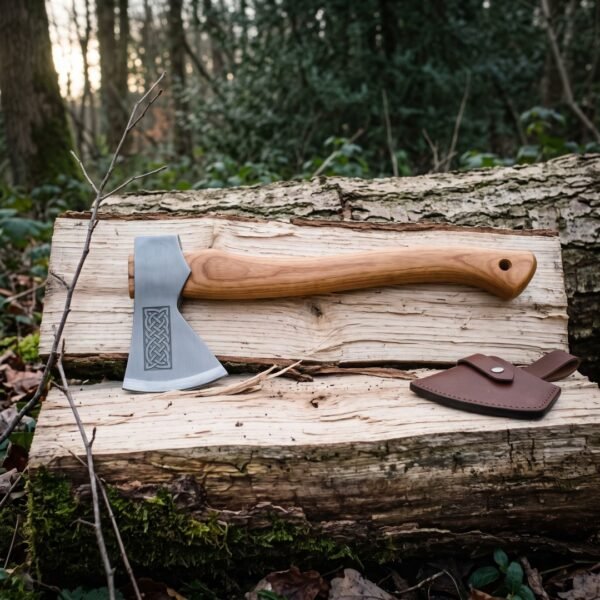
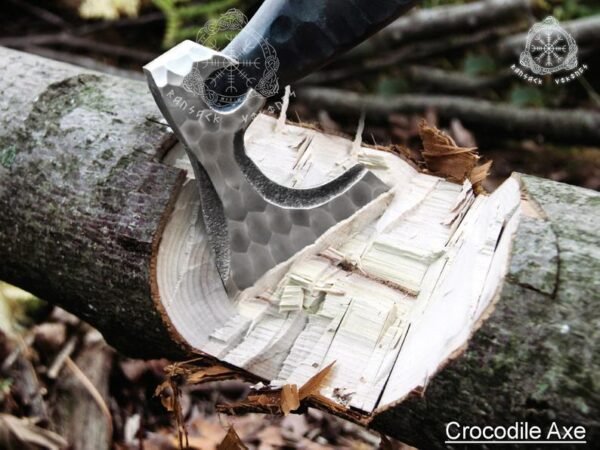
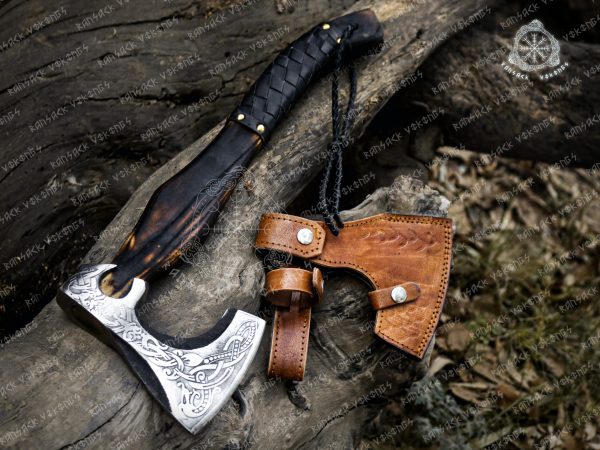
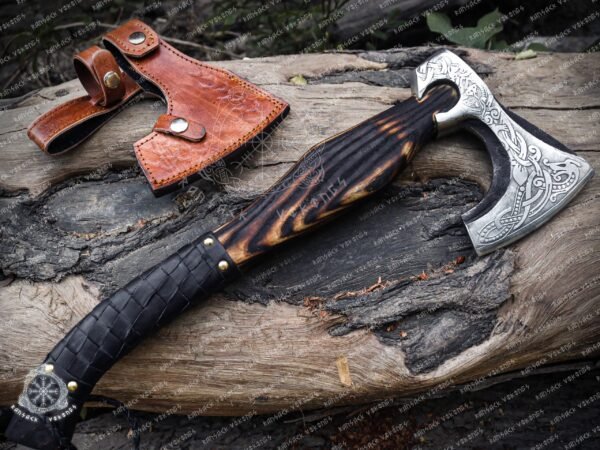
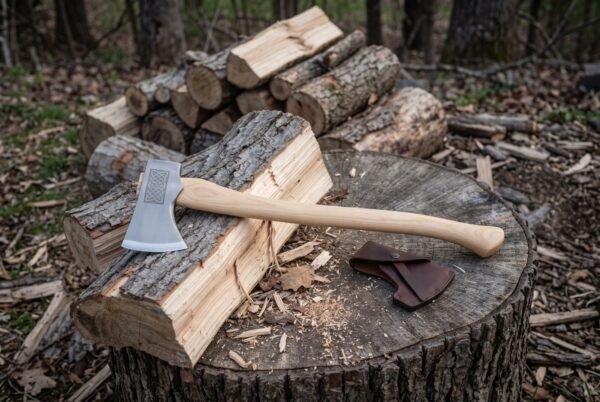
Yes. The fitted vegetable tanned mask in the photograph ships with the axe. The log, the branch and the woodland are photography setting and are not included.
Can I get runes on it as a gift
Yes. Use the rune converter on this page for an Elder Futhark line and tell us whether you want it on the cheek or on the leather. A name and a date is the most common request.
How long before it ships
Processing is one to two weeks because each head is forged and hung to order, then shipping is free within the United States. Engraved orders sit at the top end of that window.
What is in the box
- One Birchbite Viking hand axe, 1095 carbon steel head on a hickory haft
- One fitted vegetable tanned leather blade mask
- Care card with oiling and sharpening notes
- Lifetime warranty against defects in forging, grind, heat treat and fittings
- Forged and finished in the Czech Republic
Explore the range
See more in splitting and felling axes, Viking axes and battle axes, or read the guides before you choose a head weight.
Close to this one
In the same category sits the Barkbiter felling axe, forged from 1095. A near match for this one is the Twinbite felling axe, pattern welded Damascus. Closest to this in the range is the Timberrune felling axe, forged from 1095.
Fitting out further, the Hallwarden Dane axe belongs with it. Nothing here exactly right, build one to your own spec on the custom Viking axe page.




Been eyeing this axe for months and it did not disappoint. Fit and finish is museum quality. You can tell real craftsmen made this by hand. Couldn’t be happier with this.
Middle of the road experience with this one. It’s Czech made and US shipped. Packaging was just okay though. Handle material felt a bit different than pictured. Blade edge needed some sharpening out of the box. Not bad, not amazing either.
This is exactly what I wanted and then some. Fit and finish is museum quality. You can tell real craftsmen made this by hand. If you’re on the fence just get it. You won’t regret it.
Feels way more premium than the price suggests. 10/10 would buy again.
Got this as a gift and now I want one for myself too. Even the small engravings are crisp and clean. Will definitely order again for another gift.