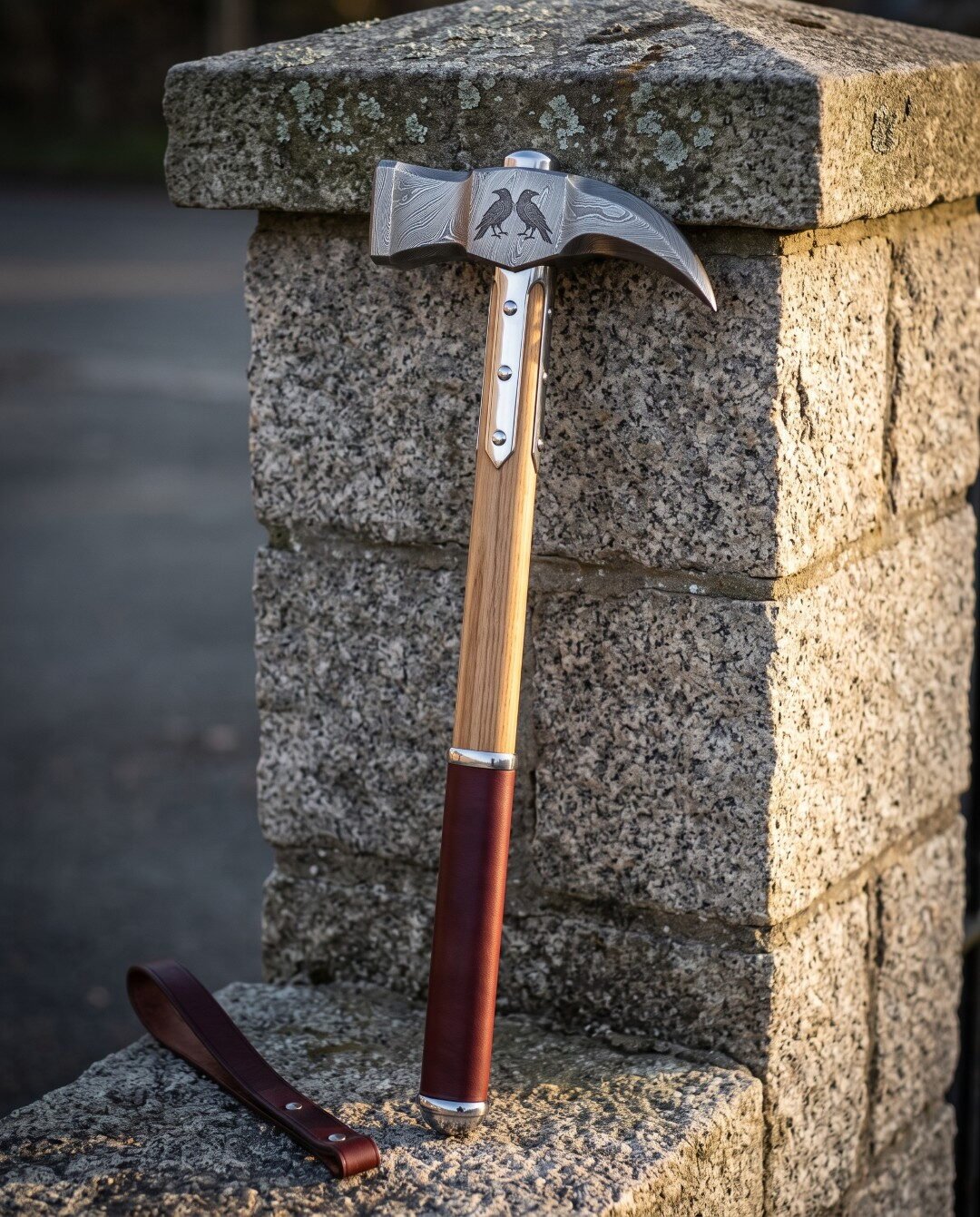
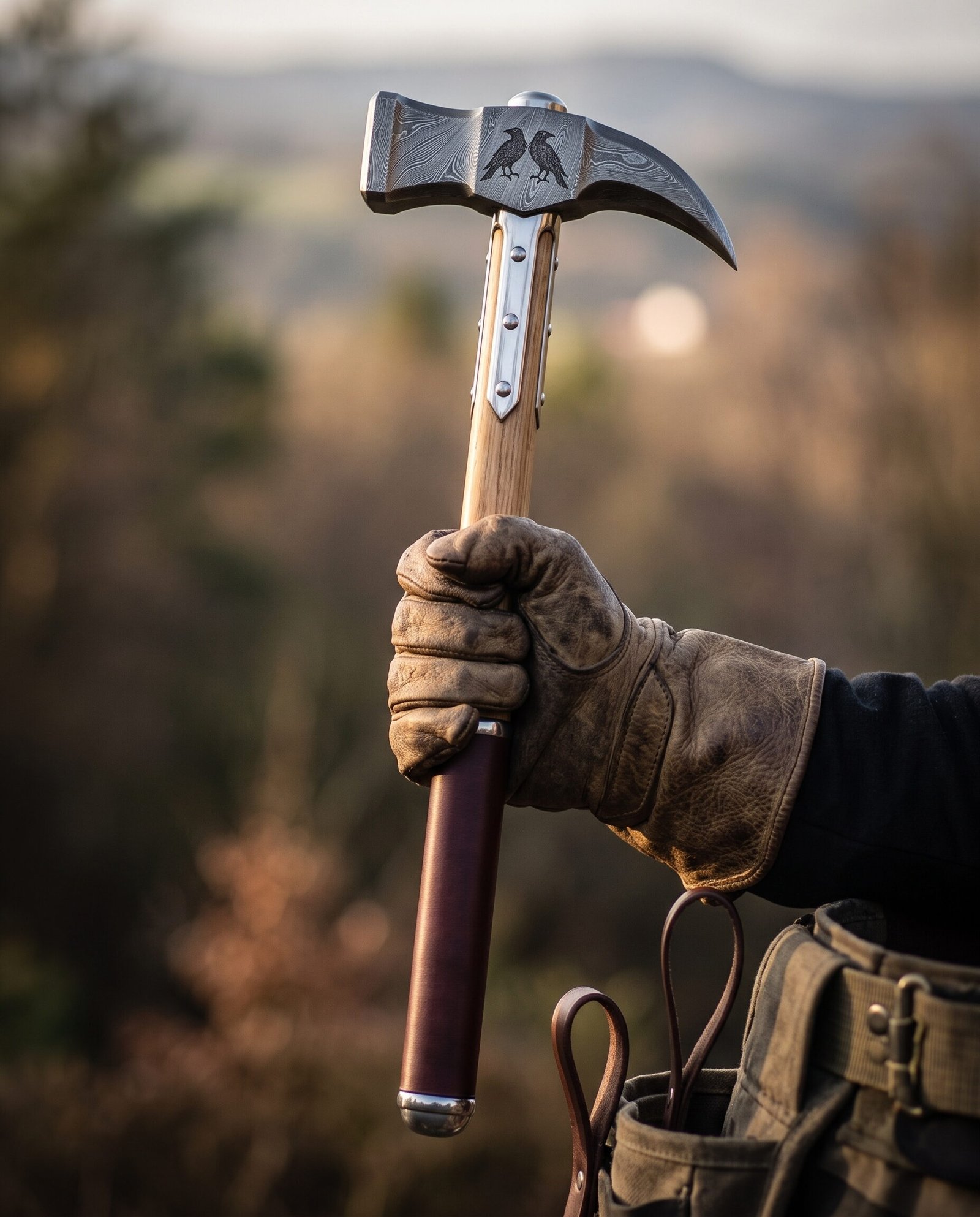
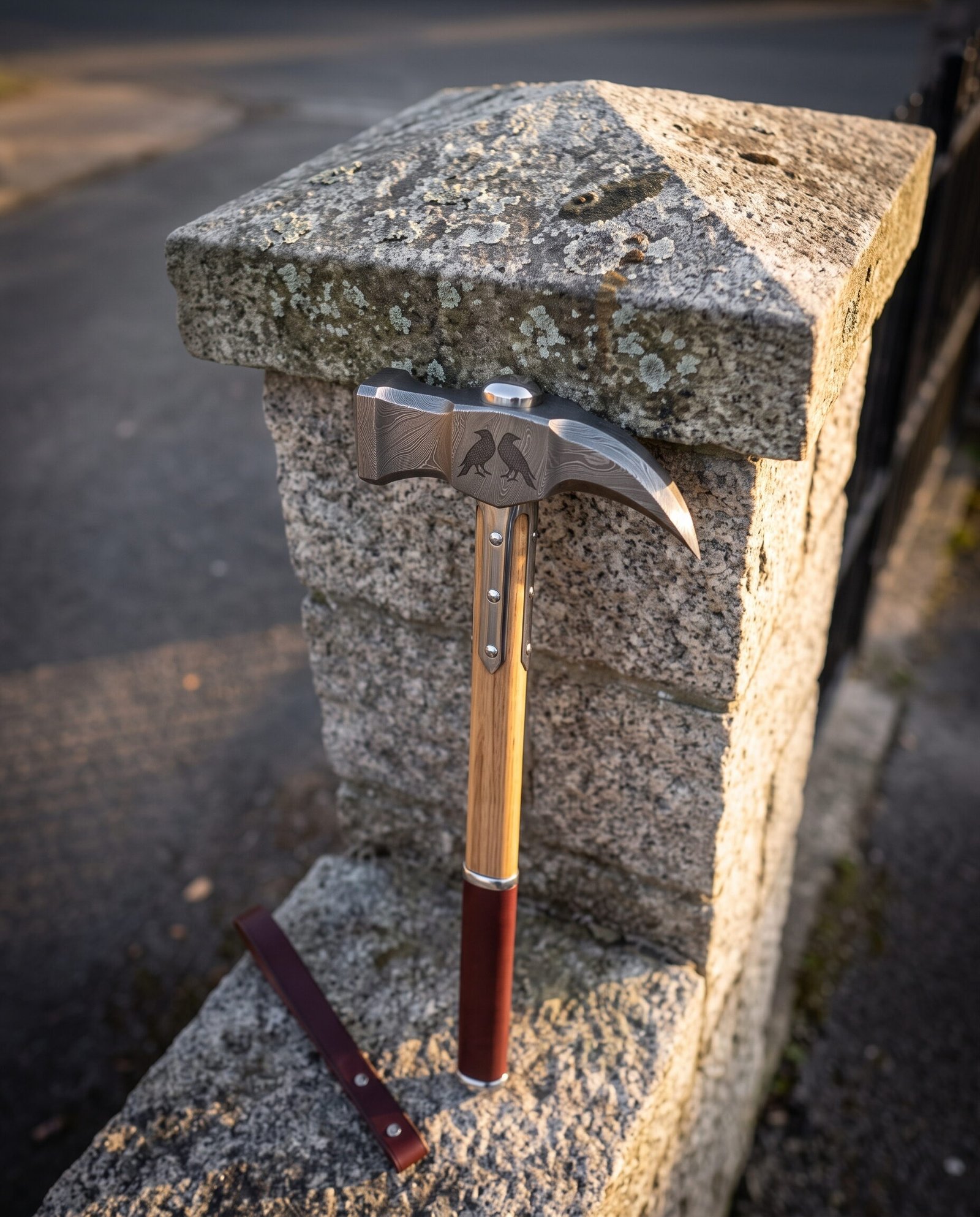
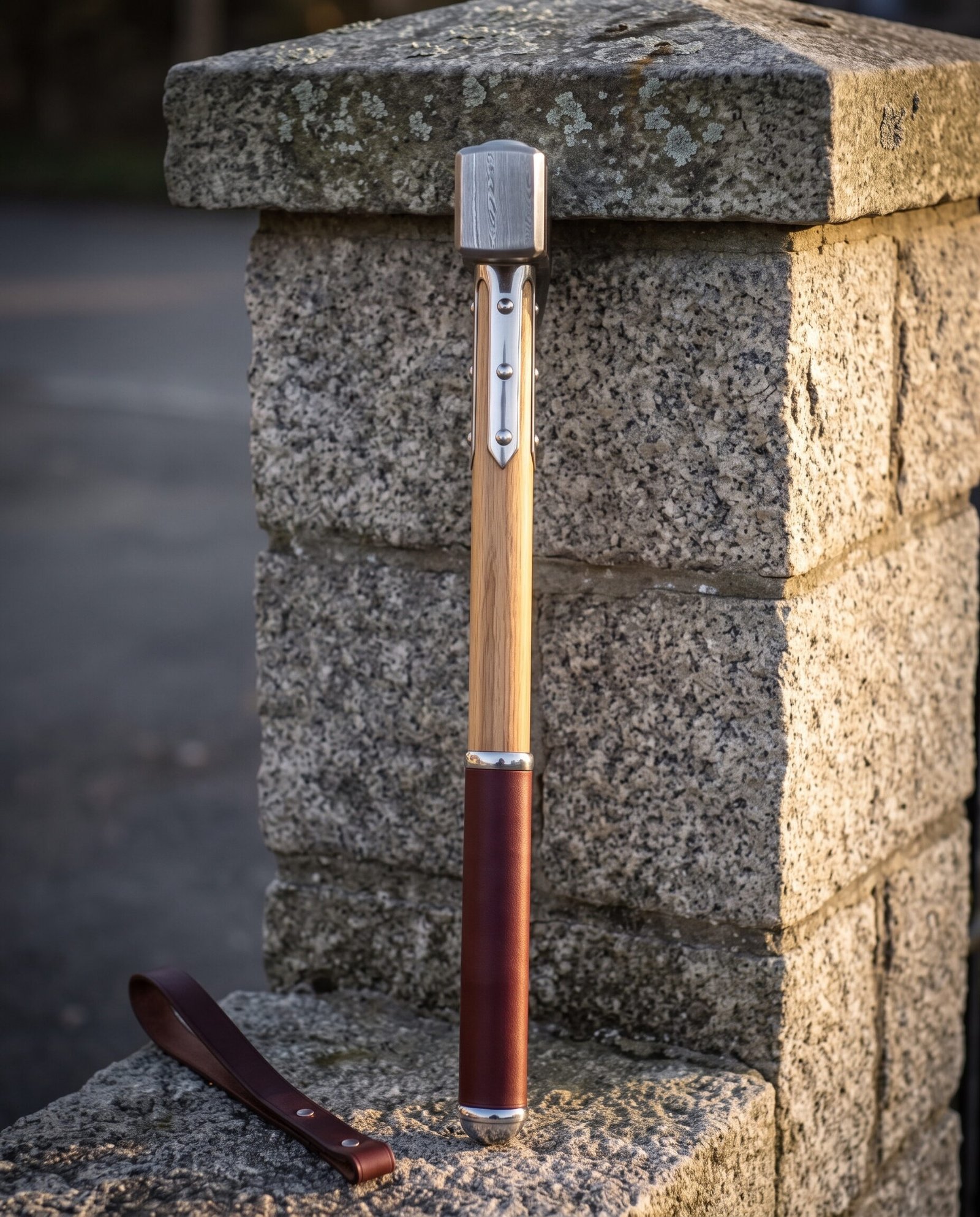
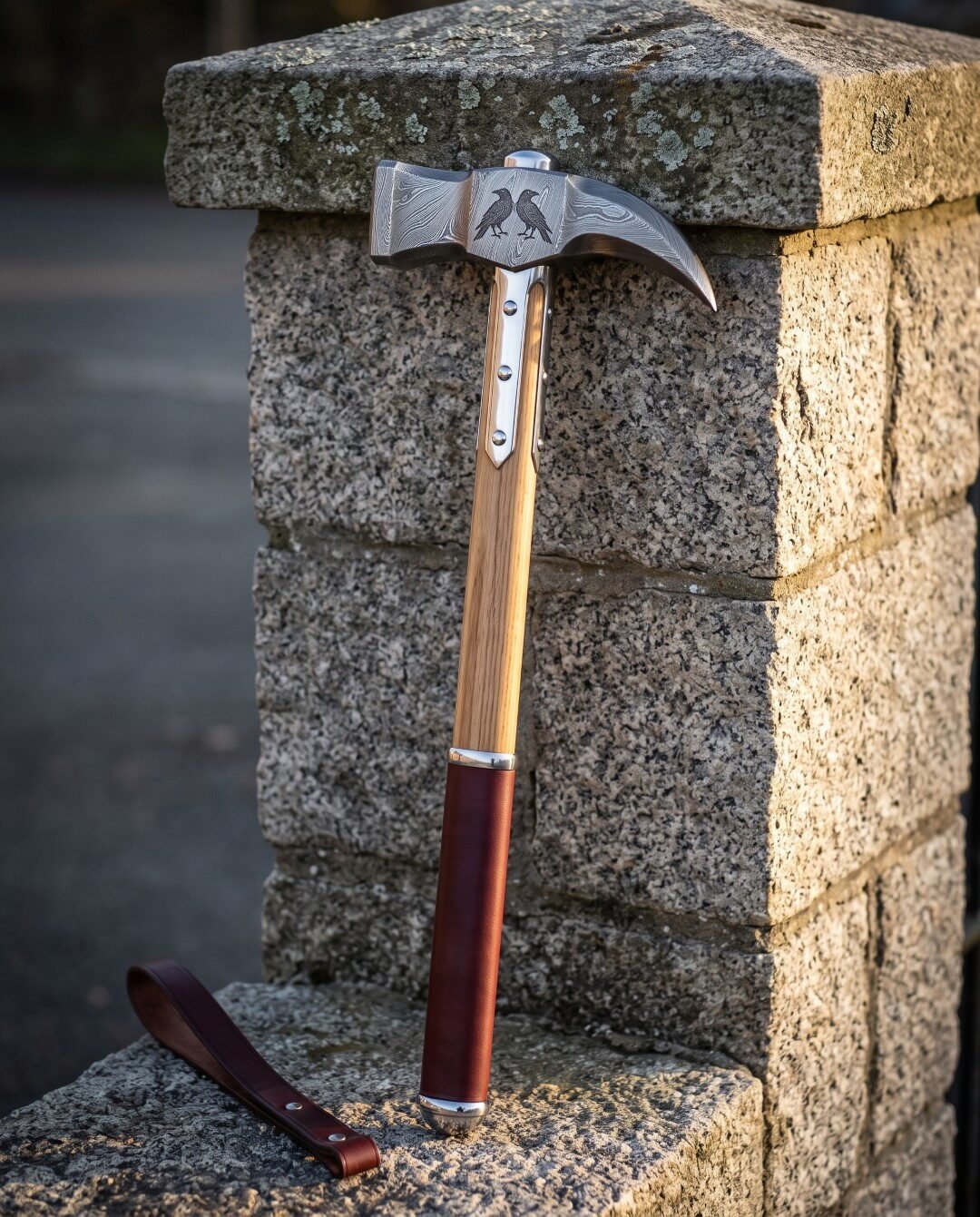
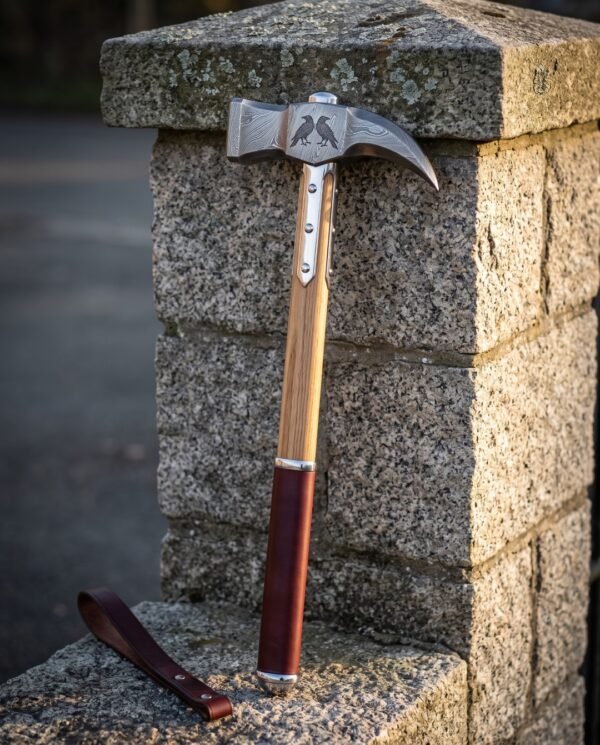
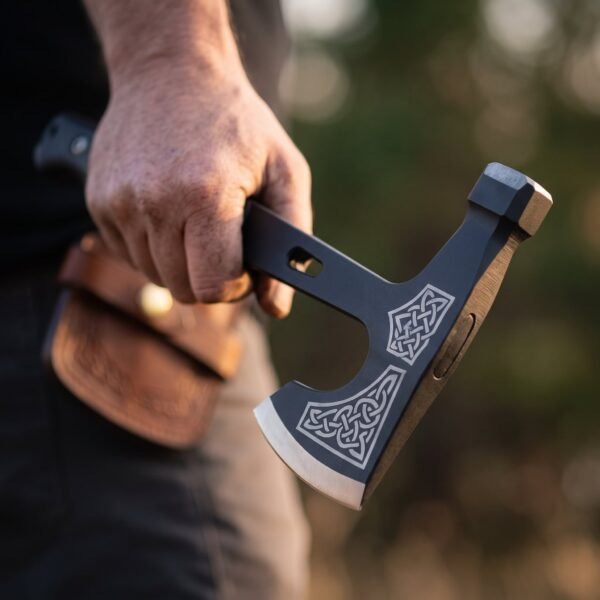
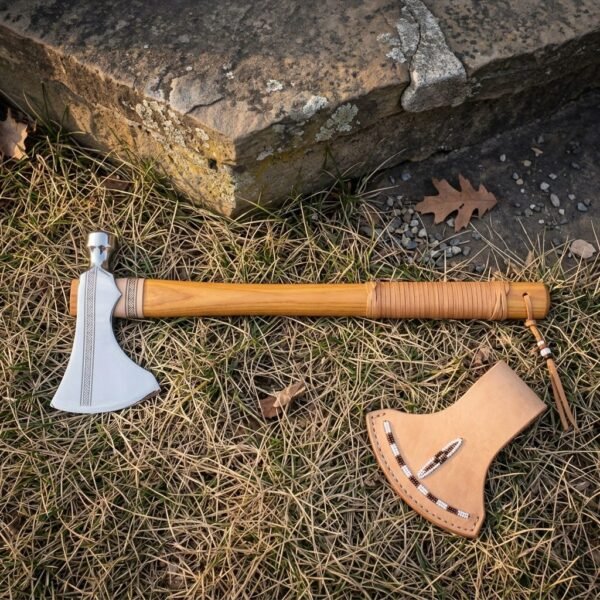
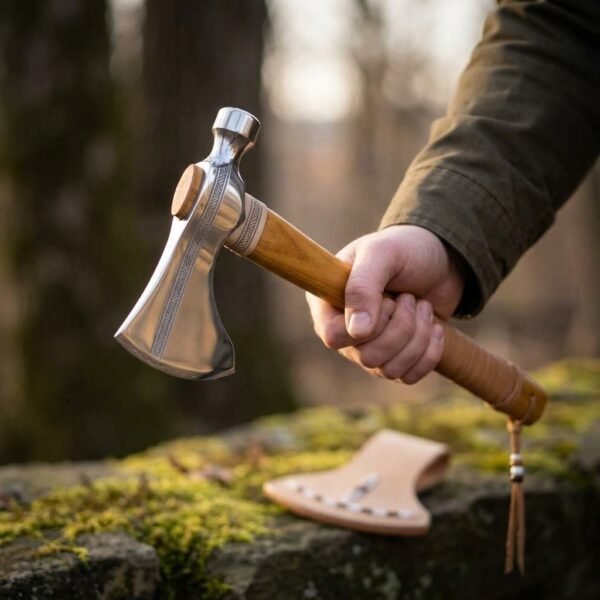
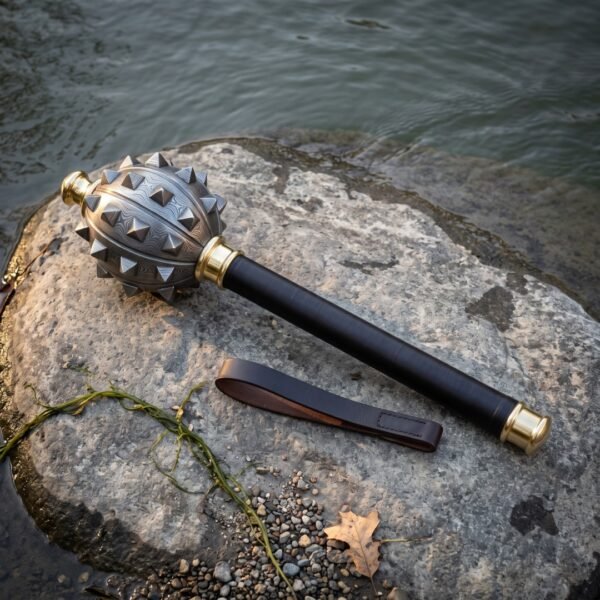
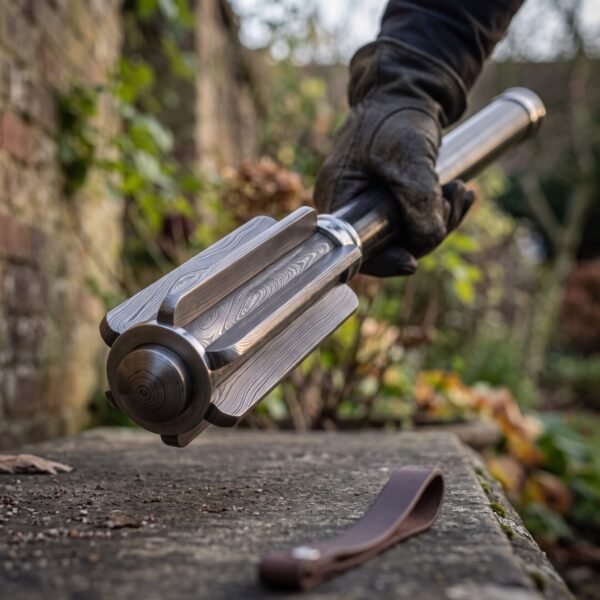
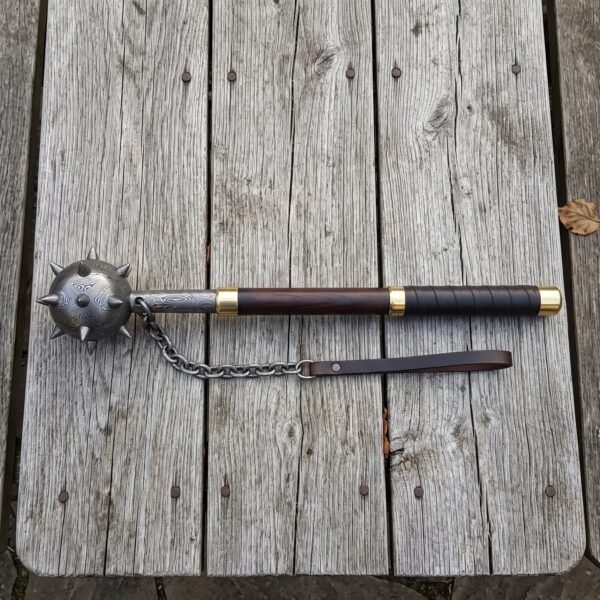
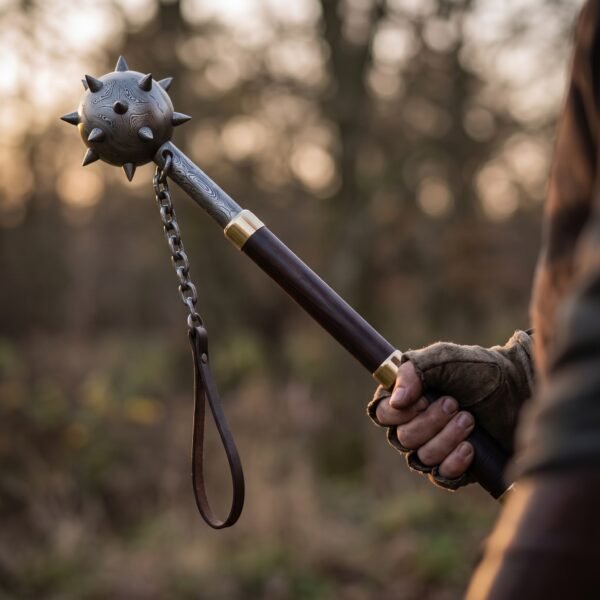
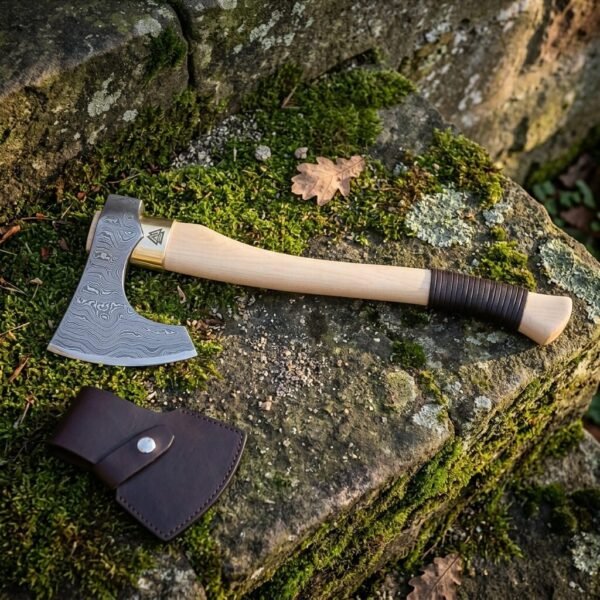
A war hammer with a forge welded Damascus head: a squared striking face on one side, a long down curved fluke on the other, and a pair of ravens set into the cheek between them. The head is fitted to a straight ash haft with steel langets running down from the eye, the lower third of the haft is wrapped in oxblood leather, and the butt is capped in steel.
The war hammer exists because armour got too good. Through the fourteenth and fifteenth centuries the cutting sword lost the argument with plate: a good breastplate simply does not care about an edge, and a man in a full harness can stand in front of a swordsman more or less indefinitely. The answer was to stop trying to cut and start transferring shock. A hammer face concentrates the whole weight of a swing into a couple of square inches and delivers it through the plate into whatever is behind it, and the fluke on the reverse concentrates it further into a point that can bite, punch through a thinner plate, or hook a rim and pull a man off balance. It is a brutally efficient answer to a specific problem. This one is forged, welded, ground, etched and hafted in the Czech Republic. What blunt arms actually did to armour is set out in war hammer and mace.
Specifications
| Head steel | Forge welded 1095 and 15N20 Damascus, acid etched to bring up the pattern |
|---|
| Hardness | 58 to 60 HRC |
|---|
| Head | Squared striking face on one side, long down curved fluke on the other, steel cap over the eye |
|---|
| Head weight | Approximately 2 lb |
|---|
| Overall length | Approximately 18 inches |
|---|
| Total weight | Approximately 3 lb 8 oz |
|---|
| Haft | Straight grain ash with riveted steel langets running down from the eye |
|---|
| Grip | Oxblood leather wrap over the lower third of the haft, steel collar above it |
|---|
| Butt | Steel butt cap |
|---|
| Decoration | Pair of ravens etched into the cheek of the head |
|---|
| SKU | RK-1563 |
|---|
The face, the fluke and the langets
Three details on this head are worth understanding because each one solves a real problem.
The face is squared rather than domed. A domed face glances off a curved breastplate; a flat face with defined corners bites and stays put long enough to deliver the whole swing. That is the difference between a blow that rings off and one that does damage through the plate.
The fluke curves downward rather than standing straight out. A straight spike buries itself and stays buried, and a hammer stuck in an opponent is a hammer you no longer have. A curved fluke enters, transfers its energy, and the curve levers it back out on the follow through. It also gives you a hook, which was used to catch a shield rim, a helmet edge or a rein and pull.
The langets are the steel straps running from the eye down the haft. They are there because the obvious way to defeat a hafted head is to cut the haft, and a wooden shaft under a sword edge is not a fair fight. Steel down both sides means the cut lands on metal. They also brace the head against the shaft so the eye is not doing all the work every time the hammer lands.
Damascus steel, hardness and honest use
The head is genuine pattern welded Damascus, not an etched imitation of one. It is forge welded from alternating layers of 1095 and 15N20, drawn out, folded and welded again, then shaped and finally etched in acid. The two steels have different nickel content, so the acid bites them at different rates and the layer structure appears as the flowing light and dark pattern you can see. That pattern goes all the way through the steel. Grind the head down and you would still find it. This matters because the market is full of pieces with a printed or surface etched pattern pretending to be Damascus, and those are a very different thing. The ravens on the cheek, by contrast, are a surface etch laid over the Damascus, and we would rather say that than let you assume they are inlaid.
The head is hardened to 58 to 60 HRC, which is knife hardness, and that carries a specific consequence you need to hear. This is a display and light reenactment piece. It is not a work hammer. Do not strike steel with it, do not drive nails or stakes with it, and do not use it on stone or concrete, because a head at that hardness can chip rather than deform. It looks magnificent, it handles beautifully, and it is not the tool for hitting hard things.
Engraving, runes and your own design
Use the rune converter on this page to turn a name, a date or a short phrase into Elder Futhark and we will cut it into the steel or the leather. If you would rather have a Viking pattern than a rune line, choose your own design in the engraving option above the add to cart button and tell us where it goes. Where a piece already carries an engraved design, your chosen engraving replaces it rather than sitting alongside it. On this hammer that means the ravens on the cheek give way to your mark, or we can set your line into the leather grip and leave the ravens where they are. See the engraving page.
Display, mounting and handling
On a wall this hangs best from two pegs supporting the head with the haft dropping free, which keeps all the weight off the leather grip. If you prefer it horizontal, support it at the head and at the butt cap rather than in the middle of the haft. Keep it out of direct sun, which fades leather and dries ash.
In the hand it balances forward, as a hammer should, which is why it feels heavier than three and a half pounds when you swing it and lighter than that when you carry it. If you are handling it at an event, be aware of the fluke behind you on the backswing. It is a point on the end of a lever and it does not need much speed to do harm.
Care
Damascus needs more attention than plain steel, because the acid etch that reveals the pattern also leaves a surface that takes a fingerprint readily and will spot if it is left. Wipe the head down after every handling and keep a thin film of light machine oil or a metal wax on it. If a spot of rust appears, take it off gently with oil and a very fine abrasive rather than a wire wheel, which will flatten the etch and mute the pattern. Do not put the head anywhere humid without oil, and never store it in a sealed bag. Feed the leather grip twice a year with a neutral conditioner and oil the ash haft annually with boiled linseed oil. Full details are on the steel care page. Etched steel wants its own routine, which is on the Damascus care page.
Made in the Czech Republic
Every piece we sell is made by hand in the Czech Republic. The smiths there work the way the trade has been worked for a long time, heating and hammering the steel, taking the bevels down by eye, and fitting the handle and the leather one at a time. There is no automated line anywhere in it, so small differences from one piece to the next are normal and expected.
Ransack Viking is a United States company based in Chicago, Illinois. We bring the pieces in ourselves, inspect them on arrival and ship them from our own warehouse. If you add engraving, that is carried out here in the United States before your order goes out.
A note on handmade variation
This hammer is hand made, not machine made or bulk produced. What arrives will not be a pixel for pixel copy of the photograph. No two Damascus billets etch the same way, so the flow and density of the pattern across your head will be genuinely different from the one shown. The ravens sit a fraction differently on the cheek, the ash varies in colour and figure from tree to tree, and the leather wrap is set by hand. The steel, the weight and the geometry are the same every time. The character is not, and with pattern welded steel that is the whole appeal.
Frequently asked questions
Is this real Damascus?
Yes. It is forge welded from 1095 and 15N20 in alternating layers and the pattern runs all the way through the steel. The ravens on the cheek are a separate surface etch laid over it, which is a different thing and we say so.
Can I use it as a work hammer?
No. At 58 to 60 HRC the head is hardened like a blade and it can chip on steel, nails or stone. It is a display and light reenactment piece. Keep a soft faced hammer for work.
Can I use it in reenactment combat?
Not in full contact. It has real mass, a hard head and a point on the fluke, and it carries no combat rating. Non contact display, drill and photography only.
Will the Damascus pattern wear off?
No, because it is not a surface treatment. The pattern is the layered structure of the steel itself. Heavy polishing can dull how it reads, which is why we say to clean rust with oil and a fine abrasive rather than a wire wheel.
What are the steel straps on the haft for?
Those are langets. Historically they stopped a sword cut from severing the shaft, and structurally they brace the head against the haft so the eye is not carrying every impact alone.
How long before it ships?
Processing is one to two weeks because the billet is welded and the head forged, etched and hafted to order. Shipping inside the United States is free and returns are accepted within seven days.
What is in the box
- One forge welded 1095 and 15N20 Damascus war hammer head
- Etched raven pair on the cheek
- Straight grain ash haft with steel langets and a steel butt cap
- Oxblood leather grip wrap
- Care and warranty card
- Forged and finished in the Czech Republic
Explore the range
See the rest of the maces and war hammers, the Norse arms, the blacksmith tools, and the guides.
Others in the same line
Worth putting side by side with this is the Ashcudgel mace, 27 inches overall. In the same category sits the Chainmaw mace, 27 inches overall. A near match for this one is the Stormlink mace, 29 inches overall.
For a different piece from the same family, look at the Skyrend Viking spear. You can have this made your way instead on the custom Norse arms page.

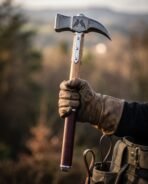
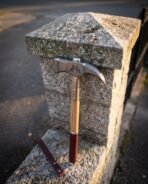
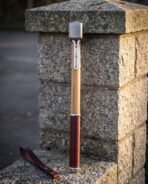
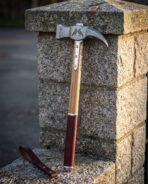
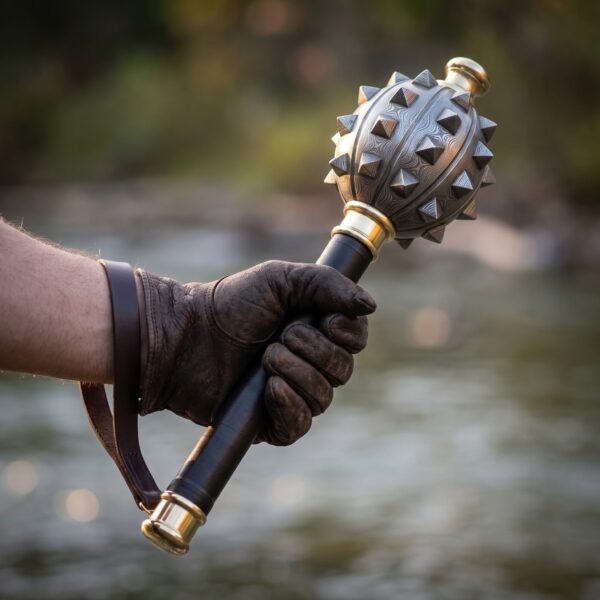
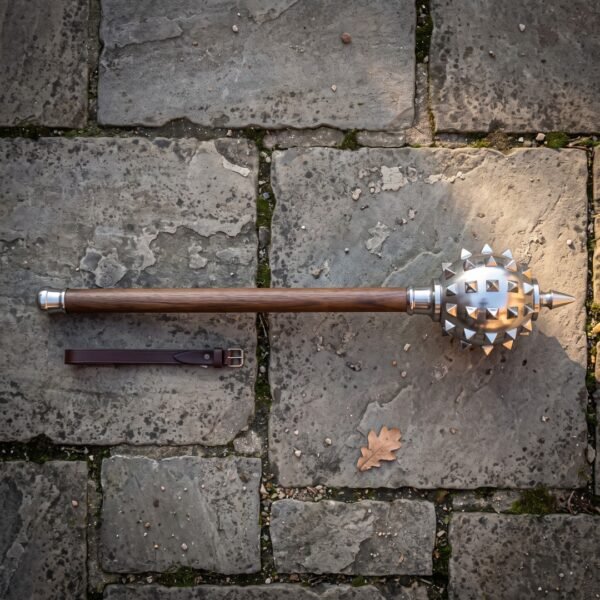
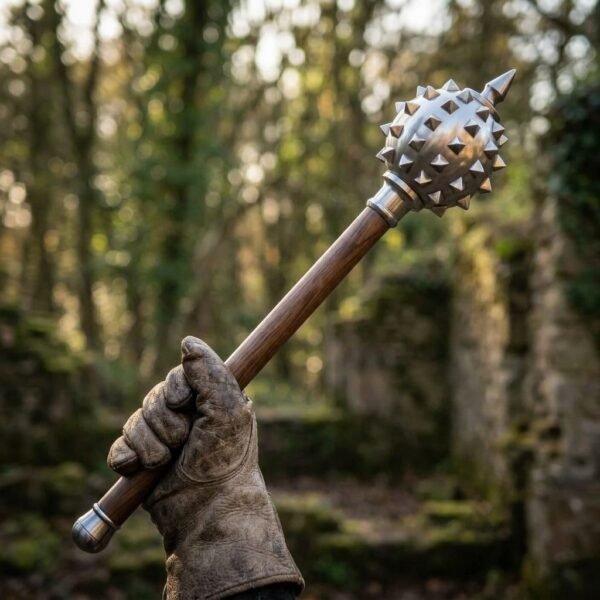
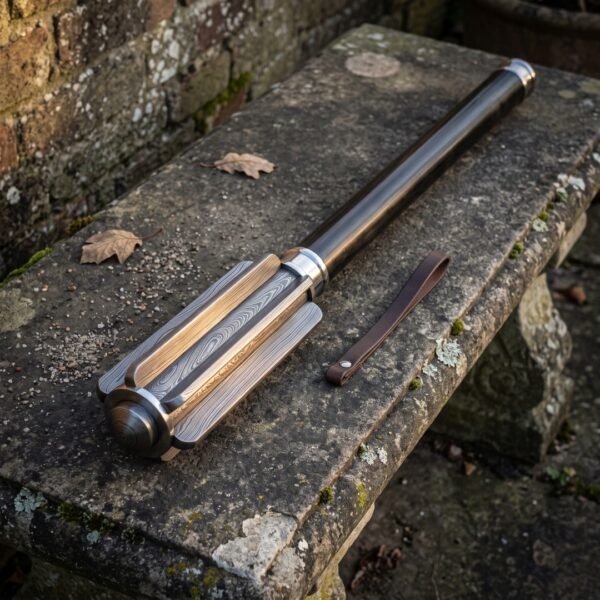
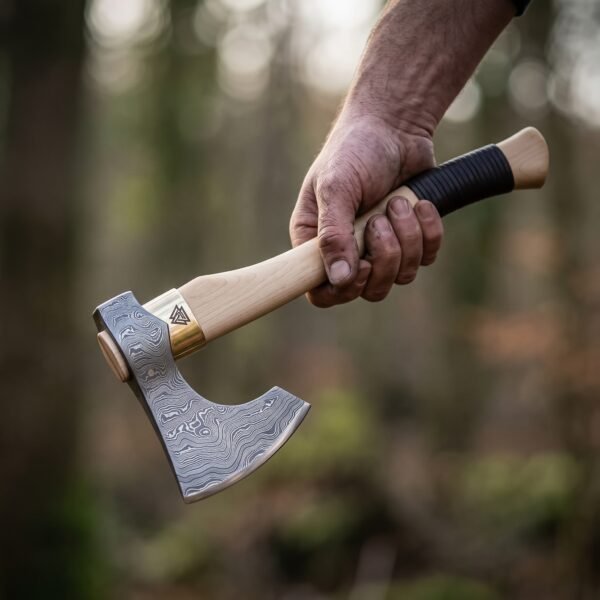
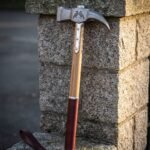
This war hammer is a genuine work of art. Haft feels sturdy and well balanced for the size of the head. Came in solid packaging and arrived in perfect condition. Steel head is heavy in a good way. You can tell it’s not hollow. Already planning my next purchase from this shop.