
Blog
The Viking Drinking Horn: History, Fittings and How to Use One

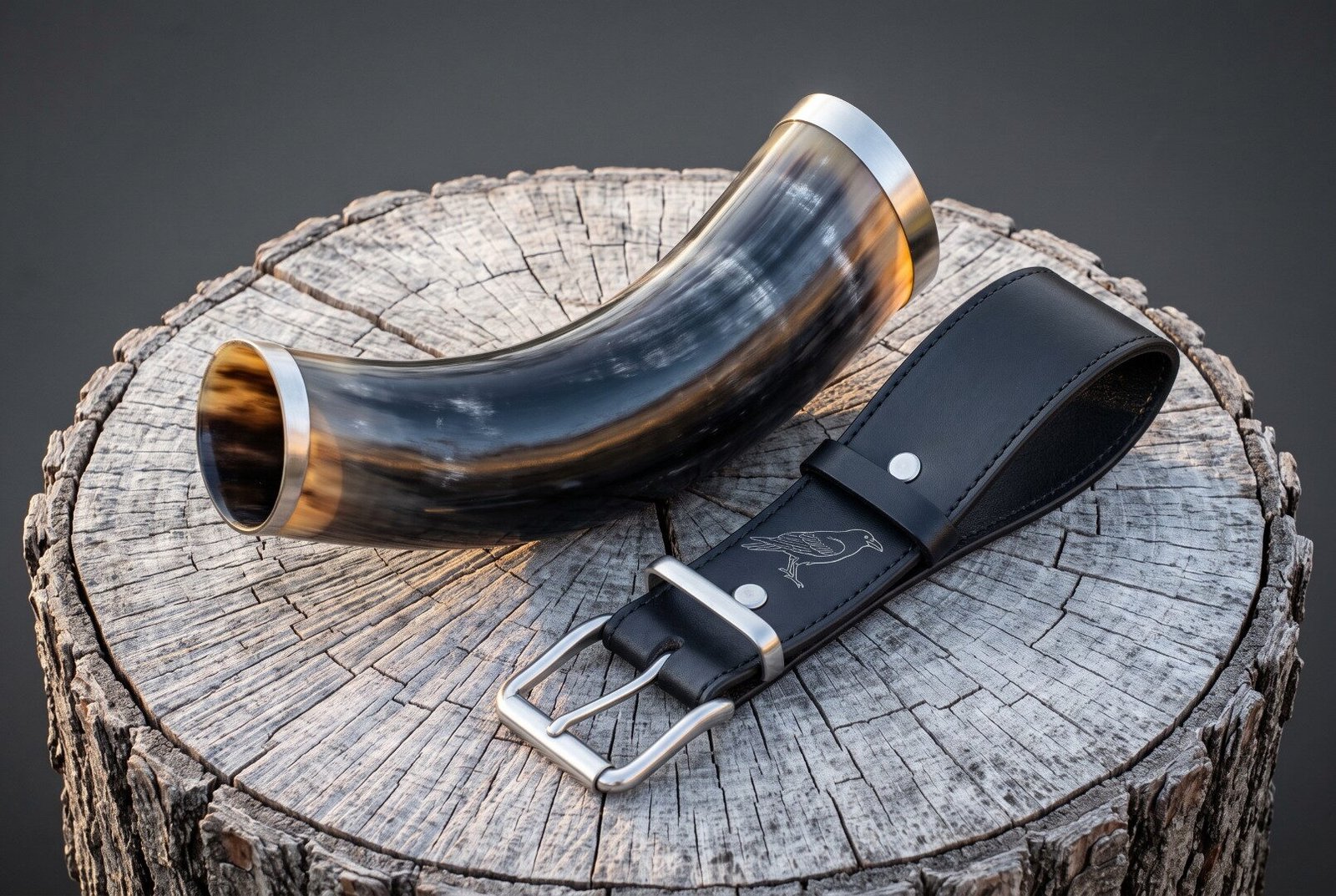
A drinking horn is exactly what the name says: the hollow horn of an ox or a cow, cleaned out, polished and used as a cup. It holds beer and it does not stand up, and those two facts govern everything else about owning one. Northern Europeans drank from them for well over a thousand years, the Norse included, and the reason they turn up in rich graves is that a good horn with silver on the rim was a status object as much as a vessel.
That second fact is not negotiable. You either drain the horn, hand it on, or set it in a stand. It shaped how they were used and it still shapes how you live with one.
What survives
The metal, not the horn
Horn is keratin, the same material as hair and fingernails, and it rots. So the archaeological record for drinking horns is mostly a record of their fittings: rim bands, decorated collars and conical terminals in bronze, silver and gilt, found in graves where the horn itself has vanished into the soil. Curators often reconstruct a horn around surviving mounts, and the shape and size of those reconstructions is educated inference rather than measurement, which museums are better at admitting than shops are.
The famous finds
Sutton Hoo, the seventh century ship burial in Suffolk, produced the fittings of several drinking horns with gilt silver mounts, and the largest of them were made from aurochs horns, the huge wild cattle that were still living in Europe at the time. That tells you two things: horns of that size were extraordinary, and the people who owned them wanted everyone to know it.
The Gallehus horns from Denmark belong to a different category altogether. Found in 1639 and 1734, they were made of gold rather than animal horn, dated to the fifth century, and one carried a runic inscription. They were stolen and melted down in 1802, so everything we know comes from drawings made before the theft. That loss is a genuine hole in the record and no amount of confident writing fills it.
Pictures and figures
The Gotland picture stones, carved limestone slabs from Sweden, repeatedly show a standing figure holding out a horn to an arriving rider. Small metal figurines of women with horns turn up in Scandinavian finds too. Whatever those scenes meant precisely, and interpretations vary, the horn is clearly doing ceremonial work in them rather than sitting on a table.
How a horn is made into a cup
The horn of a cow or ox is a keratin sheath growing over a bony core. The core is removed, the sheath is cleaned out, and the wide end is cut and trimmed. Traditional preparation involves soaking and scraping, and the inside has to be got properly clean or it will smell for the rest of its life.
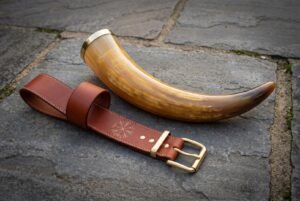 Hornmead Hand Made Viking Drinking Horn with Polished Brass Rim | Roughly 14 to 16 Inches Along the Curve | Vegvisir Stamped Leather Belt Hanger | Norse Mead Gift | RK-1711
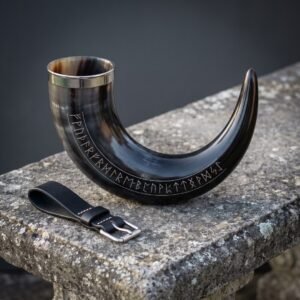 Runemead Hand Made Rune Drinking Horn | Full Elder Futhark Row | Dark Natural Ox Horn and Polished Steel Rim with Black Leather Belt Loop | Norse Mead Gift | RK-1675
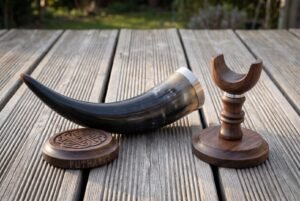 Oakcradle Hand Made Drinking Horn with Stand | Dark Natural Ox Horn | Turned Walnut Cradle and Carved Knotwork Coaster | Norse Table Gift | RK-1677
Once cleaned, the outside is scraped, sanded and polished, which is where the colour comes from. Natural ox horn ranges from pale cream through amber to almost black, often with streaks, and no two are alike. That variation is a feature of the material, not a fault in the workmanship, and it means the horn you receive will not be identical to the photograph.
Fittings come last. A rim band in brass, steel or silver protects the cut edge, which is the part most likely to chip. A tip band or a cap finishes the point. A leather strap or belt loop lets it hang from a belt, and a turned wooden cradle or a forged stand gives it somewhere to sit when it is not empty.
How they were used
In the hall, and in a specific way. Norse sources describe drinking as a formal business: toasts, oaths sworn over a cup, a horn carried around the company and passed hand to hand. A vessel that cannot be put down enforces that better than any rule of etiquette. You drink and you pass it on, or you hold it, and either way the horn keeps circulating rather than sitting in front of one person.
What went into it was ale and mead, both brewed at strengths and in styles nothing like modern drinks, along with imported wine for those who could get it. The everyday tableware of a Norse household was wood and pottery and the horn came out for occasions, which is why the fine ones went into graves.
Alongside the horn, every adult carried a knife. The small utility blade at the belt did the work a table knife does now, and the story of that tool is in our post on the Viking seax. If you want to know what the knotwork, valknut and vegvisir marks engraved on modern horns and leather actually refer to, our guide to Viking symbols and their meanings goes through them one at a time and says which are Norse and which are later.
What to look for when you buy
The lining
This is the thing that matters most and the thing least often mentioned. Bare horn will taste of horn, and it will slowly degrade if liquid sits in it. A horn intended for drinking should have a food safe interior finish, usually a food grade lacquer or a beeswax seal. Ask, and if the seller cannot tell you what is on the inside, treat the horn as decorative.
Capacity and size
Horns are sold by length along the curve as often as by volume, because the two do not track neatly. Something in the range of 14 to 16 inches along the curve is a comfortable size for a person to hold and holds a serious drink. Bigger horns look impressive on a wall and become tiring to hold once full.
Rim and fittings
Check that the rim band is fitted tightly and that the cut edge underneath is smooth. A rough rim is unpleasant to drink from and will chip, usually on its first outing. If a stand or a belt hanger is included, look at how the leather is finished and whether the stitching is real.
Smell
A properly cleaned horn smells of very little. A strong keratin smell out of the box means the interior was not fully cleaned, and while a wash with bicarbonate of soda and a rinse will improve it, a badly prepared horn never fully recovers.
Living with one
Rinse it out with cool water and a little mild soap after use, then stand it upside down in a stand or hang it to drain and dry. Do not put it in a dishwasher, ever: the heat and the detergent will craze the lining and can split the horn. Do not fill it with anything hot, for the same reason. Do not leave liquid sitting in it overnight, because the seal is a barrier and not a permanent one.
Every so often the outside benefits from a wipe of mineral oil or a light beeswax polish, which brings the colour back up and stops the surface drying out. If the inside starts to taste, a rinse with a solution of bicarbonate of soda, then a thorough dry, usually sorts it. A horn treated this way lasts decades.
The horns and drinkware we make
Our drinking horn range is natural ox horn, hand finished, with polished brass or steel rim and tip bands and leather belt hangers. The range includes a horn with the full Elder Futhark rune row cut along the body, one with an engraved raven strap, a Valknut horn that comes with a turned oak stand, and a walnut cradle model with a carved knotwork coaster. Sizes run to roughly 14 to 16 inches along the curve on the larger pieces, and because every horn grew on a different animal the colour and the curve vary from one to the next. If you would rather have something that stands on its own, the Viking beer mug and tankard range holds ox horn tankards with rune engraved steel bands, riveted stainless and brass tankards, carved hardwood mugs and a birch kuksa. Horns, stands and coasters also sit in our wider Viking home decor range if you are furnishing a room rather than buying a cup. Ransack Viking is a US company in Chicago, Illinois. Every piece is handmade in the Czech Republic the old way, then imported, inspected and shipped from Chicago. Engraving is done in the US after arrival.
Choosing a modern one is a different matter from understanding the old ones, and we cover it in what to look for in a drinking horn. Horns turn up often as wedding presents, which we go into in gifts for a Viking wedding, and the other Norse table piece people ask about is hnefatafl, the Norse board game.
Questions people ask
Can you actually drink from a Viking drinking horn?
Yes, provided the inside is properly cleaned and sealed with a food safe lining, usually a food grade lacquer or beeswax. Bare, unsealed horn will taste of keratin and will degrade over time if liquid sits in it. If a seller cannot tell you what the interior finish is, treat that horn as a display piece rather than a cup.
Why do drinking horns have no base?
Because a horn is a natural shape and its point is solid. That is not an oversight, whatever the reviews say. A vessel that cannot be set down has to be drained, held or passed on, which suits the formal, circulating drinking described in Norse sources. Modern horns get around it with a turned wooden cradle, a forged stand or a leather belt hanger.
Are original Viking drinking horns in museums?
Rarely the horns themselves. Keratin rots, so what survives in graves is the metalwork: rim bands, collars and conical tips in bronze, silver and gilt. Museum displays usually mount those original fittings on a modern horn, so the horn you are admiring is younger than you are. The Sutton Hoo burial in Suffolk produced some of the finest surviving mounts, from horns large enough to have come from aurochs.
What is the safest way to clean one?
Cool water, a little mild soap, a soft brush, then stand it upside down to drain and dry fully. Never use a dishwasher, and never fill it with hot liquid, because heat crazes the interior lining and can split the horn itself. For a lingering smell, rinse with a solution of bicarbonate of soda and dry thoroughly.
How big should a drinking horn be?
Something around 14 to 16 inches measured along the curve suits most people, holds a real drink and stays comfortable to hold. Larger horns look dramatic and get heavy once they are full. Sellers quote length along the curve more often than volume, because horn is a natural material and the two measurements do not track reliably.
Will my horn look like the photograph?
Not exactly, and anyone promising otherwise has not handled much horn. Ox horn ranges from pale cream through amber to nearly black, usually with streaks, and every horn grew on a different animal. Colour, curve and length vary from piece to piece. The fittings and workmanship are consistent; the horn itself is a one off every time.
Pieces in the catalogue
If you are shopping rather than reading, the Hornmead Viking drinking horn and the Draughtraven leather belt hanger are the nearest match. Also worth opening, the Oakcradle drinking horn and the Runemead rune drinking horn.
Shop the range
Hornmead Hand Made Viking Drinking Horn with Polished Brass Rim | Roughly 14 to 16 Inches Along the Curve | Vegvisir Stamped Leather Belt Hanger | Norse Mead Gift | RK-1711Runemead Hand Made Rune Drinking Horn | Full Elder Futhark Row | Dark Natural Ox Horn and Polished Steel Rim with Black Leather Belt Loop | Norse Mead Gift | RK-1675Oakcradle Hand Made Drinking Horn with Stand | Dark Natural Ox Horn | Turned Walnut Cradle and Carved Knotwork Coaster | Norse Table Gift | RK-1677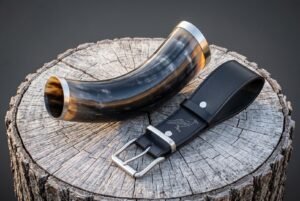 Draughtraven Hand Made Viking Drinking Horn and Leather Belt Hanger | Natural Ox Horn | Polished Steel Rim and Tip Band with Engraved Raven Strap | Norse Feast Gift | RK-1672
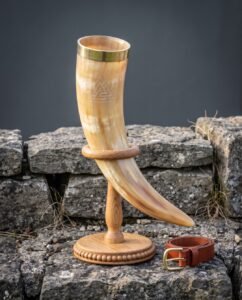 Amberdraught Hand Made Valknut Drinking Horn and Oak Stand | Pale Natural Ox Horn | Solid Brass Rim Band with Tan Leather Belt | Norse Wedding Gift | RK-1685
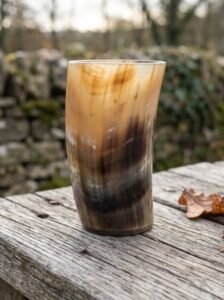 Meadhorn Handcrafted Norse Viking Beer Mug with Polished 100 Percent Natural Horn Body | Norse Drinking Groomsmen and Wedding Gift | RA-611
40 thoughts on “The Viking Drinking Horn: History, Fittings and How to Use One”
Comments are closed.