
Blog
Buying a Drinking Horn: Sealing, Capacity and Care

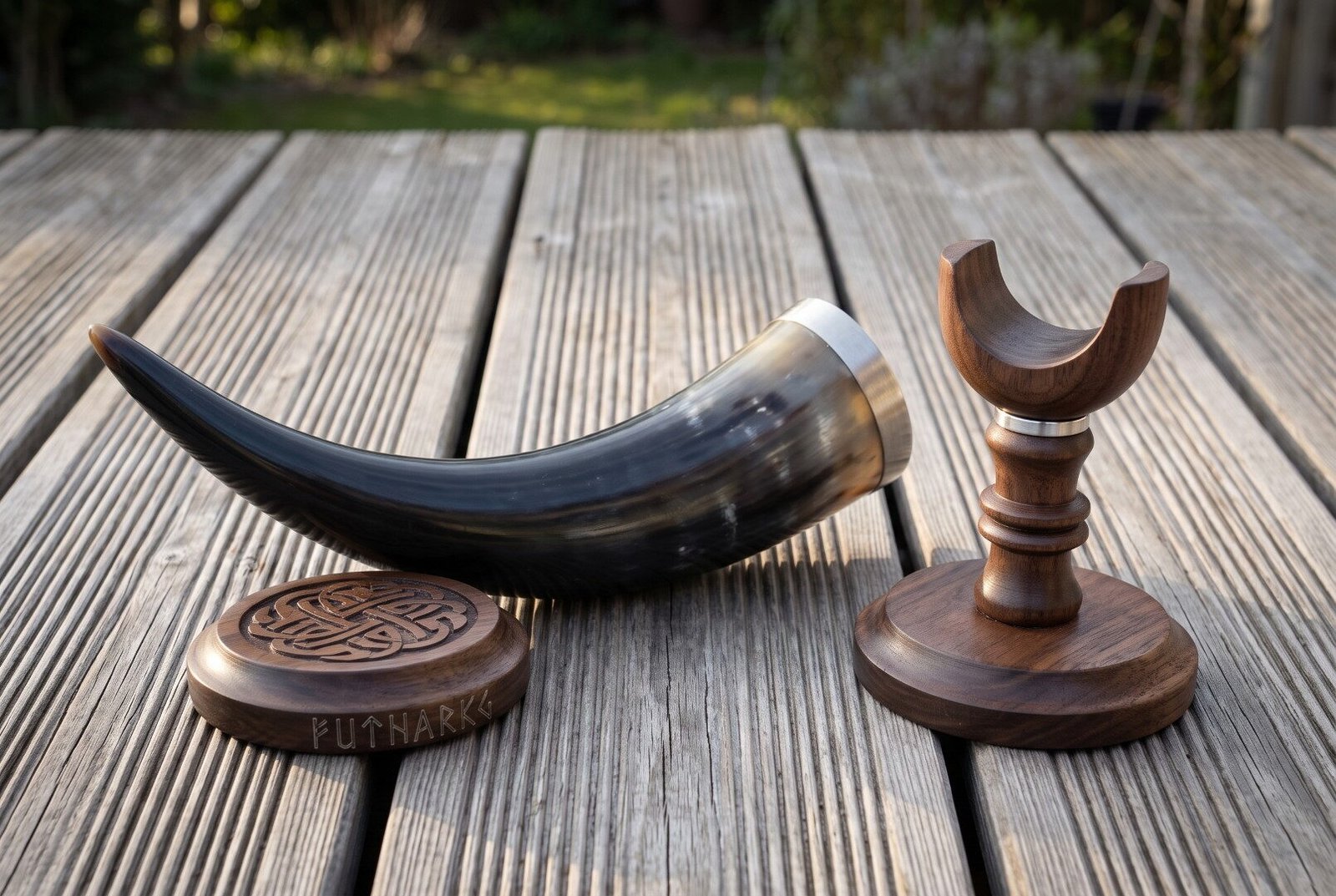
Buy a natural ox horn of around 12 to 20 fluid ounces with a food safe interior seal and a stand or cradle, and treat it as a hand wash only vessel. That one line covers drinking, display and gifting, and it is duller than the marketing. Skip anything sold without a stated interior finish, and never leave liquid standing in a horn.
Drinking horns are the piece people buy on impulse and then quietly stop using, almost always for one of two reasons: the seal was never right, or nobody told them how to look after it. Both are avoidable.
What a drinking horn is actually for
Drinking at home and at events
The main use, and the one that makes the care advice matter. A horn holds a drink, keeps it cold well because horn is a poor conductor, and cannot be set down unless it has a stand or a flat cut base. That last point catches people out. A traditional horn is drunk from until empty, by design.
Display
A polished horn on a turned wooden cradle is a strong object on a shelf, with a shape and colour gradient no manufactured vessel matches. If it will never hold liquid, the interior seal matters less and you can buy on looks. Be honest with yourself, though, because people who intend display often end up drinking from it at the first opportunity.
Ceremony, weddings and toasts
Horns are popular for handfastings, groomsman gifts and club rituals, where one is passed around or a set used for a toast. Capacity matters here, and so does whether the horn can stand between uses. Engraving ties a stock horn to a date and a name, which is most of why these sell as gifts.
Gifting
Good gift, with one caveat. If the recipient will not read care instructions, buy a horn with a removable liner, or a steel tankard. A neglected horn goes bad, and a bad horn smells memorable.
Sealing, which is the whole question
Horn is keratin, the same material as fingernails and hooves. It is porous, it absorbs liquid, and it holds onto smell and flavour if it is not sealed. Every decision about whether a horn is pleasant to drink from comes back to what is on the inside.
 Draughtraven Hand Made Viking Drinking Horn and Leather Belt Hanger | Natural Ox Horn | Polished Steel Rim and Tip Band with Engraved Raven Strap | Norse Feast Gift | RK-1672
 Oakcradle Hand Made Drinking Horn with Stand | Dark Natural Ox Horn | Turned Walnut Cradle and Carved Knotwork Coaster | Norse Table Gift | RK-1677
 Hornmoot Hand Made Ox Horn Tankard with Rune Engraved Steel Band | Full Pint Drinking Vessel | Stainless Bands and Wooden Base and Leather Belt Hanger | Norse Mead Gift | RK-1611
Food safe interior coatings
A properly finished drinking horn has the interior sealed with a food safe coating: usually a food grade lacquer, a beeswax based seal, or an epoxy resin rated for food contact. The seal does two things. It stops the drink soaking into the horn wall, and it stops the horn flavouring the drink. A well sealed horn tastes of nothing at all.
What you want from a listing is a plain statement of the interior finish. Sellers who seal properly say so, because it is expensive and a selling point. A listing that details a beautiful exterior and says nothing about the inside is telling you something. Ask before ordering.
Beeswax seals are traditional and pleasant, with one real limit: they soften with heat. Do not put hot drinks in a wax sealed horn and do not wash it in hot water, or you will melt the seal out and be back to bare keratin. Lacquer and food grade epoxy tolerate warm water better but still should not meet a dishwasher.
Removable liners
Some horns ship with a food grade plastic or stainless insert that lifts out. That is the low maintenance option: you wash the liner, the horn stays dry, and the sealing question disappears. Purists dislike them, which is their business. Anyone who wants a horn they will use every week should consider one.
Bare horn
An unsealed horn is a display item. It takes up whatever it holds, never cleans fully, and the smell that develops in a neglected one is why so many people think horns are impractical. If you buy unsealed for looks, keep it dry.
Capacity, and picking the right one
Capacity varies with the natural curve and thickness of the horn, so two horns of the same length can differ noticeably. Under 10 fluid ounces is a tasting size, easy to carry and easy to finish. From about 12 to 20 ounces is the practical drinking size, roughly a pint, and where most buyers should sit. Above about 24 ounces you get impressive display horns that are heavy when full.
Because horn is natural, capacity, colour and curve vary between pieces, even within one product. That variation is the appeal, and a seller who promises exact matching across a set is promising something horn does not do.
The rest of the decisions
Stand or no stand
A horn without a stand has to be held or hung until empty. A turned wooden cradle, a metal ring stand, or a flat cut and capped base all solve that. If the horn is for a table rather than a hall, buy the stand. It also protects the tip, which chips if the horn rolls off a surface.
Fittings and mounts
Steel or brass rim bands, engraved collars and riveted tip caps add cost and durability. A rim band protects the mouth of the horn, its most vulnerable part, and gives a cleaner lip to drink from. A leather belt hanger is worth having if the horn goes to events.
Polished or natural
Polished horns are sanded and buffed to a gloss and show the internal banding and translucency at the tip. Natural finished horns keep more surface texture and read as older. Both are the same material. Colour ranges from near black through amber to pale cream depending on the animal, and on a good horn it is not dyed.
Engraving
Horn takes engraving well, and it is the standard way to turn one into a wedding or groomsman gift. Engraving is cut into the outside wall and does not affect the interior seal. Deep relief carving on a thin horn is another matter, so ask first if that is what you want.
Care, which is short and non-negotiable
Hand wash only. Never a dishwasher. The heat and detergent destroy any seal and can crack or warp the horn itself, since keratin moves with heat and moisture.
Never leave liquid standing in a horn. Empty it when you are done, rinse it, and dry it. Liquid left overnight is how a horn starts to smell, and once a smell is in the horn wall it is very hard to remove.
Wash with cool or lukewarm water and a mild soap, using a soft bottle brush if needed. Rinse thoroughly, then dry it properly: wipe what you can reach, and stand or hang the horn mouth down so the inside drains and air moves through. Storing a damp horn mouth up traps moisture at the tip.
For the outside, a light rub of beeswax or natural oil once or twice a year stops the surface drying and dulling. Keep horns out of direct sunlight and away from radiators, since heat dries keratin and causes surface cracks.
If a wax seal begins to fail, which shows as a dull patch or a returning smell, it can usually be re-waxed with food grade beeswax: melt gently, pour in, roll the horn to coat, pour out the excess. Do not attempt this with a lacquered or resin sealed horn.
Traps and how to spot them
The first is silence about the interior. If a listing does not say how the inside is finished, assume it is not, and treat the horn as a display piece.
The second is the dishwasher safe claim. No natural horn is dishwasher safe. A seller claiming otherwise either misunderstands the material or is selling resin.
The third is resin masquerading as horn. Moulded resin horns are uniform in colour, identical between units and unusually light. Real horn varies in colour and thickness, shows translucency at the thin tip against a light, and has faint growth banding.
The fourth is heat. Mulled wine and hot mead ruin more horns on their first outing than anything else. Warm is the limit for most seals and cool is safest.
The fifth is the smell test on arrival. A new horn should smell of very little. A strong animal smell out of the box means it was not cleaned properly before sealing, and washing will not fix that from outside.
What to spend
Ranges rather than numbers, since prices move. The cheapest band is small unfitted horns with an unstated interior, sold as souvenirs and fine on a shelf, nowhere else. The useful band is polished natural horns of pint capacity with a stated food safe seal, a rim band and either a stand or a belt hanger. That is where most buyers should look.
Above that you pay for engraved collars, tooled leather, matched wooden cradles and larger horns. Sets for weddings sit here because of the engraving work rather than the horn. Steel and brass tankards occupy a similar band and are a reasonable alternative if you want something you can leave standing on a table without thinking about it.
What I would buy
A polished natural ox horn holding roughly a pint, with a clearly stated food safe interior seal, a steel or brass rim band, and a turned wooden cradle so it can sit on a table. That is a horn you will use rather than admire. If it is a gift and the recipient is not the careful type, add engraving and expect it to live on a shelf, which is a fine outcome.
If you want something for regular use with no maintenance thinking, buy a steel tankard and keep the horn for occasions. The two do different jobs.
Our own drinking horns are natural horn with stands, and the horn mugs and tankards cover the flat based vessels for anyone who wants to set a drink down. If you would rather have metal, the Viking beer mugs are stainless and brass with belt hangers, and they go in the sink without ceremony. Ransack Viking is a US company in Chicago, Illinois. Every piece is handmade in the Czech Republic the old way, then imported, inspected and shipped from Chicago, and engraving is done in the US after arrival. For the background on how these vessels were actually used, the Viking drinking horn covers the archaeology, and the symbols people ask us to engrave are explained in Viking symbols and their meanings. Horns sit well alongside the rest of the Viking home decor if you are dressing a room.
Where the horn comes from in Norse use is set out in the Viking drinking horn. For other pieces that suit a living history group, see gifts for a reenactor, and for a Norse game to go with it there is the board game hnefatafl.
Questions people ask
Can I put a drinking horn in the dishwasher?
No, never. Dishwasher heat and detergent strip out beeswax seals, attack lacquer and resin finishes, and can warp or crack the horn itself, because keratin moves with heat and moisture. Hand wash in cool or lukewarm water with a mild soap and a soft brush, rinse well, then dry the inside properly. Any horn described as dishwasher safe is either resin or badly described.
How do I know the inside is food safe?
The listing should say, in plain words, what the interior is sealed with: food grade lacquer, beeswax, or an epoxy resin rated for food contact. Sealing is expensive and sellers who do it advertise it. If a listing describes the outside in detail and never mentions the inside, ask before ordering, and if you get no clear answer treat the horn as a display piece.
Why does my horn smell?
Almost always because liquid was left standing in it, or because it was put away damp. Horn is porous keratin and it absorbs what sits against it once the seal is compromised. Rinse and dry after every use, and store it mouth down so air moves through and moisture drains. A wax sealed horn that has started to smell can often be cleaned out and re-waxed with food grade beeswax.
What capacity should I choose?
Around 12 to 20 fluid ounces suits most people. That is roughly a pint, comfortable to hold full, and it empties in a reasonable time, which matters because a horn without a stand cannot be set down. Under 10 ounces is a tasting size, politely put. Above 24 ounces makes a striking display horn but gets heavy and awkward once it is filled.
Can I drink hot mead or mulled wine from a horn?
Best not to. Beeswax seals soften and can melt out at hot drink temperatures, and heat is hard on the horn itself even with a lacquer or resin interior. Warm is the outside limit for most horns and cool is safest. If you want a hot drink at an event, use a steel or ceramic vessel and keep the horn for cold mead, ale and cider.
How can I tell natural horn from a resin copy?
Hold the tip to a light, which settles it. Real horn is translucent at the thin end, shows faint growth banding, and varies in colour and thickness along its length. It also feels denser than it looks. Resin copies are uniform in colour, identical from unit to unit, lighter in the hand, and often have a faint mould seam you can find by running a fingernail along the curve.
Things you can actually hold
If you are shopping rather than reading, the Hornmead Viking drinking horn and the Oakcradle drinking horn are the nearest match. Also worth opening, the Amberdraught horn oak stand and the Hornmoot ox horn tankard.
Shop the range
Draughtraven Hand Made Viking Drinking Horn and Leather Belt Hanger | Natural Ox Horn | Polished Steel Rim and Tip Band with Engraved Raven Strap | Norse Feast Gift | RK-1672Oakcradle Hand Made Drinking Horn with Stand | Dark Natural Ox Horn | Turned Walnut Cradle and Carved Knotwork Coaster | Norse Table Gift | RK-1677Hornmoot Hand Made Ox Horn Tankard with Rune Engraved Steel Band | Full Pint Drinking Vessel | Stainless Bands and Wooden Base and Leather Belt Hanger | Norse Mead Gift | RK-1611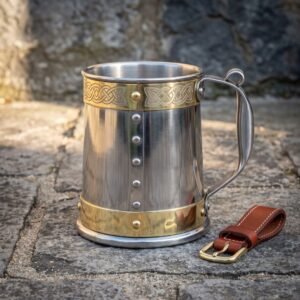 Brasshall Hand Made Stainless and Brass Viking Tankard with Celtic Knotwork Band | Riveted Body and Formed Steel Handle | Brown Leather Belt Hanger Included | Norse Ale Gift | RK-1622
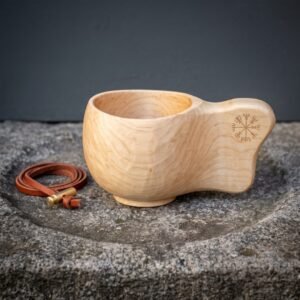 Birchhollow Hand Made Birch Kuksa Wooden Cup | 10 fl oz Carved Bowl | Vegvisir Burned into the Handle and Leather Carry Cord | Camp and Hearth Gift | RK-1605
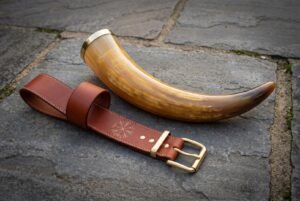 Hornmead Hand Made Viking Drinking Horn with Polished Brass Rim | Roughly 14 to 16 Inches Along the Curve | Vegvisir Stamped Leather Belt Hanger | Norse Mead Gift | RK-1711