
Blog
Assassin’s Creed Valhalla: What It Got Right About Norse Kit

Assassin’s Creed Valhalla gets more right than most Norse fiction, and the thing it gets most right is not the gear at all. It is the economics. The game understands that a raid is a business trip, that portable wealth was the point, that loyalty was bought with gifts, and that a leader’s real work was holding a settlement together. On kit it scores well on shields, axes and ships, and then gives most of that back on armour and fighting style.
The game is set in 873 and moves between Norway and a fragmented England, which places it squarely in the period of the Great Heathen Army recorded in the Anglo-Saxon Chronicle. That is a real setting with real people in it, so it is fair to hold the details to a standard rather than waving them through as atmosphere. Some of it survives the inspection better than you would expect.
What it gets right
The shield
Round, plank built, with a central iron boss over a hand grip behind it. That is the correct construction, and the game treats the shield as a live part of fighting rather than as scenery, which is more than most productions manage. Painted faces are also well founded: the shields from the Gokstad ship burial in Norway were painted, and colour on a shield face is one of the safest assumptions in the whole reconstruction.
The one liberty is durability. Game shields absorb far more punishment than plank and hide will ever take, which is a kindness to the player and a slander on the material. A real shield was closer to a consumable item that split during use, and part of its design logic is that a splitting board catches an edge.
The axe
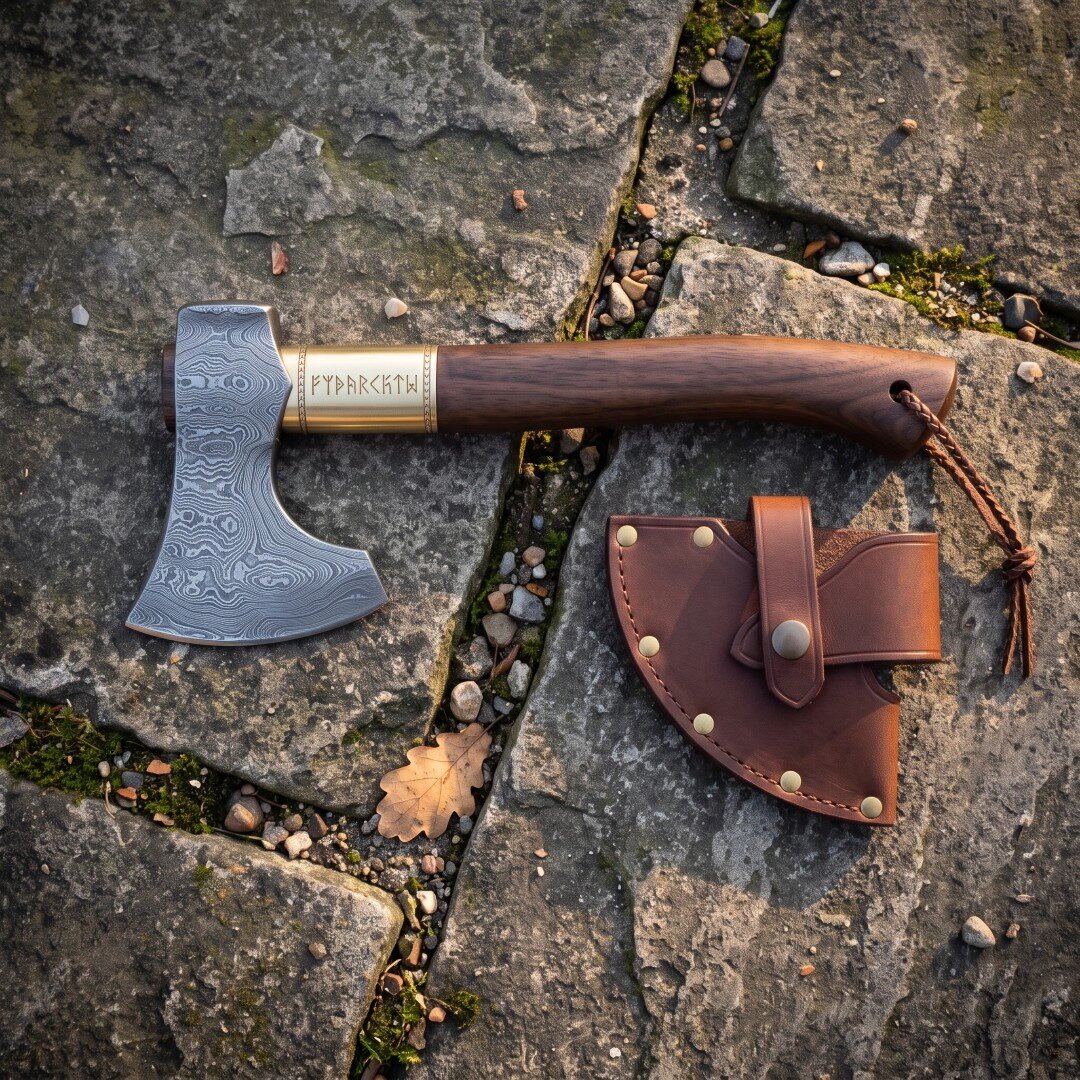
Correct in shape, correct in prominence. The axe was the affordable arm of the period, cheap in iron compared with a sword and useful for a hundred jobs that had nothing to do with fighting. Bearded heads with a long lower edge appear throughout the game and throughout the archaeology, and the long hafted two handed type shows up in the right places. Our history of the Viking axe tracks how those types sat beside each other through the period.
The seax and the spear
The single edged knife is present and treated as an everyday object that becomes an arm at close range, which is exactly right. Spears appear too, and the game is better than television at remembering that a spear was the ordinary fighter’s ordinary choice. Our page on the Viking spear and its place in the shieldwall explains why it dominated in a way screen fiction rarely shows.
The bow
Bows are sometimes dismissed as a game concession, and that is unfair. Viking Age bow finds exist, including material from Hedeby, and archery is attested in the written sources. The game overstates how often a raider would have been an archer, but the object itself is not an invention.
The ships
Clinker built hulls with overlapping planks, a shallow draught and a single square sail are correct, and the game is right that these were the enabling technology for everything else. A hull that could cross open sea and then run up a river or straight onto a beach is what made a raid on an inland monastery possible at all. The Gokstad and Oseberg ships in Norway are the finds that underpin every modern reconstruction, and both are complete enough to be sailed from.
The settlement
This is the strongest part. Building a longhouse, siting a smithy, taking in people who owe you loyalty, and spending raided silver on the place rather than hoarding it is a genuinely good model of how ninth century Scandinavian power worked. Raiding was not an end in itself. It was capital acquisition for a political project at home.
What it gets wrong
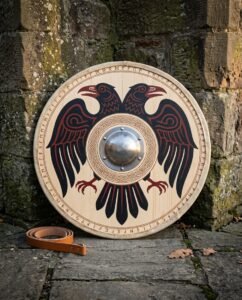 Ravenward Hand Made Viking Round Shield | 24 Inch Diameter | Leather Arm Strap and Hand Grip | Norse Reenactment Gift | RK-1203
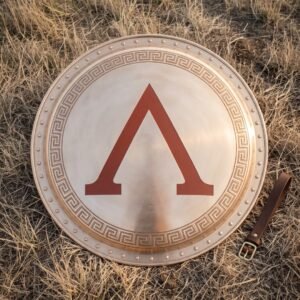 Crimsonward Hand Made Steel Faced Greek Hoplon Shield | 30 Inch Spartan Aspis | Bronze Meander Rim and Painted Crimson Lambda | Hoplite Display Gift | RK-1503
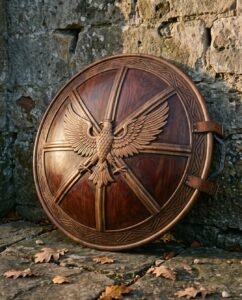 Aquilorn Hand Made Carved Hardwood Round Shield with Bronze Toned Roman Eagle | 24 Inch Diameter | Leather Arm Straps and Forged Grip Bar | Legionary Display Gift | RK-1987
Armour
Everyone in the game is armoured, and most of it is fiction. Mail was expensive enough to mark out a leader and his household, not standard issue for a raiding party, and complete Viking Age mail is rare in the archaeological record. The sculpted and strapped leather that fills out the game’s lower armour tiers has no evidential support for this period at all. It exists because a wool tunic does not read as protective on a screen, and no art director has ever been thanked for restraint.
What people actually wore was textile, and probably a good deal more of it than we can prove, since wool and linen rarely survive in the ground. Our overview of Viking armour and what the evidence supports works through the finds and their limits.
Fighting with two of everything
Carrying an axe in each hand, or two shields, or a shield and a spear, is a game mechanic. There is no support for it as a fighting style. The shield does too much useful work to give up, and a second axe gives you nothing a shield would not give you more of. The Norse fought in lines with shields overlapping, which is undramatic, effective, and almost impossible to sell as a combat system.
Runes as equipment
Slotting runes into gear to improve it is pure game design. Runes are an alphabet, not a menu of upgrades. They were used for names, ownership marks, memorials, messages and occasionally charms, and there is a genuine magical dimension to some inscriptions, but nothing in the record resembles a system of interchangeable stat improvements. Our page on the valknut and what it actually meant is a good example of how thin the ground gets when you ask what a Norse symbol really signified.
Valhalla itself
The game’s framing treats death in battle as the single route to Odin’s hall. The sources are less tidy. Grimnismal describes Freyja receiving half of the slain each day at her own hall, with Odin taking the other half, and Norse ideas of the afterlife are plural and inconsistent across the poems. Presenting one hall as the destination is a simplification that suits a game about a single ambition. Our guide to Ragnarok and how the Norse end times are described covers how the hall fits into the larger picture.
What is real and what is invented
Real: the 873 setting and the political fragmentation of England into competing kingdoms. Real: named historical figures including Alfred of Wessex and the sons of Ragnar recorded in the sources, though what those sources say about them is thinner than the game implies. Real: round shields with iron bosses, bearded and long hafted axes, seaxes, spears, bows, clinker built ships, painted shield faces, and raiding as an economic activity aimed at portable silver.
Invented: the hidden blade and the entire order it belongs to, which is the series’ own mythology and makes no claim otherwise. Invented: dual wielding, rune slotting, armour sets as tiers of protection, and most of the sculpted leather. Invented: the neatness of the afterlife.
Sitting in between is the personal appearance question. Arab and Byzantine writers who met Norse traders in the east describe body markings, and Ibn Fadlan’s tenth century account of the Rus is the passage usually cited for the tattoos that fill the game. The word he uses is translated in more than one way, and what he saw may have been paint. It is not fabricated, and it is not settled.
Building the kit for real
If the game has left you wanting the objects rather than the fantasy, the good news is that the accurate items are the affordable ones. A round shield defines the whole silhouette and is the single best first purchase. Our hand made round shields follow the plank built pattern with steel domed bosses, painted faces and leather arm straps, in twenty, twenty four and thirty inch sizes.
For the axe, our hand forged bearded axes run from belt sized heads on fifteen inch hafts up to long hafted pieces, several with rune cut or knotwork engraved collars in the decorative tradition of inlay work. If you want the armour that a leader rather than a farmer would have owned, the butted chainmail hauberks and coifs are the honest high status option, and they will teach you very quickly why mail was expensive. For the smaller pieces that carried meaning rather than protection, the Mjolnir hammers and Norse war hammers cover both the wearable and the hafted forms.
Steel is plain 1095 hardened to 54 to 58 HRC, or Damascus of 1095 and 15N20 forge welded and taken to 58 to 60 HRC. Each piece is handmade in the Czech Republic the old way, then imported, inspected and shipped from Chicago, Illinois. Engraving is done in the US after arrival, so a rune band can be cut to a real transliteration rather than to a decorative shape.
The television versions are covered in the arms of the Viking dramas, the axe from the God of War games in the axe behind Leviathan, and the fantasy swords people ask about most in the blades of The Witcher.
Questions people ask
Is Assassin’s Creed Valhalla historically accurate?
In its setting and its economics, largely yes. The 873 date, the divided English kingdoms, the named historical figures and the model of raiding as capital acquisition are all defensible. In its gear it is much looser, particularly on armour, where nearly everyone wears protection that only a leader would have owned.
Did Vikings fight with two axes?
No, and it is not a close call. Dual wielding is a game mechanic with no support in the archaeology, the art or the written sources. Giving up a shield costs far more than a second axe gains, and Norse fighting was built around overlapping shields in a line. The one hand free is what makes the shield wall work.
Were runes used to enchant gear?
Not as a system. Runes are an alphabet used for names, ownership, memorials and messages, and some inscriptions do carry a charm or a protective intent. Nothing resembles the interchangeable stat improvements the game uses. That is a role playing convention borrowed from fantasy gaming and given a Norse alphabet to wear.
Did every Viking go to Valhalla?
The sources do not say so. Grimnismal has Freyja taking half the slain to her own hall each day while Odin takes the rest, and Norse ideas about the dead are inconsistent across the poems. A single tidy destination is a modern simplification, and a useful one for a story with a single goal at its centre.
What is the most accurate item to buy first?
A round shield. It is the item the game and the archaeology agree on most closely, it costs less than mail or a sword, and it changes a display or a kit more than anything else. A spear is the next most typical purchase and the cheapest genuinely period correct thing you can own.
Do you sell gear from the game?
No. Nothing we make is connected to or endorsed by any game, film or series, and we do not put franchise names on our products. What we sell are historically grounded Norse pieces in our own designs: round shields, bearded axes, riveted helmets, chainmail and hammers, with engraving available after they reach us. That covers everything in the game that actually existed.
Things you can actually hold
The catalogue carries the Knotbeard Viking bearded axe and the Notchcrown Viking axe. So do the Silverward round shield and the Knotsax broken back Seax.
Shop the range
Ravenward Hand Made Viking Round Shield | 24 Inch Diameter | Leather Arm Strap and Hand Grip | Norse Reenactment Gift | RK-1203Crimsonward Hand Made Steel Faced Greek Hoplon Shield | 30 Inch Spartan Aspis | Bronze Meander Rim and Painted Crimson Lambda | Hoplite Display Gift | RK-1503Aquilorn Hand Made Carved Hardwood Round Shield with Bronze Toned Roman Eagle | 24 Inch Diameter | Leather Arm Straps and Forged Grip Bar | Legionary Display Gift | RK-1987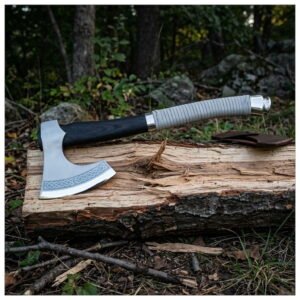 Braidhewn Hand Forged 1095 Steel Bearded Axe | 20 Inch Haft | Celtic Knotwork Etched Head and Leather Edge Cover | Norse Woodcraft Gift | RK-1832
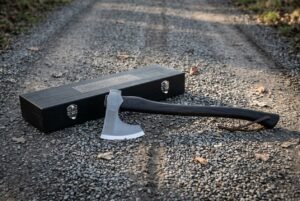 Caskbeard Hand Forged 1095 Steel Bearded Axe | 19 Inch Hardwood Haft | Knotwork Engraved Head with Leather Wrist Thong and Engraved Wooden Case | Viking Gift | RK-1913
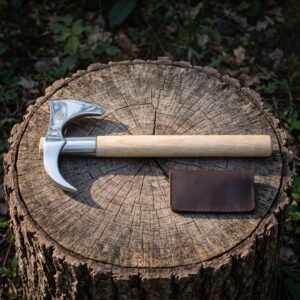 Gleambeard Hand Forged 1095 Steel Bearded Axe with Engraved Valknut | 17 Inch Ash Haft and 6 Inch Edge | Mirror Polished Head and Leather Blade Cover | Norse Gift | RK-2131