
Blog
Jormungandr, the Midgard Serpent

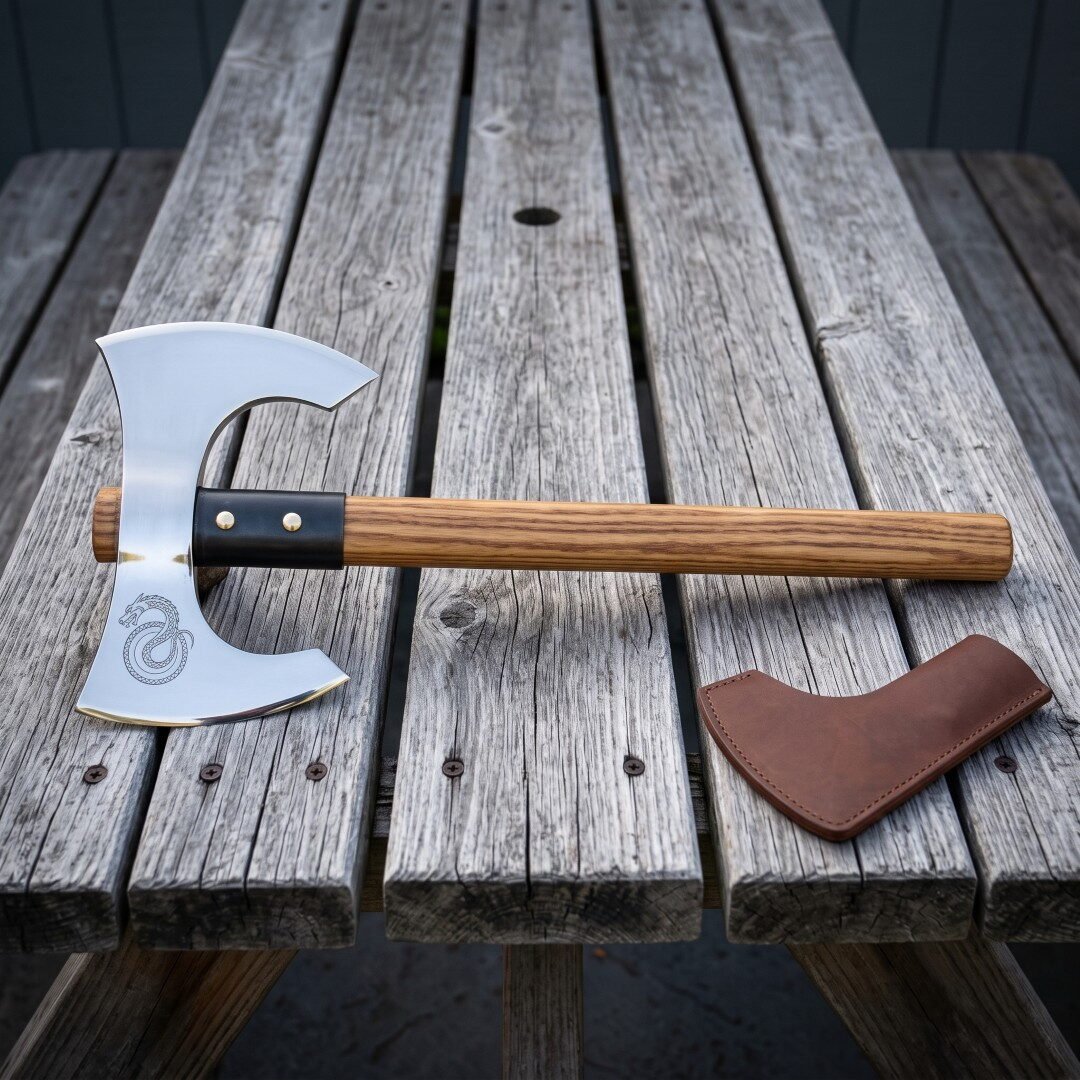
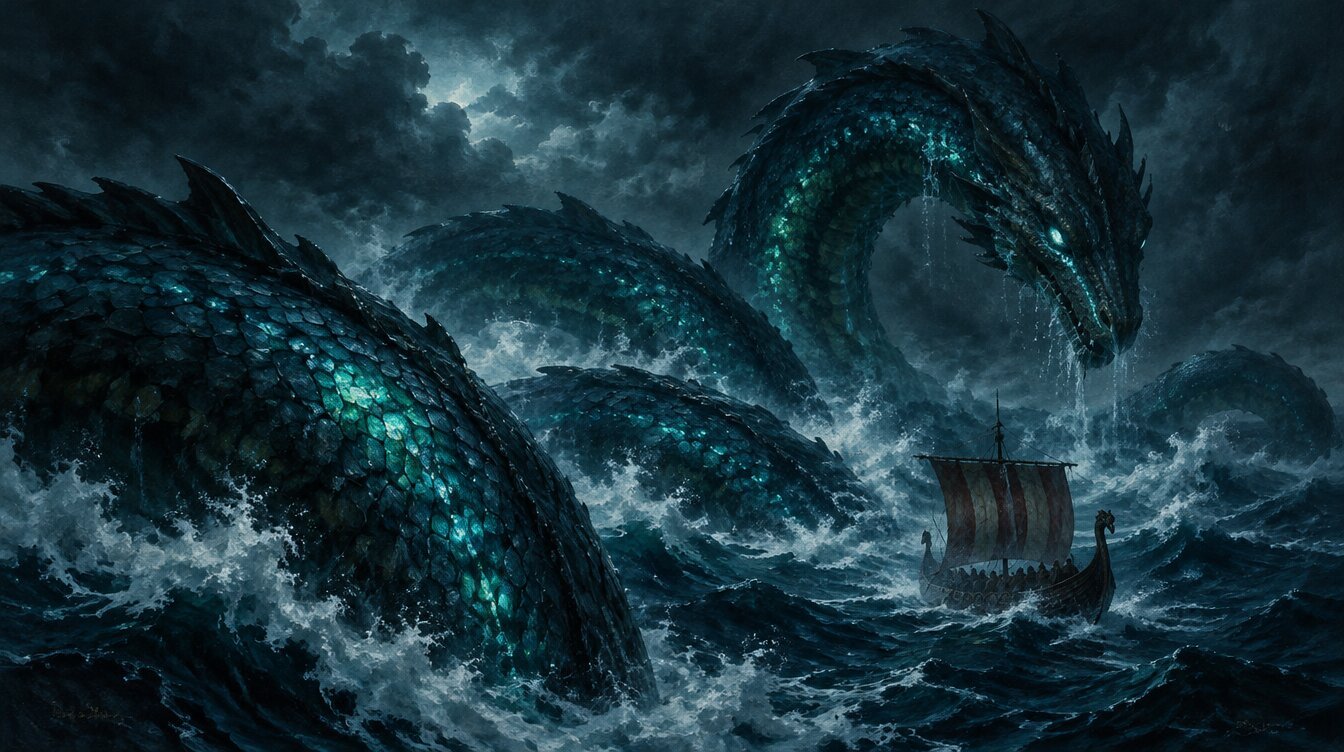
Jormungandr is a snake so long it lies in the ocean with its own tail in its mouth, encircling the inhabited world. It is Thor’s opposite number, it kills him and is killed by him, and it is the single Norse creature with the best archaeological record, because Viking Age carvers could not stop drawing the day Thor went fishing for it.
This page sets out what the sources actually say, and where they disagree, which they do more than most retellings admit. The material comes from the Poetic Edda, from Snorri Sturluson’s Prose Edda of around 1220, from skaldic verse older than either, and from four carved stones.
The name and what it means
Jormungandr splits into two parts. The first, jormun, is an intensifier meaning huge, vast or more than human, and it turns up in Old English as eormen with the same force. The second, gandr, is the awkward one. It covers staffs, wands, magical creatures and long thin things generally, which is why translators offer world serpent, world staff, world river and world binder without any of them being clearly wrong.
The plainer name is Midgardsormr, the serpent of Midgard, and that is what most of the prose calls it. Midgard is the enclosure where people live, described on the page about the nine realms of Norse cosmology. The serpent is what encloses the enclosure.
Where it comes from
Snorri gives the parentage in Gylfaginning. Loki and the giantess Angrboda produced three children in Jotunheim, and the gods dealt with each. Odin threw the serpent into the deep sea that lies around all lands, where it grew until it circled the earth and could take its own tail in its jaws. The wolf they kept and bound, which went about as well as expected and is set out on the page for Fenrir. Hel went down to govern the dead who did not fall in battle. All three are treated together in the guide to the children of Loki.
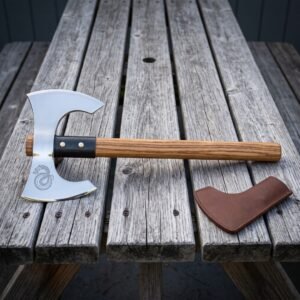 Wyrmhewn Hand Forged High Carbon Steel Viking Double Headed Axe | 19 Inch Oak Haft | Etched Coiled Serpent with Fitted Leather Head Cover | Norse Collector Gift | RK-2146
 Stormvine Hand Forged Damascus Viking Sword with Mjolnir Pommel & Quatrefoil Blackened Guard | About 38 Inches Overall | Green Wrapped Grip and Leather Scabbard | Display Gift | RK-2208
 Staveholm Hand Forged Damascus Viking Sword | 35 Inch Overall with 29 Inch Blade | Runic Arched Guard and Olive Leather Grip and Brown Scabbard | Norse Collector Gift | RK-2120
The older poems do not lay out that family group. They assume the serpent, refer to it, and get on with the story. As with much of the mythology, the neat organisation is Snorri’s editorial work on material that reached him in pieces.
The cat that was not a cat
Thor meets the serpent three times in the surviving material, and only recognises it once.
In Gylfaginning, Thor and his companions reach the hall of Utgarda-Loki, a giant who sets them contests they cannot win because all of them are rigged. Thor is asked to lift the giant’s grey cat off the floor. He gets one paw up and no more, and is mocked for it. Afterwards, once the party is safely outside and the illusions are dropped, Utgarda-Loki admits what the cat was. It was the Midgard serpent, and Thor stretched it until it nearly touched the sky, and everyone watching was more frightened than they let on.
It is the best joke in the Prose Edda, and it works because Snorri holds the reveal until the guests are out of the door.
The fishing trip, and the argument about how it ends
The famous episode is Thor going out in a boat with the giant Hymir, using an ox head for bait, and hooking the serpent. Two accounts survive and they do not end the same way.
Hymiskvida
In the Poetic Edda poem Hymiskvida, Thor tears the head off Hymir’s best ox, rows further out than the giant wants to go, and hauls the serpent up. He strikes at it. What happens next is genuinely unclear in the manuscript, because the verse is compressed and possibly damaged. The serpent sinks back. Whether it was killed is not stated in a way anyone can settle.
Snorri’s version
Snorri tells it with more furniture and a definite ending. Thor braces so hard his feet go through the bottom of the boat and reach the seabed. He drags the serpent to the gunwale, they stare at each other, and Thor reaches for the hammer. Hymir, terrified, cuts the line, and the serpent drops back into the sea. Thor throws the hammer after it and then hits Hymir hard enough to put him overboard. Snorri says some people claim Thor killed the serpent that day, and adds that he thinks it more correct to say it survived.
That aside is worth pausing on. Snorri knew a rival version was in circulation and chose against it. Skaldic verse older than him appears to support the version he rejected. So the neat story most people know is a thirteenth century author’s editorial preference, not the only thing Viking Age people believed.
The stones
Four carvings are usually brought into the fishing episode, and together they make it one of the best attested scenes in the whole mythology.
The Altuna stone in Uppland, Sweden, eleventh century, shows a figure in a boat with a hammer raised and a line running down to a serpent, and one foot appears to have gone through the hull. Thor is alone in it, with no giant, which fits the version where nobody cuts the line and the serpent does not get away.
The Hordum stone in Thy, Denmark, shows two figures in a boat with a foot through the bottom and a line running to a serpentine shape below.
A stone fragment at Gosforth in Cumbria, cut by the hand behind the better known Gosforth Cross, shows the same scene with the ox head as bait.
The Ardre VIII picture stone from Gotland is more disputed, but is often read as carrying the episode among its crowded panels.
The dates spread across several centuries and several countries, and they all show the same moment. Whatever else is uncertain about Norse religion, people across the Norse world knew this story and wanted it on stone.
How the poets referred to it
Skaldic verse worked by substitution, so the serpent turns up under descriptions rather than its name. Loki is called father of the sea-thread. Thor is called the sole slayer of the serpent, and also the one who struggles against the encircler. Those kennings are useful evidence in their own right, because a kenning only works if the audience already knows the story well enough to decode it in the time it takes to hear a line. The serpent was common knowledge.
The kenning tradition also preserves the version Snorri argued against. Poets writing before him treat the killing as accomplished, which is the same position the Altuna carver took. Snorri was tidying up a story that already had two endings in circulation, and he told his readers he was doing it, which is more than most editors manage.
Thor and the serpent as a pair
The two are set against each other in a way no other pairing in the mythology quite matches. Thor is the god of the enclosure, the one who keeps what is outside from coming in, and the serpent is the outside itself, wrapped around the whole arrangement. Odin has Fenrir, but Odin also has a hundred other concerns. Thor’s entire function points at this one animal.
That may be why the fishing scene was carved so often. It is not a story about a fish. It is a picture of the thing that holds the world together straining against the thing that surrounds it, drawn small enough to fit on a stone by a road. Thor’s wider role is set out on the page for Thor in Norse myth, and the hammer he reaches for on the page about Mjolnir.
Ragnarok
Voluspa describes the serpent letting go of its tail and coming ashore in a fury, which is what makes the sea rise. Snorri says the serpent spits venom over the air and the water.
Thor kills it. Then he walks nine paces and drops dead of the venom. Both Eddas agree on the nine paces, which is the sort of specific, useless, unforgettable detail that suggests genuinely old material rather than invention. Nine is doing work there, as it does throughout the mythology, and the full sequence is on the page for Ragnarok.
Whether the fishing trip was understood as a failed attempt at that final fight, or as an unrelated encounter, the sources do not say. It reads like a rehearsal.
What the serpent is not
It is not the ouroboros. The tail-in-mouth image is genuinely there in the Norse material, and it also appears in Egyptian and Greek sources centuries earlier and completely independently. There is no evidence of borrowing in either direction, and a serpent long enough to circle the world has to do something with the spare end.
It is also not a symbol of eternity or rebirth in the Norse context, whatever it means elsewhere. In the Norse material it is a boundary and a threat. The world has an edge and something enormous lives at it.
Serpent and dragon motifs do appear on genuine Viking Age metalwork and woodwork in quantity, in the Borre, Jelling, Mammen, Ringerike and Urnes styles. Those are ornament, and beautiful ornament, but very few of them can be tied to this specific creature. The distinction between attested motif and modern design is covered on the page about Viking symbols and their meanings.
Wearing it
A coiled serpent is one of the few Norse designs that genuinely descends from Viking Age ornament rather than from a nineteenth century book. Ransack Viking is a US company in Chicago, Illinois. Pieces are handmade in the Czech Republic, then imported, inspected and shipped from Chicago, with engraving cut here after arrival. Plain 1095 runs 54 to 58 HRC and Damascus of 1095 and 15N20 runs 58 to 60. US orders ship free and tracked with no import duty, and there is a lifetime warranty against defects. The ranges that carry serpent work are bearded axes, Viking swords and Norse pendants. Everything else written here sits in the guides.
Questions people ask
What is Jormungandr in Norse mythology?
A vast serpent, child of Loki and the giantess Angrboda, thrown into the sea by Odin and grown so long that it encircles the world of people and holds its own tail in its jaws. It is the enemy of Thor, and at Ragnarok the two kill each other. It is also called Midgardsormr, the Midgard serpent.
Did Thor kill the Midgard serpent on the fishing trip?
The sources disagree. Snorri says the giant Hymir cut the line and the serpent escaped, and notes that others told it differently. The poem Hymiskvida is unclear at the crucial point. The Altuna stone in Sweden shows Thor alone in the boat with no giant to cut anything, which fits the version where the serpent does not get away.
What does the name Jormungandr mean?
Jormun is an intensifier meaning huge or beyond human scale, and gandr covers staffs, wands and long magical creatures. Translators give world serpent, world staff, world river and world binder, and none of those is clearly the right one. Midgardsormr, serpent of Midgard, is the plainer alternative name used in most of the prose.
Is the Midgard serpent the same as the ouroboros?
No, though it shares the tail-in-mouth image. The ouroboros comes from Egyptian and Greek material centuries earlier, and there is no evidence of contact between the traditions. In Norse sources the posture is a consequence of the serpent’s length rather than a symbol of cycles or eternity.
Which Viking Age carvings show Jormungandr?
The Altuna stone in Uppland, the Hordum stone in Denmark, a fragment at Gosforth in Cumbria and, more arguably, the Ardre VIII picture stone from Gotland. All show the fishing episode. The spread of dates and locations makes it one of the best attested single scenes in Norse myth.
Was Thor’s cat-lifting contest really the serpent?
In Snorri’s account, yes. Utgarda-Loki disguised the Midgard serpent as a grey cat, and Thor managed to lift one paw before giving up. The giant confesses afterwards that the effort nearly reached the sky and that everyone present was frightened. The poem sources do not carry this episode.
How does Jormungandr die?
Thor kills it at Ragnarok, and then dies himself, walking nine steps before the venom takes him. Voluspa and the Prose Edda both give the nine paces. The serpent’s release from its own tail is what raises the sea and helps begin the final sequence.
From the shop
If you want a piece that carries this, the shop has the Serpentward display sword and the Serpentgleam arming sword. The Coilwyrm arming sword and the Wyrmfall Viking sword are in the same corner.
Shop the range
Wyrmhewn Hand Forged High Carbon Steel Viking Double Headed Axe | 19 Inch Oak Haft | Etched Coiled Serpent with Fitted Leather Head Cover | Norse Collector Gift | RK-2146Stormvine Hand Forged Damascus Viking Sword with Mjolnir Pommel & Quatrefoil Blackened Guard | About 38 Inches Overall | Green Wrapped Grip and Leather Scabbard | Display Gift | RK-2208Staveholm Hand Forged Damascus Viking Sword | 35 Inch Overall with 29 Inch Blade | Runic Arched Guard and Olive Leather Grip and Brown Scabbard | Norse Collector Gift | RK-2120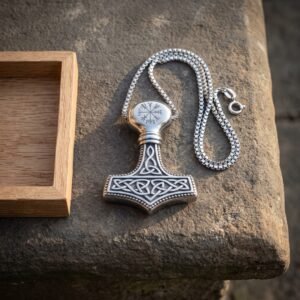 Thunderknot Hand Made Silver Finish Mjolnir Pendant with Celtic Knotwork & Vegvisir Crown | 24 Inch Box Chain | Norse Gift | RK-1754
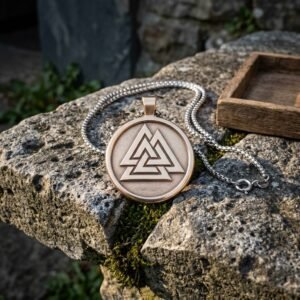 Kinbound Hand Made Bronze Tone Valknut Pendant with Raised Triple Triangle & 22 Inch Box Chain | Norse Memorial Gift | RK-1601
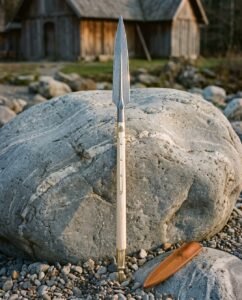 Ashreach Hand Forged Damascus Viking Spear with Leaf Shaped Head | Brass Valknut Ferrule and Ash Wood Haft | Leather Point Cover Included | Norse Reenactment Gift | RK-1614