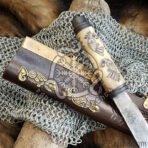
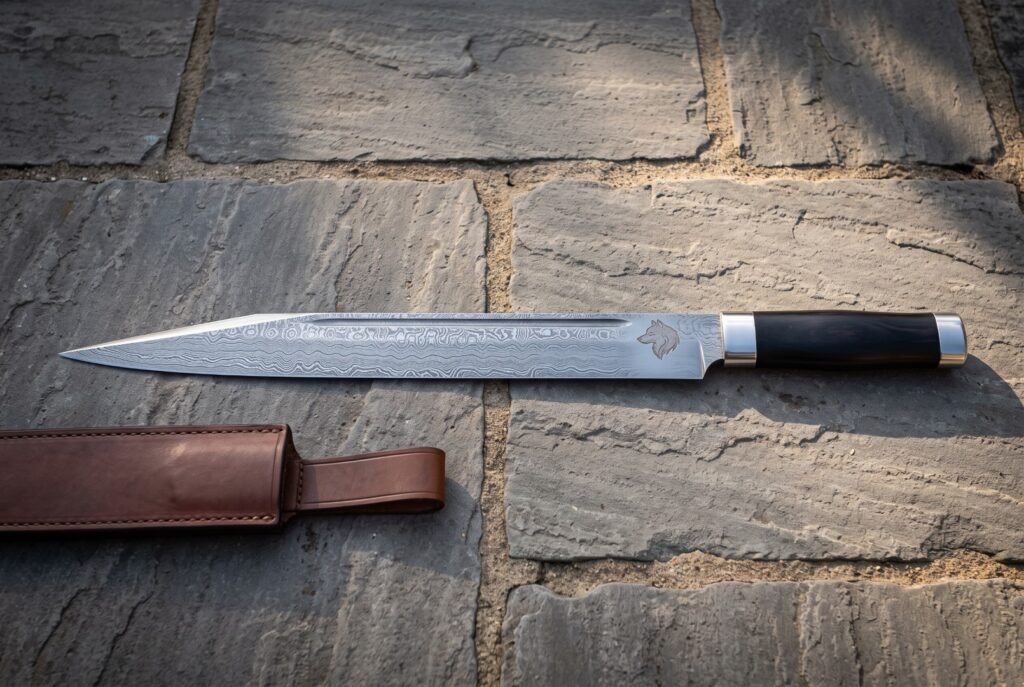
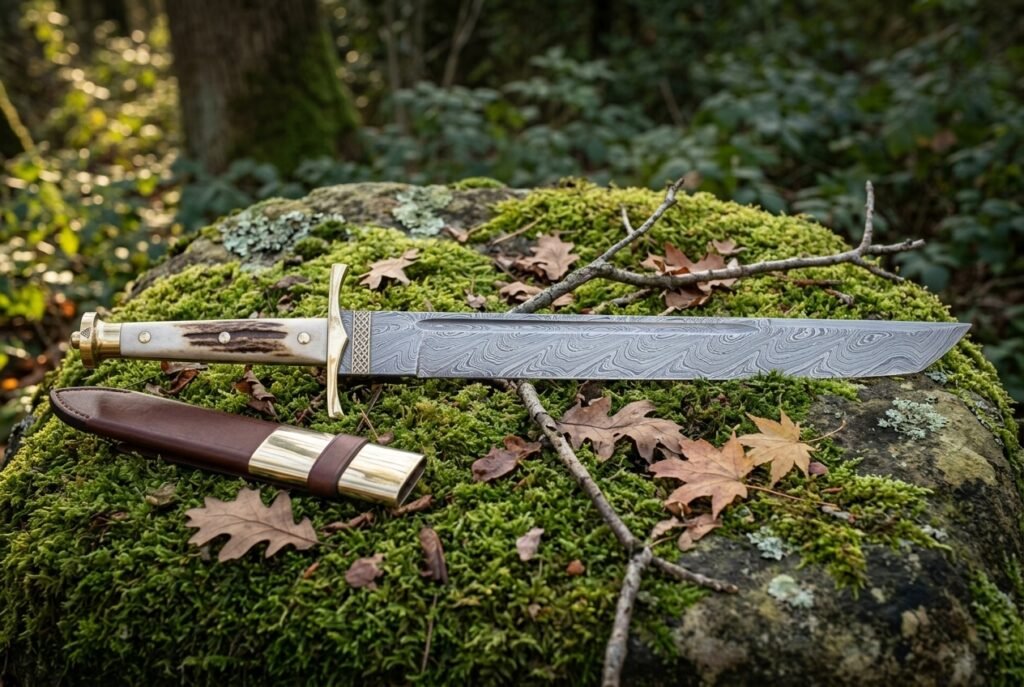
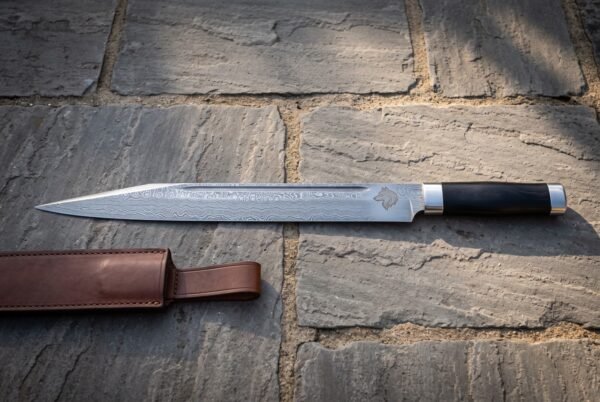
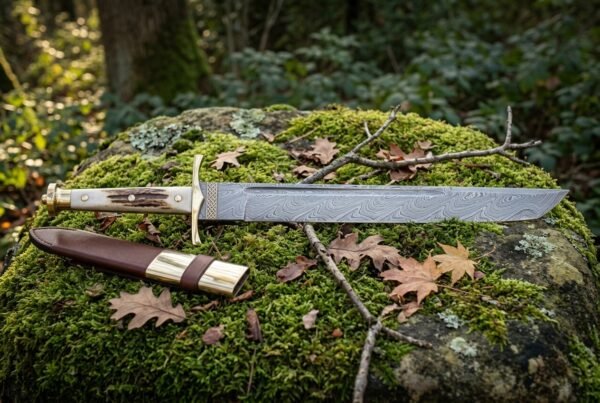
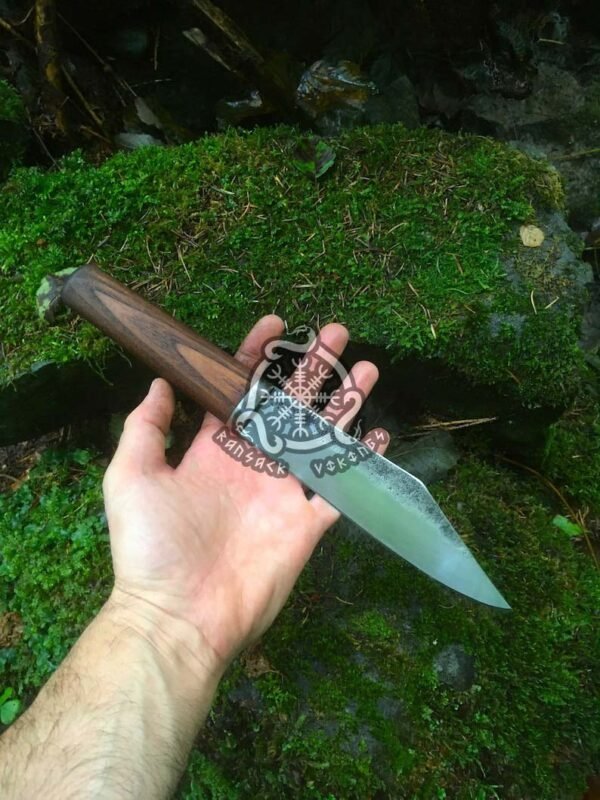
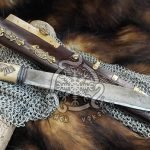
The Huginandmunin is a Viking seax knife for people who notice the difference between a knife that was made and a knife that was manufactured. A high carbon steel blade 13 inches long and 1.25 inches wide, a camel bone handle with a fitted bolster, 18 inches overall, hand finished throughout and built with the blade flat kept clear for rune engraving.
It is named for Odin’s two ravens. In the Grimnismal, one of the poems of the Poetic Edda, Odin says that Huginn and Muninn fly over the whole world each day and return to tell him what they have seen, and that although he fears Huginn may not come back, he fears more for Muninn. Their names mean thought and memory, and that stanza is one of the few places in the surviving Norse material where a god admits to being afraid of anything. It is a fitting name for a blade meant to be inscribed and kept.
The Huginandmunin is forged and finished in the Czech Republic, and shipping inside the United States is free.
Specifications
| Steel | Hand forged high carbon steel |
|---|
| Hardness | 54 to 58 HRC |
|---|
| Blade shape | Broad single edged seax |
|---|
| Overall length | 18 inches |
|---|
| Blade length | 13 inches |
|---|
| Blade width | 1.25 inches |
|---|
| Handle | Camel bone with bolster |
|---|
| SKU | RK-606 |
|---|
The seax that carries the whole runic alphabet
If you want to understand why a seax and rune engraving belong together, the object to look at is in the British Museum, and it was pulled out of the River Thames at Battersea in 1857.
It is called the Seax of Beagnoth, and it is a langseax of the broken back type, about 72 centimetres long overall, dating to the tenth century. What makes it extraordinary is not the blade but what is inlaid into it in copper, brass and silver wire. Down one side runs the only complete Anglo-Saxon futhorc yet found anywhere: all twenty eight runes, in order, cut into the metal of a working blade. Beside them is a name, Beagnoth, also in runes, which is presumably the man who owned it or the smith who made it.
Nobody knows why a full alphabet was put on a knife. The plausible readings are that the runes carried protective force in themselves, that the alphabet functioned as a kind of charm, or simply that the owner was demonstrating literacy on the most public object he possessed. What is beyond argument is that inscribed seaxes were a real category rather than a modern invention, and that the broad flat of a single edged blade is where early medieval owners chose to put their names.
That is exactly the surface this piece gives you. Thirteen inches of blade at an inch and a quarter wide, with a flat kept clear, is one of the largest engraving fields in the whole catalogue.
Why a broad seax is shaped the way it is
The broad spine and the angled tip are not styling. They are what the archaeology shows, and both come from the same constraint: the seax had to be a blade that ordinary people could afford, so it had to do as much as possible with as little steel and labour as possible.
A single edge halves the grinding and, more importantly, saves the expensive part, which was always the steel rather than the smith’s time. Leaving the spine thick and flat puts mass behind the edge without needing the width of a sword blade, so the cut has authority. And with no fuller and no distal taper, the balance stays forward, which is what makes a seax bite into a target the way it does.
At 13 inches this is well into what archaeologists call the langseax range, which was the fighting end of the family. The five inch handle is not oversized either: long grips are typical of the finds, because without a crossguard the length is what lets you shift your hand back for a heavy cut or forward for controlled work, and it gives you somewhere safe to put your fingers.
The detail sits in the seax buyer guide for the types and what to look for, and in the seax history.
Why high carbon steel and not stainless
The blade is 1095 high carbon steel, hardened and tempered to 54 to 58 HRC so it takes a keen edge and holds it through real work. That is a slightly softer heat treat than we give Damascus, and on a 13 inch blade it is the right one: an edge that rolls under abuse can be steeled straight in a minute, where a harder edge would chip and take a stone to repair.
High carbon is also simpler than Damascus and tougher under abuse, which is why smiths still reach for it, and it is what the original blades were made from. Stainless would resist rust better and that is the whole of its advantage here. It would take a duller edge, it would be harder to bring back on a stone, and it would be historically wrong on a reconstruction of an early medieval knife.
The cost of carbon steel is that it needs a wipe and a light oil. The differences are laid out in high carbon steel versus Damascus, and the wider case against stainless is in Damascus versus stainless.
The camel bone handle
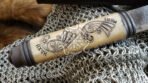
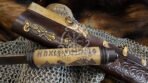
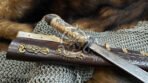
The handle is camel bone, cut, shaped and polished by hand, with a fitted bolster at the front where the grip meets the blade. Horn and bone are warmer in the hand than steel or micarta and they take a polish that plastic cannot fake. Every piece is marked differently by the animal it came from.
Bone is not the same material as horn even though the two get sold side by side. Horn is keratin, slightly flexible and translucent at the edges. Bone is mineral, so it is harder, more brittle, fully opaque and it takes a brighter polish. Historically both appear on seax grips, along with dense timber and, on the high status pieces, silver and bronze fittings. The bolster on this one is doing the same job those fittings did: it caps the front of the grip so the bone cannot split back from the tang under load.
Care is the same routine timber gets. A light coat of oil once or twice a year, thin and wiped back, stops it drying and shrinking against the bolster. Keep it out of long soaking and away from direct heat. The method is in wooden handle care and works on bone and horn without change.
Engraving, runes and your own design
Use the rune converter on this page to turn a name, a date or a short phrase into Elder Futhark and we will cut it into the steel or the handle. If you would rather have a Viking pattern than a rune line, choose your own design in the engraving option above the add to cart button and tell us whether it goes on the blade or the handle. Where a piece already carries an engraved design, your chosen engraving replaces it rather than sitting alongside it. This is the model in the range built specifically for it. Thirteen inches of clear blade flat will take a full name, a date and a short phrase without crowding, and camel bone is one of the best surfaces we work with for a cut line. See the engraving page.
Care and sharpening
Carbon steel darkens with use. That patina is a protective layer, so leave it. What you do want to avoid is standing water, so dry it and oil it before it goes away, and do not leave it wrapped in anything that holds damp.
Sharpening a long single edged blade is easier than it looks. Work in overlapping sections along a bench stone rather than trying to sweep the whole 13 inches in one pass, keep the angle consistent, and finish fine. High carbon responds fast, so a few minutes restores a working edge from dull. The method is in our whetstone guide, and blade care in steel care. If orange rust ever appears, it lifts off easily using the method in removing rust.
Made in the Czech Republic
Every piece we sell is made by hand in the Czech Republic. The smiths there work the way the trade has been worked for a long time, heating and hammering the steel, taking the bevels down by eye, and fitting the handle and the leather one at a time. There is no automated line anywhere in it, so small differences from one piece to the next are normal and expected.
Ransack Viking is a United States company based in Memphis, Tennessee. We bring the pieces in ourselves, inspect them on arrival and ship them from our own warehouse. If you add engraving, that is carried out here in the United States before your order goes out.
A note on handmade variation
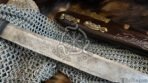
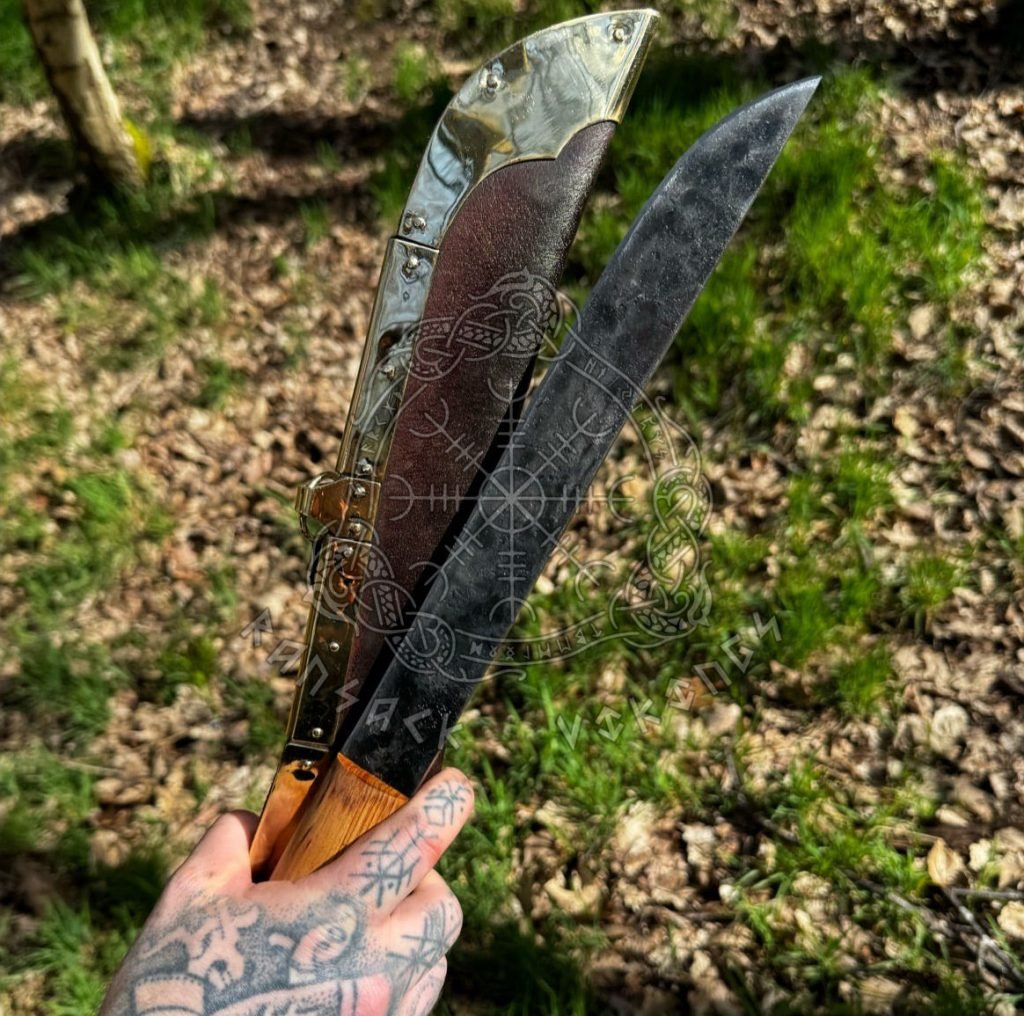
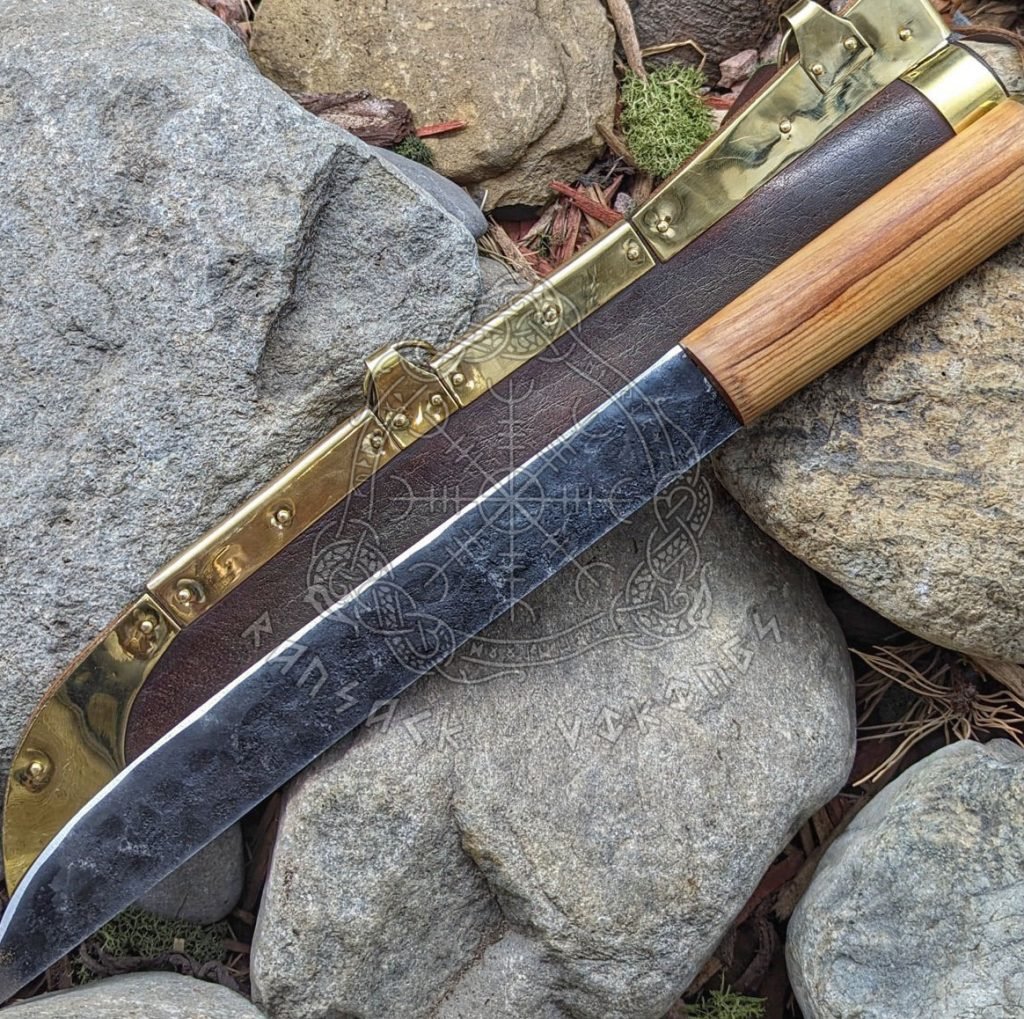
The Huginandmunin is hand forged. It is not machine made and it is not bulk produced, so what arrives will not be a pixel for pixel copy of the photograph. The surface tone and the hammer work come off the anvil rather than out of a die, the camel bone carries the marbling of the animal it came from, and the line of the spine and the angle of the tip shift by fractions because a person forged them. The dimensions, the steel and the build are the same every time. The character is not.
Frequently asked questions
Does it come with a sheath
No. This model ships as the blade in protective packaging. If you want a leather sheath cut for it, message us before ordering and we will quote for one.
Did real seaxes carry runes on the blade
Yes. The best known example is the Seax of Beagnoth in the British Museum, which carries the complete Anglo-Saxon runic alphabet and its owner’s name inlaid in wire down the blade.
What is the difference between Elder Futhark and the runes on that blade
The Beagnoth seax uses the Anglo-Saxon futhorc, a later and longer alphabet of twenty eight runes. Elder Futhark is the earlier twenty four rune system, and it is the one our converter uses.
Is a 13 inch seax legal to own
Owning a fixed blade of this size is straightforward in most of the United States, but carrying one is regulated by state and city law and the limits vary considerably. Check your local rule before you take it out of the house.
Is camel bone strong enough for a blade this size
Yes, and it is fitted with a bolster at the front precisely so the load is carried by the fitting rather than by the bone alone. Bone grips appear throughout the archaeology for the same reason.
How long does it take to make
Processing is one to two weeks before it leaves the shop, plus transit. Engraving is cut here and does not usually add to that.
What is in the box
- One Huginandmunin high carbon Viking seax knife
- Protective packaging
- Forged and finished in the Czech Republic
Explore the range
Compare it with the rest of Viking Seax, the belt blades in Viking Knives, the longer pieces in Viking Swords and the personalised work in Engraved and Personalized. Norse history and steel background sit in the guides.

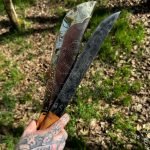
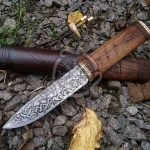









Really happy with this knife overall. Not my first Ransack Viking order and it held up to their usual standard.
Incredible craftsmanship on this one. Nice touch that it ships from within the US even though it’s crafted in the Czech Republic. Edge retention has been great even after regular use. Already planning my next purchase from this shop.
Turned out better than I expected going in. Blade quality is solid. Arrived a bit less sharp than expected but a few passes on a strop fixed it. Glad I made this purchase.