The single thing that separates a good kitchen knife from a bad one is not the edge angle and it is not the steel. It is how thin the blade is directly behind the edge. A knife can be shaved to twenty degrees a side and still push through a carrot like a wedge if the metal above the bevel is thick, because after the first millimetre of cut it is the shoulder of the blade doing the work, not the edge. Grind it thin behind the edge and the same knife falls through the same carrot. That is what a chef knife has to get right, and it is why a hand ground blade so often outperforms a thicker factory one of better steel.
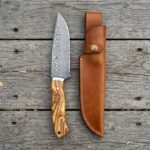
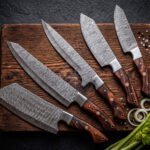
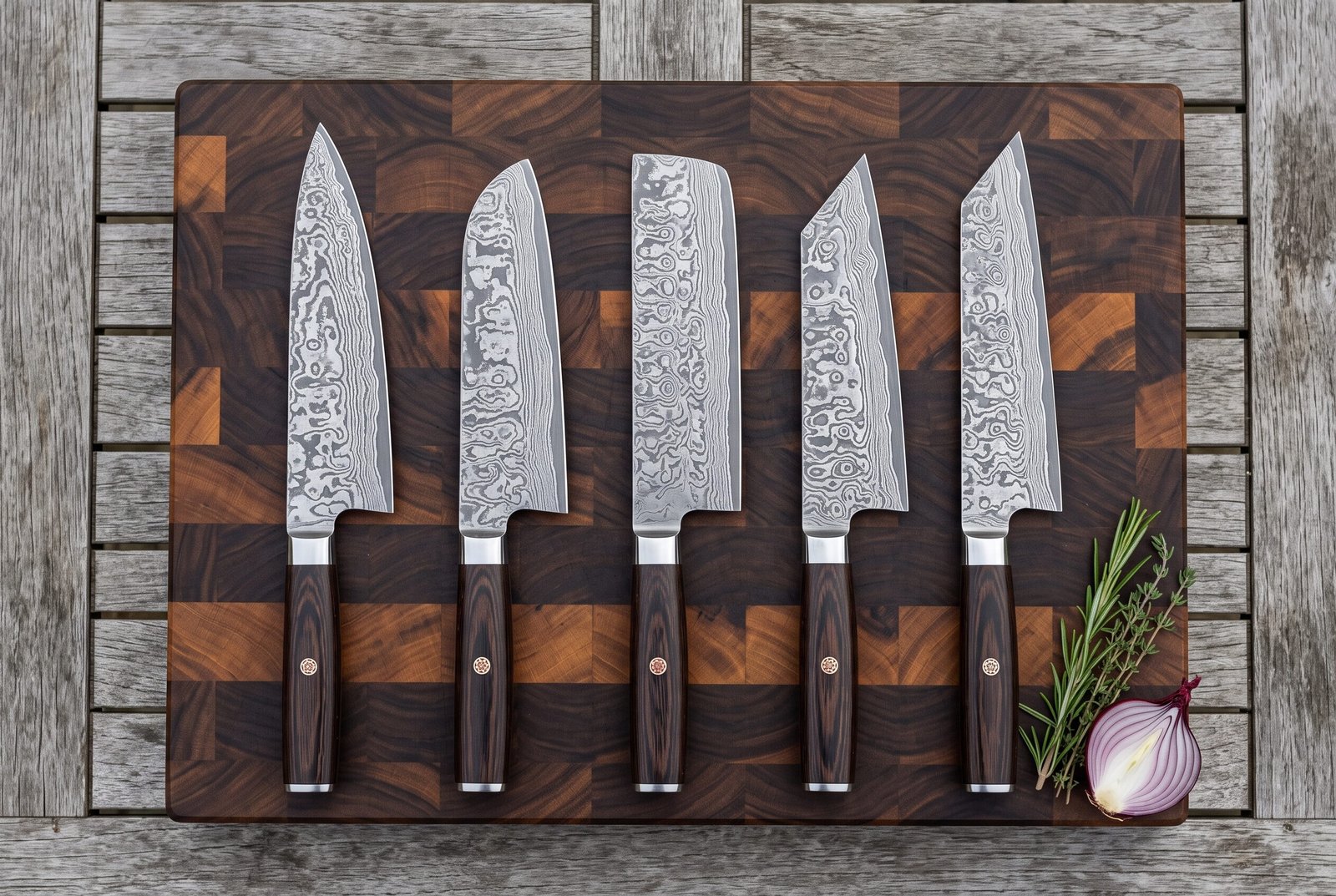
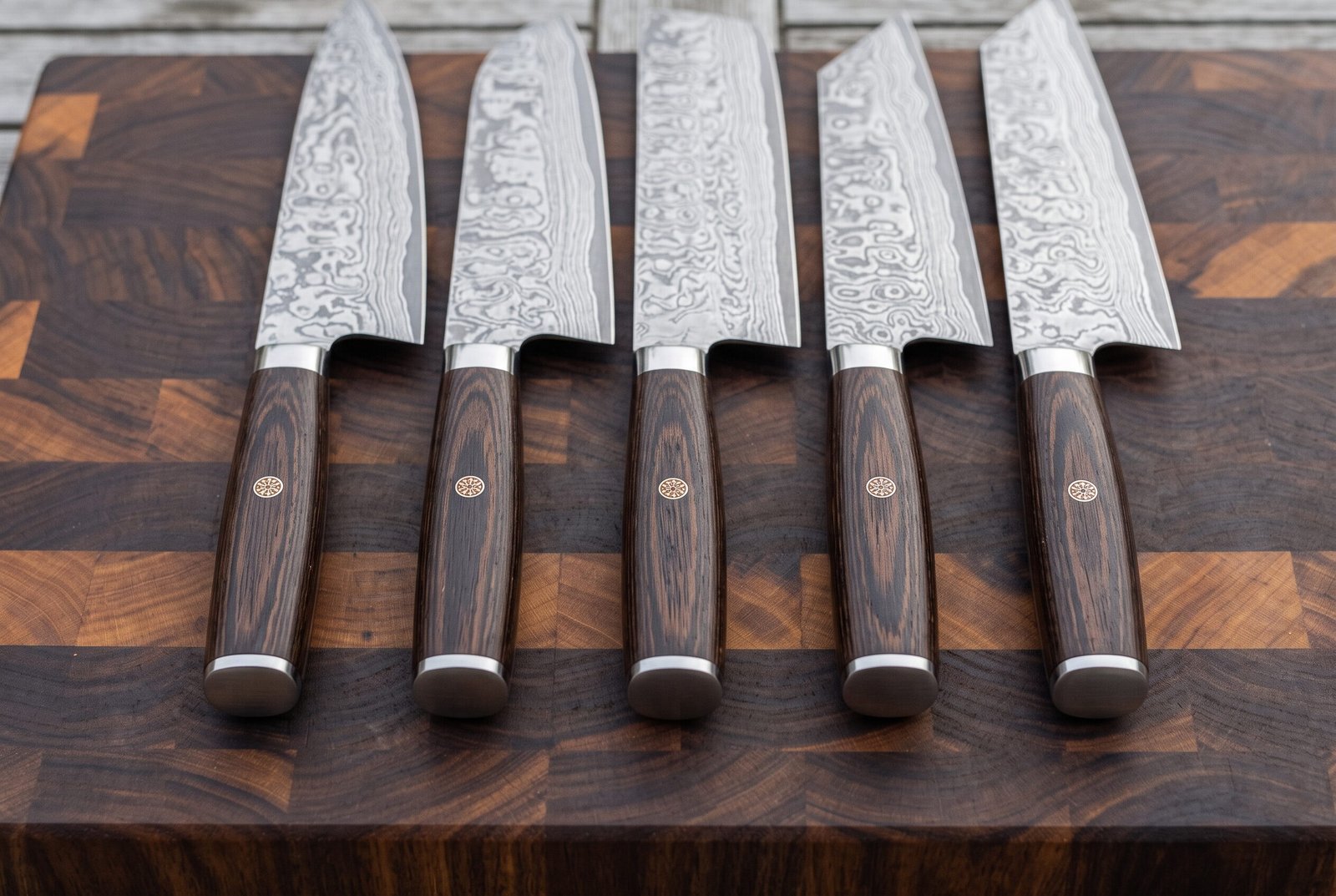
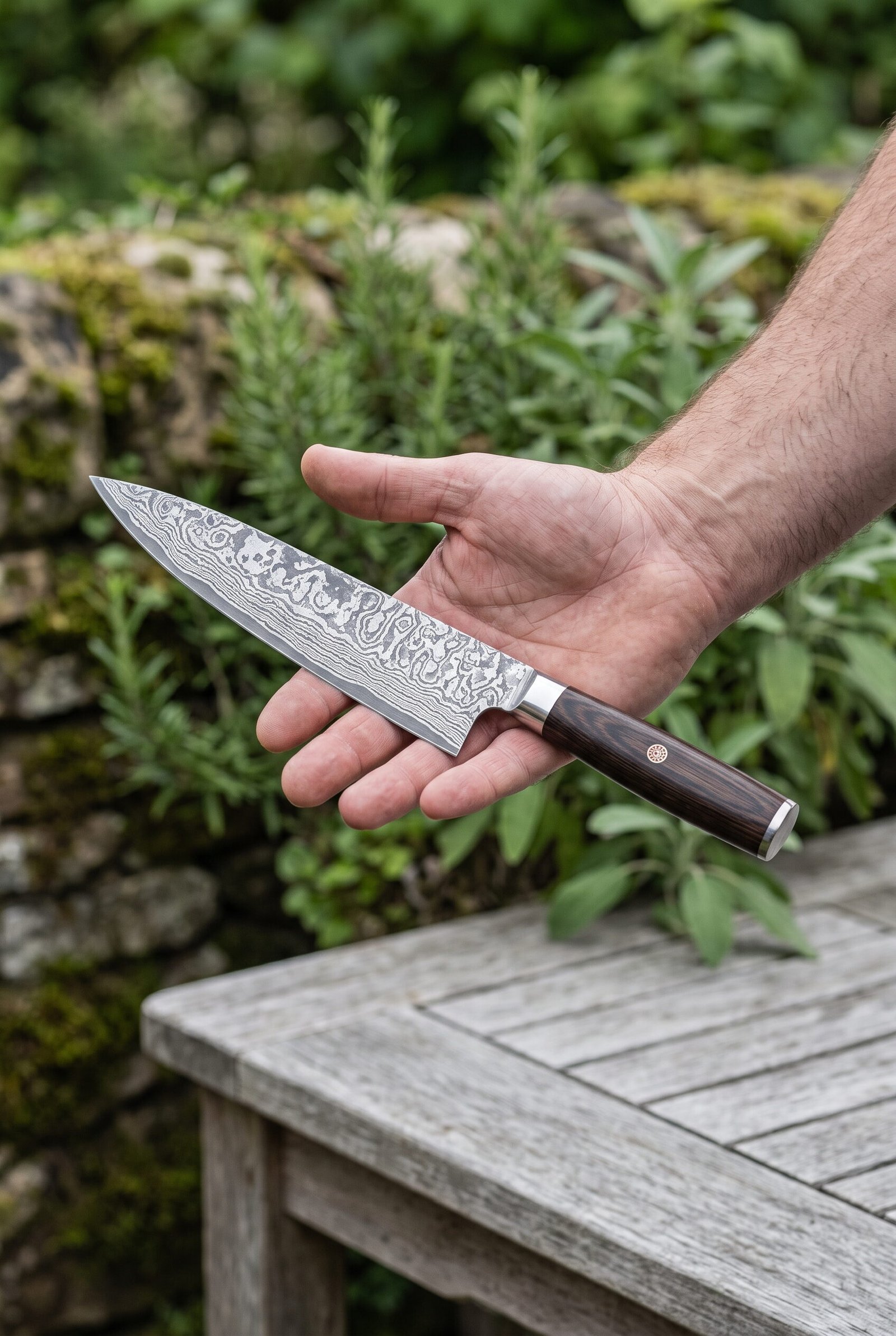
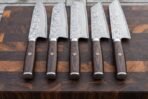
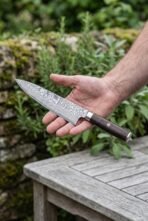
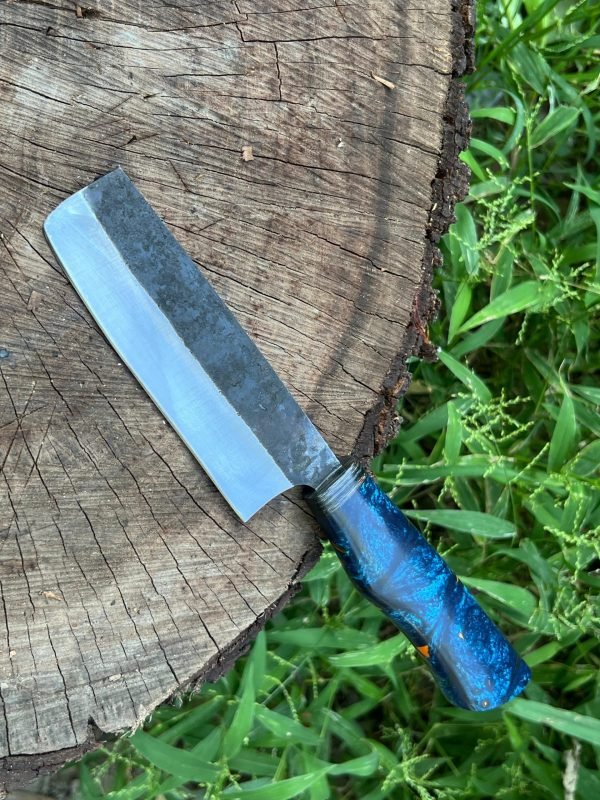
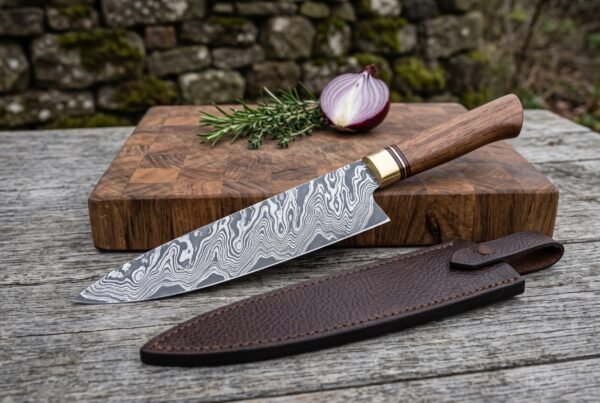
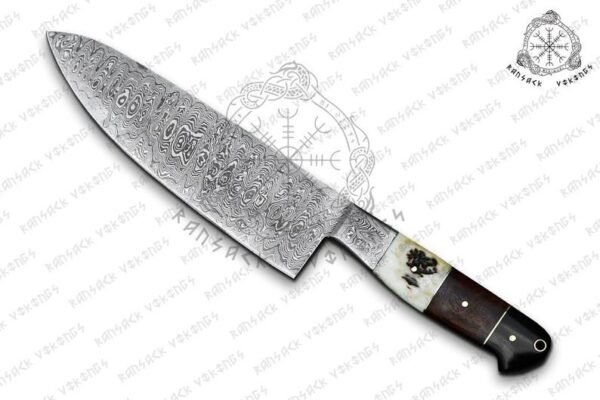
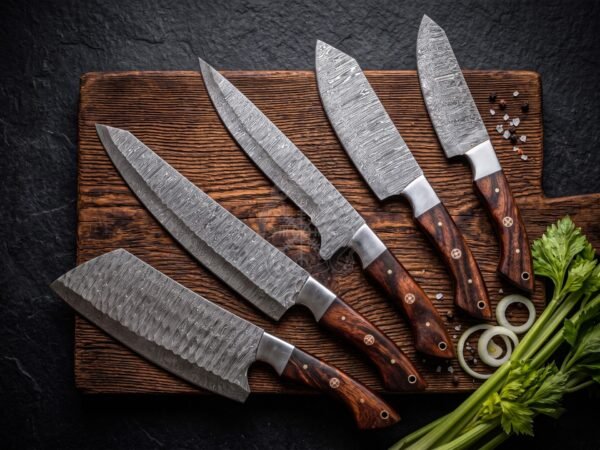
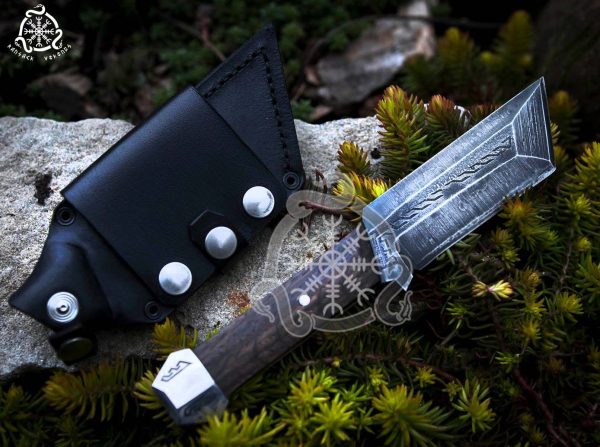
The Wengechef is forged in Damascus from 1095 and 15N20 at 58 to 60 HRC and ground with that in mind. The blade is 7 inches on a knife that runs 12 inches overall, with a 5 inch wenge wood handle, a steel bolster and a mosaic pin. It is built around one idea, which is a knife you will actually reach for rather than one you keep for guests.
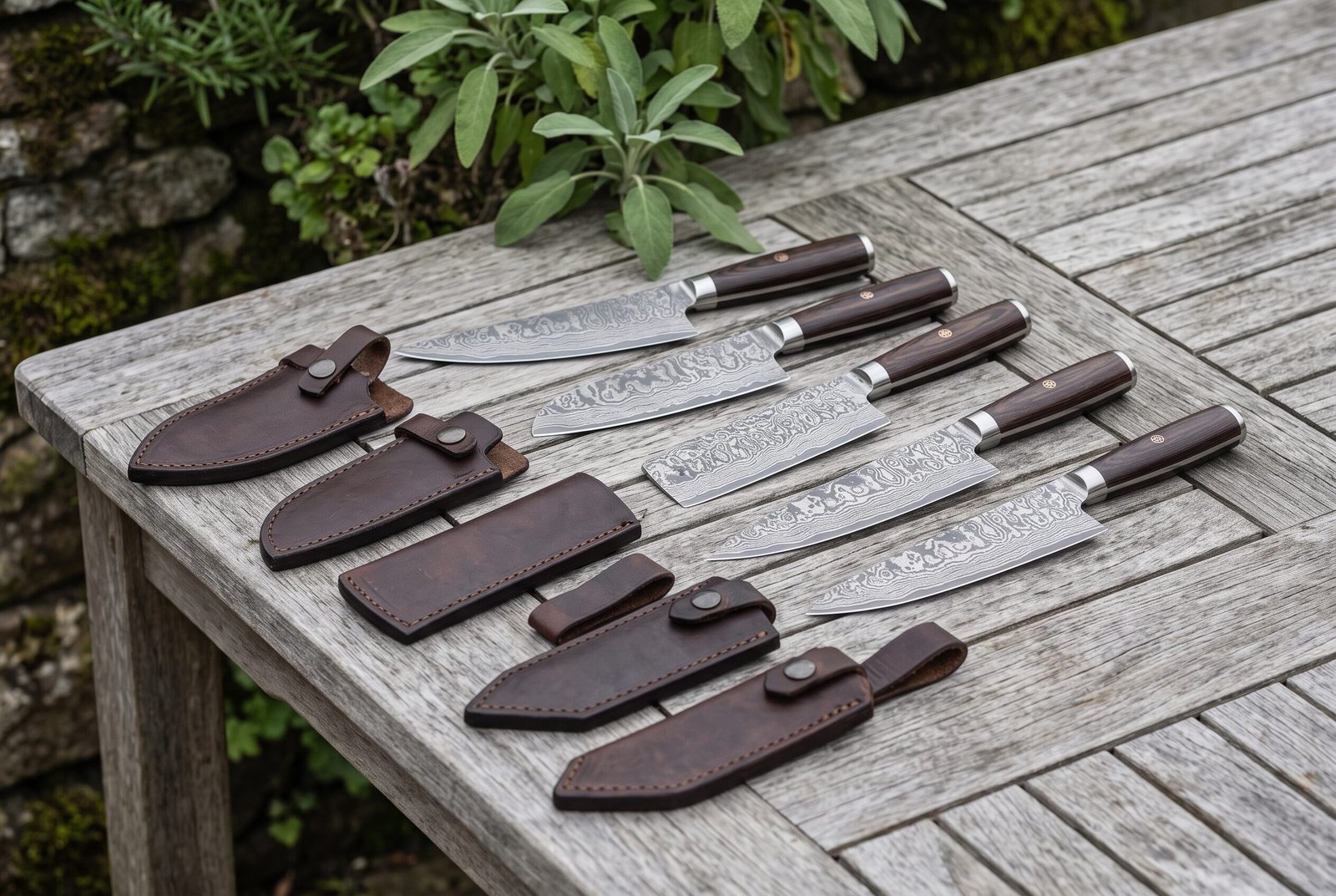
It is forged and finished in the Czech Republic, and it ships with a leather sheath and protective packaging.
Specifications
| Steel | Hand forged Damascus, 1095 and 15N20 |
|---|
| Hardness | 58 to 60 HRC |
|---|
| Overall length | 12 inches |
|---|
| Blade length | 7 inches |
|---|
| Handle length | 5 inches |
|---|
| Handle | Wenge wood with steel bolster and mosaic pin |
|---|
| Sheath | Leather |
|---|
| SKU | RK-1137 |
|---|
Why a chef knife is shaped the way it is
A chef knife has a curved belly and a straight heel, and both are doing a job. The curve lets you rock the blade through herbs and garlic with the tip staying in contact with the board, which is the fastest way to reduce anything to small pieces. The straight section at the heel is for push cutting, where the whole edge comes down at once through an onion or a stack of carrots, and it is also what lets you get a clean cut all the way to the board rather than leaving the last thread of skin attached.
Seven inches is a deliberate middle. The classic Western chef knife is eight to ten inches, which is superb on a large board and unwieldy on a small one. A santoku is closer to six and a half, which is nimble and short on reach. Seven gives you enough length to slice through a squash or a roast in a single draw, while still being controllable for the finer work most home cooking actually consists of. The height of the blade matters as much as the length, because a tall blade gives your knuckles clearance above the board, and that is what allows a proper claw grip. More on kitchen profiles in the Damascus chef knife guide.
Why Damascus and not stainless
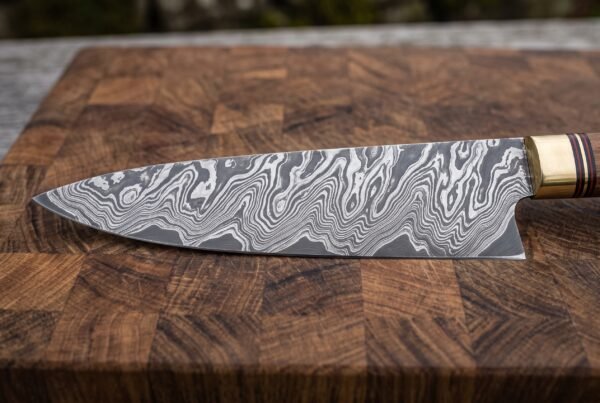
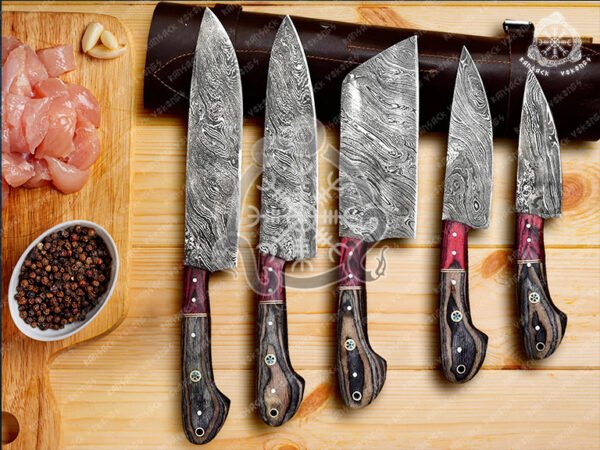
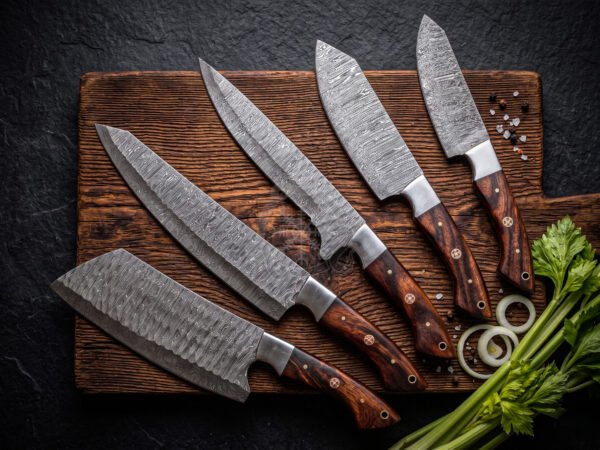
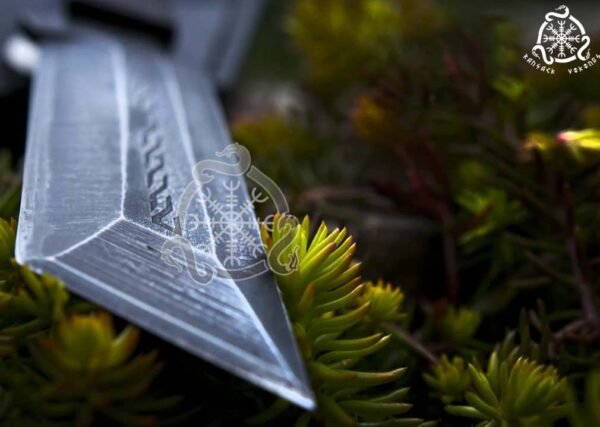
Damascus here means 1095 and 15N20 forge welded together into one billet, folded and drawn out so the layers run through the steel. The 1095 provides hardness and the 15N20 carries nickel, which stays bright when the finished blade is etched while the 1095 darkens. That is the pattern, and because it is structural it cannot wear off. On a kitchen knife there is a practical benefit as well: the fine layering gives the edge a very slightly toothy character that helps it start a cut on a tomato skin.
The trade against a stainless kitchen knife is real and you should know it before buying. This blade is high carbon underneath the pattern. It will take a finer edge than most stainless and hold it far longer, and it will sharpen back in a fraction of the time. In exchange it will react with acidic food and with water left on it. That means hand washing and drying immediately after use, every time, rather than leaving it in a sink. If that sounds like a chore, buy stainless and be happy. If it sounds like ten seconds, this is the better knife. The comparison is set out plainly in Damascus versus stainless.
The wenge wood handle
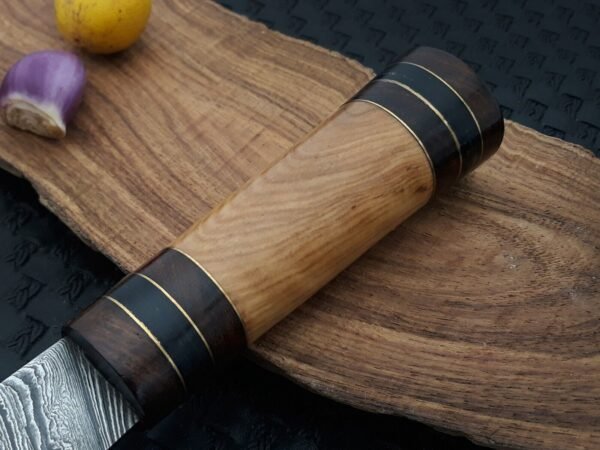
Wenge is a West African hardwood and it is one of the densest timbers used for knife handles. It is very dark, almost chocolate brown, with fine near black lines running through it, and it darkens further toward black with age and oil. It is also unusually stiff and hard wearing, which is why it turns up in flooring and furniture as well as in knife scales. The open pore structure gives it a slight texture in the hand rather than a glassy surface, which is welcome on a knife handled with wet fingers.
Wood moves with temperature and moisture, and a kitchen is the hardest environment there is for that. A light coat of a food safe oil once or twice a year keeps the grain tight, stops the pores drying out and keeps the fit around the bolster and the mosaic pin from opening up. Never leave it soaking and never put it in a dishwasher, where the heat and detergent will do more damage to the handle in one cycle than a year of use. The method is in wooden handle care.
Engraving, runes and your own design
Use the rune converter on this page to turn a name, a date or a short phrase into Elder Futhark and we will cut it into the steel or the handle. If you would rather have a Viking pattern than a rune line, choose your own design in the engraving option above the add to cart button and tell us whether it goes on the blade or the handle. Where a piece already carries an engraved design, your chosen engraving replaces it rather than sitting alongside it. On a chef knife we set the line high on the flat near the spine, well away from the edge, so that years of sharpening never work into it. Wenge is dense enough to take a very crisp cut if you would rather have it on the handle. It is all cut here. See the engraving page.
Care and sharpening
Hand wash it in warm water, dry it immediately, and put a thin film of mineral or camellia oil on the blade if it is going into a drawer for a while. Keep it off bone and frozen food, keep it out of the dishwasher, and use a wooden or plastic board rather than glass or stone, which will destroy an edge in a single meal. Onions, tomatoes and citrus will grey the blade slightly over time. That is patina rather than damage and most owners come to prefer it. The routine is in steel care.
A kitchen knife wants maintaining rather than rescuing. A few passes on a fine stone every couple of weeks will keep it where it started, whereas letting it go blunt and then grinding it back removes far more steel. Raise a burr along one side on a medium stone, match it on the other, finish fine, and strop if you have one. On a 7 inch blade work in two overlapping sections rather than trying to cover the whole edge in one pass. Method in sharpening with a whetstone.
Made in the Czech Republic
This is a handmade piece from the Czech Republic, made in a workshop that still forges, grinds and finishes by hand instead of stamping parts out. The smiths there have kept the older way of working, and the wood, horn and leather are shaped and fitted by hand as well. Two pieces of the same design will never be identical, and that is part of what you are buying.
Ransack Viking is a United States company. We handle the import ourselves, look over every piece when it lands and ship from our warehouse in Chicago, Illinois. Engraving is done in the United States after the piece arrives, so your design goes on before we send it out.
A note on handmade variation
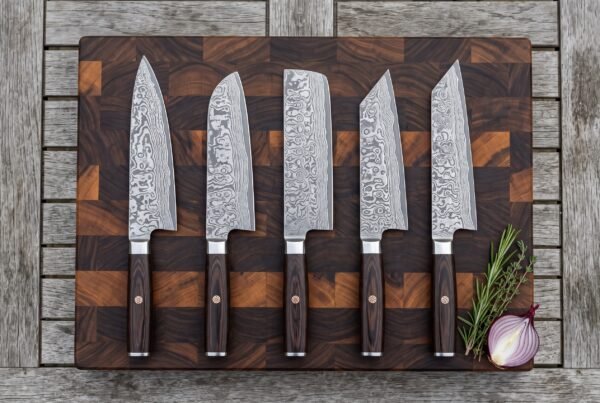
This chef knife is hand forged, not machine made and not bulk produced, so what arrives will not be a pixel for pixel copy of the photograph on this page. The Damascus is drawn out under a hammer and every billet lands differently, so the banding down a 7 inch blade is unique to yours. Wenge varies from mid brown to near black depending on where in the tree the board came from, and the fine dark lines fall differently on every handle. The mosaic pin is cut from a patterned rod, so the face that shows is whatever the cut revealed. The dimensions, the steel, the hardness and the build are the same every time. The character is not.
Frequently asked questions
Will the blade discolour when I cut onions and tomatoes?
Slightly, yes. Damascus is high carbon underneath the pattern and acidic food will grey it over time. That film is patina and it protects the steel. Wash and dry the blade after use and it will develop evenly rather than blotchily.
Can it go in the dishwasher?
No, and this is the one rule that matters. Dishwasher heat, steam and detergent will rust the blade and dry out the wenge handle. Hand wash in warm water and dry immediately.
Is 7 inches the right size for a chef knife?
It is the practical middle. Eight to ten inches is faster on a large board, six and a half is nimbler for small work. Seven handles a squash and a shallot equally well, which is why it suits most home kitchens.
Is wenge a good handle wood for a kitchen knife?
It is one of the best. It is exceptionally dense, stiff and hard wearing, and its open pore texture gives grip with wet hands. Like any timber it wants a light food safe oil once or twice a year.
Can I cut through bone or frozen food with it?
No. At 58 to 60 HRC the edge is hard, and hard edges chip on bone and ice. Use a cleaver or a bone saw for that and keep this for prep, herbs, vegetables and boneless meat.
Can it be engraved as a housewarming or wedding gift?
Yes, and it is one of the most requested pieces for it. A name, a date or an Elder Futhark line goes high on the blade flat or into the wenge. Allow the longer end of the one to two week processing window.
What is in the box
- One Wengechef Damascus chef knife
- Leather sheath
- Protective packaging for storage or gifting
- Forged and finished in the Czech Republic
Explore the range
Related collections are Chef Knives, Hunting Knives, Viking Knives and New Arrivals. The how and why behind the steel is covered in the guides.
Also in this part of the catalogue
Sitting beside it in the catalogue is the Blockward chef knife, 14 inches overall. Another in the same line is the Boardkeen chef knife. Next along the rack is the Brasshearth chef knife, pattern welded Damascus.
Fitting out further, the Riverstag fish fillet knife belongs with it. Or start from a blank sheet on the custom Damascus knife page.




This knife is a genuine work of art. Weight and balance make it feel like a real functional piece not some cheap replica. If you’re on the fence just get it. You won’t regret it.