
Blog
The Axe Ragnar Lothbrok Carries in Vikings, and What It Really Is

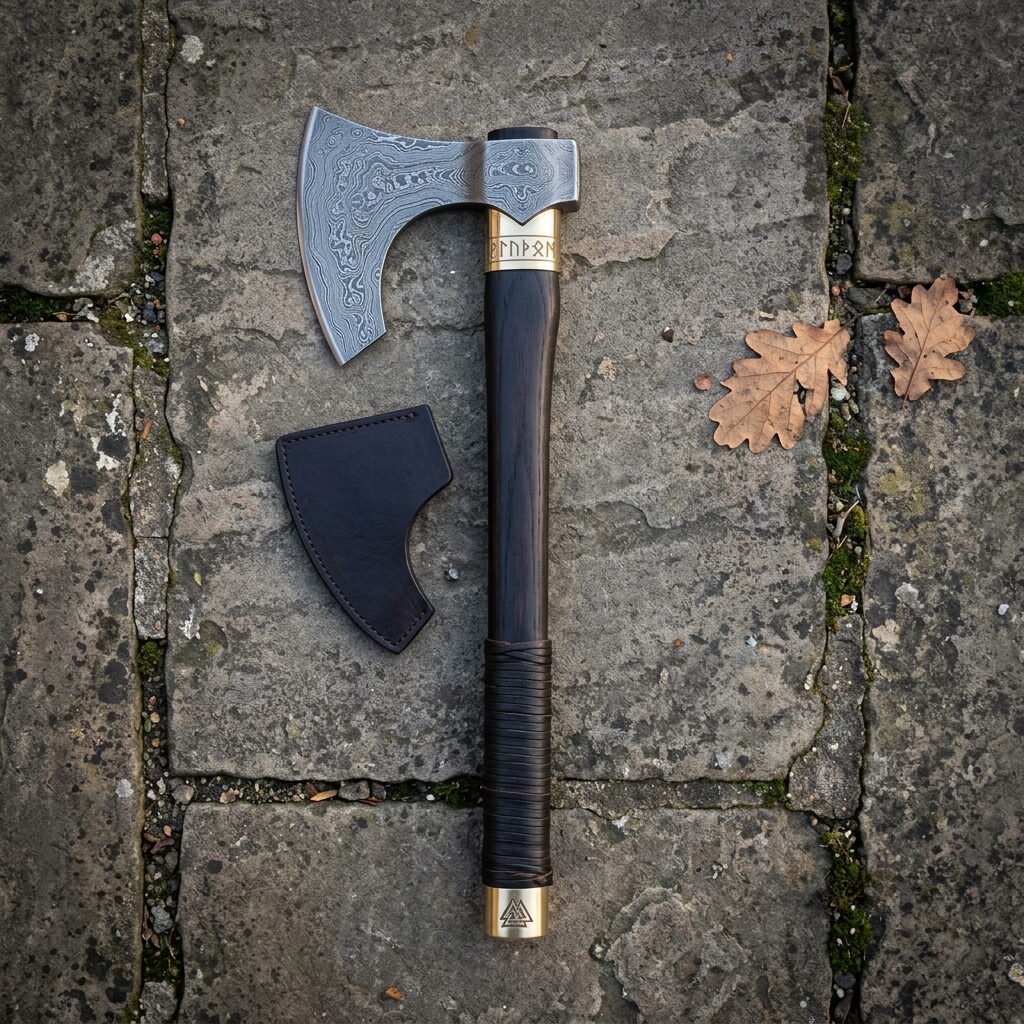
Most people searching for Ragnar Lothbrok’s axe mean one thing: the bearded axe that Travis Fimmel’s Ragnar carries through the early seasons of the television series Vikings. It is a small axe with a long hooked beard on a plain wooden haft, tucked into his belt or swung one handed in the raid scenes, and it did more to sell bearded axes to the public than any museum ever has. It is also a television prop, which is worth remembering before anyone offers to sell you an authentic one. This post covers who Ragnar was in the sources, what the on screen axe looks like, how it stacks up against real Viking Age finds, and what to actually look for if you want a hand forged bearded axe with that character.
Who Ragnar Lothbrok is in the sagas
Ragnar Loðbrók, the nickname means “hairy breeches,” is the hero of Ragnars saga loðbrókar, a legendary saga written down in Iceland in the thirteenth century, roughly four hundred years after the events it describes. He appears again in the Tale of Ragnar’s Sons, in the Danish historian Saxo Grammaticus’s Gesta Danorum from around 1200, and in Krákumál, a poem framed as his death song. In these sources he kills a serpent to win his first wife Thora, marries Aslaug, daughter of Sigurd the dragon slayer, raids widely, and finally dies in a snake pit at the hands of King Ælla of Northumbria. His sons then bring an army to England to avenge him.
The sons are the historical anchor. Ivar the Boneless, Halfdan and Ubba are recorded in the Anglo-Saxon Chronicle and Irish annals as leaders of the Great Heathen Army that landed in East Anglia in 865 and went on to overthrow Northumbria and East Anglia. Björn Ironside appears in Frankish sources as well as the Norse ones. Their father is the problem.
Why historians argue about whether he existed
No contemporary source names a Ragnar Lothbrok. What we have instead are several ninth century figures who might have contributed to the legend. Frankish annals record a Viking leader called Reginheri who sacked Paris in 845 and died shortly afterward. The saga tradition may have gathered him and others like him, along with pure folklore, into a single larger than life father for the well documented sons.
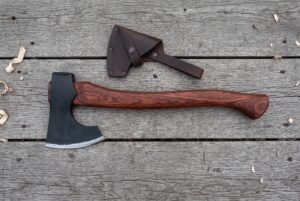 Ragnar Lothbrok Hand Forged High Carbon Steel Viking Bearded Axe | 19 Inch | Rosewood Handle with Leather Blade Cover and Gift Box | Norse Camping and Christmas Gift | RK-389
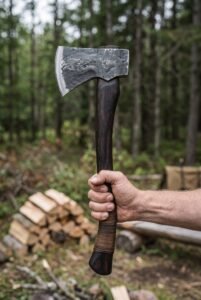 Ragnar Warlord Hand Forged High Carbon Steel Viking Axe | 20 Inch | Rosewood Handle with Leather Wrapped Grip | Norse Battle Axe Collector Gift | RK-641
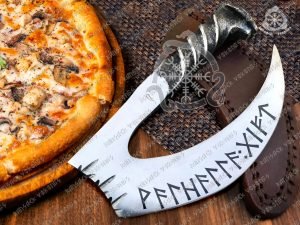 Hearthcutter Hand Forged Stainless Steel Pizza Axe | 12 Inch Handle | Olive Wood Handle with Veg Tanned Leather Blade Cover | Kitchen Housewarming and Groomsmen Gift | RK-316
The honest summary is that Ragnar is semi legendary. There was probably a real raider or several real raiders behind the name, but the man who kills dragons and dies singing in a snake pit is a literary creation. The series Vikings is a drama built on the legend, not a documentary, and it compresses events that happened decades apart into one lifetime. That is fine for television. It only becomes a problem when someone tries to buy “the historically accurate Ragnar axe,” because there is no such object to be accurate to.
What the axe looks like on screen
Described in general terms, the axe Ragnar carries in the show is a one handed bearded axe. The head is compact with a pronounced beard, the lower part of the blade that hooks down well below the eye, giving a cutting edge much longer than the head’s body would suggest. The finish is dark and plain rather than polished. The haft is straight, unadorned wood of roughly forearm length, sometimes with a simple wrap near the head. It is carried in the belt and used as much as a tool as a fighting piece, which is consistent with how the show presents Ragnar as a farmer first.
That is deliberately a restrained description. The production changed props across seasons, other characters carry their own axes, and we are not going to invent details about who made the screen props or how they were built. If you want that information, look for interviews with the production’s armoury team rather than a knife shop.
How it compares to real Viking Age axes
The good news is that the general shape is not far off what archaeologists actually dig up, which is more than most screen props manage. Bearded axes, skeggöx in Old Norse, are among the most common axe forms in Viking Age graves and settlement finds across Norway, Sweden, Denmark and the Norse settlements in Britain. The beard exists for practical reasons: it extends the cutting edge without adding much weight, and the hollow behind it lets the user choke up on the haft right under the head for close, controlled work, whether that is carving a plank or catching a shield rim.
The standard reference is still Jan Petersen’s typology from 1919, which sorts Norwegian axe heads into types lettered A through M. Several of the mid sequence types are bearded, and many are far smaller than people expect, particularly people who arrive with the television version in mind. Head weights for one handed Viking axes commonly fall somewhere between about half a pound and a pound and a half, with hafts that put the whole axe somewhere around two to three feet. Big two handed axes, the broad bladed type M that people call the Dane axe, come later in the period and are a different animal, with a thin, wide, flaring blade on a haft that could reach five feet.
Where the screen axe departs from the finds is mostly in finish and in decoration. Real heads were forged from iron, often with a harder steel bit welded into the edge, and the well preserved ones tend to be plainer than television props. Decorated examples exist, and the Mammen axe from Denmark, inlaid with silver, is the famous one, but it was a high status object, not a farmer’s belt axe. Our longer post on Viking axe history goes through the types, the Dane axe and how the axes were used, and our post on what a bearded axe is explains what the beard actually does and why the shape keeps being made.
What to look for in a hand forged bearded axe with that character
If the look you want is Ragnar’s, you are looking for a small one handed bearded axe, dark or satin finished, on a plain hardwood haft. Here is what matters when you compare listings.
Head shape. Look for a beard that drops well below the eye, a cutting edge around four to five inches on a hand axe, and a fairly narrow neck between the eye and the edge. Some modern bearded axes exaggerate the hook until the beard is longer than the body, which looks dramatic but leaves a thin, weak section of steel. A moderate beard is closer to the finds and stronger in use.
Haft length. A one handed axe in the screen style wants a haft in the range of fifteen to twenty inches. Anything under fourteen inches is a hatchet whatever the listing calls it, and anything past twenty four is drifting toward a two handed piece. Straight grained ash, hickory or walnut are the common choices, and spare handles and hafts are worth knowing about before you crack one. A leather or cord wrap under the head is a nice touch and helps the choke grip.
Weight. As a guide, a hand axe in this style should come in somewhere around one and a half to two and a half pounds overall. Lighter than that and it will feel toy like. Heavier and it stops being a one handed piece and becomes tiring to swing.
Steel and hardness. Our plain axes are 1095 high carbon steel, heat treated to 54 to 58 HRC, which the steel and hardness page sets out in full. That range is deliberate rather than a compromise we are apologising for. It is hard enough to hold a keen edge for splitting kindling and carving, and soft enough not to chip when the edge meets a knot. Our Damascus axes are forge welded from layered 1095 and 15N20, hardened to 58 to 60 HRC, and the pattern shows in the head after etching. For a plain dark screen style axe, 1095 is the natural choice.
Blade cover. A bearded axe with no edge protection is an accident waiting to happen in a bag or on a wall. Look for a fitted leather cover with a snap or strap that actually holds under the beard, since a loose sleeve slides off a bearded head easily.
Hang and wedge. Check that the head is wedged tight and the eye is fully filled. A loose hang is the most common fault on cheap imports.
Where to find this style on our site
We sell hand forged bearded axes in this style, made the old way in the Czech Republic, then imported, inspected and shipped from our base in Chicago, Illinois. They are our own designs in the general character of the axe Ragnar carries, not licensed screen replicas, and we do not claim any connection with the production. Several are named for that look, including a Damascus “Ragnar style” bearded axe with a five inch edge on a twenty inch haft and a plain 1095 bearded axe on rosewood with a leather cover and gift box.
You will find all of them in our Viking axes category, and the ones with the true hooked beard are collected under bearded axes. If you want to see the axes alongside seaxes, spears and swords of the same period, the wider Norse arms range holds everything together in one place. Every axe ships with an edge cover, and most can be engraved with a name, a date or a line of Elder Futhark runes before they leave Chicago, at 19 dollars for text.
A note on “battle ready” and safety
A 1095 bearded axe at 54 to 58 HRC is a working tool. It will split kindling, carve and throw. It is also perfectly capable of hurting someone, and no film prop is. Treat it as you would any sharp axe: keep the cover on when it is not in use, hang it out of reach of children as the storage notes spell out, and oil the head lightly before storing, because high carbon steel will rust if left damp. If you only want the look, the wall plaque versions of our bearded axes are the safer and more honest choice for a living room.
How the television series armed its cast more generally is covered in the arms of Vikings and The Last Kingdom. For another axe that owes its fame to a screen, see the axe behind Leviathan.
Questions people ask
Was Ragnar Lothbrok a real person?
Probably not as a single individual. The sagas describe him, but no contemporary source names him. His sons, including Ivar the Boneless and Björn Ironside, are historically attested, and the legend probably gathers several ninth century raiders into one man with better stories.
What kind of axe does Ragnar use in Vikings?
A one handed bearded axe: a compact head with a long hooked beard, plain dark finish, on a straight wooden haft of roughly forearm length, carried in the belt.
Is the axe in the show historically accurate?
The general shape is close to real Viking Age bearded axe heads found in graves across Scandinavia. The finish and some proportions are television choices, and Ragnar himself is semi legendary, so there is no original to compare it against, however firmly a listing insists otherwise.
Do you sell the official Ragnar axe from the show?
No. We sell hand forged bearded axes in that general style. They are our own designs, not licensed replicas, and we have no connection with the production. Anyone offering you the official one should be asked to produce the licence.
What size bearded axe matches the screen look?
A hand axe with a four to five inch edge, a fifteen to twenty inch haft and an overall weight of roughly one and a half to two and a half pounds is the closest match.
What steel are your bearded axes made from?
Plain axes are 1095 high carbon steel at 54 to 58 HRC. Damascus axes are 1095 and 15N20 forge welded together and hardened to 58 to 60 HRC.
Where are your axes made?
Every axe is hand forged in the Czech Republic the old way, then imported, inspected and shipped from Chicago, Illinois. Engraving is cut in the United States.
Things you can actually hold
Ready to ship, the Ragnar Viking bearded axe and the Ragnar warlord Viking axe. The Ravenskegg Viking bearded axe and the Ravenhaft raven axe are the other two.
Shop the range
Ragnar Lothbrok Hand Forged High Carbon Steel Viking Bearded Axe | 19 Inch | Rosewood Handle with Leather Blade Cover and Gift Box | Norse Camping and Christmas Gift | RK-389Ragnar Warlord Hand Forged High Carbon Steel Viking Axe | 20 Inch | Rosewood Handle with Leather Wrapped Grip | Norse Battle Axe Collector Gift | RK-641Hearthcutter Hand Forged Stainless Steel Pizza Axe | 12 Inch Handle | Olive Wood Handle with Veg Tanned Leather Blade Cover | Kitchen Housewarming and Groomsmen Gift | RK-316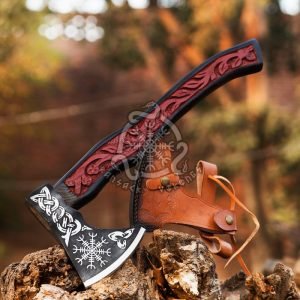 Ashgrim Hand Forged Damascus Viking Bearded Axe | 18 Inch | Wood Handle with Leather Blade Cover and Gift Box | Norse Camping Gift | RK-634
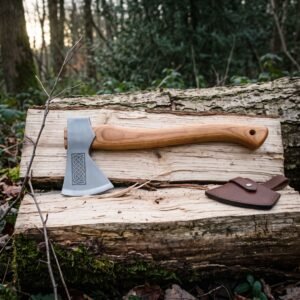 Barkbiter Hand Forged 1095 Steel Felling Axe | 20 Inch Hickory Handle | Knotwork Engraved Head and Leather Blade Mask | Camp and Bushcraft Gift | RK-1515
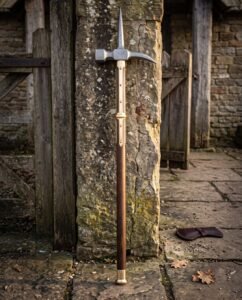 Brassmaul Hand Forged High Carbon Steel Medieval Polehammer | 58 Inch Overall with an 8.5 Inch Head | Reenactment Display Gift | RK-1359