Blog
Elder Futhark: Every Rune, Its Name and Its Sound

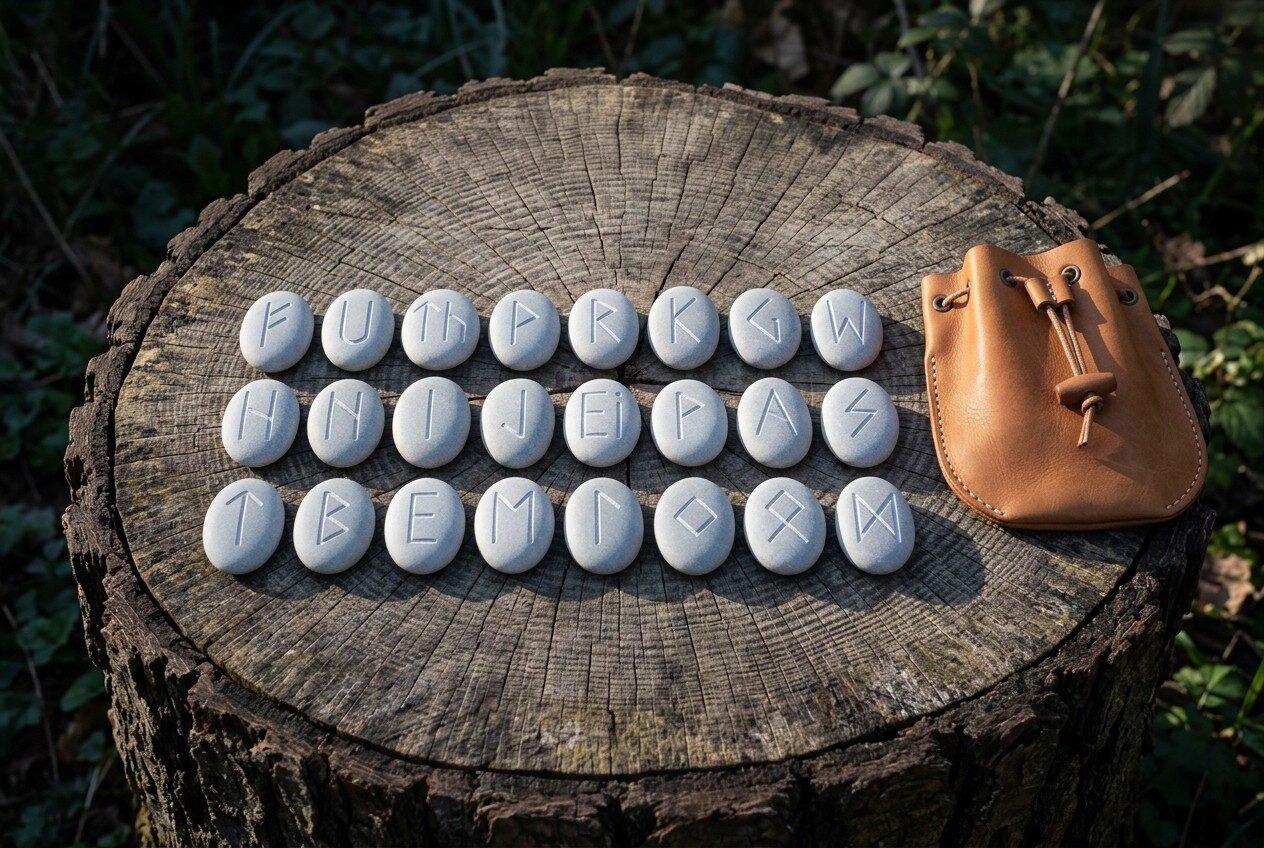
The Elder Futhark is a 24 character alphabet used across Germanic speaking Europe from roughly 150 to 800 AD. The full table of all 24 is below, with each rune’s reconstructed name, its sound value and the meaning usually attached to it. Read the table, then read the section under it, because the names are reconstructions and the divination meanings are modern. Neither fact survives the journey to most rune set listings.
Those two caveats are not pedantry. They change what you should put on a ring or an axe head. A rune is a letter first. Everything else came later, and some of it came a great deal later than the people selling rune sets tend to admit.
What the Elder Futhark is
It is a writing system, named after its first six sounds: f, u, th, a, r, k. It was used by speakers of early Germanic languages from Scandinavia down through central Europe, cut into metal, bone, wood and stone. A few hundred inscriptions survive. Most are short. Plenty of them are a name and nothing more, scratched onto a comb, a brooch, a spearhead or a piece of a scabbard. The Germanic speaking world used its alphabet mostly to label its possessions.
One of the earliest is a bone comb from Vimose in Denmark, dated to around 160 AD, carrying the single word harja. The earliest complete row of all 24 in order is on the Kylver stone from Gotland, laid face down in a grave around 400 AD. That stone is the reason we know the order at all.
All 24 runes
| Rune | Name | Sound | Usual meaning attributed |
|---|---|---|---|
| ᚠ | Fehu | f | Cattle, movable wealth |
| ᚢ | Uruz | u | Aurochs, the wild ox |
| ᚦ | Thurisaz | th | Giant, thorn |
| ᚨ | Ansuz | a | A god, one of the Aesir |
| ᚱ | Raido | r | Riding, a journey |
| ᚲ | Kaunan | k | Sore or ulcer, sometimes read as torch |
| ᚷ | Gebo | g | Gift |
| ᚹ | Wunjo | w | Joy |
| ᚺ | Hagalaz | h | Hail |
| ᚾ | Naudiz | n | Need, hardship |
| ᛁ | Isaz | i | Ice |
| ᛃ | Jera | j or y | Year, a good harvest |
| ᛇ | Eihwaz | ei | Yew tree |
| ᛈ | Pertho | p | Unknown, often guessed as a lot cup |
| ᛉ | Algiz | z | Elk, or protection, both disputed |
| ᛊ | Sowilo | s | Sun |
| ᛏ | Tiwaz | t | The god Tiw, Old Norse Tyr |
| ᛒ | Berkanan | b | Birch |
| ᛖ | Ehwaz | e | Horse |
| ᛗ | Mannaz | m | Man, a human being |
| ᛚ | Laguz | l | Water, lake |
| ᛜ | Ingwaz | ng | The god Ing, Old Norse Yngvi |
| ᛞ | Dagaz | d | Day |
| ᛟ | Othala | o | Inherited land, ancestral home |
Two notes on the order. The final pair, Dagaz and Othala, swap places depending on the source: the Kylver stone puts Dagaz last but one, while the Vadstena bracteate reverses them. And Algiz is a terminal z rather than a sound you would use at the start of a word, which is why transliterations often print it as a capital R.
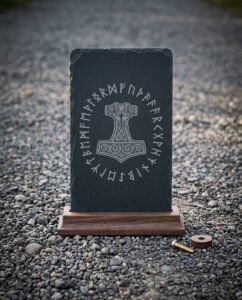 Thundermark Hand Made Engraved Slate Rune Plaque with Mjolnir and Full Elder Futhark Ring | 10 by 7 Inch Riven Slate | Solid Walnut Display Base | Norse Home Gift | RK-1714
 Slatestave Hand Made Engraved Pale Grey Rune Stone with Full Elder Futhark Row & Knotwork Arch | 10 Inch Standing Height | Solid Oak Display Base | Norse Home Decor Gift | RK-1705
 Stonecast Hand Made Elder Futhark Rune Set | 24 Engraved Casting Stones | Tumbled Stone with Tan Leather Drawstring Pouch | Norse Divination Gift | RK-1780
The three aettir
The 24 divide into three groups of eight, called aettir, singular aett. This is not a modern invention: the Vadstena bracteate physically separates the row into three blocks of eight. The names given to those groups today, Freyr’s aett, Hagal’s aett, Tyr’s aett, are a later convention taken from the first rune of each group, and they are not recorded in the Elder Futhark period.
Where the rune names come from
This is the part the rune meaning posts skip. No Elder Futhark inscription tells us what the runes were called. Not one. The names in the table above are reconstructions, worked backwards by linguists from three much later poems.
The three rune poems
The Old English Rune Poem describes the Anglo-Saxon futhorc, an expanded English version of the system. The manuscript that held it burned in a library fire in 1731, so we have it only through a printed copy made by George Hickes in 1705, which is the kind of luck the study of runes runs on. The Norwegian Rune Poem and the Icelandic Rune Poem both describe the Younger Futhark, the 16 rune Scandinavian system that replaced the Elder Futhark, and both survive in copies later still.
Scholars compare the names in those three poems, apply the sound laws that connect Old English and Old Norse back to Proto-Germanic, and arrive at forms such as fehu and berkanan. The method is sound and the results are widely accepted. They are still reconstructions, and a couple of the runes resist it. Nobody knows what Pertho meant. Algiz is argued over. Anyone who prints a confident one word meaning for those two is filling in a blank.
Where the divination meanings come from
Casting runes to answer a question is a modern practice, and not a very old modern one. There is no Viking Age source that describes anything like the rune reading sold today, with a bag of 24 stones, a spread and a book of interpretations. This is worth saying plainly on a page that sells rune sets.
What Tacitus wrote
The one classical passage people cite is Tacitus, Germania, written around 98 AD. He describes Germanic people cutting marks into strips taken from a fruit bearing tree, scattering them on white cloth, and a priest or a father of the family drawing three while looking up, then reading them. That is a real description of lot casting. Two problems: Tacitus is writing before the Elder Futhark is properly attested, and he calls the marks notae, signs, without saying they were runes. He may be describing something simpler.
What the Norse sources actually show
The Norse material shows runes used as writing, and used as magic, and the magic is not fortune telling. In Havamal, in the Poetic Edda, Odin wins the runes by hanging nine nights on the windy tree, and the poem then talks about carving them, staining them and knowing how to read them. In Egils saga there is a famous scene where Egill finds a sick girl with a piece of whalebone under her bed, cut with runes by a man who did not know what he was doing. Egill scrapes the runes off, burns the shavings, and cuts new ones. That is runes as a working charm, cut for a purpose. It is not a reading.
The twentieth century
Modern rune divination largely comes from the last hundred years or so of esoteric writing, and the version most people meet was popularised by Ralph Blum’s The Book of Runes in 1982. That system even adds a blank twenty fifth rune, which has no basis in any historical row. If you enjoy rune casting, enjoy it as a modern practice with a shallow history. It is only a problem when a seller backdates it by a thousand years.
Why the row shrank
Around 800 the Scandinavians dropped from 24 runes to the 16 of the Younger Futhark, at exactly the point when their spoken language was developing more sounds rather than fewer. So one rune had to cover several sounds and reading became context dependent. Nobody has a settled explanation for it. In England the change went the other way and the futhorc grew to 26 and then more. The Elder Futhark is the ancestor of both.
Runes on things you can hold
If you want the row itself rather than a modern reading of it, our runestones and rune sets include full 24 stone Elder Futhark casting sets and engraved slate pieces carrying the complete row. Runes also run through the Damascus steel jewellery range on ring bands, arm rings and pendants, and across the heads and hafts of the pieces in Viking axes, including the Norse runic axe group. Anything you want cut to your own wording goes through our engraved and personalised range. To be clear about how that works: Ransack Viking is a US company in Chicago, Illinois, every piece is handmade in the Czech Republic the old way, then imported, inspected and shipped from Chicago, and the engraving is done in the US after the piece arrives, which is why we can take your exact rune line late in the process. On blades the steel is plain 1095 at 54 to 58 HRC, or Damascus of 1095 and 15N20 forge welded at 58 to 60 HRC.
Writing a name in runes without embarrassing yourself
The Elder Futhark records sounds, so transliterate what a name sounds like rather than how it is spelled in English. There is no rune for c, q, v, x or y. Use k for a hard c and s for a soft one. There is no th sound in most modern names, so Thurisaz is rarely the right choice for the letters t and h sitting side by side. Double letters were often written once. Send us the name and we will send back the row we would cut before anything is engraved.
For how runic inscriptions fit alongside the rest of the symbol set, our guide to Viking symbols and their meanings covers the wider picture, the piece on the Valknut deals with a symbol that is genuinely Viking Age but has no recorded meaning, and Viking axe history explains why so many surviving inscriptions turn up on tools and arms rather than on monuments.
What was actually carved with these letters is covered in the runestones, and the later Icelandic staves that get mixed up with them are separated out in the vegvisir.
Questions people ask
How many runes are in the Elder Futhark?
Twenty four, in a fixed order that we know from the Kylver stone on Gotland, cut around 400 AD, and from bracteates such as the Vadstena find. The order divides into three groups of eight called aettir. The last two runes, Dagaz and Othala, appear in either order depending on which source you follow, so both sequences are historically defensible.
Are the rune names authentic?
They are careful reconstructions rather than recorded names. No Elder Futhark inscription tells us what the letters were called. Linguists rebuilt the names from the Old English, Norwegian and Icelandic rune poems, all of which are later and describe different rune rows, then applied known sound changes. Most reconstructions are widely accepted. Pertho and Algiz remain genuinely uncertain, and are likely to stay that way.
Did Vikings read runes for divination?
Not in the way rune sets are used today, ours included. The sources show runes used for writing, and for charms cut with a specific purpose, as in the Egils saga episode where Egill scrapes off badly cut runes and carves correct ones to heal a sick girl. Tacitus describes Germanic lot casting in 98 AD, but he calls the marks signs, not runes.
Where do modern rune meanings come from?
Mostly from twentieth century esoteric writing, with Ralph Blum’s The Book of Runes in 1982 doing more than anything else to spread the current system. That version adds a blank twenty fifth rune that exists in no historical row. The one word meanings in our table above are the traditional glosses drawn from the rune poems, which is a different and older thing than a divination reading, though the two often end up in the same bag.
Can I write my name in Elder Futhark?
You can, with care. Transliterate the sound rather than the English spelling. There are no runes for c, q, v, x or y, doubled letters were usually cut once, and letter by letter substitution produces nonsense. Send us the name you want and we will send back the exact row we would engrave, so you can check it before any steel or silver is touched.
Why did the Younger Futhark have fewer runes?
That is one of the real puzzles. Around 800 the Scandinavian row dropped from 24 characters to 16, at the same time the language was gaining sounds rather than losing them. One rune then had to serve several sounds and readers worked it out from context. No explanation has won general agreement. In England the opposite happened and the futhorc expanded instead.
Things you can actually hold
On the shelf in the same spirit, the Stonecast Elder Futhark rune and the Fatecast engraved slate rune. Next to those, the Runewhet Futhark Viking sword and the Everrune Viking rune ring.
Shop the range
Thundermark Hand Made Engraved Slate Rune Plaque with Mjolnir and Full Elder Futhark Ring | 10 by 7 Inch Riven Slate | Solid Walnut Display Base | Norse Home Gift | RK-1714Slatestave Hand Made Engraved Pale Grey Rune Stone with Full Elder Futhark Row & Knotwork Arch | 10 Inch Standing Height | Solid Oak Display Base | Norse Home Decor Gift | RK-1705Stonecast Hand Made Elder Futhark Rune Set | 24 Engraved Casting Stones | Tumbled Stone with Tan Leather Drawstring Pouch | Norse Divination Gift | RK-1780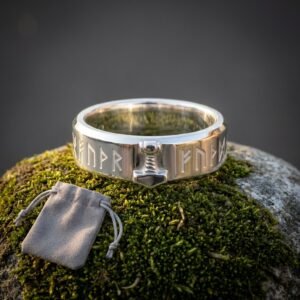 Runeclasp Hand Made Polished Steel Viking Rune Ring with Engraved Elder Futhark Band & Applied Mjolnir Motif | Wedding Gift | RK-1637
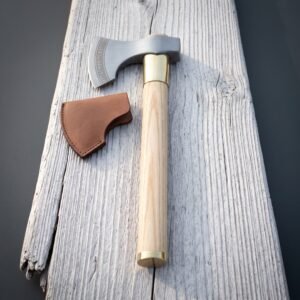 Runebite Hand Forged High Carbon Bearded Axe with Elder Futhark Engraved Cheek | Ash Haft and Brass Collar | Leather Blade Sheath | Norse Woodsman Gift | RK-2175
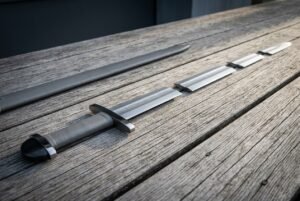 Runewhet Hand Forged 1095 Steel Elder Futhark Viking Sword | 35 Inch Overall | Grey Leather Grip and Tea Cosy Pommel | Norse Collector Gift | RK-1856