Blog
What Is a Messer? The Sword Built Like a Knife

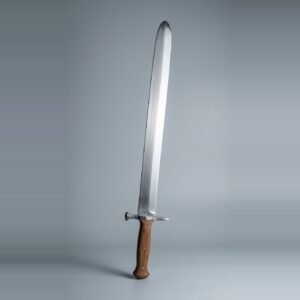
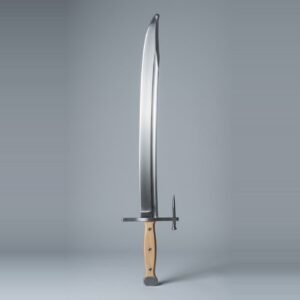
A messer is a single edged sword of the 15th and 16th centuries built the way a kitchen knife is built. That is the whole definition and it is the only one that holds up. The blade extends into a flat slab tang, two wooden scales are laid either side of it, rivets go through the lot, and a stud called a nagel sticks out sideways from the quillon block to keep other people’s blades off your knuckles. No through tang, no peened pommel, no nut. If a listing says messer and the handle is a tube with a pommel screwed on the end, it is not a messer, it is a sabre wearing a name it borrowed.
That construction is the reason the messer family looks so different from everything else on a sword rack, and it is also why the type confuses people who came in through the longsword door. The messer is German, it is common, it turns up in the fencing books with its own body of technique, and in modern clubs it is one of the most enjoyable things to learn because everything it does is close, fast and slightly rude.
If you are new to all of this, start with what HEMA actually is, then how to choose your first HEMA sword. If you already know you want one, the HEMA messers category is the short route.
What makes a messer a messer
Three things, in order of how much they matter.
First, the hilt construction. A flat slab tang between two scales, riveted. This is knife construction scaled up, and it is what the word messer means in German: knife. Everything else follows from it. The grip shape is whatever the scales are carved into, so messer grips tend to be flatter and more oval in section than a round sword grip, which makes the edge alignment easier to feel and harder to lose.
Second, the nagel. A stud or bar projecting sideways from the quillon block, standing over the back of the hand. It is not decorative and it is not a quillon. More on it below, because it is the single most misunderstood fitting on the type.
Third, the single edge with a back. Messer blades are usually straight or very slightly curved, often with a clipped point where the last few inches of the back are ground away to a false edge. That clip is what turns a chopping blade into something that can thrust properly.
The nagel, and what it is actually for
The nagel is a hand guard for a hilt that has no room for a real one. Because the tang is a flat slab held by scales, you cannot build a cross through it the way you can through a sword tang without weakening the thing badly. So the guard goes sideways instead, out from the quillon block, standing over the knuckles on the side the blade is most likely to be struck from.
Nagel shapes vary more than any other part of the type. A plain stud, a mushroom head, a ring, a forward angled spike, sometimes a full knuckle bow on later pieces. The ring form gives the most cover. The spike form gives you a fitting that occasionally catches on a bind, which some people consider an advantage and other people consider a reason to swear.
Practical point for buyers: check which side the nagel is on. Almost all messers are made for the right hand. Left handed stock is systematically thin across messers and sabres everywhere in this market, which is an old complaint and a real one.
The size bands
Messer, langes messer and grosses messer are not three hard categories. They overlap in period and they overlap on retail shelves, and anyone who tells you there is a firm dividing line is selling you something. The bands below are the useful working ranges rather than legal definitions.
Bauernwehr
Blade of roughly 15 to 35 cm. The short end of the family, closer to a large belt knife than a sword, with a nagel and usually no cross at all. Sold today mostly as a sharp for cutting and as a companion piece, not as a sparring tool.
Messer and langes messer
Blade of roughly 45 to 90 cm. This is the band most club fencing happens in, and the one most people mean when they say messer. It is a single handed sword, used with the off hand free, and it crosses over neatly with arming sword and sabre material.
Grosses messer
Roughly 75 to 113 cm overall. The big single hander, heavy enough that some pieces suit a hand and a half grip even though the type is not two handed. If you like the messer idea but want more presence and more reach, this is the band to look at.
Kriegsmesser
1 to 1.35 m overall and genuinely two handed. This is the one type in the family that is properly separate, because the technique changes once both hands are on the grip. It sits closer to the longsword and montante end of the sport than to the rest of the messers.
Why the messer exists, and the story you will hear about it
Somebody at your club will tell you that messers existed because a law stopped commoners carrying swords, so cutlers built swords and called them knives and everybody solemnly agreed to pretend. It is a wonderful story. Treat it as a story rather than a documented fact, because the evidence usually offered for it is thinner than the people repeating it suggest.
What is not in doubt is that the messer was common, that it was made by the same trades that made knives, and that it had enough of a following to earn its own material in the German fencing books rather than being treated as a poor relation of the sword. A type that gets its own body of technique is a type people actually used.
How a messer fences
Close. Everything about the geometry pushes you toward the bind and past it. The single edge means edge alignment is a constant concern and the flat grip helps you keep it. The nagel means you can take a blade onto your hilt in a way that would cost you fingers on a plain cross. The free off hand means grappling shows up faster than it does in longsword, because there is a whole spare arm available and the sources noticed.
People coming from longsword usually find the first few weeks awkward and then find it addictive, because the messer punishes hesitation and rewards committing to a line. People coming from sabre find it immediately familiar until the first time someone binds them and walks in. If you want the curved and later end of the single edged world instead, the HEMA sabre guide covers it, and the dussack guide covers the cheap and cheerful training relative that shares a lot of the same movement.
Steel, flex and construction
Our messer trainers are 51CrV4 spring steel hardened to 49 to 52 HRC. Spring steel is chosen because it bends and returns instead of taking a set or snapping under a hard bind, which is exactly the load a messer sees. Harder is not better here. A blade at 56 HRC and up holds an edge beautifully and breaks in a way that ends your evening.
Stainless is the warning sign to watch for. It is used on decorative swords because it needs no oiling, and it is too hard and brittle for repeated impact. A stainless messer is a wall piece with a good costume.
Flex matters less on a messer than on a feder because you are not thrusting into people with the same frequency, but it still matters. Read HEMA sword flex explained before you order, and check your club’s requirements rather than assuming. For the difference between a trainer and something that will actually cut, see blunt versus sharp training swords.
One construction check worth making on any messer you buy anywhere: rivets should be flush and tight, the scales should sit hard against the tang with no daylight, and the nagel should not move. A loose nagel on a riveted hilt is not a five minute fix.
Which one should you buy
For club fencing, a langes messer in the 45 to 90 cm blade band is the default and it is the default for good reasons. It covers the material, it fits in a normal kit bag, and it is a size you can still control at the end of a long session.
Buy a grosses messer if you are already comfortable with a single hander and want more reach and more authority in the bind. Buy a kriegsmesser if you specifically want the two handed material, and be honest that it is a different study rather than a bigger version of the same one. Buy a bauernwehr if you want a sharp for cutting practice or a companion piece, not if you want something to spar with.
And if none of this appeals and you actually wanted a thrusting sword, rapier versus sidesword is the guide you want, or what is a feder if the longsword crowd got to you first.
Where to see these
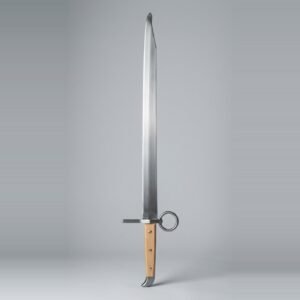
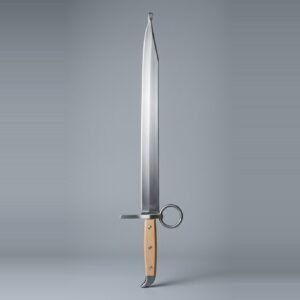
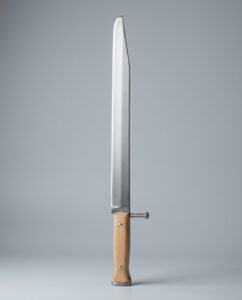
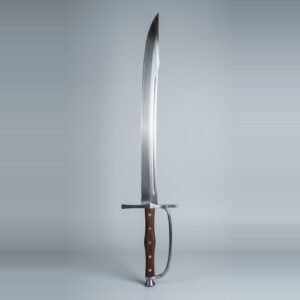
Four worth comparing side by side. The Brenvald langes messer is the plain club pattern: ring nagel, three brass rivets, pale wood scales and a clipped point with a beak shaped cap at the butt. The Brunhak langes messer runs the same idea with a larger ring nagel for anyone who wants more cover over the hand. Step up in size and the Skarnvald grosses messer drops the cross entirely and runs a nagel alone, which is as close to the period look as this family gets. Bigger again, the Storvekk kriegsmesser is the two handed war knife of the family, a curved clipped point blade with a knuckle bow and five brass rivets through walnut scales.
All of them are made by hand in the Czech Republic, inspected at our North Babylon, New York warehouse and shipped from there. Engraving is done in the United States after arrival, and the rune and custom design options are on the engraving page if you want a name or a date cut into the steel.
Questions people ask
What is a messer in simple terms?
A single edged sword of the 15th and 16th centuries built with knife style hilt construction: a flat slab tang held between two riveted scales, with a stud called a nagel projecting sideways to protect the hand. The word is simply German for knife.
Is a messer a sword or a knife?
It is a sword that is built like a knife. The blade length puts it squarely in sword territory in most of the bands, but the way the hilt is assembled comes straight from the cutler’s bench rather than the sword maker’s, and that construction is what defines the type.
What is the difference between a messer and a langes messer?
Mostly length, and the line between them is soft. Langes means long, and the band commonly quoted for messer and langes messer together is a blade of 45 to 90 cm. Retailers and period sources both use the words loosely, so judge the piece by its measurements rather than its label.
What does the nagel do?
It shields the back of the hand from a blade coming in on the outside, which is the job a cross does on an ordinary sword. Because a messer tang is a flat slab held by scales, a full cross is not practical, so the guard goes out sideways instead.
Is a kriegsmesser just a big messer?
Not really. At 1 to 1.35 m overall it is two handed, and putting the second hand on the grip changes the technique enough that it is a separate study. It has more in common with the longsword end of the sport than with the single handed messers.
Can a messer be used for cutting practice?
Only if it is a sharp. A blunt trainer will fold tatami over and teach you nothing useful about edge alignment. Sharps are a separate purchase, made in 1095 high carbon at 54 to 58 HRC rather than spring steel, and they are not sparring tools.
Do messers come with a scabbard?
Not in this range, so do not plan around one. Store the blade oiled and horizontal, and keep it out of a sealed sheath where trapped moisture will sit against the steel.
Is a messer good for a first HEMA sword?
It is a good first sword if your club teaches messer, and a poor one if it does not, which is the same answer that applies to every type. Where messer does have an edge is cost and handling: it is a single handed sword with simple fittings, so it is usually cheaper than a longsword and easier to control while you are still building the habit.
Keep reading
The rest of the HEMA writing is indexed in the guides section, and the full line sits under HEMA swords.